What links the sprightliest greenery in my vernal garden with a dish created in 1962 at a railroad halt at the head of the navigable Loire? L’oseille is what the French call sorrel and in the unassuming industrial town of Roanne two chefs created culinary magic by marrying this acidic, zesty herb to a salmon escalope.
I first read about it in 1978 in remarkable book called Great Chefs of France, essentially a handsomely illustrated roll call of all the figures who created ‘Nouvelle Cuisine’. Roanne-based Les Freres Troigros, Jean and Pierre, sounded the most fun. Asked to create a dish for Paul Bocuse’s Legion d’Honneur lunch for Giscard d’Estaing, they came up with Escalope de saumon a l’oseille and the rest is history. I have been slavishly following the recipe for this delicate, almost Zen-like dish since 1980 when the brothers published their own cookbook, Nouvelle Cuisine, part of a series translated into English that included Cuisine Minceur by Michel Guerard, the only one of that groundbreaking kitchen generation still alive.
By 1968 the brothers had gained a third Michelin star for the restaurant, which it has held ever since, while morphing from the station’s Hotel Moderne, prospering from the Route Nationale 7 running past, via a more sophisticated makeover in 1976, to its current incarnation after a switch to a rural site in 2007. Jean died of a heart attack in 1983, Pierre in 2020 at the age of 92, the Troigros legacy long since consolidated in the hands of Pierre’s son Michel (and now a new generation). Influences on the menu in recent times have been Japanese, a logical extension of the pared down intensity of the original Nouvelle Cuisine movement.
Alas, I’ve never eaten in the restaurant proper. On a press trip to explore the wines of the Roannaise region a Troigros lunch was organised for us. A lovely prix fixe three courses yes, but it was in a spin-off down the street, the Cafe Epicerie Le Central. It cost just 23 euros, quarter of the price of a main at the big place, where the other day I struggled to find salmon with sorrel on the website menu.
My own sorrel crop has mostly been perennial. When one year it failed we were rescued by a cutting from the unlikeliest of sources, the Michelin-starred Mr Underhills in Ludlow.
Chris Bradley was virtually a one-man band at the stove (hence a no choice five course menu) with his wife Judy front of house. Quite a team, both now retired, the building down by Dinham Weir sold on as a private house.
The no choice dinner we had in the garden was utterly memorable with salmon and sorrel as a starter. Which led to our lament about our own lost herb. Not only did Judy come up with a replacement from her own garden, she even volunteered Chris to drive us back to our hotel in the absence of Ludlow taxis. Now that was Michelin star service. Here’s my take on the original Troisgros recipe…
Salmon in a creamy sorrel sauce – a dish that has stood the test of time
Ingredients
1kg fresh middle cut of salmon, skinned; 80g fresh sorrel leaves; 2 shallots; 500ml fish fumet; 4tbsp dry white wine; 2tbsp Noilly Prat; 400ml double cream; 40g butter; juice of ½ lemon; salt and freshly ground pepper; small amount of arachide or other light oil.
Method
Divide the salmon into four fillets and put them between two sheets of lightly oiled wax paper and flatten the fish evenly, using a mallet. Remove the stems from the sorrel by stripping the central veins from each leaf.
To prepare the fish sauce put the fish fumet, white wine, Noilly Prat and shallots into a saucepan and cook over high heat until a near glaze is reached. Add the cream and reduce until the sauce is slightly thickened. Add the sorrel for around 20 seconds while stirring. Then incorporate the butter off the heat. Before serving add a few drops of lemon juice
To cook the fillets, sprinkle salt and pepper on the least presentable side. Heat up the oil (or use a non-stick pan), then add the salmon with the seasoned side down for 25 seconds. then turn to the second side for another 25 seconds. The salmon should be undercooked since it will continue to cook after plating. Add the sorrel sauce, enlivened with a squeeze of lemon, to each warmed plate then add the salmon. Voilà!
https://i0.wp.com/www.neilsowerby.co.uk/wp-content/uploads/2022/04/Trois-1-scaled.jpg?fit=2048%2C1536&ssl=115362048Neil Sowerbyhttps://www.neilsowerby.co.uk/wp-content/uploads/2022/11/NS-typemark-v1c.pngNeil Sowerby2023-05-29 12:13:002024-03-21 14:21:03Spring is the season: sorrel and the fish dish that revolutionised cuisine
Poretti, Moretti, Peroni? As if they were concocted on a Scrabble board (big score for Mezzogiorno, but I digress), all those big Italian beer brand names sort of morph into one generic light lager. That’s what they taste like to me. Still, on a (let’s pray) sunny August Bank Holiday Weekend in Manchester’s Cathedral Gardens they hit the spot to accompany pizza slices, arancini, even gelato. Yes, Festa Italiana (August 25-27) is back for its sixth outing. With, you guessed it, sponsors Poretti offering a new upfront attraction.
Giuseppe Dell’AnnoSofia Gallo
Equally refreshing is the presence of newer blood at the demo counters. Yes, there will be returning veterans such as Jamie Oliver mentor and UK brand ambassador for Parmigiano Reggiano Gennaro Contaldo and Giancarlo Caldesi (Return to Tuscany, Saturday Kitchen, Sunday Brunch), alongside Festa founder Maurizio Cecco. But they will be joined by rising stars such as Great British Bake Off 2021 winner Giuseppe Dell’Anno and Masterchef UK 2021 quarter-finalist/ICG Cooking Competition Award winner Sofia Gallo. Another huge Festa fave is pastaia Carmela Sereno Hayes offering pasta classes for all ages.
Maurizio CeccoSun’s out in Cathedral Gardens
The line-up has been announced in a week when Maurizio has also been celebrating the first birthday of the latest outpost of his Manchester empire, Salvi’s, set among the four colossal towers of Deansgate Square. Prosecco and Poretti (naturally) flowed freely at the big party in this sleek, buzzing restaurant.
Festa Italiana offers an alternative immersion in all things authentic Italian and gastronomic . Think al fresco meets dolce vita in the shadow of the National Football Museum and the Corn Exchange. Street food and workshops aplenty. Music is also very much part of this very family-friendly, free-to enter festival. Want to sing along to That’s Amore? Or Tu Vuo’ Fa L’Americano?At the live music stage your chance will come. Possibly fuelled by ample sips of Poretti…
The Birrificio Angelo Poretti will be pouring at its ‘iconic Piazza’, pairing its beer with food at a sit-down dining spot. This ‘Grande Tavole’ experience is a ticketed event on Saturday 26th with the area open to all on Sunday 27th.
https://i0.wp.com/www.neilsowerby.co.uk/wp-content/uploads/2023/05/italydancingw.jpg?fit=1300%2C975&ssl=19751300Neil Sowerbyhttps://www.neilsowerby.co.uk/wp-content/uploads/2022/11/NS-typemark-v1c.pngNeil Sowerby2023-05-19 15:50:142023-05-19 15:50:17Just one more Poretti? Manchester’s Festa Italiana matches food and birra
Intimidated? Not easily. Yet there have been occasions. I recall a stay in a Mayfair apartment with our own private butler. “Order me a cab for Loftus Road.” An eyebrow-raised response: “Might that be the soccer stadium? Will sir be requiring a scarf and rattle?” Thankfully, in the midst of the away support, you are enveloped in a communal support system. Buoyed by some Blackburn Rovers umbilical cord. There’s not quite the same safety net when you are dining solo in the capital.
The legendary Henry Harris couldn’t be happier chalking up a new era for Racine
I tell myself I’ve alway found it a test of a restaurant how they handle a ‘Gourmet No Mates’. Maybe they’ll mistake me for a Michelin inspector and either up their game… or piss in my potage. But that’s all just fanciful. For my lone foray to Fallow in the autumn I was ushered to the chef’s table counter, as requested, and soon discovered I wasn’t alone in being alone. Next door, from Japan, was a fellow seeker after the sustainable culinary holy grail at London’s hottest restaurant. Just off Haymarket, it was bustling front of house and in the open kitchen right before me. To be on the safe side I ingratiated myself with the Irish sommelier by ordering a palate-cleansing pint of Guinness. Among the occupied throng I felt welcome and the whole food experience was worth the risk.
Reassured, last month I struck out with a hat-trick of solo efforts in Farringdon, Soho and Shoreditch respectively – Bouchon Racine, reincarnation of Henry Harris’s legendary Parisian-style bistro in Knightsbridge; wine-led Noble Rot on the site of the old Gay Hussar; and Manteca, hippest of Italian nose-to-tail newcomers, ironically replacing a Pizza Express. The space almost became Rambutan, who’ve just opened near Borough Market, but that’s a whole different story. Rambutan
Let’s start with the latter, heaving on a Sunday evening, where it was again my choice to bag a counter. My luck was in as they sat me next to the salumi slicer. Hypnotic. A bigger deal than you might imagine; they cure their charcuterie in-house. A couple my age, bearing no tats or facial hair, urged me to tuck into the Saddleback coppa and, at a hefty sounding £10, it was remarkably sweet and creamy after its sojourn in the basement hanging cabinet.
The sommelier this time was from the Southern Med via Leeds. His buttonholing me about was I from those parts (Yorkshire) put me at my ease, as did the red I ordered – a Dolcetto from AJ Vajra, a Piedmont winemaking family I know well. Light and fragrant, belying its deep purple hue, it was a a perfect companion for every morsel, from some pillowy focaccia through to the heartiest of pasta mains, fazzoletti with duck ragù and duck fat pangrattato (£15, I resisted the £10 winter truffle supplement). The wine list a a real thing of beauty, ranging from the reasonably priced rustic to stellar Tuscan royalty. Authentic credentials? 20 varieties of amaro. Cynar, Fernet Branca knew, but Madame Milu, Ferro Chiva Baliva and Ramazzotti? Maybe another time.
Yes, you’d be right in assuming no Italian presence in the ownership or probably the kitchen brigade (though it was hard to make them out in the frantic blur of the open kitchen). The restaurant is a collab between Smokestak barbecue king David Carter and Chris Leach, once of another carnivorous joint, Pitt Cue. Both huge Italophiles, obviously.
Before the duo beached up in Shoredith Manteca had been a start-up project at 10 Heddon Street, then a standalone restaurant in Soho. But it is here among the bare, plastered walls it truly seems to have found its mojo. Dining on my tod, I obviously went for small plates, tempted though I was by a wood-fired whole John Dory or a Creedy Carver duck.
My healthy greens were puntarella alla romana, its bitter leaves given a gladiator’s thrust by anchovy and chilli (£8). Pig’s head fritti (£8) next, their over-the top spice hit down to a dollop of pilacca. The chilli heat was subtler in a slick portion of line caught pollock crudo (£12), blood orange giving it a Sicilian feel.
My £15 fazzoletti with ragù was slightly less in your snout than what became a Manteca signature dish when Shaun Moffat (now at the Edinburgh Castle, Ancoats) was chef there – a pig skin ragù topped with parmesan and served with a dipping chunk of the same skin crisped. Manteca comes from the Spanish word for pork fat or lard. excpect you guessed something like that.
Manteca, 49-51 Curtain Road, London EC2A 3PT (020 7033 6642).
You wait five years for a second Noble Rot restaurant to bob up and before you can find a gap to book your solitary table at the Soho version they’ve opened a third one – in Shepherd Market, Mayfair. I was hoping to make up for a disappointing experience, just before the Pandemic, in the original Lamb’s Conduit Street Rot, where the food didn’t match up to the wine or the atmosphere of the unreconstructed 1701 townhouse. I’d been buying the Noble Rot wine magazine, out of which it sprang in 2015, and still do, on occasion buying wine from its allied Shrine to Vine operation. The sophomore Soho site is, in contrast, an irregular old haunt of mine as The Gay Hussar. Not that I frequented it in the way that generations of Labour politicos and journalists did. Not for me the scheming cabals, who used the upstairs dining room as their canteen; I just enjoyed the goose-fat and goulasch, the veal stuffed cabbage and sour cherry strudels of this very Hungarian restaurant, run by Victor Sassie for 34 years from 1953 until his death. General manager John Wrobel and others kept this time warp going until 2018. What is wonderful is how the rescuing Noble Rot team, whose backers included restaurant reviewing doyenne Marina O’Loughlin, have kept so much of the Georgian interior and atmosphere – albeit with a very different food and wine offering.
Be gone Bull’s Blood and all who go sloshed on it. This being Noble Rot, there’s a comprehensive modern list, offering numerous leftfield wines by the glass. I indulged in a Pittnauer Blaufränkisch from Austria’s Burgenland after a palate refresher of classic Kernel table beer, offering remarkable flavour at just 3.5% ABV. Oh, and a glass of minerally biodynamic Crozes Hermitage Blanc from the brilliant Laurent Habrad in-between.
Thankfully my three course supper was spot on this time. A risotto of palourde clams (£14) offered a sensory overload trinity of flavours – vermouth, fennel and bottarga. It followed by a generous confit duck leg with a classic accompaniment of cavolo nero, lentils and a sauce of Agen prunes and red wine. The £30 price a slight ouch factor. Prunes featured again with hazelnut in a biscuit for a dense wodge of chocolate mousse.
Modern British cuisine beautifully executed and a warm welcome to match. Who needs company? The narrow downstairs dining room accommodated a fellow solo diner, a family with young kids and, shades of the past, in the corner behind me, a couple plotting the political demise of a rival. Cue approval from the Martin Rowson caricatures of past habitués upstairs.
The feelgood aspect was clinched by The Green Scarf Factor. I was already on the Elizabeth Line when I got a text saying I’d left it. They’d stash it away for me. Next day when I dropped by to collect it couldn’t be found and I was in a train rush. Not to worry. When we locate it we’ll post it on to you, they said. And they did.
Not just the French tragedian Jean famed for his alexandrines, Racine was also a much-loved bistro across from Brompton Oratory in Knightsbridge. The name translates as root and the roots of chef/patron Henry Harris’s culinary inspiration were definitely ‘à travers la Manche’. Alas that quartier beyond Harrods was already being colonised with oligarchs whose tastes ran more to property than French bistro classics and Racine shut in 2015, leaving so many memories.
It was my perennial London bolthole. My wife Theresa and I even took a Paris-based copain there to shame him with this paradigm of ‘petits restaurants’. My dear late dining amie Sarah Hughes would fit in confession at the Oratory before boozy lunch. Even eating there on my own was a perfect comfort zone. Push through the front door’s heavy draught proof drape and you felt cosseted. A glass of Beaujolais at your elbow, a choice of Le Figaro or the Times proffered, while you awaited the likes of oysters, rillettes, rabbit with mustard and creamed spinach and a Valrhona chocolate pot.
All of which dishes, eight years on, I revisited in the upstairs dining room of the Three Compasses, Cowcross Street, opposite Farringdon Station. With Monsieur Harris himself, in front of the Bouchon Racine’s chalked menu board, beaming at the effrontery of reconvening when his fan base had nigh on given up on a permanent return.
That fanbase was very much in evidence one Tuesday lunchtime. Mostly middle-aged trenchermen on the ample side with a long afternoon’s commitment to exploring the wine list. Service was informally impeccable and the simple dining room more Montmartre than you’d expect from a faded old London tavern.
Whisper it, too, the food may be even better than of yore. My oysters were Carlingford’s finest – plump Louet Feissers au naturel, six for £22 – the Rillettes (£11) from Ibiaima pork, sourced from the French Basque country. Then so much tender flesh on the Lapin à la Moutarde (£23), cloaked in smoked bacon, its silkiest of sauces given extra succulence by my swamping the plate with an £8.50 side of spinach creamed with foie gras. Check out the menu board for all the treats I had to resist. No pudding I had told myself but, of course, the tiny two tone pot au chocolate (£8) with my double espresso was de rigueur – as they used to say in Knightsbridge.
The origin of the word bouchon for such a bistro comes from Lyon. They were originally inns for silk workers and the name apparently derives not from corks, as you might imagine, but from a 16th century expression for a bundle of twisted straw. This featured in signs to designate the restaurants. In Farringdon steer your course via the Three Compasses. A solo voyage? You won’t feel marooned.
https://i0.wp.com/www.neilsowerby.co.uk/wp-content/uploads/2023/05/Racine-main-pic-scaled.jpg?fit=2048%2C1536&ssl=115362048Neil Sowerbyhttps://www.neilsowerby.co.uk/wp-content/uploads/2022/11/NS-typemark-v1c.pngNeil Sowerby2023-05-09 16:48:002023-05-09 16:48:39Bravo Bouchon Racine, where our Henry rolls back the years for this solo hero
Take in the Indian food shot above. The mutton keema is adapted from a recipe by my beloved Dishoom, the paratha was bought in frozen, while the date and tamarind chutney and coriander/mint dip were both home-made. Star of the impromptu tiffin, though, is hidden under that tangle of radish sprouts. Step into the spotlight Gurdeep Loyal’s Punjabi Ranchero.
It comes from his Mother Tongue (4th Estate, £28) and follows the template of this utterly utterly distinctive cookbook, whose playful manifesto proclaims: “Food is a living form of culture that evolves: its boundaries are fluid, blurred, porous and dynamic… authenticity is an unending reel of culinary snapshots, an evolving spectrum that captures many transformative moments along flavourful journeys in generations of kitchens.”
So where we are at with this “second generation British Indian food writer and home cook, a descendant of Punjabi farmers and Leicester market traders with big appetites” is a dish such as this ‘Aloo Chaat Wedge Salad with a Pink Peppercorn Ranch Dressing’. Potatoes and chaat masala meet American iceberg lettuce dressing. His aim? To marry the “same splendidly kitsch garnishing skills as Indian street snacks” with the “Fanny Craddock meets breakfast buffet school of culinary arts.” Cue some ‘visual mood board’ fantasy about the iconic Fanny sporting a sari on Christmas Day!
Like all the 100 determinedly hybrid recipes in his debut collection, it works a treat. Hard to imagine in advance Gurdeep’s anarchically fusion take, Lasagne Rolls with Kasunda Keema (the recipe for which is at the end of this piece), but I was won over by his introduction to it. A charming, accomplished writer, he is as good on intros as tweaking traditional food styles.
“It was the daytime clubbing scene where the boundaries of bhangra and Asian underground were pushed, blending Punjabi folk music, classical Indian melodies and Bollywood anthems with hip hop, R’n’B, soul, dance and garage. I remember South Asian friends bunking off college on Wednesday afternoons, heels in their bags, to get to afternoon raves.
“Created by and for the diaspora, they served a generation of young adults, united by a need to party coupled with a need to be at home in time to make roti. I encountered offshoots of the scene much later, through the queer-desi night Club Kali and sporadic bhangra DJs that played Popstarz at the Apollo. Those 2am moments on the dance floor were rare times I could be every layer of my identity at once, illuminating with lasers what was often concealed by the code-switching of my life by daylight. Identity is like lasagne: each layer unique, but transformed when brought together as a whole.”
Spices have a key roleGurdeep Loyal
A professional level cellist, 39-year-old Gurdeep can’t resist peppering his food writing with musical analogies. Born in Leicester, he has pursued his passion for flavours across an eclectic career path that has included helping grow Innocent Drinks and exploring global food trends for Harrods and Marks & Spencer. All this while coping with plural identities as a British-born son of Punjabi immigrants. He recognises the irony of the title Mother Tongue when his mother will never have the English language skills to read it.
And, of course, there is another Loyal identity – as a gay man. It’s not the kind of memoir that dwells on prejudice and the struggles that brings. For that try The Go-Between by the equally flamboyant Osman Yousefzada (Canongate £14.99). He wrote: “My parents come from an underclass; they were illiterate and couldn’t read or write in any language.…they came from humble rural areas in Pakistan and Afghanistan and moved to the UK in the early 1970s to fill the low-level jobs no one else wanted.”
Much of his account is of a child perceptively exploring the confines of the immigrant ‘ghetto’ that was Balsall Heath, Birmingham and the restrictions on women, particularly his beloved mother and sisters. Eventually, he breaks through the barriers to reach university in London, starting his own fashion label (Beyoncé and Lady Gaga were clients) and more recently becoming renowned as a multi-disciplinary artist.
Osman YousefzadaNik SharmaMayukh Sen
Brought up in America, another gifted gay writer Mayukh Sen trades less on his Asian descent (Bengali). His own breakthrough book of 2021, deals with the marginalisation of female voices within a patriarchal 20th century culinary culture. Taste Makers: Seven Immigrant Women who Revolutionised Food in America (Norton, £11.39) profiles cookery writers familiar to me on this side of the Pond – Italian champion Marcella Hazan and Indian Julie Sahni, restaurateur and recipe rival of the higher profile Madhur Jaffrey – but the remaining five were equally fascinating in their struggles to promote their authentic cooking styles.
These may seem yesterday’s battles when we now have a bewildering proliferation of cookbooks defining authentic cuisines of nations, even regions. And with one click online you can source multiple variants of one exotic recipe or other. In the midst of this tumult my tip is to seek out those second generation Asian writers who are not on repeat, who have loyalty to tradition but bend it to their own culinary will.
I’d first recommend the remarkable Nik Sharma, California-based molecular biologist/photographer/cookbook author and, a theme developing, also gay. Start with Saison (Chronicle Books, £25), then move on to the more challenging, science-based The Flavor Equation (Chronicle Books, £26) and perhaps his A Brown Table website.
Ravinder BoghalMeera SodhaCynthia Shanmugalingam
In the UK women writers are to the fore. Sumayya Usmani blends an expectation-defying memoir and a contemporary take on her native Pakistani cuisine in Andaza (Murdoch £20). Meera Sodha’sMade in India and Fresh India (both Penguin Figtree, £20) are my go-to weekday meal gospels. Her story, too, is one of emigration. She was born in Lincolnshire to Ugandan Indian parents and the cross-fertilisation shows in a dish like a brussels sprout thoran and she is not too purist to promote a curry featuring a Lincolnshire sausage. On the fipside, I’m not sure how much beaching up in Coventry from the Tamil northern tip of Sri Lanka has influenced Cynthia Shanmugalingam’s recently restaurant Rambutan near Borough Market. Her cookbook of that same name is a retro look at the (delicious) family food she grew up with and its transformation in exile, while not shying away from the tragic sectarian strife of her homeland.
More recently another second generation Punjabi, Sarah Woods, in her Desi Kitchen (Penguin, £30), has charted the diaspora of a variety of regional Indian cuisines in assorted UK regions, again recognising the mutations of ‘authentic’ dishes. Ravinder Boghal, Kenyan-born to Indian parents, doesn’t even claim, in her Marylebone restaurant Jikoni and the cookbook of the same name to be remotely ‘traditional’. ‘Proudly inauthentic recipes from an immigrant kitchen’ is the sub-heading of Jikoni (Bloomsbury, £26).
Crab crumpetsChalai chicken wings
I’m a big fan of Ravinder’s paneer gnudi with saag or clove-smoked venison samosas with beetroot chutney but, for the moment, I‘m loyally smitten with Gurdap. Oh, those Coconut Crab Crumpets with Railway Crispy Eggs (I kid you not), Tahini Chalai Chicken Wings, Hariyali Coconut Fish Pie, Miso-Masala Fried Chicken Sando, Desi Kofta Meatballs with Sticky Mango-Lime Tomatoes, Sweet Chilli-Gunpowder Roasted Cauliflower, and Chocolate-Orange Jalebis. Pure genius. Meanwhile, finally, lasagne as you’ve never known it…
Kasundi keema lasagne rolls
(Serves 4)
For the kasundi keema:
2 tbsp ghee
2 large onions, finely chopped
1 tbsp coriander seeds, crushed
1 tbsp black mustard seeds
1 tbsp cumin seeds
8 garlic cloves, very finely chopped
2 tbsp finely grated fresh ginger
2 tsp chilli flakes
500g minced lamb (20 per cent fat)
2 tbsp Garam Masala (see page 23)
2 tsp fine sea salt
5 tbsp tomato purée
2 tbsp dark brown sugar
3 tbsp apple cider vinegar
½ x 400g can of chopped tomatoes
For the cheese paste:
200g mature Cheddar cheese, grated
2 tsp cumin seeds, crushed
3 tbsp coarse semolina
1 tsp coarsely ground black pepper
1 egg, lightly beaten
For the greens:
200g cavolo nero, coarse stalks removed
1 tbsp English mustard
4 garlic cloves, very finely chopped or grated
4 tbsp lemon juice
For the lasagne rolls and tarkha:
10-12 lasagne sheets
500g jar of tomato pasta sauce
2 tbsp vegetable oil
30–35 fresh curry leaves
1½ tbsp black mustard seeds
1 tsp chilli flakes
Method
To make the keema, heat the ghee in a large pan, add the onions and cook for 7–8 minutes until golden.
Next add the coriander, mustard and cumin seeds, cooking for another 2–3 minutes, before adding the garlic, ginger and chilli flakes. Now add the lamb, browning for 4–6 minutes before mixing through the garam masala and salt. Finally add the tomato purée, sugar and vinegar, along with the tomatoes. Simmer and reduce for 5–7 minutes, then set aside.
To make the cheese paste, mix all the ingredients together into a crumbly mixture.
For the greens, boil the cavolo nero in salted water for 5–6 minutes until tender, then blend with the mustard, garlic and lemon juice into a thick smooth paste. Add a little water if needed, then let it cool.
Preheat the oven to 200°C fan.
Cover the lasagne sheets with boiling water and leave for 4–5 minutes to soften a little. Slice each lasagne sheet down the middle lengthways, making 2 strips ready for rolling.
Take one pasta strip, spread with 1 tablespoon of the mustard greens, sprinkle over some cheese paste and finally add a spoon of keema. Roll up tightly into a snail. Repeat to form all the lasagne rolls.
Pour the jarred tomato pasta sauce into an ovenproof dish and tightly pack in the lasagne rolls. Cover with foil and bake for 25 minutes, then remove the foil and bake for a final 10–15 minutes until piping hot and crusty on top.
Meanwhile, for the tarkha, heat the vegetable oil in a pan, then add the curry leaves, mustard seeds and chilli flakes. Sizzle for 1 minute, then drizzle over the baked lasagne rolls just before serving.
https://i0.wp.com/www.neilsowerby.co.uk/wp-content/uploads/2023/05/Punjabi-ranchero-scaled.jpg?fit=2048%2C1536&ssl=115362048Neil Sowerbyhttps://www.neilsowerby.co.uk/wp-content/uploads/2022/11/NS-typemark-v1c.pngNeil Sowerby2023-05-06 20:17:142025-06-21 12:38:45Proudly playful, Gurdeep’s Mother Tongue is an Asian cuisine game changer
Quiz time. David Beckham and arguably the finest 18th century Falstaff – what have they in common? Answer: a fierce looking fish bearing the thumbprint of St Peter.
Back in 2015 Becks took a then teenage Brooklyn fishing off Dorset. There’s a picture of the pair proudly brandishing their catch – the second biggest John Dory ever landed on that particular boat, the skipper told them. That might make it 3kg. It’s hard to tell given the bizarre body. This delicious expensive fish is certainly no looker. So thin, head on it is nigh invisible as it sneaks up on prey, rapidly sucking up the likes of shrimp and squid.
David and BrooklynTomb of James Quin
Those distinctive black marks on either side of its dark olive yellow body, clustered with spines? Supposedly they are the thumb and finger-prints of Apostle Peter, who snatched the fish out of the Sea of Galilee and removed a gold coin from its mouth to pay taxes he owed. Its Latin name is Zeus Faber. So godlike connections but that hasn’t saved it from nicknames. The French traditionally dubbed it ‘l’horrible’ or “poulet de mer”. One theory from a certain Jules Verne has its proper name springing from ‘janitore’, St Peter’s role at the gates of Heaven, but it’s more than likely an anglicisation of Jaune Doré (golden yellow).
It certainly shone brightly for the Irish-born Shakespearean actor James Quin, maybe bested as Lear to David Garrick but a legendary champion of the John Dory’s merits. When asked what sauce suited its surprisingly fleshy fillets he responded by announcing the banns of marriage between ‘delicate Ann Chovy, and good John Dory’.
You’ll find the tomb of this maverick ham, accused of both murder and manslaughter in his roistering prime, in the Abbey Church, Bath. Where, as quoted by Alan Davidson in his scholarly North Atlantic Seafood, “Quin’s celebrity as the prince of epicures was well known, and where his palate finished its voluptuous career.”
So a man after my own heart. I’ve been been basking in a kind of John Dory afterglow since acquiring, at Wellgate Fisheries, Clitheroe, the best specimen I’ve ever had. Carefully avoiding those nasty barbs, owner Giles Shaw filleted it from its heavy bones and substantial head, which later yielded a perfect fumet for a paella.
Just 40 per cent of body weight left, but what to do with the slightly sticky but firm flesh? The mercurial Quin recommended poaching in sea water and serving with a lobster or shrimp sauce, according to Davidson, who suggests cider and cream might be the way to go. Instead I reverted to Mistress Ann Chovy and followed the Mitch Tonks recipe for Grilled Dory with Anchovy Vinaigrette, replacing the customary braised fennel (a sprinkle of fennel pollen sufficing) with steamed spinach. I also scattered over a few mussels from the batch destined for the paella. Thanks to the quality of fish it was the equal of the dish we ate at Tonks’ flagship, The Seahorse, on Dartmouth Embankment. https://seahorserestaurant.co.uk
By all means follow my lead but wait until autumn. John Dory is not on any endangered quota, but breeding season is May to August… You can purchase it online from Tonks’ own Rockfish Seafood Market. Another good John Dory source is Trident Fresh Fish Or maybe give Giles a ring and enjoy the drive up to Clitheroe to collect.
Eliza Acton noted in Modern Cookery for Private Families (1845) that John Dory, “though of uninviting appearance is considered by some persons as the most delicious fish that appears at table”. I concur heartily.
How I cooked my John DorySourced from Wellgate
GRILLED DORY WITH ANCHOVY VINAIGRETTE AND BRAISED FENNEL
Ingredients:
150 ml /¼ pt olive oil
150 ml/ ¼ pt white wine vinegar
150 ml/ ¼ pt white wine
2 bay leaves
1 tsp fennel seeds
1 tsp coriander seeds
1 sliced lemon
1 small onion, finely sliced
3 cloves garlic, finely sliced
3 Florence fennel bulbs
John Dory fillets – they will vary in size but allow about 180g / 6 oz per person
Salt
For the anchovy vinaigrette:
6 salted anchovy fillets
1 tsp Dijon mustard
3 tbsp white wine vinegar
100 ml double cream
1 tbsp parsley, finely chopped
Squeeze of lemon
Black pepper
Method:
Pre-heat the oven to 175C. First braise the fennel by gently heating the olive oil, wine vinegar, wine, bay leaf, fennel seeds and coriander seeds in a pan. Then add the sliced lemon, onion, sliced garlic and fennel. Cover and cook in the oven for about an hour until the fennel is tender. Remove from the oven and allow to cool at room temperature in the braising liquid.
Make the anchovy vinaigrette by pounding the anchovy fillets in a pestle and mortar. Then put the mustard in a bowl with the vinegar and whisk together slowly adding the olive oil until those the three ingredients emulsify. Then add the anchovy paste and gently whisk in the cream. Add the parsley, a squeeze of lemon and plenty of black pepper.
Heat the grill then brush the John Dory fillets with a little olive oil and season with salt. Grill for 6-7 minutes until lightly golden.
To serve put two or three chunks of braised fennel and onion mixture on a plate, place the fish alongside and drizzle with the anchovy vinaigrette.
https://i0.wp.com/www.neilsowerby.co.uk/wp-content/uploads/2023/05/John-Dory-1.jpg?fit=769%2C500&ssl=1500769Neil Sowerbyhttps://www.neilsowerby.co.uk/wp-content/uploads/2022/11/NS-typemark-v1c.pngNeil Sowerby2023-05-02 19:28:012023-05-02 19:28:11All hail John Dory! Why I’m an apostle for this king of fish
Bushy-tailed serendipity rules. There I was, digging out my copy of Robert Owen Brown’s Crispy Squirrel, Vimto Trifle to check out what, as ghost writer, I’d written about the origin of Eccles cakes – for a review of a new biography of 18th century cookery writer/force of nature Elizabeth Raffald – and realising the book is a decade old this year. I still remember the legal worries we had about Vimto challenging the use of their brand name and my own stickler qualms that really it should not be ‘Crispy’ but ‘Crisp’.
In the same week I spotted on social media one of those weary local newspaper clickbait forays – ‘The Manchester restaurant serving up WLD SQUIRREL to adventurous diners’. The story claimed: “For many, it was seen as a culinary step too far, with some urging the restaurant to ‘please leave the squirrels alone’. Others said they drew the line at ‘creamy rodent stew’, but there were also a fair few who were keen to give it a taste.”
Crispy Squirrel recipe. Images and design by Joby Catto, Anti (Design Services) Limited
The admirable Street Urchin in Ancoats weren’t exactly skinning endangered red squirrels for the pot, just taking a sustainable approach to the over-abundant grey variety, duplicating pretty much (with interesting twists) Rob’s Southern-fried recipe that put the crispy into deep-fried rodent parts. See below.
Street Urchin chef/patron Kevin Choudhary at Street Urchin has subtly modified his take on buttermilk fried rabbit since the press exposure, partnering it with home-made black pudding, puy lentils, wild garlic and pickled blackberry salad.
Earthy flavours there to echo squirrels’ woodland habitat. 20 years ago Fergus Henderson gave it his own ‘nose to bushy tail’ treatment, braising it with bacon and porcini. That was at his St John restaurant alongside London’s Smithfield Market, which I’m sure didn’t trade in squirrel meat.
The best place to buy it (as recommended in Crispy Squirrel) is the Wild Meat Companyin Woodbridge, Suffolk, though I‘ve just checked with their website and it’s fur-on only at the moment, not the ‘oven ready’. Rachel Choudhary tells me squirrel is available from their supplier, the Cartmel Valley Game. Her husband Kevin once worked for Robert Owen Brown, who in turn is an acolyte of Fergus Henderson. From little acorns, as they say.
Whatever your source, do bear in mind it tis one whole squirrel per person. The only substantial fleshy bit is the haunch. Otherwise, it tastes like a subtler version of rabbit with the same low carbon footprint and available the year round.
The Wild Meat Company suggest an alternative recipeto make the most out of this lean beast – roasting it with squash sage or hazelnuts. Or maybe give it the ragu treatment.
Still there remains a taboo feel to squirrel. Like badger hams, horse meat or Mexican mole (oh, no, that’s something quite different). Mountain folk in America’s Deep South are not so squeamish, even if the racoon (different family from the squirrel) apparently makes better eating.
Not that everyone subscribes. US President Calvin Coolidge was sent a raccoon from Mississippi to be served at the 1926 White House Thanksgiving dinner. Rescued from that rocky fate, Rebecca was kept as a pet by First Lady Grace Coolidge.
https://i0.wp.com/www.neilsowerby.co.uk/wp-content/uploads/2023/04/Urchin-squirrel.jpg?fit=640%2C524&ssl=1524640Neil Sowerbyhttps://www.neilsowerby.co.uk/wp-content/uploads/2022/11/NS-typemark-v1c.pngNeil Sowerby2023-04-28 13:36:042023-04-28 13:42:13Still squeamish about squirrel eating? Well, from little acorns…
ECCLES cakes and orange custards. Blame it on a pair of puddings for a mutual obsession with the greatest English cookery writer you may never have heard of. My own interest in Elizabeth Raffald was piqued a decade ago during research for Crispy Squirrel and Vimto Trifle (MCR Books) by chef Robert Owen Brown. She was one of his culinary heroes and when we included a recipe for Eccles cakes it turned into a homage to this 18th century cookery writer/entrepreneur, who led a remarkable life. Not just as housekeeper of stately Arley Hall (above).
Her own hugely influential The Experienced English Housekeeper of 1786 contained a ’receipt’ for ‘Sweet Patties’ that’s not a million calories from Eccles’ finest, even if the ingredients include boiled calf’s foot, apples oranges, nutmeg, egg yolk, currants and brandy, in puff pastry, and it could be baked or fried.
Meanwhile Dr Neil Buttery, scientist and fledgling food historian, had already chanced upon Mrs Raffald’s recipe for Seville orange custards in English Food by the great Jane Grigson, another Raffald fan. Levenshulme-based Neil famously went on to blog his attempts to cook every recipe in her 1974 classic. Now finally he has authored a biography of Elizabeth Raffald that encompasses the huge impact she had on Manchester beyond the dishes she created and catalogued so brilliantly. It’s enthralling.
That the book is titled Before Mrs Beeton is a polemic provocation. Brand Isabella Beeton has never faltered since her untimely death at just 28 in 1865, four years after the publication of her Mrs Beeton’s Book of Household Management. Dr Buttery points out chunks were compiled by anonymous contributors with much copying of recipes and her husband soon sold the copyright, allowing it to be modified over successive editions. “Contrary to public perceptions,” he writes, “Beeton is less the Nigella Lawson or Delia Smith of her day and more the Colonel Sanders.”
Contrast with Elizabeth Raffald, the real deal, publishing 800 recipes. most tried and tested by herself. Indeed the only time this stellar cookery phenomenon “missed a trick”, in Buttery’s words, was with those prototype Eccles cakes, which she developed at her bakery shop in Manchester’s Market Place.
The Guardian of the time reported “a worthy female leaving her, and going to settle at Eccles, Mrs Raffald made her a present of the recipe for this dainty, which made the recipient’s fortune, and that of her niece, who succeeded her in the business – many thousands of pounds having, we are told, been realised by this sweet little monopoly.”
Not that every recipe in The Experienced English Housekeeper is as accessible or as ‘monetizable’, to use that dyspeptic tag. Take ‘Rabbits Surprised’ or, my fave, ‘Pigeons Transmogrified’. The first requires “Take young Rabbits, skewer them and when they are roasted, draw out the Jaw-bones and stick them in the eyes to appear like Horns… stick a bunch of Myrtle in their Mouths, and serve them with their Livers boiled and frothed.”
The Pigeons get off lightly. They are stuffed into hollowed out cucumbers with heads sticking out with ‘a bunch of barberries in their bills’.
Such elaborate show at table is a legacy of her time as housekeeper at Arley Hall, Cheshire, where her aristocratic overlords loved tounleash a ‘Grand Table’ banquet on their guests – some 75 separate dishes on more than one occasion. Other challenging recipes included one for turtles, using their blood and fins and, of course, an elaborate mock turtle substitute. Yet also in the book you’ll find simple dishes that seem quite modern like the first mention in English cookbooks of macaroni cheese and burnt cream (creme brulee by any other name).
The book is split into three parts – the first dedicated to browning, soups, fish, plain meat, game, pies and puddings, the second covering confectionery and ‘directions to set out a table in the most elegant manner and in the modern taste.’ In the third she discusses pickling, potting and distilling. Eminently practicable if you discount the likes of staggeringly elaborate pastry work. Elizabeth can also lay claim to creating the first English wedding cake, as we know it.
Though she wrote English Housekeeper in Manchester, its gestation was undoubtedly at Arley Hall, four miles from Lymm, where she arrived from her native Yorkshire as Elizabeth Whittaker in 1860. For four years she was housekeeper for Lady Elizabeth Warburton, to whom she later dedicated her book, before marrying the head gardener John Raffald and moving to Manchester. After which it’s really hard to keep up with her hyperactive schedule. in the midst of compiling a series of Manchester business directories – the original ‘yellow pages’ – launching an employment agency and two newspapers, promoting what might be the first ever ‘ready meals’, running shops and public houses, including her own, The King’s Head, she gave birth to at least nine children.
Eventually it all went downhill until she died suddenly aged 47, of a stroke or aneurysm, in 1781. Husband John’s alcoholism undoubtedly contributed to the business failure, but she showed him little sympathy. One one occasion he was drinking heavily and feeling suicidal. When he said he wanted to drown himself, Raffald replied: “I do think that it might be the best step you could take, for then you would be relieved of all your troubles and anxieties and you really do harass me very much.”
Dr Buttery is compassionate:“He’s the perfect scapegoat, the one who caused the collapse of Elizabeth’s empire, hurrying her death as she exhausted herself… but the truth is Elizabeth was working too hard before the coffee house, indeed even before the King’s Head; working too hard was her natural state and something was going to give eventually…
“Elizabeth’s untimely death released him from the life choices he had regretted, a life that led him into a depression he self-medicated with alcohol, a life that took away his wife. Returning to his beloved brothers and working in the family gardens was the only sensible thing to do.”
Elizabeth was buried in the Old Church family plot in John’s home town of Stockport, but you can’t locate her gravestone because John couldn’t afford to pay for an inscription. That run-down Exchange Coffee House, the Raffalds’ last venture. was on the site of today’s Selfridge’s. Check out the discreet blue plaque to Elizabeth on the side of the store. Market Place, epicentre of her commercial success, was destroyed by World War II air raids. Arley Hall, much changed architecturally from her tenure, remains the sacred Raffald place.
And it’s here that I like to think of Elizabeth in culinary over-drive. This new Buttery book, like its precursor, The Dark History of Sugar, occasionally gets bogged down in heavily researched historical context (nothing that keener editing wouldn’t obviate), but it’s at its best when the author’s deep empathy with kitchen practice comes to the fore. It inspires me to recreate one of those ‘receipts’ that earned Mrs Raffald such a following (including Queen Victoria).
So let’s conclude with an ode to flummery. We are back in the exhausting territory of those Arley banquets with their emphasis on display and munificence. In her book Elizabeth includes a table plan for her ‘Grand Table’. Fortunately diners weren’t expected to devour every dish of the litany of delights – mock turtle soup, broccoli, kidney beans, bottled peas, salad, house lamb, fricassee of veal, a small ham, sweetbreads, ox paletts, ducks almonde, boiled turkey, pigeon compote, chicken fricassee, haricot beans, beef olives, hare soup, florindene of rabbits, pork griskins, larded oysters, sheep’s rumps and kidneys, cod sounds, French pye, lambs’ ears stuffed with forcemeat and transparent soup.
And the flummery then? Her actual menu is mind-bogglingly labour-intensive. With a wacky whiff of Heston Blumenthal about it. Let me quote Dr Buttery’s paraphrase: “Jelly and flummery were the media of choice for 18th century ‘subtleties’. They were made from gelatine derived from calves’ feet, ground hartshorn or, on fast days, isinglass extracted from the swim bladders of sturgeon. (I’m tickled by one of the author’s acknowledgements – “I’m also indebted to Ellie Huxley for going through the rigmarole of of making Mrs Raffald’s calves’ foot jelly, so I didn’t have to.”)
“Flummery was a sweetened dish made from the boiling of cracked oat grains in water. The resulting opaque ’stock’ was strained through cloth, flavoured and sweetened. Once cool, it set to a delicate jelly. Elizabeth needed her flummery toto form a wobbly, quivering but ultimately stable structure, and therefore made hers from almond milk mixed with calves’ foot jelly, rather like a modern blancmange or panna cotta.”
Don’t even ask how all this segued into gargantuan, moulded creations such as ‘Eggs and Bacon in Flummery’ and the cochineal and brandy driven showstopper, ‘Solomon’s Temple in Flummery’. To find our more you’ll have to acquire Dr Buttery’s excellent tome.
Upstairs and downstairs incarnate, all this endeavour was about creating an “immersive experience for guests while, Elizabeth, the creator, worked tirelessly with her staff out of sight and earshot in the hot, noisy kitchens.
Before Mrs Beeton – Elizabeth Raffald, England’s Most Influential Housekeeper by Dr Neil Buttery (Pen and Sword Books, £20) is out now.
Spoiler alert. Ancoats is so last year. Not demonstrably, so but Manchester’s coolest ‘hood is yielding fewer food and drink surprises. The action has moved elsewhere. In contrasting directions. A new wave of indie chefs is bravely fermenting away in other corners of the city centre and further afield. The emphasis is understandably casual. Their rivals for attention, a flurry of gigantic food hall projects, arguably takes casual to a frenetically ridiculous level.
Certainly the ‘golden goose’ seems to be laying its commercial eggs everywhere. That metaphor came to me in response to a puff for the latest project rolling out its CGIs for our delectation – Kargo at Salford Quays. “Blend Family is adept at building new, unique food hall experiences, intricately engineered to become community hubs. With a mix of design and culinary excellence, Blend Family, in partnership with Quayside MediaCity, will showcase the best in up-and-coming food and drink talent, hand chosen and incubated to bring the best in world food under one roof.”
That’s not to diss the street food credentials of Blend, who operate the Cutlery Works in Sheffield (here’s my report) and also GPO in Liverpool, which prompted Guardian reviewer Grace Dent to opine: “I need to ask a very honest question here: are food halls ever a truly satisfying dining experience? I’ve no doubt they seem so on paper and in the marketing meetings, they’re fantastic for filling old, unloved but historically important spaces and they’re good news for downward-spiralling city centres. Yet in reality they’re noisy, unrelaxing and the food is often patchy, with the occasional gem hidden among the colossal choice of menus.”
Spot on, but such criticism is not stifling the food hall stampede. Manchester and its hinterland already boast Exhibition, Society, New Century Hall, Exhibition, Escape to Freight Island (shut for months but due to reopen amid much-publicised unrest from laid-off staff), Stretford, Sale (about to shut permanently) GRUB, Hatch, Hello Oriental, Stockport’s The Produce Hall, the pioneering Altrincham Market plus its siblings Macclesfield’s Picturedrome and Mackie Mayor, this month named the UK’s best by a global travel site.
Mackie MayorAnd its predecessor Alty Market
Now, alongside Kargo (echoes of orthographically challenged foodie neighbourhood Kampus) in the new Quays revamp, Central Bay, we can also expect two further massive projects, this time on post-industrial sites.
Located in the city’s largest factory and metalworks north of Piccadilly Station, the 5,000 capacity Diecast will open in phases from summer 2023 onwards, and will be home to Manchester’s biggest beer garden, brewery, open air BBQ kitchens and a ‘NeoPan’ pizzeria. There are also plans for it to be a huge ‘creative resourc’e. It’s from the team that have done such a good job with Firehouse & Ramona in the NQ, this time aiming to create “one of the most exciting destinations on the planet.”
Further big dreams, from an interloper, Allied London’s shipping container food and drink operator Boxpark. They are calling their new 30,000 sq ft complex on Water Street overlooking the River Irwell Shipyard. Its neighbours will be the Factory International arts venue and Soho House (neither on my bucket list).
No comment on this revelation of its dynamic: “Early plans show that graffiti, huge graphics and industrial features will be part of the aesthetic for the exterior, giving it a Williamsburg Brooklyn kind of feel.” Expect the food hall to offer “a mix of artisan vendors and rolling smaller stalls.”
These are the high profile beasts but they are not alone on the horizon. In the slightly stalled First Street new frontier plans have been submitted for a 400 cover ground floor food hall open to the public in a student accommodation block called TheHouse of Social. World cuisine is the selling point of a fifth food hall in the pipeline on Bury New Road, Broughton. Plans have been approved for a former car repair centre to be transformed into TBNR Foodhall, a 200 cover canteen dining experience with upstairs shisha bar.
Spring awakening for a new wave of restaurants
You’ve probably gathered by now this kind of large communal dining experience is well down my list; the street food scene seems to have been hi-jacked by commercial expediency. Harsh? Maybe the lockdown years, which have made so many folk all the more eager to mingle, have made me keener for a more intense encounter with quality food and drink.
It is interesting that two of my Manchester food heroes have jumped ship from their food hall tenancies. Caroline ‘Sao Paulo Project’ Martins no longer has an outlet in Exhibition and is back at her original pop-up venue, Blossom Street Social with ‘Sampa’; Michael Clay, chef/patron at its stalwart Ancoats neighbour Elnecot, launched his Anglo-Saxon pizza project, Dokes in Society but has now shifted it to a permanent site in Prestwich.
Elsewhere it’s good to see the sites of The Creameries. Chorlton and Cocktail, Ramen Beer + Bun in the Northern Quarter finding new foodie occupants.
Late in 2022 I confess I expected far more closures. Instead a fresh wave of talent has come on board, reinforcing the city’s culinary upturn first initiated by Ancoats warriors Mana, Erst, Jane Eyre, Rudy’s, Edinburgh Castle, Street Urchin and in the city proper 10 Tib Lane and Another Hand. My new faves (including outliers in Marple Bridge, Liverpool and Haslingden) are:
Beef vol-au-vent (Climat)Pig’s head terrine (Higher Ground)
A new Manchester superstar is born. I am an unapologetic champIon of chef Joseph Otway and the rest of the stellar team, who have finally laid down restaurant roots in their adopted city after pop-ups, a pandemic where they created their own Cinderwood/ market garden, and created Flawd natural wine bar at Islington Marina (still going strong). Read about their commitment to sustainable animal husbandry here. This nose to tail ethos results in my beloved pig’s head terrine.
I had much fun celebrating the signature snack of this rooftop wine-led restaurant – the vol-au-vent but the small plate menu from exec chef Luke Richardson and head chef Simon Ulph offers more sophisticated delights, as does a wine list majoring on Burgundy. Big plus the cityscape views from the eighth floor of Blackfriars House.
Iain Thomas was the chef who launched The Alan restaurant in 2022 to great acclaim. Now he and the hotel’s former marketing head David O’Connor have set up this itinerant sustainably focused supper club, initially at The People’s History Museum. Read my interview with Iain about his food philosophy.
Tom Kerridge was always going to be a hard act follow after he pulled his Bull & Bear project from the upmarket Stock Exchange Hotel. Cocktail kings the Schofield Brothers, who’d already established their Sterling Bar in the basement stepped into the breach and hired Eleanor Bristow from The French as front of house and highly rated Joshua Reed-Cooper (ex-Simon Rogan/Where The Light Gets In) in the kitchen. Classic grill cuisine the aim to match the affluent ambience of the former trading floor.
If the converted Stock Exchange represents old money then this ’contemporary Japanese’ restaurant, a £3m investment, is a bold splashing of the cash. It’s undoubtedly mega plush with menu prices to match (£150 for the 11-course kanseiki menu) but the sushi/sashimi raw materials are of the highest quality and the whole food operation is steered by chef/patron Michael Shaw, who brings an impressive Michelin pedigree.
Bistro and bottle shop it calls itself, so there’s a fine choice of wine to accompany squid bolognese and other quirky dishes from chef Craig Sherrington’s imaginative menu that helps this Marple Bridge newcomer transcend the neighbourhood gem tag. My Fold fave the toasted corn dish (the main image of this piece).
I previewed this ambitious tasting menu operation before it opened in under the radar Haslingden; a return review visit for Manchester Confidential confirmed the star quality of one-man-band chef Steven Halligan.
I made a rare visit to Liverpool for the recent launch of this new-build restaurant/bar, where chef Daniel Heffy puts to good use his top-end Michelin experience at Frantzen in Stockholm. The name also signals his commitment to the UK’s own northern provenance. Everything came together beautifully in a dish of Cornish white crab, soured cream, pickle silverskin onions and fennel on buttered toast. Like Higher Ground and Climat in Manchester it benefits from the support of developer landlords Bruntwood.
https://i0.wp.com/www.neilsowerby.co.uk/wp-content/uploads/2023/03/Toasted-corn.jpg?fit=805%2C649&ssl=1649805Neil Sowerbyhttps://www.neilsowerby.co.uk/wp-content/uploads/2022/11/NS-typemark-v1c.pngNeil Sowerby2023-03-26 22:51:202023-04-28 13:45:00Food hall overload? I’m more for supporting great new indie restaurants
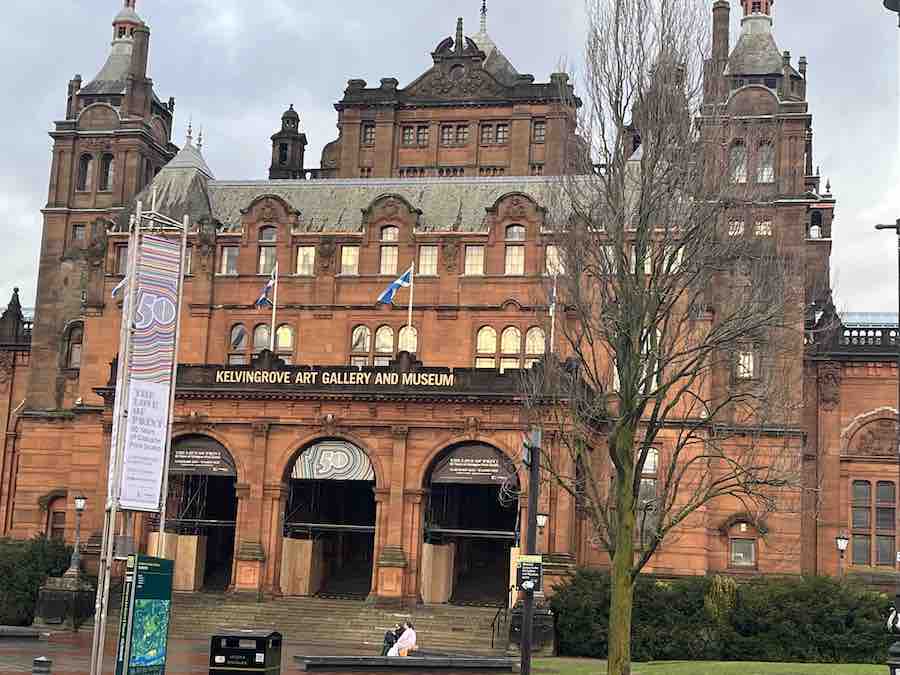
Quite a day. Two Glasgow bucket list musts ticked off in a couple of hours: Crabshakk restaurant and Barrowland Ballroom. A reward – after two intense days of butcher awards judging – of a feast of fresh seafood in still hip Finnieston, then Father John Misty in full sardonic flow at the legendary Gallowgate venue. For all this I had the blessing earlier in the day of Salvador Dalí’s Christ of St John of the Cross, as breathtaking as ever on its astral perch in the Kelvingrove Museum.
It’s the kind of fervent embrace I’ve come to expect from that great sandstone city on the Clyde. On previous visits I’ve rigorously researched Glasgow’s thriving food and drink scene or thrown myself into its rich musical heritage. Yet there were always gaps to be filled.
Barrowland BallroomThe Moxy’s cool interior
Thanks to the judging invitation from the Q Guild(from bacon to rib-eye via sausages, pies and stir-fries it was a lot of fun) and a handy Merchant City base in the Moxy Hotel I had time to explore. Extra time thanks to rail strikes extending my stay.
King Tut’s, St Lukes, Oran Mor – I’d done them all on that specifically music trip but I’d only stared across at the Barrowland from The Gate cocktail bar opposite. In the absence of a gig that night, the famous Technicolor lights were out. The raucous Father John Misty concert more than made up (even if lonesome me was adopted by the Glaswegian equivalent of Beavis and Butt-Head bellowing out the lyrics they knew by heart).
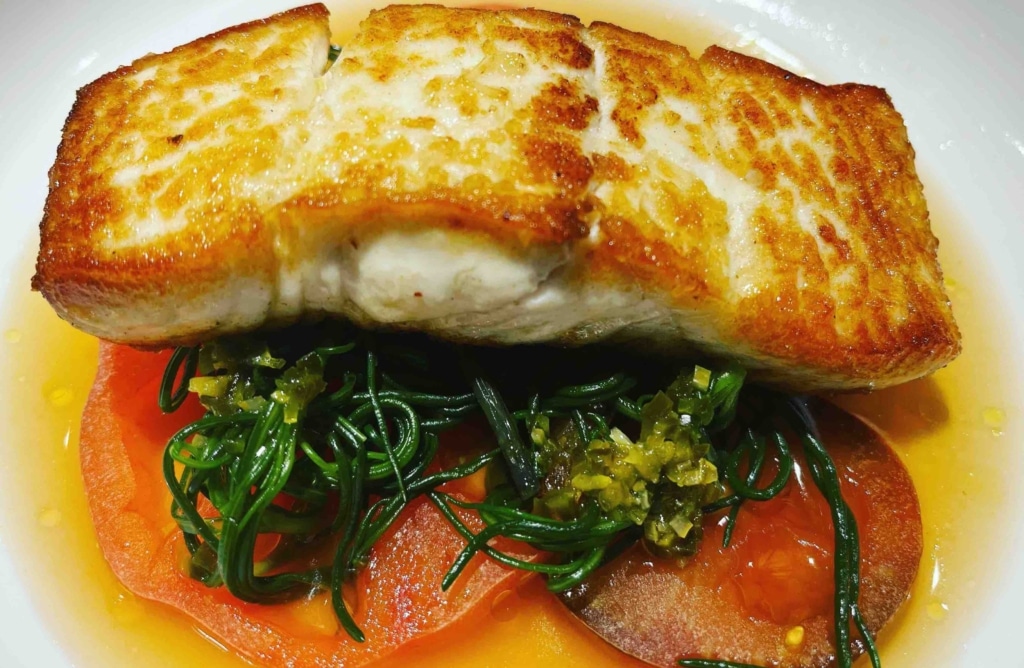
Dining solo at Crabshakkwas an altogether more sedate affair. Even if I probably needed a large bib as I messily ripped into a whole crab at the counter. Contender for most beautiful fish dish of the year so far followed – a tranche of halibut in a tomato miso with a draping of monksbeard.
This brilliant ‘high tea’ made up for a less convincing dining experience the previous evening (in company). Tucked into the Cathedral Hotel, Modern Italian Celetano’s came with a glowing recommendation from The Guardian’s Grace Dent but, fennel salami and a couple of accomplished pasta dishes aside, it didn’t deliver the promised bliss.
It is handy though for a mooch around the spooky Necropolis http://www.glasgownecropolis.org, which looks down on a cityscape packed with steeples and towers. This 19th century burial ground, inspired by Paris’s Pere Lachaise, lies on a ridge close to the city’s pre-industrial centre, rubbing shoulders with the magnificent Gothic Cathedral. For 700 years St Mungo’s tomb has drawn pilgrims there.
The Necropolis boasts 3,500 monuments, commemorating the city’s grandees. More than 50,000 other souls keep therm company from their unmarked graves. The cemetery upkeep is an ongoing challenge, my guide from the Friends of Glasgow Necropolis, told me as we stood beneath the hulking monument to religious reformer John Knox (“he is Edinburgh, nothing to do with us really.”).
Glasgow-based journalist Peter Ross in his great celebration of Britain’s graveyards, A Tomb With a View (Headline, £20), says the Knox statue “functions as a sort of Statute of llliberty, representing all that is stern and joyless and unbending about Scotland”.
His own favourite Glasgow cemetery is the gentler Cathcart on the Southside; for Gothic ghoulish, though, head for the Southern Necropolis, across the Clyde from Glasgow Green. Here the eerie marble figure known as The White Lady, marking the grave of two women killed by a tram in 1933, is said to turn its head to gaze at passers-by. It’s also the alleged haunt of the Gorbals Vampire with its iron teeth and lust for the blood of local lads.
Such urban folklore is enough to make you turn to drink. Wee drams aside, in this city that’s traditionally been courtesy of Tennent, whose mass market lager brewery looms to the south of the Knox Necropolis. As a family business it predated the boneyard by centuries and there were once genuine fears the arrival of corpses would contaminate its spring water supply.
Tennent’s commitment to the present is undoubtedly its collab with Alloa indie brewers Williams Bros – Drygate, a converted box factory on its estate, now home to a US-style craft brewery tap. The Drygate labels are designed by students from the Glasgow School of Art.
The Art School pre-blazeThe distinctive ‘Hat Rack’The Mackintosh House, inside the Hunterian
Which leads us neatly to the on-going saga of the iconic Art School building designed by Charles Rennie Mackintosh. This was extensively damaged when a blaze broke out late in the summer of 2018 as it neared the end of a £35 million restoration project following a previous fire in May 2014. The scaffolds and tarpaulins remain in place. It will be years yet before the current rescue project is finished.
Born in 1868, policeman’s son Mackintosh had none of the advantages of his architect contemporaries, just more talent. To get a taste of the whole Art Nouveau-dabbling coterie sign up for one of the Mackintosh’s Glasgow Walking Toursor download as self-guided leaflet.They all offer an illuminating introduction to the city as a whole, particularly the Victorian and Edwardian era where the vast wealth raised through shipbuilding and the sugar and tobacco trade was lavished on elaborate architecture.
I like the fact that Mackintosh designed both the main newspaper offices – the Daily Record, all glazed brick down a dark lane (home to vegan cafe and gig venue Stereo) and the Glasgow Herald building, deftly transformed into the panoramic Lighthouse, Scotland’s Centre for Architecture and Design (alas still closed post-pandemic).
My favourite building on our tour had to be James Salmon Junior’s Gaudiesque 1902 St Vincent Street Chambers, nicknamed the ‘Hat Rack’. Small in stature, Salmon was nicknamed the ‘Wee Troot’. A recent bridge over the Clyde has been dubbed the ‘Squinty Bridge’. Yes, the city’s dry humour takes no prisoners.
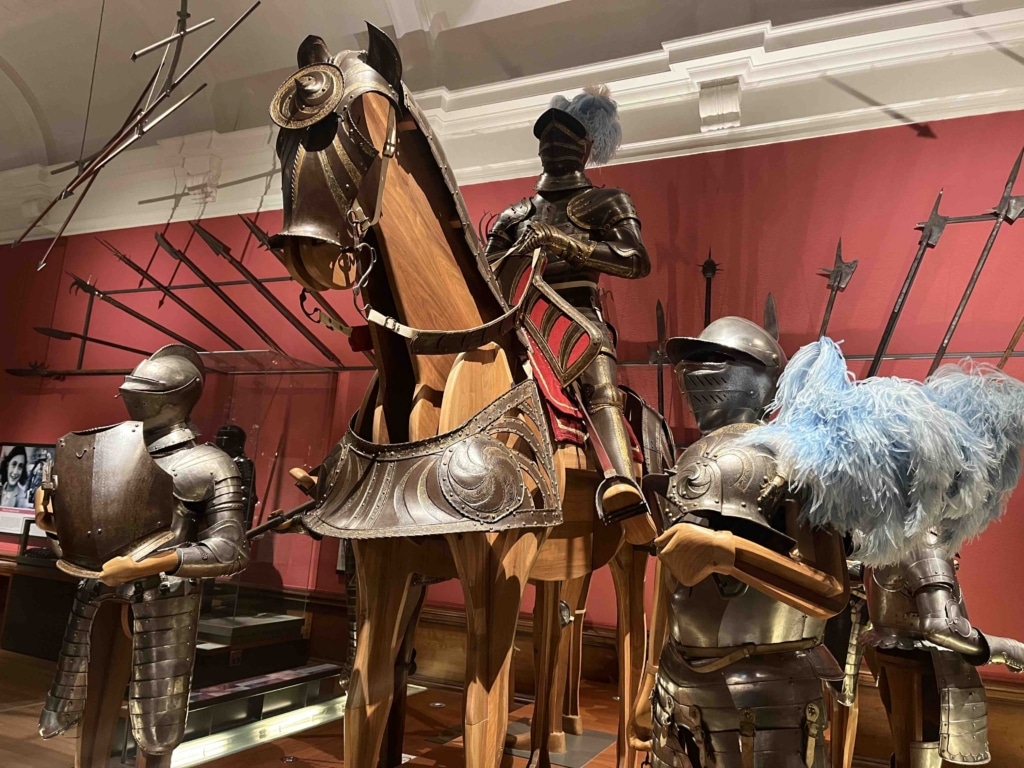
So much architecture but Glasgow has a wealth of green spaces, too. I love Kelvingrove Park and the shady promenade along the River Kelvin, taking in Kelvingrove Museum. This fantastical Spanish Baroque pile, spring cleaned inside and out two decades ago, houses an eclectic collection of art and objects that takes your breath away – from Rembrandts, Van Goghs and Salvador Dali’s vertiginous Christ of St John of the Cross to armour collections, a stuffed elephant and a dangling Spitfire. It’s a great place to acquaint yourself with Mackintosh’s influence and the contemporaneous Glasgow Boys art movement.
The interior of the Glasgow house where Mackintosh lived with his wife and artistic collaborator Margaret Macdonald has been reassembled up the hill within the University of Glasgow’s Hunterian Museum, featuring a definitive collection of his austerely beautiful furniture. From here it’s a 10 minute walk to Byres Street and the West End – the
Bohemian buzz of which would surely have delighted the dandy in Mackintosh.
Much quieter, in the southern approaches of the city, is another green oasis voted Europe’s best park in 2008, Pollok Country Park, home to elegant Pollok House, great walks and the remarkable Burrell Collection Museum – a Mackintosh-free zone.
It is a custom-built modern repository for more than 9,000 objects bought by Sir William Burrell, cannily using wealth from the family shipping business. Chinese, Muslim, Medieval and Gothic treasures rub shoulders with Impressionist masterworks. Unlike the Kelvingrove, it feels uncluttered, displaying at any one time only 20 per cent of the collection. The landmark building reopened last spring after four years shut for water damage repairs.
t is too far out to feature on Glasgow’s official hop on hop off (with commentary) City Sightseeing Tour. This double decker’s circular route takes in the East and West Ends as well as the revitalised banks of the Clyde with its award-winning, Zaha Hadid-designed Riverside Museum. Offering an even more fascinating insight into the city’s past is the People’s Palace on Glasgow Green in the East End. This sandstone working class cultural centre charts everything from tenement poverty to entertainment diversions. Attached to it is the elegant Victorian glasshouse of the Winter Garden.
Nearby you’ll find the Templeton Carpet Factory, modelled on the Doge’s Palace in Venice, and, of course, The Barrowland Ballroom. Take them both in on a walk up to Merchant City, once home to mansions and markets and now reinvigorated as a creative hub after decades of decay, good for bars and people watching.
It’s after here you start to recognise the grid system Victorian expansion built along. Look down long straight streets and you’ll inevitably see church towers or steeples framed at the end. It all feels uncannily American. Indeed when the cityscape turns hilly around Blythswood Square it might almost be San Francisco. Not quite sure John Knox would have approved.
Babbity BowsterThe State Bar
Fleeting tips on food and drink in Glasgow
Crabshakk, as you already know. The Finnieston original has spawned a sibling up at the Botanical Gardens. Other fish restaurants of note – the veteran bistro Gambaon West George Street and the Finnieston Bar and Restaurant. Nearby Gannet, paragon of Scottish sourcing, is probably the pick of the Argyle Street eateries.
Pubs? My fave remains The State Bar, off Sauchiehall Street, with its glorious Victorian interior, fine cask ales and Glasgow’s longest-running blues jam. In the Merchant City, a short stroll from the Moxy Hotel, is the laid-back Babbity Bowster, named after an old Scottish wedding dance and offering a countrified beer garden at odds with its urban surroundings. Current craft beer mecca is down on Southside – Koelschip Yard with 14 cutting edge keg lines.
https://i0.wp.com/www.neilsowerby.co.uk/wp-content/uploads/2023/03/Barrowlands-main-1-scaled.jpg?fit=2048%2C1367&ssl=113672048Neil Sowerbyhttps://www.neilsowerby.co.uk/wp-content/uploads/2022/11/NS-typemark-v1c.pngNeil Sowerby2023-03-26 16:25:312023-03-26 22:58:47Having a Barrowland ball, cracking a crustacean – Glasgow belongs to me
It’s that time of year again and as I prepare to barbecue a big bundle of calçots in my rather blustery backyard the whole celebration is tinged with sadness. Because these long thin Catalan onions that resemble a leek (but aren’t related) will forever be associated with Lunya in the Barton Arcade and Iberica in Spinningfields. Both these now departed Hispanic standard bearers in Manchester hosted jolly, messy events around that quirky veg’s brief season. Bibs were essential as the charred objects of our desire, fresh from the coals, were dipped in a pungent Romesco-style sauce and accompanying wine was poured from a great height from needle-nosed porróns.
Calçots’ journey from plot to plate is far more epic than your supermarket spring onion’s. The Catalans plant them in early autumn, traditionally as the moon is waning, then a few weeks later, when the shoots have pushed up, transplanting them. The following summer they are harvested and stored in a dry place to germinate again, then in August/September they are trimmed and replanted in trenches.
Served in newspaper with romescoSwigging from the porron
Now the fun starts. Let Colman Andrews, author of the still definitive Catalan Cuisine (1997) take up the story:
“As they begin to sprout once more earth is packed around the new growth to blanch it (as done with chicory and celery) – and this is how calçots got their name, from the verb C, to put on boots or shoes. (The Catalan word for shoe, in fact, is the almost identical calçat. Compare the Italian word calzone, ‘big stocking’, meaning a stocking-shaped turnover pizza).
“By the time the calçots – as many as 12 or 13 of them from each large onion, seven or eight from each smaller one – are harvested in January and the ensuing few months, they have become not only much larger but much milder and sweeter. And because of their ‘shoes’ of soil, at least half their length is white.”
What was once a seaside speciality around Tarragona province, is now commonplace across Spain, as ubiquitous as paella or churros. A colleague noticed Manchester’s acclaimed 10 Tib Lane is currently serving leeks with romesco, saving on the air miles for the real thing.
Peter an Elaine Kinsella at the Manchester LunaSo much effort to grow
In truth the annual La Calçotada wasn’t remotely on mind until a visit to Liverpool this week for the opening of Daniel Heffy’s impressive new restaurant NORD. En route I happened upon the original Lunya restaurant/bar/deli, where founders Peter and Elaine Kinsella retrenched after their Manc exit. And there for sale was a stack of calçots, in all their earthy prime, which I snapped up on impulse, The Kinsellas will be hosting their own Calçotada this Sunday afternoon (March 26) at Lunyalita at Albert Dock, with not just calçots smoking on the grill but also a selection of grilled meatsand yes, the cava will flow. For afters, crema catalana, naturally. My more modest party at the same time may feature fino sherry en rama, my preferred tipple, decidedly un-Catalan. but hey I will, of course, have make my own take on Romesco (recipe below).
I’ll endeavour to char the calçots almost black, wrap them in newspaper as tradition demands.To be topical, I used Times columnist Matthew Parris’ caustic consignment of Boris Johnson to history’s scrap heap. Leave them to steam for 20 minutes, then gingerly peel open the sweet insides from their feathery casing. Serve them simply with lashings of romesco and garlicky tomato bread. The Catalans serve them in long terracotta roofing tiles to keep them warm, but it’s not my priority, obviously.
My gift horse bundle from LunyaMy home-made romesco sauce
ROMESCO SAUCE
Ingredients
200g piquillo peppers
6 garlic cloves, unskinned, raosted for 20 minutes
6 plum tomatoes, roasted
100ml sherry vinegar
250ml olive oil
1tsp smoked paprika
50g breadcrumbs
150g blanched almonds
juice of ½ lemon
Method
Toast the almonds in a dry frying pan for 3-4 mins until starting to turn golden and smelling toasted. Shake the pan often to turn them. Tip out and leave to cool, then grind. Roast the tomatoes in the oven until soft and sticky Drain the red peppers and tip into a food processor with the almonds, breadcrumbs, tomato, lemon, garlic, vinegar and smoked paprika, then blitz to a chunky mixture. With the motor still on, slowly drizzle in the olive oil to make a coarse sauce. Season well.
https://i0.wp.com/www.neilsowerby.co.uk/wp-content/uploads/2023/03/Calcots2-1-scaled.jpg?fit=2048%2C1536&ssl=115362048Neil Sowerbyhttps://www.neilsowerby.co.uk/wp-content/uploads/2022/11/NS-typemark-v1c.pngNeil Sowerby2023-03-25 19:15:382023-03-26 23:03:27Calçots charring on the grill – it’s my Catalan party and I’ll cry if I want to