It’s definitely going to be the Low Road ye’ll tak tae Scotland from the Pentonbridge Inn. Marked by meandering Liddel Water, just beyond the treeline a level mile away, lies the border. Once such a distinction wasn’t made around these parts. Welcome to the ‘Debatable Land’, 50 square mile no-go lair of the Reivers – raiders and cattle rustlers whose ferocity knew no bounds in either direction.
That’s all history. Today’s polite post code says Cumbria and Pentonbridge’s restaurant boasts a Michelin star, but the upstairs corridor is lined with bedrooms named after local Reiver families. Our is Batteson. It might take a subscription to Find My Past to track down that particular clan. I content myself with dipping into The Debatable Land: The Lost World between England and Scotland by historian Graham Robb, better known for his dissections of French culture. His fresh travel aim is to understand how these border badlands resisted being either English or Scottish until the natives’ brutal decimation in the early 17th century. It’s a roaring tale.
Fellow Borders chronicler Rory Stewart described it as a “swelling into a seven mile bubble of exception: an air pocket between two borders. The Kings of England and Scotland had made living here a capital offence; their subjects could kill on sight anyone found in the zone, without trial, as vermin.”
Beguiling what historical diversions sprang up on what was essentially a pilgrimage to explore the glorious cuisine that has earned chef Chris Archer the coveted star (above we chat to him after our amazing meal). En route we encountered beautiful oddities that prove Cumbria has far more to offer than just the Lake District…
Netherby Hall is an impressive pile
Netherby Hall – a dashing hero and a fertile cornucopia
Of course, this has been territory much marched over in history. Hadrian’s Wall is under half an hour by car. Closer still, four miles away, is the rather grand Netherby Hall. Today’s mansion in manicured grounds is the product of centuries of rebuilding on the site of a Roman Fort. It incorporates a medieval peel tower, once the lair of the reiving Grahams, who in 1605 were dispossessed and transported to Ireland. Their descendants remained at Netherby until 2014 when they sold it to Gerald and Margo Smith, who spent millions converting part of the grade II listed property into upmarket self-catering. Before turning their attentions to the then run-down Inn.
Once upon a time the Hall’s greatest claim to fame was as a setting for Sir Walter Scott’s Lochinvar. In this ballad the eponymous hero rides out of the west to gatecrash a bridal feast and rescue his beloved Ellen from tying the knot with “a laggard in love and a dastard in war.”
Our arrival was more sedate, asking the estate manager if we could roam the lavishly restored Walled Garden that supplies veg, fruit and herbs to Chris and his Pentonbridge team. I’d recommend requesting a visit, too, if you are staying at the Inn; it really is an abundant wonder, kept in trim by four gardeners.
From Raymond Blanc’s Manoir to Mark Birchall’s Moor Hall kitchen gardens can be an essential part of the whole Michelin experience. Whisper it softly, Netherby’s is at least their equal. You reach it via a narrow iron gate in a red brick wall bordered with lavender. Inside apple and pear trees climb the walls and pergolas while more varieties of nasturtiums than I can credit share the beds with globe artichokes, cavolo nero and cabbages. Cultivated roses rub shoulders with banks of wild flowers in gorgeous disarray. Windfall fruit is scattered everywhere. Those Michelin essentials, micro herbs, are planted twice a week in the greenhouses.
Dinner at the Pentonbridge Inn exceeds expectations
And there they are, tweezed upon our plates across the eight-course tasting menu. Yet the green wisps are bit-part players in a show-stopping display of culinary skill and balance. What impresses about the whole menu is a deceptive restraint that unleashes intense flavours. All matched by a relaxed atmosphere behind the pass and in the dining room.
Chris is well-versed in more high-powered Michelin establishments. His CV includes Winteringham Fields (across the Humber from his East Yorkshire roots), Cambridge’s Midsummer House, the Yorke Arms, Nidderdale, under the inspirational Frances Atkins and Raymond Blanc’s Le Manoir. As head chef at The Cottage In The Woods near Keswick he appeared on Great British Menu. It gained its star after his departure (here’s my recent review), but surely he laid the foundations.
The team hard at work in the open kitchen The final touches from Chris
Canapés, snacks, amuse bouches, call ’em what you will, are often perfunctory. Not here. Mouthfuls of Limousin beef tartare mini-pie, beetroot macaroon and Montgomery cheddar biscuit each make a statement for the meal to live up to. It is Cumbria, so Japanese Chawanmushi, ubiquitous in starry establishments at the moment, is translated as Savoury Custard with Peas. Nothing is lost in translation.
Netherby nasturtiums take a bow in a bowl of mackerel chunks and tomatoes in their juices. Plated separately are dollops of caviar and spring onion in delicate pastry cups.
After a palate-cleansing opener of Joseph Perrier Brut Royal NV we are drinking a Grüner Veltliner from Austria’s Kamptal region with its characteristic white pepper and stone fruit tang, It comes into its own with the next fish course – a tranche of North Sea halibut plus a peeled langoustine buddy in a frothy brown reduction.
In this neck of the Debatable Land you’d bet your Reiver’s ill-gotten gains on the main being lamb and so it proves. The most elaborate dish but that balance is always in evidence – sharing the plate with the roast spring beastie a leaf of Netherby kale, a blob of carrot puree, a smoked beetroot pillar, a wee haggis plus an exquisite square of slow-cooked lamb shoulder with its tousling of mushrooms.
An accompanying Cool Coast Pinot Noir from Chilean stars Casa Silva doesn’t quite work for me – I am in a Cabernet Franc mood – but our final (pudding) wine does. Château Briatte – benchmark Sauternes, awash with pineapple and honey pairing beautifully with our pre-dessert of ‘Stuart Wright’s (I should have asked) Honey, Milk’… and the most refined of millefeuille pastries encasing Scottish raspberries and white chocolate. Petits fours follow, as accomplished as the amuse bouches.
The given wines (Grüner apart) have been part of our gratis press meal, but with the £130 eight course tasting menu the standard wine flight is £75 a head, a prestige version is £125. Assembled by sommelier Robert Patla, the wine list is a thing of beauty equal to the food offering. There’s also the cosseting embrace of velvet sofas in the bar (which is open to the public).
After the feast there are nine bedrooms to cosy up in, divided between the main original building and a converted barn that is connected to the hotel. Our Reiver-themed room above the restaurant had the advantage of a bath, and a cushioned seat on the window ledge to take in the views. These aren’t spectacular, yet rurally comforting like the tweed, wood and slate that are incorporated into the Inn’s decor. From the outside, standing at a crossroads you get no idea of the stylish, modern lay-out to come. Three of the barn rooms are dog-friendly, too – with bowl, bed and treats.
Breakfast is a comparatively simple affair, freshly cooked to order, the fry-up a greaseless treat. Good granola, great coffee.
Withnail and I Country – hippy days are here again
Carlisle and Penrith are the major Cumbrian urban centres that lie just off the M6. Go off the beaten track instead, as we did. En route north we diverted to the monthly Orton Farmer’s Market, but it seemed much diminished, perhaps because it’s in the shadow of the famous Tebay Services Farm Shop. Our target, though, was the other side of Shap – Bampton. Not to be confused with Brampton, east of Carlisle, which we visited later.
This beautiful area’s claim to fame is as a location for cult film classic Withail and I. It was the first starring role for the famously teetotal Richard E Grant, who played the eponymous drunken hero, a doomed late sixties actor. Since its low key premiere in 1987 it has spawned generations of fans. The most devoted attend an annual outdoor ‘Picnic Cinema’ screening at Sleddale Hall, aka ‘Crow Crag’, Uncle Monty’s dilapidated cottage in the movie.
We chose a quirkier memento – the red phone box in Bampton village where Withnail phoned his London agent. Inside it’s a mini-shrine with a visitors’ book, flowers and, appropriately, an empty Rioja bottle. Over the bridge is the Mardale Inn with its own Withnail connections. Back in 2009 its eccentric owner and fan of the movie Sebastian Hindley tried to buy Sleddale Hall, but it fell through.
The hostelry itself was closed for several years until it was revived in 2022 as a terrific community pub. On our visit the local bell ringers were having lunch, taking advantage of an interesting menu and Good Beer Guide-listed ales. You can stay there too; it’s on the Coast to Coast Long Distance Path.
The pine cones of Wreay and the unique genius of Sarah Losh
A road trip is never complete without a visit to one of England’s special churches. Not always the grandest nor the oldest but with something to offer you won’t find anywhere else. Two, both Victorian, cropped up in Cumbria – the first St Mary’s of Wreay. It earns four stars in Simon Jenkins’ England’s Thousand Best Churches: “Unlike almost all the works in this book, Wreay appears to have been the creation of a single original mind … The Arts and Crafts Movement took half a century to catch up with her.”
You can pin it down as a revival of Lombard architecture – the austere neo-Romanesque exterior would not look out of place in Northern Italy – but its creator Sarah Losh’s designs take it to another dimension. Self-taught as an architect, she paid for it out of her own pocket as a memorial to her sister Katherine. She also commissioned local craftsmen to provide the wealth of ornamental detail. Outside these include crocodile and snake carvings, inside you’ll find depictions of fossils, vines and dragonflies. But the dominating motif is the pine cone. You’ll find them everywhere.
It is a homage to a family friend, Major William Thain, who served at Waterloo and was killed in the Afghan Wars of 1842, the year in which the church was consecrated. He is said to have sent a pine cone to Sarah before he died. It is an ancient symbol of regeneration and a promise of rebirth.
A Pre-Raphaelite pelican rules the roost in St Martin’s Brampton
The Arts and Crafts Movement made it to Brampton (the one with the R) towards the end of the 19th century. The village’s patrons the Howard Family, Earls of Carlisle, offered its folk the choice of a tram service or a new place of worship. They went down the holy route and, unusually for the period, got a church that wasn’t in the Gothic style.
It was the only church ever built by Philip Webb, an associate of William Morris and member of the Pre-Raphaelite Brotherhood. That’s how he was able to commission Edward-Burne-Jones to design the stained glass. He made a powerful fist of it – reds, blues, pinks and purples glow vividly; leaves, flowers and animals densely pack the frames. There’s not much Nativity or Crucifixion in the scenes and angels and saints have been chosen because they share names with Howard family members. Look out for the fantastic pelican below the figure of Christ The Good Shepherd.
After all this phantasmagoria drive five miles south to Talkin Tarn to recover your breath. It’s a little glacial lake with watersports and a 1.3 mile circular path that is hardly taxing. Leave calf-stretching to the Lake District.
Kirkoswald is worth a stopLong Meg and her Daughters
Long Meg and Her Daughters speak of ancient times
After such ecumenical sight-seeing it’s time to go all pagan in the Vale of Eden. The river of that name lives up to it. From Talkin take this glorious zig-zag pastoral route south. Stop off for a pint in one of its handsome villages such as Kirkoswald or Armathwaite. And don’t forget to pay your respects to Long Meg.
She and ‘her Daughters’ are a Neolithic stone circle near Little Salkeld. It is 350ft in diameter, the second biggest in the country. Long Meg is the tallest of the 69 stones, some 12ft feet high, with three mysterious symbols, its four corners facing the points of the compass and standing some 60ft outside the circle. It dates from around 1500 BC; Long Meg is made of local red sandstone, while the daughters are granite boulders.
That’s the prosaic briefing. Local legend claims that Long Meg was a witch who with her daughters, was turned to stone for profaning the Sabbath, as they danced wildly on the moor. The circle is supposedly endowed with magic, so that it is impossible to count the same number of stones twice, but if you do then the magic is broken. Wordsworth wrote one of his less inspired poems about the spot.
https://i0.wp.com/www.neilsowerby.co.uk/wp-content/uploads/2025/08/exterior.jpg?fit=1200%2C762&ssl=17621200Neil Sowerbyhttps://www.neilsowerby.co.uk/wp-content/uploads/2022/11/NS-typemark-v1c.pngNeil Sowerby2025-08-24 16:11:332025-09-03 12:43:59Dream dining at the Pentonbridge Inn (and a curious Cumbrian trail there)
Readers of this blog will know my admiration for the leftfield ingredient crusade of second generation Asian food guru Gurdeep Loyal. Sharing his culinary conceits is like ‘coming out’ in the kitchen That’s how I found myself preparing his ‘Aloo Chaat Wedge Salad with a Pink Peppercorn Ranch Dressing’.
Potatoes and chaat masala meet American iceberg lettuce dressing. His aim? To marry the “same splendidly kitsch garnishing skills as Indian street snacks” with the “Fanny Cradock meets breakfast buffet school of culinary arts.” Cue, in his debut cookbook Mother Tongue, some ‘visual mood board’ fantasy about the iconic Fanny sporting a sari on Christmas Day!
Mega MunchingTaste those claws
What has all this to do with my surprise encounter with fine dining Monster Munch (more later) in the Huddersfield commuter village of Kirkburton? Less fusion, but a restaurant chef operating with a similar panache and sense of humour.
For all I know, behind the blinds here some bungalow kitchens may still pay retro homage to Fifties telly chef Cradock (and her monocled hubby Major Johnnie). On the flipside, in pursuit of home molecular gastronomy. hipster newcomers may be plying their Sous Vides and Thermomixes.
Bruce is to the right of chef Will
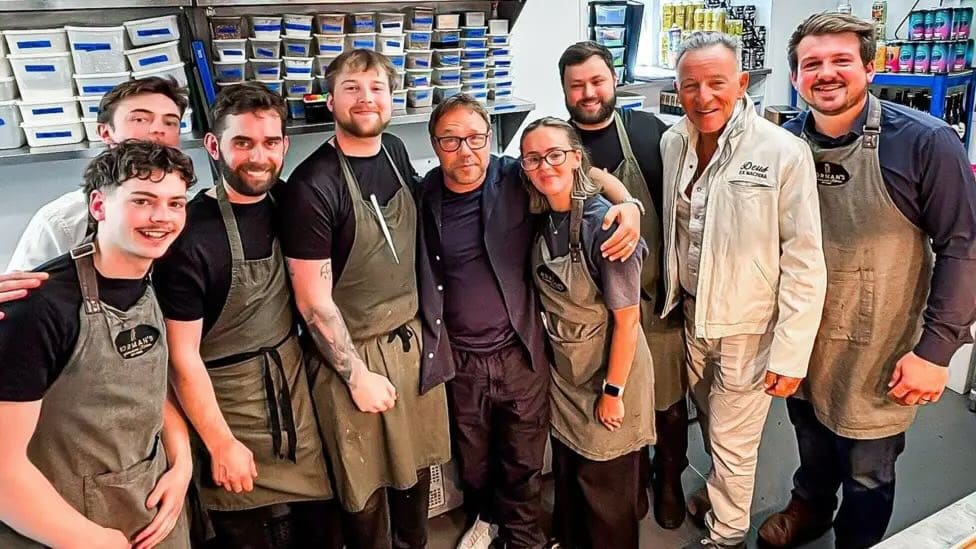
There’s certainly a state of the art Thermomix in constant use by chef Will Webster in Kirkburton’s prime dining spot, Norman’s Neighbourhood Kitchen, which was sprinkled with unexpected stardust in May when the touring Bruce Springsteen and his actor mate Stephen ‘Boiling Point’ Graham dropped in for lunch just days after it had gained its AA second rosette.
Among the small plates they ate was Isle of Wight tomatoes with sherry dressing, a pangrattato topping and wild garlic ice cream. Graham described it as “Mad Merlin Stuff”. I loved the dish too on my more recent visit; wild garlic being out of season, Thai basil was substituted in the soft scoop.
Isle of Wight tomatoesHouse focaccia to mop upthe juice
Celebrity trolling was not the reason for my lunch. I was catching up on a long-time recommendation from my friend, Amanda Wragg, Yorkshire Post restaurant reviewer, who had given Norman’s her Meal of the Year accolade in January. Just six months after Webster left Halifax’s Shibden Mill Inn to join former front of house colleague Ollie Roberts. The pair now have a four-strong kitchen, all of whom appear to be partial to snacking on Monster Munch (more later). Whether the restaurant dog Norman also gets a treat, I’m not quite sure.
This is not just about me playing catch-up. The day after my visit that same Yorkshire Post published a piece trumpeting how trendy and prosperous the village is these days. And Norman’s is not alone as a food mecca. Folk queue every day for the puff pastry heritage meat sausage rolls at celebrity chef Tim Bilton’s upmarket Butcher’s Larder further down North Road. To think, I’d always hurtled along Penistone Road past the Kirkburton turn-off.
My flaking halibutChicken skin fudge
Similarly, I’d tended to ignore the Shibden Mill Inn, though it’s only a 40 minute drive from my home. I’d certainly never associated its top-end dinner menu with the word playful. Will, who spent most of his six years there as head chef, has found new creativity with a smaller team to juggle ideas with.
Hence the creation of Pickled Onion Monster Munch Beurre Blanc (got there at last). If a current dessert – white chocolate and salty chicken skin fudge – sounds wacky it follows in the footsteps of a signature sauce based on a kids’ snack shaped like monster claws.
“The pickled onion version was the most popular snack among the team,” says Will. “That’s the inspiration. We played with crushing them, adding onion powder and a touch of extra vinegar and it worked. Extra flavour came from diced pancetta and charred sweetcorn… the Munches are corn-based.”
My beef tartare pieThe rich, rich tartiflette
Stone bass and clams have previously benefited from its gorgeous, gloopy intensity. Flakey halibut was my dish on the day – dish of the day. I overdosed on bacon and creaminess by also ordering a tartiflette, a favourite potato dish of mine that perhaps belonged more to an Alpine ski resort than sweltering midsummer Yorkshire. A prawn crudo with strawberry, elderflower and more chicken skin might have fitted the bill better.
I don’t regret, though, the nibble I ordered with my glass of Sicilian white Grillo (from a well-chosen, well-priced list). It’s a swallow-in-one but deserves to be savoured, the tiny rare beef tart with mushroom xo sauce and a whoosh of shredded horseradish.
Bill delivered via Cool Runnings VHSThe dog of the house
I squeezed a walk-in counter in the window; the rest of the 40 cover dining room was full. Mostly a demographic that could probably recall when Monster Munch was a new snack craze and this had been the industrial West Riding.
For corn snack completists Wikipedia offers a comprehensive history of Monster Munch, briefly called ‘The Prime Monster’, majoring on mega bag size. In brief, though, four monsters were created in contrasting colours with varying amounts of arms and eyes. Each representing a different flavour. Even after Walkers Crisps took over the brand Pickled Onion remained the pick as it does to this day. Confession: I’ve never tasted a Monster Munch.
The Pink Gibson brings a touch of Monster Munch to Hawksmoor
The closest I have come till now was when upmarket steak house Hawksmoor revamped their cocktail list last October. My favourite among the newcomers was ‘The Pink Gibson’, their take on a dry martini that substitutes a pickled onion for an olive as garnish. Boatyard Vodka, Audemus Umami gin, Aperitivo Co dry vermouth and pink pickled onion juices were the new version’s constituents. Hawksmoor’s head of bars Liam Davy rhapsodised: “It’s a classic dry martini which we have found a way of making taste like a pickled onion Monster Munch…it’s an incredibly refreshing quite savoury drink.”
So there’s a trend going. “Monster, monster” as that football agent geezer Eric Hall used to say.
Norman’s Neighbourhood Kitchen, 22A North Rd, Kirkburton, Huddersfield HD8 0RH. #Good Food Guide 100 Best Local Restaurants. Norman’s is shut for its annual break from August 23, reopening on September 9.
Golden fruit of the gods is the Hellenic sobriquet for the quince. I don’t know the Greek for knobbly but this hard fruit inevitably is that, just as its raw interior tastes tart and astringent, belying the heavenly scent from its skin. Cooking transforms it. So too distilling squeezes out something quite remarkable.
All this occupies my thoughts in a small plates bistro just off Columbia Road Flower Market in Bethnal Green as I sip a quince eau de vie made by Capreolus. Its yellow hue mirrors the mother fruit’s surface, the scent almost tropical with a lingering juicy taste unusual in a 43% spirit. It has been poured by the distillery’s founder Barney Wilzcak (who with his professional photographer hat on took the quince picture above). Barney describes it as ““possibly the most ethereal fruit we work with, astonishing in its nuance and elegance.”
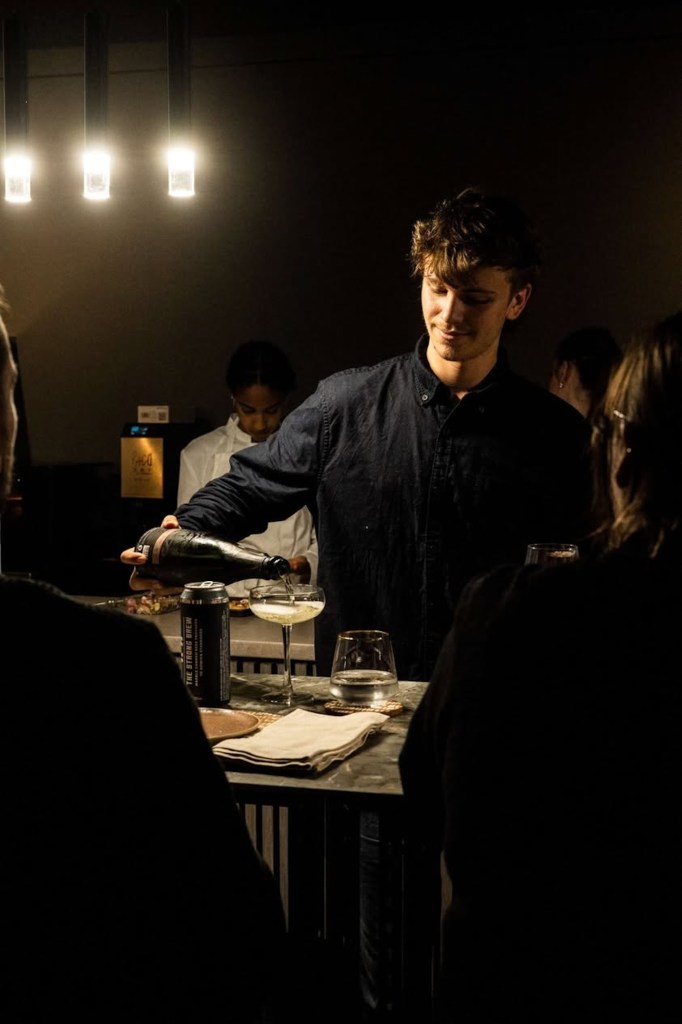
Laurent Cazottes at BrawnBarney pours a glorious sample
At Brawn I am a guest of Les Caves de Pyrene, best known as natural wine specialists but this trade tasting puts the spotlight on four other artisan drinks makers on their roster. Three have come over from France – Caroline Rozes (Armagnac Laurensan), vermouth specialist Jean-luc Carrozes (Vinmouth) and Laurent Cazottes, whose biodynamic estate in Southern France produces grapes, fruits, flowers, grains, and plants from which he fashions wines, spirits and liqueurs. A tomato liqueur was particularly astonishing. You can see why his wares can be found on Michelin restaurant digestif lists across France and beyond (you’ll find several examples at lovely Bavette Bistro in Horsforth near Leeds).
A new organic orchard of their own for Capreolus
All Laurent’s samples taste exquisite, but I am here primarily for the fourth exhibitor, Capreolus. Seven of their eau de vies are on the (low intervention) list at Manchester’s Higher Ground– at between £9 and £16 a 25ml measure. Lunching there a fortnight before my Caves de Pyrene date I mentioned it to the restaurant’s Daniel and Ana. And – curse them! – they were just days away from a private visit to the distillery in deepest Gloucestershire. When next winter Higher Ground opens Bar Shrimp next door they are promising a special collaboration with Capreolus.
Thanks, Ana, for the promised picture of Barney on site and his new quince tree project. In his March newsletter he had revealed that after a two and a half year search Capreolus had purchased some five acres of lowland hay meadow, where they had planted 252 quince trees, representing four varieties never grown commercially in the UK before. A big welcome then to Ispolinskaja, Turunchukskaja (both Ukrainian), Limon Ayvasi (Turkish) and Cydora Robusta (German). The trees, one year old and eight feet tall when they arrived, are interspersed with crab apple trees for diversity’s sake. It is one of the largest UK quince orchards, but the plan is to restrict yields to five tons annually, a third of a commercial crop target.
It will plug a gap in their commitment to their own immediate terroir. At the moment this is the only fruit they buy in regularly from outside a 35 mile radius of their base at Stratton near Cirencester.
James and Susanna at Little PomonaTheir expression of quince
Foxwhelp is an awkward orchard customer but what a collab
Little Pomona Cider and Perry Millis also outside that radius, lying 55 miles north west in Herefordshire. It’s a luminous spot that I have visited. That was just a few months before co-founder Susanna Forbes succumbed to cancer. We spent three fascinating hours in the company of her and husband James sampling their acclaimed boundary-pushing ciders and perries.
The pair came from a background in wine (James) and drinks journalism (Susanna) and across their range have not been afraid to incorporate hops, cherries and (you guessed it) quinces. Their ‘Still Life with Quince’ is an intense blend of barrel-aged cider and quince wine.
But when it came to a long-mooted collaboration with Capreolus their contribution was a single varietal cider made from an uncompromising apple called Foxwhelp. How come the evocative name? One cider apple historian attributes it to originating near a fox’s den where the cubs or whelps would play with the windfalls. Jury’s out.
Tannic and lashingly acidic, producing ciders with great ageing capacity, Foxwhelp has been around since the 17th century with its own hardcore admirers willing to pay premium prices. Susanna called it “the Riesling of the apple world”. Little Pomona have respected its qualities by barrel-ageing successive vintages in a solera system, akin to sherry making. Was this blend the base for 2022 Capreolus? I never get to ask at a crowded Brawn.
The Foxwhelp collaboration Evocative raspberry eau de vie
I do know some of what to expect when I taste the 2022 Capreolus x Little Pomona Foxwhelp Cider Eau-de-Vie (43%) and there it is – that mind-blowing aroma of wild strawberry and blood orange typical of the cider version. That strawberry rush continues on to the palate alongside a rounded appliness, as you’d expect. The concentration is down to wild yeast fermentation of meticulously sorted low-yielding fruits, preserving up to 45kg of fruit in each finished litre. Labour intensive isn’t the half of it for Barney and his partner Hannah Morrison. There’s a small child and dog to share the adventure, which began when he abandoned his job as a conservation issues photographer to develop the distillery on his family’s land.
His talent with words is evident too: “What enchanted me was how this elegant way of working, this capturing of pure essence, revealed so much. What I discovered was something that not only isolated a moment of peak ripeness but transported me to the parent plants and landscape in which I was raised.
“The elevation of flavours imperceptible in the raw fruit took me to standing in 300 year old perry pear orchards. The aroma of a Blackberry Eau de Vie to the autumnal warmth of the sun. The synesthetic link of aroma and flavour is something where language consistently fails.”
It sounds idyllic but to reach this point where their spirits (including a lovely gin) can command such high prices in prestigious places has taken prodigious efforts. Still there remains an idyllic aspect to housing two copper stills in an old lean-to greenhouse. Roe deer roam this land, hence the distillery borrowing the latin name for the breed: Capreolus Capreolus. “Delicate, slipping away, this animal is a constant accompaniment to picking in the surrounding countryside, a reminder of the fleeting nature of what we are trying to preserve.”
Barney has written an illuminating, evocative account of Capreolus for the Caves de Pyrenes blog. Do check it out.
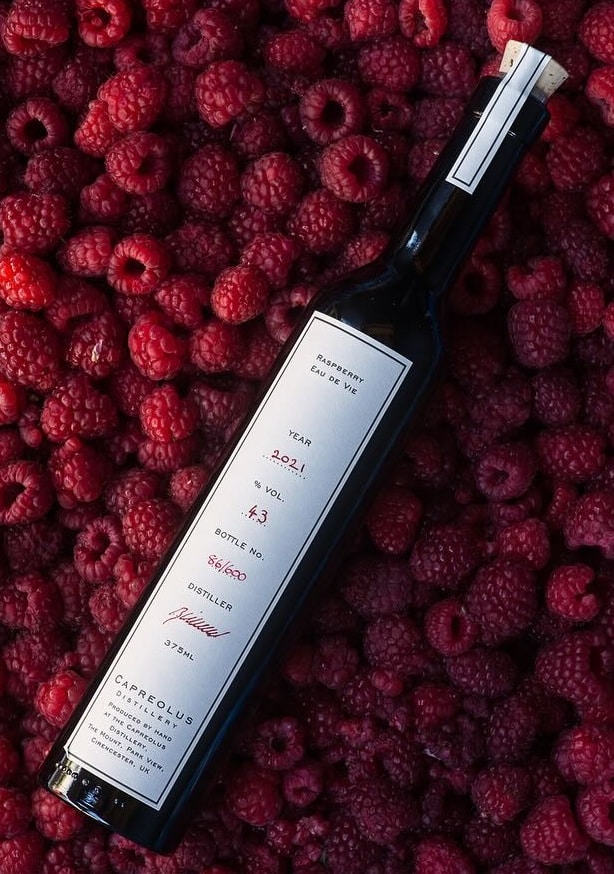
“In 2022, with my daughter 8 weeks old and bouncing beneath a tree in the garden where we work, we touched every single fruit of 3,000,000 raspberries as fingers felt for flaws and removed every single leaf, stem and hull. In the resulting eau de vie you can smell 1,000 seeds in your glass, crushed mint and raspberry leaf, lemon zest, and yes, the perfume of the most perfect fruit enveloping you – it is as if you were stood amongst the plants themselves.”
As I sip that particular spirit in the urban sprawl of East London I feel transported to the perfumed orchards of Gloucestershire.
https://i0.wp.com/www.neilsowerby.co.uk/wp-content/uploads/2025/07/Quince.jpeg?fit=1300%2C865&ssl=18651300Neil Sowerbyhttps://www.neilsowerby.co.uk/wp-content/uploads/2022/11/NS-typemark-v1c.pngNeil Sowerby2025-08-16 10:24:002025-10-17 14:37:50Capreolus – distilling the ethereal essence of the mighty quince
IT’S the 25th anniversary of Anthony Bourdain’s Kitchen Confidential, which lifted the lid on the boiling point world of high testosterone professional kitchens. It remains a riveting, rock and roll read, but the complete invisibility of the ‘gentler sex’ still rankles.
By the time he was a globe-trotting telly phenomenon Bourdain was renouncing that macho persona. In one 2017 magazine interview he admitted: “I found myself in this very old, very, frankly, phallocentric, very oppressive system and I was proud of myself for surviving it,”
Fast forward to 2025 and there’s still a market for dishing the dirt on kitchens’ steamy, dark side. Slutty Cheff’s anonymous Instagram account has 43,000 followers for its tales of sex, drugs and chicken breasts. There’s a book out and maybe a film to follow.
Each to his (or her) own. I’d recommend instead last year’s A Woman’s Place is in the Kitchen by high-flier Sally Abé, which “lifts the lid etc” from a feminist perspective. Calling out continuing discrimination against women in the industry, her autobiography hit a raw nerve. Not that it deterred white male superstar chef Jason Atherton from declaring in a February interview: “I haven’t seen sexism in the kitchen.”
This tone-deaf dismissal sparked an open letter from 70 prominent women chefs calling for an end to sexism in hospitality. Signatories included Abé and leading North West chefs Stosie Madri (Parker’s Arms) and Mary-Ellen McTague (Pip). Less than a week before, the 2025 Michelin UK Awards in Glasgow had paraded on stage the 22 new one-star chefs; only one, Emily Roux, was a woman and she had accidentally been fitted with a male chef’s jacket, it turned out. A compensatory video featuring female kitchen experiences was embarrassing.
The workplace numbers do tell a tale, though. Just 13 per cent of kitchen staff are women; under half that in the Michelin sector.
Rosie Maguire at Higher GroundSeri Nam (right) and Flawd manager Meg Williams
Thankfully this perceived talent imbalance is all bollocks (if you can bear with the gender-led expletive)
Maybe too sweeping a statement, but this article has been inspired by a new generation of talented chefs who are heading up the kitchens of many of Manchester’s finest indie restaurants. Take Higher Ground’sRosie Maguire. Just two years after joining (from Michelin-starred Mana) the 27-year-old was appointed Head Chef and this year was shortlisted for Chef to Watch at the National Restaurant Awards. She was also on Code Hospitality’s ’30 Most Influential Young People In Hospitality’ list.
Her grill expertise combines with an extra-curricular project studying and recording the Dexter beef breed the restaurant sources from Jane’s Farm. Further Higher Ground commitment to female talent is evidenced at their natural wine bar offshoot Flawd, where Korean head chef Seri Nam uses advanced fermentation techniques for her small plates menu.
Eight female head chefs tell it how it is…
To gauge their career experiences I have interviewed a cross section of female head chefs around Manchester: Mary-Ellen McTague (Pip at Treehouse Hotel), Ruby Jary (Madre Group), Jessica Furniss (Where The Light Gets In), Caroline Martins (SAMPA Project), Rachel Stockley (formerly of Baratxuri and another sexism letter signatory), Beth Hammond (Tawny Stores), Fabiola Bonacci (Tast Catala) and Alison Beardsley who, as Harvey Nichols head chef Alison Seagrave, was the first female Chef of the Year (2007) in the Manchester Food and Drink Awards. The only others to scoop the award are Mary-Ellen (twice) and Rachel.
And did you fall in love with food by your mother’s stove?
What follows are snapshots of their answers to issues I raised. The questions ranged from… How did you start in hospitality? Has being a woman made it harder to succeed? Have you encountered sexism? Is all this changing? Why suddenly so many female head chefs? As one, are you committed to easing your team’s work/life burden? Which chefs have inspired you along the way? Does Michelin matter? Most embarrassing kitchen moment? Your style of cooking/signature dish? Top kitchen tip? What do you like to eat off-duty? Hospitality is an a perilous state – what can be done to rescue it?
MARY-ELLEN McTAGUE
46, started her career at Sharrow Bay in the Lakes, then worked for Heston Blumenthal at the Fat Duck, Bray. After Ramson’s in Ramsbottom, she opened Aumbry in her home patch of Prestwich, The Creameries in Chorlton and is now exec chef of Pip in Manchester’s newest hotel, Treehouse. She is co-founder of Eat Well MCR, a hospitality collective that has delivered over 130,000 meals to people sidelined by poverty.
Is the head chef trend encouraging?
I think if you look at London there’s a similar pattern in the last 10 to 15 years, more female head chefs and more diversity in general. Which is good. Possibly it may be more a city thing. Really, anti-social hours is a big issue. We are busier in the evenings and at weekends. You can’t access normal child care if you’ve got children unless you’ve got family who live close by. My Auntie Steph is currently picking up my son from school and then collecting his prescription.
Fairer conditions?
It’s still a struggle. What’s good about working for a big company like this (Treehouse Hotels) is the financial burden is on the company and the requirement to create reasonable working conditions. When you’re an independent it’s really hard, the margins are so squeezed in cooking. When we first opened Aumbry VAT was 12.5 per cent and that was really hard but just about doable. The economics make it hard for a small business to be as flexible with staff as they would want to be.
Harder to succeed?
Oh yeah, you had to suppress things, show no weakness, work twice as hard, be twice as good as your male peers to get half the recognition. The Fat Duck was the only kitchen where there was at least one other woman. Heston was a really good boss and I didn’t feel I was being treated any differently from the boys.
At least these days most young women working in kitchens expect there to be other women around. When I started (at Sharrow Bay) it was “what fresh hell is this? They had never had a woman in the kitchen before. It was 25 years ago. When you talk to chefs like Ruby and Rose they’re a different generation. They’ve got a whole different perspective. It’s ridiculous to say there’s no sexism in kitchens but hopefully they will have experienced less.
Even now only a quarter of my brigade here is female. The more women there are in kitchens the better it will be for all women in kitchens.
What made the early days so bad?
There were a number of things that shocked me. One was how hard it was. I thought I’d worked hard in housekeeping, front of house but the kitchen felt absolutely like a baptism of fire. Thew tolerance of working in hot conditions, hunger, needing the toilet, completely ignoring any of your own physical needs. I was like ‘wow this is mad’.
There were three head chefs. Two of them took a year to speak to me directly. It was always via other chefs. Like having an alien in the kitchen. Obviously in those days I was completely useless, a total waste of space. Eventually it was fine when I became a needed member of the team; I moved up as people left.
Have you shouted at staff?
Yes, I try not to. It’s not an edifying thing that you are so stressed you are shouting at someone. As you get more experienced you see trouble coming. Nowadays I try to be a more mentoring figure.
Most embarrassing moment?
It was at the Fat Duck. I was on the section where we did foie gras and duck liver parfait. I went to take my next parfait out of the fridge to start plating up and it was an empty terrine mould. Someone had just put it back in the fridge and I should have checked. We’d already had one order and for Heston this happening was an absolute no-no.
At that time he had a little bistro at Bray Marina; they also had parfait. He called them and they brought some up. It was like Fawlty Towers. He looked at it and said “we can’t serve this/“ They then got balled out. So I not only got myself in bother but a whole other team too. They hated me.
I thought this was game over, that’ll be me out of the door. I’d been there just three months. Perhaps I was so devastated they couldn’t bear to fire me. If I’d got sacked it could have changed the course of my life. That’s the one I think about at 3am.
RUBY JARY
English-born, 26, started at 19 as a commis in her sister’s Galway restaurant Ruibin. She trained in pastry at the university there, then worked in East London for three years, mostly at Manteca but also at Sager & Wilde. She moved to Madre in Manchester and went on to open Medlock Canteen, which sadly shut last month. She has just taken on an exec chef role under Madre founder Sam Grainger.
x
Why so many women head chefs suddenly? Down to a new wave restaurant culture?
I don’t necessarily think it’s ‘so many’ as women in the industry are still few and far between. I also don’t think there is any one particular reason that women are taking on head chef roles other than them being extremely talented as chefs rather than having anything to do with gender.
New wave? I think so because of the light that is being shone on the patriarchy in general and not just in the kitchen. I’d like to think that has filtered into restaurants and kitchens. This shift isn’t just a trend, it’s the result of women challenging a male-dominated kitchen culture for years.
Women are finally leading, innovating, and owning their space. It’s not just appreciation, it’s reclamation. I think it would be wrong of me to say I don’t have Michelin star ambitions but I don’t want them anywhere near me just yet! It is certainly an end goal for me, but I have a lot of ‘side quests’ to complete in my career first.
First job?
Working for my sister in her newly opened restaurant, I was blessed as not only is she my sister but as a teacher and a head chef she is the most kind, amazing mentor I could’ve asked for. No first job in a kitchen is ever easy but I couldn’t have had a better first environment.
Have you encountered sexism?
Of course. That’s just part and parcel of being a woman. I absolutely regard sexism as a problem and wouldn’t be the loud feminist I am if I didn’t. There are so many things fundamentally wrong with that Jason Athertoninterview, and it undermines everything women and a lot of men have been fighting for to keep our work environments safe. Sometimes people don’t actually realise they are or have been sexist, and by saying ‘sexism doesn’t exist in the kitchen’ it really solidifies that lack of self-awareness.
As a head chef is it your aim to lower brigade stress?
I would say, yes, I’m committed to that. I always think that I could be better, we all could. I like to show my commitment to my team by asking them what they want to work as opposed to just throwing hours at them and this is then reflected in their contracts. Also keeping up to date on your knowledge with certain apps/websites that track your staffing hours/costs (ours physically puts them in the red for doing too many hours) is important too. If I want a work life balance and don’t want to work all the hours under the sun why should I expect my team to do it?
What sparked your love of food?
I got into food because I love to eat. It was really that simple. My family have always been big eaters and good cooks. My older sister is a chef for over 15 years and now a restaurant owner; you can find my older brother cooking with his Kamado and pizza oven in his garden all year round; my mum is the one who started that all for us and she got it from her mum. She taught me how to make my first loaves of bread (proofing on the radiator is a core memory for me).
Your chef inspirations?
It changes all the time. At the moment I absolutely love Josh (The Whole Fish) Niland. What that man does to fish is just absolute wizardry! Other big inspirations for me are Asma Khan of Darjeeling Express, where the team are women that are not trained chefs, Anna Higham (The Last Bite, ‘best book ever’) and Ixta Belfrage. On a day to day, my sister Alice and my partner Archie (sous chef at Winsome, Manchester) inspire me to do more and step up my game. I have a huge list of pastry ideas on my phone. Heaven knows when I can try them out.
Your style of cooking?
I would probably say sweet and heavy. I’m an absolute sucker for sweets and carbs. Its the pastry chef in me. My signature dish is probably the deep-fried rhubarb pie and custard from Medlock Canteen. Again it always changes with the seasons, but my favourite ingredient right now is a British strawberry. Unmatched. Off-duty I really love with all my being a good curry and rice. Whether it’s Dishoom, home-made, Indian, Chinese or Thai. Can’t go wrong.
Most embarrassing moment?
Oh god where do I start? The fact that quite a lot of generic chef trousers are made for men has led to me ripping more pairs than I’d like to admit – and yes, during service in an open kitchen.
Top kitchen tip?
A pre service freshen up! Travel face wash, mouthwash and baby wipes, and a fresh set of clothes is an absolute must if you’re in a kitchen that does lunch and dinner service.
How to rescue hospitality?
More help from our local councils and government. Hospitality is a vital part of our culture, and the support for small businesses just isn’t there – this also falls under the umbrella of what our British government is doing to our farmers. The poor farmers are being crucified from every angle, so they cannot afford to sell to small local business and are being forced to sell to corporate companies. Which means our prices as buyers are then being hiked, which means we then have to charge more and it becomes unaffordable for your local people to turn into regulars.
JESSICA FURNISS
29, born in South West London, in 2019 she moved up from Cornwall to Manchester to work at the Midland Hotel while completing a patisserie qualification before becoming head of pastry at Pollen Bakery. Next move was to run the pastry section at WTLGI in Stockport; after a year she was promoted to head chef.
Why this female trend?
There are some incredibly talented women working here, attracted by the opportunities that are on offer and Manchester’s entrepreneurial spirit. It’s great to see and to be one of these women who are being recognised for their tireless efforts, creativity and mentorship skills.
To build a successful restaurant you need a talented chef team and to really entice this talent you need to build the right environment: one where you can learn, explore, joke, teach and most importantly cook. And from where I’m sitting I see so many female head chefs that have cultivated this environment.
Many restaurants in Manchester are focusing on culinary excellence rather than trying to win accolades. Sadly in this current climate, a Michelin star can often be something that ends up restricting your ability to adapt and innovate your restaurant. With always the pressure of it being taken away and the consequences.
So no starry dreams?
I respect all it has done for hospitality globally and, to be recognised for a green Michelin star at WTLGI is certainly gratifying. However Michelin does not guide my ambitions. My priority is the restaurant, our suppliers, our guests and the supportive community we have built in Stockport, whether or not that leads to a star.
First job?
As a commis in a hotel in Surrey. That job was eye opening, it showed me just how difficult it can be to be taken seriously as a young woman. Especially as that was 10 years ago and the head chef’s mentality was not healthy nor inclusive. I remember feeling so lucky to have been given the opportunity to work with these rather gruff but talented men that I felt the instant need to prove myself. Growing up in kitchen environments like that is an experience often described as “character building”. However I am almost certain I had enough character to start with. Would I have rather someone listen to and nurture my curiosity rather than berate and make light of it? Of course. Am I glad I have managed to model my leadership on more progressive behaviours than this? Damn right.
Have you encountered sexism?
Of course, I have. Even though we may be in 2025 sexism in the workplace is still rife. The unfortunate (depending on how you see it) thing is that sexism has evolved; it’s an undertone, a background noise and a gut feeling rather than the incredibly obvious heckles of the past.
At the end of the day women in this industry will suffer from a lack of understanding. Our bodies change every 28 days, that’s 20 services to endure, 20 times you’ll mask and put on a brave face whilst hormones are wreaking havoc on your mind and body. I think the problem is a lack of education on the matter, if we understand these differences we will have the resources to deal with them.
Are you committed to easing that pressure?
Absolutely. I think if anyone has answered this with a ‘no’ then that undermines all our efforts, doesn’t it? The concept of your cooking being valued on your suffering has to a great degree been ‘glamourised’ by TV and media. But it’s outdated and unnecessary. We are all aware of the high-pressure environment a kitchen can be.
Having to create and prep dishes in tight time frames, all while spending almost the entirety of your waking day standing up. That, as far as I know, has and will not change dramatically. But if by encouraging my team to take their holidays, book that doctor’s appointment during the work week, stay at home if they are unwell and spend time together outside of work, then yes.
We should also prioritise making the time we spend in this profession a positive, healthy and balanced one. Luckily at WTLGI we have the Landing (rooftop market garden), which allows us to take some time away from the kitchen in the fresh air and feel connected to our food sources. To get our hands dirty, hopefully in the sun and remind ourselves of the beauty in what we do.
What sparked your food passion?
This romanticism of cooking as a child is a funny thing. But the tattered old chocolate chip cookie recipe card my family friend has too willingly got out after a few drinks would suggest I was lucky enough to have my curiosity with food well nurtured from a young age. My well-travelled parents would always encourage us to try things and we were blessed with some excellent culinary experiences early on. My connection to food is still very grounded by my father, often sharing our newest cheese discoveries in depth. Every Christmas, I treat him and my stepmother to a gift voucher for an excellently curated restaurant, and look forward to his feedback.
Chef inspiration?
Anna Higham – her use of seasonal ingredients is second to none. Her dessert book,The Last Bite, has some truly incredible bits of information and I loved what she brought to Lyle’s in London. Out of all the forced rhubarb and custard desserts I’ve ever had (and will), hers was the best. Such a beautiful use of the raw ingredient to achieve a wondrous mix of texture. The combination of rustic refinement and simplicity she does incredibly well.
Your style of cooking?
My style is very much based on my experience of bakeries, giving me a controlled but curious approach to food, driven by seasonality and a respect for the origins of our ingredients. My favourite ingredients are flour, butter and eggs. The differences each of those commodities offers in variation, there are endless possibilities.
Signature dish? I am most excited for the next dessert I’ll be putting on to highlight the Landing berries. The tayberries and loganberries have come early with the good weather, so I’ve collected them up and preserved them to coincide with wineberries later in the year.
I plan to make a refined British classic: The Summer Pudding. Making a tarragon sugar shokupan and soaking in the fermented tayberry juice. Picking (daily) and romantically placing the fresh wineberries. A roche of creamy woodruff infused sorbet with a pool of sheep’s cheese whey sauce. Complemented with crystallised white chocolate, some fresh herbs and blackcurrant leaf oil. (Let me know when it’s on the menu, Jess).
My days off food is influenced by how tired I may be. In an ideal world I would be brining and roasting a chicken every Sunday, but I think we’d all know that’s not happening. If I’m cooking it’ll be highly influenced by the selection at Unicorn, Chorlton that day.
Most embarrassing moment?
Not sure I can remember a certain moment. The kitchen feels like a very natural habitat for me so I don’t tend to get embarrassed easily. Coming into the open kitchen environment of WTLGI, having been recently diagnosed with AuDHD was quite daunting. Feeling like all 80 eyes were on you and the pressure of telling the story of our farmers, beekeepers, fishermen and friends all felt very overwhelming. But in getting to know these incredible people involved in our project, I feel nothing but pure delight using my passion to explain to our guests who they are, the challenges they may face and why they should be supported.
How to rescue hospitality?
The UK sector is facing incredible challenges primarily due to increased operational costs and reduced support from the government. Changes that would really help would be to address the increased national insurance contributions and the reduction of business relief rates, as well as providing some specific support for hospitality.
I fear these issues will be the nail in the coffin for many independents as rising energy prices and inflation are already contributing to a toxic environment. The industry cannot afford to absorb these increases. And passing the costs onto the consumer isn’t the solution either.
There are some longer-term solutions which could help reduce costs. Smart water and energy management, for example. But when most businesses are struggling now, with many not even having three months of cash reserves and any resilience to stay afloat, overall something needs to change.
CAROLINE MARTINS
39, from Brazil, trained as a plasma physicist but gave it up after appearing on MasterChef Brazil. She moved to London to gain a Cordon Bleu diploma, working at Michelin-starred establishments Kitchen Table at Bubbledogs, Galvin La Chapelle and Pied à Terre. She currently runs SAMPA, a chef’s table restaurant in Manchester’s Northern Quarter.
Why this head chef trend?
With all costs rising, loads of restaurants are having to decrease their opening times, changing working hours to save on utility bills but also creating a better work/life balance. As a result, women are more encouraged to stay and work their way up the brigade. When I started we used to work from 7:30am to 1am. There wasn’t any work-life balance, it was pushing women away, especially the ones thinking of having a family/husband, etc…
Michelin stars?
I have ambitions for this ‘elite’ because that’s how I was trained as a chef and for me it would mean the UK is finally opening up to Latin American cuisine.
But I don’t think accolades appreciate women in general. It made me really sad to see only a couple of female faces at the last Michelin ceremony. So many talented women chefs are not even on the radar of many of the big awards.
First job?
My first job was as a stagiaire (intern) at two-starred Trenkerstube in North Italy. I was the only female chef there, but everyone was so nice to me. I always noticed staff are treated much better in hotels. Maybe because they’ve got an HR department? Also, because I was fresh out of culinary school, the chefs really took their time to teach me. Italians do fine dining differently. It never felt draining.
Did you encounter sexism later?
Oh yes. Sexism is behind the reasons I left most places I’ve worked in fine dining.
If you’re a female, head chefs try to stick you in the pastry section. Not giving you a chance to learn the other sections. I even got the head chef at one Hackney place back in 2019, telling me that the barbecue “is not a woman’s section”, because “women’s skin is thinner than men’s skin and if there’s a burn, it would take longer to heal”.
At another, Michelin starred, London restaurant one former head chef used to make sexual comments about one of the girls in pastry, very nasty sexual jokes for everyone to hear. She used to go to the bathroom to cry. When we reported the matter it was all swept under the rug. I got really upset and left the job. Often as a commis chef I kept being placed to the most insignificant jobs folding dish cloths, making coffee, polishing the whole stainless steel kitchen with baby oil.
I got frustrated and quit.
Many of these chefs now hold important positions in the industry. It seems that hospitality rewards sexist behaviours like that. It pushes away female interest to join.
In contrast, an inspiration for you?
Chef James Knappett (of Kitchen Table, London). He taught us about ‘urban foraging’. We would go out on our days off to collect delicious ingredients, such as meadowsweet, elderflower, wild leek and pineapple weed. Then he would use his creativity to come up with the most delicious dishes.
How did you first get into food?
With my Portuguese grandmother Alice, making bread from starch, and with my father Marcos learning how to barbecue for family and friends.My favourite off-duty food remains rice, black beans, steak, farofa (cassava crumble) and iceberg lettuce and tomato salad. Plus my fermented dedo-de-moca chilli sauce on the side.
Your own food style?
Brazilian-British Fusion. I try to match the best British produce with Latin American vegetables and fruits, and Brazilian techniques. My signature dish is barbecued Orkney scallops served with heart-of-palm (the core of the palm tree) and a cassava mousseline.
Most embarrassing moment?
Recently: I was explaining a beef+sugar cane molasses sauce reduction for my guests at SAMPA chef’s table, while saucing their dishes in front of them. I got distracted and sauced a vegetarian lad’s main course (smoked tofu), while he was trying to ask me not to. Luckily he was a good sport and I had time to make him another main course.
How to rescue hospitality?
VAT is actually what is killing restaurants in this country. You’re demanded to charge your guests 20 per cnet on top of what it really costs, but when it’s time to fill in your VAT return, you don’t get anything back, because there’s no VAT to claim back in food Ingredients. The same does not happen in bars, as all alcohol purchases are VAT-included. Something needs to be done very fast, or restaurants will keep dropping like flies.
RACHEL STOCKLEY
37, she started out 13 years ago as an apprentice at the old Palace Hotel kitchens, then rose to become head chef of Baratxuri in Ramsbottom for five and a half years. Since then she has become a freelance chef/consultant and is currently a home economist on the BBC series, Great British Menu. She played a chef in the Beeb drama Boiling Point.
Why so many more women now in head chef roles?
I am totally oblivious to the fact that it’s ‘recently’. I feel like it’s been like that for years; it’s just the spotlight is being shone more on them now. When i was at Baratxuri, our sister restaurant, Levanter, was headed up by a brilliant head chef, Yvonne Lumb.
Michelin star ambitions?
No.
First kitchen job? Was it easy being a young woman?
I took a job as an apprentice commis at 23 years old at the Palace Hotel because I finally realised that cheffing was the only thing I would be half decent at. So maybe coming into the industry not wet behind the ears and with a little bit of life experience of working in hospitality since 15 helped me to understand what chefs would be like. I’d had some horrible experiences in that period but in my first chef job the kitchen was split almost equally male and female. My exec chef was so fair and mentored me so well that I have to credit him for being such a good role model and instilling those key good practices into my work ethic.
For the first few years in different jobs I encountered sexual harassment, sexism, racism, the lot. It was a pirate ship. But when you’re a teenager and these are your first few jobs, in systems where you’re at the bottom of a pile, you don’t see any way of complaining about it.
What sparked your food passion?
My mum and dad always cooked for me growing up, it was extremely rare to have takeaways – only fish and chips. I probably started helping to cook dinner at eight years old and continued until I could do it all myself and that felt so normal that it never occurred to me to do it as a career. Until two failed attempts at different degrees and years cooking for all my friends in Uni.
Career inspirations?
I think for me mostly it was my peers at work. When I was a commis or a chef de partie you’d be watching the chef above you and thinking, right, that’s what I need to do, to get to the next step. I never had grandeur expectations, I just wanted to be respected within my kitchen and thought upon as reliable and someone that could handle big services and pressure.
Your own style of cooking?
I suppose I have been known for Basque style cuisine and cooking over fire. I think in general seasonality remains key to everything I cook and my favourite ingredients, of course, change with the seasons. Off-duty I like to eat Thai, Filipino food and reaaaaaaally good pizza.
Most embarrassing moment?
Not embarrassing for me but…. I had customers once at Baratxuri thank me for their meal and then say ‘compliments to the Chef; tell HIM, HE’S amazing!’ I also had another set of customers asked if I’d previously worked in the Thai restaurant around the corner and after I I’d said no, insisted that I had.
How to rescue hospitality?
Substantial government changes. It’s action right from the very top.
BETH HAMMOND
34, after travelling for much of her early twenties she started working for Richard Carver of Honest Crust, running his Little Window offshoot at Altrincham Market. She later joined the team at Flawd before creating the dining menu at Stockport’s Yellowhammer, bakery project of Where The Light Gets In. A year ago she realised her dream of launching her own casual destination, Tawny Stores in Marple (with an 80 per cent female team).
Why the female trend?
I think a big part of it is the kind of restaurants being built here are smaller, owner-led, value-driven spaces that are less about hierarchy and more about collaboration. That makes space for women to lead without having to mirror an old school ‘chef’ persona. Manchester’s food culture feels like it’s moving forward, even if awards culture still lags behind.
Michelin star ambitions?
Not really. I love great food and consistency, but the pressures that come with that world don’t interest me. I care more about creating a kitchen that people enjoy working in, that puts out beautiful plates without breaking people.
Have you encountered sexism?
I’ve had my skills questioned, been talked over, ignored, and been called ‘bossy’ when leading a team. It’s not every kitchen, but it’s common enough to still be a real problem. I’ve always been quite selective in places I have worked, looking for female-led spaces and kitchens (like Flawd) that appreciate work ethic.
I have a lot of women working for me and do believe women are more drawn to female led,-owned business to be heard and seen, and understood with life balances with children. No one should have to burn out to be taken seriously. We work hard, but I try to build in balance, fair rotas, breaks, time off. You can make good food without having to glorifying the stress that comes with it.
What sparked your food passion?
We are a family of foodies, Grandparents great cooks, Mother is a great cook, we used to come home from school and food network would be on the TV, my sister is a chef now living in New York and my other sister works with food as a developer at the Co-op.
Chef inspirations?
I love Flawed head chef Seri’s style of food and love that she has such skill, which comes from her Korean heritage, and then uses the ingredients available to her with these techniques. More well-known chefs, Gill Meller and Anna Tobias, cooks who let ingredients speak, who value simplicity, seasonality, and a sense of place.
Your own cooking style?
Seasonal, produce-led, no fuss. I would credit Richard Carver for this, who taught me the value of really good quality ingredients and that if you have amazing ingredients you really don’t need to do much to make them taste amazing. I do love Asian food from my travels, which often creeps into my dishes. I am often aware of my white privilege and don’t feel comfortable ‘elevating’ other people’s food which isn’t my own. So influence only and recognition. Off-duty dining? Thai, Vietnamese and Korean.
Most embarrassing moment?
Splitting the custard as my first task when I did a week at Where the Light Gets In.
How to rescue hospitality?
VAT being one of the biggest things to change, the model does not work for hospitality, especially for establishments who are always using non-rated products. People have to understand the rising costs for businesses and recognise why places are having to put up their prices.
FABIOLA BONACCI
36, after studying for a maths degree this Italian chef kicked of her career as an events chef in Pisa before, at 24, moving to Tarragon and Reus, where she mastered Catalan cuisine. After a spell in Germany she moved to London in the midst of Covid and rose to be head chef at tapas bastion Barrafina in Covent Garden. Tast Catala, Manchester outpost of Michelin-starred Catalan chef Paco Pena, is her next big career step. The majority of the menu is Paco dishes; she contributes weekend specials and her own signature dinners.
How has being female affected your career?
I had a lot of discrimination, from Spain to the UK. In Spain, one summer, I was working all week, without day off, from morning until night and my salary was less than the male chef who had my same duties and role. In the UK in 2022, when I came back from maternity leave, I found out that all the other male head chefs of the company (I was the only female) had a raise of salary while I didn’t get one. They also assigned another male head chef who was still on probation as my superior when, based on seniority, he should have responded to me. Honestly, sometimes it is quite hard to combine work and personal life, but I make it work.
What sparked your food passion?
I started to be at the stove when I was very little. I used to cook with my mum and grandma, and I fell in love with the smell, sound and flavours of the kitchen.
Chef inspirations?
Italian chefs like Massimo Bottura, Carlo Cracco, Antonino Cannavacciuolo. I watched how they work, their different styles and found them fascinating.
Michelin star ambitions?
In the past I was a bit more obsessed with stars. Now it would be wonderful to win one, but I’m enjoying my job as it is.
Your own cooking style?
I call my style ‘Spanian’, a mix between Italian and Spanish food. Mediterranean ingredients are my favourite, simple and tasty. And my comfort food, you guessed, Italian recipes.
ALISON BEARDSLEY
51, worked on a Bury Market butcher’s stall from the age of 13 and at 19 went straight from Hopwood Hall College, Rochdale to London, working as a pastry commis in a string of elite kitchens – including the Berkeley under the legendary John Williams, whose Ritz dining room is the current UK Restaurant of the Year. In 2003 she moved back to Manchester to open Harvey Nichols Second Floor, three years later promoted to executive chef. In 2009 she quit to open Macaroon by Alison Seagrave, a shop/cafe in Bamford. These days, with a family, she runs her acclaimed online bakeryMacaroon by Alison Seagravefrom home. Do check it out.
Why this female trend?
Because of their talent.
First job? Was it easy being a young woman?
It was the SAS Portman hotel, Marble Arch and I was just 19. It was around a 70/30 men/women split. My immediate team was two women and one man, so I had a good introduction into work life. I think I was lucky, I’ve always had great teams around me that all included women (including back at Bury Market).
Have you encountered sexism?
Yes of course. I’m a woman and sexism is everywhere, not just in kitchens.
I have always worked in a male-dominated industry, so I’m totally used to it. That doesn’t make it OK, but I’ve grown up with it all around me, so I know how to handle it. As head chef I used to give the brigade cans of full fat coke and bars of chocolate to get through busy shifts.
What sparked your food passion?
My Nan was a great cook/baker. I loved watching her and sometimes helping. We always went out to nice restaurants for family birthdays and celebrations. I was used to eating out from an early age and have always loved it.
Your comfort food?
I like simple home-cooked food like pies, chilli and curry and I love my slow cooker. I don’t own an air fryer yet.
Top kitchen tip?
When juicing a lemon, place it whole in the microwave for 30 seconds. You’ll get double the amount of juice.
How to rescue hospitality?
Its the cost of living crisis thats the problem, sky-high rent, rates and ingredient costs. We all feel it when grocery shopping. We all have less money to spend. I don’t go out for dinner as much, but I still want to go out. So it’s more cafes instead of restaurants, coffee, cake and breakfast instead as that’s cheaper. We still need to socialise and have treats but with a lower spend.
• Apologies to other Manchester head chefs not interviewed such as Lucie Sainerova at Australasia, Georgie Tamara Hewitt at MAYA and Danielle Heron of OSMA, all of whom are doing amazing jobs.
https://i0.wp.com/www.neilsowerby.co.uk/wp-content/uploads/2025/07/Jess-as-main-1.jpg?fit=1595%2C965&ssl=19651595Neil Sowerbyhttps://www.neilsowerby.co.uk/wp-content/uploads/2022/11/NS-typemark-v1c.pngNeil Sowerby2025-08-16 06:47:002025-10-17 14:39:49In their own words: why female head chefs are flourishing around Manchester…
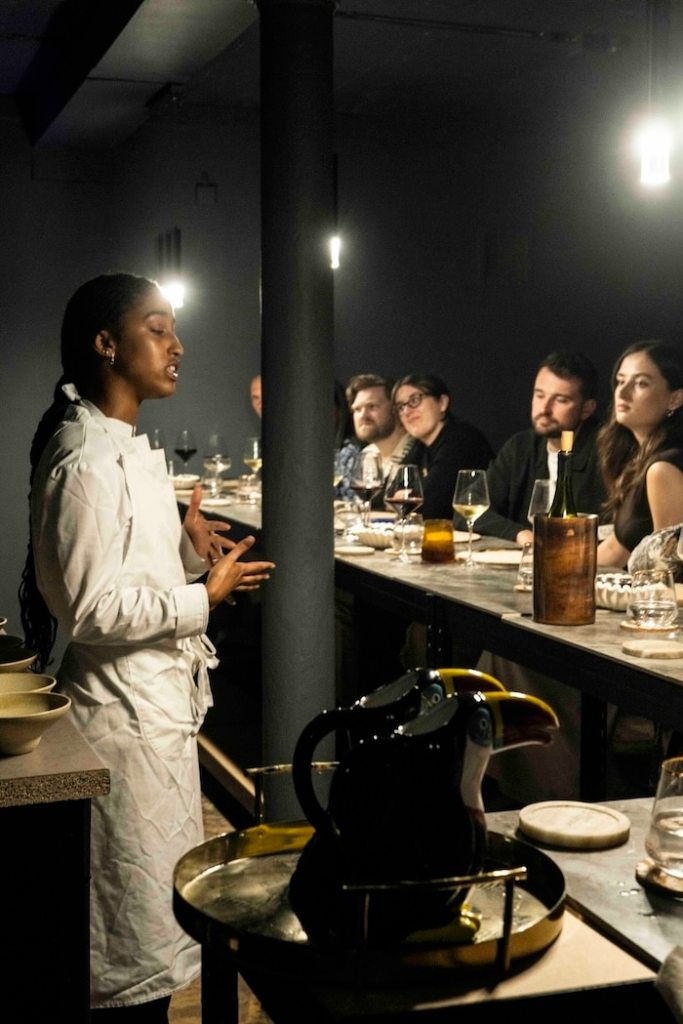
The underground world of SAMPA Chef’s Table is full of exotic flourishes. A Brazilian wonderland of toucan water jugs and vivid pink flamingo receptacles for your pre-dessert cashew apple ice lolly. That’s before chef patron Caroline Martins’s signature abstract expressionist finale – scrawls of coconut yoghurt, basil custard and mango across a slate, to be topped with meringue. That this performance takes place in a penumbral secret location in Manchester’s Northern Quarter adds to the sense of delightful disorientation.
A further mind scrambler. Where else in the UK would your pairing consist entirely of Brazilian wines? Former Great British Menu contender Caroline proudly flies the green, yellow and blue flag of her native land in thequality of ingredients she imports, so why not do the same with the wine list?
Compared with South American cousins Argentina and Chile, Brazil as South America’s third largest wine producer is almost as much a mystery as the new SAMPA venue. Hard to remember a bottle on our supermarket shelves – despite Brazil boasting more vineyard area than New Zealand.
A vinous voyage into the dark
Book a SAMPA dinner and you’ll get the location sent to you just pre-arrival. Presumably the same applied to the intrepid wine lovers who had signed up for a tutored tasting in the afternoon ahead of our evening meal. It was hosted by Go Brazil Wines’ Nicholas Corfe, who later poured his wares for us. He has championed the cause – along with national spirit cachaça – from his Suffolk base for 15 years. He cherry picks from small producers in the southernmost state of Rio Grande do Sul.
Vines were first planted in Brazil by the Portuguese in the 16th century. Then, in the 19th, came Italian immigrants, mainly from the Trento and Veneto regions of the north-east. In the Seventies an international player, Moët & Chandon, arrived to introduce modern vinification techniques.
There was nothing rustic about the four wine matches at SAMPA. What did I make of them?
The dinner was bookended by two sparklers, Amadeu Laranja Nature Traditional Method 2020 and a Don Guerino Moscatel NV 2022, the former on the orange spectrum, the result of extended maceration, refreshing and surprising complex, the latter a sweetie with counterbalancing acidity, weighing in at just 7.5. per cent ABV.
I enjoyed both, but had less joy from Pizzato Sauvignon Blanc 2024. Grassy on the nose, it promised more than it delivered, its tropical fruit muted, the mouthfeel quite coarse.
The Pizzato vineyardsNervi is their red flagship
In contrast a red from the same Serra Gaúcha-based winery, the Pizzato Nervi Reserva Tannat 2020 was a terrific example of a heady grape variety associated with Madiran in South West France. Uruguay has proved a natural home for it in South America, but, based on this example, Brazil is giving it a run for its money.
From the great 2020 vintage, it has been aged for 11 months in new French oak barrels. Result: concentrated dark fruit and spice, soft tannins, a hint of leather perhaps. It would have coped well with a meatier main than Caroline’s (delightful) galinhada chicken.
Pizzato own 45 hectares of vines split between their original Vale dos Vinhedos (Valley of the Vineyards) estate and the newer Dois Lajeados. The vines for Nervi are 25 years old, from the first plantings after the family switched from supplying grapes to big wineries to becoming an independent producer. Such a wine vindicates that bold decision.
Has maverick Martins found her perfect base?
Caroline Martins has made quite an impression since landing in Manchester some five years ago with husband Tim (who marshalled the troops brilliantly at the latest launch). She famously swapped a globetrotting career as a plasma physicist to go on Masterchef Brazil and train at Le Cordon Bleu in London. Check out the highs and lows of her career path in my recent interview with her, ‘Why female head chefs are flourishing around Manchester’.
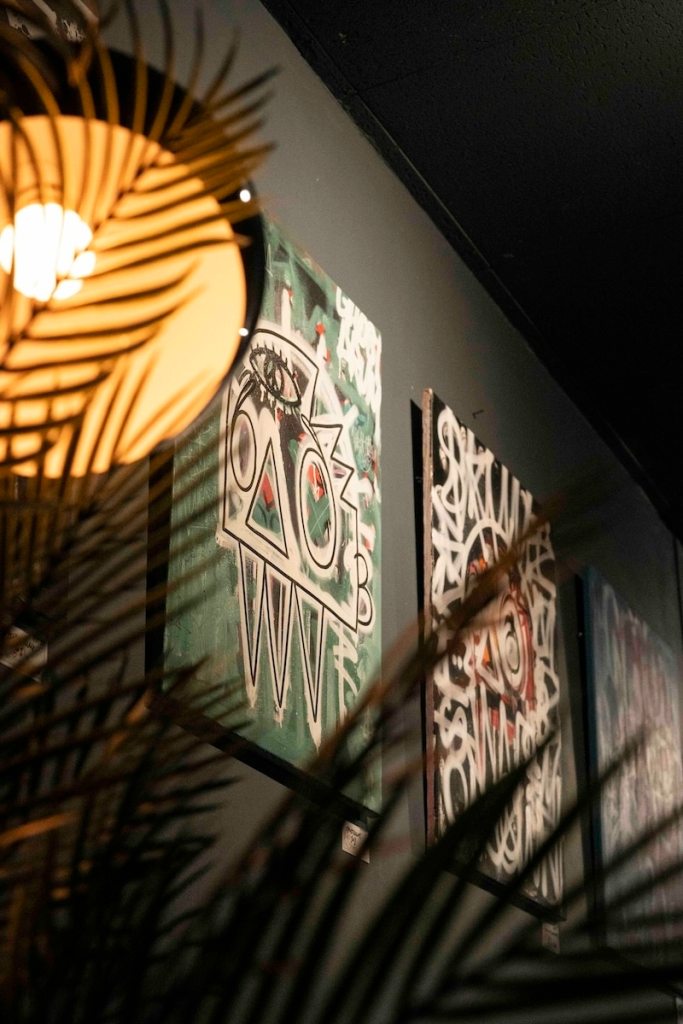
A trajectory that has encompassed numerous Brazilian-British fusion pop-ups led her to the unlikely Northern Quarter combo of Calcio Sports Bar on Dale Street with Chef’s Table experience for just eight folk in the cellar. It was a fine dining homage to the food of São Paulo (Sampa is its colloquial name). Now she has found a new home for her project, spacious enough to almost double her covers and include its own art gallery. The current exhibition, ‘Saudade’ is by one Pete Obsolete (below).
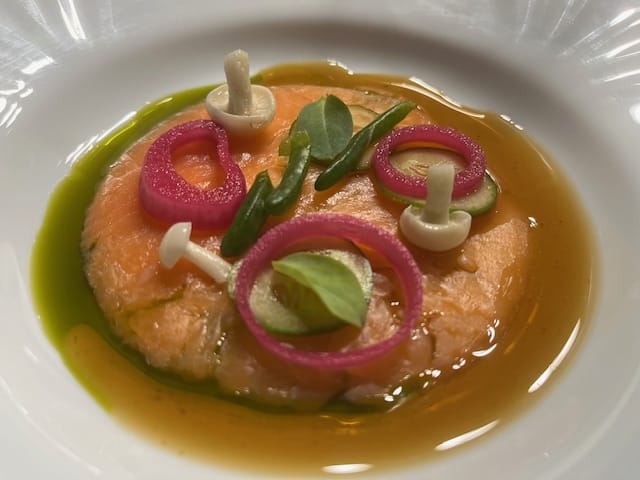
Caroline continues to refine her playful food offering. I particularly loved the laranja lima (a chalkstream trout carpaccio) and the ‘Garstang white cheese with fig leaf and Dan and The Bees honey, both evidence of our immaculate British sourcing.
PS Beware the potent Brazilian chilli that lurks among the snack starters of pineapple and pickles. Diito the fiery yellow dip with the pichanha tartare. Oh and prepare for a slight fuggy atmosphere in the underground lair. Caroline does love blow torches and smoking dishes!
A 12 course tasting menu comes in at a remarkably good value £58 (£69.60 inc VAT). The drinks pairing is £48. For £30 you can bravely match the dishes with a range of Cachaças. Book here.
“Fly me to the moon, let me play among the stars and let me see what spring is like on Jupiter and Mars,” as Sinatra crooned.
One spring two decades ago we flew into what seemed like another planet – Las Vegas. We stayed on the Strip at The Mirage Hotel and Casino, whose major selling points were a daily erupting ‘Volcano’ and a ‘Secret Garden’, where we bonded with resident dolphins. Further highlights included renewing our vows at an Elvis wedding chapel (pink Cadillac, dry ice and a singalong with the King) and dinner at the place to be, Piero’s, which featured in Martin Scorsese’s Casino.
That mobster classic is celebrating its 30th anniversary. So many of its locations in the city have since bitten the dust, as has The Mirage, site for a new Hard Rock Hotel. The dolphin attraction had closed in 2022 after four had gone belly-up inside 10 months.
Meeting a Mirage dolphinPutting on a show with Elvis
Through all this shape-shifting across Sin City Piero’s Italian Cuisine has survived, though its signature osso buco, fave of regular Frank Sinatra, hasn’t. You will find this braised veal shank on the bone, though, on the menu at Manchester’s Louis, a homage to vintage American-Italian cuisine, soundtracked naturally by ‘Ol Blue Eyes’, Dean Martin and their ilk.
OK, the Spinningfields business district outside lacks the pizazz of Vegas, but it’s also free of the gangsters who frequented ‘The Leaning Tower’, Piero’s rebrand for Casino. Mirroring the restaurant’s own checkered associations (and I don’t mean the table cloths).
In contrast to owner Nicky Santoro (Joe Pesci) taking goreish exception to one customer in The Leaning Tower, our real life Thursday evening at Louis was an absolutely joyous celebration of a fantasy fifties America. And like the Permanently Unique group’s other recent project, Fenix, the place was mobbed (sic) by 7.30pm.
Sharon Stone and De Niro in CasinoToday’s Piero’s (much refurbed)
New York, not Las Vegas, is the prime inspiration. Ippokratis Anagnostelis, exec chef behind the Fenix’s Mykonos-inspired modern Greek cuisine, travelled there with co-founder Drew Jones to find restaurant role models… but Scorsese movies such as Casino and Goodfellas are undoubtedly a key influence on Louis, too.
Drew has admitted this: “Obviously there’s a dark side to those films, but take that away and the environment, the glamour, the clubs, the bars, they’re extremely luxurious.” As is Louis, a destination where folk are encourage to don their glad rags and wallow in the live music as part of the experience. Surely Robert De Niro, star of both films, would approve, as a serial restaurateur in more recent times?
Swish interior of LouisIts signature osso buco
So does the cuisine here live up to the hype? The offering is far more exciting than the routine high street Italian served up at Carluccio’s, previous occupant of the unit. We were there by invitation to road test the new summer dishes, so I had to resist Osso Buco Revisited. Reminding myself it is, of course, a sharing dish.
Another change since our last visit – they are now allowing customers to photograph their experience. From the launch onwards on arrival punters were obliged to apply ‘fedora’ stickers to their phone for the duration. Removing mine afterwards ripped a chunk of leather off my case. Second visit, replacement purchased, I declined, still promising to obey their privacy edict.
This time round then gave me the chance to capture the beauty of the dishes served. Stand-outs were our starters. An egg yolk, tide of parmesan foam and a fin of crisp topping a spiced steak tartare on a sheet of lasagne (£24) sounds an odd combo but it tasted sublime. Ditto a substantial, gloriously glazed portion of sticky bourbon short rib with equally sticky mushrooms and curly crisps, this time of sweet potato (£22).
Sommelier Pasquale Moschettieri was busy wheeling around the Champagne trolley, the bubbly served in old school coupe glasses, of course. But the true vinous treasures lay in his wine sanctuary just behind us. Oh, the temptation. Serendipitously we had ordered a Nerello Mascalese from his native Sicily, so we became instant buddies. A classic volcanic red from the northern flank of Etna, velvety yet taut. A higher budget for your wine pairing? This is one Palermo boy’s offers you’d be mad to refuse.
Our mains were essentially superior comfort food. Classic Italian filtered through a North American emigre sensibility in a generous contemporary UK take. I had handmade cavatelli pasta smothered in a slow-seethed duck ragu (£30). Across the table Pollo alla Calabrese (50p cheaper) matched chicken breast with a sausage sauce on a bed of polenta. Satisfying both, but neither is likely to supplant in my affections dishes that remain on the menu such as rigatoni with vodka and tomato or the New York, USDA grade strip steak.
To close, we also shared exemplary chocolate tart and baked New York cheesecake (what else?) with shots of rather sumptuous house-made limoncello.
How did it compare with a very distant memory of Piero’s? This 2025 meal experience was surely superior. I suspect that moody downtown Vegas joint might have been resting on its celebrity laurels. In contrast, laid-back Louis has got me “under its skin”.
• As I finish this review/reminiscence I discover that after 43 years in existence Piero’s has just been sold to a new corporate owner with a bagel and doughnut empire. This shock move is in the wake of a violent squabble between Piero’s founder Freddie Glusman and his son Evan over substantial missing funds. It had to be in the script.
https://i0.wp.com/www.neilsowerby.co.uk/wp-content/uploads/2025/08/louis-main.jpg?fit=2016%2C1512&ssl=115122016Neil Sowerbyhttps://www.neilsowerby.co.uk/wp-content/uploads/2022/11/NS-typemark-v1c.pngNeil Sowerby2025-08-04 15:16:312025-08-21 16:02:58Viva Louis Vegas! American-Italian comfort food it’d be a crime to miss