PJ Harvey’s wonderful return to form, Inside the Old Year Dying, springs from the epic Dorset dialect poem, Orlam, she published last year. It’s an album I have on constant repeat as it yields its surprises, aural and verbal. I’ve still to tackle the poem itself, product of eight years’ mastering the neglected linguistic heritage of her native county (it has an English translation on facing pages).

Yes, Thomas Hardy remains synonymous with Dorset but the parson poet of Blackmore Vale, William Barnes, is Polly’s literary inspiration A greater poet, Edward Thomas, described him as “the mouthpiece of the Dorset carters, cowmen, mowers and harvesters”. The rustic patois of the region that populates his verse is a wellspring for the raw, supernatural growing-up story of nine-year-old Ira-Abel, whose oracle is the all-seeing eye of a dead lamb, the Orlam of the book’s title. 

The vision of Barnes (1801-1886) himself is altogether more grounded as I was reminded when researching another great Dorset survivor, Blue Vinny – a large newly-purchased chunk of which faces me as I write (Calder Cheese House, £2.95 per 100g.)

Vinny (or Vinney) was apparently Hardy’s favourite cheese, fancifully linked by some to Talbothayes Dairy in Tess of the D’Urbervilles, where Tess and Angel Clare’s love ripened against a backdrop of its “lush, fertile land” in contrast to ‘starveacre’  Flintcomb-Ash where, in a memorable low point she’s forced to wrench swedes from the rugged terrain. 

Yet I can find no reference to tangy, blue-veined cheeses across Hardy’s extensive oeuvre. Barnes, though, sings of its merits loud and clear in his poem, Praise O’ Do’set, just after a fulsome plug for frothy cider:

“Woont ye have brown bread a-put ye,

An’ some vinny cheese a-cut ye?”

In truth, it’s not one of Barnes’s best, omitted from my browning 1972 selection of his work, edited by Robert Nye. At that time true Dorset Blue Vinny was just a fading memory, even in its Vale of Blackmore heartland. The image of that perfect dairy country was sealed into the English DNA at that time by the ‘boy on the bike’ Hovis ads, filmed on Golden Hill, Shaftesbury. Alas, it was probably processed ‘Cheddar’ going on that processed brown bread.

The Second World War had been almost the final straw for a cheese already in decline when the government concentrated essential dairy production on a few key hard cheeses. By the Seventies with a revival of interest in traditional British foods, the cause was not yet lost, though. 1978’s groundbreaking In Search of Food by David and Richard Mabey desperately turns the search for any existing Blue Vinny farmhouse producers into a two-page ‘Detective Story’. They toured all the villages of the Vale, including Barnes birthplace Bagber, Glanvilles Wooton, Buckland Newton and beyond to Piddletrenthide and Cerne Abbas. Ultimately the quest was all frustrating dead ends but they set the bar.

From them I learned ‘“The Vinny of the name is a corruption of ‘vinnid’ or veiny, referring to the mass of blue veins that run through the cheese. The milk for the cheese would be hand-skimmed, since mechanical skimming takes away too much of the cream from the milk…”

It was all a bit hit and miss. In unhygienic cold, damp dairies cheeses were left for months while spores of penicillium roqueforti would grow. “In some dairies, farm hands would dip harness leathers in the milk churns when the day’s work was over, and they might leave mouldy bread or old boots in the cheese room. The final trick was to store the cheese at the bottom of a vat of cider; it might take months but eventually the cider would clear and the cheese would ripen. What a harmonious and practical partnership between two foods.” For a current similar symbiosis of booze and blue cheese check our my recent report on Oregon’s Rogue River Blue.

By the time the legendary Patrick Rance updated his The Great British Cheese Book in 1988 a Vinny saviour was at hand. The monocled Major had charted various small scale attempts at revival, plus the the passing off of second-grade Stilton off-cuts as the real thing, but finally he welcomed what has proved to be a successful champion for four decades now and the source of the creamy and crumbly, intricately-veined specimen in front of me. Bravo Mike Davies and his family at Woodbridge Farm, Sturminster Newton.

It all came about as a means of using up surplus milk on the family farm. Trained cheesemaker Mike unearthed a 300-year-old recipe. bought a second-hand vat and set to work in the pantry, where – learning curve – soon everything from the walls to marmalade jars turned blue. Production today is still based around their own pasteurised milk and the cheese, lower in fat than most, matures at the farm for 15 to18 weeks.

I can’t better Ned Palmer’s evaluation of it in his A Cheesemonger’s Compendium of British and Irish Cheese (Profile Books, £14.99): “With a rough, fawn-orange rind and a deep, well-distributed indigo blue, the cheese has an aroma of digestive biscuits, a satisfyingly chewy texture and a long, hot peppery finish.”

Their Blue Vinny has won numerous awards and has been recognised by the European Commission as one of a select group of foods worthy of carrying its “Protected Geographical Indication” (PGI) mark.

Like Lancashire crumbly It’s a great cooking cheese. A decade ago River Cottage, just across the border in Devon, created a ‘Leek and Dorset Blue Tart’ that is a stalwart of the Hugh Fearnley-Whittingstall rustic repertoire:

Ingredients

For the shortcrust pastry:

250g plain flour

125g unsalted butter

Pinch of sea salt

1 medium egg yolk

25-50ml cold milk

For the filling:

2 large or 3 medium leeks (about 500g), trimmed of tough green leaves, washed and sliced into 1cm rounds

Knob of unsalted butter

Sea salt and freshly ground black pepper

100g Dorset Blue Vinny grated

2 medium eggs

2 medium egg yolks

350ml double cream

Method

First make the pastry. Put the flour, butter and salt in a food processor and pulse until the mixture looks like breadcrumbs. Add the egg yolk, then pour in the milk in a gradual stream. Watch carefully and stop adding the milk as soon as the dough starts to come together. Turn out and knead lightly a couple of times, then wrap in cling film. Chill for half an hour.

On a lightly floured surface, roll the pastry out quite thinly and use to line a 25cm loose-based tart tin, letting the excess pastry hang over the edges. Line the pastry case with greaseproof paper, fill with baking beans and place in an oven preheated to 70C/Gas Mark 3. Bake blind for 20 minutes, then take the tart out of the oven, remove the paper and beans, lightly prick the base all over with a fork and return to the oven for five minutes, until the base is dry but not too coloured. Carefully trim off the excess pastry with a small, sharp knife. Turn the oven temperature up to 180C/Gas Mark 4.

To make the filling, put the leeks into a saucepan with 100ml water, the butter and some salt and pepper. Bring to a low simmer, then cover and cook gently, stirring once or twice, for about 10 minutes, until just tender. Drain well, reserving the cooking liquor. Spread the cooked leeks in the tart case and cover with the grated cheese.

Put the eggs and egg yolks, cream and leek liquor in a bowl and beat until smooth. Season to taste, then pour this custard over the cheese and leeks. Put the tart back into the oven and bake for about 30 minutes — the custard should be just set when you gently shake the tin. Serve warm or cold.

The above is wagyu steak on sourdough toast. Charred thick slices, smeared with mustard mayo, scattered with radish discs, IPA pickled gherkins and those tiny capers that explode on your tongue. The wagyu? Marinated in (making a welcome return to the limelight) coal oil. I was expecting an ashtray element from the coal oil marinade, but, no, the flavour was all subtle mesquite. It’s a kind of delicious homage to Simon Rogan’s signature dish at The French a decade ago. The one that has Times critic Giles Coren swooning: “I tell you what, I would walk to Manchester barefoot in the rain for one more mouthful of the chopped raw ribeye of ox in coal oil.”

Did the wagyu on toast  make up for the absence of Squid Bolognese on my return to Fold in Marple Bridge near Stockport? Most definitely. That ‘deconstruction’ was touted as their signature dish back at their March launch, but it has obviously not stood the test of time as the menu has evolved. Maybe it had vague roots in the great Pierre Koffmann’s fishy riff on spag bol, but here ribbons of squid mimicking pasta in a rich ragu with garlic bread didn’t quite hit the mark. Still there’s langoustine scampi fries (in a scampi fry crumb) with lobster aioli and chip shop croquettes to champion Fold’s playful nostalgic takes on  snacks and classic dishes.

All this and my vote wasn’t enough to leapfrog this smart addition to Marple Bridge into the Good Food Guide’s 100 Best Local Restaurants 2023 list.In that particular bunfight a place called Tallow in Kent was national number one. And I’ve no quibble with Manchester’s rather lovely The Spärrows scooping the top North West award with Fold just missing the 100 Best cut. Still I did feel that various city centre establishments that squeezed it out didn’t qualify as ‘local’.

Sean Finnegan’s self-styled Bistro and Bottle Shop on Town Street certainly does. It attracts the morning coffee crowd as much as the wine aficionado seeking a leftfield bottle.

Certainly you can snack on a roster of small plates or make a special evening occasion of it. Just five minutes (steep) walk to Marple Station and it’s a rapid 20 minutes to Piccadilly. Though if you make the trek, as I did for this second time, you’ll find yourself jostling with a seriously local clientele. That’s my definition of neighbourhood. Fold’s exec chef Ryan Stafford actually hails from Marple, but the culinary palette he works from is the opposite of parochial. This former Masterchef finalist is often back in London for his lucrative day job as a private chef (for world leaders, rock stars and folk with expansive yachts). That means that head chef Craig Sherrington (Great British Menu) has the dominant say in the upcoming autumn menu. 

I hope he keeps those croquettes, in particular. On the outside they could be any old fried object on a corporate menu. Bite into them and they are a delicate thing of wonder, a chippie madeleine (sic) moment when shards of monkfish, a Champagne chip shop curry sauce, smashed peas and malt vinegar dust cohere. 

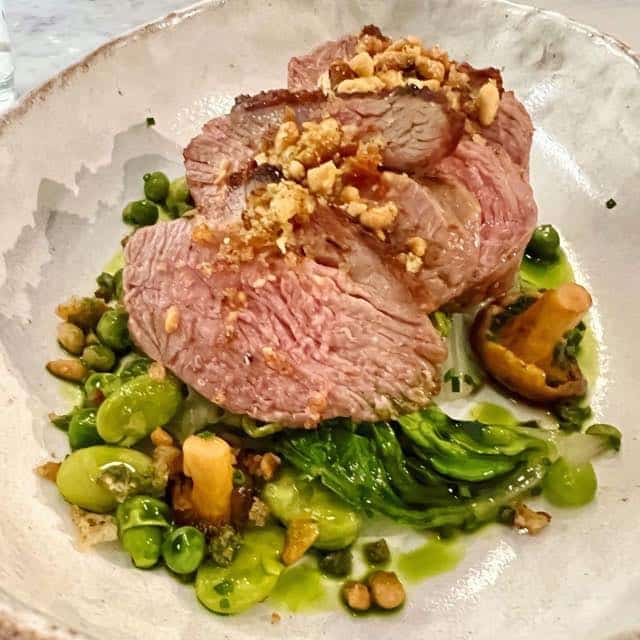
There are so many joys among the cold plates and snacks, but don’t ignore the hot plates. Maybe £21 for Exmoor caviar on baked jersey royals with mashed potatoes brings a touch of Paris’s Kaspia Caviar to Marple Bridge but I’d recommend instead a generous helping of salt marsh lamb with a classic summer accompaniment of peas, beans, gem lettuce and tarragon (£22) or ‘China Town’, a sensational salt n’ pepper sea bass dish (£24).

All this and a terrific drinks selection from craft beer to natural wine and beyond. That wagyu on toast found its perfect match in Thistledown She’s Electric, an organic old bush vine Grenache from South Australia’s McLaren Vale. A Fold plus that sets it apart from many other casual small plate rivals is that bottle shop wine list.

For the record, this is my Best Local Restaurant (even though it’s trek away from my locality).

Fold Bistro and Bottle Shop, 14-16 Town St, Marple Bridge, Stockport SK6 5AA.

NIGELLA Lawson and Samuel Pepys make strange bedfellows but what bizarrely bonds them is a fondness for Bottarga, salted and cured grey mullet roe. Unique, it’s often dubbed the ‘truffle of the sea’. 

Reaching its apogee in Sardinia but relished as a delicacy across the world (the Japanese sake snack version is called karasumi), a not inexpensive tranche of it lies well wrapped in my fridge, where it will keep for months. That’s if I can resist grating it over pasta with clams, Nigella’s fave, or shaving it onto bruschetta for a funky, umami fix. Think dried anchovies on steroids, Visually it bears an odd orangey resemblance to Spanish quince paste membrillo  – until you sniff its underlying fishiness.

Sardinians just can’t resist what they cll bottarga di muggine. My esteemed restaurant critic oppo Ruth Allan tell me she encountered bottarga grated over a Caprese salad of tomatoes, mozzarella and basil at Sardus Cucina in Altrincham; when I visited island exiles Giovanni and Salvatore diverted me with other distinctively Sardinian treats – Coratella (chicken livers and chestnuts stewed in Vernaccia di Oristano fortified wine) and malloreddus, (tiny shell-like gnocchi served with tomato and pork sausage ragu).

Though it made it difficult to venture as far afield as South Manchester lockdown has widened my culinary horizons in many ways. Thus I chanced upon bottarga via two books – Ms Lawson’s ravishing Cook-Eat-Repeat and the great Pepys Diaries. After enjoying Claire Tomalin’s biography of the great Sam I dipped into entries across the early 1660s and very jolly they were.

Samuel Pepys – too much claret and bottarga and so to bed

Take this from Wednesday, June 5, 1661: “After dinner to the office where we sat and did business, and Sir W. Pen and I went home with Sir R. Slingsby to bowls in his ally, and there had good sport, and afterwards went in and drank and talked. So home Sir William and I, and it being very hot weather I took my flageolette and played upon the leads in the garden, where Sir W. Pen came out in his shirt into his leads, and there we staid talking and singing, and drinking great drafts of claret, and eating botargo and bread and butter till 12 at night, it being moonshine; and so to bed, very near fuddled.”

Contiguous with cherry-picking this superior tittle tattle (I’m a big fan of the Alan Clark Diaries, too) Cook-Eat-Repeat arrived, definitely Nigella’s best book since How To Eat. I’m proud my review of that 1998 debut was quoted on the paperback cover: “A monument to human greed”. Alas it was dropped for the recent reprint; consigning me to the dustbin of history like many a diarist rival of Pepys.

Nigella – her bottarga dishes are among many delights in her new book

Since then, of course, Nigella has become a significant cookery writer, even for those of us not smitten by her flirtatious TV persona, pouting the likes of: “How can you resist my prodigious pavlovas?”. Like Delia she has the power to influence our ingredient shopping habits. Remember that Christmas when her advocacy of goose fat sent sales soaring? 

I doubt that’s going to happen with bottarga. It’s never going to be a regular on our supermarket shelves. The same goes for lorighittas – a braided round pasta resembling a child’s bracelet, which Nigella ordered over lunch at Olivomare a small Sardinian seafood restaurant inn Belgravia to discuss the new book with her publisher. To augment the vongole (clams) botarga added its pungent, salty oomph, confirming this combo’s place in proposed print.

Following her recipe (see below) I substituted linguine and my palourde clams were sourced from the rather wonderful Wellgate Fisheries in Clitheroe.

Close-up of the bottarga. Grate finely and don’t over-heat

The bottarga, nothing but the finest, came from rather further afield. Readers of this website know of my admiration for Jacob Kennedy’s Bocca di Lupo restaurant in Soho (ADD Cotechino link). Alongside the monthly changing feasts for two he’s still doing via mail order he also stocks bottarga supplied by Stefano Vallebona, whose family have been dealing in luxury Sardinian fish products since 1890. 

In 1997 bottarga was the first item Stefano brought to the UK, in a briefcase to share with restaurant industry pals. His producer is one of the few on the island still using the ancient ways to salt, press and air dry the mullet roe, an ancient method brought over by the Egyptians 3000 years ago. Indeed the name derives from the Arabic word battarikh and it gets a mention in groundbreaking 15th century cookbooks by Martino de Rossi and Bartolomeo Sacchi.

Bocca sell it at £19.50 for 100g (plus shipping), similar to buying it straight from the Vallebonas’ Wimbledon-based deli, which supply top restaurants. Its website is a treasure trove of Italian and Japanese specialties.

Wellgate Fisheries supplied the clams for the dish below

NIGELLA’S PASTA WITH CLAMS AND BOTTARGA

From Cook-Eat-Repeat, serves one as a special treat (typical Lawson)

Ingredients

250g clams, bottarga enough to give 3x15ml tbs when grated (never buy pre-grated), fat clove of garlic, minced, 100g lorighittas (or linguine), 2x15ml tbs extra virgin olive oil, 1 lemon, 1/4 tsp dried chilli flakes, 3x15ml tbs dry white vermouth or wine, 1tsp unsalted butter.

Method

Put the clams to soak in a bowl of cold water and leave for 15 minutes. Put the water on for the pasta and assemble and measure all your other ingredients. First peel back the pellicle (membrane) of the bottarga to leave about one and a half cm and grate it finely into a bowl until you have 2tbs’ worth, leaving a bit more to grate over the pasta as you eat.

When the water comes to the boil, add salt and then the linguine. Drain the clams, discarding any that are open.

When the pasta has four minutes to go get out a heavy-based pan with a lid that will fit both pasta and clams later and gently warm the olive oil in it. Take the pan off the heat and finely grate in the zest of the lemon and add the garlic and chilli. Stir for a minute on a lowish heat.

Turn up the heat, add the clams and pour over the vermouth or wine and clamp on the lid so the clams steam open. That should take a couple of minutes. Discard any clams that remain closed. When the linguine is cooked but al dente move it from its pot to the clam pan, add the butter and give everything a good shake. Leave to stand with the heat off for two minutes then stir in the bottarga and perhaps a sprinkle of parsley. A good stir and it’s ready.

The grey mullet for the bottarga are caught off Sardinia’s rugged coast

So what exactly is Bottarga?

The roe sac of a fish – most commonly grey mullet (di muggine), but the more saline tuna (di tonno) has its advocates. It’s salted and massaged to expel air pockets, then pressed and dried. A laborious process but worth it. The big plus point in ancient times was its keepability. Stick it in the fridge today and it will resist rot for many months. A bit like Thai fish sauce or dried shrimp? Much subtler, more delicate. Akin to caviar perhaps. So don’t cook it though, just add at the end to pasta or eggs perhaps.  

Bottarga’s premium price is down to the fact that it takes 2,300 tonnes of grey mullet to make the 150 tonnes of bottarga that is the annual consumption in Sardinia. 

The sacs are washed in iced water and gently massaged by hand to eliminate any air pockets. They are then cured in sea salt, usually set in overlapping layers for a few weeks. The resulting slabs are washed again and pressed to eliminate brine and other liquids. The slabs are then transferred to a well ventilated  ‘ageing room’ and laid on wooden shelves. In order to achieve a uniform drying process, they have to be periodically turned and are matured for several months depending on the size of the roe.

Let us salute fair Salina and Slaithwaite. The former, a volcanic Aeolian island reached by hydrofoil from Sicily, the latter a moorland mill town on the main line between Manchester and Leeds. Each has offered creative refuge to master pizzaiolos, who’ve helped shape the culinary landscape of toppings on dough.

The cases of Giuseppe Mascoli and Jim Morgan provide a romantic backdrop to the big business that pizza has become. This relatively affordable treat that, post-pandemic, prospers while other High Street rivals go under. 

Proof of the desirability of UK pizzeria chains is the expansion of the original Neapolitan-inspired destinations created by Amalfi Coast raised Giuseppe and Huddersfield Town fan Jim. Only last month shareholders in Franco Manca and sister brand The Real Greek (70 and 27 outlets respectively) approved a £93.4m takeover by a Japanese noodle conglomerate. Giuseppe had long extricated himself from the brand he created – ‘best pizza in London’ – to live the good life on Salina, making wine on the island he fell ion love with while sourcing the perfect capers for his burgeoning restaurants.

Meanwhile, since being taken over by hospitality operator Mission Mars (of Albert’s Schloss fame) Rudy’s has opened 17 sites across Britain. The latest, its sixth in Manchester where it all started, incorporates a pizza academy to stretch the skills of staff. In truth, I’d rather learn the secrets of ‘the one true pizza’ at the elbow of Jim in his smart new venture, Anello, in a converted library in Yorkshire’s Slaithwaite (pronounced Slow-it).

It’s all a far cry from the sensation back in 2005 when Giuseppe, a former LSE lecturer, took pizza back to its Neapolitan roots in the Afro-Caribbean enclave that was Brixton Market. Queues snaked around the block to get a slice of the authentic action. The key? A sourdough foundation naturally leavened for 24 hours under the watchful eye of baker friend Bridget Hugo. Ditto 10 years later in the new foodie frontier of Ancoats when Jim’s research pilgrimages to the pizza cafes off the Spaccanapoli finally paid off for him and pioneer partner Kate Wilson. Their shoestring project was named after their pet dog Rudy. Franco Manca’s monicker was equally quirky. Giuseppe took over the original 1986 business from one Franco, honouring him in perpetuity. ‘Manca’ in Italian means missing.

So does the pair’s purist pizza legacy linger on?

Franco Manca

It’s so easy to yell ‘sell-out’ or ‘pale shadow’ as a treasured one-off becomes ostensibly more corporate. Franco Manca, with three outlets in Manchester, certainly talks the talk still, emphasising the scrupulous attention to sourcing, the long proving (ie rising) of the dough in-house each day, even focusing the brief wine list on organic production.

I’d not been to the King Street branch before one gusty, wet Manchester lunchtime at odds with the searing inferno of the ‘Old Country’ currently. The welcome was as warm as the decor. Prices, even of specials on the boards, were eminently reasonable, one of the great selling points in London. 

Contrast with L’Antica Pizzeria da Michele (self-proclaimed world’s best pizza) 60 metres away across the Cross Street tramlines. I’ve not been back since it made its grand entrance 18 months ago, but the experience was odd – service wobbly, setting eye-numbingly neon and prices high (even though the pizza quality was decent). Da Michele had become a global brand, from the humble yet Instagrammable original in Naples that had inspired Jim Morgan in his quest.  Still it may have learned its lesson. I’ve just checked the latest menu and the cost of a Margherita that was then £9.95 has now been reduced to a fiver.

What does strike you immediately at Franco Manca is the menu avoids the classic  pizza names – Margherita, Marinara, Cappriciosa and the like. Instead they are numbered 1 to 10. It mirrors an eclectic attitude to provenance. The Pivetti organic 00 flour may hail from near Bologna, tomatoes from Campania and Salina supplies benchmark capers, but the MSC certified tuna and the anchovies are sourced from Cantabria in Northern Spain, while the mozzarella still comes from Somerset. Why? Because Giuseppe (the opposite of sloppy in his thinking) persuaded his friend Albino Scalzitti to move there from the southern Italian Apennines to ensure a fresher supply line. Somerset’s native Ogleshield and Montgomery’s Cheddar also feature on the same shopping list, but no English wines. In the trademark tumblers Italy rules.

Giuseppe’s main legacy remains the sourdough starter. Acquired from a Naples bakery, its wild yeast-driven magic dates back to the 18th century. In contrast we were there to road test the very latest pizzas on the Franco Manca menu. Hearty starters of beef ragù al forno with mozzarella and aubergine parmigiana were buttresses against that traitor of a summer day outside, but the pizzas were the going to be the acid test. They actually do one with a ragù topping, which is as wrong as pineapple.

We both chose pizzas without any tomato involved. Mine (No.10 for £10.95) had an undertow of wild broccoli pesto. Cime di rapa? Friarelli? Or Calabrese? I should have asked. On top of this came mozzarella and grana padano cheese with a substantial crumbling of fennel sausage. The latter was rather lovely but my on a whim extra topping of nduja was a bad idea. The famed base had that billowing chewiness I expected and liked, but as the cheese cooled it all felt a touch congealed.

Pizza No.9 across the table was the true triumph of the visit. a glorious £11.25 worth. Mozzarella, fresh basil, wild mushrooms and burrata all given an earthy kick by a truffle pesto base. Big flavours but a herby Sicilian Syrah held its own beautifully. Overall a fine experience. Fingers crossed this admirable brand has fallen into safe hands.

Franco Manca, 37-43 King St, Manchester M2 7AT. There are also branches in the city in Piccadilly Gardens and at the Trafford Centre. Open every day.

Anello

Slaithwaite has always meant dough to me over the past few years. The town’s Handmade Bakery has been a key foodie pioneer as a townscape of industrial dereliction has transformed into one of those Sunday Times’ Coolest Places To Live. You can commute in either direction to Leeds or Manchester, albeit subject to the unfit for purpose vagaries of Transpennine Express. For Jim Morgan, whose dad had ties with Handmade, it was a case of coming home. On our visit Kate was absent – on childcare duties. Otherwise, it all felt like Rudy’s 2023. With new strings to their bow on the way. As well as acquiring a talented chef, Tom McManus, from the sadly missed Moorcock across the hills they have also taken that gastropub’s epic outside grill.

They are setting this up a mile and half down the A62 at their mates Zapato Brewery, who provide Anello’s crisp house table beer, Pinto de Pico. Tom was away on holiday in Greece when we dropped into what feels almost like an Ancoats out-rider. You can feel his influence on a range of small plates that complement the Marinaras and Margheritas emerging from the truly serious pizza oven. Cue picture of a lad wielding long paddle.

As you’d expect they source leaves and veg from a local plot and the organic flour is from Shipton Mill, but tomatoes and fior di latte mozzarella are imported from Campania. Arancini was splendid but an £11 dish of porchetta disappointed, not least because the broad beans hadn’t been double-podded.

The pizzas? Marvellous. Not least because of that slow-raised dough. More echt Neapolitan than Franco Manca’s, softer and more digestible. The toppings were more traditional but then Anello, like the original Rudy’s, doesn’t aim to re-invent  the wheel. Just replicate the perfection of Old Naples.

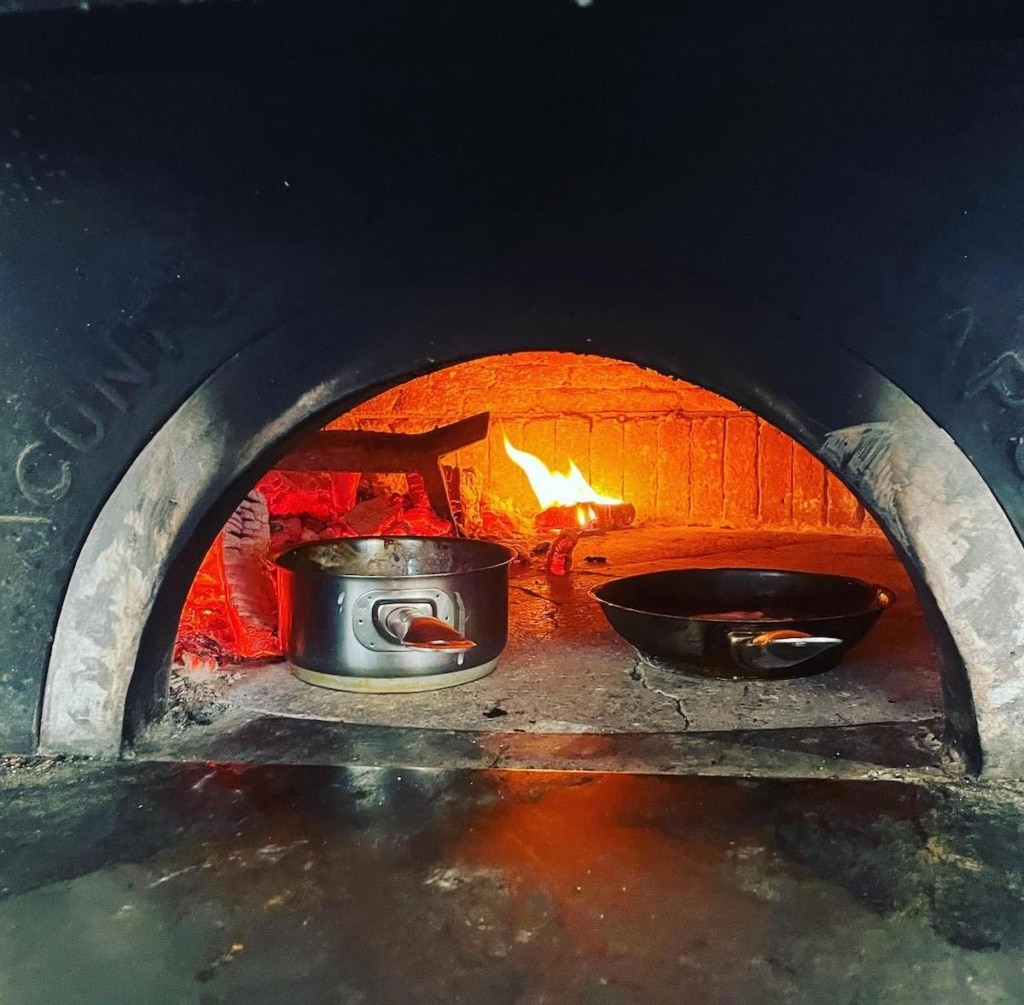
Their pizza oven was built for them in that turbulent city – by the Acunto family, who have a history of making pizza ovens stretching back 125 years. According to Jim: “Once fired up to 450C, the pizza takes just 60 seconds to cook. This intensity and speed of cooking creates a wonderful freshness to the pizza with enticing aromas, flavourful charring and a tenderness to the dough unusual with other types of pizza.” 

Agreed. So to all those renegade purveyors of Roman, New York, Detroit, Chicago  and, abomination, Hawaiian Pizza there’s a Neapolitan expression especially for you: “Vafanapoli! (ps it’s very rude).

Anello, 8 Britannia Road, Slaithwaite, Huddersfield HD7 5HG, 01484 841720, Open Wednesday to Sunday.

It’s a glorious sweep down through the North Yorks Moors from Whitby to Hovingham. En route 30 odd miles of heather heaven in high season with the pastoral lushness of the Howardian Hills at the end of it. I just wonder if the legendary Captain Cook ever made the journey? We always associate the adopted Whitbian with seaborne expeditions to the furthest corners of the globe. Did he know this Tyke hinterland of ruined abbeys and fine local produce?

He was certainly familiar with tetragonia, the spinach/sorrel like leaves now on my plate at Mýse in bonny Hovingham. Back in the 18th century he enlisted what the Antipodeans also call warrigal greens or New Zealand spinach to ward off scurvy among his crew on the Endeavour’s long voyages.

There’s little chance of me contracting this disease of vitamin C deficiency over the course of Josh Overington’s beautifully balanced 10 course tasting menu, among the highlights of which is the Herdwick lamb ‘main’, where three tetragronia leaves are draped over Herdwick lamb, fillet and belly, cooked over coals and served with an anchovy-umami rich garum sauce on a base of pearl barley, tiny cubes of lamb tongue and addictive garlic capers. The tetragonia is tangy, slightly chewy, grown specially for Josh by a local farmer.

Such a dish is typical of Josh’s spanking new project. At the end of last year, after a decade in York, he and his sommelier wife Victoria sold up their acclaimed Cochon Aveugle restaurant and wine bar Cave du Cochon. Their new home is a restaurant with rooms in the former Malt Shovel opposite that most eccentric of 18th century Palladian big houses, Hovingham Hall (clue: its architectural focus is the stable block).

The makeover of the premises has been stylishly managed. What was a village local is now the crucible for the French-influenced ‘Bistronomie’ food that once had critics swooning, despite the no choice menu being served blind (Cochon Aveugle = Blind Pig). The big difference in Hovingham is you get a printed menu.

According to Josh in a newspaper preview the food focus has also shifted. “This is our chance to create something more ambitious and a reflection on our incredible Yorkshire surroundings. I grew up here and it has been home to Victoria for 10 years, so we wanted to create a welcoming, homely spot, each dish a nod to dinners that my Yorkshire grandmother would cook for me, but elevated and refined.”

Maybe that’s a culinary leap of faith along with naming the destination Mýse, apparently the Anglo Saxon term for ‘eating at table’ (pronounced meez). The word does translate as ‘table’, but I’ve dusted off my old copy of Sweet’s Anglo-Saxon Primer (revised edition 1970) and got no further. My bluestocking spouse suggests it might even be a Latinate derivative similar to mesa. Surely there’s also a play on the French term mise en place (everything chopped and measured out before cooking in a professional kitchen. None of this bothers me over much. With food this sublime they could call it Beowulf’s Magic Mead Hall and I wouldn’t fall on my sword.

So what did I eat there that sun-dazzled July noon time?

A trio of snacks – a postage stamp sized tranche of smoked eel dusted with bilberry powder poised on a cup of eel and apple broth; on a wooden spoon delicate shards of razor clam given rare oomph by a tangle of salted rhubarb and lightly pickled elderflower; ox cheek fried in Yorkshire pudding batter with fermented cucumber. I‘m sure granny would have loved the latter without knowing it might rate as a beignet. I saved some of the seeded sourdough to mop the juices of the next-up Orkney scallop. The temptation was to keep on smearing it with the proffered Ampersand Dairy cultured butter and chicken drippings. The fat hand-dived mollusc was a classic Overington dish, baked in the shell with a sea urchin butter for a sweet salty kick. A crumble of bottarga-style crisped coral enhanced this further.

Josh told me the broth for my line-caught cod had been created by simmering in-season senshyu onions with water for three days. The pearly North Sea fish itself was poached in aged beef fat, senshyu and lemon verbena. Then followed that lamb – Herdwick not Swaledale as predicted, but the perfect taste of the North following Josh’s brief.

My fave pudding of a trio was ‘day old bread’, which meant soaking yesterday’s brioche in vanilla custard then caramelising the edges, so it superficially resembles a fat fish finger. It came with a trio of preserves for messy dipping, the best of which was a little raspberry and rose number but honourable mentions for goat’s milk caramel and a ‘hidden’ hazelnut crème fraîche main image – serving for two). 

Simpler was a plate of four strawberries ‘dipped in their own jam’ with a citrus marigoldice cream. Then came a petit four like tab of linseed caramel that called for coffee and a tempting local cheese offering that I declined.

I also restricted my wine intake to two glasses because I was driving. A vinho verde and a Greek xinomavro. Such a shame when the wine list is heavily weighted towards Keeling & Andrew’s remarkable ‘Noble Rot’ roster.

The obligatory tasting menu costs £80 at lunchtime (wine pairing £65pp); £110 in the evening (wine pairing £85pp).

Wheat field ramble, Tristram Shandy, Tommy Banks’ new boozer

Poppies line the Ebor Way out of Hovingham. If I keep to the dusty footpath for an hour and more I’ll be sure to reach Oswaldkirk, the sign says, but the sun is relentless over the fields of wheat and broad beans, so after a brisk stretch walking off lunch I retreat to my car and drive 10 miles east to Coxwold and Shandy Hall. Cock and Bull Story (2005) was Michael Winterbottom’s appropriately absurd attempt to film the unfilmable – Laurence Sterne’s anarchic, baggy 18th century novel, Tristram Shandy. The groundbreaking novelist’s home lies at the top of the sloping village. Now a museum, Grade 1 listed Shandy Hall is open to the public at weekends, the two acre grounds most days, but not today (‘private function’). Instead I take a table and a Harrogate Water at the Fauconberg Arms in the centre of the one-road hamlet. An umbrella shields me from the sun as I bask in the charm of a place that almost defines unspoilt.

It’s the base camp for my exploration of another pub transformed by an accomplished chef. Back in 2017 Tommy Banks and Josh Overington were part of a trio of chefs representing the North East in the BBC’s Great British Menu. Tommy now holds Michelin starts at Roots in York and his flagship Black Swan at Oldstead three miles down the road from Coxwold. 

En route to the Swan you’ll come upon Byland Abbey. A ruin under the care of English Heritage, it’s hardly in the same league as Rievaulx up the road, but that fellow casualty of the Dissolution of the Monasteries doesn’t have an idyllic pub garden opposite where I’ve been served the finest beef burger I’ve ever tasted outside Hawksmoor.

Yes, Tommy has taken over the Abbey Inn – where as a lad he washed pots – and its menu follows the sustainable tenets of his restaurants. The Dexter chuck brisket and short rib for the patty is from the Banks family farm. Topped with bacon and chicory jam, oozing cheese, tomato and cucumber pickle, it is accompanied by beef fat fries (less impressive). It will cost you £21 from the garden menu or inside, even now at the steep end for a burger, but it’s worth it. The menus here are very much posh pub, not dedicated restaurant. Once a farmhouse built by the monks, it has been a hostelry since 1853 and is staying that way. At 70, the Abbey Inn has double the covers of Mýse; each, though offers three luxury rooms to stay over. Hard to resist ordering the extra Timothy Taylors or Xinomavro red or two and crashing. This is a wonderful corner of England.

Restaurant Mýse, Main Street, Hovingham, York, YO62 4LF.

The Abbey Inn at Byland, York, YO61 4BD.

I’m late to the party. Ever thus. Until the other week I dIdn’t realise that Graviéra, second most popular cheese in Greece after feta, could age for eight years or more. Jay Hickson, founder of Calder Cheese House just down the road from us and a mountain cheese expert, brought a chunk of this aged version back from his treks around Crete.

One Tyrokomeío Patsourákis had crafted this particular specimen on April 15 2015, using raw sheep’s milk from his flock. Jay described it as “bright and rich with honeyed caramel tones” and he was spot on. As a hard cheese it had probably once been buttery but now it was brittle and ultra-nutty. Nice to nibble with a glass of Belgian Trappist’s finest Westmalle Tripel, the rind end was a revelation grated into a dense minestrone. Reminiscent of old gruyere forming a crust of mega cheesiness on the surface of a soupe à l’oignon.

Alas, Calder Cheese House has now sold out of Graviéra Krítis but – shameless plug – the shop is an Aladdin’s cave of dairy-led wonders and considerably kinder on the pocket than La Fromagerie, which has three outlets in London – Highbury (cheese guru Patricia Michelson’s original shop which I first visited 30 years ago), Lamb’s Conduit Street and just off Marylebone High Street. 

It was into the latter that I popped en route to review Chet Sharma’s Bibi restaurant My target was the only American cheese they stock, one mentioned in Patricia’s encyclopaedic  but accessible Cheese (2010), subtitled ‘A journey through taste tradition and terroir’. I‘d assumed the creamery was in California, but couldn’t find it on my California Cheese Trail app (every home should have one) alongside folksy treats such as Bleeting Heart sheep’s and Pugs Leap goat.

It turns out that my other belated major discovery of 2023, Rogue River Blue, hails from Oregon and is a Big Cheese, as they say, and not just in those West Coast parts. in the 2019/20 World Cheese Awards, held in Bergamo, Italy, it was crowned World Champion Cheese, first American entry to ever take the prestigious global award. Not that it has been hiding its light under a bushel since its first release in 2003…

So what makes Rogue River Blue so exceptional?

You could argue the steep price – £63.60 for 500g – but it is the phenomenal care that goes into making it.. After being aged for eight months it then finishes maturing for a further six to eight months wrapped in Rogue Valley grape leaves (Syrah and Merlot, I believe) that have been macerated for a year in Clear Creek Pear Brandy, flagship spirit from one of America’s oldest artisan distilleries. When it emerges from the custom-built ageing caves this is no shrinking violet. Pit an Amarone against it to be on the safe side. My saison beer struggled to contain the densely creamy fudginess shot through with a sharp saltiness in the blue veins. I could swear the aftertaste was of smoky bacon, maybe even barley wine, too.

You might also come across Smokey Blue, the original Rogue recipe for the first blue cheese ever made on the US West Coast. This has traditionally been given a caramel nuttiness by being smoked for 16 hours over hazelnut shells. But staff at La Fromagerie warned me River Blue was definitely the way to go

It has obtained cult status, comparable to say Russian River’s Pliny The Elder in the American beer world. There’s huge hype around the annual release of the cheese, which  often coincides with the autumn equinox. Surely justified by the care that has gone into the production. Both the full fat milk from their own herds from the previous fall and the hand-picked vine leaves are organic and all that ageing is labour-intensive.

We wonder what French President Emmanuel Macron made of it in December 2022 when it was one of three American cheeses serve at a White House state dinner by Joe Biden. Did this devotee of Roquefort relish or resist this rogue element on the cheeseboard and proclaim: “Sacré bleu”?

I relish a certain symmetry in my metropolitan dining out patterns. Take Bouchon Racine and BiBi. The former has just been named Best New Opening by the National Restaurant Awards and placed at no.5 in their prestigious top 50. I’d already visited it in Farringdon, driven there by word of mouth and a residual reverence for its previous incarnation in Knightsbridge.

Flash back to the 2022 NRAs and flying in at no.5 and as best newcomer, yes, BiBi, a very different beast from Henry Harris’s take on a classic French bistro. In a discreetly glamorous Mayfair setting chef patron Chet Sharma nods to his Indian heritage both in decor and what’s on the plate but applies culinary methods learned in the development kitchens of our own Michelin heavies L’Enclume, The Ledbury and Moor Hall. The latter’s Mark Birchall is a particular culinary inspiration. He also worked a stint at the Basque Country’s Mugaritz, a respectable 31st in the 2023 World’s Top 50 Restaurants list announced this week. 

No more lists I promise, just take on board that there is high-powered operator a couple of metres across the counter from me, assembling small plates in front of the sizzling sigree grill. The fish and meat that feel the heat are the best of British, the premium spices and other exotics sourced from across the Indian sub-continent. There’s a little map showing you locations on the back of the Chef’s Selection Menu.

At lunchtime there is an à la carte offering and a new four course set menu for £35, but that Chef’s Selection is the only evening option at £125 a head (an optional and top notch wine flight costs £75). The reasoning behind this no-choice direction, which pointedly avoids calling itself a ‘tasting menu’? Even though seven courses plus additional snacks sounds just that… with a certain welcome brevity.

“There’s some bad branding around the phrase ‘tasting menu’,” Chet Sharma tells Tony Naylor for a fascinating  Observer Food Monthly article that dropped just as I started to gather my thoughts for this appraisal of BiBi’s cuisine.

The piece goes on: “BiBi’s £125 dinner menu is expensive. But crazy as it may sound, says Sharma, it was introduced to provide value. In London, he argues, you can easily spend £70 or £80 a head on fairly average food, whereas BiBi’s food (“complex enough to sit alongside the most complex dishes in the country”) aims to provide far greater bang for your buck.

“BiBi’s chefs are not wasting hours of costly labour prepping ingredients that aren’t sold. They are focused on perfecting a streamlined number of dishes. This helps Sharma keep tight control of his fluctuating food costs, and enables him to flexibly gild dishes: ‘Let’s add morels to this dish, for example’, when prices allow.”

So did the BiBi food live up to its reputation?

Easily. The snacks signal the playful intent, so far removed from stuffier high end London Indians (BiBi’s owners JKS are also responsible for Trishna, Gymkhana and Brigadiers). Take the papad scrolls flavoured with pungent cave-aged Wookey Hole Cheddar to be dunked in the dankest of green chutneys – pure chlorophyll pesto. Or a single Louët-Feisser oyster (from Carlingford Lough, also, incidentally, favoured by Bouchon Racine) dressed with passion-fruit Jal Jeera, a kind of tart cumin-scented lemonade. 

In the second course proper there’s a similar culinary conceit, where an Orkney scallop sits ceviche like in its shell, loaded with a spiced up Nimbu Pani (lime soda, the Sub-Continent’s  favourite soft drink). In between there’s the punch of a BiBi ‘tartare’. The tenderest of Belted Galloway beef is studded with fermented Tellicherry peppercorns to create a ‘chaat’ of pepper fry. Street food elevated, as they say in the trade. 

Next up a is a Parsi special occasion classic called a macchi, where white fish fillets, often pomfret, are coated in a paste of ground coconut and sour mango, fresh coriander and mint, and steamed in banana leaves. In the Sharma version, with the emphasis on pickled green chillies, the fish is halibut and the result is hot and gorgeous.

Now that grill kicks in. It’s a £20 supplement for the Aged Swaledale Lamb Barra Kebab (main image). I couldn’t resist and it proved the dish of the evening (against a strong field). This traditional Mughli chop, charred and yet tender, comes encircled by spirals of a sensational Kashmiri doon chettin (walnut chutney), which is fiery but also in perfect balance.

Suddenly and surprisingly the counter in front of me fills up with a parade of dishes that signify ‘this is your main’. A pillowy roomali naan and a goodly helping of rice are there to mop up the juices from an ex-dairy goat Galouti Kebab and Sharmaji’s Lahori Chicken. Galouti means ‘melt in the mouth and this dish involving minced mutton or goat (interchangeable in North Indian cuisine) was created for a toothless old Nawab in Lucknow. The Lahori chicken has been marinated in yoghurt and spices before being barbecued. The whey collected from hanging the yoghurt combines with cashew to make a remarkable sauce alongside some wild garlic puree and a sharp cauliflower chutney.

Strained yoghurt is the base for the delicate shrikhand dessert featuring strawberry and meadowsweet. To conclude a kulfi ’lolly’, given an equally neat presentation to conclude a beguiling experience that redefines high end Indian restaurant food.

BiBi? A homage to Grandma with a contemporary cutting edge

You’ve been waiting for me to explain the name BiBi? There are echoes of some Sixties boutique there and isn’t there a Korean pop chanteuse with that moniker. Actually it’s an Urdu title roughly translating as ‘lady of the house’, often applied to grandmas and yes there are decorative touches honouring Chet’s own bibis – a wooden beaded curtain similar to the one in his grandma’s own kitchen, while Kashmiri Paisley motifs on walls and bar stools is inspired by her shawls. Antique mirrors and lamps add to the surprising homeliness in a tight 33-cover space.

All this is slightly at odds with the back story of Chef Chet. All that high end culinary discipleship that followed his physics doctorate at Oxford and an obvious commitment to sustainability that is very much of the moment. The kitchen grills with sustainable Holm Oak charcoal from the South Downs; the menu paper is compostable. You do sense though that at BiBi he has come ‘home’. And there is heart there. Utterly surprising and revelatory in the oligarch’s playground that most of Mayfair (and Knightsbridge) has become.

BiBi, 42 North Audley Street, Mayfair, London, W1K 6ZP. Vegetarian and pescatarian tasting menus are available.

A head for heights? Most certainly as long as I‘ve a cocktail in my hand or, better still, a series of small plates arriving against a panoramic backdrop. To satisfy my needs, every high rise development these days seems to come with a rooftop bar or restaurant. At the Manchester version of Soho House, due later this year, they are even throwing in a swimming pool eight storeys up below its bar and I note that the ubiquitous Gino D’Acampo has been getting in on the act over in Liverpool, opening an eponymous Sky Bar Terrace at the top of the INNSiDE by Meliá hotel.

It may be that city’s highest alfresco restaurant and bar, but at 270 ft it’s a mere molehill compared with the tallest viewpoint I’ve visited – Chicago’s Willis Tower, the Western Hemisphere’s third highest building at 1,730ft. One caveat, its Sky Deck with jutting-out glass Ledge is the same height (1,450ft) as the top of that old stager, New York’s Empire State.

Both dwarf our own Shard in London, which stands at a mere 1,020ft. One advantage is that the 72nd floor viewing gallery is partially open air, offering views of the pinnacle, as well as 360-degree views around the building. I’m still gob struck by how tiny Tower Bridge looked from 800ft above.

All of which brings us to Manchester’s 20 Stories, whose major selling point is its huge outdoor terrace and bar (with appropriate shelters for when the city’s weather lives up to its reputation). At 300ft, it’s a glamorous, stunning spot to take in the ever-changing skyline and cityscape (see main image). You can understand its appeal as a special place for a drink and a people watch. The wine list is arguably the best in town, but food quality has been variable with a constant change of head chefs since its inception in 2018. 

I dined there recently, road-testing their new five-course tasting menu, available Monday to Thursday, 5.30pm-8.pm. It started well with a vegan opener of broccoli steak with horseradish and lemon, but after that it didn’t live up to its £65 a head price. A better bet is to pick from the more casual Terrace Menu, perhaps mixing and matching tomato, basil and parmesan arancini, truffle fries and BBQ flat iron steak tacos with a tipple or two from their Aperol Cocktail Menu.

Black Friar, Salford – keeping it down to earth

Casual and al fresco is a good way to go in this sweltering summer and the maturing  ground-level garden of the re-born Black Friar is a choice spot, even if there is no view to speak of. Well, who would want to ogle the traffic hurtling down Trinity Way? By chance, it has chef connections with 20 Stories. Aiden Byrne, launch chef there, was scheduled to do the same for the Black Friar but pulled out around Pandemic time; his replacement Ben Chaplin came from… you guessed it. 

His 20 Stories fine dining pedigree was obvious when I first sat down to eat in the newly planted garden with its big fence two summers ago. A couple of dishes were over-elaborate for what was aimed as a gastropub. The menu has since settled down  from trying to balance all this with ‘pub classics’, maintaining high quality ingredients while  taking fewer risks.

It is good they are still making the most of their urban greenery, though when we went recently to sample their summer ‘Garden Menu’ gusty showers weren’t doing it any favours.This particular menu is served straight from the outdoor bars, so we benefited from its canopy and ski heaters. And a couple of goblets of holy Gavi to heal the soul. There’s a choice of three amply topped flatbreads, including an artichoke version for vegans, who can also dive into a Falafel Friar Bowl. Alongside the charcuterie and cheese platters sat our big extra temptation, definitely not plant-based: Honey-glazed Ham Hock with Welsh rarebit and pickled onions. The Black Friar is very generous with its pickles and, alas with a mountain of coleslaw that accompanied the hock. As a £17 sharing plate this was a meal in itself. We took the half-stripped bone home with us. Combined with yellow split peas and stock, it formed an un-seasonally  ballasting soup that lasted us all next day. As blazing sunshine reappeared.

Queen Bee with a red dot, signature vol au vents – it must be Climat

The other end of Blackftriars Street and Chris Laidler is showing off his stings on the rooftop terrace of Climat, now home to four hives and 40,000 bees, including a Queen, marked with a red dot. The wine-led restaurant’s founder and his exec chef Luke Richardson also brought back from Hampshire a further 50,000 bees that are now ensconced at their respective homes in Wrexham and Chester – all contributing honey to Climat and sister restaurant Covino in Chester, a place I also really love.

Chris tells me they expect the total of 90,000 bees will swell to 500,000 over the summer before reducing in size to weather the winter months. He’s resigned to the occupational hazards of bee-keeping – despite wearing the full gear to handle them. He’s more worried that there’ll be enough opportunities for his charges to pollinate in Manchester city centre, even though it’s leafier than you think.

And there is competition. Chris points across the road to the roof of the car park behind the brutalist former Ramada Renaissance, slowly being transformed into the Treehouse Hotel. Here Manchester Cathedral have installed a total of 10 hives in addition to the six already on the cathedral’s roof producing ‘Heavenly Honey’.

It’s amazing what your eye takes in from a great height. On the eighth floor of Blackfriars House, Climat actually benefits from not being up in the stratosphere. I prefer the more intimate nosiness of being level or slightly above rival rooftops, so you don’t miss intricate features. Seen from the outside terrace (well away from the swarms) or through floor-to -ceiling plate glass. Perhaps with a 500cl carafe of Bourgogne Aligoté at your elbow – ‘is that honey on the nose?’ – and a signature vol au vent while awaiting a small plates parade of what Luke dubs his ‘Parisian expat food’.

This is Niki Segnit. She is up there with the great British food writers. Her debut cookbook/compendium, The Flavour Thesaurus was an instant classic when it was published 13 years ago. Lauded by her peers, it found an eager market among those of us who look beyond glossy recipe repetitions. There had never been anything quite like it before, this playful exploration of ingredient matches springing from a flavour wheel of her own random devising. A reference book born out of erudite research that was equally at home by the bedside or on the kitchen table, it delivered a unique, inspiring perspective on food combinations and the science and social mores behind them. EM Forster’s ‘Only Connect’ applied to our store cupboards.

If the ‘difficult second album’, Lateral Cooking (2018), saw her via diagrams consolidating the technical bedrock of her encyclopaedic taste research, it now looks like it was essentially the springboard for her masterpiece, the recently published The Flavour Thesaurus: New Flavours (Bloomsbury, £20). Those new flavours are predominantly plant-based. It was intended to be zeitgeist-led vegan, from kale to cashew, pomegranate to pistachio, seaweed to tamarind, but Niki’s reluctance to abandon cheese and eggs won the day in this parade of 90 flavours and their cross-fertilisation in the kitchen. 800 references in total with a scattering of recipes spontaneously blooming out of them.

What was special about the original Thesaurus was the frame of reference equal to the greats, David, Grigson, Roden. And, of course the sheer chutzpah of her prose that’s the sweetener for so much erudite exposition. 

Let’s celebrate the sly, almost metaphysical, wit she brings to the task of cross-referencing flavour profiles. Words stimulating appetite? Bon mots, bon appetit? Bring it on. 

Take her tall tale about the penicillium origins of Roquefort blue cheese (in her Rye section) … “The story involves a shepherd retiring to a cave for lunch. He was about to tuck into his rye bread and cheese when a passing shepherdess caught his eye/ he set off in pursuit and by the time he came back – after what microbiology 101  yells mus have been several days of vigorous lovemaking – his food had gone mouldy. Here the story takes a bold narrative turn to focus on him eating the spoiled food. 

“(Was it a lovelorn death wish on the shepherd’s part? Was the lovemaking so perfect nothing could possibly ever measure up to it? Or was he so smitten that he simply didn’t notice it had gone mouldy? Find out in my sizzling international bestseller, The Shepherd of Roquefort.)”

Corn and Honey yields this account of middle-aged inverted libido: It’s said that John Harvey Kellogg invented the cornflake as a means of suppressing carnal yearnings. Eat bland food, the theory went, and the fire in your loins would soon gutter and fail. He had it exactly the wrong way round. The Western world’s collective equator-sized  waistband stands as proof that humans will drop anything for another bowl of something delicious. Across the world women reach across the bed to find a cool absence where their husband once was, as, downstairs, in the unflattering light of the open refrigerator, he tucks into the fifth bowl of breakfast clusters while browsing the Damart catalogue for the next size up in elasticated leisurewear.” 

She recommends instead a few hot corn pancakes, glossy with butter and honey, Chestnut honey because of the slight bitterness that offsets the sweetness of the corn. Finally comes the inevitable scientific punchline: “It also contains an aromatic ketone called aminoacetophenone, which characteristic of corn tortilla, grapes and strawberries and for the unsentimental and more adventurous gastronaut, dog’s paws.”

Elsewhere there’s an abundance of rock and roll or film references, not all of which come off, but I do like her response (in Vanilla and Passionfruit) to Pornstar Martini creator Douglas Ankrah insisting the flavour pairing was inspired by cakes and pastries… “which is a bit like finding out that Mötley Crüe’s inspiration for Girl, Girls, Girls was a Women’s Institute Easter Bonnet Competition that Nikki Sixx attended with his gran.”

Aubergine and Miso 

Chocolate with aubergine in a dessert is one of her more challenging forays (for me), even if my own addition of chocolate to caponata should make me welcome fellow Sicilian dish, melanzane al cioccolato. Nikki almost convinces me with “Some might say that given enough chocolate, ricotta, dried fruit and toasted pine nuts you could wolf down a boiled Birkenstock…” Instead I tried out her aubergine and miso combo, which turned out perfect culinary co-ordination.

“Aubergine mellows miso, absorbing its salty stridency to make a tender savoury sponge. Nasu Dengaku, a variation on tofu dengaku, is the classic Japanese take on the pairing. For 2-4 servings, as an appetiser or side dish, halve 2 aubergines lengthwise. Score the cut sides with a criss-cross pattern. Brush with a little neutral oil and roast at 200°C for at least 30 minutes until they have softened and charred slightly. In a small pan over a low heat, whisk together 2tbsp red miso and 1tbsp each of mirin, sugar and sake untril both the sugar and miso have dissolved. Glaze the scored sides of the aubergine with the miso mix, then put  the under a hot grill for a few minutes until he glaze is flecked with dark brown patches and bubbling. Note: sweetened miso burns quickly, so don’t leave unattended.”

I didn’t and the result was so remarkable I didn’t regret the absence of chocolate!

The Flavour Thesaurus: more flavours by Niki Segnit is published by Bloomsbury at £20.

Under the radar? That’s definitely Abruzzo. It’s the poor touristic relation of Toscana, Umbria, Piemonte and yet this predominantly rural Italian region has so much to offer. Three National Parks, one Regional Park and several natural reserves are home to an unprecedented 75 per cent of Europe’s flora and fauna species. The slow food on offer, washed down with the local soft Montepulciano reds, is reason enough to visit the scores of  ancient hilltop villages.

Take lentils. The medieval town of Santo Stefano di Sessanio holds a festival every September in their honour, the Sagra delle Lenticchie, and is campaigning to win them DOP (Denominazione d’ Origine Protetta) status alongside such iconic foodstuffs as Parmesan, Balsamic vinegar of Modena, San Marzano tomatoes and the like.

I source my Abruzzo lentils (via the wonderful Ham and Cheese Company in Bermondsey) from the Casino di Caprafico 100km south east which accesses the same scrubby terrain that somehow brings out the iron-rich best in these tiny legumes. Easily the equal of France’s acclaimed Puy lentils. The same deeply traditional operation also yields my go-to new season olive oil. The head honcho is Giacomo Santoleri. Let Ham and Cheese Co tell his story:

“Giacomo Santoleri was an engineer before turning to agriculture 20 years ago. His Caprafico farm is on the eastern slopes of the Maiella National Park, close to the town of Guardiagrele and there he has chosen to grow a range of heritage grains to mill for bread and pasta. Pasta from his barley and emmer (farro) is a long way from the uniform white mono flavour of pasta made from high yielding wheat varieties and it is also much healthier; emmer is known to be good for the heart and immune system. It is high in antioxidants, fibre and protein. Like many heritage grains the plants are strong and sturdy and can be grown without the need for chemical fertilisers and pesticides.”

And the Caprafico lentils?

“Giacomo grows ancient grains and pulses on the Caprafico plain in Abruzzo. These lentils are sown at the end of March on poor, chalky soil and they thrive in the harsh mountain temperatures of the Maiella National Park. Surviving these adverse conditions gives the lentils lots of flavour

“The lentils ripen at different times depending on their altitude but the majority are harvested during August. Harvesting takes place by hand because the lentils grow so close to the ground that mechanised harvesting can destroy up to 40 per cent of the harvest. Inside the cloth bag are 500gs of the most beautiful, speckled lentils. Cook them with a carrot, an onion and a stick of celery then stir them – still firm – into some softened dice of the same vegetables. Top them with a sausage or poached egg.”

The form the perfect base for toothsome New Year’s Day treat, Cotechino, sausagey subject of one of my Italian Food Trail pieces, but with my latest lentil batch I have wilfully ditched seasonality.

Just as summer is almost convincing Yorkshire it is Abruzzo I’ve assembled in my garden the ingredients for a decidedly autumnal Lentil and Chestnut Soup, loosely adapted from a Rachel Roddy recipe. It was an excuse to use up two vacuum packs of hulled chestnuts that had lain too long in the store cupboard. Plus I had an excess of chicken broth in the freezer and a surfeit of herbs from the garden.

Lentil and Chestnut Soup

Ingredients

4 tbsp good olive oil

1 onion,

1 carrot

1 stick celery,

100ml Noilly Prat

3 tomatoes, skinned and diced

Ready cooked chestnuts, broken up

2 litres of chicken broth/water

Parsley, chervil, dill, marjoram or other mixed fresh herbs.

1 bay leaf

Salt and pepper, to taste

Method

In a large pan heat olive oil over a low flame, add chestnuts, stir for a minute then add vermouth and let it bubble for a couple of minutes.

Rinse the lentils and add to a separate pan with chopped veg, herbs and stock water mixture. Simmer for an hour or so over a low heat until the lentils are tender Unlike red lentils they keep their shape). Remove bayleaf. Take out half the mix and blend roughly before returning to the lentil pan along with the chestnuts and a splash of good extra virgin olive oil. Caprafico would be perfect.