There are some images that are hard to sweep from your mind. You know the sort of stuff – hypocritical politicos caught by CCTV in a ‘steamy clinch’. Etched in my cranium is that ogre of monstrous appetites, Robert Maxwell, in his eyrie at the old Daily Mirror HQ in Holborn opening a desk drawer during a meeting and scooping a hairy fistful of caviar into his maw.

That might put anyone off this ultra-expensive delicacy for life. On the hack’s salary he was paying me I was never going to develop the habit. But when the opportunity comes along to reacquaint oneself with the unique experience of high end sturgeon roe it’s hard to say ‘whoa there’.

The three Petrossian caviars we got to try

I barely know my Beluga from my Ossetra but I know what I like. In truth my palate isn’t attuned to the nuances that separate the trio of caviars sent to me by iconic brand Petrossian but I’m getting there. The three 50g tins before me range in price from £100 for the Alverta® Royal Caviar through £120 for the Alverta® Tsar Impérial™ Caviar to £130 for the Ossetra Tsar Impérial™

Before I even dare broach them I have to do some research, which I can share with you as fellow caviar virgins. If you are already an aficionado (not just a show-off glutton like the aforementioned Cap’n Bob) look away now.

Prehistoric survivor – Acipenser Gueldenstaedti

Ossetra, also called Oscietra or ‘Russian sturgeon’, hails from the shores of the Caspian Sea bordering Kazakhstan and Azerbaijan. It’s in those dark waters, muddied by the interminable internecine conflicts of the region, that we should start.

The star of the show is the bottom-feeding sturgeon – scientific name Acipenser Gueldenstaedti – which was around way before the dinosaurs and hasn’t had much of a makeover since. Traditionally it was an absolute lottery for sturgeon to produce offspring. Even the smallest of them are over six years old when they first spawn. Beluga and Kaluga, the larger varieties, only reach maturity in their twenties.

Sturgeon were also picky about where to lay their eggs – inevitably in tthe same area where they themselves were hatched. It was all quite an endurance test. En route they lived off their own fat, swimming upriver against the tide, until they found a rocky stretch to find a mate and spawn. Yet unlike salmon they don’t perish at the end of the process, which has kept them from extinction.

Overfishing and poaching definitely pushed the sturgeon toward the brink, though until it became illegal to fish for this species in that region. After years of studies and research, Petrossian was the first player on the market to offer farmed Ossetra in 2007.

A scattering of caviar, smoked salmon and a buckwheat blini is quite a combo

I must admit it was my favourite of the trio, whether on its own or with blinis (our own fresh buckwheat treats, not the bought-in disappointments), soured cream and slices of Petrossian’s Coupe du Tsar®  80 day smoked salmon tenderloin.

The dark amber-hued Ossetra was briny and sensual with a persistent aftertaste, for me pipping its creamier, iodised rival, the almost black Alverta® Tsar Impérial™. The other Alverta was less distinctive. Both the product of the Acipenser transmontanus white sturgeon, which can top four metres long in its natural habitat of North American rivers. Nowadays the fish is farmed for it eggs in California and Italy.

They sure love it in the ‘Golden State’ where the great chef patron of The French Laundry, Thomas Keller has just launched a new pop-up bar pairing – what else? – caviar and Champagne in the Napa Valley wine town of Yountville.

Fresh out of Krug, I opened sharing bottles of beer with photographer compadre Joby Catto. He brought along ‘Spirit of Nature’, a mixed fermentation yuzu fruited sour and

The Wild Beer Co’s Ninkasi Saison. The latter, containing 10 per cent apple juice, fruity hops and wild yeast, made an excellent fist of counterfeiting the appropriate Champagne. 

No bias here but the best match came from my Elderflower and Gooseberry Sour 2020. Tart and funky, it made a perfect marriage of convenience with the briny caviar.

Black gold comes at a mega premium price

Is it all worth it?

A pre-pandemic survey of the UK’s two and three Michelin starred restaurants discovered that over 70 per cent featured caviar on its menus. This is all the milder, farmed stuff, more sustainable than the wild product from the Caspian and Black Seas, international trade in which has been banned since 2006. That had to be done since harmful fishing practices put native sturgeon on the endangered list.

Still there are some issues in harvesting the roe (ie eggs) from sturgeon in the farms. These are discussed in a balanced way in this 2019 Guardian article.

Without the farms, caviar, an iconic luxury item, would not now exist. A new generation of chefs are seeking alternative roes but as with Champagne versus other bubbles the cachet is not the same. 

From the watershed moment when it was transformed from peasant fodder – a meat substitute during fasts – into a coveted status symbol of the Tsars and ultimately the affluent across the globe there has been no turning back for caviar.

As I nibble the final glistening ‘black gold’ off a silver spoon I relish an oligarchal sense of conspicuous consumption, but ultimately I prefer the salmon on my blini.

To buy Petrossian caviar, smoked salmon and other top of the range products visit this link.

Many thanks to Joby Catto for the beer and some excellent images.

Spring 2018 and I’m besotted. The venue a rough and ready moorland pub high above Sowerby Bridge. Not an obvious honeytrap for a tryst and there was precious little flesh on the bones of the object of my desire. A deep-fried herring skeleton on the debut menu was a mission statement for the reinvention of the Moorcock Inn at Norland.

That challenging herring bone that kickstarted the Moorcock experience

Penning the first UK review of Alisdair Brooke-Taylor’s daring fresh take on the UK gastropub I wrote: “North Sea herring season is upon us. All those Dutch and Flemish trenchermen salivating at the prospect of fatty raw fish soused in vinegar or brine. A Yorkshireman’s penchant for pickles stops at onions; herring bone to him is tweed or twill.”

Not real bones, constituting the second course in a £35 tasting menu. One that started weird and became ever more wonderful. They resembled a seahorse or a fossil shape in ammonite. Three winters (and herring seasons) have passed and this take on a Japanese omakase snack has never reappeared.

Mangalitza chop and wild greens – so very Moorcock

The rare breed Hungarian Mangalitza pork that provided the 11 week dry-aged chops that followed has remained on the radar, though. It contributes to the house-cured charcuterie sharing board that is a star attraction in the post-lockdown food offering. Some component have been two years in the making.

This outstanding home cured charcuterie plate is my favourite contemporary snack

It is made up of pork rillettes, hot smoked rare breed ham, Gloucester Old Spot coppa, chicken liver parfait, jellied pork terrine, smoked prunes and toast. All for just £18 a platter. Inevitably you add on a £4.50 portion of their own wholemeal sourdough and cultured butter – like the extensive employment of a huge wood-fired barbecue, a constant since day one (main image).

You can purchase the Moorcock sourdough and cultured butter to take home

Pandemic caution means that tasting menus are shelved for the moment; attention focuses on the daily shifting boards that constitute the bar menu.

There is a walk-in capacity, mind, as Alisdair and drinks-savvy partner Aimee Tufford continue to encourage the pubby (and dog-friendly) side of their now acclaimed foodie destination. I celebrated a recent birthday there with a pint of cask Vocation Bread and Butter Ale from fellow local heroes Vocation and then drank a series of Belgian beers, culminating in an old favourite, Westmalle Tripel (in the proper glass).

Alongside natural wines, the couple are devotees of Belgium’s astonishing beer culture after cutting their culinary teeth at the Michelin-starred In de Wulf restaurant, close to the border with Northern France.

In this unlikely spot legendary chef Kobe Desramualts, with Alisdair as his right hand man, had created a very special place. Just before it closed in 2016 influential website Opinionated About Dining named it third best restaurant in Europe after L’Arpège in Paris and the Basque Country’s Azurmendi.

The kitchen garden in its early day being hewn from the surrounding moorland

Norland may seem an equally unlikely spot but over three years it has developed a similar ‘forage and ferment, cure and preserve’ ethos, utilising their own two acre organic kitchen garden and the surrounding moorlands, which yield mushrooms and wild herbs aplenty.

Alastair’s kipper ties – coming upon a batch of herring smoking merrily away

The garden has evolved spectacularly and the other centrepiece of the Moorcock, the expansive outdoor barbecue is used to increasing effect for cooking with fire or smoking. Lots of chefs – Tomas Parry at Brat notably – have bragging rights here but few do it as well as Alistair and his small team.

The chef’s talents don’t stop here. The various lockdowns gave Alistair the opportunity to hone his talent for ceramics, making glazes with the ash from the burnt charcoal. Now he’s not just providing for the restaurant. From ramen bowls to platters and jugs these have pride of place in an upstairs shop (open during pub hours) that offers gift packs of foodie goodies and, naturally, classic Belgian beers.

This ceramic plate complements this leek, potato and smoked poulet egg pie, topped with Baron Bigod and a radish salad

Lauded in the early days by national critics such as the Observer’s Jay Rayner and  Marina O’Loughlin of the Sunday Times, the Moorcock became a hot ticket. Twisting the metaphor hot tickets get cooler as as fickle critical attention shifts to newer ventures.

The extra pressure of Covid must have been immense. Potter’s kiln aside, Alasdair and Aimee tackled it with a defiant playfulness. I recall their take on a Chinese menu, featuring th likes of their in-house XO sauce and the kind of wild Yorkshire greens you don’t usually find in a black bean stir-fry.

Ever resourceful, the Moorcock turned into a community grocer during lockdown

More straightforwardly they diversified into quality foodie groceries – from Yorkshire asparagus to mixed bags of Cornish sea vegetables to over-wintered jars of their own produce. I recall with fondness Aimee’s rather lovely house Negroni made from a ‘Campari’ she crafted from rosehip, hogweed and clementine, mixed with rose petal wine and Yorkshire gin. It all helped to keep them afloat.

Crucially they kept their core staff together. Sustainable, ethical, pleasurable. What’s not to fall in love with all over again?

Moorcock Inn, Moor Bottom Lane, Norland Moor, Sowerby Bridge HX6 3RP. 01422 832103. Thanks to Joby Catto for the main barbecue picture and other image help.

It was numbing last year when the Manchester Food and Drink Festival was postponed. Man and boy (well almost) I had served my dues as one of its Awards judges and, sitting in at some of its more random events, had oodles of foodie fun over the years.

This September (from the 16th to the 27th) MFDF is back to its fully functioning best and, pandemic backlash permitting, should champion the further resurgence of Manchester’s dynamic culinary scene against the lockdown odds.

I regularly edited the print brochure but that task is now confined to history. The 24th Festival sees for the first time the entire programme of what’s happening and when will be available via a brand new MFDF app. Users will be able to browse the full festival programme, reserve a table at the Festival Hub and vote in the MFDF awards too.

The app can be downloaded in the apple and android app stores by searching ‘Mcr Food and Drink Festival’. 

The jovial Hub before the days of social distancing hastened the postponement of MFDF in 2020

That Festival Hub was switched to Cathedral Gardens from Albert Square when the major renovation of the Town Hall kicked in. Once again it will host a programme of events happening in partnership with the city’s restaurants, bars, cafes and chefs running throughout the Festival.

Some tables will be available to book over the two long weekends, but there will also be plenty of opportunities for walk-ins as large areas will not require reservations.

Even on Monday and Tuesday when it is not open to the public, the Hub will be hosting special Festival events and pop-ups.

Tom Kerridge’s ‘pub’ will be taking over the Festival Hub for a day

What are the top events on offer?

Mon Sep 20: The Bull & Bear Takeover – Tom Kerridge’s restaurant operation at the Stock Exchange Hotel monopolises the Hub for one night only to create a special street  food meets pub grub feast with a live music soundtrack.

Wed Sep 20: Manchester’s Biggest Chippy Tea – Some of the city’s best loved restaurants, chefs, chip shops and food traders, including The Hip Hop Chip Shop, Street Urchin and Lord of the Pies are coming together to create a mammoth chippy tea feast in homage to one of the region’s best-loved meals.

Thu Sep 23: Schlosstoberfest – It may not be quite October but Albert’s Schloss will be getting in the mood with Schlosstoberfest at the Hub. Expect an Oktoberfest Takeover bringing brats, pretzels and lederhosen. Free to attend and no need to book at the MFDF street kitchen they will be serving up Bavarian food and programming a lively night of Schloss-style entertainment.

Bratwurst Albert’s Schloss style can be spectacular

Thur-Sun Sep 16-19: MFDF Street Kitchen Takeovers – MFDF has its own street food kitchen trailer on site at the Hub which where guests will include Evuna, Jackie Kearney and Tast Catala.

Fri-Sun Sep 24-26: Eat Well Kitchen – Eat Well Mcr is the inspiring social enterprise born out of the COVID-19 crisis. Founded by food and drink star Mary-Ellen McTague, Kathleen O’Connor and Gemma Saunders, it provide meals made by chefs and hospitality professionals to people sidelined by poverty. Each day their kitchen at the Hub will feature a different restaurant partner from the Eat Well Collective with all profits going to Eat Well Mcr, including a £1 voluntary donation added to orders. 

Thu-Sun Sep 16-19 and Thu-Sun Sep 23-26: The Just Eat Street Food Chalets – MFDF sponsors Just Eat will be bringing some of their Manchester restaurant partners to the Just Eat Street Food Chalets. They include Peck and Yard,, La Bandera, Vertigo Plant-Based Eatery and JJ Vish and Chips.

There will be an abundance of global street food to tempt Festival-goers

PLUS, an array of street food vendors will be at the Hub over the two long weekends and an MFDF Artisan Food Market will operate from Thu 16 to Sun 19 and Thu 23 to Sun 26. Drinkers are well catered for with a variety of bars on site, while on Fri 17 and Sat 18 Halle St Peters in Ancoats hosts the ever popular MFDF Wine & Fizz Festival.

Participating retailers including Decent Drop, Prestwich’s Grape to Grain, Le Social Wine,  Cork of the North and UKiYO Republic showcasing their wonderful range of Japanese sake. As well as tasting the wines, guests can buy from those on site too and take some very special bottles home. £12.50. Book here

The MFDF Awards 2021 will be presented at a Gala Dinner at the Ticket All at Escape to Freight Island on Monday, September 27. Award nominations are now open. New categories this year include one which demonstrates the regional breadth of the festival – ‘Best Foodie Neighbourhood’.

For full details of the UK’s best regional celebration of food and drink, including its extensive programme of free music, visit the Festival website.  

Last October at home prepping up my Northcote Autumn Gourmet Box I wore the apron that was the legacy of a 2014 Cookery School experience there (I buggered up the Beef Wellington, as I recall). I’ve a soft spot for the place, love the Obsessions festival every January that has brought a global smorgasbord of chefs to this corner of the Ribble Valley and go back further with them than1996 when they won the Michelin star they’ve held ever since.

It’s 38 years since Nigel Haworth and Craig Bancroft were given the chance to turn this Victorian pile into a fine dining mecca with rooms. In the Nineties when Ribble Valley Restaurants were suddenly ‘rock n’ roll’ you were either Haworth or Heathcote (Paul), like being Beatles or Rolling Stones. Well, almost.

Lisa Goodwin-Allen worked her way up to exec chef through the Northcote ranks

Now part of the Stafford Collection luxury portfolio (not a bad thing) Northcote is definitely on the top of its game despite all the constrictions of a pandemic. All helped by the high profile of exec chef Lisa Goodwin-Allen who took on the Great British Menu mantle of her mentor Nigel.

He is doing his own thing these days and, as I write, is about to bring back from the dead The Three Fishes, the groundbreaking regional produce-inspired gastropub he created a few miles up the road at Mitton. Sold on with the rest of the Ribble Valleys Inn Group, it shut in 2019.

Remaining under the new regime, sidekick Craig (ebullient front of house/wine guru) is,  welcoming us this sunlit Thursday lunchtime to sample Lisa’s £95 five-course Spring Gourmet Menu. For lunch you must book it specially. In the evening, as Northcote cuts its cloth to accommodate the current challenges, it’s available either of two sittings, as we await the reintroduction of a la carte.

The revamped terrace gives Northcote fresh options – and it’s a perfect spot for a wedding shot

Encouraging is the buzz a wedding party on the spanking new outdoor terrace. Along with a full house of folk, most of whose own nuptial are decades back, we are consigned to the dining room, which shares the same rural vistas. Hard to credit the busy A59 is only 200 metres away.

The matching wine flight is £53.80. I’m often wary of ceding choice but this is pretty solid, notably two whites – the Abstraction #1 Muscadet Sur Lie from Guerin (with Orkney Scallop) and Redoma Branco from Nierpoort in Portugal’s Douro Valley (Wild Turbot) – and a perfumed Bruno Sourdais Chinon red from the Loire.

Poussin the boat out! Lisa treats the bird to a garlic and allium makeover

The latter was the perfect match for my favourite dish, a Norfolk Poussin. Also known as coquelets, poussins are the baby chickens much cherished by the French. They rarely weigh in above 500g and are perfect for quick grilling. 

My first encounter came courtesy of enterprising online butcher Farmeson and in my home kitchen I followed a recipe from Wild Honey’s Anthony Demetre. This involved spatchcocking – removing the backbone from tail to neck so the bird can be opened out flat – and an overload of garlic and herbs. 

Lisa treats it differently. Garlic featured again, one white blob and a swirl of on-trend black garlic, its long caramelisation imparting a subtle liquorice tone. Hen of the woods mushroom and a baby allium poached in ponzu ramped up the succulence. 

The trim breast and a cute little croquette of leg meat may have lacked the splayed splendour of my effort but they were  delicious testimony to canny UK sourcing. Norfolk poussins are corn-fed and reared ethically for their short lives in Fakenham as an alterntib from importing from France. 

Lisa’s previous course of Wild Turbot feels very spoonable, foamy GBM. It’s another little marvel incorporating clam, cucumber, sea lettuce and dill in a saline-inclusive broth.

Like the whole menu, it sings of the season. I love the sorrel granita that adds a lemony counterpoint to Yorkshire Asparagus (green, from Sand Hutton I’m presuming) and basil gel but also the combo of Isle of White heritage tomato textures that lifts a perfectly seared Orkney scallop.

Amalfi lemon inspired dessert completed a satisfying meal, but could we resist the petits fours?

Admirable restraint, matched to accomplished technique, culminates in a masterly pud celebrating the Amalfi lemon and Limoncello. It’s a work of art that almost convinces me tangy powders and meringue splinters are for me. Still a pretty Michelin-friendly plateful. Which bring us back to the admirable Michelin substitute delivered to us in October 2020 as an alternative to the forbidden delights of restaurant dining.

It was easily the best menu kit we encountered during lockdown. But this recent Northcote visit was proof that nothing can replace the real thing. Especially where washing up by someone else is concerned.

Northcote, Northcote Road, Langho, Blackburn BB6 8BE. 01254 240555. For information on a variety of gourmet breaks visit the website but be warned, plan ahead. They’re full up well into the autumn.

There’s a fascinating interview with Lisa Goodwin-Allen in trade magazine Supper, where she discusses the challenges that have sprung from the pandemic and lockdowns. She also sing the praises of the Norfolk Poussin! Read it here.

I noticed recently Mana was advertising for a ‘Chef of Fermentation’. That’s quite a specific job title in a hospitality marketplace that’s struggling to find sous chefs and KPs. But when you’re on a mission to net that second Michelin star it’s best to stay true to your culinary direction and gut feelings (sic). 

Garum will certainly be on the kitchen to-do list for the new recruit. It entered the conversation early on in my first visit to the Ancoats Manchester game-changer. I’d already been impressed by dishes such as smoked yakitori eel, glazed with roasted yeast and blueberry vinegar, and Dungeness crab baked in hay celeriac and masa.

Underneath that shell the oyster dish that leant on chicken garum

Chef patron Simon Martin had talked us through both. Next up was a raw oyster tucked taco style into a cabbage leaf with fudge miso, chicken fat, English wasabi, pine salt and chicken garum. In mid-explanation he was surprised by my knowledge of garum’s back story – the fermented fish sauce used as a condiment in the cuisines of Ancient Greece and Rome, not a million miles away from Thai fish sauce Nom Pla..

Simon had adapted garum to incorporate chicken. At his culinary alma mater, Rene Redzepi’s Noma in Copenhagen, they offer a whole palette of garums. Look at this beauty: rose and shrimp garum with a suitably rose-tinted description of what is essentially a whack of umami-rich funk. 

Rose shrimp garum symbolises Noma’s innovative take on ancient traditions

“We take shrimps, water and salt, with fresh roses and blend it. It is naturally fermented by the enzymes inside the shrimps. During the foraging season last year, the fresh roses were added and they have been fermenting together ever since. The garum is quite intense by itself but the roses bring balance to it with its floral notes and sweetness.”

There’s a whole chapter on garum in The Norma Guide To Fermentation (Artisan, £30) by Redzepi and David Zibler, the man he entrusted to run the restaurant’s Fermentation Lab. Another member of the team convinced them to diverge from fish as the base. Hence, chicken, bee pollen and grasshoppers. All made is temperature controlled cylinders, leaving nothing to chance in this stinkiest of production processes.

That would probably be heresy to John Niland, chef owner of St Peter in Sydney, Australia. His ethos, laid out in his cookbook/manifesto, The Whole Fish, is to use all of the creature. Like Nose to Tail meat cooking, the object is not to waste the 60 per cent or so of  a round fish that is routinely discarded in a western restaurant. Again one of the team (so democratic this new wave in the kitchen) came up with a sustainable garum.

“To produce the garum, start by adding 50 per cent of water to the total amount of heads, bones and scraps you have from small fish, such as sardine, mackerel, anchovies or trevally, then to this total quantity add 20 per cent of fine salt. Mix together, transfer to a mason (kilner) jar, seal and place in a circulator bath set to 40 degrees Celsius (104 degrees Fahrenheit). Leave for seven days in the dark, stirring once daily. Make sure that the gall bladder is removed as it will make the finished sauce extremely bitter. This recipe is versatile and can be adapted to produce scallop, prawn (shrimp) or cuttlefish garums.”

In Niland’s follow-up book, Take One Fish: The new school of scale-to-tail eating (Hardie Grant, £26, to be published August 5) he goes one challenging step further with a recipe for custard tart, made with a sardine garum caramel made using the head, bones and scraps of sardines.

Imperial Rome was an enthusiastic consumer of garum (or liquamen)

Leaving aside today’s state of the art equipment, it is a method the Ancients would have recognised. Garum was a fermented fish sauce used as a condiment in the cuisines of ancient Greece, Rome, and Byzantium. Liquamen was a similar preparation, and at times the two were synonymous. It enjoyed its greatest popularity in the Roman world.

Pliny the Elder derives the Latin word garum from the Greek γαρός (garos), maybe a type of fish, and states that it was crafted e from fish intestines, with salt, creating a liquor, the garum, and a sediment named (h)allec or allex. A concentrated garum evaporated down to a thick paste with salt crystals was called muria – packed with protein, amino acids, minerals and B vitamins, so not far off today’s soy sauce.

After the liquid was ladled off of the top of the mixture, the remains of the fish, called allec, was used by the poorest classes to flavour their farinata or porridge. 

The finished product—the nobile garum of Martial’s epigram—was apparently mild and subtle in flavor. The best garum fetched extraordinarily high prices, and salt could be substituted for a simpler dish. Garum appears in many recipes featured in the Roman cookbook Apicius. For example, Apicius (8.6.2–3) gives a recipe for lamb stew, calling for the meat to be cooked with onion and coriander, pepper, lovage, cumin, liquamen, oil, and wine, then thickened with flour.

The traditional way of creating Colatura d’alici from salt and anchovies

And so to Colatura d’alici. I hastened to purchase a vial of this intense stuff (it translates fetchingly as anchovy drippings) after one of my favourite chefs, Jeremy Lee of Soho’s legendary Quo Vadis recommended it in Observer Food Monthly.

He  wrote: “Alici is the essence of anchovy and it’s a very precious condiment. It comes in a very small bottle, like a bottle of perfume. It’s not cheap, but it’s relatively easy to get, and a little goes a long way. It’s never gone off – well, not that it lasts long enough to find out. I get it from Andy Harris at the Vinegar Shed (£26.50) and use it sparingly. It’s an elegant variation on using Worcestershire sauce in something, but it’s not so overwhelming. There’s a softness to it that’s amazing, it adds a roundness. You just need a few drops.

“It’s extraordinary in braised lamb and hogget dishes – lamb and anchovy is such a fabulous combination. Pork too. I add the alici to porchetta tonnato as a final flourish, much as you would add a squeeze of lemon juice. I find the combination of alici and lemon juice incredible in all sorts of dishes. It’s an extraordinary ingredient and one I cherish.”

Colatura d’alici works well as a simple dressing for spaghetti

Like traditionally made Southeast Asian-style fish sauce, but with a much longer ageing process, colatura is concocted with just anchovies and sea salt. For colatura anchovy fillets and salt are layered in wooden barrels (chestnut is good) and then set them aside in a temperature-controlled environment to ferment for up to three years. The liquid exuded ages into colatura, which is surprisingly unfishy. Still a health warning – this is mega pungent. But worth it.

What do the composer of the William Tell Overture and a Liverpool charcutier trained in South West France have in common? A love of Cotechino. No, not the name of some cynical Juventus centre back but the most amazing poaching sausage I’ve left it far too long to discover.

Bel Canto maestro Gioachino Rossini was forever ordering this speciality of Modena in his native Italy, along with its culinary cousin, the sausage-stuffed pig’s trotter called Zampone. Both winter seasonal delicacies are based on the uncompromisingly porkiest bits – real nose to tail stuff. Modena, not short of World Heritage recognition for its buildings, was also assigned Protected Geographical Indication (PGI) for Cotechino Modena in 1999.

I ordered my debut Cotechino nearer home from North by Sud-Ouest Charcuterie, its bits sourced from free range rare breed pigs on the Wirral. It arrived as part of a £40 ‘Large Selection Box’ showcasing the pork-curing talents of one Andrew Holding.

Also in the pack, weighing in at over a kilo, were sliced selections of coppa (cured pork collar), cured pork loin and goula, the jowl bacon called guanciale in Italy; the spreading sausage nduja, two whole saucisses sec, lardons of Ventrêche (which formed a bacony base for a Coq au Vin) and whole, chunky, grey Cotechino bulging out of its natural casing.

If Andrew follows the traditional recipe, it is made from high fat content meat from cheek, neck, shoulder, fatback, and lots of pork rind, seasoned with salt, pepper, nutmeg and coriander. Made fresh in Modena, it would traditionally take hours to poach in simmering water until the rind softened to give the characteristic melting texture. The essence of Slow Food. 

My take on Cotechino with mustard and lentils

Here, pre-prepared and vacuum packed, it took just 20 minutes to warm through. 

These days most North Italians would do the same. They would also serve it, as I did, with lentils and mostarda di Cremona. For my Cotechino e Lenticchie I used the French Le Puy variety because they are incomparable; the mostarda, a mustardy candied fruit preserve, came (via Alexander’s Mediterranean Pantry on Todmorden Market) from its Cremona heartland, 90 minutes north west of Modena.

Mostarda di Cremona – if you’re making your own handle with care

Lockdown had me creating many pickle and relishes from scratch but life really is too short (again). I was put off mostarda making by my mentor in most things hardcore Italian, Jacob Kenedy, chef patron of Soho’s Bocca di Lupo. In his Bocca Cookbook (Bloomsbury, £30) he writes: “The day you are satisfied that the fruit is candied and the syrup thick enough, procure some essential oil of mustard. This may not be easy to find and should be handled like TNT. Rubber gloves must be worn, wear some glasses too and the bottle shouldn’t be sniffed directly. This may sound over-cautious – but it is a dangerous and irritant substance before dilution in the mostarda.

Andrew Holding has imported European charcuterie skills to Liverpool

Jacob, London-born and Cambridge educated so hardly a peasant, also crafts his Cotechino from scratch. Caveats here include the necessity of sourcing skin-on pig’s cheeks. Worth it because “lots of glands and gnarly bits in the jowl give an incredible roundness of flavour”. Pigskin is tough, used for making shoes, so Jacob advises it might be worth asking your already obliging butcher to mince meat and skin together through a 4.5mm plate. When the spiced mince  mixture is finally encased there’s a lot of sausage hanging to be done.

Better to buy one from North by Sud-Ouest or alternatively from Coombeshead Farm a restaurant with rooms featured in the recent Rick Stein’s Cornwall BBC series.

Best of all, when travel restrictions are lifted, head for the Emilia Romagna region at New Year, where they put into practice the old maxim ‘del maiale non si butta via niente’ (pigs are used till the last bit), with cotechino and zampone the centrepiece of celebrations. The lentil accompaniment to the former is believed to bring luck in the year ahead. If the mustard oil hasn’t blasted you first!

Why have I allowed an invasive native of the Yucatan peninsula into my kitchen? The immediate answer is the thunderstorm outside. It’s freaking out our chihuahua (fellow Mexican), who is cowering in a corner, while I’m equally frightened our new Chaya plant (also known as Tree Spinach) will be devastated if left out in the deluge in its flimsy pot.

When it hits maturity as a 12ft tall rival to Japanese knotweed the Chaya will hold its own but, as a stripling freshly arrived from a Lincolnshire herb nursery, we’re giving it shelter. And that kind act is causing ructions all of its own. Because I have briefed the rest of the household on the pluses and minuses of harbouring such a nutritious plant.

So already I’ve slipped in its major selling point. Chaya has high levels of protein, calcium and iron, while  the leaves are also crammed with carotene, potassium and vitamin C, putting normal spinach or Chinese cabbage in the shade. Superfood status? This is a hype-free zone.

All this nutritional benefit is for the future, of course, when my plant grows enough foliage to cook with. 

Wild tree spinach grows abundantly around Hartwood restaurant

You could just juice it or, like our spinach, stew it in butter, one minute minimum. I’ll start with legendary food writer Diana Kennedy’s Tamales de Chaya and then proceed to Grilled Coronado Fillets with Piña and Chaya from Eric Werner and Mia Henry’s Hartwood restaurant between the jungle and the sea in the hippest stretch of Yucatan (if you can’t get there their cookbook is highly recommended).

Culinary bucket list logged but let’s first fit in the downside, which is causing some domestic consternation. As a major convert to indigenous Mexican regional cuisine during lockdown I hunt down authentic ingredients zealously, but some do come with a health warning. Not all the insects surprisingly. Cue Chaya. When mature, the leaves can be tough with microscopic stinging hairs, which can irritate the skin for days, so handle with latex gloves when cleaning. Unless very young, best not to eat it raw since, like spinach or almonds, it contains a toxic compound, a form of hydrogen cyanide. That’s easily sorted, I’m telling my wary nearest and dearest, simply by boiling, frying or drying the leaves.

This is my tree spinach in search of jungle conditions in the Calder Valley

I will be charting my progress – in the garden and the kitchen – with this vigorous perennial, which I’ve been slow to catch on to. A decade ago Guardian gardening correspondent Alys Fowler vividly described the beauty of the Tree Spinach Chenopodium giganteum or Magenta Spreen Lambsquarter in her garden: “The tree spinach is a brilliant bright green with each new set of leaves blushed a shocking magenta.”

Attractive, but Alys warns: “It will reappear everywhere. It is not exactly a thug, but if you’re not prepared to eat it, that’s an awful lot of weeding. If you sow it as seed, consider sowing it in modules or seed trays and planting it out as this will give you more control as to where to grow it. If you want full-height plants, it needs to go at the back of the border.”

Maybe it needs a WALL.

TOP FOODIE DOCUMENTARY TIP

Diana Kennedy: Nothing Fancy (available to rent on Amazon Prime for £3.49) tracks the now 98-year-old expat Brit to her lair deep in the Mexican forests. This fiery, formidable cookery writer is the foremost champion of authentic Mexican cuisine and Elizabeth Carroll’s inspiring warts and all profile does her proud.

Norma, Ben Tish’s love letter to Sicilian food in Fitzrovia, reopened on May 17. This restaurant hosted the last meal I ate in London before lockdown. It was in the company of a dear friend and former colleague, Sarah Hughes, who died this April from the cancer she had endured for so long. We shared so many meals over the years. This review, which couldn’t appear at the time, is in tribute to a great writer. A charitable trust set up in her name has reached its £30,000 target.

They don’t appear to serve a Bellini at Norma, the restaurant that shares the name of that opera composer’s most famous heroine. I’m sure they’d rustle you one up, though this Venetian Prosecco creation is at odds with a cocktail list kicking off with a Saracen. 

There’s a whole North Africa meets Sicily vibe going on here in both decor and menu – in synch with the chef’s last cookbook, Moorish. That he’s no swarthy son of backstreet Palermo but a clean-cut Lincolnshire lad adds to a sense of cultural appropriation about this latest arrival in London’s old boho haunt, Fitzrovia.

Yet there are precedents for English chefs falling in love with food styles from Milan via Malaga to Marrakesh and making them their own. Witness Sam and Sam Clark at Moro or Jacob Kenedy at Bocca di Lupo. In Manchester Yorkshireman Simon Shaw has conquered Spain with El Gato Negro and skirmished into Portugal (Canto) with a Levantine foray, Habas on Brown Street his latest offering.

Ben Tish is on love with the flavours of Sicily and North Africa

By chance Ben, above, was due shortly to appear at our own Northern Restaurant Bar trade show, postponed because of Covid (the influential event is scheduled to return to Manchester Central in March 2022).

At the NRB there would have been a chance to quiz Signor Tish on how he became besotted with the food of Sicily and the culinary tendrils that bind it to Africa’s Barbary Coast – notably through ingredients such as citrus and saffron, pine nuts and almonds, nutmeg and cinnamon. All were in evidence at that Norma dinner.

Pasta alla Norma we had to try. Sicilian in origin, its sharp topping combines tomatoes, aubergine and salted ricotta. The pasta used is negotiable; it’s chunky rigatoni at Norma, which gets its name from this dish, not the tragic opera with its cast of druids in Ancient Gaul. 

Pasta alla Norma is a take on a Sicilian classic

In concept the restaurant is a slightly oddball side project of the Stafford Hotel in St James’s. They hired Ben, once of Salt’s Yard, to cook at their exquisite in-house Game Larder and are now indulging his real food passions.

These were obvious from the first dishes that issued from Norma’s downstairs raw bar, central to the dining experience in this three-storey Georgian townhouse (the top floor is for private dining). 

Sea bream crudo had a hint of saline bottarga about it

We were already nibbling crisp yet fluffy focaccia (£2 apiece) and chickpea panelle (£4.50) – similar to Nice’s socca but with salsa verde – when the wild sea bream crudo (£10) arrived, freshest of fillets doused in a peppery olive oil, a hint of saline bottarga in there, scattered with pomegranate arils.

Creamy saltmarsh lamb crudo (£12) was equally enticing, served with lamb fat crostini and toasted pine nuts. It’s the kind of food I’d yearned for around Palermo’s frenetic Ballarò Market and been disappointed. Instead in the old country we had tackled both Pani ca’ Meusa, a sandwich of lard-fried spleen and ricotta, and grilled skewers of tough cow spleen, lung, and trachea that stink of mortality. Thankfully the Tish Sicily fixation doesn’t go that nitty gritty.

The benchmark red prawns were dense-fleshed divas

The reputation of the red prawns meant they were a must-order. At £16 for four a substantial investment but worth it, dense-fleshed divas, singing of rosemary and orange. They partner surprisingly well a duo of violet artichokes (£12), halved and seared into a deep caramelisation. Alongside a scoop of pine-nut puree for dipping.

A pretty dish, as is Norma’s take on the ubiquitous burrata (£13) that comes in a tangle of red chicory, blood orange croutons and coriander seeds, dressed with fruity vinegar and olive oil. Somewhere along the way we also hoovered up a bowl of frittered spaghettini under a snowstorm of parmesan with more of the cheese and olive oil as a dip. Norma is big on dips.
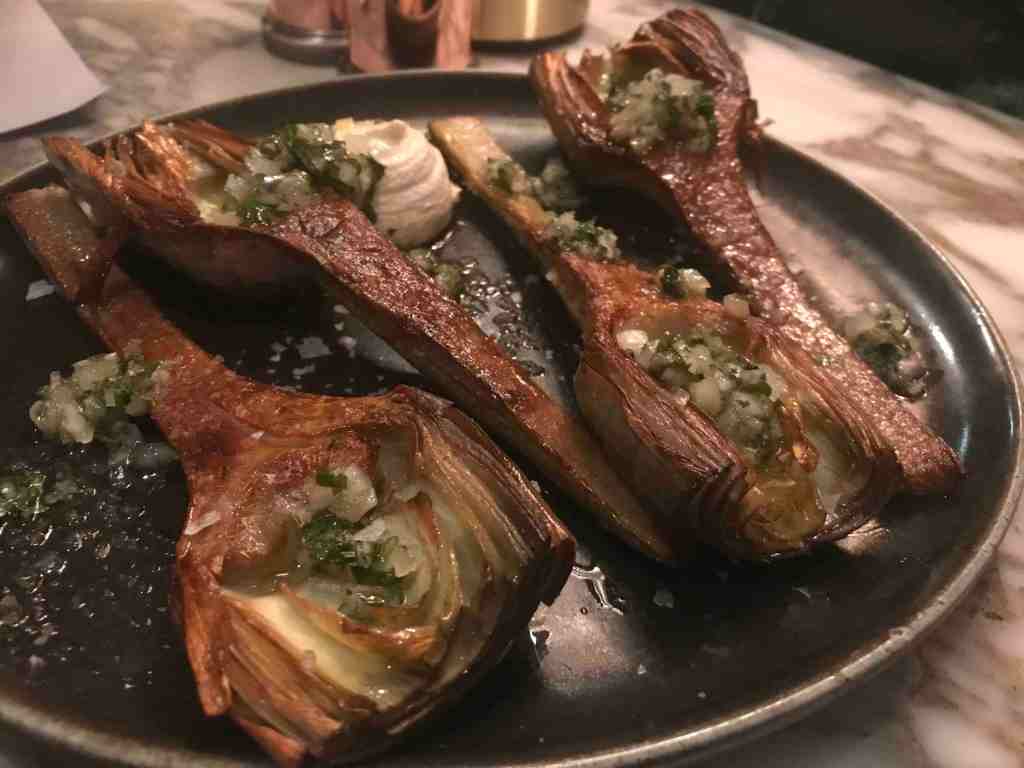
Caramelised violet artichokes were divine

It seems madness in retrospect that my guest Sarah and I ignored the cannoli option but no regrets about the house sundae for £8.50 – a homely homage to the in-season blood orange, gelato and caramelised, with whipped orange blossom ricotta and biscotta. 

It perhaps needed a Negroni to partner it, but we’d shared a bottle of Cerasuolo di Vittoria red (£42) from high profile Sicilian producer Planeta. It’s blend of Nero d’Avola and the fruitier Frappato. The name comes from the local dialect word for cherry but there’s exotic pomegranate flavours too that so match the food menu.

The Norma house sundae made a fitting finish

Voluptuous is the word for the fit-out, all marble and tiles, rich fabrics and intimate lighting, but avoiding the harem look. Downstairs at least. We explored no further, so engrossed were we in the parade of small plates. They do some obvious mains but this is the better way to explore Sicily. If ultimately the food felt more moreish than truly Moorish who cares? I wish we had its like in Manchester.

Stylish, intimate, the interior really works

Norma, 8 Charlotte Street, Fitzrovia, London W1T 2LS, 020 3995 6224. The prices are as of March 2020.

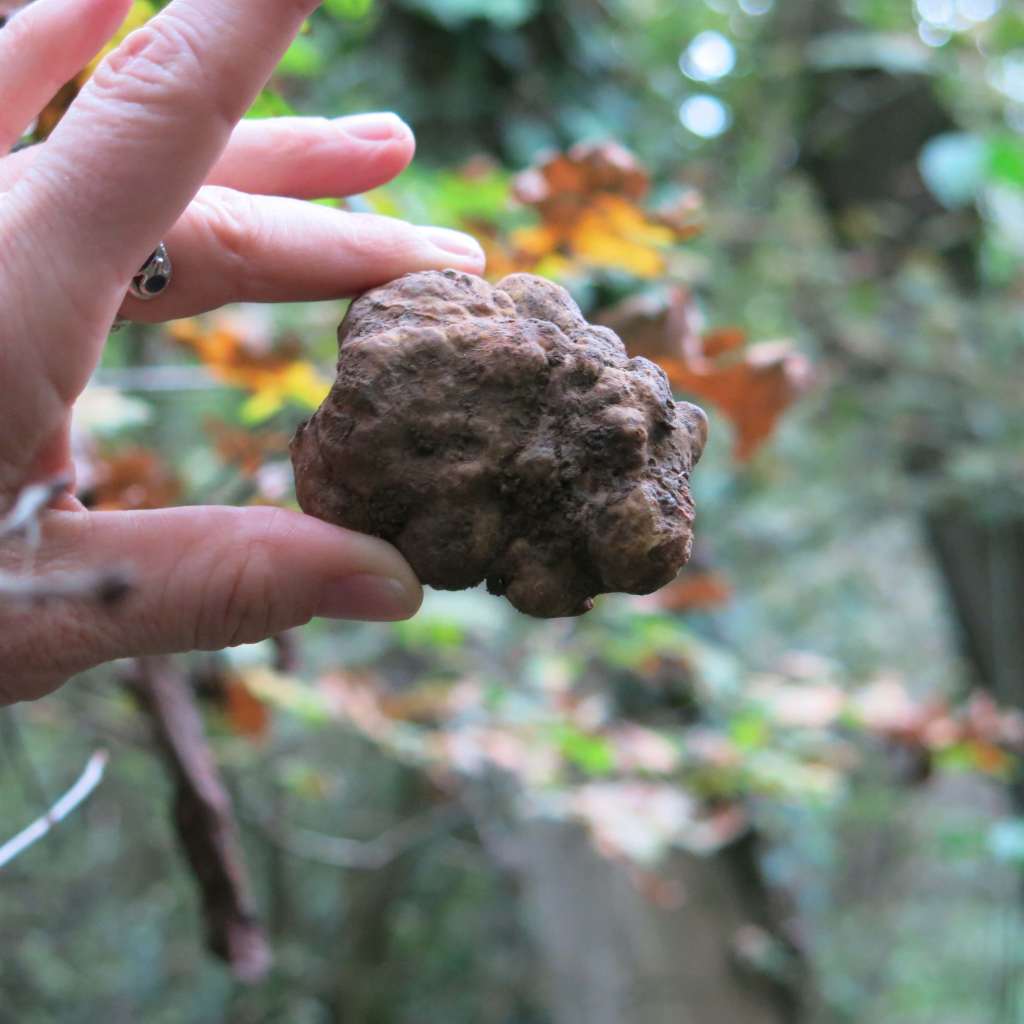
One of my early lockdown treats, my alternative to baking banana bread and sourdough (or hoarding more loo rolls than my neighbours) was to order a small sample of English truffle from The Wiltshire Truffle Company, shaving the precious tuber into scrambled eggs, its heady aroma permeating the kitchen.

Since when I’ve moved onto more and more arcane foodie explorations – bottarga, colatura d’alici, mostarda di cremona, cottechino. There’s an Italian theme developing here, so if I want to resume my truffle fixation I should really hang on until next autumn when the white truffles of Alba in Piedmont make their seasonal bow. 

Not that seasons are crucial in our global society. The Wiltshire suppliers don’t just confine themselves to Italy, France and the ‘full English’ they’ve done so much to promote. Their latest mail-out trumpets the arrival of Australian winter truffle, akin to Périgord truffles from South West France – “widely considered by leading chefs to be the best black truffles on the planet”. Big claims and you could compare these Aussie beauts with the company’s regular shipments of Italian summer truffles from hunters in the Tuscan and Umbrian hills. If your funds run to it. Truffles are wallet-busters. At auction the most prized varieties could cost you over £5,000 per kilo.

A local truffle trader on the streets of Alba

The most exciting and affordable way to encounter them is to visit Alba at peak Truffle Festival Time. OK, it hosts auctions flogging the most perfect specimens to connoisseurs and entrepreneurs across the world, but even the smallest cafes offer affordable menus showing their pride in the product. I know I’ve been there. And also, cutting out the middle men, I’ve trekked with hunters in the ancient forests as they unearth secret truffle patches with their specially trained dogs. Ditto in Oregon, USA, where I was invited to an altogether more academic Truffle Festival…

• There’s a documentary in cinemas, The Truffle Hunters, which is set around Alba and another UK online truffle merchant called TruffleHunter, which has a fine reputation. They’ll also sell you a professional standard truffle shaver. I’m wary of much that passes as truffle oil; truffle butter can be a better bet for a cheaper option to the real tuber.

But first, what exactly makes the white truffle so special?

Truffles are the fruiting body of a subterranean fungus usually found in close association with the roots of trees, their spores dispersed through fungivores (animals that eat fungi). Hence it was traditionally pigs that were trained to hunt these coveted delicacies. These days it’s more likely to be dogs. White truffles are more highly prized than the black. Growing symbiotically with oak, hazel, poplar and beech and fruiting in autumn, they can reach 12 cm diameter and 500g, though they are usually much smaller, between 30g and 110g. The flesh is pale cream or brown with white marbling which releases their powerful scents, not appreciated by everyone (let’s call it olefactory Marmite). There are an estimated 200,000 regular truffle gatherers in Italy, with the sector worth around €400 million a year.

Fresh truffles should be consumed more or less immediately although they will last for up to seven days in a domestic fridge.

Once upon a time in Alba 

I’d never associated hedonism with tramping through thick forest undergrowth in the dusk. Peering to see if a lean setter-cross has found the ideal tree root to dig frantically under. I am not alone here in the heart of Alba truffle country in an October unseasonally warm. Around me 15 other paid-up ‘Hedonistic Hikers’, cameras at the ready, also await a tuber epiphany. 

Our guides, trading under the name Hedonistic Hiking, are proud to include an authentic white truffle hunt in season as part of their ‘Jewels of Piedmont’ (Piemonte) walking tour. It’s not everyone’s idea of holiday heaven but it sets serious foodies salivating. Those who know what the fuss is all about when the autumn mists that give their name to the famous local grape variety, Nebbiolo vines coat the valleys of North West Italy’s Langhe region and the autumn wine harvest is nearly over. It’s now Truffle Time, all the way to Christmas.

The following day we’ll indulge in an early evening aperitivo and do the ‘passeggiata’, strolling around the truffle-scented squares and alleys of regional capital Alba, where the annual Truffle Fair is on to celebrate – and auction off – this lucrative delicacy. 

Still for the moment, at the gourmet equivalent of the coalface, there’s work to be done. 

Truffle accessories aren’t strictly necessary

Our truffle hunter, Marco Varaldo, expresses faith in his rookie hound, Laika, so new she doesn’t feature in his publicity material. Marco has a day job, but hunting for the lucrative truffles, with their intoxicating, almost aphrodisiac scent, is his passion. 

The white variety, the ‘tartufo bianco’, rarer and more expensive than the black and found mostly famously in this corner of Italy, is revered the world over by gastronomes (and expensive restaurants). Admiration isn’t universal – their earthy assertiveness nauseates some sensitive palates. I’m not in that camp.

The white truffle can’t be artificially cultivated. This is part of its unique appeal. They are sought for in certain jealously guarded locations, hidden at the base of oak, beech and hazel trees. You train your dog to recognise the pungent aroma and then snuffle them out of the soil and leaf mould. It all seems a mite random as Laika zips and zig-zags around, scattering leaf mould, but then…

The novice truffle hound comes up trumps

I don’t know what the Piemontese for Eureka is, but it is time to yell it. The pooch apprentice has struck gold – ‘white gold’. Marco quickly straddles Laika, snatching a knobbly clay-covered lump from her jaws, pocketing it and rewarding the dog with a far less expensive treat. We clamber to see what the fuss is about. Marco delicately brushes the muck off the white truffle and we all commune with its pervasive perfume.

Over the next couple of hours we collect further specimens and, later, part of the haul, assiduously shaved over the local tajarin pasta, will be the centrepiece of our supper at a little local restaurant called Mange. When truffles are abundant, near the source, they can be a surprisingly democratic treat. Just a few slices elevate a local beef dish, below.

Truffle heaven on a plate. It doesn’t get much better

We were staying in La Morra, which follows the pattern of all the settlements in the Langhe, which recently attained World Heritage Status. They sit on a hilltop above the vines, dominated by a castle, a church, usually both, and offer ample opportunity to taste the wines that have made this corner of Piemonte famous – Dolcetto, Barbera, Barbaresco (in one small enclave) and, above all, Barolo. 

One of of our walks, from our hotel, the Corte Gondina, to Barolo village itself, took in the family-run winery of GD Vajra at Vergne. I’ve been there before in the early summer to taste their excellent wines and, now the harvest complete, was welcomed back like an old family friend. Piemonte’s like this. It doesn’t feel like some calculating tourist honeypot. You meet it on its own terms. Just like the truffle.

The Ponzi vineyards at the heart of Oregon’s wine country

Oregon’s wine country is also home to truffles (and another festival)

The Willamette Valley, just south of Portland, is the epicentre of Oregon wine, notable for Pinot Noir that can arguably rival Burgundy’s silkiest reds. And where there’s great wine there’s usually a thriving food culture. Yet until I was invited to join the The Oregon Truffle Festival I had no idea the rolling hills around McMinnville are also home to both black and white varieties plus four Oregon natives. 2021 pandemic strictures meant it has gone virtual (you can pick up goodies via an online marketplace – truffle stout anyone?).

Truffle hunting Oregon style and there’s a reward here

All this is obviously off a normal tourist’s radar, but rolling Willamette Country’s wineries and fine restaurants aren’t. McMinnville makes a fine base for exploring. Stay in its red brick historic district, perhaps at the oddball Hotel Oregon, which has a rooftop bar and is decorated with relics of the building’s 115-year history and the town’s famous 1950 UFO sighting. You might also run into the ghost of a former resident, nicknamed John.

As in all the towns along the route, I grabbed a craft beer, this time at the convivial Golden Valley Brewery and Tap before sampling a festival special truffle vodka and local wine at the Elizabeth Chambers Cellars, one of many tasting rooms in the town. 

You’ll probably find it more fun to drive out to one of the country wineries to do your sampling. It sounds boringly generic but Willamette Valley Vineyards offers exceptional quality. Wine and truffles – the perfect marriage either side of the pond.

Truffle carpaccio – our festival reward

Yucatán or Oaxaca? Oaxaca or Yucatán? It’s a heavyweight contest. Celebrations of particular cuisines don’t come more comprehensive – and gloriously well illustrated – than two monumental, magisterial love letters to regional Mexico by David Sterling and Diana Kennedy.

Sterling’s Yucatán: Recipes From A Culinary Expedition and Kennedy’s Oaxaca al Gusto: An Infinite Gastronomy together weigh in at over 5kg. Both are published by the University of Texas, from a state that likes to think big. They’re beautiful too and immaculately researched.

Essex-born Diana, based in Mexico since 1957, is the doyenne of writers on Mexican cuisine. Even the Mexican government recognise her championing of their culinary traditions, often sadly debased – they gave her their highest honour for a foreigner, The Order of the Aztec Eagle. Oaxaca, her magnum opus, won Cookbook of the Year in the 2011 James Beard Awards. Similar US top table recognition for Yucatán arrived four years later; within a year its author was dead at the age of 65. 

Originally from Oklahoma, Dvid Sterling had a mega career as a designer before his chef talents saw him found, in the heart of the Yucatán, Mérida’s Los Dos – lauded as one of the world’s top 10 cookery school. That designer’ visual sense permeates a book that, like Kennedy’s, is the result of a lifetime’s intense research. Both could be seen as coffee table books but are so much more. I bought hers first and then found the courage to stump up the £48 for his.

This tortilla press has been a passport to a whole new world of tacos, burritos and enchiladas

The books became my lockdown lifeline. I dream one day of flying into Mérida, gateway to the beaches of Cancun and Turum but also a portal to visit the ruins that evoke the Mayan civilisation that flourished hereabouts. Or will Oaxaca 800 miles to the South West live up to DH Lawrence’s prose in Mornings in Mexico and the musings of Anthony Bourdain in Netflix’s Parts Unknown, where he encountered classic Zapotec (ie pre-Hispanic) cooking?

Pandemic restrictions gave me time and space to foster an interest in the regional cuisines of Mexico, as varied a those of Italy, say. It has resulted in a wooden box hosting 20 different types of dried chillies, a spice cupboard boasting epazote, Mexican oregano and achiote, a giant chaya plant prospering in a garden tub and a bright red tortilla press with bags of blue corn masa at the ready. Yes, I am also a devotee of Netflix’s Tacos Chronicles.

The watershed moment? The documentary Diana Kennedy: Nothing Fancy (available to rent on Amazon Prime for £3.49) tracks the now 98-year-old expat to her lair deep in the Mexican forests. This fiery, formidable cookery writer is the foremost champion of authentic Mexican cuisine and Elizabeth Carroll’s inspiring warts and all profile does her proud.

For over 50 years she has travelled the length and breadth of the country. The resulting books are light on illustration and design; the best the travelogue My Mexico: A Culinary Odyssey with Recipes. All that low key presentation is rectified by Oaxaca al Gusto: An Infinite Gastronomy.

Let’s be honest. Its sheer authenticity makes it hard to replicate dishes. There’s little chance I’ll be rustling up an iguana in a black mole sauce any time soon. For the uninitiated a mole is a rich chilli sauce with chocolate and nuts, not a wee underground critter.

Techniques cited too are equally intimidating. Her recipe for mole negro oaxaqueño calls not only for a specific type of clay pot (“it has to have a round base and a ‘collar’ around the top to hold in the heat”), but also for this pot to be cooked on a charcoal brazier. All this and I’m still trying to source an iguana (ready skinned).

Food preparation is labour-intensive in both Yucatán and Oaxaca

Kennedy’s ringing endorsement is on the dust jacket of Sterling’s Yucatán: “I know of no other book in print today, or in the past for that matter, that explains so meticulously the ingredients and history of the foods of Yucatán.” 

She herself had not given her full attention to this tropical peninsula, isolated from the rest of Mexico. Sterling makes up for it big time, exploring the three states it comprises – Yucatán, Campeche and Quintana Roo. The food is a melting pot of many traditions, Mayan, Spanish, Lebanese, French and more, all fuelled by remarkable abundance of raw produce. All these are catalogued in full colour at the start of Yucatán.

Chapters divide the book by geography — the market, the urban matrix, the fertile shores, the pueblos, as well as sections devoted to “pantry staples” and “kitchen technique.” 

At the heart of Yucatecán cuisine are the spice mixes called recardos, some powdered, some in paste  form, which you’ll find heaped up in every market. There’s no shame in using these essentially home-made bases for every recipe. Alas here you’ll have to make your own. Or travel to Yucatán. It’s on my post-pandemic bucket list.

It just pips Oaxaca because of a contemporary culinary cuckoo. In ultra-hip Tulum, south of suntan city Cancun, is Hartwood, New York exiles Eric Werner and Mia Henry’s restaurant between the jungle and the sea. Each provides the freshest wild ingredients to be transformed by the wood-burning oven that dominates the outdoor kitchen (I expect I’d pack insect repellent before visiting).

The food served at Hartwood is “addictive,” says Noma chef Rene Redzepi, adding, “It’s the reason people line up for hours every single day to eat there, even though their vacation time is precious.”

How do I know about it? I read the cookbook, of course,

©2021-23 Copyright Neil Sowerby unless otherwise indicated. All right reserved.