I ought to be reassured by Richard Corrigan writing “there’s no such thing as a recipe for colcannon really,” but all he’s doing in The Clatter of Forks and Spoons is dismissing the need for exact measurements or debating whether you can substitute kale for Savoy cabbage. The great chef is not jettisoning the spuds, bedrock of this rustic Irish classic.
Both colcannon and its country cousin champ can be made using fresh or leftover potatoes, but they have to be the floury sort, boiled in their skins. The texture is all wrong with waxy varieties. Parsnips can be added but mustn’t be a puree.
My ‘Colcannon Royale’ with celeriac and pancetta gilding the cabbage lily
The champ mash variant is proof, though that dishes mutate with the times. Originally it was made with stinging nettles – peasant stuff indeed – but over the years spring onions, green and white parts, became the norm. The word colcannon is from the Gaelic term cal ceannann, which means white-headed cabbage while cainnenin can mean garlic, onion, or leek.
But does all this looseness give me carte blanche to make colcannon with mashed celeriac, albeit kept deliberately lumpy? After all, the Scots equivalent of an avenue for leftover mashed potatoes, rumbledethumps, can easily incorporate swede or turnip, while England’s own bubble and squeak has licence to use up a whole gallimaufry of fridge remnants.
In this company, celeriac is a class apart, especially when the mash (never a puree) is augmented with cream and butter, then stirred into lacy Savoy and young leek, braised but retaining a certain bite. Oh and I couldn’t resist adding crisp pancetta to the mix. I call it my Colcannon Royale.
My combination of traditional coq au vin and colcannon was wickedly delicious
It would have made a fine bowlful on its own, but I partnered it with an old school coq au vin, which made for a testingly rich lunch. Before I had a much-needed lie-down I continued some cursory research into the role of colcannon in Irish life and its curious association with Halloween.
Indeed the first written mention was a 1735 diary entry of one William Bulkely, a traveller from Wales who had the dish on October 31 in Dublin: “Dined at Cos. Wm. Parry, and also supped there upon a shoulder of mutton roasted and what they call there Coel Callen, which is cabbage boiled, potatoes and parsnips, all this mixed together. They eat well enough, and is a dish always had in this kingdom on this night.”
Bulkely didn’t know the half of it. For Halloween the Celts developed their own souped up fortune telling equivalent of coins in Christmas pud. It all kicked off with a blindfolded spinster plucking from the garden the head of cabbage or kale that is to be cooked in the colcannon.
Charms were mixed into the dish itself. Which charm you found was seen as a portent for the future. A button meant you would remain a bachelor and a thimble meant you would remain a spinster for the coming year. A ring meant you would get married and a coin meant you would come into wealth.
To seal the deal unmarried women would stick the first and last spoonfuls of Halloween colcannon into a stocking and hang it on their doors. Guaranteeing the first man who walked through the door would become their husband.
There’s even a 19th century folk song, ‘The Skillet Pot’ that celebrates the dish:
“Did you ever eat colcannon when ’twas made with yellow cream, And the kale and praties blended like the picture in a dream? Did you ever take a forkful, and dip it in the lake Of the heather-flavoured butter that your mother used to make?”
Time to consult Alan Davidson’s Oxford Companion To Food, one of the greatest books in the English language. An immediate surprise in the colcannon entry is its adoption by the English upper classes in the late 18th century. According to one account: “A more elaborate mash was prepared of potatoes and Brussels sprouts, highly flavoured with ginger and moistened with generous amounts of milk and butter.” Now that is a ‘Royale rival’.
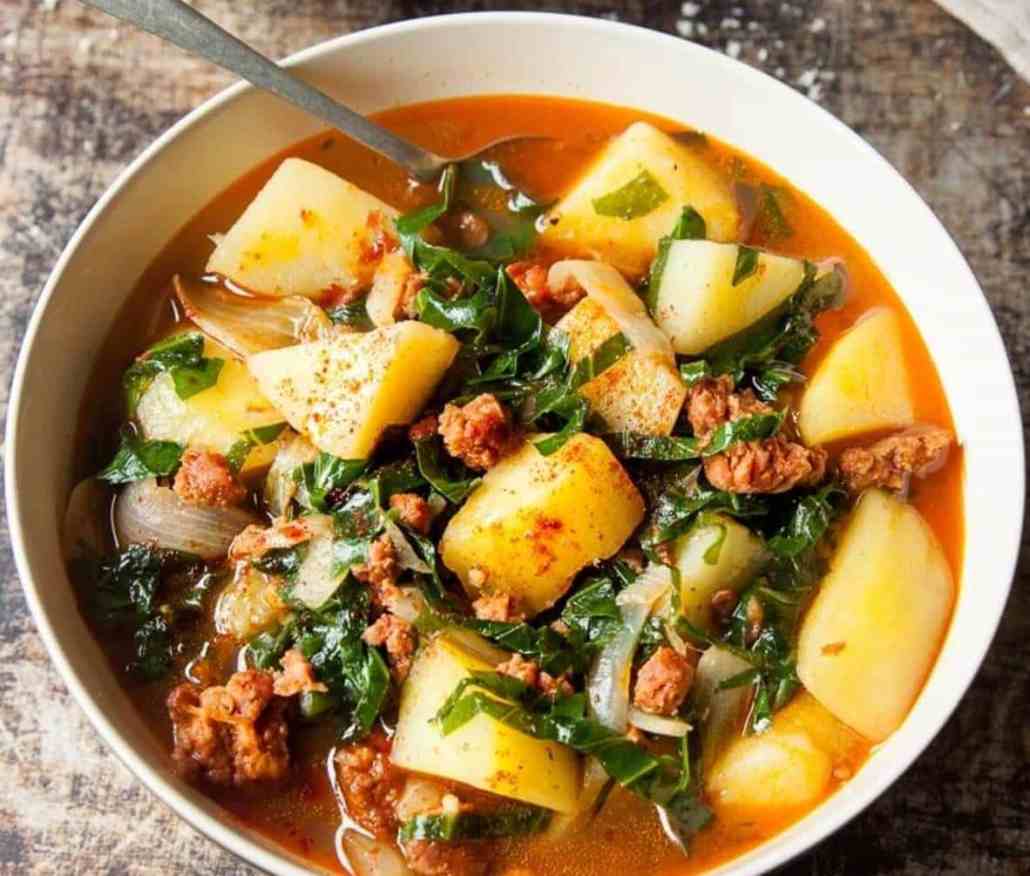
Caldo Verde is a distant Portuguese relative of colcannon and all the other cabbage/potato combos
Still for those lower down the social ranks it is so often a leftover dish. And I’ve still got three quarters of a Savoy cabbage and half a bag of Rooster potatoes. Onions, garlic and chorizo are yanked from the larder, chicken stock from the freezer and soon, small world, a big pot of Portuguese Caldo Verde is simmering on the hob. Shall we call it Sopa de Colcannon’?
https://i0.wp.com/www.neilsowerby.co.uk/wp-content/uploads/2021/09/Cabbage-scaled.jpg?fit=2048%2C1536&ssl=115362048Neil Sowerbyhttps://www.neilsowerby.co.uk/wp-content/uploads/2022/11/NS-typemark-v1c.pngNeil Sowerby2021-09-12 23:09:002021-09-14 23:19:24Ta-ta taties! But is celeriac in colcannon complete sacrilege?
Time was there used to be a new brewery opening every month in Manchester with cosy taprooms hard on their heels. That torrent of craft has slowed to a trickle with the emphasis now on established operations upsizing to bigger premises. Track are shifting up to Piccadilly Trading Estate opposite Cloudwater while both Beatnikz Republic and Blackjack have expanded into neighbouring arches.
Bucking the trend (though it has, appropriately, had the gestation period of an Indian elephant), is the Bundobust Brewery, which is opening from 4pm on Thursday, September 16, offering the group’s full repertoire of Gujarati street snacks and craft beer, much of it their own, created on the premises. So the kind of major, major opening we’ve been starved of. And it’s dog-friendly. Our chihuahua Captain Smidge (below left) approved even though spicy veggie is not quite his thing.
It’s located in the Grade II-listed St James Building on Oxford Street, a swift stagger from Oxford Road Station or the St Peter’s Square Metrolink stop.
The last time I was on site was February 12, 2020 and we all know what inhibiting factor for hospitality happened shortly after. Kitted out in a hard hat, I quickly recognised why Bundobust co-founders Marko Husak and Mayur Patel had fallen for the former car park with its wealth of period features – vintage alarm bells, glazed bricks and ‘Drive Slowly’ signage – plus a show-stopping giant glass atrium mirroring the Piccadilly Bundobust’s glass apex.
This is all on a much bigger scale, influenced by US brewpubs and with a focus on sustainable furniture. Each chair is made from 40 recycled plastic water bottles, while school desks have been repurposed into beer hall-style tables, complete with “I Woz ‘Ere” etchings across a 150-seat taproom and restaurant. All within a fully-functioning brewery that gleams with all the allure of a new toy. A toy that’s in the hands of a very experienced head brewer.
Dan Hocking, former main man at Holland’s world-renowned Uiltje Brewery, has spent the past year perfecting recipes behind closed doors in the state-of-the-art facility.
Bundobust’s brand new Vienna-style Lager, Cartway Lager, will be available exclusively at the brewery upon opening, taking its name from the historic ‘Cartway’ space within the St James Building that the brewery occupies. Hocking says: “Vienna Lager has a fantastic balance of sweetness and bitterness, and it’s the best all-rounder beer style to pair with food”.
On the opening day the first 200 pints are being given away, with the purchase of food and we expect lager demand will make it Goodnight Vienna.
Marko tells me: “We were due to open in May 2020. The past 18 months have slowed us down, but the delay has meant that we’ve been able to develop our beer recipes. Expect the familiar Bundobust vibe and menu, with the bonus of being in a working brewery”.
That 10-hectolitre custom-build is capable of producing 20,000 pints per month. The beer range will only be available, on rotation, at the Brewery and at the other Bundobust venues in Manchester, Liverpool and Leeds. They are designed to partner the award-winning food.
CHAITRO. 5% Nitro Chai Porter. Smooth and creamy Porter with roast malts, a whack of our Bundobust chai masala, and fresh ginger.
PEELA. 4% Pale Ale. Easy drinking hazy Pale, brewed with Azacca and Ekuanot hops. Loads of tropical fruit flavour.
DHANIA PILSNER. 4.8% Coriander Lager. Clean and crisp Czech-style Pilsner with a hit of citrusy toasted coriander seeds.
KIPSY BHAI. 4.8% Kellerbier. Traditional Kellerbier-style lager with German malts and hops. Clean, balanced and crisp.
EAST IS EAST. 6.5% New England IPA. New England-style IPA showcasing ever-changing combinations of the freshest hops.
WEST IS WEST. 6.5% West Coast IPA. Dank and bitter IPA. Piney and resinous, brewed with a rotating selection of the choicest hops. An absolute stand-out.
Bundobust Brewery will also be collaborating with the cream of UK brewery talent. Recent collaborations include Andhera Hoppy Black Lager with Deya Brewing Company, New Delhi Dazzler India Pale Wit with Northern Monk, and Salted Lemon Sour with North Brewing Co.
On a personal note, I have a small role in the Bundobust Odyssey. I was an early reviewer, for Shortlist magazine, of Marko’s pioneering Sparrow Bier Cafe in Bradford, ensuring it made the Top 10 UK craft beer bars, and as a customer wolfed my share of dosas, choles and chaats at Prasad, the Patel family’s acclaimed restaurant, now in Drighlington. In 2014 the two friends combined beer and veggie small plates to create the first Bundobust in Leeds (yes, Zelig-like I was there). The Brewery is just the latest chapter in a delicious indie story.
https://i0.wp.com/www.neilsowerby.co.uk/wp-content/uploads/2021/09/Dan.jpg?fit=2048%2C1365&ssl=113652048Neil Sowerbyhttps://www.neilsowerby.co.uk/wp-content/uploads/2022/11/NS-typemark-v1c.pngNeil Sowerby2021-09-08 18:07:442021-09-16 10:16:26Brewer Dan fuels the Spice Odyssey as Bundobust Brewery finally takes off
The Manchester Food and Drink Festivalkicks off on Thursday, September 16 with the full raucous backing at the Cathedral Gardens Hub of Mr Wilson’s Secondliners (above). As usual the Festival is packed with events and should profit from a huge public appetite for some kind of tasty ‘new normal’. Here is my choice of five very special MFDF opportunities to enjoy yourself and support a resurgent hospitality industry…
Tom Kerridge’s posh operation in the Stock Exchange Hotel will will be bringing the pub to the hub on Monday 20 September for a three-course feast with music, too. Expect potted Loch Duart salmon with apple jelly and cucumber chutney to start and a braised beef and cheese pie with English mustard for your main and a pud of banana custard with dates, pistachio and honeycomb. The Festival Beer Bar is there to add to the pub experience.
MFDF x Eat Well Dinner, Mana, Blossom Street. Tue Sep 21. £200.
This is the big one – a collab between some of the city’s finest chefs at its only Michelin-starred establishment, all to raise money for Eat Well, a social enterprise tackling food poverty in Manchester. Participating are Mana’s own Simon Martin, Mary-Ellen McTague (The Creameries), Ben Humphries (District), Eddie Shepherd (Walled Garden) and Anna Søgaard (Erst), each preparing one course. Tickets go on sale Friday, September 10. 25 spots only are available. Book here.
Much-loved Ancoats pioneer Elnecot are joined by their wine suppliers It’s Alive for a menu inspired by the British Isles. Natural wines will be paired with the likes of a Yorkshire hogget broth, a surf and turf and a rendang doughnut.
Exec chef Paco Perez and head chef Julià Castelló have designed a five-course gastronomic tasting menu that includes octopus, oysters, autumn rice with mushrooms, cheese and figs plus poussin, beetroot and truffle. There’ll also be one limited-edition Macallan whisky that pairs with this feast. Choose Barcelona but also choose Scotland via Manchester. Choose a ticket that costs £125.
Launching a run of seasonal events, Open Kitchen, inside the People’s History Museum, showcase a selection of wines from the Bolney Estate in Kent, a winery known for its sustainable land management since 1972. Taste six wines across the evening (I particularly recommend the Lychgate red) with table snacks and a wider small plates menu available to purchase.
https://i0.wp.com/www.neilsowerby.co.uk/wp-content/uploads/2021/09/M-Wilsons.jpg?fit=2048%2C1365&ssl=113652048Neil Sowerbyhttps://www.neilsowerby.co.uk/wp-content/uploads/2022/11/NS-typemark-v1c.pngNeil Sowerby2021-09-07 23:08:002021-09-10 15:17:07Five Manchester Food and Drink Festival star turns to sink your teeth into
I love the shaded downstairs bar at Kala in Manchester. It’s a place of assignation. You just slip in off King Street and slide onto a tall stool. Open a copy of The Times at the obituaries section to signal you are here to the swarthy man in the Crombie three seats away. There is information to be shared in covert fashion. The fate of nations may hang in the balance over a glass of Sicilian Catarratto. Even that name is suggestive of subterfuge.
OK, it’s called fantasising. As I await the October publication of a posthumous John le Carré novel I have daydreamed back into the treacherous world of George Smiley and his Russian nemesis, Karla. Just lose the R. The swarthy contact is an old PR pal I’m meeting for lunch and urgent post-lockdown gossip. He may know where the bodies are buried but he’s not telling.
There’s a table awaiting us upstairs at this Manchester link in Gary Usher’s Elite Bistros chain. You can’t avoid mentioning the patron; it’s like failing to affix ‘Putin’s’ to ‘Russia’. Inimitably he’s been back on social media recently, defending one corner of his empire against some bolshie customer while in June he re-emphasised his crowdfunding genius by raising over £150,000 in 24 hours to create a catering arm for his company.
As you can gather I’m a fan of Usher and his bistros and I’m glad they’ve held it all together during the pandemic. I’ve dined at four out of the six and never had a remotely unsatisfying experience.
This last time is no different. The set menus are pricier than of yore – three courses for £40, two for £35 – but worth it. There’ s a canny continuity about the Elite food offering in the hands of exec chef Richard Sharples. The unsurpassable wobbly custard tart is nowhere to be seen, alas, but the stalwart featherblade of beef glows out of the menu sheet and has to be my main. The swarthy one take a punt on the plaice.
First, though, the starters. Mine is an uncompromising looking dish of squid rings two ways, au naturel (encasing charred aubergine, lemon and confit garlic) and blackened on a red pepper sauce. Perfectly Med. My ‘sinister companion’ finds equal joy in the creamiest puddle of burrata hosting cubes of pickled kohlrabi with a blackened spring onion and fennel seed dressing.
The surprisingly fleshy plaice is grilled whole, then dressed with salted lemon butter. Watercress and straw potatoes are ideal simple accompaniments and there’s also ‘leek ash’, which is superfluous.
Which brings us finally to the signature bistro dish that is as magnificent as ever – the featherblade, here partnered with ruby beetroot ketchup and parmesan truffle chips. Oh and a summery bottle of Jean-Marc Burgaud Beaujolais.
So what is the secret of the Kala featherblade?
We went undercover to find out. Actually we Googled it. First you need the right cut from a grass-fed beast – a long flat muscle tucked in behind the shoulder blade, also known as flat iron. A line of connective tissue runs through the featherblade’s centre; cooked down this creates a gelatinous texture that generates great gravy and consistent texture. The blade is best slow-cooked whole.
The Elite Bistro chefs braise it for up to eight hours in chicken stock and red wine, along with a mirepoix of onion, carrot, celery, leek, garlic, thyme, and rosemary. To create a sauce they stick the mirepoix in a huge pan with a load of chicken bones and simmer overnight. Next day the liquid is strained, then reduced with red wine until it’s a rich, glossy sauce.
It’s not finished there. Usher revealed the final secret touch in an interview: “We take the blade and put it in a pan of this sauce. Then literally someone stands there spooning the sauce over the meat, again and again, for 20 minutes. What happens is, as the sauce reduces, it’s getting thicker and stickier. Every time you put it on, it’s creating a layer. That’s where the sticky, naughty dirtiness of it comes from.”
https://i0.wp.com/www.neilsowerby.co.uk/wp-content/uploads/2021/09/New-feathrblade-scaled.jpg?fit=2048%2C1536&ssl=115362048Neil Sowerbyhttps://www.neilsowerby.co.uk/wp-content/uploads/2022/11/NS-typemark-v1c.pngNeil Sowerby2021-09-07 15:57:382021-10-10 13:14:40Featherblade – the official steak secret of Kala success
Finnochio’s, a San Francisco night club, famed for its drag queens, just failed to make it past the Millennium, having traded for decades on the Italian slang word for homosexual, rent boy even. Why the generic name for fennel took on queer connotations I have no idea; I’m just happy to pay upfront for the culinary satisfaction Finnochio always brings – in all of its forms.
In particular I’m hooked on fennel pollen. It’s a speciality of Tuscany, but it is taken to the next level in Calabria, Italy’s deep south, where they call it “the spice of angels”. It soars way above earthbound fennel seeds.
Calabria, source of the finest wild fennel pollen, dubbed ‘spice of the angels‘
Hand harvested, like the equally labour intensive saffron, and dried in the sun, it comes at a premium (around £16 for 15g). Understandably, each flower head will only yield about a ¼ teaspoon of creamy yellowy pollen at the most. Yet it offers a defining taste of the Mediterranean summer with a little going a long way. A pinch will provide an explosion of liquorice, anise and citrus, which used sparingly, can add an extra dimension to both sweet and savoury dishes.
Combine it with Himalayan pink salt to create a rub for pork, use it to energise an orange and olive oil cake or simply finish off a pasta dish with a dash. I add it to stocks and soups obsessively.
You could, of course, harvest your own but wild fennel is not at its most intense in my Yorkshire hinterland. And bear in mind, ye who balk at picking wild mushrooms, fennel and poisonous hemlock (remember Socrates) are both in the same carrot family, sharing distinctive umbrella-shaped flower clusters; those of fennel are yellow, hemlock white.
If you’re still keen peruse these instructions by Californian master forager Hank Shaw, one of my go-to gurus in all things wild.
As an alternative, two reliable online sources of authentic fennel pollen are Spice Mountain and Sous Chef.
Fennel pollen and Florence fennel bulb are related but offer different culinary properties
So how does the pollen relate to fennel bulb?
A perennial home favourite of mine has been a fennel risotto with vodka (recipe here) from the River Cafe cookbooks, enhanced of late by the addition of my beloved pollen. It uses those white bulbs we know as Florence fennel, dubbed ‘pregnant celery’ by the writer Maggie Stuckey and adapted to be used as a vegetable, particularly good with fish.
Both wild and domesticated fennel are he same plant, Foeniculum vulgare, the feral stuff only differing because it rarely sets a bulb. Fennel is tough, appropriately enough for giving its name in Greece to Marathon (the place with much fennel). It is herbaceous, meaning it “dies” every year and regrows from the root in spring.
All that rebirth stuff chimes with the mythological (and health promoting) status of finocchio. It was inside a stalk of dried fennel that Prometheus, defying Zeus hid a charcoal lump from the chariot of the sun to bring the gift fire to humankind.
My little pot of fennel pollen is my own gift of pagan sunshine that keeps my kitchen civilised throughout the dreary winter.
“Good cooking is a result of a balance struck between frugality and liberality,” wrote Patience Gray in the introduction to her seminal 1986 work, Honey From a Weed, an account of her peripatetic roughing it around various primitive corners of the Med.
“It is borne out in communities where the supply of food is conditioned by the seasons. Once we lose touch with the spendthrift aspect of Nature’s provisions, epitomised in the raising of a crop, we’re in danger of losing touch with life itself.”
Her mid-century foraging across forest and shoreline is a far cry from our well-stocked global larders. She never purchased a plastic pack of ‘wild’ rocket in her life. It grew outside her rustic stone dwelling and like all the other edible ‘weeds’ tasted far more intense.
Not quite at this level, but a return to frugality may be closer than we think as post-Brexit the supermarket shelves are increasingly stocked with tumbleweed. The grande dame of making do, Patience’s ways may yet be a virtue.
As a dog owner myself I’m reticent about urban foraging; at the same time I’m averse to buying drab pre-packed veg, preferring to grow my own limited crops or to seek out growers (preferably organic) who cut out the middle man.
I invariably take two bags to a local market on a Sunday, where farm folk travel over from West Lancashire, guaranteeing 80 per cent of their seasonal, conventional produce to be from their own fields (lemons I don’t expect from outside Ormskirk). Two bags? To fit in the bunches of beetroot, carrots, celeriac and radishes all with their ample fronds still attached.
They are the tops, in more ways than one. We are talking young specimens with bright, spry leaves and stalks; if they are muddy and wilting just chuck them. And fear not they aren’t toxic; indeed they are rammed with goodness.
Juicy beet bits are reminiscent of rainbow chard – a member of the same family – but I also love the uber pepperiness of radish tops added to a South Indian dal. It takes moments to turn either into the simplest of fresh salads. With the iron-rich beetroot briefly blanch the stalks and reunite them with the leaves, dressed with a splash of sherry vinegar and olive oil.
Carrot tops contain around six times more vitamin C than the root, plus potassium, calcium and phytonutrients. The abundant lacy leaves soon lose their swish, so I’d recommend swiftly turning them into a pesto that does not lose by it slight bitterness. By all means blend the tops with native hazelnuts, rapeseed oil and cheddar or, better still, go the Ligurian way (minus the basil but using pine nuts, parmesan and extra virgin olive oil. If you’ve got me trofie pasta in the pantry all the better. I substituted linguine.
Radish tops are the most perishable of all. Separate them, store in a fridge and use within 24 hours. Perhaps substitute them for spinach in a herby filo pie with feta and nigella seeds or just wilt them in butter with grated nutmeg. Postscript: they are perhaps the most nutritious of the trio. They rank right up there with broccoli and kale in terms of antioxidants, while they’re also packed with vitamin C and calcium.
https://i0.wp.com/www.neilsowerby.co.uk/wp-content/uploads/2021/08/Beets-scaled.jpg?fit=2048%2C1536&ssl=115362048Neil Sowerbyhttps://www.neilsowerby.co.uk/wp-content/uploads/2022/11/NS-typemark-v1c.pngNeil Sowerby2021-08-30 18:50:032021-08-30 19:05:23Beet, carrot and radish tops – chuck these beauties at your peril
One trip down Manchester memory lane for me is to check my Bhangra Beatnikz beer cocktail recipe remains on the Dishoom website.
Still there. It won best cocktail at the last Too Many Critics charity dinner held in the city with seven food writers battling it out in the Manchester Hall kitchens of the newly arrived Indian restaurant group. It was all about raising money for Action Against Hunger. If you must know, my hake moilee was also awarded best dish – mainly thanks to copious amounts of coconut milk and head chef Naved’s team holding my hand.
The date? Monday March 18. The last time I crossed the threshold of Dishoom’s latest loving homage to the Irani cafes of old Bombay (now Mumbai). Opened early last century by Zoroastrian immigrants from Iran, there were almost 400 of these cafés at their peak in the 1960s. Now fewer than 30 remained before Covid. Who knows what the future holds for them?
“Their faded elegance welcomed all: courting couples, sweaty taxi-wallahs, students, artists and lawyers. The cafés broke down barriers by bringing people together over food and drink. Bombay was more open and welcoming for their existence.”
That warm hospitality applied equally to Dishoom Manchester – even if the ‘faded’ bit was a mite more studied – until the lockdown closures.
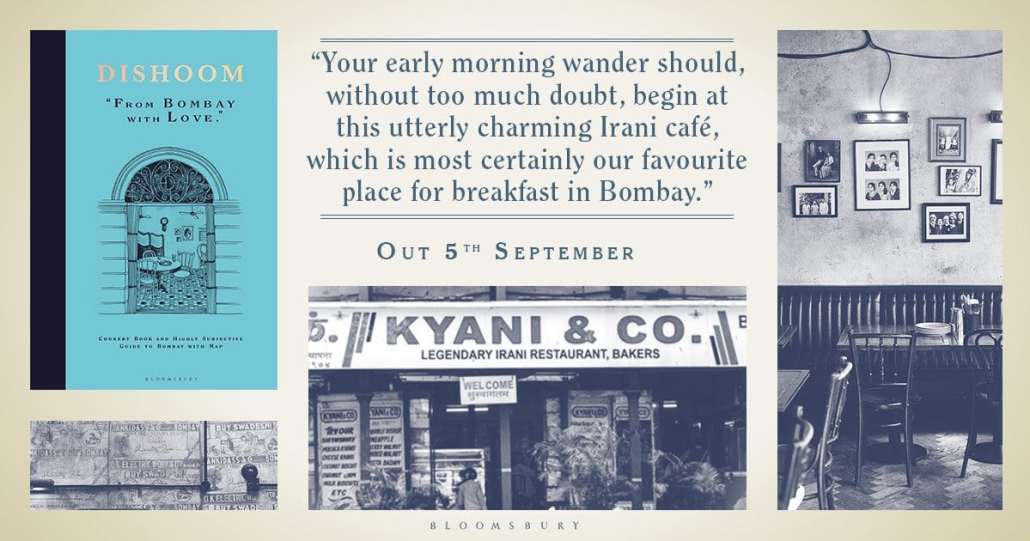
During those barren, frightening periods I kept my passion for Dishoom’s food alive by cooking from the pages of Dishoom ‘From Bombay With Love’ (Bloomsbury, £26). With its evocative photographs and a retro design, it’s arguably the most vivid and elegant cookbook of recent times. Not just about food, it was also an eccentric travelogue about a city that has captivated me on both my visits.
I cooked from it a lot, even essaying their signature black daal via a short cut recipe that didn’t require 24 hours in the pot and much sturdy stirring. To attempt their bacon naan (pictured above with Ghanesh) seemed sacrilege, though. The home kit for that groundbreaker did tempt me, but I never ordered. Now finally when all the Dishooms – in London, Manchester, Birmingham and Edinburgh – are thankfully open again, I couldn’t resist a home delivery ‘taster’ before resuming direct Dishoom fan duties. No, not as a punkah wallah, just a punter.
What a line-up that arrived on our doorstep with full instructions
OUR DISHOOM HOME FEAST
Feast is the right word, a well balanced selection of Dishoom classics: House Black Daal, Mattar Paneer, Lamb Sheekh Kababs, Murgh Malai, Bhel, Kachumber, and Tawa Rotis. To accompany it there’s a bottle of Mango Lassi, and for pud a sweet, creamy Gulkand Mess. A very attractive line-up.
The whole assemblage held its own against my favourite menu kits – from Northcote, Hakkasan and Clays Hyderabadi Kitchen. Few real kitchen skills were required. Accompanying printed instructions were clear (I didn’t bother with the videos). Preparation time was posited at 45 minutes, which was about right. They never warn you of the washing up time after!
Trying to balance grilling the lamb (Sheekh Kababs) and chicken Murgh Malai) with stove top cooking the Tawa Rotis was the only bit that got me hot under the collar (oh for a couple of chilled Bhangra Beatnikz at my elbow). Standout dish was the paneer with peas, but all the dishes felt restaurant standard and authentic, not the cobbled together, outsourced disappointments of certain home deliveries. Not naming names.
The whole package costs £60, to serve two to three people. We augmented it with our own saffron rice and a Sri Lankan coconut dal (Meera Sodha recipe) to ensure it fed four. It was more than ample. Leftovers? A stylish Dishoom tea towel and four metal skewers (for the lamb and chicken) we shall treasure.
Buy Home Feast here. You can also upgrade your kit to include a bottle of Int3gral3 Italian natural sparkling wine for an extra £20. For every kit Dishoom donate a meal to charity partner Akshaya Patra.
https://i0.wp.com/www.neilsowerby.co.uk/wp-content/uploads/2021/08/Finished-meal.jpg?fit=1280%2C856&ssl=18561280Neil Sowerbyhttps://www.neilsowerby.co.uk/wp-content/uploads/2022/11/NS-typemark-v1c.pngNeil Sowerby2021-08-25 17:23:382021-08-27 13:36:20Dishoom Home Feast delivers a gateway to India on a plate
Ominous warning for the recipe I was about to challenge myself with. Spicy Mutton and Tomato Biang Biang noodles. What could possibly go wrong? Not the roasted tomato and mutton broth constituents of this adaptation by Pippa Middlehurst of a classic dish from Xi’an, eastern hub of the Silk Road.
No, it was the handling of the biang biang that was likely to shoot me in the foot. Basically you’ve got one chance to stretch the noodle dough to the right silky, elasticity. BIang Biang is the onomatopoeic sound the dough makes when you slap it on the worktop. Pippa says it takes practice to perfect; after much trepidation and the required minimal contact I landed lucky with my metre lengths of noodle. Comparatively. The final dish, laced with coriander, cumin and star anise, was gorgeous.
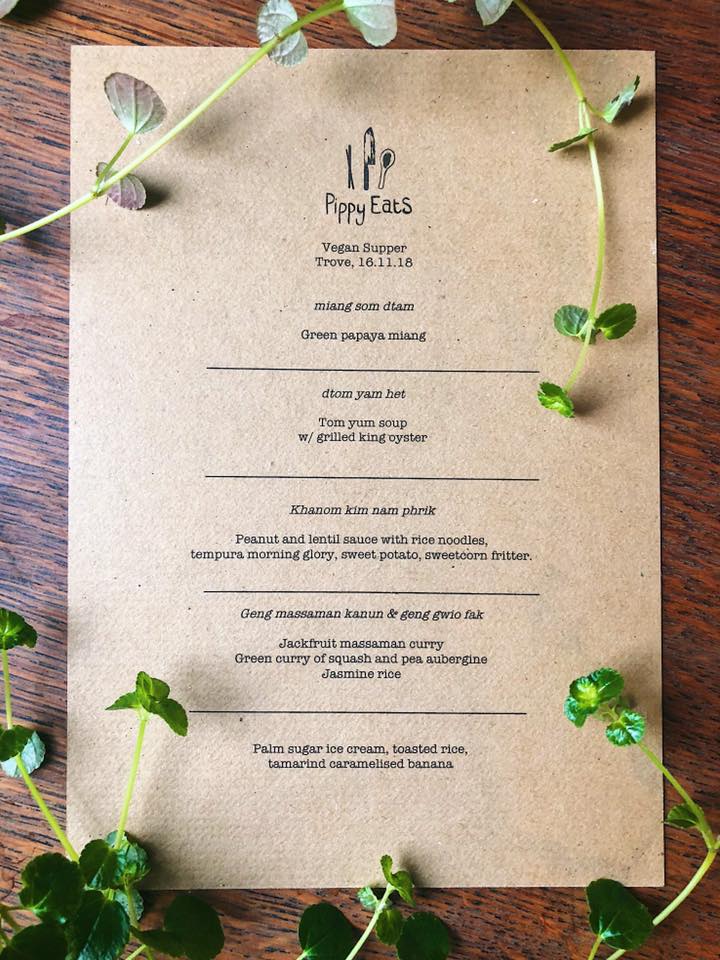
It’s from Bowls and Broths (Quadrille £16.99), sophomore cookbook by the cancer research scientist turned supper club maestro, aka @pippyeats, after the huge success of her debut, Dumplings and Noodles.
The new book will be published on September 2, ahead of the launch of her food school and fully-equipped community cookery space for hire, Noodlehaus in Ancoats later in the year. It might well fit the bill for any further educational initiation of mine into the noodlesphere. So far £43,775 has been pledged in a Kickstarter Campaign.
This base in an old mill is the obvious next step for Pippa, winner of the BBC’s Britain’s Best Home Cook in 2018. She quit the lab that year to run cookery workshops and supper clubs around Manchester under the Instagram soubriquet @pippyeats. Result of travels around Taiwan, China and Japan, including noodle school in Lanzhou, was Dumplings and Noodles.
Her latest local al fresco expedition was setting up stall last weekend at Platt Fields Market Garden, providing high class ballast for their Deya Brewing and Friends event. Yet another sign of a new wave city food culture that transcends traditional restaurants and bars.
As for her own project, she told my colleagues at Manchester Confidential ahead of her Kickstarter launch: “I am so excited to be able to create my dream cookery school in the heart of Manchester. The building is in an old mill and has the most incredible natural light, which will be amazing for the photography workshops I will be hosting. The space will be open to all and I am looking forward to working with the community to provide a space that people can come and learn about cooking as well as share my love of cooking.”
That love of cooking bubbles over (like my biang biang noodle pot) in the new tome, which lives up to its manifesto: ‘Build a bowl of flavour from scratch with dumplings, noodles and more’.
Broth is the key. So my next dip into Pippa’s bowl-centric universe is a ramen, a dish I love but – guess what? – have never quite got right. She proposes a Tonkotsu Tsukemen. Just need now to source the requisite amount of pork bones and chicken feet.
It’s a culinary keepsake from her time in Japan and bears the inevitable proviso: “The noodles were thick and bouncy with a perfect amount of resistance and chew.” For someone whose ‘al dente’ pasta has been dubbed by my nearest and dearest as ‘al dentist’ it’s yet another challenge.
Noodlehaus, 37-49 Devonshire Street North, Manchester, M12 6JR. pippyeats.com
https://i0.wp.com/www.neilsowerby.co.uk/wp-content/uploads/2021/08/NOODLES-scaled.jpg?fit=2048%2C1536&ssl=115362048Neil Sowerbyhttps://www.neilsowerby.co.uk/wp-content/uploads/2022/11/NS-typemark-v1c.pngNeil Sowerby2021-08-24 13:40:412021-10-20 21:28:30Bowls and Broths – how I got strung out in my quest for Pippy perfection
Much has been made of the North’s dominance in the National Restaurant Awards announced this week with four out of the five best establishments up here and 16 in the top 40. Manchester only contributed two, both in Ancoats – Mana at number 11 and Erst, just along Murray Street, at 47.
A truer reflection of the city’s strength in depth came hot on the heels of that national Top 100 when the shortlist for the Manchester Food and Drink Awards 2021 was announced. A record 113 nominees will contest the 15 categories, all the winners to be chosen entirely by the public for the first time in the MFDF’s 24 year history.
It is a matter of expediency, post-Pandemic logistics meaning the normal ‘mystery shopping’ by the judging panel is impracticable. The Manchester Food and Drink Festival , sponsored by Just Eat, kicks off on September 16 and the Awards will be presented at the Ticket Hall at Escape to Freight Island (pictured above) on Monday, September 27.
As a senior MFDF judge my personal wish is for normal service to be resumed in 2022, but this fresh formula of the public picking their favourites from shortlists drawn up by the judges is an interesting litmus test. Ideally it will reflect the increased foodie sophistication of the city and its satellites alongside pride in the hospitality culture that has survived a torrid 18 months. One new category likely to be hotly contested is ‘Best Foodie Neighbourhood’.
You can vote for each Award via the MFDF website or app. The app can be downloaded on theApp Store here and Google Play here. The closing date for votes is 11.59pm on Monday, September 20. Fancy a ticket for the Awards presentation dinner itself? Tickets are on sale here.
Here are the 2021 Manchester Food and Drink Awards Nominations:
Summer 2021 marks two milestones in the post-industrial bubble that is Kelham Island. Cutting edge restaurant Jörohas expanded beyond its upcycled shipping container base to open a four-room boutique hotel nearby, complete with chef’s table, while the homely pub at the heart of this buzzing urban community is celebrating 40 years of just being The Fat Cat.
A maverick umbilical cord links that almost bucolic cask beer mecca, whose in-house brewery spawned the iconic Pale Rider ale, to the sleek steel (well it is Sheffield) Krynkl complex where chef Luke French has transformed the city’s culinary expectations over the past four years. It reached No.34 in the Estrella Damm National Restaurant Awards (announced on August 16).
Post lockdown it seemed a good time to visit both pioneering venues. So a tram from the station (after a Thornbridge Jaipur refresher, naturally at the Sheffield Tap on Platform 1B), then across the busy Shalesmoor roundabout to a suddenly hushed warren of backstreets to establish the respective locations.
Only disappointment of a dazzling day, the Kelham Island Tavern had been forced to shut
A detour might have been in order, too, to the Kelham Island Tavern, arguably the city’s best craft beer pub venue but – sign of the times – there was a Covid-closure note on the door. Still the pre-amble ramble did allow me to soak in the atmosphere of a district that defines industrial heritage and cool renewal…
Renewal, of course, means creatives clustering in shiny new build apartments or brick-heavy warehouse conversions with a casual bar/dining scene springing up to service the influx. And occasionally big hitters show up such as Mana in Ancoats, Brat in Shoreditch or Casamia on the Bristol waterfront. Sheffield has its own contender…
JÖRO
One slight tremor as I entered the penumbral interior, the normal 50 covers reduced as a Covd-safe measure. Would the widening horizons of Luke French and his wife and business director, Stacey Sherwood-French impact on the core operation? Not jut th hotel project but also street food spin-offs. Fear not this was an outstanding £65 eight course lunch that ate up three joyful hours. I’m not sure I’m a fan of the building, shaped from 29 shipping containers but I am of a serving staff that included one who had a sake qualification (thanks for the New Mountain Junmai recommendation) and another who knew his way round the new Spanish wine frontiers of Ribeira Sacra and Sierra de Gredos.
Chef Luke has previously expressed his desire to “find something similar to L’Enclume or The Black Swan at Oldstead, somewhere rural we can forage in and with a smallholding to grow our own ingredients.” For the moment he’s as urban as it gets, albeit with some amazing rural suppliers. Just a Michelin Bib for the moment but the food I encountered across my tasting menu surely deserve a star. Manchester’s own Mana deserves a second, but that’s a whole other matter.
Jöro Highlights? Virtually everything, from an early introduction to Chawanmushi, a savoury Japanese custard here flavoured with smoked eel, a tiny tranche of which also featured alongside salmon roe and pancetta. Wortley wagyu rump in a tartare with celeriac and mustard was less groundbreaking but equally wonderful. I should have asked about the Wortley provenance (it’s the fabled beef of Japan but reared in South Yorkshire’s grasslands); I didn’t make the same mistake with Doncaster peas. “You’ll taste them and know why,” was the enigmatic response. Their yoking with mint and lamb fat yielded more detailed exegesis. The key to the dish was ‘lamb garum’ where lamb mince and koji had been given 10 weeks in a water bath to create a fermented base for this incredible dish. For more on garum readmy recent article.
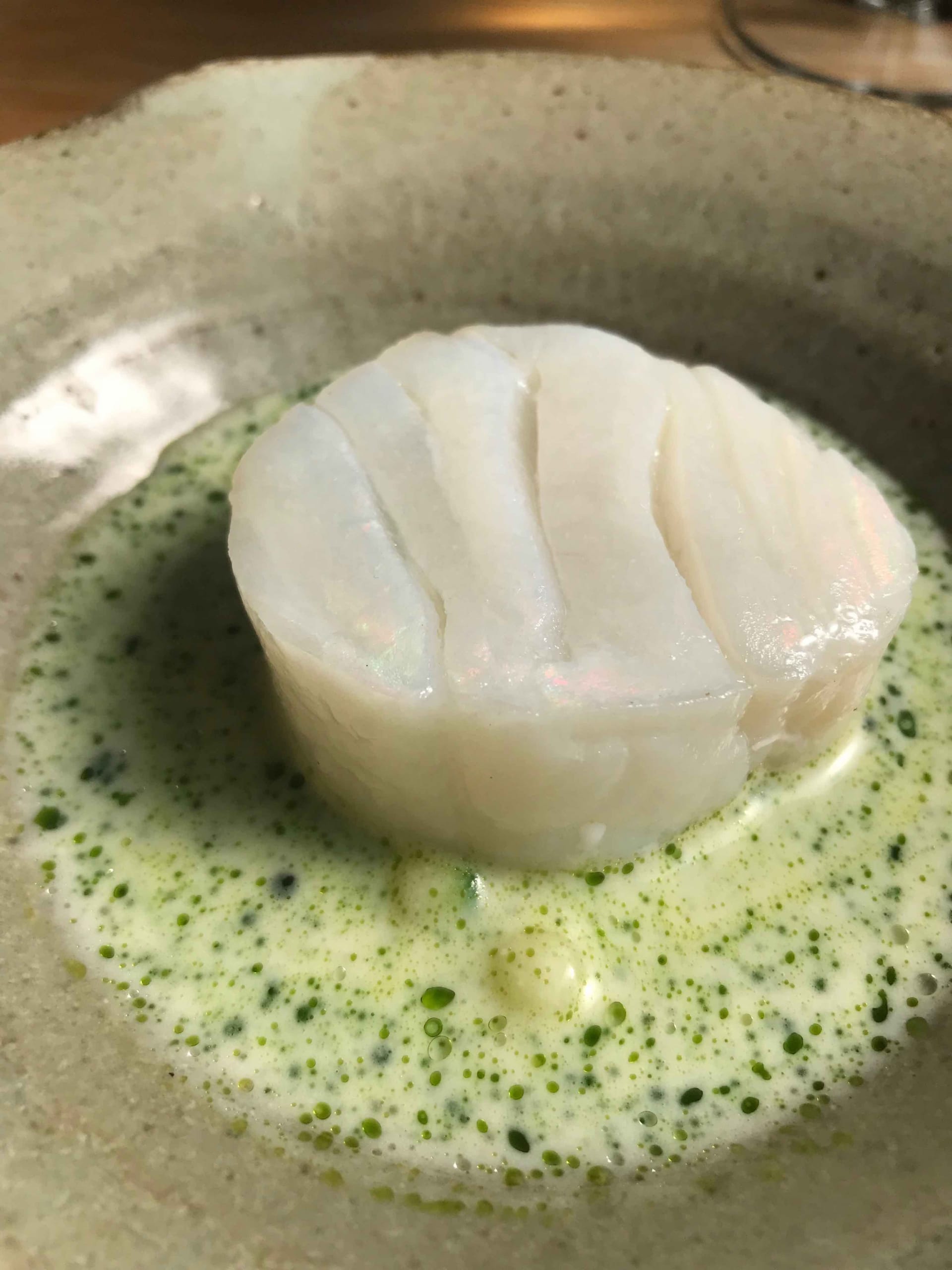
What I really loved about the whole experience was a straightforward punch of flavours, whether a pure tranche of Cornish cod on a bed of smoked haddock and creme fraiche sauce or among the desserts the stand-out strawberries with lemon verbena and organic yoghurt. You get the dedication to our own raw materials filtered through an appropriated Japanese and Norse (hence the name) sensibility.
Stays and JÖRO Packages can be booked online via thislink.
THE FAT CAT
Neither of my two destinations is on the island proper, man-made in the 13th by diverting water from the River Don to power medieval mills. So a distant seed sown for the Industrial Revolution proper, the catalyst for which in Sheffield was the opening of John Crowley’s Iron Foundry in 1829, tapping into river power abundant coal and iron ore.
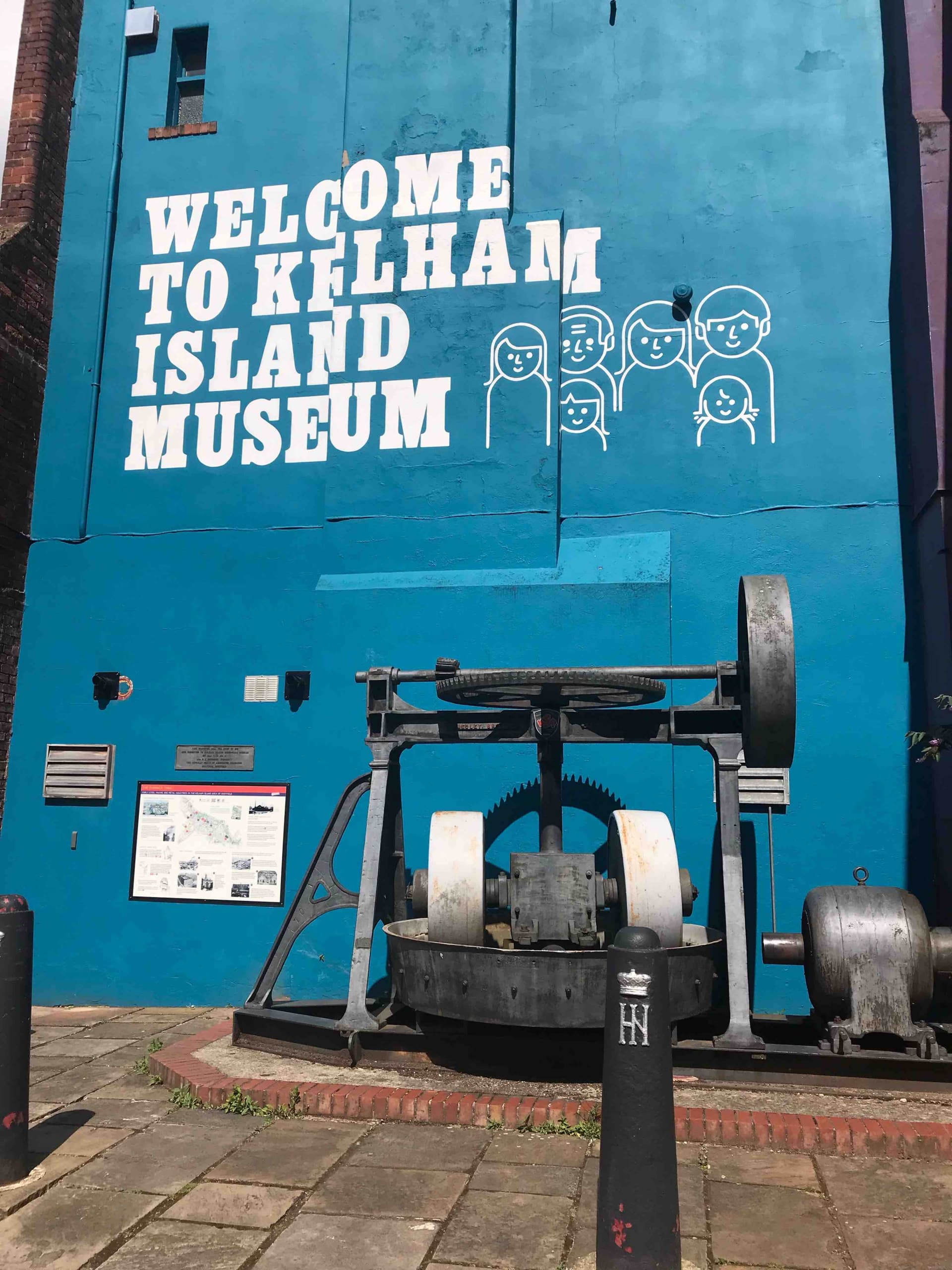
If you want to get the full story visit the Kelham Island Museum, which was created 40 years ago. You can see it prize exhibition for free because the only Bessemer steel converter still in existence stands in front. This egg-shaped black hulk quickly revolutionised 19th century steel production.
Thirsty work, the industry in its heyday and pubs like The Alma just down the street of that name existed to slake those forge-driven thirsts. Then came the long slow decline of the Steel City. From the Seventies onwards recession and dereliction battered Kelham.
It took a brave man to acquire the Alma, change its name to the ironic Fat Cat and start brewing his own exceptional beer in the yard.
That was the grand plan of Dave Wickett, the new co-owner. The pub introduced Sheffield to a cavalcade of guest beers and by 1990 when Dave took sole control he created his own Kelha Island Brewery in the beer garden. The pub survived flooding in 2007; the level is charted on the exterior alongside that of the The Great Sheffield Flood of 1864. It survived Dave’s early death and is still brewing in premises across the street.
In 2004 their flagship beer Pale Rider was voted Supreme Champion Beer of Britain at The Great British Beer Festival. It has hardly been off the hand pull ever since, though a recent month’s hiatus perturbed devotees.
Matthew Curtis, in his highly recommended new survey, Modern British Beer (CAMRA Books, £15.99) descrIbes Pale Rider thus: “There was some malt character in the flavour, soft and candy-floss sweet, but only fleetingly. This allowed a crescendo of hop to build with notes of candied orange peel to the fore, but they were restrained throughout with a balanced bittersweet finish forming at the end of this orchestral flourish.
A touch flowery but a good summary of my ‘aperitif’ experience before lunch over at Jöro. Old meets new in one memorable Kelham Island afternoon.
https://i0.wp.com/www.neilsowerby.co.uk/wp-content/uploads/2021/08/Kelham-main-scaled.jpg?fit=2048%2C1536&ssl=115362048Neil Sowerbyhttps://www.neilsowerby.co.uk/wp-content/uploads/2022/11/NS-typemark-v1c.pngNeil Sowerby2021-08-17 10:05:112021-08-17 10:14:26Saluting Jöro and the Fat Cat on Sheffield’s paradise Island