Serendipity? You bet. What are the chances of booking a dining destination to celebrate a ‘big’ birthday and in the intervening months it wins its second Michelin star and three days before your stay gets elevated to the UK’s number one restaurant?

Ynyshir was already a hot ticket for the foodie who likes to be challenged; now chef Gareth Ward and his design-savvy partner Amelia Eiriksson are having to fend off a press pack desperate to find out what all the fuss is about on this distant edge of Wales.

We already had a fair inkling. We holed up there exactly six years ago and adored the embryo project the pair had embarked on after taking full ownership. Since when we’ve traced from afar the radical transformation of this once whitewashed hunting lodge outside Machynlleth, once owned by Queen Victoria. A doom-laden redecoration, a ram’s skull motif and brown sheepskin throws off a Game of Thrones set, a soundtrack rumoured to make Nine Inch Nails sound like loungecore and a 32-course Japanese-influenced tasting menu that has ‘imminent overdraft’ written all over it. Bring it on.

Some time after we had polished off 15 fish courses – riffs on lobster, shrimp, scallop, crab, hamachi, blue fin, black cod and madai via a sensual overload of nahm jim, wasabi, yuzu, miso, sesame– Ynyshir really kicked off. A volcanic fire pit was ignited outside the window while a mirror ball pierced every corner of the penumbral dining room and I could have sworn the DJ ratcheted up the decibels.

Luckily we had been assigned one of two tables by the window and Captain Smidge, our gourmet chihuahua, had snuggled down on a rug oblivious to the hubbub, even missing the Wagyu beef three ways which he would have wolfed. Most of the dishes would have been far too spicy for him and anyway most were one-bite size. Hard to pick a favourite. The Welsh lamb spare ribs were sensational, ditto the blue fin tuna, the scallop with duck liver or the miso cured black cod with aged kaluga.

Impeccably behaved Smidge had been given special dispensation to sleep in the main house and to join us and 22 other souls on Yynyshir’s epic culinary voyage. The large couple from Essex, who had booked the chef’s table, looked quite blown away by the perfect storm of the adjacent kitchen brigade, with Gareth Ward as Captain Ahab on the bridge, silhouetted against the flaming grill.

A quiet date place this ain’t, yet our dinner experience had started in calm fashion on our arrival at 3pm. Like the other guests, we were invited to ‘check in’ for the meal before being shown to our rooms. Overnight stays are part of the package. 

In turn you are taken out from your lounge drink to be introduced to a large box of raw produce that is the inspiration for the dishes ahead. Beware getting nipped by the live crab. Your MC then composes a taster bowl of ‘Not French Onion’. It was a signature statement in 2016 – Japanese dashi stock flavoured with onion oil, diced tofu, pickled shallots, sea vegetables, onion and miso purée and brown butter croûtons. I conjecture this chawanmushi (savoury custard) has been refined but it remains utterly delicious. 

Next up is a session with Ynyshir sommelier Rory Eaton to discuss your wine (or sake) requirements for the evening. The list has stratospheric bottles but also a few you’d class as accessible. We went middle ground by the glass – Alsace Pinot Gris, South African Chenin Blanc, Chablis, South African Pinot Noir and a Barolo. Rory, a class act, remained attentive to our vinous needs throughout the evening. 

A similar professionalism pervades the operation. Three days before, on the Monday Gareth and Amelia had to be leant on to make the trek to London, where they triumphed at the Estrella Damm National Restaurant Awards. No over the top celebrations, mind. Tuesday, 200 miles away, was to be business as usual. Even a scalded foot wasn’t keeping Gareth from the pass. Having risen through the ranks at Hambleton Hall and Sat Bains, the towering County Durham lad is nothing if not driven. Do not expect him to cater for your dietary requirements. You are there to eat HIS food.

In a corridor near our ground floor room hung a chef’s jacket proclaiming Yynyshir’s two Michelin star status. That achievement arrived through a deliberate policy to shake up expectations of country house dining. On our first visit it was a benign luxury country retreat. Not chintzy old school, but certainly decorous, quite at odds with the Japanese techniques/lamb fat base of dishes coming out of the kitchen. Hand in hand with a ramping up of the Orient influences and an obsessive investment in the finest raw materials (local, yes, but if the best has to be imported, so be it) came that radical reworking of the look of the place, inside and out. 

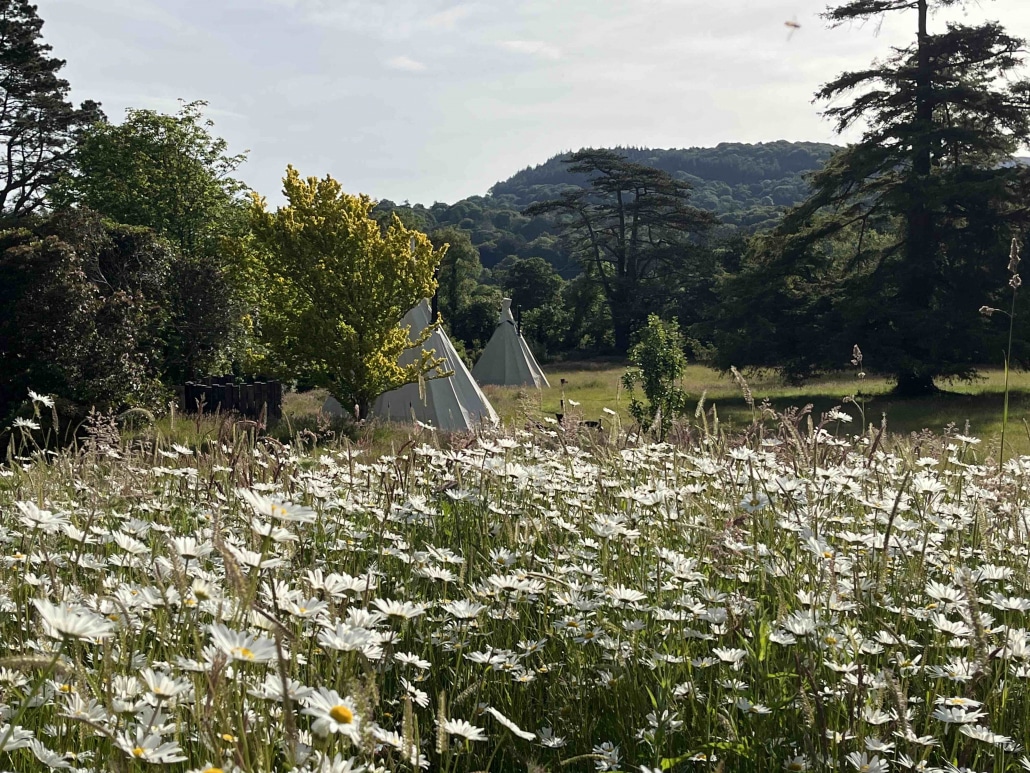
Moody dark blue and grey makes a statement. As does the two teepees viewed across rewilded grounds, thronged with chest-high ox-eye daisies on our visit. They were our vista as we opted to sample the first five courses outside by the (unlit) fire pit, revelling in the kind of heat wave rarely encountered around the Dyfi estuary. 

Fortunately, our ground floor bedroom – yes, moody dark blue decor – was cool in every sense. Not that we had much time to spend in the space that was formerly the lounge/bar area (before and after above). Ynyshir is a high octane experience.

By the time we reached the seven puddings, including a playful Alphonso take on a Bakewell, we were flagging, yet rallied around an old acquaintance from first time around. Gareth’s deconstructed ‘tiramisu’ is a great splatter of coffee cake puree, vanilla mayo, chilli crémant gel, coffee, mascarpone granita and a grating of intense 100 per cent chocolate.

The finale? Well, no. Further Valrhona in an ‘after dessert’ in the bar. Single origin Madagascar Manjari daringly paired with shitake mushroom and kaffir lime… a final stroke of genius from a remarkable, unique restaurant experience.

Ynyshir Restaurant and Rooms, Eglwysfach, Machynlleth, Powys SY20 8TA. 01654 781209. Lunch or dinner £350. Prices start at £495 per person for a house room plus dinner (drinks extra). The grounds are also home to a ‘pub with casual dining’ marquee, Legless Fach. Check out my original Ynyshir review and discover the nearby shrine to austere priest poet RS Thomas, the amazing RSPB reserve over the hill and the charms of eco-friendly Machynlleth.

Is my ‘Weeaboo’ (look it up) brother working his way through the letter T in the Japanese foodie lexicon? First up for my Christmas present he provided me with the kit to create Takoyaki; now for my birthday a Tamagoyaki pan set arrived. 

I mastered the former delicacy, fried octopus in crispy dashi batter doughnuts; more practice may be needed for the latter,  a rolled omelette geared towards breakfast or the bento box (lunch box). Perhaps on the pan’s debut the four month-old kimchi filling was a soggy step too far. I care not that Korea intruded; the Japanese are not always purist at the snackier end of their cuisine. Still maybe a toasted wafer of nori might have been a better bet. Dashi soup stock is also popular with grated daikon radish perhaps.

With the rectangular pan, pink as sakura cherry blossom, came, equally roseate, a brush for oiling and a paddle for omelette flipping. Oh and a black oblong plate on which to slice and display my Tamagoyaki. My brother kept the tee-shirt.

Ingredients were lined up. Four very fresh eggs to be beaten with the inclusion of one tablespoon of soy sauce, the same amount of mirin (I fought shy of recommended sugar) and a pinch of salt. A splash of cooking oil brushed onto the 8in x 4in pan (called a Makiyakinabe), on a medium heat and we are ready to start. Entry level stuff. It could all be more delicate but it’s early days..

Add a third of your egg mix into the heated pan. Once the egg has cooked slightly so that the top is still slightly uncooked, spread on a third of the kimchi, push it over to the side of your pan, turning over. Add oil. Then add another third of the egg mix, allow to cook slightly and add another third of the kimchi. Turn over again. Add oil. Repeat all this for a final time, rolling up to create layers. Lift gently on to black plate, let it cool and then slice horizontally.

Had it turned out the neat cylinder so suited to sushi selection (see main image)? Not really, but I’ll be working on it. Here’s how the experts do it: https://youtu.be/2VJBABOA22Q

Regular readers of this website may have registered my passion for charcuterie. Be it the remarkable Italian artisanal products championed by one of my local haunts, Coin in Hebden Bridge or the Modena poaching sausage Cotechino replicated by a Liverpool charcutier trained in South West France.

British charcuterie has remained under the radar but, like our wine and cheeses, is now promoting itself as a real contender against continental opposition that has been curing or  smoking the stuff for centuries. Our own traditional brawns, haslets, chines, potted meats, even hams, are a whole different matter. We may have left Europe but when it comes to  a sharing platter it seems it has to be that French term charcuterie.

In Manchester I’ve recently enjoyed a selection (above) from Curing Rebels at Flawd wine bar whose chef/co-owner Joseph Otway is a huge fan of his fellow Brightonians, while the strong Scottish influence at the Butcher’s Quarter (Tib Street and Deansgate Mews) has seen them featuring nduja and salamis from Edinburgh’s East Coast Cured. A widely available pioneer, using no nitrates in their charcuterie, is an old favourite, Trealy Farm in Monmouthshire and the outstanding Cobble Lane Cured flies the flag for London across some prestigious establishments.

What all the operations have in common is combining curing skills gleaned from Europe’s finest with Britain’s exceptional raw materials.

Yorkshire border based, I’m happy enough to rely on Porcus three miles away as the pig flies, but there is Tyke competition from the multi-award-winning Lishman’s of Ilkley, who’ve stuffed a lot into 35 years of sausage making, pies, bacon and all things porky.

I’ve come late to their salami, though, the high profile of which has coincided with Emma Lishman joining dad David in the family business, the roots of which go back much further.

On the Lishman’s website David recalls: “I grew up on a farm where we raised pigs and turned them into bacon and hams, on the stone slabs in the cellar. My father taught me the recipe and method. He also grew up on a farm near Harrogate, and during WW2, the POWs from the local camp were brought to work on the land. One German was a butcher back in his homeland, and showed father how to cure and preserve the meat from the pigs on the farm. It’s a method we still use today.”

Stalwarts of Q Guild of Butchers, the body representing Britain’s best quality independent meat retailers, the Lishman team hand-craft their products in-house featuring pork from only Yorkshire high welfare outdoor bred pigs. It has won them a raft of awards, including two golds in the 2021 British Charcuterie Live Awards for their Yorkshire Black Bacon and Pork Hazelnut & Cider Salami.

My verdict on the Lishman charcuterie

Yorkhire chorizo This take on the spicy Spanish speciality won best gluten-free at this year’s Smithfield Star Awards run by the Q Guild. It is silky, the fat well balanced.

Fennel salami My favourite, even when not called ‘Finocchiona’. I am a fennel freak, liberally dusting many a dish with expensive fennel pollen, so maybe for me the spicing could have been more assertive.

Coppa A real depth of hammy flavour from cured pork shoulder loin.

Smoked York Ham Delicately smoked without compromising the creamy fat. Being honest, with all these products (available online via the website) and other UK providers I do regret mostly having to buy them ready sliced and packaged, however sustainably. I like slicing int the whole thing. A small grumble in the midst of such quality.

Courageous is the only way to describe opening a self-funded 12-cover, tasting menu based restaurant in a small Lancashire town with no history of cutting edge dining.

Restaurant Metamorphica is soft launching in Haslingden, as I write. Well behind schedule because of unprecedented times, yet lockdowns allowed chef/patron (ie one man band) Steven Halligan to create from scratch the project he has dreamed about since his catering student days. 

His promise was always apparent. By the age of 20 he won Greater Manchester Young Chef of the Year; two years later he was runner-up for the North West Young Chef of The Year. All this as he was fast-tracked through some impressive kitchens – notably Room and Mr Cooper’s House and Garden in Manchester – justifying his decision to spurn university. Even in 2021, while diverting towards Metamorphica, he made it to the semi-finals of National Chef of the Year.

Yet it always rankled that from the age of 16 cold water was poured upon his vision to one day run a restaurant of his own. The aim to follow in the footsteps of his chef heroes across the world, whose hefty cookbooks grace his new dining space in a former pub. Now 28, Bury-born Steven is ready to prove the doubters wrong.

Herculean best describes the effort put in by him and his father to make this happen. Crowdfunding was never going to be an option without the necessary high profile. So it has been a case of amassing used kitchen equipment for a song, hands-on graft turning an aborted Indian grill conversion into a destination more suited to the constantly evolving menus he wants to put out. The only impossible to avoid outlay was to an electrician. Steven reckons hiring outside help instead of doing it all themselves would have cost them an undoable £150,000.

What best symbolises the rebirth of the corner site just off Haslingden town centre is the window retained from its previous incarnation as the Roebuck boozer versus the butterfly logo that partly justifies the ‘Metamorphica’ monicker of Steven’s restaurant.

Ovid’s Metamorphoses sprang to mind. Not so. I’m happy to accept it might have its foundation in Metamorphica, the classic magic trick associated with Houdini and brought brought up to date by musician Criss Angel. Maybe Steven is metaphorically breaking free from a box that constrained him. Maybe referencing the metamorphic rocks caused by compression? Or mirroring the shape changing stages out of which a butterfly emerges.

A thing of beauty. So is the menu also? On paper, certainly, and after relishing a couple of handsome snacks I can’t wait to sample the real deal when all is settled in…

The first ‘development’ menu featured brioche and cheese; tomatoes, lovage, cream; house loaf and butter; mackerel, cucumber, chervil; pollock, herb tea, parsley, pink peppercorn, sesame, mead; pigeon, plum, rye; goat’s cheese, mirabelle, sorrel; lamb, apple, turnip; anise, apple, honey; almond and meadowsweet millefeuille; blackcurrant pate de fruits.

Until June 30 he is serving this kind of menu for ‘Just The Chef’ events each night, hosting 

only four customers at the open kitchen chef’s table. It will cost of £63 per head (with an optional six-strong ‘drinks journey’), compared with the eventual £78 per person for for 11 courses, maximum covers per night 12. For the foreseeable it’s to be just Steven both in the prep kitchen and front of house with his dad helping with the washing up. The chef’s own first taste of hospitality was as over a sink as a kitchen porter at his Auntie’s gastropub in 2008.

From there it has been a prodigious learning curve – eating in Copenhagen’s finest or the Eleven Madison Avenue, the New York three star of one particular inspiration, Daniel Humm, or working a stage at Philip Howard’s The Square (now closed) in London. Check out the Metamorphica website and you’ll find encomiums to many heroes and mentors, global and local, but also a fierce disillusionment with the way hospitality can stifle talent, too.

In his two years at Mr Cooper’s House and Garden (2AA Rosette and Michelin Bib Gourmand), inside Manchester’s Midland Hotel Steven rose to sous chef, becoming interim head chef for his final six months. You sense in the end he was keen for a personal challenge elsewhere. A short consultancy management role at Stockport’s influential Where The Light Gets In helped whet his appetite to do his own independent thing.

Hence Restaurant Metamorphica. Still a work in progress this steely mission statement about following your dream. Haslingden as an acclaimed gourmet destination? I definitely wouldn’t bet against it.

Restaurant Metamorphica, 1 Charles Lane, Haslingden, Rossendale, BB4 5EA. 01706 614617.

I’ve been contemplating cruelty a lot lately. No, not inflicting it personally. There are already enough despots and apparatchiks around showing no remorse for what they do to their fellow man. I’m more interested in how we can all turn a blind eye to the suffering that may underpin our simplest pleasures. Easy to write off a legacy of organised humiliation and torture of entire races. War? No, Sugar.

Penning The Dark History of Sugar obviously disturbed food historian Dr Neil Buttery. At our meeting in a cafe near his Levenshulme home he came across as a gentle, civilised soul, slightly regretful of his own sweet tooth (we disagreed on the necessity for Bake-off) after putting our centuries-old sugar rush in often gruesome context. 

Gung-ho apologists may rage against the dumping of a slave master’s statue by trumpeting what a glorious boon the British Empire was for those under its yoke. But, in the crowded field of global exploitation between the 16th and 19th centuries, British  explorers, slave traders and plantation owners certainly ‘refined’ levels of cruelty exceeding those of colonialist rivals.

That 1791 political cartoon above, called Barbarities of the West Indias shows a cruel overseer plunge a slave, claiming to be ill, into a kettleful of boiling sugar syrup to ‘warm’ him up. Nailed to the wall behind are a dismembered arm and amputated ears (British Museum).

You survive the hellish boat journey from Africa and all that awaits you is the tyrannic treadmill of working in the cane fields and dangerous factories. Black lives didn’t matter.

Across the Caribbean as slaves heavily outnumbered masters and their downtrodden British servants there was always a fear of rebellions, so every savage means was used to break their spirit as much as their bodies.

From 1807’s The Penitential Tyrant below shudder at the iron mask, collar and spurs used to restrain slaves.The masks were often fitted with tongue depressors, preventing swallowing; collars had long spurs so they could not lie down or sleep.

Such revelations were all grist to the anti-slavery mill slowly grinding along towards Abolition in 1834, when vast amounts of compensation allowed slave owners to retire in luxury back to Blighty, country houses, statues and all. They left behind chaos as ‘freed’ slaves discovered they weren’t entirely free and sugar operations found all kinds of back door ways to continue to exploit a captive workforce. Production would shift across the globe with all kinds of political and social consequences.

Meanwhile, back across the Atlantic, from the mid 18th century onwards sugar had become an essential part of the middle class diet alongside fashionable coffee and tea, seen as healthy alternatives to booze. A far cry from the luxury spice it had been at the court of the extravagant Richard II as supplies filtered in from the East. Dr Buttery has done a terrific job in crushing a vast web of historical detail into barely 200 pages.

Our americano and latte have just been brought over. Neither of us takes sugar with them. Our chat has now moved onto the sugary legacy of ill health. A spoonful of sugar may help the medicine go down but it’s the catalyst for billions of dental cavities.

The patron saint of tooth decay appears to be Queen Elizabeth I, whose licensing of what was essentially piracy opened up the New World to sugar cultivation and slavery. Her sugar kick addiction was fuelled by whole banquets given over to the stuff, shaped into dolphins, elephants mermaids and the like. Result her legendary rotten black ‘tushy pegs’.

After extraction of many of these and the consequent collapse of her lower face she constantly covered it up or stuffed her mouth with rags. A later monarch, Sun King Louis XIV, did the same after losing all of his teeth to sugar by the age of 40. He also banned smiling at court in Versailles. It was likely he suffered from Type 2 diabetes, a consequence of a sugary diet that has snowballed ever since. A dark history indeed.

Ironic that the day Neil and I meet up – and I put a face to the evolutionary biologist turned chef behind the podcasts – our bedevilled government backtracks on cracking down on the obesity epidemic. 

Delayed for at least a year is the proposed ban on “buy one get one free” deals on junk food and a pre-9pm watershed for TV advertising, Continuing to encourage cheap food and drinks high in sugar, salt and fat is apparently a measure to alleviate the cost of living crisis. Let them eat cake!

The Dark History puts our sugar-dependent diet in historical context, charting the rise of breakfast cereals (“by 1921 there 60 brands, most liberally laced with sugar”) and commercial cakes and biscuits. Then there’s jam, not the kitchen garden preserve of yore but, aimed at the working city dweller, an industrialised product – “made from fruit of inferior quality or even the left-over pulp from some other food manufacturing process and only made up around a third of jam by weight.” 

And, of course, it was advertised as good value and nourishing, a fitting partner for the white bread and strong tea which in the 20th century remained a working class staple meal. All not so far removed from today’s fast food conglomerates who disguise the amount of sugar and salt (and all sorts of unhealthy shelf-live extending additives) in their products. And don’t get me started on the diet advice scapegoating of healthy fats to get sugar off the hook.

Neil Buttery insists he didn’t set out to write a political book, but his hugely readable and recommendable Dark History chimes with so many current preoccupations about food poverty, obesity and, of course, Black Lives Matter. 

Another coincidence on the day we met: a Home Office deportation flight took off to Jamaica, carrying British-raised Afro-Caribbeans guilty of various previous offences. Any excuse and an absence of compassion. Previous flights, to fix immigration loopholes, had strong Windrush generation connections. The legacy of slavery is not easily sugar-coated. 

A Dark History of Sugar by Neil Buttery is published by Pen & Sword in hardback at £20. Check out his blog British Food: A History. and the allied podcast. He has a further website, Neil Cooks Grigson, where he works his way through the great cookery writer Jane Grigson’s 1974 classic, English Food. 

A chilling brush with slave heritage

As a travel writer I’ve been lucky enough to visit Caribbean islands – Jamaica, St Lucia, Antigua, St Vincent, Mustique… and Barbados. On that latter island, after severing ties with Britain, there are plans to build a new heritage site next to a burial ground where the bodies of 570 West African victims of British transatlantic slavery were discovered. 

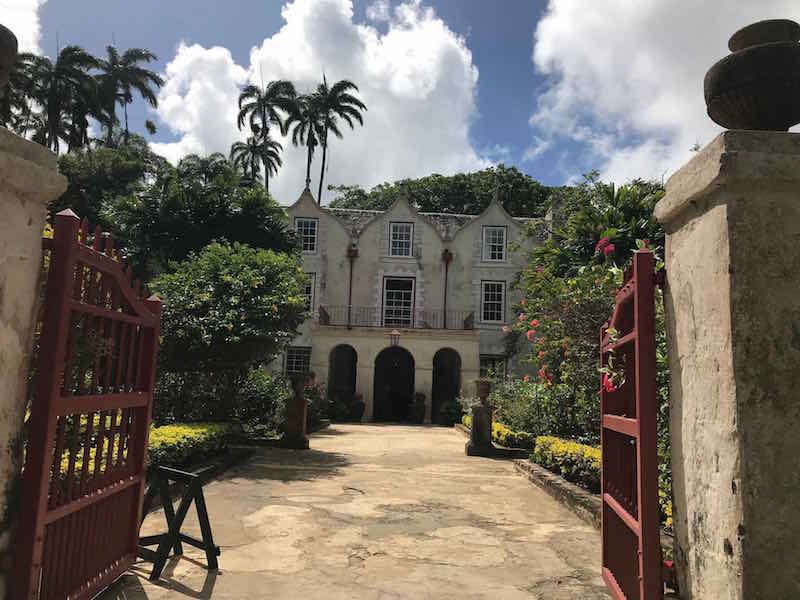
It will complement the existing Barbados Museum and Historical Society in Bridgetown. For a more vivid echo of a turbulent colonial past I was recommended St Nicholas Abbey. One of only three Jacobean mansions left in the whole Americas, the gabled old house set among mahogany trees summons up the ghosts of those early plantation owners.

At first encounter it’s a serene spot. Current owners the Warren family have been in situ for under two decades and lovingly preserve the old rum-making methods in a boutique distillery. So you get a steam-powered cane crush and a traditional pot still, using cane for the syrup that’s unique to the 400 acre estate, half of which is under sugar cultivation.

Tucked way behind the gorgeous old house is a museum addressing the tribulations of slavery on the estate and in the passage to the barrel rooms, easy to miss, are seven yellowing pieces of paper scribbled with lists of names, numbers, and pounds sterling, dating back to 1834.

Apparently in anticipation of freeing slaves, owners had to document the numbers and estimated worth of their slaves for the government to pay them out. £150 was the going rate for the most valuable male with farming skills with fertile women also valuable commodities. Tradable flesh. All this so that sugar could be on every table back home.

Back from visiting a remarkable market garden in deepest Cheshire, I did three things – rewatched the Netflix Chef’s Table episode on US ‘farm to fork’ guru Dan Barber, Googled ‘Singing Frogs Farm’ in Sonoma County, California and trawled the Internet for deals on celtuce seeds. Damn you spellcheck for repeatedly swapping in ‘lettuce’.

It wasn’t instant. I didn’t actually go straight home following my exploration of sandy-soiled Cinderwood, outside Nantwich. After Arriva had whisked me and Richard Cossins from Crewe into Manchester, I stopped off at New Islington Marina for a few dishes at Flawd natural wine bar, of which Richard is co-owner. We came bearing gifts for his business partner, Joseph Otway – turnips we had picked from a polytunnel an hour before for this much-travelled chef to slice into translucent discs to shelter smokehouse mackerel.

Further Cinderwood produce followed in canny assemblies that belied the limited cooking facilities at Flawd. Particularly lovely was a halved gem lettuce topped with Garstang Blue Cheese and leek with a pungent sprinkle of crunchy stuff. Chilled juicy Gamay chosen by Flawd’s ex-Noma sommelier Daniel Craig Martin added to the ultra-fresh appeal of dining this way. Al fresco would have added but a stiff breeze subverted the Ancoats sunshine.

Many contemporary Manc restaurants are now buying from the Flawd team’s one acre growing arm 40 miles to the south. The distinguished likes of Mana, Erst, Elnecot, 10 Tib Lane, The Creameries. Honest Crust pizza king Richard Carver has placed a huge order for regular fresh basil  a. It demonstrates a burgeoning commitment to letting the freshest of ingredients tell their own story.

Which brings us back to that trio of reflex reactions I opened with. Dan Barber was Richard and Joseph’s boss when they worked at his (literally) groundbreaking restaurant, Blue Hill at Stone Barns in upstate New York, a converted barn just 30 miles (or maybe a million) from Manhattan.

As with other restaurateurs/chefs of their generation, forward thinking yet respective of tradition, Barber’s 2014 book, The Third Plate: Field Notes on the Future of Food, is the duo’s bible.

The Third Plate champions organic flavour-driven produce as a meal focus. Shift to fewer slabs of protein, elevate the finest quality veg and grains to centre stage, respect the earth is the message. The movement has been mirrored over here by Simon Rogan’s Cumbrian farm, and the urban growing project of chef/patron Sam Buckley at Where The Light Gets In, Stockport, where Joseph Otway became head chef.

It’s all about connections. Quite dizzying connections. Richard, who worked for Rogan at his London ventures Roganic and Fera, was general manager of Blue Hill at Stone Barns when Joseph arrived as fish chef there before working at Relae in Copenhagen, where he met Daniel, then a sommelier at Noma. Sounds like a culinary equivalent of ‘Rock Family Trees’, but you get my drift.

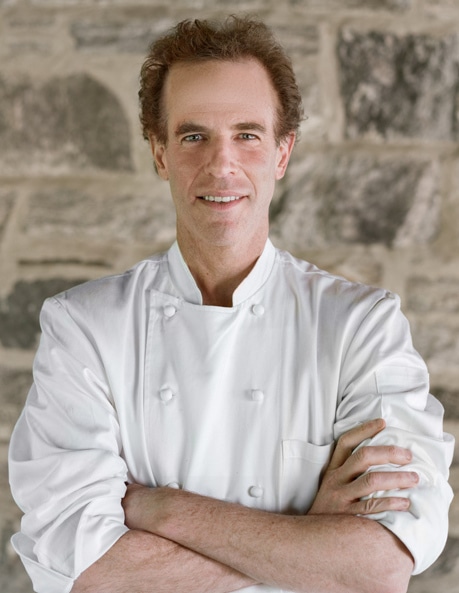
So how does ‘Singing Frogs Farm’ (above left) join the narrative? Enter the man destined to be head grower at Cinderwood. Trained at a long-standing organic farm in Southern England, Michael Fitzsimmons (right) moved back to be nearer his native Liverpool. At one point he worked at Michelin-starred Moor Hall near Ormskirk, complete with its own walled kitchen garden. Yet it was thanks to an unlikely cheffing stint at WTLGI that he was steered back to his first love, horticulture. 

The seeds were sown at a late night wind-down in the Stockport branch of Wetherspoons when he bonded with Joseph Otway and sommelier/natural wine expert Caroline Dubois, later to be Cinderwood’s first customer through her Levenshulme cafe, Isca. All three were keen on establishing a true farm to fork link, a commercial sustainable, growing project geared to generate maximum flavour. The Sam Buckley influence was obvious and the innovative Stone Barns Center, while Singing Frogs offer practical inspiration for Michael on how to work with soil. The key? No tillage.

Tillage is the mechanical manipulation of soil. In its place you should: Disturb the soil as little as possible. Keep as many living plants in the soil, as often as possible. Grow as many different species of plants as practical. Keep the soil covered all the time. Incorporate animals.

According to the Singing Frogs website, “When one understands the myriad scientific reasons for each of these principles, one quickly sees how tillage in all its forms is the complete antithesis of soil health.”

There is a long way to go for for Cinderwood to match the productivity of their likeminded Californian cousins but it is early days yet. It took a further year after that Wetherspoons summit for the twist of fate that helped make the dream come true. 

Higher Ground was the new seedbed. That was the pop-up kitchen Otway, Cossins and Co launched at Kampus, the ‘garden neighbourhood’ of diverse apartments being created across from Canal Street in Manchester city centre. Their restaurant showcase in the site’s inherited ‘bungalow on stilts’ was scheduled to last four weeks but was cut short by the arrival of the pandemic. Which, as it turned out, gave them plus Michael the chance to assemble Cinderwood – via a lot of hands-on graft.

There was land to be cleared, sheds and two polytunnels to be erected, water and electricity supplies to be secured and a ton of pressure on Michael to put his horticultural principles into practice. With success he now has an assistant grower, Mike McCarten, who brings his own cheffing nous from working at Richard Carver’s Altrincham Market side-project, Little Window. The network tightens.

Yet still none of this would have been possible without the arrival of their future landlords at Higher Ground’s launch night in February 2020. Bearing steaks. Their own reared sirloin. As a kind of organic calling card. Jane and Chris Oglesby had turned over their land at Poole Hall near Nantwich to raising Longhorn, Dexter and Belted Galloway cattle in the most natural possible way.

As Richard Cossins recalls: “Chris Roberts (a chef specialising expert in cooking with fire and author of For The Love of Food) had told the Oglesbys they really ought to meet us, we’d really get on, so they just turned up out of the blue. Jane produced this pasture-fed beef from her handbag and Joseph, after opening the windows, cooked these amazing steaks.

“Jane really knew her stuff, had read The Third Plate and it had inspired her quest for regenerative beef. We bonded at once and they offered to lease us land to start Cinderwood on the estate. One acre would be enough for us to get going, though there is an option for a further four, which me might use for soft fruit. The soil is rich from being dairy pasture in the past. It was just perfect for us to work with.”

Family money from the Bruntwood property empire is behind Jane’s 120-strong rare breed herd. Few ‘farmhouses’ are as lavish as Regency mansion Poole Hall, but this is no Marie Antoinette playing a shepherdess vanity project. It’s very hands-on. On our visit I was hugely impressed by the ethical commitment of farm manager Ste Simock, proud that his beef herd benefits from total freedom to roam wild plant-rich pastures. The animals are never kept indoors, never tread on concrete even; the bulls stay with the herd; to avoid any stress in the beasts he accompanies them in pairs to Callum Edge’s small scale abattoir on the Wirral.

Twice a week Michael Fitzsimmons makes his own delivery journey into Manchester, finishing up at Flawd. En route to Cinderwood I had popped into Another Hand on Deansgate Mews for brunch and just missed his drop-off of the radishes of your dreams. The chefs there Julian and Max are huge fans of the produce.

Michael’s own dream would be of a cluster of small-scale nurseries surrounding the city, selling to and fuelling a thriving indie restaurant scene. For the moment we just have Cinderwood.

So what about my third quest – in pursuit of the elusive celtuce I saw Michael carefully tending outside polytunnel 2? That’s a story for the future. Read about it via this link.

Readers of this website will be aware of my reverence for leftfield ingredients. So it was a delight to encounter celtuce on my recent adventure down at Cinderwood, the chef-led market garden in Cheshire.

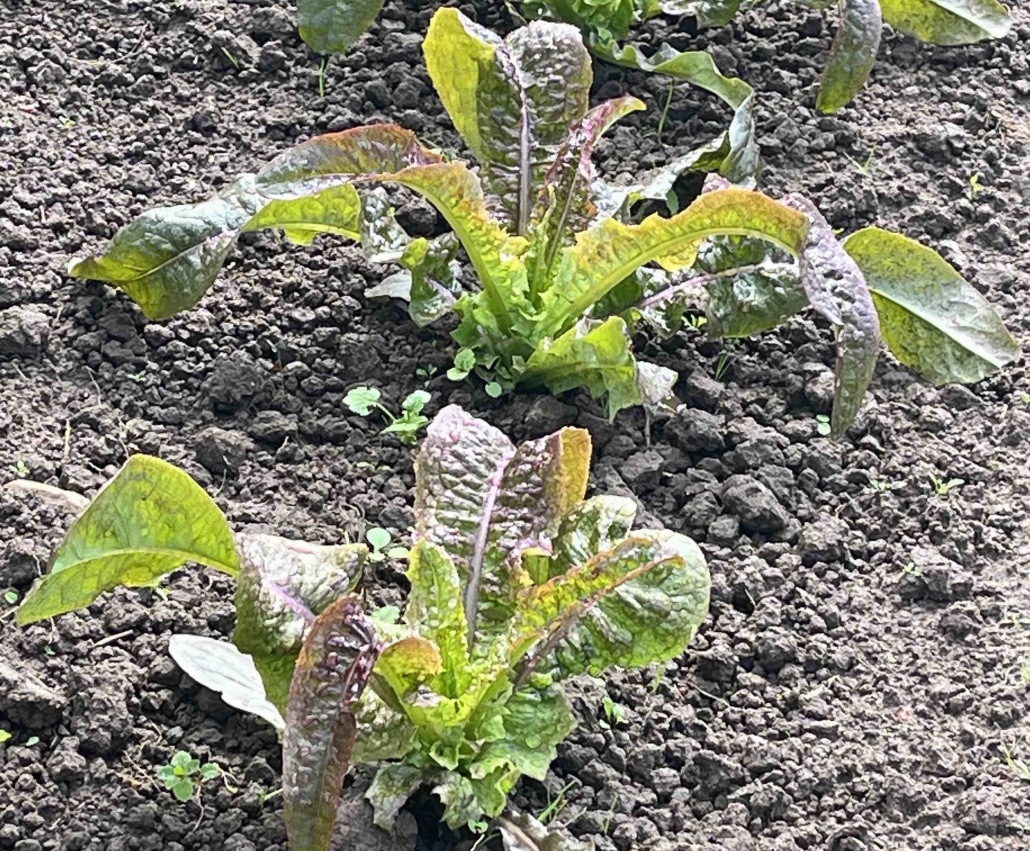
Grower Michael Fitzsimmons pointed it out, an unglamorous leafy straggle in the lee of the polytunnel. At first glance a cross between dandelion and chard. “I’m really excited about it,” Michael told me. “The plant is like a lettuce that has bolted. It grows tall and might productively flourish nine months of the year. This variety is called ‘Purple Sword’. We’ve got our eye on another, but we’ll have to order the seeds from America.”

That’s where chef Joseph Otway first discovered the joy of celtuce when he was working at Blue Hill at Stone Barns, a groundbreaking high end ‘farm to fork’ restaurant yoked to non-profit educational space Stone Barns Center for Food and Agriculture. The emphasis there is on tasting menus using produce plucked from the fields hours before.

I’m going to have to take the word of transatlantic celtuce fans for what a mature plant turns out like. Apparently at full maturity the stems are roughly 20cm long but just 5cm wide. One food writer described it as like a cos lettuce on top of a gnarly broccoli-like stem, the tops long and luscious. Its origins are in the Mediterranean, but it found its true home after it migrated to China and Tibet via the trade routes.

In that country the stem and leaves are referred by different names: wosun and yóumàicài and have different uses. Like our own Swiss chard it is two vegetable in one.

Generally the slightly bitter leaves braised in a broth; in Sichuan the nutty, mild-tasting stems, once peeled, are stir-fried quickly or, raw, they add a water chestnut-like crunch to salads. It pickles well, too. And you can grill it like lettuce (no relation).

Via Dan Barber’s championing of it at his Blue Hill restaurants its has become a green rival to kale and sprouts on menus from Brooklyn to Manhattan. Expect it to conquer all before it eventually in Manchester. High in vitamins A and C and potassium, it even panders to health kicks.

Barber has credited Jack Algiere, the farm director at Stone Barns, with ‘discovering’ celtuce, but it is a vegetable that has ‘been in the public domain’ since the 1890s when it was sold as asparagus lettuce. In the early 1940s it made a reappearance in the catalogue of Pennsylvania’s W.Atlee Burpee Company after a missionary posted some seeds from China. I discovered all this from Jane Grigson’s perennially useful Vegetable Book (1978), where a page and a half on celtuce is sandwiched between celeriac (also once ‘queer gear’) and chayote (still is).

And so to hon tsai tai…

In less enlightened times greengrocers used to call exotic veg ‘queer gear’. The late TV talk show host Russell Harty used to claim that his stall holder father Fred “introduced the avocado to Blackburn Market”. Sadly diminished these days, it’s unlikely to be showcasing the likes of hon tsai tai any time soon.

But this leafy Asian arrival may soon be joining celtuce in the sprouting ranks at Cinderwood. Michael Fitzimmons’ next ‘project’ may be cultivating this plant, whose kinship is with cime di rapa (broccoli rabe). It sports dark green leaves with purple veins and deep purple stems with small yellow flowers. Everything is edible and apparently offers a sweet mustardiness, brought out by the inevitable stir-frying.

Another veg of Chinese origin, kailan, offers a similar taste profile. Might this be the next ‘new’ veg on our plates? So many greens, so little time.

Just two months ago when the current cost of living crisis wasn’t the headline news it is now and families weren’t being lectured by Tory fat cats on how to budget for deprivation Food Waste Action Week was offering its own stark reminder of food supply disconnection and trumpeting ways to fix it.

Fighting talk then from the exec director of Manchester’s Open Kitchen, Corin Bell: ”I’ve been passionate about food, food waste and food sustainability for as long as I can remember. Open Kitchen came out of a lot of trial and error in trying to develop a model that balanced tackling both food waste and food sustainability in real ways, not conflating the issues, and not using one as a sticking plaster for the other. 

“I hope that Open Kitchen can continue to be part of the campaigning movement fighting for a future where good food isn’t wasted in the first place, and emergency food provision isn’t needed, because poverty has been ended.”

As food bank use burgeons this seems further away than ever. Yet it’s not just about no family going hungry; it’s also an environmental imperative. Campaigner at Love Food, Hate Waste claim that the average UK family wastes the equivalent of eight meals every week, while food waste in UK households produces nearly 25 million tonnes of CO2 every year.

In response to all this Open Kitchen has In the vanguard of a setting a sustainable catering example, working with a huge range of food businesses to source beautiful ingredients that would otherwise be jettisoned. Zero waste is indeed their culinary mantra. So near dated milk is turned into paneer for tikka kebabs, wonky veg and fruit transformed into pickle and ketchups.

To showcase what can be achieved taste-wise, Corin and her team established its flagship Open Kitchen Café & Bar inside the People’s History Museum on the banks of the Irwell. To celebrate its first birthday new head chef Sean Lee has created a fresh summer small plates menu mostly out of raw materials that would otherwise have gone to waste. 

Sean’s CV includes exec chef of The Bath Arms, Cheddar and The Congresbury Arms, Bristol and The Burlington Restaurant at The Devonshire Arms in the Yorkshire Dales. A quite different environment but he’s not fazed: “I love the concept, and the chance to be really creative with an ever-changing mix of food. I hope that I can build a name for myself in Manchester, and also further the cause of stamping out food waste and championing local sustainably produced food. It’s a great challenge.” 

Expect Sean’s menu to change constantly to include as much local, seasonal produce as possible. For the moment there’s mozzarella arancini with home-made herb oil and garlic aioli, tempura crunchy seasonal veg with sticky tamarind sauce, and spicy butterbean hummus and homemade flatbreads, smoked haddock fishcakes and roast veg and and smoked sausage frittata. Accompanying is a new range of spritz cocktails, including a Negroni (what’s not to like?) or local beers from Blackjack.

Open Kitchen Cafe & Bar, People’s History Museum, Left Bank, Manchester M3 3ER.

It is fitting that the front cover of Benedetta Jasmin Guetta’s new cookbook (her first in English) should feature carciofi alla giudia. If ever a dish symbolised Jewish influence on Italian cuisine it is this. You’ll find these crispy deep-fried globe artichokes all over Rome, snack fodder seemingly amalgamated in to the city’s ancient fabric. Yet they originally sprung from its Ghetto. In 1555 Pope Paul IV forced the Jews to be segregated into ghettos.

The first was in Venice and the site was originally a foundry surrounded by canals. The word ghetto comes from gettato, meaning cast metal. The Roman one, which lasted for 300 years, was around the Portico d’Ottavia. Even today the city’s 15,000-strong Jewish population congregates around that area.

The artichoke dish’s true ethnicity make an interesting footnote in Guetta’s Cooking alla Giudia: “In 2018 the Chief Rabbinate of Israel declared that carciofi alla giudia are not kosher because they might conceal non-kosher insects. Roman Jews disagree, arguing that the artichoke leaves are so thick and dense that insects cannot penetrate the artichoke. In my opinion carciofi alla giudia are kosher.”

Splitting hairs over antipasti, well that’s a first. Or maybe not in the tangled interface of Jewish and Italian food culture, which Santa Monica, California-based Benedetta has explored in the blog Labna for well over a decade.

Hence her book offers 100 tried and tested recipes with a host of useful hints. In Italy the carciofi, to be at its best, is made with the softer and larger Romanesco artichokes harvested between February and April along the coastal strip north of Rome. Unusually, instead of the normal, cheaper sunflower or peanut they are double-fried in extra virgin olive oil.

Thrift, though, was born of necessity in the Ghetto. Take Zuppa di Pesce, another perennial favourite of the Eternal City. Once it was a speciality only of the fishing villages but the Jews turned it into a delicacy by making the best of scraps from the local market. Often eked out into a full meal with pasta or bread added to the broth. Note: the book’s version is more elevated, employing red snapper, tuna and sardines with dry white wine.

Fish features a lot. In Venice I combined visiting the ghetto/synagogue cluster in the Cannreggio quarter with a classic cicchetto, Sarde in Saor. Everything about it sings of the migratory influence of Spain’s Sephardic Jews. Sardine fillets are fried and then marinated in vinegar with soft onions before pine nuts and raisins are sprinkled on top. Virtually the same dishes features for Shabbat and Rosh Hashannah in the Jewish Calendar, the author points out.

This is not such a far remove in its flavourings from another dish with obvious Levantine/Jewish credentials, aubergine-led caponata half-stew, half-salad from that ultimate culinary melting pot, Sicily.

Ultimately, these are the connections the book traces, wearing its scholarship lightly and  accessible to home cooks. I might cook recipes from Claudia Roden’s monumental masterpiece, The Book of Jewish Food, but I’m more likely to consult it for historical background. The last cookbook to attempt what Guetta is doing is the out of print Edda Servi Machlin’s Classic Cuisine of the Italian Jews from 40 years ago.

It is startling to discover pasta dishes and puddings you considered essentially Italian have, at least partially, in a very different culture. It works both ways, too, as strict Jews devise ways to adapt Italian staples to their own kosher dietary laws. Take the Lasagne Kasher, where beef replaces pork and the bechamel is made with olive oil and broth rather than butter and milk. Or you could swap for a Tuscan alternative, Scacchi, a matzo, meat and veg casserole. Expect, in season artichokes to be included! In truth, I think her honey matzo fritters are a better use of these unleavened flatbreads.

Cooking alla Giudia: a celebration of the Jewish food of Italy by Benedetta Jasmine Guetta (Artisan Books, £30). The main picture is of Sarde in Saor from the book © Ray Kachatorian.

It’s one helluva road trip from Austin, Texas to Cragg Vale, West Yorkshire. Eventually you turn right off the B6138 (England’s largest continuous gradient that once tested the calves of Tour de France competitors) and plunge into a wooded hollow, home to the Hinchliffe Arms.

It’s as sturdy a Pennine hostelry as you’ll find and it’s about to be revived under arguably Manchester’s premier ‘pub custodian’. Well, landlady sounds a bit Bet Lynch. Esther Maylor is not giving up her controlling interest in The Eagle Salford, which she has run for a decade from the age of 25. But from the end of May she’ll be at the helm of the Hinchliffe. Big boots to fill here with the reign of one Robert Owen Brown still a recent association. Even allowing for pandemic pressures, it’s not felt the same since he relinquished the stewardship.

So how does Austin gatecrash the narrative? In March Esther was performing with her Manc band Heavy Salad at the influential South by South West Festival in the Texan capital of cool. A multi-talented musician in her own right, the Lincolnshire vicar’s daughter is currently part of Salad’s girl backing trio. To get a flavour of the band visit this link or maybe catch them at Manchester Psych Fest this September. 

Music played a part in levering Esther into the hospitality industry. She was in a band called Biederbeck with Johnny Booth, who along with actor Rupert Hill had a business turning around run-down pubs. She begged a bar job at his debut project, The Castle in the Northern Quarter, out of which arose The Eagle opening. That was a collab with brewers Joseph Holt, which entailed adding on an intimate music venue to the once grim backstreet boozer.

All a far cry from the rural idyll of Cragg Vale, but there is a certain symbiosis. The Hinchliffe’s own new lease of life sprang from another Manchester brewery, JW Lees. Taking it over, they gave it an extensive and sympathetic renovation befitting its location.

That’s where Robert Owen Brown enters the picture in the summer of 2017. I was excited to have Rob and his ‘nose to tail eating’ ethos on my Calder Valley doorstep. 

After all, when he was cooking at The Mark Addy (a cobble’s throw, almost, from The Eagle) I had worked with him on his cookbook, Crispy Squirrel and Vimto Trifle. I welcomed him to Yorkshire by quoting from the book’s blurb: “Robert Owen Brown is the real thing… a chef who combines oceans of technique with an instinct to feed and a deep understanding of gutsy cooking – the verdict of Observer food critic Jay Rayner, for whom Rob is a panellist on his BBC Radio 4 show, The Kitchen Cabinet.

“Radio air time, mind, doesn’t put bums on seats. And Cragg Vale is hardly Maida Vale. Just regard it as a scenic  adventure getting there. Which is surprisingly easy from Manchester, especially if after the M62 you go the A58 wild moorland route. Alternatively, get off the Halifax train at Mytholmroyd and grab a cab. You’ll end up inching down an incline into a ludicrously picturesque wooded dell with a church and gurgling stream.”

I’d suggest following those trusted travel instructions to check out what Esther Maylor brings to the table. 

Be warned there won’t be an immediate food offering when the new era kicks off at the end of May. That’s for a future full of potential surprises. Just a full drinks menu (note to Lees – a couple of guest beers would be a plus) and the kind of warm welcome that’s big in Salford… and Texas.

Hinchliffe Arms, Church Bank Lane, Cragg Vale, near Mytholmroyd, HX7 5TA. 01422 887439.