I was impressed by the Manchester deli just opened by Lily’s, long time champions of Indian vegetarian food in Ashton-under-Lyne. When I first ate at the original mothership, named after the Sachdev family matriarch, it was very much a case of teeming thalis on formica top tables. Very much a cafe. The new generation have upped the style offering (check out the Ashton HQ murals) without compromising the food quality. Not that I’m ever likely to acquire a taste for any of their  mega-sticky mainstay sweets.

In its gleaming new Henry Street outlet offering takeaway and store cupboard staples (but alas no fresh veg or herbs) there are ranks of these technicolor treats above a counter of samosas, pakoras, bhajis and other savoury snacks that are more to my taste.

So I couldn’t resist picking up a couple of Gujarati samosas on a flying visit, but my focus was elsewhere. I’m well stocked with every variety of Indian spice, but it is a while since the Anardana jar has been refreshed. OK, not a phrase you hear everyday; let’s just call me a sub-continental completist.

I scanned the alphabetically arranged spice shelves in vain but no anardana in sight. What is this elusive culinary enhancement? It is basically dried pomegranate seeds ground into a powder to serve as an intense acidifying agent in dishes, especially those from the Punjab. The seeds and pulp are separated from the rind of the fruit and shrivelled in the sun for up to a fortnight, turning reddish brown. According to the great Alan Davidson in the Oxford Companion to Food, the best example comes from the wild pomegranate known as daru, which grows in the lower Himalayas.

I eventually sourced my anardana replenishment in the foothills of Levenshulme at the Noor supermarket, which stocks two rival brands. You could, of course, substitute Iranian pomegranate molasses, popularised by Yotam Ottolenghi, for the same effect.

Rival souring agents vary according to region. Kerala ha th pumpkin-based cambodge, while the Konkan area flavours its dal with kokum, but anardana’s main rival is Amchoor, which provides a sourer, resinous oomph to curries, chutneys and especially chaats. The base here is green, unripe, out-of-season mangoes, again sun-dried. then pulverised, with the advantage of adding no extra moisture to dishes. Like papaya, it can be used to tenderise meat. It is packed with potassium, magnesium, calcium and assorted vitamins. Whatever, use it sparingly.

Which brings us to a third ‘A’ that to me is a prime sensory component of Indian cooking but can overwhelm a dish – Asafoetida. The ‘foetid’ gives the game away about this gum extracted from a pungent variety of giant fennel. John O’Connell in his essential The Book of Spice describes it as smelling like “pickled eggs covered in manure”. The French call it merde du diable (devil’s dung). And yet… in its powdered form temper a dish with what the Indians call ‘hing’ and all that rankness dissolves. It recreates the aromas of onion and garlic, staples deemed impure by certain Hindu castes, so it is the perfect substitute. No Indian pickle is the same without it. Amazingly until recently India imported the entirety of its hing from colder climate countries such as Iran and Afghanistan. Now there’s an initiative to ‘grow their own’, according to a Guardian report.

According to O’Connell, there are strong Ayurvedic medical claims for asafoetida as both sedative and stimulant. A further plus is its ability to suppress flatulence. That’s the calling card too for Ajwain (or ajowan). It’s the prime constituent of Omum Water, the Sub-continent’s version of gripe water, once given to babies for colic, and has a range of antiseptic properties. I’m quietly addicted to it in spice mixtures, especially for dusting chaats (above, the moreish  Bundobust version. Known familiarly as the bishop’s weed, it’s an obvious cousin to fennel, cumin and caraway. https://bundobust.com

In the Noor Stores along Levenshulme’s global main drag ajwain was there in the spice section, neighboured by three varieties of anardana. Back of the net! And irresistible giant fresh pomegranates were also on sale for a pittance. The benefits (and excitement) of buying ethnic.

My favourite chaat recipe – Meera Sodha’s New Potato + Chickpea

Ingredients

75g pitted dates; 3tsp tamarind paste; salt; 2tbsp Greek yoghurt; 600g baby new potatoes; 2tbsp unsalted butter; 1tsp cumin seeds, roughly ground; ½tsp ground black pepper; 1tsp ground ginger; 1 green finger chilli, finely chopped; 400g can chickpeas, drained and rinsed; 1 large banana shallot, finely diced; juice of 1 lemon; large handful of coriander, chopped; handful of thin sev (fried chickpea noodles).

Method

Prepare the date and tamarind chutney first. Blend the dates together with the tamarind paste and a pinch of salt and 100ml of water, then leave to one side.
Mix the yogurt with a couple of tablespoons of water until you can drizzle it using a spoon, then leave to one side. Wash and boil the potatoes for 15 minutes, until they are tender and a knife can slip through them easily. Drain, tip out onto a plate, and crush them slightly with a fork or the bottom of a sturdy cup.
Put the butter into a wide-bottomed frying pan over a medium heat. When melted, add the ground cumin seeds, black pepper, ginger, chilli, and ¾ teaspoon of salt. Stir, then add the potatoes. Leave the potatoes to crisp and char for around 5 minutes, to heat through. Toss together and throw in the chickpeas, shallots, and lemon juice. Then add the date and tamarind chutney. Stir to mix and take off the heat.
Serve warm in individual plates or bowls with a couple of dollops of yogurt, a scattering of coriander and sev. (I sprinkle over a couple of teaspoons of chaat masala spice mix. You can make your own (amchoor, coriander, cumin, black pepper, kala namak, cinnamon, ginger). I bought a packet from Lily’s.

From Fresh India by Meera Sodha (Fig Tree, £20)

Chinatowns, I’ve done a few. From London’s Gerrard Street main drag to the more atmospheric San Francisco neighbourhood to Manchester’s own compact quarter. I’m an astrological dragon, so the Dragon Parades are for me; less so the waddling Lion Dances that come out of the woodwork during Chinese New Year.

This year’s animal is the Tiger, roaring into the limelight from February 1. In Manchester the focal point of celebration is an arty sculpture in St Ann’s Square, made from wood and recycled materials, that’s more Tiggerish than tigerish but hey we don’t want to scare the kids. For full details of the city’s Year of the Tiger schedule visit this link. (alas, due to Covid precautions, the customary parade and fireworks finale will not be taking place on the closing Sunday, February 6)

The beautiful tiger installation for St Ann’s Square, Manchester

Contrary as ever I chose Leeds, which lacks a designated Chinatown, for my advance  gustatory celebration and, to coin a phrase, the fortune cookie favours the brave. Wen’s was just splendid, earning its Tiger stripes with a flourish.

The interior is not dramatically changed from its 30 year spell as Hansa, serving Gujarati veggie food cooked by a groundbreaking female team. When inspirational founder Hansa Dhabi finally retired from the restaurant, Wen’s added their own distinctive stamp in 2019.

I could have been forgiven for thinking it was the Year of the Horse as the first thing I spotted on entering the cosy North Street restaurant was a Western saddle propped in a corner. Chao Wen, front-of-house, confessed it was a whim buy on a trip to a Manchester emporium. It signalled no equine purpose in this keen bodybuilder’s life, he assured me. Whatever, it alerted me to a distinct shift from the regular ‘go for a Chinese’ template. 

Witness the soundtrack of loungecore piano treatments of Christmas carols. Well, have you ever tackled a jellyfish salad to the tinkling strains of In The Bleak Midwinter? And who would have thought a selection of Mother Wen’s homemade fried dumplings would have brought such tidings of comfort and joy? She cooks in the basement with her husband. The two of them, both from Shandong, once ran a small restaurant in Beijing. What they certainly bring to their Leeds venture is the same no-short-cuts search for authenticity, even if the Chinese menu does roam regionally with Sichuan to the fore. Hence my Kung Po Chicken (£10.60), startlingly well balanced despite the considerable quantity of dried chillis and citrussy sharp sichuan peppercorns involved with the generous portions of marinated cubed chicken and peanuts. I’ve cooked the dish myself but never got near this quality. Thanks to Steve Nuttall of Wayward Wines and Anja Madvani of Leeds Confidential for that particular recommendation.

Wen’s was bigged up too, I discovered from a framed cutting on the wall, by Observer critic Jay Rayner in September 2020. He was rightly effusive about the house ‘dumplings in gossamer skins’. He’s aware how many Chinese restaurants buy them in. Wen’s menu offers five varieties, ranging from £5.80 to £6.90 for a half dozen – minced chicken, spicy minced beef, minced pork, king prawn and mixed seasonal greens. I had a selection (doubling up on the beef) and they were remarkably juicy inside the lightest of dough casings, their bases crisply crusted. Next time I’m heading straight for Mrs Wen’s hand-pulled noodles Dan Dan style. Think minced pork and oodles of chilli oil.

As for that marinated jellyfish with shredded Chinese leaf (£7.90) which kicked off proceedings, I chose it out of curiosity, expecting yet another Chinese riff on texture (think pig’s ears, rooster combs and chicken feet). It was a delightful surprise, dried strands rehydrated and delicately dressed in chilli oil, soy sauce, sichuan peppercorns and garlic, I suspect. Tigers are fine in their place; why can’t there be a Year of the Jellyfish?

Wen’s Chinese, 72-74 North Street, Leeds LS2 7PN. 01132444408.

I’ve been poorly since Christmas. I wasn’t alone. Most of the immediate family succumbed to ferocious head colds. All Covid tests negative, so that was something. Debilitated, my to-do-list groaned, but the time out also made me consider my mixed feelings about ‘supporting hospitality’ when there was still a pandemic minefield to be negotiated. 

My own blog (for that is what it is) is all about quite niche foodie avenues. Able to afford? Well, just, prioritising food sources rather than affording fancy clothes or most other commercial imperatives. But still able to choose. Not waking each day wondering how to get by. As so many are. There is first hand evidence every week at the local food bank where my wife works.

And then, among the squalid Tory party ‘Big Dog’ squabbles, comes hard factual evidence of this inflation-driven issue, putting so much into perspective. I’ve always respected the breadline frontline reports of Jack ‘@BootstrapCook’ Monroe, yet her latest informed research (queried by some online but I believe her Asda shopping based data) shook me to the core.  As did her message – why is the mainstream media not bringing these horrors to our attention? Her Tweet thread details the horrendous rise in the cost of living for the poorest among us. On social media it has understandably gone viral with 15 million views and counting. Let me add my support to this stark outline of a humanitarian crisis on our own doorstep.

Jack Tweeted: “Woke up this morning to the radio talking about the cost of living rising a further 5%. It infuriates me the index that they use for this calculation, which grossly underestimates the real cost of inflation as it happens to people with the least. Allow me to briefly explain.

“This time last year, the cheapest pasta in my local supermarket (one of the Big Four), was 29p for 500g. Today it’s 70p. That’s a 141% price increase as it hits the poorest and most vulnerable households. This time last year, the cheapest rice at the same supermarket was 45p for a kilogram bag. Today it’s £1 for 500g. That’s a 344% price increase as it hits the poorest and most vulnerable households.

“Baked beans were 22p, now 32p. A 45% price increase year on year. Canned spaghetti was 13p, now 35p. A price increase of 169%. Bread. Was 45p, now 58p. A price increase of 29%. Curry sauce. Was 30p, now 89p. A price increase of 196%.A bag of small apples. Was 59p, now 89p (and the apples are even smaller!) A price increase of 51%. Mushrooms were 59p for 400g. They’re now 57p for 250g. A price increase of 56%. (This practise, of making products smaller while keeping them the same price, is known in the retail industry as ‘shrinkflation’ and its insidious as hell because it’s harder to immediately spot.) Peanut butter. Was 62p, now £1.50. A price increase of 142%.

“These are just the ones that I know off the top of my head –  there will be many many more examples! When I started writing my recipe blog ten years ago, I could feed myself and my son on £10 a week. (I’ll find the original shopping list later and price it up for today’s prices.) These are just the ones that I know off the top of my head – there will be many many more examples! When I started writing my recipe blog ten years ago, I could feed myself and my son on £10 a week. (I’ll find the original shopping list later and price it up for today’s prices.)

“The system by which we measure the impact of inflation is fundamentally flawed – it completely ignores the reality and the REAL price rises for people on minimum wages, zero hour contracts, food bank clients, and millions more.

“But I guess when the vast majority of our media were privately educated and came from the same handful of elite universities, nobody thinks to actually check in with anyone out here in the world to see how we’re doing. (Fucking terribly, thanks for asking.) Every time there’s a news bulletin on the rising cost of living, I hope that today might be the day that that some real journalism happens, and someone stops to consider those of us outside of the bubble. Maybe today might finally be that day.

“And just to add: an upmarket ready meal range was £7.50 ten years ago, and is still £7.50 today; a high-end stores ‘Dine In For Two For £10’ has been £10 for as long as I can remember; my local supermarket had 400+ items in their value range, it’s now 91 (and counting down) The margins are always, always calculated to squeeze the belts of those who can least afford it, and massage the profits of those who have money to spare. And nothing demonstrates that inequality quite so starkly as tracking the prices of ‘luxury’ food vs ‘actual essentials’. To return to the luxury ready meal example, if the price of that had risen at the same rate as the cheapest rice in the supermarket, that £7.50 lasagne would now cost £25.80. Dine In For £10 would be £34.40.

“We’re either all in this together, or we aren’t. Now, picture if you will, the demographic of the voter who has kept the current party in power for the last 11 years. Imagine the Chancellor having to explain to them that their precious microwave dinner now cost almost four times what it did yesterday. The Prime Minister claiming that he’s cutting the cost of living while the price of basic food products shoot up by THREE HUNDRED AND FORTY FOUR PER CENTis the one I’m properly angry enough to riot over.”

Jack, I’m with you on the barricades.

Check out the December 2021 Food Foundation report on food insecurity.

Cheshire’s Arley Hall grounds have been hosting Harry Potter: A Forbidden Forest Adventure. My family went on a chilly Potter pilgrimage to the attraction; I dog-sat and kept the home fires burning. Next day I paid my personal homage to a hero of my own… with strong Arley links.

OK, I didn’t follow Elizabeth Raffald’s 1769 recipe for Mac and Cheese. Not because it is no longer serviceable but because I sought the more luxurious cosseting Nigella Lawson brings with her Crab Mac ’n’ Cheese from her wonderful Cook, Eat, Repeat (Chatto & Windus, £25). Poor relation of the lobster variant? Think again, a long as the crab element’s a super fresh mix of white and brown meat it knocks the claws off the rival combo.

Picture above, full ingredients and method to follow, but back to Mrs Raffald (or Raffauld). I first came across her when primordial Northern Quarter pioneers, The Market Restaurant, named a private dining room after this formidable woman, who became such an entrepreneurial force in 18th century Manchester. A previous Nigella tome might have tilted at irony in its How To Be a Domestic Goddess title, but that fitted Raffald like a leathern glove as fledgling housekeeper at Arley Hall, outside Nantwich.

The 800 original recipes she developed there – including a precursor of the Eccles cake and the first written recipes for piccalilli and crumpets – were the base for her classic, best-selling The Experienced English Housekeeper (1769), which rivalled contemporary Hannah Glasse’s The Art of Cookery Made Plain and Easy, published 20 years before. Both seminal cookbooks were revered in the 20th century by Elizabeth David and Jane Grigson, whose own cookbooks influenced the Market Restaurant’s bistro offering.

Since the dawn of time (or should that be cheese) there had been global dishes that paired dairy and pasta, but it took the Doncaster-born 26 year old to pin down To Dress Macaroni with Parmesan Cheese. All the elements are in place

The Stars and Stripes flies proudly on the Mac and Cheese Club of America site

“Boil four ounces of macaroni till it be quite tender and lay it on a sieve to drain. Then put it in a tossing pan with about a gill (ie a quarter of a pint) of good cream, a lump of butter rolled in flour, boil it five minutes. Pour it on a plate, lay all over it parmesan cheese toasted. Send it to the table on a water plate, for it soon gets cold.”

Parmesan, imported from Italy, was then a luxury item. A century earlier, as the Great Fire of London threatened his home, my beloved Samuel Pepys buried wheels of parmesan along with other treasures.

By the time Eliza Acton’s 1845 book Modern Cookery for Private Families (superior to Mrs Beeton) came along the familiar béchamel sauce version had consolidated the dish’s popularity and Cheddar and Gruyere now contended for the gloopy cheese element in what was universally known as Macaroni Cheese.

That was certainly still its name in the 1930s when an affordable mass-produced version from KRAFT featuring processed cheese and dried pasta was vital in keeping poverty-stricken Americans fed during the Great Depression. It was well suited to war time rations, too, and later student self-catering. So Mac and Cheese inexorably became a Yankee institution. 

These days the dish can benefit from hipster twists, but it has more obsessive manifestations as I discovered when I checked out the Mac and Cheese Club of America Facebook group.

Take, for instance a recipe for ‘The KRAFT Macaroni & Cheese and Spam Hot Dish’, a bake whose ingredients list includes a Mac ‘n’ cheese pack, frozen peas, condensed cream of celery soup and sliced luncheon meat. Then there are Mac pizzas and burgers and a Mac ready meal that I wonder would be welcome in the Bible Belt – ‘Mac & Cheesus: The Dine Divine’, ready in 10 minutes.

Such a dish would surely have appalled Elizabeth Raffald, who (in a generally very practical book) proposed a second course of a lavish dinner to include ‘roast hare, transparent pudding covered with a silver web, snowballs, moonshine, rocky island and burned cream, mince pies, creerant with hot pippins, crawfish in a savoury jelly, snipes in ditto, pickled smelts, marbled veal, collared pig and potted lamprey, vegetables, stewed cardoons, pompadour cream, macaroni, stewed mushrooms and dessert’.

Not that food was the entire compass of this lady’s life. Born in Doncaster in 1733, she died, apparently of exhaustion, at the age of 48 in 1781 after 18 years in Manchester, where she bore 16 children as well as founding a domestic servants’ employment agency, launching a prototype deli/catering operation and running two pubs plus a cookery school.

Nigella Lawson’s Crab Mac and Cheese

It’s good to see Nigella still around at 62, as life-enhancing as ever in her best book in years, Cook, Eat, Repeat, from which this recipe comes.

She says: “The combination is just sumptuous, like a cross between a mac’n’cheese and a bisque. I stray further from tradition in that I use pasta shells rather than macaroni, and I don’t scatter more cheese on top and brown it in the oven. I find a freckling of Aleppo pepper more than makes up for the familiar heat-scorched finish.” In my version I used rigatoni

Ingredients

100g Gruyère, 15g freshly grated Parmesan, 15g plain flour, ¼ tsp ground mace, ¼ tsp smoked sweet paprika, ⅛ teaspoon Aleppo pepper or hot smoked paprika, plus more to sprinkle at the end, 250 ml full fat milk, 1tbsp tablespoon tomato puree, 30g unsalted butter, 1 fat clove of garlic, ½ tsp Worcestershire sauce, 200 grams conchiglie rigate pasta,  100g mixed white and brown crab meat.

Method

Grate the Gruyère into a bowl and add the Parmesan. Mix the flour with the spices in a small cup. Pour the milk into a measuring jug and stir in the tomato purée. Put a pan of water on to boil for the pasta.

Find a smallish heavy-based saucepan. Over lowish heat, melt the butter, then peel and mince or grate in the garlic and stir it around in the pan quickly. Turn the heat up to medium and add the flour and spices. Whisk over the heat until it all coheres into an orange, fragrant, loose paste; this will take no longer than a minute. It soon looks like tangerine-tinted foaming honeycomb. Take off the heat and very gradually whisk in the tomatoey milk, until it’s completely smooth. Use a spatula to scrape down any sauce that’s stuck to the sides of the pan.

Put back on the heat, turn up to medium and cook, stirring, until it has thickened and lost any flouriness; this will take anything from 3 to 5 minutes. Stir in the Worcestershire sauce.

Take the pan off the heat and stir in the grated cheeses. Put a lid on the saucepan, or cover tightly with foil, and leave on the hob, but with the heat off, while you get on with the pasta. Add salt to the boiling water, then add the pasta and cook according to the packet instructions. When the pasta is just about al dente, add the crabmeat to the smoky cheese sauce, then once you’re happy that the pasta shells are ready, lift them into the sauce, reserving some pasta-cooking liquid first, and drop the shells in. 

Stir over lowish heat until the crabmeat is hot. If you want to make the sauce any more fluid,  add as much of the pasta-cooking water as you need. Taste to see if you want to add salt – the crab meat you get in tubs tends to be quite salty already.

Divide between two small shallow bowls and sprinkle with Aleppo pepper or hot smoked paprika.

“Don’t worry about me. I’m not gonna be slinging pizza for the rest of my life.” Little did Julia Roberts realise in her movie breakthrough, 1988’s Mystic Pizza, that that line might come back to haunt her. Flash forward to Manchester 2022 and you’ll find the veteran Hollywood star up in lights at the city’s latest topped dough emporium, L’Antica Pizzeria Da Michele

A bit of a mouthful to follow Zizzi – the previous Italian incarnation squatting in this palatial Edwardian bank building – but then so is the Napoletana in front of me. A huge and hugely satisfying mouthful from a springy, chewy base to an intense but measured topping of tomato, basil, Agerola fior di latte, Cetar anchovies, capers and oregano. ‘The greatest pizza in the world’ as the Da Michelebrand pushers proclaim? Up there, maybe, but it was rapidly cooling as it arrived at table from a distant oven and stone cold by half way through. That wouldn’t have been acceptable back in Naples, where the original pizzeria of this name has forged its reputation against fierce competition for over 130 years. 

Matt Goulding, in his fascinating exploration of Italian cuisine, Pasta, Pane, Vino, details the competitive zeal of the city’s pizzaioli and their commitment to their way of making arguably the world’s finest fast food. 

And there is an argument, as he writes: “Neapolitan pizza may be the original form of pizza  as we know it today, but for some – for those who like their pizza with textural contrast, who don’t consider pizza a knife and fork proposition – it doesn’t always deliver. Neapolitan pizza can be a violent enterprise – the high temperatures, the aggressive blistering, the miasma of cheese and sauce and rendered fat that leaves the centre of a pizza almost empty. The resulting pizza is relentlessly soft, yielding, fickle, unforgiving. It is a game of centimetres and seconds – the difference between a subpar pizza and a superlative one is a blink of an eye in the mouth of the oven.”

Julia Roberts only entered the Da Michele story just over a decade ago when she reprised her pizza schtick, starring in Eat Pray Love as globe-trotting seeker after self Elizabeth Gilbert, who falls head over heels for the modest restaurant on the Via Cesare Sersale, declaring she was “having a relationship with her pizza.” This someway explains critic Mark Kermode’s four word summary of the movie: “Eat, Pray, Love, vomit”.

On a wall of the new King Street branch a golden scrawl of the film’s title shares billing with a still of Julia scoffing a slice and there’s also further gush in pink neon: “I want someone to look at me the same way I look at pizza”, which is not up there with my fave doughy quote: “The perfect lover is one who turns into a pizza at 4am.”

All of which diverts from the big da Michele question: Why here, now?

I saw ample evidence on a trip to Naples of how popular the original is, with its strong local fanbase bolstered by the tourist traffic generated by Gilbert’s book and the film. You have to book a slot to gain entrance to a very basic venue. Averse to queuing, I surveyed the gathering crowds from across the square as I enjoyed a Margherita in theatrically themed rival Trianon da Ciro. It was excellent, only bettered by the plate overlapping monster at De Matteo on the Via dei Tribunali. 

At all three venues you’d pay around six euros for a classic Margherita; in Manchester they charge £9.90 for this basic topping of tomato, basil and mozzarella, rising to nearly double that price for more elaborate toppings. No pizzas at Manchester’s acclaimed Rudy’s cost over a tenner, while their cocktails are each three quid cheaper that at Da Michele, where for six quid you get just the one arancino as a starter (we asked).

My Napoletana, generously topped though it was, felt steep at £12.90. Not as steep as the accompanying 250ml glass of (excellent) Badioli Chianti Riserva for £15.90, which I estimate is a 400 per cent mark-up on store prices. 

Strangely, when I sought to double check our bill the online menu didn’t run to prices. I wanted to register how much the wagyu steaks cost as well as the pastas, salads and desserts that join the 13-strong pizza roster that climaxes in a wagyu burger version. Above are dishes of tuna tartare and truffle ravioli, both pretty dishes but they scream Italian restaurant staple grafted onto the original Da Michele selling point

In the Naples restaurant they have proudly served only two types of pizza – Margherita and Marinara (the one without the cheese). 

The decision to expand the brand globally has also vastly expanded the menu. A constant among the pizzas is a predominant use of Agerola fior di latte cow’s milk mozzarella and soy bean oil over buffalo mozzarella and olive oil. Was this the formula from the start, five generations ago? The leavening and kneading nous created by Michele Condurro has surely never been tampered with. 

My research shows me that the first L’Antica Pizzeria launched over here in Stoke Newington followed the two pizzas only template but that split to trade under a new name (and presumably new ownership) when branches in Soho and Baker Street appeared. All a bit vague. Neither setting comes near the high-ceilinged grandeur of 43 King Street, much of the current style inherited from the unlamented Zizzi but with some odd tweaks.

My eyes may have deceived me, but they appear to have replaced Zizzi’s dove grey upholstery with a dusty pink version. A more strident pink decor, in many swirling shades, helps the bar dominate the front of the room. Pink is definitely the colour of the moment in the city.

It’s good (in an ironic way) to see restaurant trees are making a comeback. Zizzi scatted some gaunt saplings scattered around the dining space but they have been replaced by two ‘flourishing’ white artificial specimens, which forge a kind of glitzy symmetry with the vast dangling chandelier. It almost makes up for the inexorable deforestation of Manchester’s restaurant scene. Long gone the giant steel tree of Sakana, so too the more modest shrub inside Mr Cooper’s House and Garden in the Midland Hotel refurb. Still indelibly etched into Spinningfield’s Tattu, though, is its colourful dried cherry blossom tree. That matches its pan-Asian cuisine. Olive trees might have been a more authentic fit for Da Michele. Or maybe not. 

This brand expansion, which includes the USA, all seems a case of spreading it a bit thin once again. Remember the one true Harry Ramsden in Guiseley or The Ivy in London’s theatreland before all the cloning began? Now everywhere. Or on a less iconic level, take the original indie Real Greek launching in Hoxton in 1999. We eventually got a chain version in Manchester last year, joining its corporate stablemate Franco Manca. That does pizza, too, and they’ve got rivals seemingly on every corner. Sourdough, New York style, Detroit, Chicago deep dish, vegan and all the rest (sadly now minu our homegrown stalwart, the original Croma). You takes yer pick. Never has choice felt more homogenised. 

It all makes me yearn for the formica tables of old Napoli, where the pizzas conform and the people don’t. To quote Elena Ferrante’s My Brilliant Friend: “The plebs were us. The plebs were that fight for food and wine, that quarrel over who should be served first and better, that dirty floor on which the waiters clattered back and forth, those increasingly vulgar toasts.” 

L’Antica Pizzeria Da Michele, 53 King Street, Manchester M2 4LQ. 0161 204 7068.

So what did Santa bring you? I bet it wasn’t an Osaka-style octopus ball kit. With all the responsibility such a gift bestows. Especially, post-Christmas in the Pennines, when fresh cephalods are thin on the ground and my store cupboard kombu looks as frazzled as me.

Still can’t complain. This portal into the gooey street food world of Takoyaki is the latest in a series of surprise prezzies from my brother, always keen to encourage my Japanese culinary skills. 

Takoyaki, literally translates as ‘octopus fried’, but they’re more than that – golf ball sized piping hot, crispy doughnuts, a dashi batter encasing a squidgy filling of octopus tentacle, benishoga (pickled ginger), spring onion, a soupcon of soy maybe. This iconic dish originated in the late night stalls of party city Osaka, but you’ll find it all over Japan. The batter is poured into griddle moulds, the filling follows, each sphere being flipped with skewers until sealed. Street theatre as much as street food. 

How could I match that? Well, New Year, new challenge, so I gathered the necessary raw materials, substituting prawns for octopus. Both have recently been acknowledged as ‘sentient beings’, so I may have to recalibrate either ingredient in future.

As part of my kit, my sibling had provided addictively creamy Kewpie mayo and his own gloopy blend of Takoyaki sauce, featuring Worcestershire sauce, mirin, sake, ginger, garlic and sugar, both to be squirted over the piping hot crispy batter balls.

To get there I used my dinky black cast iron pan with 16 semi-spherical moulds. There are electrical versions, but mine was the traditional model that sits on the stove top. My one fear was it would not reach the necessary sizzling point on the Aga ring. It did take longer than expected, but it worked out deliciously well.

Firstly, I had to assemble the batter, which entailed making my own simple dashi stock by steeping kombu (kelp seaweed) and katsuobushi (bonito flakes) in water for several hours. This is not a quick fix, though, in a rush, you could substitute dashi powder in the batter mix – which is 200ml dashi, 100g flour and one beaten egg, thoroughly mixed but on the thin side. Oil the moulds well to encourage a savoury browning and when they are served take care: the filling inside the tiny spheres can be molten hot. All the more umami, though, when you sprinkle on some bonus bonito flakes.

Nothing, of course, is likely to beat the experience of snaffling your takoyakis in Osaka’s neon-lit Dotonburi district after a few Asahis, but to recreate the dish itself at home you can buy a pan from Amazon or improvise with an Ebelskiver Danish pancake pan. You can also purchase online a squeeze bottle of ready-made takoyaki sauce, complete with a cute octopus label.

I’ll use octopus next time but I concur with seasoned Japanese culinary explorer Michael Booth it doesn’t have to be the de rigueur filling. Prawn or squid are obvious replacements. In Booth’s The Meaning of Rice and other tales from the belly of Japan (Jonathan Cape, £14.99) he sacrilegiously suggests pork belly slowly simmered in sake or mirin, lighty pickled mackerel or even a chocolate version. The world is your Takoyaki.

How an English family’s foodie travelogue became a Japanese animation hit…

Michael Booth’s first travel book, 2007’s  bestselling Sushi and Beyond (Vintage £8.99) was sparked by picking up a book on Japanese food, falling in love with with it and on the spur of the moment whisking his wife and two sons off on a trip to that country. In 2015 it inspired an animation series over there. Hardly Simpsons with Sushi, it is a quirky primer for a fascinating food culture. Here’s a taster.

In Episode 18, The World’s Fastest Fast Food: Michael and his family go to Osaka, which with its gaudy neon lights and people always on the go, presents an energetic vibe altogether different from Kyoto. While Lissen is left to buy some souvenirs, Michael and his two boys go in search of places serving the local specialties: Okonomi-yaki (savory pancakes) and Tako-yaki (octopus balls). They can’t decide which of them to eat. A strange old lady appears and more or less drags them to her establishment, which offers both dishes. What happens next? Spoiler alert above.

The best gifts come in pairs. In the run-up to Christmas the most perfect grazing bolthole has sprung up down the road, from which a portal has opened to a cornucopia of Italian artisan wonders. Living the edible dream as just bottled, grassy new season olive oil from the Abruzzo, Sicilian capers packing a volcanic punch and a whole Tuscan finocchiona (fennel salami) from Cinta senese pigs arrived in the post the other day. All the way from some enlightened middle men in Bermondsey.

Buon appetito then. But first back to that handily placed bolthole. It’s in Hebden Bridge in a former bank building and it’s called Coin. What’s behind the bar’s name? I suggest to co-owners Oliver Lawson and Chloe Greenwood it might be a reference to the ‘The Cragg Vale Coiners’. Up the hill in Heptonstall Shane Meadows is currently filming The Gallows Pole – a BBC adaptation of Ben Myers’ novel about real life 18th century counterfeiters in the Calder Valley. 

Already there’s a craft beer bar in nearby Mytholmroyd named Barbary’s after the alehouse the gang frequented. Or maybe Coin as the French for corner to match the site whose lofty windows look out on two streets? And, of course, in its previous incarnation as Lloyds Bank plenty of small change passed across the counter.

Oliver, poker-faced, agrees it might be any or all of those. He’s more forthcoming about the origins of the charcuterie board we’ve ordered along with a £10 trio of Lindisfarne oysters  and schooners of Garage IPA from Barcelona. 

The imports he’s most proud of are the finely sliced finocchiona, mortadella, coppa and prosciutto di San Daniele that circle a wedge of the bar’s home-made pâté de campagne on our platter. Having worked for the likes of Mana in Manchester and (along with Chloe) the Moorcock at Norland he has a fair handle on quality ingredients and that’s even more important when kitchen facilities are limited.

It’s a similar scenario at Flawd at New Islington Marina, Manchester. As part of their small plate offering Flawd source their cured meats from Curing Rebels in Brighton. It would have been easy for Coin to rely on local stars  Porcus in the hills above Todmorden, but ‘Slow Food Movement’ explorations in Italy left them smitten with the quality they found. 

“We wanted to do something different to anything else in the area,” Oliver tells us as he adds a house pickle accompaniment to the table. “The charcuterie prices are pretty much the same that we would pay for their British equivalent.”

The 100g meat plate is £13.95, a plate of five cheeses (two French, one Swiss, a Cheddar and Todmorden’s very own Devil’s Rock Blue) a tenner, while simple small plates range from £5.50 to £9.50. Our meal eventually costs me an extra £90 on top. Why? Because I was so enamoured of the charcuterie we were served that back home I placed my own order with the UK suppliers and friends of Oliver and Chloe, The Ham and Cheese Company. Formed on a Borough Market stall 15 years ago, they now work out of wholesale maturing rooms in a Victorian railway arch in Bermondsey. All they sell is from a network of small, ultra-sustainable, independent producers from across Italy (plus there’s a small Basque presence also).

The operation has a huge fan base among top London chefs specialising in Italian cuisine – Theo Randall, Joe Trivelli of the River Cafe and Murano’s Angela Hartnett, who says: “What I love about Elliott and Alison is their ability to source the most incredible salumi straight from the producer. The best I have tasted – plus my mother (with Italian roots) agrees!”

What really sold Ham and Cheese Co to me was a blog by Alison on the website entitled The Ethical Abbatoir. Its mission statement is immediate: “The first thing we ask a potential new producer is the number of pigs they slaughter a week. We know that this will often tell us more about the producer, their philosophy, and the quality of their product, than any other question.” This blog piece features their San Daniele provider, Prolongo, a family business that is so wedded to tradition (natural drying and ageing, salting, massaging and larding) that they only produce 7,000 hams a year).

It’s harder to work this way in the UK because the tradition of small-scale animal slaughter that these Italian producers sustain has all but disappeared. 

Not feeling able to run to a 2.3kg whole rare breed Mora Romagnoli mortadella from Aldo Zivieri, I had settled on a more modest finocchiona from Carlo Pieri, who has a small shop in the Tuscan village of Sant Angelo Scalo near Montalcino. He works just four pigs a week and uses a local abattoir he invested in to save it. His octogenarian mum picks all the wild fennel seeds and fennel pollen that season Carlo’s salumi. Check out my paean to fennel pollen.

As it turns out I end up accepting a substitute. Elliott tries to ring me, then texts the news that the next delivery from Tuscany is a week away; I can wait or try, at the same price, a new producer’s fennel salami, 50g smaller but normally more expensive, made from Cinta Senese, the queen of Italian pigs (above), so I’m actually getting a better deal. 

And so it proved. A perfect blend of creamy fat and sweetly cured flesh, the one from the Rosati family’s Azienda Agricola Fontanelle was remarkably even better than the Pieri we first tasted at Coin. We paired it with buffalo mozzarella and doused them in that ‘green’ olive oil I mentioned.

A final word, especially relevant as no shows proliferate across hospitality, by all means do as I did, and work your way through the producer pen pictures on the Ham and Cheese website, revealing a glorious food culture. Maybe even place an order. But do support a small indie like Coin, launching at the most difficult of times. 

I’m going back as soon as I can to road-test the rest of the menu and a whole raft of natural wines. As usual I’ll be making my own Negronis this Christmas, yet I also intend to try one of Oliver and Chloe’s. Before tackling another charcuterie platter, naturally.

Coin, Albert Street, Hebden Bridge, West Yorkshire, HX7 8AH. 01422 847707.

Of all the places to be buttonholed by a mycophile. A craft beer sharing-bottle gathering that got the festive season off to a very jolly start for five dedicated trenchermen. Except I left with a small amount of semi-drunken shame at being so ignorant of all the wild mushrooms out there after our resident expert had expounded on the joys of foraging. Oh to be able to rhapsodise too about finally chancing upon an epic cluster of hen of the wood just yards from your cottage.

So will I take the fungi plunge in 2022? Probably not. A residual fear of going down the inadvertent toxic route has kept me from taking a basket into the trees and perhaps harvesting the likes of Deadly Webcap, Death Cap, Destroying Angel or Funeral Bell (the names are the giveaway).

OK, so the rare Deadly Webcap (Cortinarius rubellus), which lurks among heather and bilberry, is unlikely to crop up in my neck of the woods. In Europe, though, gatherers have consumed it it and perished after mistaking it for magic mushrooms (Psilocybe species) or chanterelles (Cantharellus cibarius).

The amazing world of wild mushrooms remains a comparative mystery to me

The former my brain can live without, the latter I’m happy to pay for by the punnet in season from the Valley Veg stall that sets up next to St Michael’s Church, Mytholmroyd every Saturday morning. We’re never likely to match the wealth of available wild mushrooms in European market but such a local initiative is good to have.

Yet even shopping at the stall I’ve been confronted by a mycological mystery. My favourite greengrocer calls the chanterelles girolles. Are they one and the same? Well, yes and no. I consulted Jane Grigson’s scholarly Mushroom Feast (1975) first and relished her minute description of this strong-flavoured apricot-orange fungus as “a curving trumpet, with delicate ribs running from the stalk through to the under edge of the cap like fine vaulting”.

I turned to the book’s index. Just after Chalon du Bled, Louis (Marquis d’Uxelles) 28-29 (for whom La Varenne created the classic shallot and champignon ‘crumb’, duxelles) I found Chanterelle, see Girolle(s)

Grigson indeed finds the names interchangeable. Chanterelle come to us from the French but they prefer to call them girolles. The waters are muddied further by Alan Davidson in the Oxford Companion To Food listing different variants in France itself and across the globe with assorted Latin names.

With this in mind I’m inclined to follow the argument of Rosy Thornton of Emmanuel College, , who writes on one forum: ‘Chanterelle’ is the name of a whole family of fungi, which includes the girolle, which is probably the most delicious and highly sought-after of the chanterelles. But the family also includes other fungi which are not girolles: for example, the trompette de mort (horn of plenty) and the chanterelle gris (trumpet chanterelle).

One thing that is certain is chanterelles/girolles are near impossible to cultivate. The best place to find them is on mossy forest floors around maple, beech, and oak trees. Prepared simply they are delicious, even if I’m inclined to discount the hint of apricot flavour the fanciful link to their appearance. Their texture is tougher than ordinary mushrooms, so Alan Davidson suggests you oak the fresh fungi in milk overnight, starting them on a low heat, so they exude their own juices and can be cooked slowly in them.

They go well with eggs, while the French love to team them à la forestière” with bacon and potatoes. Jane Grigson’s favourite way is serving them on buttered toast, which in her day wouldn’t have been sourdough. She even inclined towards simple biscottes (rusks) as base for the extravagant amount of girolles in her recipe, below. Perhaps they carpeted the woods around Trôo, her Loire home.

She prefaced her recipe thus: ”In spite of undeniably good recipes like the girolles à la forestière” or the delicious flavour of chicken and girolles together, I still think that the best way of eating them is the simplest one of all. If you choose biscottes in preference to bread, you will agree with me, I think, that this recipe combines crispness and beautifully flavoured chewiness, both set off by butter, black pepper and some parsley.”

I like to add burrata and watercress to my version of girolles on sourdough toast

Ingredients 

2-3 pounds girolles; butter; one clove garlic finely chopped; salt, freshly ground black pepper; chopped parsley; well buttered biscottes or toasts.

Method

Trim off the earthy part of the girolle stems, then wash the caps quickly but carefully, and drain them well. Cook them in several tablespoons of butter, adding the garlic. Keep the heat high, once the mushrooms begin exuding their juice – some people drain off this liquid, and complete the cooking of the mushrooms in fresh butter.  It very much depends on how wet or dry the girolles are, which again depends on the season in which they are picked. The answer is to drain off the liquid if it doesn’t evaporate before the mushrooms are cooked; they must not be allowed to stew to leather. Season with salt and pepper, sprinkle with parsley, and serve on biscottes or toasts immediately.”

My mushroom challenge for 2022

Glad that’s settled. My New Year resolution now is to challenge our dedicated mushroom hunter-gatherer to come up with a Jew’s Ear (Auricilaria auricilaria-judae). Much prized for its flavour and texture by the Chinese, who dry it, it is also known as wood ear. The anti-semitic name dates back to the Middle Ages, possibly a reference to Judas, who reputedly hanged himself from an elder tree – the host species.

Why do I crave this particular specimen? What’s not  to like about this description in Richard Mabey’s classic Food for Free (1972): “I can imagine no food more forbidding in appearance than the Jew’s Ear. It hangs in folds from decaying elder branches like slices of some ageing kidney, clammy and jelly-like the touch. It is no fungus to leave around the house if you have sensitive relations, or even to forget about in your own pocket.”

And it’s safe to eat as  long as you cook it. It’s always the good lookers you have to watch out for.

How memorable the morning I came away from Manchester Art Gallery clutching a packet of sea kale seeds from the gallery shop. I also carried with me newly purchased copies of Derek Jarman’s Garden and the polymath artist’s Modern Nature, the first an illustrated memoir of how he created his unique garden in the challenging terrain of Dungeness, Kent, the second his journals from January 1989 onwards, meshing his horticultural project inexorably with the AIDS-related complications that would eventually claim his life eight years later.

Derek Jarman Protest! is a remarkable retrospective of a multifarious creative career, on until April 10 2022 (free but you must book a slot). Alongside, from January 30, the 80th anniversary of his birth, all 11 of his feature films and a further 11 shorts will be shown as part of the collaborative Derek Jarman at HOME season at the city’s First Street arts venue.

 The whole package is the first time in 20 years the diverse strands of Jarman’s practice – as painter, writer, avant-garde filmmaker, set-designer, gardener, pop video innovator, gay rights champion, political activist – have been brought together. In truth, I’ve never hugely warmed to his cinematic output, even with the luminous presence of Tilda Swinton (pictured below in Caravaggio, my favourite because I love the artist) alongside a still from challenging final work Blue.

In contrast Jarman’s late return to painting, inspired by the jewels inside a seemingly barren landscape and in response to the emotional aridity of the Thatcher years, is sublime. So too his set designs. His writings will also last as a poignant record of what it was like to be a homosexual in times of persecution and plague. And then there is that garden… 

At the exhibition, to get to the apparent serenity of of a huge wall portraying a bucolic Prospect Cottage – albeit against its backdrop of Dungeness Nuclear Power Station – you have to pass through the most politicised aspects of Protest!. 

Here’ll you’ll find dark, deathly ‘Assemblages’ such as ‘Mrs Thatcher’s Lunch’, where the cutlery is stained with blood and scratched into the surface are the words ‘GBH promises, promises, promises, The Affluent Society’. Interpretations of the cryptic GBH include  ‘Grievous Bodily Harm’ or ‘Great British Horror’.

At first this artistic agit-prop and his residual gregariousness (he was crowned drag-tastic Alternative Miss World in 1975 for his Miss Crepe Suzette) seem at odds with the fisherman’s hut he retreated to, shortly after being diagnosed HIV positive in 1987. Yet around the distinctive black dwelling with its yellow window frames and John Donne’s great poem The Sun Rising emblazoned on an outside wall, he created a rustic work of art in its own right that has become a place of pilgrimage. When we visited a decade ago the great garden was still profuse but in 2018 when Jarman’s companion HB died all was placed in jeopardy.  

Thankfully, Prospect House was rescued for posterity by fund-raising £3.5m. We pray its current custodians, Creative Folkestone, can restore the garden to its to its glory – an unfenced riot of flotsam and jetsam, driftwood and flints, Japanese-like pebble patterns and the hardiest of plants. Jarman hated lawns and over-manicured habitats. So do I.

Sea kale – nature’s work of art I hope to cook and eat

Generally rare, Crambe maritima (cabbage of the sea) flourishes on the Ness as nowhere else in England and it was one of the plants that survived best on the saline shingle surrounding the blackened clapboard of his Prospect Cottage. 

In the Manchester Art Gallery shop there is a selection of nine seed packets for sale, each £2.75, ‘carefully hand-packed by Thomas Etty Esq’ , a Kent-based heritage seed supplier. Populating your own garden with the likes of sea campion, rock samphire, sea carrot and wood sage is the plan but I feel they may not necessarily thrive in my part of the world. And I’m never letting the invasive viper’s bugloss anywhere near my flower patch, however pretty.

Still as a tribute to Jarman I shall plant the sea kale seeds in my loamy Yorkshire raised beds this March. It will take patience as, after thinning the rows, you must allow a further year for them to acclimatise. Even then you must blanch by covering with a bucket.

One concern I will be spared is raised early in Derek Jarman’s Garden. “Crambe maritima are edible, but a radiologist told me that they accumulate radioactivity from the nuclear power station more than any other plant.” It’s just the slugs I’ve got to worry about. Or maybe not. According to Jarman with roots 20ft long, tough enough to resist caterpillars and snails, a sea kale plant can live up to half a century.

The symbolic importance to Jarman of ‘sage green’ sea kale is evident when it is the first plant name-checked in Modern Nature, but this rhapsodic Garden entry captures it best: “It is the Ness’s most distinguished plant… they come up between the boats. 

“They die away completely in winter, just a bud on the corky stem. In March they start to sprout – the first sign of spring. The leaves are an inky purple, which looks fine in the ochre pink pebbles, but they rapidly lose the purple and become a glaucous blue-green. 

“Then buds appear; by May these turn into sprays of white flower with little yellow centres – they have a heavy, honey scent which blows across the Ness. The flowers then turn into seeds – which look like a thousand peas. They lose their green and become the colour of bone. At this stage they are at their most beautiful – sprays of pale ochre, several thousand seeds on each plant. The autumn winds return, the leaves rot at the base, dry out and blow away; by November the Crambe has completely disappeared.” Until the next year.

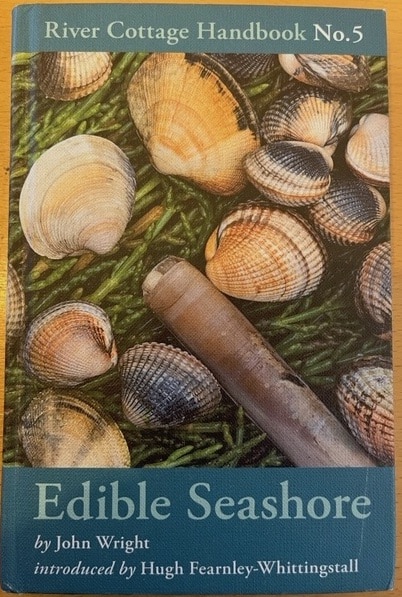
Let me confess: I have little aptitude for beachcombing/foraging. If I go off, I first consult the essential Edible Seashore by John Wright (£14.99), fifth in the River Cottage Handbook series. This warns you off picking more than a few leaves from a sea kale plant in SSSIs (Sites of Specific Scientific Interest). Which is no hardship when you consider they can grow up to two metres in diameter.

What deters me in my quest to cultivate and cook it comes in Edible Seashore “How to cook” section: While it is possible to eat a mature cooked sea kale leaf, it may require a day or two to accomplish the task. It has the flavour and texture of a damp thick face flannel. As the Victorian horticulturalist, Charles McIntosh lamented, this kale cannot be too much boiled.”

They recommend picking when the leaves are purple and tiny. On the bitter side at this stage, it’s best to blanch. Better still try the young flower spikes, which taste like broccoli. Or you can dig up and steam the shoots (though this is counter-productive to having a crop next year!) The taste is said to resemble asparagus.

For an exotic recipe check out this combo on the Great British Chefs website – steamed Scottish sea kale and white sprouting broccoli with crab, smoked cod roe and seaweed. Find sea kale on the menu at any restaurant and it will be cultivated stuff not wild because of the picking restrictions. I know an asparagus farm in Scotland that sells a limited amount of Crambe wholesale and the irrepressible Raymond Blanc grows it in his walled garden at Le Manoir aux Quat’ Saisons, putting it on the menu in season, serving it like asparagus. Edinburgh chef Tom Kitchin has created a sea kale and blood orange salad.

Did Jarman himself ever eat sea kale? In Modern Nature he writes about gathering elderflower, frying it in batter and sprinkling it with sugar for supper, but food never seems a priority  

Those journals, which began with ecstatic lists of plants, end in a litany of the drugs that keep him alive. As he gradually loses his sight and his body shrinks he spends more time in hospital than at Dungeness, but a companion to the end at Prospect Cottage is sea kale.

February 10: “Replanted a row of sea kale in the back garden, my first gardening this year.

Then settled down to put the voice-over for the film (Blue, his last) in order. In the afternoon I walked to the sea and found the storms had washed away the shingle, exposing the sea kale. I gathered several very large specimens and replanted them in the front garden.”

May 6: “A week has passed without a cloud in the sky. At dawn the sea kale, a froth of white flowers, is covered with small copper butterflies drunk on nectar. They freeze as my shadow falls across them.” And on August 10 a last, frail mention of “bone-bleached sea kale”.

RIP Derek Jarman.

My wife is aiming for a new Kindle for Christmas. Helping to save trees. While I’m dreaming of a couple of fat tomes to occupy my stocking. Maybe not on the topics this website centres on. I’m not averse to fiction or books on German history. Hint.

Lockdowns saw me researching into some recherché culinary roads less travelled, hence of late I’ve purchased fewer new publications. So don’t expect any definitive overview from the 2021 suggestions below. Still much delight. In compiling my list I realised I had bookended it with two authors who have been with me most of my post-Beano reading life. Let’s salute two octogenarians who are the greatest living exemplars in their field – food scholar Claudia Roden, 85, and travel writer Colin Thubron, 82, both of whose books this year transcended all those feeble potboilers piled high around them. 

Med: A Cookbook by Claudia Roden (Ebury, £28)

On the cover of Roden’s first new book in a decade there’s praise from Yotam Ottolenghi: “To read Claudia is to sit at her table, with everything, simply, as it should be. Pull up a table for the food; stay at the table for the stories.” The author herself begins what is much more than a recipe book with the epigraph “Cooking is the landscape in a saucepan”. All of which neatly sums up the fault line, dotted with hummus, tabbouleh, baba ganoush and a 1001 other treats, that lead from her groundbreaking A Book of Middle Eastern Food (1969) to the post-Millennium dinner parties inspired by her disciple Ottolenghi’s own oeuvre.

The Med reflects the fact that she has never rested on her scholarly laurels. Egyptian-born with Sephardic Jewish roots, Roden tapped into Spain with her last book, arguably my favourite of hers, and her latest offers a distillation of all her magpie-like culinary excavations radiating from the Mediterranean shores. Travel to Gaziantep, a Turkish city on the border with Syria via a green olive, walnut and pomegranate salad or investigate her pumpkin soup with orzo and amaretti, finding a new use for the traditional pasta filling of Mantua in Northern Italy. All this accompanied by evocative, anecdotal detail ranging from early family life in Aleppo via exile to Britain to the contemporary culinary mores of Barcelona.

Ripe Figs: Recipes From The Eastern Mediterranean by Yasmin Khan (Bloomsbury, £26) 

Claudia Roden us a hard act to follow but many cookery writers have mined that rich Mediterranean/Middle Eastern seam. I’ve been a huge fan of Yasmin Khan since her debut, The Saffron Tales (2016), which is as much about charting the lives of contemporary Iranians as their exquisite cuisine. Its successor, Zaytoun, inpected Palestinian food through an acutely political lens as she journeyed through kitchens in Israel, the West Bank and the Gaza Strip. Raised in Birmingham, the child of a Pakistani father and Iranian mother, she initially worked as a human rights activist. This is fully evident again if you look behind the handsomely illustrated pages of her third cookbook. It covers the food of Greece, Turkey and Cyprus with a set mission – to explore how migration has shaped cultures for the better… with food a vital litmus test.

Hence Ripe Figs is filled with the stories and recipes from families that have lived in the region for generations but alongside, in the midst of the global refugee crisis, she finds positive contributions from the displaced in the Moria refugee camp on Lesvos and elsewhere. In Istanbul kitchens she cooks with Kurds and in Northern Cyprus explores the thorny British colonial legacy. Fascinating reportage but the book is also a  trove of sun-filled recipes that celebrate how the joy of food can bring us all together.

Sicilia: A Love Letter to Sicily by Ben Tish (Bloomsbury, £26) 

Food and joy to me are synonymous with Sicily. Well maybe not gagging on spleen sandwiches from the street stalls of Palermo. I’m thinking proper tomatoes, lemons, capers, olive oil, ricotta salata, scaccia bread, cannoli and, of course, seafood. The image fronting this article is of the remarkable gambero rosso red prawns from the island’s South West Coast. These particular specimens were served to me with an orange dressing and thyme, in one of my final meals out before the first lockdown, at Norma in London’s Fitzrovia. This homage to Sicilian cuisine, with an inevitable Arabic influence, was created for the Stafford Collection by Ben Tish. In his matching ‘love letter’ he puts his own light stamp on a culinary melting pot of so many influences. It’s worth buying the book just for the pudding recipes.

An A-Z of Pasta by Rachel Roddy (Fig Tree, £25) 

Subtitled ‘Stories, Shapes, Sauces, Recipes’, this is an alphabetical exploration of the quintessential Italian food from the Rome-based home cook, whose evocative despatches appear in The Guardian every Saturday. Does it supersede my super-stylish long-standing pasta primer, The Geometry of Pasta by Caz Hildebrand and Jacob Kenedy (of Bocca di Lupo fame)? Neither can do full justice to the full range of Italian pasta shapes, estimated at over 500. She tackles 50, subdivided into six main categories, with 100 accompanying recipes to justify her claim that “pasta shapes are edible hubs of information”. if that sounds daunting just check out the recipes, most of which are eminently accessible. Tagliolini with datterini tomatoes and chanterelles? Or fresh capelli d’angelo with prawns and lemon. Pass the parmigiano, per favore.

To complete my Italian ‘course’ I’d like to recommend the pasta-driven Taste: My Life Through Food by Stanley Tucci (Fig Tree, £20), but this eagerly anticipated prezzie is still being loaded up at Santa’s Lapland HQ, I’m hoping. There’ll be hell to pay if I’m not tucking into the Big Night star’s comestible memoir amid the messy aftermath of a roast goose dinner.

A Cook’s Book by Nigel Slater (4th Estate, £30)

What’s not to like about chapters entitled ‘Sometimes You Just Want Pie’ or ‘The Stillness of Cheesecake’? Slater’s Observer column readers, he tells us, didn’t want prunes in a chicken and leek pie, so he has left them out for this book of 200 tried and tested recipes, which plays to his strength – a close kinship with his readers. As the title implies, he is a cook, not a chef. As home-based as his near namesake Nigella, he does not share her ease on telly. Still he writes like a cosy angel, drawing you into the foodie diary of his life. Think Alan Bennett with a well-stocked pantry. The Stillness of Cheesecake may read like a riff on Milan Kundera (The Unbearable Lightness of Soufflés, anyone?) but it offers the homeliest of advice, too, alongside a slavering appreciation of food kept simple. And I quote: “A slice of cheesecake arrives on a small white plate. Cool, calm, silent. A sour whiff of buttermilk, the caramel sweetness of vanilla, Your fork slides through with barely a sigh.

“The sweet, fudgy filling can cloy after a mouthful. This pale and graceful pastry needs a pot of jam or fruit to waken it, and us, from its vanilla-scented slumber. A tart fruit compote will work – gooseberry, plum or apricot – or a little mound of baked rhubarb at its side.”

No space to digress into his discovery in San Sebastian of Basque cheesecake. Never been a huge fan of this over-praised pud, but Slater’s advocacy makes me want to attempt it again.

The Beer Bible by Jeff Alworth, 2nd Edition (Workman, £30, also available in pb)

Beer really is more my thing than cheesecake and the ideal Christmas present for the ale lover in your life has to be this revised version of Alworth’s award-winning magnum opus, first published in 2015. Six years is a long time in the rapidly evolving world of craft beer and the Portland Oregon-based Beervana blogger has been perfectly placed to chart it. Take Manchester’s iconic Cloudwater Brewing – they were just starting out in 2015, fuelled by co-founder Paul Jones’ learning expedition to the American West Coast where Alworth mentored him in the hop-driven scene.

Now Cloudwater merits four pages in this massive, comprehensive work of reference that still has that personal touch in its appreciation of the world’s vast array of beer cultures. Even sake gets a look in this time round. What I particularly like about the book is its even-handedness, giving space to understand how mass market lagers might appeal. Manchester, too, is not just about Cloudwater and Marble (young head brewer Joe Ince makes the index) but traditional family brewers Hydes, Robinsons and JW Lees are also hailed.

Modern British Beer by Matthew Curtis (CAMRA Books, £15.99pb)

Another acclaimed beer writer liked Manchester so much he moved here permanently. Just after publication this autumn I met the LIncoln-raised writer/photographer at the Sadler’s Cat bar in the city centreto discuss its genesis – in a blog born out of a Damascene conversion to beer in Colorado a decade ago. In my interview/review I wrote: “New wave UK beer writers have codified the global beer styles that have been clarified/reinvented across America and then taken up over here. Matthew Curtis goes a step further and charts the creative melting pot of our own mash tuns and barrel ageing projects. Modern British Beer proves we are not just brewing lackeys; our own cask ale traditions remain the envy of the world, our own innovations the equal of anywhere.” 

The Curtis format certainly does the contemporary UK beer scene justice. The book is divided into seven regions with up to 15 breweries from each profiled via a defining beer style. It has already sparked a number of thirst-quenching pilgrimages. Check out this one to Sheffield’s St Mars of the Desert.

Modern British Cider by Gabe Cook (CAMRA Books, £15.99pb

On the surface a companion volume to MMB and, by chance I also spent a fascinating day  in the company of its author. the self-styled ‘Ciderologist’. Not in a bar this time but in the orchards of Dunham Press Cider, a northern outpost of a drink more associated with Somerset and Herefordshire. Later that day, at a tasting at GRUB in Manchester I even encountered a Scottish cider among a remarkable variety of styles.

In my subsequent report I wrote: “Rather than an artisan polemic, Modern British Cider is a careful summation that makes you want to sample all the delights he flags up in ‘The Most influential British Cider Makers Today’ chapter. In particular, to consider the contrasts between West Counties and East Counties, ie. made from tannic bittersweet cider apple varieties on the one hand and from fresher, fruitier dessert and culinary specimens on the other.”

So is all lovely in the orchard? The book is a fine gazetteer of where to find the good stuff but doesn’t fight shy of confronting the challenges for a tipple saddled with tarnished perceptions from the past. And, of course innovative ‘new wave cider’ has its own responsibility to its traditions. My Christmas suggestion – order this book and maybe treat yourself to a fine Pomona or Oliver cider to accompany your turkey or (apple-stuffed) goose.

A Cheesemonger’s Compendium of British and Irish Cheese by Ned Palmer (Profile, £14.99)

Cider, like beer, is a great accompaniment to cheese. And we’re not talking the token Christmas Stilton here. In 2014 Ned Palmer, schooled at Neal’s Yard Dairy, set up the Cheese Tasting Company to proselytise about the golden age of British cheese (it’s now). Two years ago his A Cheesemonger’s History of the British Isles beguilingly explored the artisan wonders at hand and the doughty makers who provide us with an alternative to the slabs of pap that dominate the supermarket shelves. A rollicking read from Ned but this follow-up is the book to slip in your pocket as you seek out a Baron Bigod or a Stinking Bishop or ask to compare a Montgomery Cheddar with a Keen’s Mature. It codifies, via style (mould-ripened, blue, washed rind, hard etc) 158 native cheeses, one to each page with a drawing and a succinct story and tasting note. Highly recommended. Next move is  find a good cheese shop. I’m lucky enough to have the outstanding Calder Cheesehouse just a 10 minute walk away in our little mill town of Todmorden. They do online, too. Visit this link. There’s still time before Christmas.

Wines of the Rhône by Matt Walls (Infinite Ideas, £30)

Early in 2021 I caught up with last year’s Noble Rot: Wine From Another Galaxy. I’d been reluctant to join Dan Keeling and Mark Andrew on their ebullient adventures since I’d already read some of them in their Noble Rot magazine. They’ve been busy boys this year too, opening a second Noble Rot restaurant, in the old Gay Hussar site in Soho and wine retail website, Shrine to the Vine. In prose, they have their finger on the pulse of the contemporary wine scene, opening up new paths.

Less showy is the Infinite Ideas Classic Wine Library, sparsely illustrated, hugely comprehensive survey of countries or key regions, often written by experts with MW after their name. Matt Walls isn’t a Master of Wine but he is Contributing Editor to Decanter magazine, who uprooted his family to a village outside Avignon fo a couple of years In order to really get under the skin of France’s Rhône region, North and South. The result is a revelatory delight, a reference work full of wise judgements. As up to date as it gets and an inspiration for our Christmas dinner wine offering.

The Amur River by Colin Thubron (Chatto & Windus, £20)

It’s a truism that there is nowhere left on the planet to discover, making it increasingly difficult for travel writers to push the boundaries. Well, veteran explorer Colin Thubron, in his 83rd year, is not one to settle for the ‘we’re all tourists now’ get-out clause. Before reading this – in one transfixed sitting – I couldn’t pin the Amur on the map. Yet it is apparently the 10th longest river on earth, flowing 3,000 miles east from a secret source in the Mongolian mountains to the Tatar Strait. Thubron travels he entire length. What gives the book its tense socio-political edge is that much of the journey follows the highly fortified, much fought-over Russian-Chinese border. 

In his quest to chart how the Russian imperial dream died Thubron’s fortitude is astonishing. Early in the trip traversing fathomless bogs at a frantic trot he falls from his squat, primitive nag and twists his ankle badly. Later he brazens out an arrest by the local police. What transcends any sense of mere derring-do is his grasp of the Amur’s tragic history and, of course, his luminous prose. Witness: “To walk here is to wade through a tide of wildflowers: multicoloured asters, gentians, butter-coloured potentilla, peacock-blue columbines. Over farther slopes, swathes of blown edelweiss make a frosty pallor for miles.”

I’ve followed Thubron from his early books on the Middle East through his eye-opening explorations of Russia and China, but this arguably is his elegiac masterpiece.