Back in the day most folk’s first encounter with Indonesian food was probably via a Rijstaffel in Amsterdam or any Dutch city, an all-you-can eat buffet, at heart a colonial legacy. At its centre would be mounds of cooked rice – the Nasi of Nasi Goreng fame, that now ubiquitous fried rice dish, often featuring chicken or prawns.

Indonesia is the world’s third largest producer of rice and farmer must make offerings of the sacred grain at harvest time to Dewi Sri, the goddess of rice and fertility. This can involve eve trekking to the top of a volcano, of which there are many.

In her fascinating new book, Healthy Vegan Street Food (Ryland Peters & Small, £20) Jackie Kearney makes rice the centrepiece of her own Indonesian/Malaysian-influenced showstopper, but it consists of just three or four plant-based elements and the rice is the more nutritious black variety. 

Healthy eating is at the core of the Masterchef legend’s fresh batch of recipes – without sacrificing flavour. As proof let me introduce you, in this exclusive extract, to her recipe for Simple Nasi Campur: Tempeh brittle, purple potato curry and coconut kale stir-fry.

“Indonesia’s answer to India’s thali. This selection plate means ‘mixed rice’, simply a plate of rice with three or four different dishes. It’s a generic term used across Indonesia and Malaysia. Nasi padang is a type of nasi campur, originating from the city of Padang in West Sumatra, where the mixed rice plate was served as a huge banquet alongside multiple curries made with meat, fish and vegetables, plus spicy sambals, peanuts and eggs.

“The Dutch colonialists adored this Minangkabau banqueting, which they called ‘rijstaffel’ or ‘rice-table’. Rijstaffel restaurants are incredibly popular throughout the Netherlands, and a closer foodie experience for most Europeans. Go hungry and be prepared for 15–20 dishes to be laid around the table.

“This recipe is a simplified little taste of nasi campur to make at home. The moreish tempeh brittle recipe uses a significant amount of (unrefined) sugars, so the portion should be a very small part of the whole platter, or give this a miss if you are trying to reduce your sugar intake and simply fry some soy-marinated tempeh instead. The kale stir-fry and simple curry are super-quick to prepare. You could also add other Indonesian elements like loaded cassava fries, manadu ‘woku’ curry or Indonesian corn ‘ribs’, if you want to create a larger rijstaffel.”

TEMPEH BRITTLE

250g tempeh; 1 tbsp plus 1 tsp culinary coconut oil, or use good-quality vegetable oil; 1-cm/½ -in thumb of fresh ginger, peeled and finely chopped (about 2 teaspoons), or use 1 tsp ginger paste;  2 tbsp coconut sugar; 1 tbsp date syrup, or use pure maple syrup or unrefined coconut sugar; 3 tbsp soy sauce; large pinch of salt. Baking sheet, lined with parchment. Serves 6.

Preheat the oven to 190°C (375°F) Gas 5. Cut the tempeh into 6 mm/¼ in thick slices, then slice into 1 cm/½ in wide small pieces (the length will be the width of your tempeh block).

Place a wide frying pan over high heat with 1 tbsp of the oil. When the oil is very hot, add the tempeh pieces. Fry for 8–10 minutes until crispy and brown on all sides. Remove and place on paper towels to drain.

In the same pan, add another teaspoon of oil and add the ginger. Turn down heat to low and cook gently for 2 minutes, then add the remaining ingredients (except the tempeh). Bring the mixture to a low simmer until a thick syrup starts to form, then add the tempeh pieces. Mix well to coat all the pieces and fry gently until the liquid is reduced and sticky.

Lay the pieces onto the lined baking sheet and bake in the preheated oven for 10 minutes until crispy and nicely browned. Remove and set aside to cool. The pieces will then become more brittle and crunchy.

COCONUT KALE STIR-FRY

1 tbsp extra-virgin coconut oil, or use culinary coconut oil or good-quality vegetable oil; 7–8 curry leaves; 1 large brown onion, thinly sliced; 3 fat garlic cloves, thinly sliced; ½ tsp ground turmeric; 7.5-10-cm/3-4-in cinnamon stick; 250–300g bunch or 200g bag of kale, thick stems removed and thinly sliced; 75g desiccated unsweetened shredded coconut, soaked in boiling water for 15 minutes; 2 green chillies, chopped; ½-1 tsp salt, to taste; freshly squeezed juice of 1 lime (about ½ tbsp). Serves 6.

Place a wok or large frying pan over high heat. Add the oil and then add the curry leaves, frying for 20–30 seconds. Now add the onion, garlic, turmeric and cinnamon. Turn down the heat to medium–low, and gently stir-fry for 3-4 minutes until the onions are softened and the garlic is golden brown.

Add the kale and turn up the heat to medium–high. Stir-fry for 8-10 minutes until the kale starts to soften, depending on how crunchy you prefer your kale. Drain the desiccated unsweetened shredded coconut and squeeze out any excess water. Add the coconut and chillies to the pan, mix well and cook for 1 minute more.

Season with salt and remove from the heat. Add the lime juice and mix well. Serve immediately.

PURPLE POTATO CURRY

½ tbsp culinary coconut oil, or use good-quality vegetable oil; 1 large brown onion, finely chopped; 2 fat garlic cloves, finely chopped, or use 2 tsp garlic paste; 4-8 small red chillies, to taste; ¼ tsp chilli powder; 1 tsp ground cumin; 1 tbsp ground coriander; 400g can plum tomatoes; 250 g purple potatoes, peeled and cubed, or use new potatoes; 

250g firm tofu, cubed (and lightly baked if you prefer); ½-1 tsp salt, to taste. Serves 6.

Place a large frying pan or wok over medium-high heat and add the oil. Add the onion and sauté for 4-5 minutes until translucent. Add the garlic, cook for 1 minute, then add the chillies and ground spices. Add the tomatoes (and juices) plus 3½ tbsp water, then squash the tomatoes to a pulp. Simmer for a few minutes, then remove from the heat.

Using a stick blender, blitz until smooth. Return the pan to high heat and add the potatoes. Place a lid on the pan, turn the heat down to low and simmer the potatoes for 20-25 minutes until soft but not falling apart. Add the tofu pieces. Season with salt and add a little more water if needed. This curry can be reheated when needed.

TO SERVE

Cooked black rice; 3–4 tbsp sambal balado; 3-4 tbsp red-skinned peanuts, lightly toasted, or use cashew nuts; freshly chopped coriander; rice crackers.

To serve the nasi campur individually, place some cooked black rice in the centre of a plate (or on a banana leaf if you like). Add a large spoonful of each of the dishes around the outside, plus a spoonful of sambal balado (or hot chilli sambal) and a spoonful of toasted red skinned peanuts. Sprinkle the potato curry with a little fresh coriander and add a few rice crackers, if you like. Indonesian rice crackers are fried, so I prefer to serve with baked Vietnamese-style crackers for a healthier option.

SAMBAL BALADO:  This Indonesian chilli and tomato condiment is a cornerstone of Indonesian food. Buy in or follow this recipe, which will make 250ml. 10-12 large dried red chillies, to taste, soaked in boiling water for 15-20 minutes; 2-6 Thai chillies (optional); 1 small red onion, roughly chopped; 3 fat garlic cloves; 1 large tomato, halved and deseeded; ¼ tbsp culinary/unflavoured coconut oil; 2-3 fresh or dried kaffir lime leaves (optional); ½ tsp date syrup (or maple syrup/unrefined coconut sugar); ½-1 tsp salt,, to taste; freshly squeezed juice of one lime;. 

Drain the soaked chillies and add to a blender or food processor along with fresh chillies (if using), onion, garlic and tomato. Blitz to a rough pulp, then add to a small pan with the coconut oil. Place over medium heat and bring to a simmer. Add the lime leaves, date syrup and salt, and simmer gently for 10-12 minutes until the liquid reduces. Add the lime juice, mix well and taste. Adjust the seasoning, adding more date syrup or salt, if needed. Store in a sterilised jar and keep in the fridge for up to two weeks.

Healthy Vegan Street Food: Sustainable & healthy plant-based recipes from India to Indonesia by Jackie Kearney (Ryland Peters & Small, £20) Photography by Clare Winfield © Ryland Peters & Small. She has published four previous books with them and the BLOG on her ‘Hungry Gecko’ website is an essential background read. 

Check out my recent interview with Jackie.

Grandes Pagos de Espana is a prestige association of single estate Spanish wineries. A broad church indeed as I discovered at a recent public tasting at Manchester’s hub of all things Iberian, the Instituto Cervantes. The seven bottles we sampled ranged from a new wave richer-style Txakoli white from the Basque Country to a minimal intervention Mencia-led old vines field blend from Leon. I particularly liked the 100 per cent Garnacha Secastilla from the Somontano region.

Unsurprisingly though it was a trio of reds from a different but very familar grape that finished proceedings, culminating in the Pago Negralada from Abadia Retuerta. 

Wines from this estate are regularly supplied to winemaking schools as benchmark examples of Tempranillo, Spain’s most widely planted premium varietal. That information came from Miguel Gavita, who had guided through the Pagos tasting. No false modesty here – Miguel works for Abadia – but he can be forgiven. I know first hand, in situ, how good their wines can be. Perhaps the wonderful setting influenced my judgement when I stayed there one glorious late spring. It’s all coming back.

My planned visit to this luxury hotel with its own winery two hours north of Madrid had been nipped in the bud when a journalists’ press trip was cancelled. Then I ran into the Abadia head honcho at a Relais & Chateaux bash in Cheshire and he said: go on, we’ll host you solo. Le Domaine lodging project was still a work in progress when I arrived

Heavenly Retreat Among Spain’s Great Vineyards

Storks and cranes, the skyline of an abbey fortress surrounded by vineyard. The storks are nesting busily in the 12th century belltower; the cranes, the giant mechanical sort, are at rest. This is a Spanish bank holiday and work will resume tomorrow on turning former monks’ dwellings and stables into eight new guest rooms and the Sanctuario spa/pool complex. To complete the transformation into one of Spain’s finest hotels. 

Welcome to Abadia Retuerta, westernmost of the wineries producing some of Spain’s greatest reds along the River Duero’s Golden Mile. Le Domaine, is the place to stay around here with just 22 rooms and a cuisine curated by one of the country’s Michelin-starred greats.

I’ve only just arrived and barely settled in my room, pausing open to fling open the shuttered windows for an eyeful of vines before I am out among them for a pre-prandial stroll. The view back is equally enchanting – pale, honeyed stone cunningly renovated, harmonising Romanesque and Baroque.

Such evenings of mellow sun and blue skies have been rare this spring. At 800m above sea-level here they expect nights to be cold, but it has been uncommonly wet, too, bad for the grapes planted across 700 hectares upon which Abadia’s fortunes are built.

In 2005 their flagship wine, the Seleccion Especial conquered all at the International Wine Challenge, capping a remarkable fast track rise for an operation only begun in 1995 on land previously part of the legendary Vega Sicilia estate. 

The winning  wine was from the 2001 vintage. I never expected to be served a bottle from that year with my dinner in the Refectorio, but there it was, still vigorous yet elegant, the quintessence of Tempranillo (with the support of some Cabernet Sauvignon).

The Refectorio was where the monks ate (and occasionally kept their livestock). Now these soaring white stone vaults are home to Le Domaine’s fine dining restaurant. For the holy men’s simple gruel, root veg and pond fish substitute sauteed cuttlefish with a reduction of its own juice, cod cheeks whitened with gelatine with a honey emulsion, market fish with seasonal ragout and its toasted bone juice, then crispy baby lamb with quinoa.

(Abadia owners Swiss pharmaceutical giant Novartis originally enlisted Andoni Luis Aduriz of Michelin-starred Mugaritz to launch the kitchen operation. It retains a star to this day plus one of those sustainability-savvy green stars. Similarly, the winery was designed by Bordeaux legend Pascal Delbeck, the man who revived Chateau Ausone.)

The estate is actually just outside the borders of the official Ribera del Duero wine denominacion, meaning the wines bear the name of the nearest town, Sardon del Duero.

This actually gives the winery more flexibility in the vines it plants and a portal for innovation. Alongside, Abadia Retuerta really feels like the cradle of winemaking in the region.

The Santa Maria de Retuerta abbey was originally founded in 1145, by Doña Mayor, wealthy daughter of Count Ansúrez, Lord of Valladolid – one of many fortified religious houses built during the Christian “Re- conquest” of Castile from the Moors. The Ansurez family left “terras et vineas” (land and vines) to the French-based order of St Norbert, which was the beginning of the estate’s long history of producing wine. 

The abbey, though, after splendid additional building work during the Baroque era, fell into a steep decline until the current sensitive renovation that marries light-filled chic interiors (lots of marble, linen and luxury fittings) in the bedrooms in the Baroque half with the miraculously preserved original church and sacristy. 

Off the utterly calm cloisters you’ll find an even calmer yoga room, hi-tech meeting rooms and the Vinoteca casual dining space new and old stone all seamlessly joined… while high above the resident stork family keep a beady eye on guests.

Most of these come with wine in mind, sampling first at the Abadia Retuerta’s own tasting room in the winery and then visiting rival establishments along the route to “wine capital” Penafiel. Le Domaine offers a unique personal butler service that can sort out all arrangements for you. Hot air balloon trip, helicopter tour or, closer to the soil a horseback ride? Just ask.

My butler Juan ferried me east to Penafiel to see the remarkable, elongated white castle on the hill and the Richard Rogers-designed Protos winery. It’s a workaday place, as wine towns often are, but with lots of attractive tapas haunts and an astonishing enclosed medieval square called the Plaza del Coso. Folk hire the balconies of its private houses when bullfights are held there. On our visit the shutters were closed, a couple of cats snoozed and it shimmered in the sun like the epitome of Old Castile.

Delightful, too, my last walk before departure at Le Domaine – along a raised path between the Duero Canal and the river proper. The birdlife is abundant and the spring flowers are glorious. The estate pays the same meticulous attention to stewarding the environment as it does to producing proper wine and pampering luxury guests. 

Mummy stork suddenly takes wing and flaps across the vineyards under a cloudless sky. A final glass of Seleccion Especial awaits me in my cool room. I think I’ve gone to heaven.

Abadia Retuerta, Carretera Nacional, 47340 Sardon de Duero, Spain. 

I came late to The New Forest National Park and it has found a nest in my heart. This 550sq km patch of ancient England is an all-year-round destination, but autumn is particularly alluring when the russet woodland plays host to Pannage. This is the practice of releasing domestic pigs into a forest (also known as ‘common of mast’), dating back to the reign of William the Conqueror, who founded The New Forest in 1079.

In this case up to 600 pigs are released to eat fallen acorns, beechmast, chestnuts and other nuts, which are poisonous to the ponies, donkeys and cattle which roam the forest. The season started in September and finishes on 18 November. It is the only time of year that the pigs are allowed to ‘roam’ – around the same time those commoner-owned native ponies are rounded up, some headed for auction. 

This New Forest breed is most often associated with this former royal hunting ground. Pigs, though, have their own special status, too. Just to watch the wilded beasties wolfing down acorns is enough to induce dreams of free range pork products There is a good reason celebrated hotel/restaurant chain The Pig, with its stalwart commitment to local produce, first took root in the heart of the Forest, just outside Brockenhurst. 

A glance at the original Pig’s ’25 mile’ menus reveals a Saddleback crackling snack, starters of Pannage Coppa or home-made black pudding, a Tile Bar Farm pork chop main and my favourite, Crispy Chilli Pork Belly, Garden Leaves, Makers Honey and Greenhouse Chilli – locally reared and grown ingredients, with zero-mile produce picked from their own kitchen garden.

A whole chapter of founder Robert Hutson’s The Pig Cookbook (Octopus, £30) is given over to ‘Porkology’, a snout to tail guide tackling the various breeds they farm and their kitchen uses, particularly charcuterie. Chef Director at The Pig James Golding even teamed up with a third generation local family butcher, Alan Bartlett, to create a curing company called A Pinch of Salt.

Which brings us to a more traditional outlet for all that pork. ‘Mr Bartlett’s Hampshire Hogs’ have a case to be the perfect bangers to match with mash. The recipe date back to Alan’s great grandfather. Jame and his team can’t resist updating the ‘secret’ blend with the addition of (my favourite spice) fennel pollen plus elephant garlic (think a cross between standard garlic and leek).

Hampshire Hogs

Ingredients: 100g breadcrumbs, rapeseed, 25g seasoning (roughly 20g salt, 5g sugar, a pinch each of sage, thyme and garlic powder), 700g boneless pork shoulder (80% lean, 20% fatty), 150ml cold water, sausage casings.

Method: Fry the breadcrumbs with a little oil until golden brown. Mince the meat straight onto the crumbs, adding the water. Mince again. Tie one end of a sausage casing with string, then insert the narrow part of a wide-necked funnel in the other end. With the back of a wooden spoon push the meat through the funnel into the skin. Once it’s full remove the funnel and tie the end. Pinch and twist into four individual sausages, then link and tie with with string. Overnight in the fridge. Best cooked over charcoal.

Enough ‘snouts in the trough’. So who needs Vermont when you’ve got the New Forest?

There are are many good places to walk and witness the autumn colours. Try the following. Hightown Common, located near Poulner in the Forest’s north, is perfect for experiencing colour on trees, from the brilliant yellow of the birches to the last clumps of purple heather and the delicate tracery of the dying brackens. The walk starts off by passing a clump of gorse bushes, which provide beautiful colour and a distinctive coconut scent. Rhinefield Ornamental Drive is probably the best-known road in the whole of the forest.  Considered by many as the ultimate autumn colour-burst, the drive was planted in 1860 and offers colour and wonder all year round, as well as the Forest’s tallest tree. Time it right, and you can also proceed on to Blackwater Arboretum to see the falling leaves twirl and float into the pond there.

Staying in the New Forest

Many of the forest’s accommodation providers offer good deals to fill beds in the autumn ‘shoulder season’, and quieter roads, pubs and restaurants make it the perfect time for a short break. One place I’d heartily recommend is the four-star Balmer Lawn Hotel (above). This is currently offering three nights for the price of two until the end of November 2022. The break costs from £145 per person, B&B, based on two people sharing a room, and  also includes full use of the leisure facilities including indoor and outdoor pools, sauna, jacuzzi and gym. Pigs can be spotted very close to the hotel, and some rooms are dog friendly (though dogs should be on leads where there are pigs.)

We stayed at Balmer Lawn on our pre-Pandemic voyage of discovery. Here’s my report on that equally enchanting spring visit – Tall Trees and A Small Dog in The New Forest. For further information on the area visit the New Forest website.

Beware sweeping put-downs. “All border towns bring out the worst in people.” The words of Mexican detective Vargas, hero of Orson Welles’ classic film noir, A Touch of Evil, which is set (though not filmed there) in a widescreen approximation of Tijuana.

Shadowy, seedy, violent, borderline – movie stereotypes stick. Chuck in the country’s more recent reputation for drug cartels and organised crime along with Trump’s fixation on That Wall, 30ft prototypes of which are still in place near Tijuana, despite enterprising locals nicking the razor wire, and there’s a bad press to overcome.

Our intrepid band overcame it instantly on a glorious day trip to this capital of Baja (Lower) California state, which has so much in common with its richer Northern namesake. Not least the food. Which brings us to Caesar Salad.

Back in the 1920s Tijuana was called Satan’s Playground by American preachers aghast at their fellow countrymen fleeing Prohibition to have a Las Vegas style wild time just across the border. 

Caesar Cardini ran restaurants here and in San Diego, USA, 20 miles up the the road. On the Fourth of July 2024 a rush of customers depleted kitchen supplies in Tijuana, so Italian-born Caesar tossed together at table all the salad ingredients left. It was a hit, word spread and even Hollywood stars flew down regularly to order a ‘Caesar Salad’. I the crush the obligatory tableside service eased pressure on the kitchen.

Whether today’s recipe was there from the start I’m not sure, but a major pleasure of our visit to the historic Hotel Caesar’s on Avenida Revolucion was to watch our waiter stirring together lemon juice, garlic, olive oil, egg, Worcester Sauce, anchovies, Dijon mustard, Parmegiano and black pepper to enhance a simple green salad with croutons. 

Oh and they didn’t enhance it with strip of chicken. And some purists still question the necessity for anchovies with Worcester Sauce already in the emulsion. Some favour cup-style large leaves, messy finger food style; I’m happy with chopped. Whatever, it is pure theatre.

The great Julia Child recalled a childhood encounter: “My parents were so excited, eating this famous salad that was suddenly very chic. Caesar himself was a great big old fellow who stood right in front of us to make it. I remember the turning of the salad in the bowl was very dramatic. And egg in a salad was unheard of at that point.” 

These days it all seems very ‘heritage’ against the backdrop of Mexico’s fifth largest city with many poor districts that are less than charming. Compensations are some seriously authentic local dishes such as aguachile shrimp, spicy goat birria and breakfast snack chilaquiles.

All of which seem quite inappropriate as I prepare a swift autumnal lunch in a deluged Pennine mill town. So, store cupboard open, a batch of romaine from Aldi at the ready, Caesar Salad it is…

My chosen Caesar recipe is a hybrid from two versions in my quarter-of-a-century old Dean & DeLuca Cookbook (Ebury Press). The deli chain itself expanded way beyond its original New York base and came a financial cropper in recent years, but I still love the eclectic recipe roster in my faithful smudged kitchen companion.

Author David Rosengarten provides the classic version, minus anchovy fillets but he does parboil rather than leave the egg raw. Alongside he includes an alternative recipe with crispy walnuts replacing croutons and crumbled Roquefort instead of Parmegiano  shavings. I crave both cheeses, so straddled the middle ground. I also philistinely added a burrata and basil on the side. Sorry Caesar. At least I didn’t resort to a bottled dressing.

Ingredients 2 big heads of romaine or cos lettuce, 50ml olive oil, 350g garlic-rubbed croutons (I cheated with focaccia cubes), salt and pepper, curls of Parmegiano cheese. For the dressing: 4 anchovy fillets, no egg, 2tsp sherry vinegar, 2tsp lemon juice, 1tsp Worcestershire sauce, ½tsp dry mustard, 125ml extra-virgin olive oil and 125g Roquefort cheese.

Method Make the dressing by mashing the anchovies and garlic into a paste. Whisk together this paste with vinegar, lemon juice, Worcestershire sauce, mustard ad crumbled Roquefort in a small bowl. Add olive oil in a stream, further whisking the mix until is is emulsified. In a large bowl toss the lettuce chunks with the dressing. Fold in the croutons and liberally garnish with the Parmegiano curls.

Midnight at Colombo Airport, stepping out into the humid, slightly foetid tropical night after an 11 hour flight. The usual welcome on such trips, a taxi driver flourishing a card with my name, misspelt. All is not as it was meant to be, alas. A small group press trip has turned out to be just solo me after the others bailed out and the Sri Lankan tourist folk have buggered up the itinerary, too.

My scheduled B&B is taken; my host is under the impression I was arriving the previous night. He shows pity, though, pours us some wine and accommodates me in a box room come cupboard. Over breakfast he tells me a government minister had recently been assassinated in his own swimming pool along the road. My good fortune? The airport runway has been patched up after yet another Tamil Tigers bombing raid.

All this is long ago. The island once known as Serendib and, in colonial times, Ceylon, is in volatile chaos once again as I write, but not with the sense of danger pervading that 2005 visit. It was post the horrors of Tsunami but peace with Tamil rebels was yet several years away. As vivid as the elephant sanctuary, tea plantations and temples of Kandy was an encounter in a hotel outside that Buddhist stronghold. Karen was a former Norwegian police officer seconded to control (with an ever diminishing team) a breakaway Tamil territory. She was driving back there after ferrying a wounded rebel colonel by airbus to hospital captivity in the capital.

Despite all this turbulent back story I was greeted warmly in every village and fed royally, my chilli heat tolerance a great help. Looking back, though, I never really got to grips with the country or its cuisine.

That’s where Cynthia Shanmugalingam comes in. Her recently published, beautifully illustrated Rambutan: Recipes from Sri Lanka (Bloomsbury, £26) explores both, from the perspective of a Tamil expatriate in England. Coventry, where her parents arrived in the Sixties, is a far cry from her family’s origins in Point Pedro at the northern tip of Sri Lanka but the anecdotes that link each life are at the core of an evocative narrative that transcends mere cookbook. 

“I felt it was a special honour to be able to tell the real story of an immigrant Tamil kid like me, and I didn’t want to do a sort of tourist idea of Sri Lanka. I wanted to write a cookbook with all the melancholy and joy that comes with losing a homeland,” the former Treasury economist told the Independent newspaper. So, yes, it doesn’t fight shy of addressing the internecine conflict that overshadowed her growing up, while still conveying the sheer sensuous joy of the places she knew, the food she ate.

The 80 recipes are revelatory, too, making it easier to recreate at home the raw and pickled dishes, sambols, curries, rice and rotis, coconut and, yes,  that are at the heart of Sri Lankan cuisine.

Cynthia will be showcasing all of these when her own restaurant, Rambutan, naturally, opens in Borough Market in October, capitalising (and perhaps improving? upon the success of groundbreaking London Sri Lankan restaurants such as the Hoppers chain, Paradise and, my own favourite in Kingly Street, Soho, Kolamba. Meanwhile, flying the flag in the North West is Stockport-based Little Lanka, shortlisted for ‘Food Trader of the Year’ in the 2022 Manchester Food and Drink Awards.

What I can’t see on the Little Lanka take-out menu is Mutton Rolls, a hugely popular street food dish I first encountered when I finally arrived at the prime reason for my Sri Lanka trip, the Colombo Food and Drink Festival. So good I ate three. The name suggest there’s bread involved; think again. Let’s turn to page 266 of Rambutan for a proper evaluation – and a recipe I really didn’t do justice to when I attempted it recently.

Cynthia suggests Colombo’s benchmark mutton rolls are to be found in the quirky Hotel Nippon – consisting of a slow-cooked mutton curry, wrapped in a Chinese pancake, breaded and then fried into a crisp, red-hot snack. The hotel is in an area known as Slave Island, home to the 40,000 strong Sri Lankan Malay community, whose cafes serve deep-fried cow’s lung and a tripe curry. Let’s admit I’m happy just to pursue the mutton (I used hogget) roll, recipe below (my version and how it should look)…

Ingredients

2tbsp coconut or veg oil; 1 finely diced red onion; 10 fresh curry leaves; 1 garlic clove, finely chopped; 2cm fresh root ginger, finely chopped; 300g mutton (or lamb) trimmed of fat an diced into 2cm cubes; 2cm piece of cinnamon stick; ½tsp sugar; 2tbsp SL curry powder (below); 100g waxy potatoes diced into 1cm cubes; 100ml coconut milk; ¼ whole nutmeg grated.

Coating: 100g panko breadcrumbs; 1tsp ground turmeric; 250g plain white flour; 1tsp salt; 3 large organic or free range eggs; 200ml milk; 200ml water; 100ml veg oil for shallow frying; ½tsp meat powder (below).

Sri Lankan curry powder: 30g coriander seeds,15g cumin seed,15g black peppercorns 2tbsp coconut or vegetable oil 2, 10 fresh curry leaves, 70g dried Kashmiri or medium hot red chillies, ¼ tsp ground turmeric.

Meat powder: 4 whole cardamom pods; 2tsp fennel seeds; 4 cloves; 2.5cm piece of cinnamon stick; ¼ nutmeg, grated.

Method (condensed)

Fry the onion over medium heat until translucent. Add curry leaves garlic and ginger for a minute, then the hogget, cinnamon, sugar, salt and SL curry powder. Just cover the lamb with cold water and bring it to a gentle simmer, to last for a couple of hours.

While the lamb is cooking boil the seasoned potatoes for six minutes, drain. 

Scoop the cooking liquid from the meat. Reduce it in a small saucepan for 10 minutes, to thicken, then add drained potatoes and coconut milk, stirring in nutmeg and meat powder. Combine with meat again and remove cinnamon stick.

Make coating by slightly crushing the panko and half the turmeric together. Put the flour, the remaining turmeric and salt in a mixing bowl. Break the eggs, whisk in then gradually add milk until smooth; whisk in the water now, a third at a time.

Heat veg oil in a small pan, pour enough batter into the pan so that it’s 2mm thick. Swirl it around to let it cook for around 30 second so it’s cooked. Transfer and keep warm and repeat until you have eight pancakes. To make the rolls take one one warm pancake and place two tablespoons of the meat mixture. Fold the pancake tightly around like a burrito to seal. Repeat. Coat them all with breadcrumbs. 

Fry two mutton rolls in a heavy-based pan with oil to a depth of 1cm, two minutes on each side, using tongs to hold and tun them. Repeat with the rest of the rolls. Keep warm, serve with sriracha.

So what’s a rambutan and what can you do with it?

The name of Cynthia’s book and imminent restaurant is Rambutan. Oddly this lychee-like fruit has a rather minor role in the narrative, taking centre stage in a dessert recipe I’m eager to attempt – ‘Rambutan and Rose frozen Falada’. 

It features first in one of the most vivid chapters, ‘Eat Fruit with Salt and Chilli’, introduced by her favourite uncle: “One day Athappa put a small hairy, red and yellow fruit into my hands from a brown paper bag and told me to crack it open. A rambutan. I dug my nails into the crisp, spiky shell and prised out a translucent orb, a meaty scented jelly, all sugar and perfume and a faint sourness at the same time.”

This woman can write. My main picture is from the book, taken by the brilliant San Francisco-based photographer, Alex Lau.

The present of some corn cobs “as corny as Kansas in August”, well super fresh off the stalk, was a Proustian madeleine moment, albeit my Memory Lane was Route 66 through another US state – Arizona – and my emblematic longing was for a swirling, ‘tricoleur’ soup. Created bizarrely by a chef originally from Hartlepool.

The flashback sent me scuttling to the kitchen to recreate it, but first some context. It was exactly a decade ago. The latest leg of an epic road trip was from Sante Fe westward to the Grand Canyon. We had skirted Albuquerque on Interstate Highway 40 – the flat, straight blacktop that was supposed to demote the legendary Route 66 to a mere backroad. But, of course, the much-covered song and the iconic image live on, albeit a mite cheesily.

Standing on the corner that statue homage to an Eagles song.  Image: Tpaairman – own work, CC BY-SA 3.0.

Altogether now: “If you ever plan to motor west, travel my way, the highway that’s the best. Get your kicks on Route 66!” When journeyman songwriter Bobby Troup (previous hit Snootie Little Cutie) penned this ditty in 1946 did he ever imagine its future mileage?

In the April I had stood on Adams Street, Chicago, in front of the Arts Institute, starting point of the 2,500 mile highway which runs south then west all the way to Los Angeles. Did I ever imagine three months later I’d be rejoining it in a place called Winslow, Arizona. Cue another song, another legend.

First track on The Eagles’ eponymous 1972 debut album was Take It Easy. One line,  ‘Standing on the Corner in Winslow, Arizona’ put the town on the map. A girl in a flatbed Ford slows down to take a look at a horny hitchhiker who dreams that her sweet love might save him. I don’t expect it ended well… but a legacy remains.

On the corner of Kinsley Avenue and 2nd Street on Route 66 you can pose with a statue of the hitchhiker, backed by a mural of the lusted-after Ford girl… oh and across the road buy a tee-shirt in the gift shop.

We decamped to Winslow’s memorial of better times – the Posada Hotel, a wonderfully elegant, restored 1930s hacienda, pet project of prolific artist Tina Mion and her husband. He artwork and a plethora of local craft fills what was the last great railway hotel built along the Santa Fe line. Amtrak trains still thunder through. We lunched in the Turquoise Room restaurant where much-travelled, Hartlepool-born chef John Sharpe had won huge acclaim, even a James Beard nomination, for his interpretations of South Western cuisine and Slow Food. 

John retired a couple of years ago, but his kitchen team and the core menu remain in place. I’ve just checked. The chillies, tomatillos and tamales stand-up for the South Western high desert heritage alongside some big, big flavours. One $40 main combines crispy, fried quail with an orange Oaxaca sauce, Colorado farm-raised venison medallion with a black currant brandy sauce, a chipotle tamale topped with a pork, venison and bison chili. Finished with a fresh vegetable medley.

I’m glad I don’t have to tackle that challenge. The object of my desire is a black and yellow emblem in a bowl with a scrawled red pepper ‘signature’. Two soups, spicy black bean and creamy corn. 

Exquisite. As was Winslow itself – a sleepy, dream America heirloom strip. Just the plc to take it easy. 

Black bean soup

Ingredients

500g black beans; ½ tspb ancho chili powder; 1tsp ground cumin; ½tsp oregano; ½tsp marjoram; ½tsp ground coriander; ½tsp ground white pepper; 1 bay leaf; 15g diced

white onions; 1tsp salt; 1tbsp chopped garlic;  2tbsp unsalted butter; 1litre water.

Method

Wash and soak the beans in cold water overnight. Place beans and the rest of the ingredients into a large pot. Bring to a boil and simmer for 1½ hours or until beans are tender. Remove the bay leaf and discard. Cool the beans and place them in a blender and blend until smooth. Dilute with water as needed. The soup can be made a day in advance.

Sweet Cream of Corn Soup 

Ingredients

1kg corn; 350g sliced white onions; 50g butter; ½litre water; 750ml heavy cream, 1tsp salt

Method

Find the freshest corn you can and cut it off the cob making sure you scrape the cob to extract all of the milk. This is the sweetest part of the corn. Sauté the onions in a thick bottomed pan until soft but not brown. Add the rest of the ingredients and bring to a boil. Simmer for 10 minutes and remove from the heat. Place in a blender and puree till smooth. If the corn is not sweet add a little sugar. This may be done ahead of time and kept warm in a double boiler.

Red Pepper Stripe 

250ml soured cream; 60g roasted peppers; 1tsp chipotle peppers; salt and pepper to taste. Blend together.

To serve

Due to the starch in both soups, they will thicken as they sit. It is important that they be of the same consistency so you may need to adjust them by adding a small amount of hot water. You want to serve the soup in the same bowl, with the bean on one side and corn on the other. So, place the soups side by side on the counter. Using a separate soup ladle for each soup, scoop a ladle of each and pour into the bowl at the same time, and at the same speed. 

As a garnish squeeze the Red Pepper Stripe on top. Best served with cornbread fresh from the skillet.

With David Hockney I’ve got previous. Alas, I wasn’t poolside in L.A. for The Bigger Splash. And it was Ossie Clark not me with the white cat on his knee in Mr & Mrs Clark and Percy. That was the Sixties when the bottle-blond, bespectacled Bradfordian forged his artistic legend. I enter the story only a decade ago outside Bridlington, getting lost in a quest to find a certain Woldgate.

That was the 10-mile straight, single track unmetalled (probably Roman) road linking the slightly shabby East Riding resort with its rolling hinterland, the Yorkshire Wolds. If it weren’t for Hockney swapping his Californian exile in search of a different landscape and quality of light, Woldgate would have remained an afternoon drive cherished by locals, its woods left to foxes, woodpeckers and tinkers. We finally got directions to this “woodland tunnel” from a local pub, The Old Star, where we’d spotted a picture of the artist and pals on the wall. Before the smoking ban excluded his compulsive pastime he was apparently a regular there.

We admired the immense, understated beauty of the landscape that the artist, then well into his seventies, captured in paint and iPad image for his show, The Bigger Picture. Not everyone was a fan. An old acquaintance of mine, Brian Sewell, art critic of the Evening Standard ,wrote: ”My predominant response to David Hockney’s exhibition of Yorkshire landscapes at the Royal Academy is ‘Why?’. Why is there so much of it? Why is so much of it so big, so towering, so vast, so overblown and corpulent? Why is it so repetitive? Why is everything so unreally bright, so garish, discordant, raw and Romany? Why is the brushwork so careless, crude and coarse?”

Make your own mind up. All those Wolds images are in situ at Salt’s Mill, Saltaire. But they are no longer the prime Hockney reason to visit this former textile mill, now an art gallery, upmarket household boutique and restaurant complex at the heart of the model village created by 19th century philanthropic industrialist Sir Titus Salt. Hockney super-fan Jonathan Silver bought the building, once the largest factory in the world, in the Seventies and created a showcase for his art.

The vast Salt’s Mill roof space can accommodate the sheer scale of Hockney’s celebration of his adopted Normandy

Silver died of cancer in 1997, but his ghost would surely relish the current big draw in the vast open top floor space – David Hockney: A Year In Normandie. At 90.75 metres long this is David Hockney’s biggest ever picture: a vibrant, joyful frieze recording the changing seasons in and around the artist’s garden in Normandy, where he sat out Covid lockdown. 

The house Hockney immediately fell in love with lies just outside the picture-perfect village of Beuvron-en-Auge, ten miles south of Cabourg and 40 east of Bayeux with its 70 metre long embroidered Tapestry that sets the benchmark for pictorial ambition.

Beuvron is a picturesque tangle of historic timbered and half-timbered buildings at the epicentre of the region’s main apple growing area, the fruit used for cider and Calvados. This rustic backdrop is reflected in the frieze – from the overflowing blossom of spring to the gaunt, bare orchards in winter. All recreated via pinning together in one continuous length most of the 220 paintings Hockney created on his iPad and printed onto paper. The enormous attic space with its own aged beams feels like gallery come barn, which is just perfect.

This is the first time this work has been seen in the UK; previously it was on display at the Musée de l’Orangerie in Paris. Hockney, now 85, traces its genesis back to when he first laid eyes upon a 30 metre long Chinese scroll painting at the Metropolitan Museum of Art, New York in 1983, which he recalls as “one of the most exciting days” of his life.

Spoiler alert, not everyone’s excited about Normandie. The critical opprobrium is led by Observer art critic Laura Cummings: “A graze of parallel lines stands for a leaf or cloud; dots of different density are used for seeds, flowers or rising suns; grass comes ribbed, knitted or in sharp little toothpicks. Ready-made motifs proliferate. Blossoms are arrays of danish pastry whorls, both ugly and unpersuasive. Even the innately beautiful structure of a tree is undermined by the stick-figure lines, which lack all eloquence or fluidity. The register is as false and fudged as an electronic signature.”

I think that verdict is harsh. OK, the content is readily transferable into notebook, calendar of souvenir mug for. Yet, the colourful, pastoral positivity is a pick-me-up after all we have endured and are enduring. As Voltaire advises: “Il faut cultiver son jardin”. Vicariously, in this case, through the vision of Monsieur Hockney of Beuvron and Bridlington.

Do make your own mind up about this genuine magnum opus. Normandie is on at Salt’s Mill & 1853 Gallery until Sunday, September 18, 2022. Entry is free and there’s lots else to occupy you in this World Heritage Status enclave.

‘Want to go for a Chinese?’ may have lost its cool cachet in the UK, but for a new generation in India the casual dining out choice is definitely Indo-Chinese. You don’t go out to order dal. Manchurian chicken? Bring it on.

There won’t be any chicken on the menu at Bundobust as they launch a quartet of Indo-Chinese specials across their sites in Manchester, Leeds and Liverpool, available until August 29. The veggie/craft beer formula rightly rules. They’ve done cauli and mushroom Manchurian mash-ups in the past, favouring a sweet-sour sauce that’s a bit chippie-like. 

And they’re not the only Manchester city centre Indian to put the Asian hybrid on the menu. Indian Tiffin Room confirmed its street food credentials by featuring diaspora dishes that originated in the old Chinatown of Kalkota (Calcutta) with influences from far beyond. 

Take Hakka Noodles. To the traditional base of Indo-Chinese spices and soy sauce coated noodles the Bundobust chefs add stir-fried green and red pepper, mushroom and white cabbage. For a fiver it’s a gorgeous combo but begs the question: who were the Hakka? 

It’s tiffin time in Kalkota’s teeming Tiretta Bazaar – the link between Chinese and Indian street food

In the late 18th century these folk emigrated from Northern China. A magnet for their silk and tanning skills was Calcutta, established by the British East India Company as capital of colonial India.

Two areas there vied to be Chinatown for them and other Chinese arrivals – Tangra and Tiretta Bazaar. Only the latter remains today as a food and cultural destination. Its restaurants are testimony to the inevitable fusion that quickly occurred to accommodate the deep-fried, chilli/spicy flavours Indians love. Key elements  soy sauce, vinegar and the Hakkas’ essential Schezwan sauce substituting dried red chillies for Sichuan peppercorns

Nowadays you’ll find this Indo-Chinese cuisine across the Sub-continent. It’s especially popular in my favourite Indian city and great melting pot, Mumbai. In Kolkata, though, the influence goes much further, where’ll you’ll find the likes of Chinese bhel and Schezwan dosa. Any resemblance to authentic Cantonese or Sichuan food is fanciful.

Alongside is a more authentic approach to Chinese regional food, too. Around 1974 India’s first Sichuan restaurant opened up at the Taj Mahal hotel in Mumbai. A different kind of hot.

Chicken Manchurian was invented in Mumbai, by Nelson Wang, the son of Chinese immigrants in Kolkata. And that’s how umami made its entry into Indian cuisine. And made the Wang dynasty!

Indo-Chinese has been a slower burner in the UK, perhaps the flagship being Hakkaland in Harrow-on-the-Hill, but I recall a visit to Asha Khan’s much-missed Darjeeling Express off Carnaby Street, where some sizzling Tangra Prawns were on the menu.

Bundobust’s entry onto the scene is as playful as you’d expect, plugging into their own Gujarati-inspired small plate evolution. 

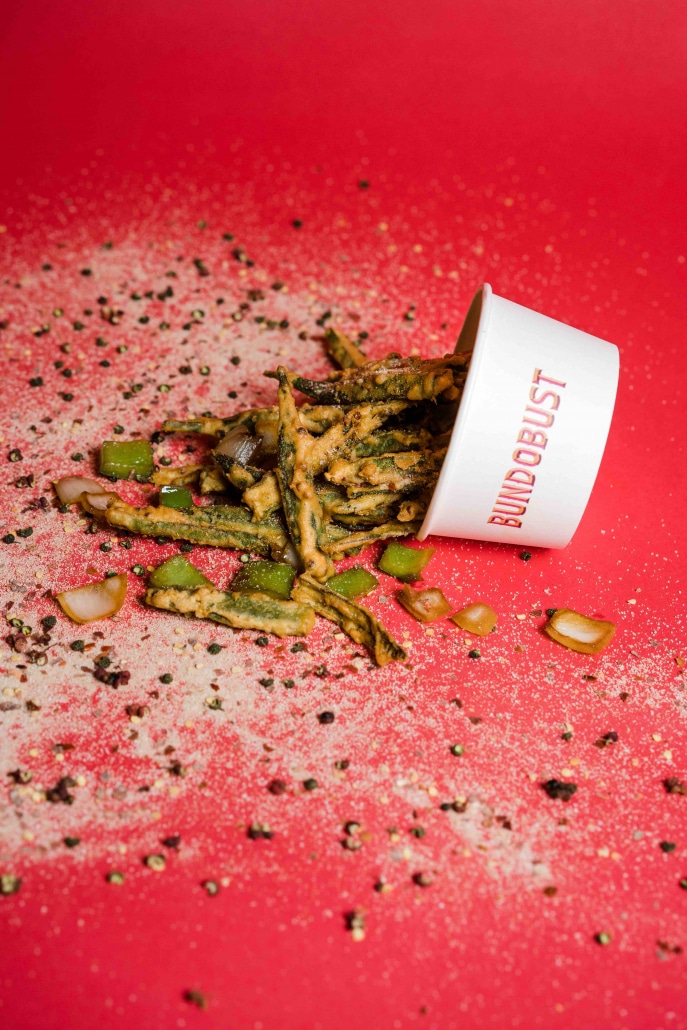
Gobi Toast (£5.25) is deep-fried pav soldiers crowned with garlic and ginger minced cauliflower crusted with mixed sesame seeds. Served with coconut korma dipping sauce. Salt & Pepper Okra Fries (£5.50), where the Bundo top seller is tossed with peppers, onions, chilli flakes and soy sauce. And from leftfield, Tofoo 65 (£6.75), a Bundo debut for the bean curd, filling pakoras in a sauce rich with Chinese five spice, curry leaf, garlic, ginger, fermented red chilli paste and mustard seeds. 

The sauce is “a Chinese spiced reimagining of the classic Chennai Hotel Buhari 1965 sauce recipe.” More research for me to do, then.

Bundobust has venues in Leeds, Liverpool, Manchester Piccadilly and Oxford Road (the Brewery).

Serendipity? You bet. What are the chances of booking a dining destination to celebrate a ‘big’ birthday and in the intervening months it wins its second Michelin star and three days before your stay gets elevated to the UK’s number one restaurant?

Ynyshir was already a hot ticket for the foodie who likes to be challenged; now chef Gareth Ward and his design-savvy partner Amelia Eiriksson are having to fend off a press pack desperate to find out what all the fuss is about on this distant edge of Wales.

We already had a fair inkling. We holed up there exactly six years ago and adored the embryo project the pair had embarked on after taking full ownership. Since when we’ve traced from afar the radical transformation of this once whitewashed hunting lodge outside Machynlleth, once owned by Queen Victoria. A doom-laden redecoration, a ram’s skull motif and brown sheepskin throws off a Game of Thrones set, a soundtrack rumoured to make Nine Inch Nails sound like loungecore and a 32-course Japanese-influenced tasting menu that has ‘imminent overdraft’ written all over it. Bring it on.

Some time after we had polished off 15 fish courses – riffs on lobster, shrimp, scallop, crab, hamachi, blue fin, black cod and madai via a sensual overload of nahm jim, wasabi, yuzu, miso, sesame– Ynyshir really kicked off. A volcanic fire pit was ignited outside the window while a mirror ball pierced every corner of the penumbral dining room and I could have sworn the DJ ratcheted up the decibels.

Luckily we had been assigned one of two tables by the window and Captain Smidge, our gourmet chihuahua, had snuggled down on a rug oblivious to the hubbub, even missing the Wagyu beef three ways which he would have wolfed. Most of the dishes would have been far too spicy for him and anyway most were one-bite size. Hard to pick a favourite. The Welsh lamb spare ribs were sensational, ditto the blue fin tuna, the scallop with duck liver or the miso cured black cod with aged kaluga.

Impeccably behaved Smidge had been given special dispensation to sleep in the main house and to join us and 22 other souls on Yynyshir’s epic culinary voyage. The large couple from Essex, who had booked the chef’s table, looked quite blown away by the perfect storm of the adjacent kitchen brigade, with Gareth Ward as Captain Ahab on the bridge, silhouetted against the flaming grill.

A quiet date place this ain’t, yet our dinner experience had started in calm fashion on our arrival at 3pm. Like the other guests, we were invited to ‘check in’ for the meal before being shown to our rooms. Overnight stays are part of the package. 

In turn you are taken out from your lounge drink to be introduced to a large box of raw produce that is the inspiration for the dishes ahead. Beware getting nipped by the live crab. Your MC then composes a taster bowl of ‘Not French Onion’. It was a signature statement in 2016 – Japanese dashi stock flavoured with onion oil, diced tofu, pickled shallots, sea vegetables, onion and miso purée and brown butter croûtons. I conjecture this chawanmushi (savoury custard) has been refined but it remains utterly delicious. 

Next up is a session with Ynyshir sommelier Rory Eaton to discuss your wine (or sake) requirements for the evening. The list has stratospheric bottles but also a few you’d class as accessible. We went middle ground by the glass – Alsace Pinot Gris, South African Chenin Blanc, Chablis, South African Pinot Noir and a Barolo. Rory, a class act, remained attentive to our vinous needs throughout the evening. 

A similar professionalism pervades the operation. Three days before, on the Monday Gareth and Amelia had to be leant on to make the trek to London, where they triumphed at the Estrella Damm National Restaurant Awards. No over the top celebrations, mind. Tuesday, 200 miles away, was to be business as usual. Even a scalded foot wasn’t keeping Gareth from the pass. Having risen through the ranks at Hambleton Hall and Sat Bains, the towering County Durham lad is nothing if not driven. Do not expect him to cater for your dietary requirements. You are there to eat HIS food.

In a corridor near our ground floor room hung a chef’s jacket proclaiming Yynyshir’s two Michelin star status. That achievement arrived through a deliberate policy to shake up expectations of country house dining. On our first visit it was a benign luxury country retreat. Not chintzy old school, but certainly decorous, quite at odds with the Japanese techniques/lamb fat base of dishes coming out of the kitchen. Hand in hand with a ramping up of the Orient influences and an obsessive investment in the finest raw materials (local, yes, but if the best has to be imported, so be it) came that radical reworking of the look of the place, inside and out. 

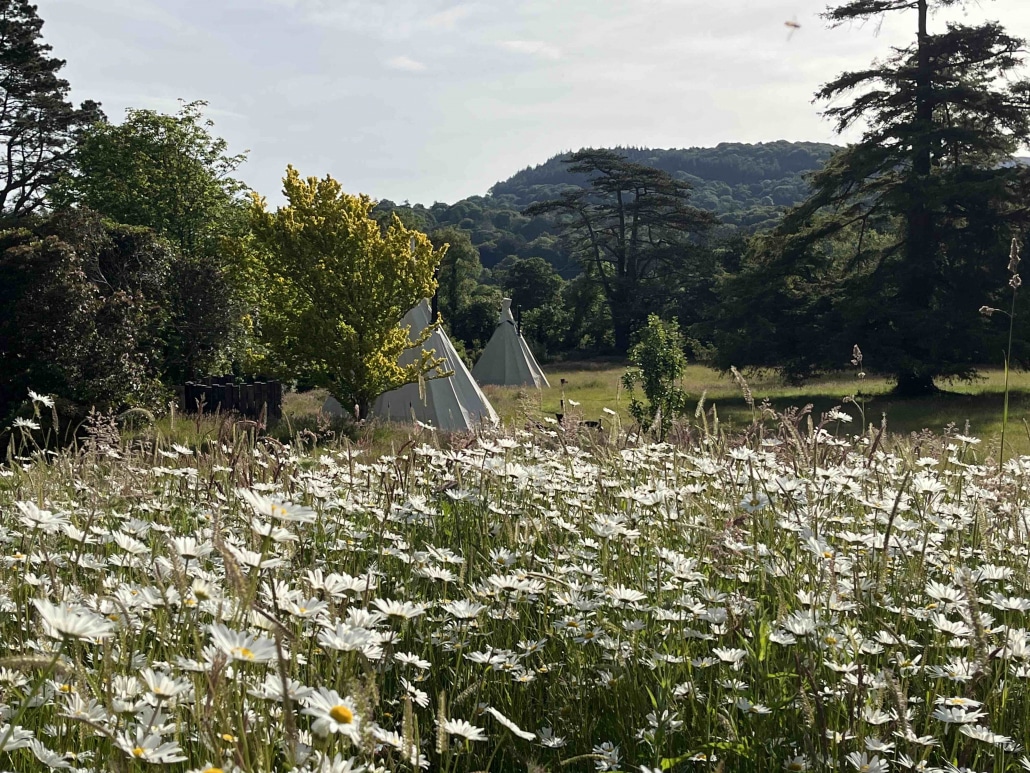
Moody dark blue and grey makes a statement. As does the two teepees viewed across rewilded grounds, thronged with chest-high ox-eye daisies on our visit. They were our vista as we opted to sample the first five courses outside by the (unlit) fire pit, revelling in the kind of heat wave rarely encountered around the Dyfi estuary. 

Fortunately, our ground floor bedroom – yes, moody dark blue decor – was cool in every sense. Not that we had much time to spend in the space that was formerly the lounge/bar area (before and after above). Ynyshir is a high octane experience.

By the time we reached the seven puddings, including a playful Alphonso take on a Bakewell, we were flagging, yet rallied around an old acquaintance from first time around. Gareth’s deconstructed ‘tiramisu’ is a great splatter of coffee cake puree, vanilla mayo, chilli crémant gel, coffee, mascarpone granita and a grating of intense 100 per cent chocolate.

The finale? Well, no. Further Valrhona in an ‘after dessert’ in the bar. Single origin Madagascar Manjari daringly paired with shitake mushroom and kaffir lime… a final stroke of genius from a remarkable, unique restaurant experience.

Ynyshir Restaurant and Rooms, Eglwysfach, Machynlleth, Powys SY20 8TA. 01654 781209. Lunch or dinner £350. Prices start at £495 per person for a house room plus dinner (drinks extra). The grounds are also home to a ‘pub with casual dining’ marquee, Legless Fach. Check out my original Ynyshir review and discover the nearby shrine to austere priest poet RS Thomas, the amazing RSPB reserve over the hill and the charms of eco-friendly Machynlleth.

On Dunster seafront stands a statue of a certain Ancient Mariner, obligatory albatross around his neck. A selfie prop gull, very much alive, flutters on his head for our shot. Behind, a quote from the Coleridge ballad is daubed on the harbour wall: “The fair breeze blew, the white foam flew, the furrow followed free”. They make much of the great Romantic poet in these parts. The Somerset port has tenuous claims to be the inspiration for The Rime of the Ancient Mariner. Perhaps lines such as “merrily did we drop/Below the kirk, below the hill, below the lighthouse top” were penned in the Bell Inn when Coleridge stayed there. He regularly walked the 10 miles west from his home at Nether Stowey in the Quantock Hills in the last three years of the 18th century.

The 50 mile ‘Coleridge Way’ that starts there bypasses Watchet on its meandering path to Lynmouth in Devon via the fringes of Exmoor, offering tangible links to another of his great poems, Kubla Khan. Of which more shortly. Lorna Doone Country is along the route, too, if you plan a homage to RD Blackmore’s historical romance of 1869 with a cream tea… or, in our case, a pint of Exmoor Gold by the East Lyn River at Brendon village’s Staghunters Inn.

This was just six miles from our base near Lynton, more attractive hilltop sibling of seaside resort Lynmouth. Shelley spent his honeymoon there in 1812. Further proof of the irresistible picturesque allure of this whole coastline to the Romantic poets. 

Take Watersmeet, the wooded gorge that descends to the sea here. Very much the “deep romantic chasm” of Kubla, albeit these days under the auspices of the National Trust. As is the Coleridge Cottage in Nether Stowey. You don’t have to be in thrall to the West Country coming together of Wordsworth and Coleridge ahead of the publication of Lyrical Ballads but it helps. Their communal Quantocks bonding and radical literary departures in 1797-98 are charted in a very hands-on way in Adam Nicolson’s The Making of Poetry: Coleridge, the Wordsworths and Their Year of Marvels (William Collins, £25).

Laid-back Nether Stowey is a very copacetic starting point to retrace their steps. The Coleridge Cottage is hardly stimulating. It doesn’t convey the bohemian muddle of the young Coleridge family somehow getting by in far from idyllic conditions. Today it’s a quintessential Somerset village to hang loose in.

Much more fun, though, was our next port of call, the aforementioned Watchet, a couple of miles off the A39. There’s a plethora of quirky indie shops and galleries plus a clutch of welcoming pubs. Just the one then? Definitely colourful Pebbles Tavern on Market Street, which boasts a comprehensive cider list alongside cask ales and shanty sessions. Fo something rockier maybe the equally colourful gig venue, The Esplanade.

Speaking of pebbles, I tripped up over the St Decuman Pebble Mosaic at the end of the Esplanade. This public work of art celebrates this seventh century holy man, who crossed over from Wales on his cloak with a cow for company. After settling he made enemies and was beheaded. Upon which he picked up his head, washed it and reattached it to his neck. The impressed locals helped him build a church. I too feel a ballad coming on.

Inland from Watchet a visit to picture postcard Dunster with its castle is a must, if you avoid high season. Of the many thatched villages dotted around the National Trust’s Holnicote estate the pick is Selworthy, with the bonus of its unusually Italianate lime-washed church with stupendous views across fields and woodland.    

But back to the coastal Coleridge pilgrimage (in the literary company of Mr Nicolson) and Porlock next. Kubla Khan allegedly came to the poet in a dream and he was busy writing it down when he was interrupted by a ‘person from Porlock’ and lost his thread, leaving it unfinished. The location of this momentous interruption? Coleridge recalled: “At a Farm House between Porlock & Linton, a quarter of a mile from Culbone church, in the fall of th year, 1797, in a sort of Reverie brought brought on by two grains of Opium, taken to check a dysentery.”

It’s nigh on 40 years since we last visited Culbone, which “can justly claim to be the smallest (in floor area), most isolated and most picturesque in England by Simon Jenkins in his magisterial England’s Thousand Best Churches. Probably Saxon in origin, its wooded combe once housed a leper colony. To reach it we walked the three and a half miles up from Porlock Weir, climbing steeply through oak and chestnut with the sea glinting to our right. The jury’s out, by the way, on which farmhouse Coleridge was staying at and if it still standing.

The Weir, a little harbour among the shingle is prettier than Porlock proper, a real sun trap offering cafes, a decent pub and Porlock Bay Oysters, among the best in the country. Owner Mark from his quayside shack shucked a couple of free ones to show just how sweet and saline they are.

North Devon is not far off and the Coastal Path will take you along the cliff tops all the way to Lynmouth. By road, your gears will be sorely tested by Porlock Hill; your reward magnificent views from the switchback A39 of the distant sea one way and the wild  uplands of Exmoor. Do slow down if one of the semi wild Exmoor ponies strays across.

Low gear is required as Countisbury Hill swoops spectacularly down to Lynmouth. That resort is very much geared towards tourism. I was happy to take the unique Cliff Railway, a water-powered funicular that takes you up the high cliff to Lynton, which has more interesting shops and a community-run cinema. We were staying in a cottage at Barbrook to the north. One night we dined on Thai cuisine at the quirky Old Cottage Inn; and on the last night ordered a takeaway from Spicy Mare, a South Indian operation run by a retired air stewardess with a passion for Kerala. The best foodie adventure, though, was to buy a beef box from West Ilkerton Farm, which has pioneered the revival of the Devon Ruby breed.

We had a great walk to Watersmeet House, the NT tea room in the spectacular gorge, but preferred the coastal path route, feral goats and all, westward to the Valley of the Rocks, the apogee of sublime romantic scenery, a riot of fossiliferous ancient stones. And, yes,

Wordsworth and Coleridge and their poetic contemporary Robert Southey all trekked there. For the Romantics rocks were their rock and roll.