Cut the mustard, keen as mustard – it’s certainly a condiment that keeps upbeat. But so often, from rustic wholegrain to the most delicate of Dijons, it’s a disappointment. ie. they don’t cut the mustard. For all the artisan labels you’re mostly getting an industrial product. Not as bland as supermarket bread made from the Chorleywood process or all those international beers that delight in being Lite. Yet when you’ve tasted the real thing…

My Mustard Damascus Moment came in a small factory tucked away in downtown Beaune. I was in Burgundy’s epicentre to taste the wines (naturellement) but the true lipsmacking legacy was Edmond Fallot’s speciality Dijon mustards.

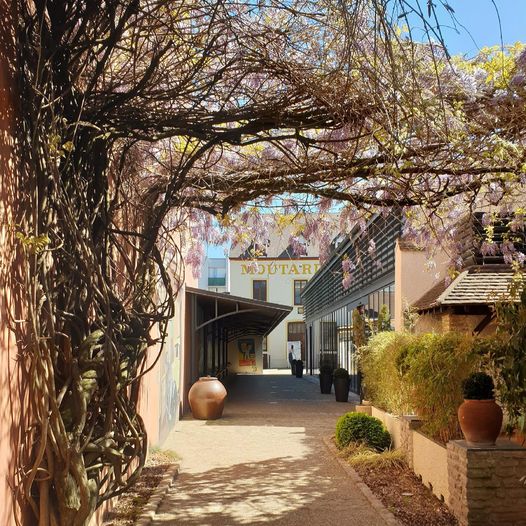
A shady courtyard leads to the Fallot Mustard Works

Dijon, 30 miles to the north, was the centre of medieval mustard making (must was often included) and was granted exclusive naming rights in the 17th century. The basic method is not complex – a combination of mustard seeds, white wine or wine vinegar, water and salt. A 1937 decree ruled that ‘Dijon mustard’ can be used as generic designation and has no link to a specific terroir.

Nor is there a stipulation about sticking to traditional methods. That’s what the Fallot family, unlike their rivals, have been doing in Beaune since 1840, today under the stewardship of Marc Désarménien, grandson of Edmond. They still go down the traditional route. Using antique millstones, they grind high quality brown mustard seeds mixed with verjuice, extracted from Burgundy grapes.

May I interest you in a sample of our typically Burgundian moutarde de yuzu?

After which they are at liberty to widen the palette. In their colourful tasting room/shop I worked my way through flavoured mustards that ranged from truffe de Bourgogne to cassis (blackcurrant), Espelette pepper to Madagascan green pepper, samples of which I brought home. There’s even a yuzu version (which I didn’t).

The one that won my heart, though, and remains the base for my Béarnaise and Poulet à L’Estragon is the Tarragon Mustard. Of all the flavours beyond the basic Fallot it is the easiest to source. It is made from black and brown mustard seeds blended with fresh tarragon leaves, giving it an extraordinary aroma and texture that also adds oomph when a powerful vinaigrette is called for.

The good news? You can buy a 310g jar for £6.50 at Harvey Nichols in-store or online. A good introduction to its joys is this simple Burgundian dish from Fallot’ own website:

A good introduction to its joys is this simple Burgundian dish from Fallot’s own website:

Chicken Fricassee with Fallot Dijon Tarragon Mustard

1 chicken (around 1kg)

30g flour

80g butter

100g small white onions

200ml chicken stock

fresh mixed herbs

100ml fresh cream

2 tbsp Fallot Dijon Tarragon Mustard

minced tarragon

salt and pepper.

Method:

Cut the chicken into pieces. Season and dust the pieces with flour. Brown them in a large casserole dish with hot butter. Add small white onions. Moisten with the chicken stock. Add mixed herbs. Bring to a boil. Cook for 35 minutes. Set aside chicken and onions in a dish. Keep them warm. Allow the sauce to reduce. Add cream and mustard. Bring to the boil. Season according to taste. Pour the sauce over chicken pieces and sprinkle with minced tarragon.

My wine recommendation is any affordable red Burgundy from Santenay or Marsannay.

Mustard cultivation is on the increase in Burgundy

A potted history of Mustard in Burgundy

Until the Second World War Burgundian woodland was where mustard was cultivated. Discarded ash from charcoal burning was rich in potash, perfect growing material. When the plants were mature the charcoal makers sold the strong and biting seeds on to the mustard manufacturers of Dijon and Beune.

Then the demand for charcoal waned, so those manufacturers were forced to look elsewhere in France, eventually outside to the United States and Canada. Recently, though, Burgundy Mustard Association, in which Fallot plays a major role, is giving new impetus to cultivation across the region again.

That has been boosted by the approval in 2009 of PGI (Protected Geographical Indication) status. So locally specific Moutarde à la Bourgogne can distance itself as a quality product, separate from the generic name Dijon Mustard. Think specific ‘West Country Cheddar’ as opposed to all those global takes on that cheese’s noble name. Tarragon mustard with Montgomery’s or Aged Keen’s. Must try.

Never known a courgette glut like it. Our raised beds are Zucchini Centrale this summer. One upside of a current disinclination to travel? There have been no transitions into the dreaded marrow. What the hell can you do with those? Answers in crayon on a hessian sack, please.

Soup has been one way to depopulate the veg rack. The Ethicurean Cookbook’s Roasted Courgette and Cobnut Soup is an old favourite even if the hazelnut’s folksy Kentish cousin is still a month or two away from ripening. As they will in that Mendip restaurant’s walled garden, which I so love. As I write I’m happy to substitute pistachios to sprinkle over the labneh I’ve been straining for 36 hours (soup recipe below).

Serendipity rules as the courgettes pile up. Italy’s a good way to go. Marcella Hazan, Giorgio Locatelli, the late Antonio Carluccio and our English Italophiles  Jacob Kenedy, Alastair Little, Rachel Roddy, all offer ways of making the green watery cylinders they call zucchini up their game.

The heftier examples really require baking, so I profitably consult the unsung Queen of La Cucina, Anna del Conte (Milan-born, resident in England since 1949, now 96).

Amaretti biscuits and ricotta are the stuffing for this Mantuan masterpiece

From her Amaretto, Apple Cake and Artichokes: The Best of (1989) I pick Zucchini Ripiene alla Mantovano, which stuffs them with ricotta and amaretti in the method particular to Mantua (recipe below). It makes use of my store cupboard stash of amaretti biscuits, close to their use-by-date. They add a beguiling almondiness, as they do to another slightly sweet speciality of that Lombard city, pumpkin tortellini.

All this sustainable kitchen prep of my glut, though, lacks a little glamour. What the Romans call Il Fascino. The glory of growing your own courgettes is the access to their trumpet-like yellow flowers. All over Italy in season you can buy bags of them at markets. Not so in Britain. I once spotted an overpriced wilting trio of them at a farmer’s market in Marylebone. It reminded me of northern traders flogging a small bag of wild garlic for a couple of quid when nearby woods reeked of the forageable stuff. Zucchini flowers – you really have to grow your own.

Leslie Forbes’ two Seventies volumes matched her illustrations with her own hand-written travelogue

What to do with them? Not too many choices. Best to take the advice of a forgotten food writer, whose two most beautiful tomes – hand written, self illustrated, product of hands-on research – remain a fixture on the shelf of my all-time favourite cookbooks.

Leslie Forbes died in 2016 at the age of 63. By then the Canadian, originally an artist (she illustrated Peter Mayle’s A Year in Provence), was most celebrated for the best-seller Bombay Ice and other literary thrillers. I couldn’t get on with them; my heart remained with A Table in Tuscany (1985) and A Table in Provence (1987). Seek them out second hand on Abe Books or the like

My original copies showing their age, well-thumbed and stained with tomato coulis and olive oil

Both have recipes for courgette flowers… or more evocatively Fiori di Zucca or Fleurs des Courgettes. I’m not one for deep-frying the stuffed flowers, so I’ll pass on the zucchini fritters San Gimignano style, ‘au naturel’ or ham-stuffed, from the Tuscan book; instead try this Provencal treatment, which Leslie sourced from the Gleize family of Chateau Arnoux. I I substitute water for the chicken stock, use canned San Marzano tomatoes and am still waiting on my second batch of chervil to come through, so omitted.

FLEURS DE COURGETTES FARCIE SAUCE POMME D’AMOUR

400g can San Marzano tomatoes

grated zest one lemon (no white pith)

3-4 basil leaves, finely chopped

1 tbsp parsley, finely chopped

1 tbsp chervil, finely chopped

pinch of powered corlander

1 garlic clove, peeled & crushed

100 ml olive oil

salt and pepper

Stuffing

3 medium courgettes, finely chopped

6 tbsp olive oil

6 fresh basil leaves, in thin strips

6 fresh mint leaves, chopped

handful fresh parsley, finely chopped

2 small garlic cloves, peeled & finely chopped

salt and pepper

generous handful fine stale breadcrumbs

1 egg, beaten

250ml water

18 large courgette flowers (picked just before you need to use them if possible)

Method

Prepare sauce at least 12 hours before: crush tomatoes with a fork, and beat in the lemon zest, herbs, coriander, garlic & olive oil. Season well with salt and pepper. Do not refrigerate. 

To make the stuffing, cook the courgettes in 2 tbsp of olive oil. When softened, remove from heat and mix with basil, mint, parsley, garlic, salt and pepper. Allow to cool and add the breadcrumbs and beaten egg. 

Remove pistils from flowers, then put a spoonful of the stuffing into each flower, tuck in the ends & lay the flowers side by side in an oven proof dish. Pour over the water remaining olive oil, cover with foil & bake for 15 minutes in an oven preheated to 350°F/180°C/gas 4. To serve, spoon a little tomato coulis onto each plate and place three flowers on top.

ZUCCHINI RIPIENE CON RICOTTA E AMARETTI

4 medium courgettes, each about 15cm

sea salt

30g unsalted butter

1 shallot, very finely chopped

2tsp olive oil

2tsp fresh thyme

3 dry amaretti, finely crumbled 

150 g fresh ricotta, drained

1 free range egg

50g grated parmesan

pinch grated nutmeg

freshly ground black pepper

dried breadcrumbs

Method

Wash the courgettes throughly and half lengthwise. Using a teaspoon, scoop out the flesh, without puncturing the skin: the aim is to get hollow, boat-shaped courgette halves. Salt them lightly and turn them upside down on a wooden board: the salt will draw out unwanted moisture and the courgette will be all the tastier for that. After half an hour, pat them dry. Keep the courgette pulp separate.

Preheat the oven to 190°C/375°F.

Melt half the butter with half the oil, add the shallot, salt it to stop it browning and fry it gently, with the lid on. When it is soft, raise the heat, add the chopped thyme and the courgette flesh, diced. Stir and then cook until fairly dry.  Mix together the ricotta, the parmesan (minus one tablespoon), the egg, amaretti and the cooked courgette pulp. Add nutmeg and black pepper.

Smear the bottom of an oven dish, preferably metal, with the remaining oil and tuck in a single layer of courgette shells. Stuff each shell with the filling, sprinkle with dried breadcrumbs, mixed with parmesan, and dot with the remaining butter and drizzle with the rest of the olive oil.

Bake until a light golden crust has formed, checking after the first 40 minutes. Eat warm or at room temperature.

The Ethicurean’s walled garden base at Wrington near Chew Magna is a remarkable foodie mecca

MAKING A SUMMERY POTAGE FROM A WALLED GARDEN

Like the nature writer Richard Mabey, folk singer/nightingale devotee Sam Lee, Robert ‘Lost Words’ Macfarlane, there are some national treasures that speak for the real England and its glories. A world away from the nasty jingoism festering and now erupting in the wake of Brexit. 

Whenever I get angry about this rampant intolerance and the way our Cabinet of Fools have handled the pandemic I return to the ultimate therapy – growing my own and cooking.

I am not alone in making that essential plot to table connection. A whole new generation of professional chef/growers is in the vanguard of championing our food heritage. In my own North these include Sam Buckley of Where The Light Gets In, Joseph Otway of Higher Ground/Cinderwood Market Garden and Alisdair Brooke-Taylor of the Moorcock at Norland.

And down in the Mendip Hills outside Bristol The Victorian Barley Wood Walled Garden provides inspirational, seasonal produce for the on-site Ethicurean, winner of Best Ethical Restaurant in the 2011 Observer Food Monthly Awards. We loved eating there, with accompanying tumblers of their home-made vermouth. Like Simon Baker, chef patron of the stalwart Gimbals Restaurant (like the Moorcock in my home territory of the Calder Valley), I am a huge fan of their The Ethicurean Cookbook (Ebury Press, £25). Highly recommended.

The Ethicurean stuff their courgette flowers with ewe’s curd and cobnuts, accompanying them with a wild fennel sorbet. They make the most of our native cobnuts, nearly extinct 30 years ago but making a comeback in likeminded restaurants. They feature in my final recipe, taken from The Ethicurean Cookbook. In season you can buy cobnuts mail order from Kent. My obliging Calderdale greengrocer Valley Veg have a supply on request.

That exquisite Ethicurean courgette soup with labneh, toasted cobnuts and English mustard dressing

ROASTED COURGETTE AND COBNUT SOUP WITH LABNEH AND GINGER TURMERIC AND MINT DRESSING

1kg small firm courgettes, sliced into 2cm pieces

rapeseed oil

500g onions finely sliced

250g carrots finely sliced

250g celery finely sliced

1tsp salt plus more for final seasoning

40g fresh cobnuts, chopped, thenlightly toasted

For the labneh:

500g Greek yoghurt

½tsp salt

1tbsp chopped marjoram

1tbsp chopped oregano

For the dressing:

85ml rapeseed oil

50ml cider vinegar

1tsp English mustard

½tsp ground ginger

¼ tsp ground turmeric

1tsp chopped mint

Method

Make the labneh a day in advance. Line a sieve with muslin and put the yoghurt in it, stirring in salt. Wrap into a bundle over a deep bowl to drain overnight. Next day discard the liquid. To make the dressing blend all the ingredients together.

Heat the oven to 200C/Gas Mark 6. Toss the courgettes with a little rapeseed oil, then spread on a roasting tin. Roast in oven for 20 minutes. Meanwhile, heat a film of rapeseed oil in a large saucepan and add onions carrots and celery; sweat for 10-15 minutes until tender. Stir so the veg doesn’t colour. Add roasted courgettes and sweat for 5 minutes longer. Add water to barely cover and bring to a simmer. Add salt and after five minutes blitz in a blender (in batches if necessary). If too thick for you, pas through a fine sieve to create a more velvety mouthfeel. Now season to taste, reheat gently and serve in bowls topped with a tablespoon of labneh, a scattering of chopped cobnuts and a drizzle of mustard dressing.

Wine dark sea. I’ve always loved that enigmatic go-to phrase of Homer. Hard to pin down its exact meaning until one sunset stroll along the vast esplanade of Greece’s second city, Thessaloniki. Nikis Avenue and its continuation doesn’t bother with fencing off the Thermaic Gulf. One stumble and you could plunge into Poseidon’s salty realm.

Sunset over the Thermaic Gulf viewed from our Thessaloniki hotel room

The home of the Gods, Mount Olympus, is a distant silhouette to the south west; the wine of the Gods undoubtedly springs from Naoussa, 75 mountainous miles north. Thessaloniki gave us so much but the taste for Xinomavro may be the most lasting legacy. Along with the view from our seafront hotel, but more of that later.

Xinomavro (pronounced ksee-NOH-mavro) is a red grape found all over Northern and Central Greece. Traditionally it’s challenging, tannic with high acidity, often compared with Italy’s Barolo grape, Nebbiolo. We were recommended it to accompany a herby lamb stew in Thessaloniki’s hip former Jewish quarter, Valaoritou.

We were immediately smitten, but that introduction didn’t yell Barolo. Back in Manchester, we unearthed a bottle that did – a Markowitis Xinomavro from 1999 on the list at the wonderful erst, Ancoats. That substantial bottle age delivered an enticing scent of violets and truffles. It tasted waxy, slightly nutty, the tannins having smoothed out without compromising the essential acidity. Very like a mature Barolo or Barbaresco. The wine is no longer available at erst but another seasoned vintage can be found at Wine & Wallop, Knutsford.

Since then I’ve deluged myself with various Xinomavros from Naoussa and the three other appellations across Macedonia. Earlier this year The Wine Society offered a toothsome special introductory case of six for a while and still offer a varied selection. I’d recommend as an introduction two contrasting bottles from the doyen of Xinomavro winemakers, Apostolos Thymiopoulos. His Jeune Vignes 2019 (£11.50) is all accessible bright red fruit and herbs, while from older grapes the Xinomavro Naoussa 2018 (£14.50) is more structured but with delicious ripeness. Almost a feel of Pinot Noir in there.

Note: you have to make a one-off modest payment to join the Society for life (membership numbers and sales have swelled dramatically during lockdowns). If you’d just like to try the 2018 without committing it’s available too at Majestic Wine.

There’s also an accessible £9.50 introduction in M&S’s new ‘Found’ range, where Thymiopoulos has blended 70% Xin with 30% Mandalaria grapes from distant Santorini.

If Xinomvavro is still under the radar with the wine-buying public – still too much in thrall to the mixed blessings of Malbec – it’s certainly a wine trade favourite. The great Tim Atkin MW raves about it in his blogs and in the engagingly maverick Noble Rot: Wines From Another Galaxy (Quadrille, £30) co-authors Dan Keeling and Mark Andrew pin its appeal down perfectly: “To think of it just as a Barolo-alike is to do it a disservice. Notes of dried herbs, tomato and olive unfurl with age, which contemporary vignerons balance by emphasising the primary fruit characters and taming its jagged tannins.”

There is a chance modern techniques could subdue the wildness of the grape. Over-oaking i happening. That’s not the case with the best example from Thymiopoulos, his award-winning Rapsani Terra Petra 2018 (Wine Society, £22), where sweetly fruited Xinomavro is blended with indigenous Krassato and Stavroto to add extra richness. It comes from a warmer climate, long-neglected vineyard on the slopes of Olympus. Told you it was the wine of the Gods.

These are real icons melding Greek Orthodox religiosity and the tourist buck

THESSALONIKI

Let’s now banish the Gods and return to Greece’s culinary capital and its liveliest city. It has ancient roots and by the late 19th century was perhaps the most multicultural city in Europe with an Ottoman heritage co-existing with Greek Orthodox, the large Jewish population a catalyst for its prosperity. An essential guide to Thessaloniki’s turbulent history is Salonica City of Ghosts by Mark Mazower (Harper pb £14.99).

Yet today’s city, with a population of 800,000, is shaped by the 20th Century – or to be more specific one particular day, August 18, 2014. Over several hours the Great Fire wiped out that rich past, destroying 9.500 houses and leaving 70,000 homeless. So the city centre you see today with its elegant French style boulevards is the result of the rebuild. 

Expect no concessions to visitor squeamishness on city market stalls

A few significant remnants survive – the old city walls high above in the old town, alongside the tranquil Vladaton Monastery, the atmospheric churches of St Demetrios and Aghia Sofia, the Byzantine Thermal Baths – but essentially it is a city to stroll around and relish the essence of modern Greekness, the bars, markets and old-fashioned shops. It’s all a bit cluttered.

The Jewish Museum in Agiou MIna Street traces the rich culture of the community, which was wiped out when 60,000 were deported to the camps by the Nazis . Valaoritou, once home to the fabric shops of working class Jews, is the coolest place to be after dark as clubs and bars slowly restore its disused buildings.

The esplanade, which passes the White Tower, a 15th-century curiosity that is famous throughout Greece, is a spacious boon to cyclists and pedestrians. New public sculptures, including the much-photographed Umbrellas opposite Anthokomiki Park, are witty and attractive. Almost every month there’s a different festival – food, music, jazz, films, wine. There are book fairs and an LGBT Pride parade in June. The Greek word most associated with Thessaloniki is “xalara” which means “laid-back” or “cool” and you really feel it as you begin to explore.  

The White Tower is visible from seafront rooms at Daios Luxury Living

We had the perfect base, Daios Luxury Living, at Nikis 59, along from the White Tower. Our fifth floor room with balcony looked down onto the seafront with exhilarating views over the Gulf, with epic sunsets and then a glorious pale moon. It was so tempting to stay put with a glass of Assyrtiko (my favourite Greek white, but that’s another story) but beer called!

At the nearby Hoppy Pub owner George Alexakis, perhaps Greece’s foremost craft beer fanatic, holds court, discussing the merits of Magic Rock and the ascendancy of Cloudwater. He and fellow pioneers even brew their own beer; the Flamingo Road Trip IPA was delicious.

On his recommendation we ate at a new, acclaimed Cretan restaurant called Charoupi. The name means ‘carob’, that chocolate-like pod some see as a superfood and is certainly a symbol for Crete. Charoupi’s menu reflects the rustic food of the island (bone-in rabbit stew, goat cheeses), but it was a carob-driven dish that astonished – a pie made not with white flour, but with carob flour and topped with black and white sesame seeds and carob honey. Alas, not a Xinomavro on the wine list.

Getting there:

It’s a two hour flight with jet2.com from Manchester. We combined Thessaloniki with staying as guest of the highly recommended Eagle Villas resort two hours south in Halkidiki, near the gateway to Mount Athos. We could see the Holy Mountain, mantled in cloud far down the coastline. Iconic is an over-used term (and obviously real icons are everywhere here) but apt for the sealed-off realm of 20 Orthodox monasteries, clustering in its shadow. 

For a thousand years the barriers have been up. Present yourself for one of the strictly controlled three-day permits at the basement border post in the nearest town, Orianopoulis, and you might well fail to convince them of your suitability. It’s simpler for a woman. You’re absolutely forbidden entry into this 300 sq km male-only dominion, home to some 2,000 monks and stunning treasures.

We enjoyed a vicarious peek at the clifftop monastic fastnesses from a catamaran we hired, picnicking on board, surrounded by a school of playful dolphins. Feeling gloriously heathen.

I am eating one of those banh mi Vietnamese baguettes, with a dip of pho broth on the side. The spice goes surprisingly well with a Denver Pale Ale from Hogshead brewery – a neighbourhood homage to English cask beer. Soundtrack is the Black Keys in glam stomp mode; staff serving sushi, pizza and Venezuelan arepas shimmy along to it. In the distance Denver’s soaring skyline shimmers.

The ‘Mile High City’ apparently gets 300 days of sunshine a year and today is living up to the boast. My vantage point is the rooftop terrace of collective eaterie Avanti F&B, a two level shipping container with half a dozen global food vendors plus bars dispensing a riot of delicious, eclectic beers. 

The panorama across the city from the Avanti Food Hall is stunning

Naturally, for this is Denver, US capital of craft brewing, home to more than 100 breweries, and to the annual Great American Beer Festival (virtual in 20121, due to return in 2022). 

After my banh mi it’s all I can do not to order another pint, a Diebolt Chin Chin de Diable Belgian Golden Strong Ale perhaps or a wild-fermented Crooked Stave Hop Savant, both local riffs on artisan hoppiness.

Heaven knows I’m thirsty enough after rambling around Denver’s hip and hilly Highlands district with its roster of fine eating places and bars – the likes of Roots Down, Linger, The Ale House, William & Graham and the veteran Beat Writers’ hang-out, My Brother’s Bar (about all of which, later). Fine old houses, too, and a pleasing leafiness.

The Ice House Building in historic Wynkoop Street

This is a city for walking. Highlands is west of the South Platte River, easily reached via the pedestrian Millennium Bridge and the revived Riverfront parks from my base in LoDo (Lower Downtown). How they love these aspirational acronyms – RiNo, which I always took for ‘Republican In Name Only’, here means the River North Art District, an urban wasteland now on the up and a hub for the craft brewing and leftfield creativity that define contemporary Denver.

LoDo too is a story of resurgence, entire blocks of brick warehouses and stables left to rot rediscovered and turned into apartments, restaurants and the like without losing their soul. Blink and you could be in that old Rocky Mountains frontier town with a whole posse of mavericks passing through – Wyatt Earp, Butch Cassidy, Billy the Kid and Buffalo Bill (who is buried up on Lookout Mountain on the outskirts of town).

Union Station’s impressive facade is symbolic of the old city centre’s regeneration

The railroad was mighty important for the development of the Wild West; one cherishable legacy in Denver is LoDo’s Union Station, a 1914 Beaux Arts masterpiece that only a few years ago was a shabby drifters’ haunt under threat of being torn down. Enter an urban conservationist called Dana Crawford, who energised its transformation into one of America’s coolest destinations, complete with its own 112 room Crawford Hotel named in her honour. 

The view of the Union Station Great Hall from my Crawford Hotel lodging

I was lucky enough to stay there; walk out of my second floor room and I gazed down from the landing on its ornate centrepiece, the sweeping Great Hall. White and gilt, glistening chandeliers for when the light fades through its vast arched windows, it’s quite glorious.

Down in the lift, avoiding the temptations of the Cooper indoor cocktail terrace, and I was spoilt for choice by the array of food and drink outlets and boutique shopping, including a tiny branch of the city’s legendary Tattered Cover bookstore and Snooze, flagship of a renowned retro brunch chain (with cocktails and ancho chilli wheat beer shandies for when the smoothies pall). Next door Mercantile switches from daytime deli to casual fine dining each evening.

My main focus was on the Terminal Bar, in the converted ticket office which occupies a whole side of the ground floor. What’s not to like about 30 rotating regional beers on tap and a smart Colorado spirits list?

The RINO district is the epicentre of Denver’s art culture

Having got the taste, I left this heavenly haunt in quest of the catalyst of Denver’s craft beer revolution – The Wynkoop Brewpub on the street of that name. To get there it’s just a short walk across the station plaza, home to a growers-only farmer’s market every Saturday (Union Station even has its own beehives on the roof and a farm to table ethos governs much of the city’s eating habits). 

Denver mayor now Colorado state senator John Hickenlooper founded the brewery/bar back in 1988, kickstarting the rebirth of the whole area. It has a real pub feel with pool, darts, telly sports and a hearty food menu. 

It’s a must-visit destination, but the axis of brewing has shifted northwards to RiNo, a still edgy district that over the last decade has been colonised by artists, hipster nesters and cutting edge brewers. This transformation has now gone into overdrive, with the infrastructure still a work in progress as we discovered on our bumpy tuk tuk ride from Downtown.

The Source, converted from an old brick foundry into a food market hall

What we discovered was majorly exciting. The hub is The Source, an 1880s brick foundry complex that has been converted spectacularly into an artisan food market hall with an on site hotel created by New Belgium brewery, from Fort Collins. Their big rivals in that town, Odell also now have a presence in Denver. A sign of the times, though, in a very competitive market, Falling Rock Tap House, a pioneering US craft beer bar, closed it doors in June 2021.

Ratio Brewery – I just missed a private gig there from Wilco

A short walk away from The Source are several excellent brewery taps – Zach Rabun’s Mockery probably the best, its name a rebuttal of the constricting German Reinheitsgebot ‘pure beer’ rules, thus emphasising their own innovative brewing (Mukduk, a summery cucumber Berliner Weisse beer quite breathtaking); Great Divide next door, motto ‘bold characters’, is a bigger concern, a pioneer in the wake of Wynkoop with their Yeti Imperial Stout range almost a brand within their brand and their brewery tours a lively introduction to the brewing process’; and Ratio Beerworks with a delicious range to be sampled in their large, functional, dog-friendly taproom, an offbeat rock venue (the touring Wilco played a private set there while I was in town).

Lining up the sours for me at the amazing Crooked Stave’s brewtap

Still, the most exciting tasting was in Source’s industrial chic food hall itself, just past the unique combo of florists and butcher’s shop, at the Crooked Stave Artisan Beer Project brewtap. Our server lined up 16 samples of the sour beers they specialise in – owner Chad Yakobson completed his master’s in Edinburgh in these complex ales fermented with wild yeast. Blueberries and cherries and barrel ageing all strove for attention with hardly a dud down the line, making for the most memorable beer moment of our visit.

Black Sky featured Robinson’s Trooper on tap and their own beers were damn tasty

All this proves how important beer tourism is to the town, which is scattered with breweries and their taps. Down in boho South Broadway I took in two which combine fermentation and heavy metal head-banging – TRVE with its occult dungeon trappings and Black Sky, whose bar – suddenly making me homesick – sports a Trooper beer banner in homage to the bitter curated by Bruce Dickinson for Robinson’s of Stockport. Booze loving bookworms have their own Fiction Beer Company, which I never got to, sampling brews inspired by literature from a bar created from stacked books. Anyone for Dreamer IPA, whose muse is the last line of Rudyard Kipling’s The Fairies’ Siege?

The Blue Bear marks the spot where the Great American Beer Festival traditionally takes place

But, of course, this is just the tip of the all-year-round ‘Aleberg’ that culminates in the Great American Beer Festival in the Convention Center on 14th Street – hard to miss because of the 40ft high blue bear leaning into it, a much-loved statue by a local artist, which is actually called ‘I See What You Mean’. Such a very Denver icon.

Larimer Square is home to Rioja, arguably Denver’s finest resturant

So if your idea of heaven strays beyond brewery visits…

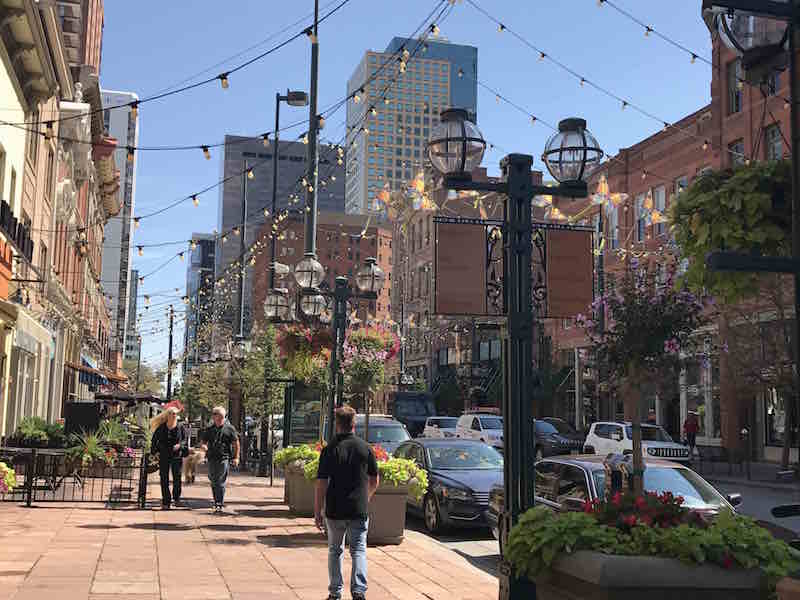
Here are a few places to eat, perhaps buy a hat or even a stash of legal marijuana.

Rioja

A contender for best restaurant in a city devoted to casual dining, this Francophile project from Jasinki-Gruich is a terrific mix of stylish surroundings, slick service and some imaginative Mediterranean-inspired food. Fittingly it’s in pedestrianised Larimer Square, the swishest stretch of bars and restaurants in the city.

I relished my rattlesnake and pheasant dog

Biker Jim’s Gourmet Dogs

This purveyor of extreme fillings and biker diner vibes, is situated in edgier territory a 10 minute walk from Rioja. Alaskan Reindeer was the recommended dog of choice, but I decided Pheasant and Rattlesnake was the way to go with an El Diablo topping. Tastes of chicken naturally, not to be hissed at.

Civic Center EATS food trucks

Throughout the summer from Tuesday to Thursday, from 11am-2pm, it’s meals on wheels time in the rather grand public park sandwiched between the Capitol, the mInt and the rather wonderful Denver Art Museum. From a melting pot of global street food on offer I went Indian. My spinach paneer lacked genuine chilli eat, but it was lovely to sit out in the Denver sun with the lunchtime crowd.

Civic Centre is a grand setting for food trucks

Ophelia’s Electric Soapbox

I went up 20th Street to breathe in the atmosphere from Coors Field ballpark on a Colorado Rockies match night and maybe grab a beer from the Jagged Mountain brewtap (not a Coors, mind, poor, thin stuff from the world’s biggest brewing facility just outside Denver). I was diverted, though, to Ophelia’s Soapbox, a former bordello that wryly styles itself as a ‘gastro-brothel’ thanks to its boudoir-style decor across several levels, encompassing and eclectic mix of cocktails and mostly organic dishes, live music and a dancefloor. 

Denver Central Market

A younger version of The Source – a gourmet food emporium with a community feel covering most bases and also a good place to lunch and, of course, drink craft beer, which we did. Lovely conversion of a bright and airy 1920s building, once a car showroom.

Linger, the former mortuary that now dispenses small plates and gelato

Linger

Another (more leftfield) conversion in the Highlands – the old Olinger’s mortuary transformed into a global small plate restaurant with a panoramic rooftop bar. The ‘O’ in the neon Olinger sign is extinguished at night; hence the laid-back name Linger.

William and Graham

Also in the Highlands classic Prohibition-style speakeasy the guise of a bookstore. A cosy escape, pull up a chair and order a Corn on the Macabre (Butter Washed Vida Mezcal, sweetcorn, blackened lime demerara and lime luice).

Rockmount

Famed the world over for its classic Western clothing range, notably the original snap button shirt, the original LoDo outfitters is a photo-cluttered shrine to all the celebs who have worn (or at least bought) the gear. I couldn’t resist slipping into the cannabis motif cowboy blouse sported by Willie Nelson in the picture.

Legal marijuana is big business in the ‘Mile High City’

Marijuana Dispensaries

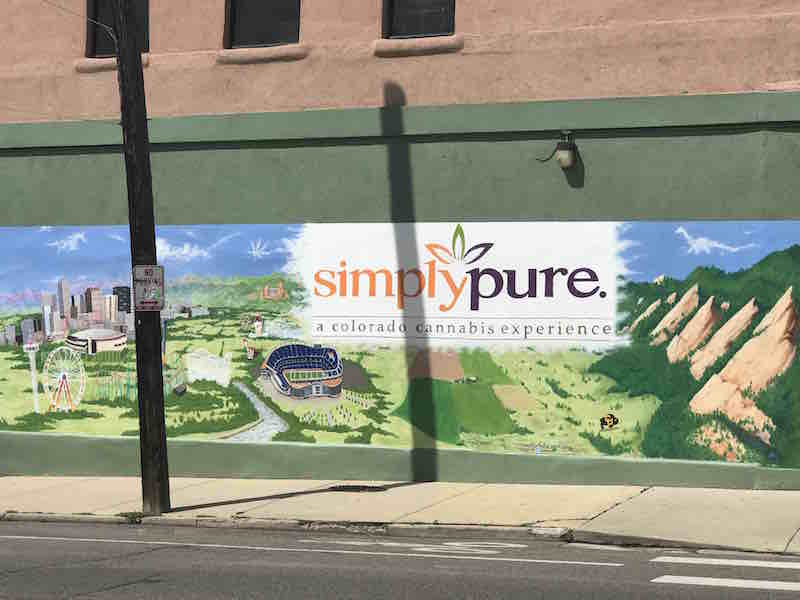
Denver would be Spliffing Willie’s kinda town, Colorado his kinda state. If you are 21 or older, you can now legally possess 1oz of marijuana in Colorado. You can enjoy many types of concentrates and edibles during your visit, bought from an array of dispensaries with names like Potco and Sacred Seed. If you wish to research further visit the Colorado Pot Guide. And if you really want an initiation into the almighty Pot, visit the city’s International Church of Cannabis.

My Brother’s Bar, famed for its Beat connections, claims to be the city’s oldest drinking joint

My Brother’s Bar

The Beat writers would have approved – cannabis was their drug of choice back in the Fifties and Sixties. Kerouac, Ginsberg and Co were regular moochers around Denver primarily because partner in crime Neal Cassidy was raised in the city. His faint legacy remains in My Brother’s on the edge of Highlands, a bar without a sign at 2376 15th St. Here you’ll find a framed letter Cassady sent to a friend from the Colorado Reformatory, where he was sent for car thieving. The ever hard-up Cassady wrote: “I believe I owe (My Brother’s) about 3 or 4 dollars. If you happen to be in that vicinity, please drop in and pay it, will you?” The beer range here is ace. I’d recommend the Odell IPA.

Glamorous ski centre Telluride is six hours’ drive away from Denver in the Rockies

FACT FILE

For full information about the state’s attractions visit Colorado Tourism Office. and for Denver check out this link. The self-guided Denver Beer Trail is a good way to get your beer bearings in the city. A version of this article, since amended post-pandemic, first appeared on Manchester Confidential.

One of my early lockdown treats, my alternative to baking banana bread and sourdough (or hoarding more loo rolls than my neighbours) was to order a small sample of English truffle from The Wiltshire Truffle Company, shaving the precious tuber into scrambled eggs, its heady aroma permeating the kitchen.

Since when I’ve moved onto more and more arcane foodie explorations – bottarga, colatura d’alici, mostarda di cremona, cottechino. There’s an Italian theme developing here, so if I want to resume my truffle fixation I should really hang on until next autumn when the white truffles of Alba in Piedmont make their seasonal bow. 

Not that seasons are crucial in our global society. The Wiltshire suppliers don’t just confine themselves to Italy, France and the ‘full English’ they’ve done so much to promote. Their latest mail-out trumpets the arrival of Australian winter truffle, akin to Périgord truffles from South West France – “widely considered by leading chefs to be the best black truffles on the planet”. Big claims and you could compare these Aussie beauts with the company’s regular shipments of Italian summer truffles from hunters in the Tuscan and Umbrian hills. If your funds run to it. Truffles are wallet-busters. At auction the most prized varieties could cost you over £5,000 per kilo.

A local truffle trader on the streets of Alba

The most exciting and affordable way to encounter them is to visit Alba at peak Truffle Festival Time. OK, it hosts auctions flogging the most perfect specimens to connoisseurs and entrepreneurs across the world, but even the smallest cafes offer affordable menus showing their pride in the product. I know I’ve been there. And also, cutting out the middle men, I’ve trekked with hunters in the ancient forests as they unearth secret truffle patches with their specially trained dogs. Ditto in Oregon, USA, where I was invited to an altogether more academic Truffle Festival…

• There’s a documentary in cinemas, The Truffle Hunters, which is set around Alba and another UK online truffle merchant called TruffleHunter, which has a fine reputation. They’ll also sell you a professional standard truffle shaver. I’m wary of much that passes as truffle oil; truffle butter can be a better bet for a cheaper option to the real tuber.

But first, what exactly makes the white truffle so special?

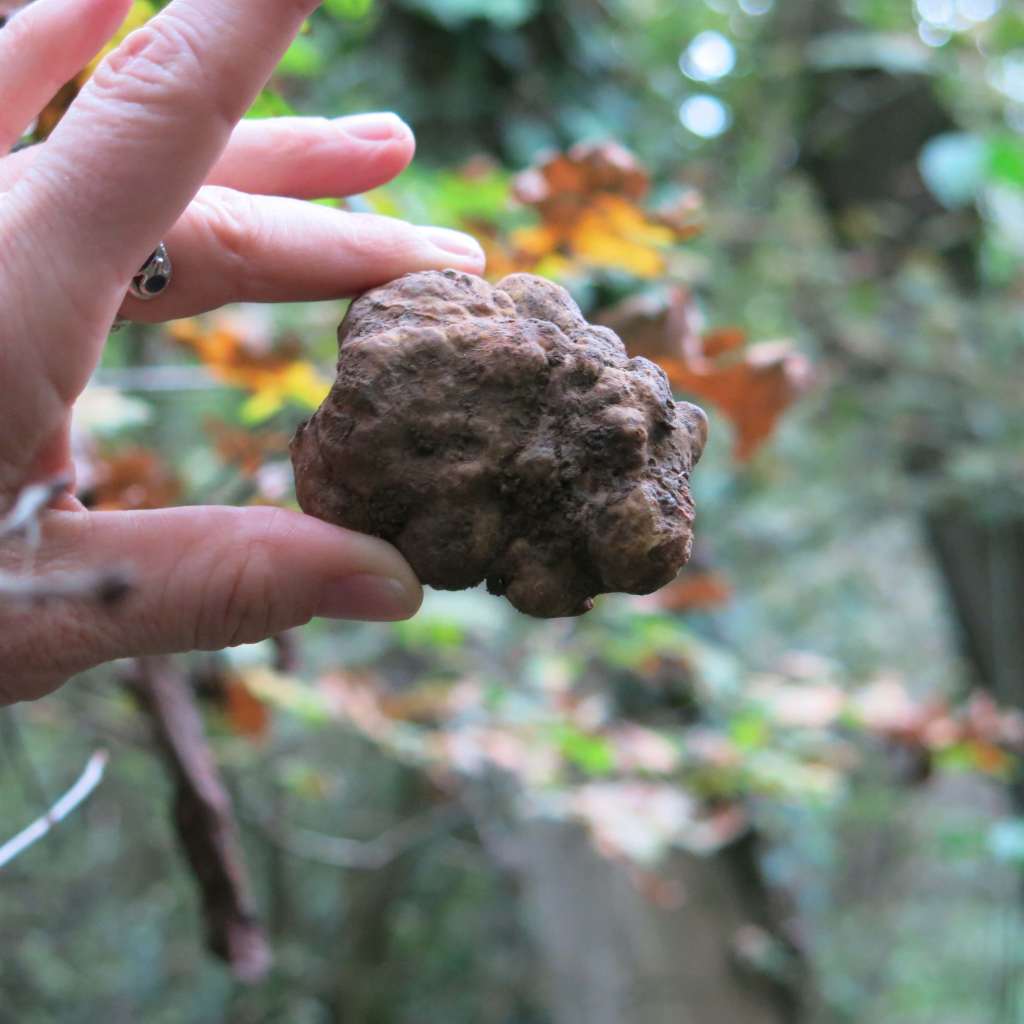
Truffles are the fruiting body of a subterranean fungus usually found in close association with the roots of trees, their spores dispersed through fungivores (animals that eat fungi). Hence it was traditionally pigs that were trained to hunt these coveted delicacies. These days it’s more likely to be dogs. White truffles are more highly prized than the black. Growing symbiotically with oak, hazel, poplar and beech and fruiting in autumn, they can reach 12 cm diameter and 500g, though they are usually much smaller, between 30g and 110g. The flesh is pale cream or brown with white marbling which releases their powerful scents, not appreciated by everyone (let’s call it olefactory Marmite). There are an estimated 200,000 regular truffle gatherers in Italy, with the sector worth around €400 million a year.

Fresh truffles should be consumed more or less immediately although they will last for up to seven days in a domestic fridge.

Once upon a time in Alba 

I’d never associated hedonism with tramping through thick forest undergrowth in the dusk. Peering to see if a lean setter-cross has found the ideal tree root to dig frantically under. I am not alone here in the heart of Alba truffle country in an October unseasonally warm. Around me 15 other paid-up ‘Hedonistic Hikers’, cameras at the ready, also await a tuber epiphany. 

Our guides, trading under the name Hedonistic Hiking, are proud to include an authentic white truffle hunt in season as part of their ‘Jewels of Piedmont’ (Piemonte) walking tour. It’s not everyone’s idea of holiday heaven but it sets serious foodies salivating. Those who know what the fuss is all about when the autumn mists that give their name to the famous local grape variety, Nebbiolo vines coat the valleys of North West Italy’s Langhe region and the autumn wine harvest is nearly over. It’s now Truffle Time, all the way to Christmas.

The following day we’ll indulge in an early evening aperitivo and do the ‘passeggiata’, strolling around the truffle-scented squares and alleys of regional capital Alba, where the annual Truffle Fair is on to celebrate – and auction off – this lucrative delicacy. 

Still for the moment, at the gourmet equivalent of the coalface, there’s work to be done. 

Truffle accessories aren’t strictly necessary

Our truffle hunter, Marco Varaldo, expresses faith in his rookie hound, Laika, so new she doesn’t feature in his publicity material. Marco has a day job, but hunting for the lucrative truffles, with their intoxicating, almost aphrodisiac scent, is his passion. 

The white variety, the ‘tartufo bianco’, rarer and more expensive than the black and found mostly famously in this corner of Italy, is revered the world over by gastronomes (and expensive restaurants). Admiration isn’t universal – their earthy assertiveness nauseates some sensitive palates. I’m not in that camp.

The white truffle can’t be artificially cultivated. This is part of its unique appeal. They are sought for in certain jealously guarded locations, hidden at the base of oak, beech and hazel trees. You train your dog to recognise the pungent aroma and then snuffle them out of the soil and leaf mould. It all seems a mite random as Laika zips and zig-zags around, scattering leaf mould, but then…

The novice truffle hound comes up trumps

I don’t know what the Piemontese for Eureka is, but it is time to yell it. The pooch apprentice has struck gold – ‘white gold’. Marco quickly straddles Laika, snatching a knobbly clay-covered lump from her jaws, pocketing it and rewarding the dog with a far less expensive treat. We clamber to see what the fuss is about. Marco delicately brushes the muck off the white truffle and we all commune with its pervasive perfume.

Over the next couple of hours we collect further specimens and, later, part of the haul, assiduously shaved over the local tajarin pasta, will be the centrepiece of our supper at a little local restaurant called Mange. When truffles are abundant, near the source, they can be a surprisingly democratic treat. Just a few slices elevate a local beef dish, below.

Truffle heaven on a plate. It doesn’t get much better

We were staying in La Morra, which follows the pattern of all the settlements in the Langhe, which recently attained World Heritage Status. They sit on a hilltop above the vines, dominated by a castle, a church, usually both, and offer ample opportunity to taste the wines that have made this corner of Piemonte famous – Dolcetto, Barbera, Barbaresco (in one small enclave) and, above all, Barolo. 

One of of our walks, from our hotel, the Corte Gondina, to Barolo village itself, took in the family-run winery of GD Vajra at Vergne. I’ve been there before in the early summer to taste their excellent wines and, now the harvest complete, was welcomed back like an old family friend. Piemonte’s like this. It doesn’t feel like some calculating tourist honeypot. You meet it on its own terms. Just like the truffle.

The Ponzi vineyards at the heart of Oregon’s wine country

Oregon’s wine country is also home to truffles (and another festival)

The Willamette Valley, just south of Portland, is the epicentre of Oregon wine, notable for Pinot Noir that can arguably rival Burgundy’s silkiest reds. And where there’s great wine there’s usually a thriving food culture. Yet until I was invited to join the The Oregon Truffle Festival I had no idea the rolling hills around McMinnville are also home to both black and white varieties plus four Oregon natives. 2021 pandemic strictures meant it has gone virtual (you can pick up goodies via an online marketplace – truffle stout anyone?).

Truffle hunting Oregon style and there’s a reward here

All this is obviously off a normal tourist’s radar, but rolling Willamette Country’s wineries and fine restaurants aren’t. McMinnville makes a fine base for exploring. Stay in its red brick historic district, perhaps at the oddball Hotel Oregon, which has a rooftop bar and is decorated with relics of the building’s 115-year history and the town’s famous 1950 UFO sighting. You might also run into the ghost of a former resident, nicknamed John.

As in all the towns along the route, I grabbed a craft beer, this time at the convivial Golden Valley Brewery and Tap before sampling a festival special truffle vodka and local wine at the Elizabeth Chambers Cellars, one of many tasting rooms in the town. 

You’ll probably find it more fun to drive out to one of the country wineries to do your sampling. It sounds boringly generic but Willamette Valley Vineyards offers exceptional quality. Wine and truffles – the perfect marriage either side of the pond.

Truffle carpaccio – our festival reward

Was there ever a hotel as ace as the Ace? In my first visit to Portland, Oregon I revelled in its grungy quirks (even the vintage shower that didn’t work). With master mixologist Jeffrey Morgenthaler and definitive Stumptown Coffee on the premises and the legendary Powell’s City of Books two blocks away who could ask for a better base in this playful, radical city George Bush dubbed ‘Little Beirut’?

Ace Hotel – could a Portland rival oust it from my affections?

I swore this would always be my Portland lodging of choice. And the vow stuck – until six months later, stopping off on a San Francisco-Seattle road trip, I discovered Jupiter. Not via any space shuttle, simply by crossing the Burnside Bridge into a post-industrial quarter that’s on the up from a long way down. In this process the Jupiter Hotel and its in-house  live music venue, the Doug Fir Lounge, have been a major catalyst, along with Portland’s top restaurant Le Pigeon next door and Burnside Brewing Co across the road. Good things come in clusters.

The Jupiter was out of this world, especially the Doug Fir Lounge

We had been asked when booking the Jupiter, a converted motel, whether we preferred a room on the Bar Side or the Chill Side; the former giving you an up-close share of party central until dawn, the latter offering a chance of some shut-eye. We chose Chill, taking advantage of an extremely comfortable bed in a compact but murally soothing environment.

Host to many top acts, the Doug Fir Lounge has regularly been named one of America’s premium gig venues – and there’s strong competition in Portland itself from the likes of Mississippi Studios and the Crystal Ballroom. Indeed the Jupiter’s leaflets claim 12 music venues within a mile radius (along with five distilleries within two miles and award-winning breweries four blocks) We just loved the timber-clad Doug Fir’s happy hour bar vibe, the raucous stand-up getting the party under way and then the fire pit bonhomie of the joint.

Le Pigeon – I’d cooked the recipes, would the real thing live up?

The beer was better, though, at Burnside Brewing and we couldn’t resist taking in Le Pigeon, 30 seconds round the corner. I’ve been cooking from restless pioneer Gabe Rucker’s cookbook for several years and the bistro didn’t disappoint with dishes such as caraway crusted sweetbreads; foie gras thom kha; and truffled chicken, shrimp and grits, corn succotash, prawn-tarragon aioli. Top end prices, especially for wine, belie the casualness of the setting and make it a special occasion place.

Legendary street food from Mong’s Khao Man Gai

A more accessible and affordable bet for a Jupiter guest is three minutes’ walk away on S.E. Alkeny Street – a cafe outlet from street food champion Nong’s Khao Man Gai, whose original food cart is still serving its trademark poached chicken with rice downtown on the corner of SW 10th Avenue and SW Alder Street. Sunday Times restaurant critic Marina O’Loughlin is a big fan.

Street food ‘pods’ are scattered around a city devised on a grid system (hence NE, NW etc attached to some impossibly long streets to signify which district you are in). The corner of 28 South East Place and Division Street hosts the Tidbit Food Farm and Garden, a lovely place to refuel, global food carts circling the Scout Beer shack like covered wagons. 

Bibimbap, sushi, roasted pepper tri-tip, Fillipino pork stew – it’s a dazzling Asian road trip. Alternatively, there’s Texas brisket or candied bacon burgers, waffle sandwiches and wood-fired pizza. I grabbed a picnic table, a Fresh Hop Simcoe brewed by the hyperactive beardies at Breakside and slurped the best bone stock rich ramen I’ve ever eaten from a truck called Hapa. The name describes the fusion of Japanese cooking techniques and Hawaiian recipes. For a full of Portland’s food cart locations visit this link.

Extracto is in the forefront of the city’s vibrant coffee culture

Though Seattle would claim the honour, sometimes you feel Portland invented coffee, too, it’s home to so many acclaimed roasteries. Stumptown is the place to start. It took on the city’s nickname (from its logging past) and for nearly two decades this roastery has set the standard by which rivals are judged. These are many to pick from nowadays. Take Extracto , a decade-old chain of two with its roastery at the original N.E. Killingsworth Street cafe/shop. From the Eleven of Spades house-blend through rare single-origin roasts to the elevation of latte decoration to an art form it hits all the right coffee buttons.

The Simpsons doughnut homage at Voodoo

With all this coffee, well, you’ve got to have a doughnut. Jupiter does a ‘The Magic is in the Hole’ certificate for guests, providing a ‘Voodoo Dozen’, a pink box of 13 from the city’s most hyped provider. Voodoo even run to a Homer Simpson tribute doughnut (creator Matt Groening is a Portlander and several of the cartoon’s characters are named after its streets – Ned Flanders, Milhouse and the like). 

But Blue Star has the edge in the Portland Doughnut Wars

Locals insist  Blue Star is the hipster doughnut of choice. I understand why when I scoff one of their lauded creations – a riot of intense chocolate, cream and brioche. The wonder of it is captured fully in a local website’s Deconstructing Blue Star’s Valrhona Donut. I’d checked out their Mississippi Avenue outlet en route for a Brewvana craft beer walking tour. 

April is our guide to the city’s amazing beer varieties

This vibrant corner of town, once a no-go area now on the cusp of gentrification, has lots to offer – the aforementioned Mississippi Studios, a street food pod (naturally), a cannabis store and the amazing Paxton Gate offering stuffed animal collectibles – but its breweries are worth the trip alone. Our Brewvana Mississippin’ tour guide April took us around three, Ecliptic, Stormbreaker and Hopworks Bike Bar and what our small party tasted along the way, especially at the latter, revealed why Portland contends with Denver for the title of US Capital of Beer. The three hour tour costs $69 and you do get to eat the pretzel necklace that brands you as an ale geek.

Snack on this choc chip treat and get high

Of course, the intoxicant of choice is not always malt and hop-driven. ‘Keep Portland Weird’ says the parking lot sign opposite Voodoo Doughnuts. Personal consumption of cannabis is legal in Oregon; still I resisted the temptation in its largest city to get high on a brownie infused with the stuff. They even sell ready-rolled joints in specialist dispensaries such as Nectar.

Himalayan salt is the tangy new kid on the block at Mark Bitterman’s saline mecca

Oh and salt is more than a footnote if you visit Mark Bitterman’s two sodium chloride-centred delis called The Meadow. Conveniently, one of them is up on resurgent North Mississippi Avenue next door to a Blue Star cafe. It was here I bought kala namak (Himalayan black salt) and a couple of Bitterman’s books – one on salt naturally, the other on cocktail bitters.

In it he name-checks another Portland legend, Jeffrey Morgenthaler, mixologist at Ace Hotel’s Clyde Common bistro and Pépé le Moko speakeasy. I couldn’t resist begging this  cocktail high priest for one of his celebrated barrel-aged Negronis.

Freaky fish in the brickwork – who said Portland was weird?

Post Negroni (or three) for further weirdness walk up to 901 Salmon Street and gaze up at a whole salmon swimming through the corner of a brick building. It’s an 11ft long bronze sculpture called Transcendence, high above a seafood restaurant.

I lived with this cat in my quirky Ace lodging

The city hosts some of the most inventive street art around. Some of it had rubbed off in my room at the Ace, adorned by a giant cat image guarding my personal vinyl deck. Retro touches extended to a Heath Robinson-like steel shower in my standalone tub that I gave up on and recycled fabrics and furnishings I found charming if hardly luxurious. Downstairs, though, oozes sociable cool. Check in and you may never leave. Unless Jupiter is in your orbit, dude.

For something different to enliven your stay in this most civilised of American cities in bewildering times check out these five fun options:

1 Small is beautiful at Leprechaun Park

Mill Ends Park – total area 452.16 sq in – holds the Guinness World Record for the world’s smallest park. Known as Leprechaun Park, it fills a circular concrete hole, once meant to be the base for a lamp-post on Naito Parkway. Back in the 1940s a local journalist, whose office overlooked it, decided to plant flowers there and it was officially recognised as a city park on St Patrick’s Day 1976. PS Don’t aim to spend a whole day there. 

2 Or if you fancy a more expansive green escape

The formal Japanese Garden has now added an extra 3.4 acres to its original 5.5, featuring ornamental cherry trees, ponds and tea house. The revamped Cultural Village has an authentic style medieval castle wall, which was built with traditional hand tools under the watchful eye of a 15th-generation Japanese master stone mason. It’s a place of tranquil contemplation all year round but must be spectacular in blossom season.

3 Portland’s Chinatown

Once dubbed ‘The Forbidden City of the West, it is now much diminished. The opium dens, brothels and kidnappings via the ‘Shanghai tunnels’ to the riverside are now gone, but the area retains a certain seediness. All the more surprising to stumble upon the gorgeous Su Lan Chinese Garden, which occupies a whole city block on NW Everett Street. Modelled after Ming Dynasty gardens and built by Chinese artisans from twin city Suzhou, it offers a microcosm of Chinese culture. Taste the tea, feel the harmony. A Portland must.

4 A good bookshop? 

Look no further than one of America’s largest, offering used and new – Powell’s City of Books. On West Burnside Street around the corner from the Ace and boasting a spectacular wine and cookery section, I couldn’t resists its allure. After three Powell’s trips my Delta baggage allowance was in serious danger.

5 Wine? Head south to the Willamette Valley

Portland has its own urban wine scene, but the real deal is less than an hour away. Willamette is famous worldwide not for being Portland’s river but for being focus of the Oregon wine industry. Roam the hills around Newberg, Dundee and McMinnville 30 miles or so south of Portland. You’ll receive a warm welcome at any number of folksy family wineries. To plan an itinerary visit this link. We went upmarket to Ponzi, one of the pioneering wineries created by ‘escapees’ priced out of California and seeking a fresh terroir for the Holy Grail grape, Pinot Noir. That was 45 years ago and nowadays the luxurious tasting room and terrace overlooking the Chehalem Hills vineyards feels not a million miles from Napa. Accordingly, a single flight featuring a selection of current vintages costs $20 with cheese and charcuterie plates from $12. Worth splashing out for wine and setting. The winery has recently been bought by Bollinger.

Fact file

Factfile

Neil Sowerby stayed at The Jupiter Hotel, 800 East Burnside Street, Portland, OR 97214 and at the Ace Hotel, 1022 S.W. Stark Street, Portland, Oregon 97205.

The Covid pandemic has grounded most of the transatlantic air services, but as lockdown ends expect a resumption from the like of British Airways and Delta.

An essential guide to the area is Travel Portland. For further afield in the state go to Visit Oregon. To plan your American trip of a lifetime go to Visit USA.