Big birthdays demand a blow-out. For my 70th last year it was unforgettable Ynyshir. Playing catch-up this, my bluestocking wife required Dreaming Spires and the Forest of Arden – so off to Oxford (where we met several decades ago) and to Stratford-upon-Avon for a rather apt staging of As You Like It (in the main theatre below right, image by Stratford Computers).

Theresa’s own version a few years ago tapped into youthful enthusiasm; the current RSC adaptation regroups a cast of grizzled veterans, supposedly 45 years on from the original production they were in. Cue all kinds of riffs on time passing. The best summation from another Shakespeare play, The Merchant of Venice: “With mirth and laughter let old wrinkles come.” Occasionally creaky, this As You Like It was all a rather joyous self-indulgence. As was the rest of our Stratford leg.

Familiar territory this half-timbered town, yet it never loses its allure. Top advice is to get to the major Shakespeare attractions early or, for those out of town honeypots, later in the day when the coach parties are dispersing. 

Before filling you in on all those must-sees a mini-guide to more modest off-the beaten track discoveries we made on this recent visit. Just stray off thronged Sheep Street, Henley Street and the like to a Stratford shorn of Edinburgh Woollen Mills, Harry Potter shrines and shop windows rammed with tourist tat and you might encounter… 

Ya-Bard – ‘a quart of ale is a dish for for a king’

The quote is from The Winter’s Tale (1611); of rather more recent vintage (2020) is Dave Moore and Sam Thorp’s splendid craft beer bar/bottle shop at 13 Rother Street (next to the Playhouse). The narrow space is lined with Belgian lambics and serious sharing bottles, but the five beers on tap are witness to Dave’s preference for hoppy pale ales and IPAs. Manchester’s own Track Sonoma was just about to go on when we dropped by. This is the real beer deal in a town whose bars and pubs don’t really cut the mustard. Falstaff would give them the sack!

Shakespeare Hospice Bookshop – ‘Knowing I lov’d my books, he furnish’d me From mine own library with volumes that I prize above my dukedom’ 

The Tempest this time. We think its hero Prospero would approve of the good deeds of The Shakespeare Hospice, which runs a range of fund-raising shops, this gloriously well-stocked shrine to the printed the word the pick. We browsed there for the best part of an hour, relishing the generous prices… for quite recent review copies in many cases. I snapped up John Kampfner’s Why The German’s Do It Better for £4 and my wife a tome on moles for a quid more. If you visit don’t miss the quirky upstairs display of “Things we found in books”.

Box Brownie – the curtain’s down!

Coffee didn’t arrive in England till the mid-17th century (according to Samuel Pepys, England’s first coffee house was established in Oxford in 1650), so understandably there’s no mention in Shakespeare. Chocolate, in liquid form, was probably familiar to the Bard but the brownie is a late 19th century American invention. They do a delectable version at Ben and Hayley’s bijou coffee house at 20 Henley Street. An antidote to all the chains infesting this tourist town, their brilliant brews from locally roasted Monsoon beans.

Four Teas – ‘When the hurly-burly’s done, When the battle’s lost and won’

Wartime home front style at this 1940s-themed tea room/English brasserie, which offers arguably Stratford’s best cream teas. Spoiler alert: the icing on the cake may be a soundtrack of Vera Lynn and Glen Miller. There’s always the garden to escape to, which comes complete with an authentic Anderson shelter. It being ‘Taking Back Control Britain’ the Classic Ivor Novello Afternoon Tea will eat up a lot of your ration cards. £27 per person, £32 with prosecco. Pass the tin hat, Captain Mainwaring.

The Kingfisher – ‘Marry, here’s grace and a cod piece’ (Lear)

Best quality sustainable fish from Grimsby, proper chips from Lincolnshire spuds at this Ely Street chippie. Lots of thesps (the likes of Patrick Stewart, John Nettles and Judi Dench) have ordered fish and chips from this low key gem, along with a certain Princess Diana apparently. It was in the same family’s hands for 42 years until 2020. The good news: it’s as good as ever and reasonably priced.  Round the corner is Salt, Stratford’s only Michelin-starred restaurant. The tasting menu is the inevitable focus here, but it offers affordable lunch options. Chef patron Paul Foster is currently opening a second restaurant in Camden, so may not be at the mothership every day. A wonderful Salt alternative is just further along Church Street, located handily in our hotel base, the Hotel Indigo, a beautiful melding of a 1500s original building with contemporary lodgings set around a hidden garden (central Stratford car parking, too!)…

The Woodsman – ‘Why let the strucken deer go weep’

Hamlet quoting an old ballad there. Venison was very much a Tudor staple, so it is appropriate that a restaurant specialising in deer and other game sits squarely opposite the site of Shakespeare’s house, New Place (our bedroom looked out upon it). Exec chef Mike Robinson, whose other restaurants include the Michelin-starred Harwood Arms in Fulham, The Elder in Bath and Chester’s The Forge, sources venison from his own private deer park in Berkshire. A dinner that featured chicken terrine, octopus and exquisite lamb as well as venison (loin and faggot) was a feast fit for a Bard, Recommended, as is the hotel.

So, what’s to see at New Place across the road?

Bought by Shakespeare in 1597, the largest house in town was where he lived with his family and later died in 1616. It was controversially demolished in 1759, but the ‘footprint’ of the razed property has been restored evocatively – notably with the creation of the Great Garden and the Knot Garden. Helping explain the history is the adjacent museum in the Grade I listed Thomas Nash House. This was owned by Shakespeare’s granddaughter’s husband and features a fascinating exhibition of archaeological finds from New Place.

Roman Catholic palimpsests in the Holy Cross Guild Chapel

The debate whether the Shakespeares were covert Papists has never been settled, but this unassuming medieval church on neighbouring Chapel Lane offers some clues. Notably the vestiges of Catholic murals. These were ordered to  be wiped out in the Reformation and John William’s father John was given the task of doing this but chose just to whitewash over the paintings, perhaps in the hope of preserving them for prosperity. 

Thus we can still make out over the chancel arch Jesus presiding in Judgement, with the souls of the elect rising from their graves to be greeted by St. Peter in Heaven. Meanwhile, the damned (whose sins of pride, luxury and gluttony are labelled) are rounded up by demons and dragged through hell’s mouth to unspeakable torments beyond. Elsewhere Popes to peasants parade in a devilish ‘Dance of Death’.

Shakespeare’s last resting place – ‘Alas poor Yorick’

Far overshadowing the Guild Chapel is the beautiful Holy Trinity, where the Bard and other members of his family are buried in the 15th century chancel. His memorial offers the famous curse “blessed be he who spares these stone and cursed be he that moves my bones”. That may not have deterred 18th century grave-robbers. AGPR (ground penetrating radar) has suggested the skull may be missing. Entry to the church is free but there is a £1.50  a head charge.

Avon calling – join the swans on the river 

Avon Boating by the Clopton Bridge offer all sorts of ‘self-drive with oars’ opportunities on the river. Cruises, where the skipper takes the strain, are the most laid-back trips. Downriver there are unparalleled views of Holy Trinity and the RSC theatres, including a sneak peek into the balconied dressing rooms of the RST and, our guide informed us, it can be a bit of a shock to see Julius Caesar consulting the Ides of March on his iPad. Then head upstream in pursuit of kingfishers and the idyllic back gardens of Tiddington Road, the most expensive street in Stratford.

The Play’s the Thing – ‘All the world’s a stage etc’

You can’t go far in this town without stumbling across quotations emblazoned on the pavement and statues contemplating skulls. All this bardolatry would, of course, be pointless without the hub – the RST, the Swan and The Other Place. Stratford is about theatre and there is a host of exciting Shakespeare performances currently playing and lined up for the near future. For details visit here. For true theatre geeks there’s also a selection of backstage tours. Starting in the Royal Shakespeare Theatre Cloakroom, you will learn about the history as well as exploring a production in more depth to learn about the theatre making process.

Your Shakespeare pilgrimage – further places to visit

But then many visitors are happy just to bathe in the aura of our greatest playwright. The Shakespeare Birthplace Trust manages the five very different properties relating to the playwright with a mission to reach out to all ages. Its website features videos and virtual tours to whet the appetite. And at the moment it is offering a great value special ticket covering all the houses.

In the town itself, besides New Place, there is Shakespeare’s Birthplace, the comfortable Tudor house where young Will grew up and (alas closed to the public at the moment) my favourite, Hall’s Croft, home to the surgeon John Hall and Shakespeare’s daughter, Susanna. High-ceilinged and furnished to show wealth, it has a magnificent formal garden with herbs that would have been used in Hall’s remedies. Alas, it is currently closed to the public.

As both houses have the original flagged floors there’s a frisson to know you are literally walking in Shakespeare’s footsteps. Knowledgeable guides in costume loiter in rooms with intent to draw you into the experience of 16th century family life. In the Birthplace guest room a woman playing a harp explains about the mouldy oranges – bought for show and  never intended to be eaten. 

A costumed glover stands in John, the playwright’s father’s workshop amid an array of his wares, all designed for different purposes. In the window hang a range of “pockets” or Tudor man-bags, the must-have accessory for any Stratford dandy. We learn also about the less pleasant side of glove making – urine used as bleach and the noxious smell of human and animal waste from the tannery in the backyard.

Country Matters with Anne Hathaway and Mary Arden

The two out of town properties with their land and gardens offer great family entertainment. The family home of Shakespeare’s wife-to-be, Anne Hathaway’s Cottage at Shottery, is beautifully preserved with the settle on which William and Anne did their courting and, again, a minor life-enhancing detail of a descendant who reputedly chipped splinters from it to sell for sixpence to tourists. Knowledgeable volunteers fill you in on period language and customs. You want to know the origins of upper crust? You’ve come to the right place.

The gardens are a delight, in high summer a riot of sweet peas and lavender. Don’t neglect to take in a sonnet in the Sonnet Arbour, its trellises channelling the surround sound of the actor’s recorded voice.

Mary Arden’s Farmhouse, (the home of Shakespeare’s mother) has been developed into a fascinating period attraction where costumed guides and volunteers cook Elizabethan feasts using authentic ingredients and care for the heritage animals and poultry without mod cons. We watched Kate the English longhorn cow being milked by hand into a wooden pail while her calf (Quickly) looked on. Why “Quickly”? Because all the cattle must be called after Shakespeare characters and the names (rather like hurricanes) have to go through the alphabet. The calf may have had designs on being Viola or Titania but she ended up named after a brothel keeper. 

You can also stroke the cute black Mangalitza pigs, learn to herd geese and groom the resident horse. The period feel is enhanced by groups of schoolchildren in costume, the only incongruous detail their trainer-clad feet. There are also birds of prey displays.

Enough period charm – let’s close with some Horrible History

A very different slice of period life was delivered up in Tudor World. Lurking down a cobbled alley in the old Shrieve’s House off Sheep Street, this is a hands-on fun experience for all the family. On the way in you are given a Tudor ID card with details of ‘your life’; on the way out you learn how you died – usually painfully and by execution. In between are chances to dress up, sit on the throne, pose in the stocks and glance in at some gruesome period practices. In one installation the barber surgeon extracts a patient’s tooth with no anaesthetic and much blood. 

In another the magician and alchemist, John Dee, sits surrounded by the paraphernalia of his trade. On the wall behind is the fascinating fact that he was a spy, code-named 007. And Ian Fleming took the moniker for what must now be the most famous secret agent ever.

Main image of Anne Hathaway’s Cottage and subsequent images of Birthplace, Hall’s Croft and Mary Arden’s Farmhouse from the Shakespeare Birthplace Trust.

It’s a glorious sweep down through the North Yorks Moors from Whitby to Hovingham. En route 30 odd miles of heather heaven in high season with the pastoral lushness of the Howardian Hills at the end of it. I just wonder if the legendary Captain Cook ever made the journey? We always associate the adopted Whitbian with seaborne expeditions to the furthest corners of the globe. Did he know this Tyke hinterland of ruined abbeys and fine local produce?

He was certainly familiar with tetragonia, the spinach/sorrel like leaves now on my plate at Mýse in bonny Hovingham. Back in the 18th century he enlisted what the Antipodeans also call warrigal greens or New Zealand spinach to ward off scurvy among his crew on the Endeavour’s long voyages.

There’s little chance of me contracting this disease of vitamin C deficiency over the course of Josh Overington’s beautifully balanced 10 course tasting menu, among the highlights of which is the Herdwick lamb ‘main’, where three tetragronia leaves are draped over Herdwick lamb, fillet and belly, cooked over coals and served with an anchovy-umami rich garum sauce on a base of pearl barley, tiny cubes of lamb tongue and addictive garlic capers. The tetragonia is tangy, slightly chewy, grown specially for Josh by a local farmer.

Such a dish is typical of Josh’s spanking new project. At the end of last year, after a decade in York, he and his sommelier wife Victoria sold up their acclaimed Cochon Aveugle restaurant and wine bar Cave du Cochon. Their new home is a restaurant with rooms in the former Malt Shovel opposite that most eccentric of 18th century Palladian big houses, Hovingham Hall (clue: its architectural focus is the stable block).

The makeover of the premises has been stylishly managed. What was a village local is now the crucible for the French-influenced ‘Bistronomie’ food that once had critics swooning, despite the no choice menu being served blind (Cochon Aveugle = Blind Pig). The big difference in Hovingham is you get a printed menu.

According to Josh in a newspaper preview the food focus has also shifted. “This is our chance to create something more ambitious and a reflection on our incredible Yorkshire surroundings. I grew up here and it has been home to Victoria for 10 years, so we wanted to create a welcoming, homely spot, each dish a nod to dinners that my Yorkshire grandmother would cook for me, but elevated and refined.”

Maybe that’s a culinary leap of faith along with naming the destination Mýse, apparently the Anglo Saxon term for ‘eating at table’ (pronounced meez). The word does translate as ‘table’, but I’ve dusted off my old copy of Sweet’s Anglo-Saxon Primer (revised edition 1970) and got no further. My bluestocking spouse suggests it might even be a Latinate derivative similar to mesa. Surely there’s also a play on the French term mise en place (everything chopped and measured out before cooking in a professional kitchen. None of this bothers me over much. With food this sublime they could call it Beowulf’s Magic Mead Hall and I wouldn’t fall on my sword.

So what did I eat there that sun-dazzled July noon time?

A trio of snacks – a postage stamp sized tranche of smoked eel dusted with bilberry powder poised on a cup of eel and apple broth; on a wooden spoon delicate shards of razor clam given rare oomph by a tangle of salted rhubarb and lightly pickled elderflower; ox cheek fried in Yorkshire pudding batter with fermented cucumber. I‘m sure granny would have loved the latter without knowing it might rate as a beignet. I saved some of the seeded sourdough to mop the juices of the next-up Orkney scallop. The temptation was to keep on smearing it with the proffered Ampersand Dairy cultured butter and chicken drippings. The fat hand-dived mollusc was a classic Overington dish, baked in the shell with a sea urchin butter for a sweet salty kick. A crumble of bottarga-style crisped coral enhanced this further.

Josh told me the broth for my line-caught cod had been created by simmering in-season senshyu onions with water for three days. The pearly North Sea fish itself was poached in aged beef fat, senshyu and lemon verbena. Then followed that lamb – Herdwick not Swaledale as predicted, but the perfect taste of the North following Josh’s brief.

My fave pudding of a trio was ‘day old bread’, which meant soaking yesterday’s brioche in vanilla custard then caramelising the edges, so it superficially resembles a fat fish finger. It came with a trio of preserves for messy dipping, the best of which was a little raspberry and rose number but honourable mentions for goat’s milk caramel and a ‘hidden’ hazelnut crème fraîche main image – serving for two). 

Simpler was a plate of four strawberries ‘dipped in their own jam’ with a citrus marigoldice cream. Then came a petit four like tab of linseed caramel that called for coffee and a tempting local cheese offering that I declined.

I also restricted my wine intake to two glasses because I was driving. A vinho verde and a Greek xinomavro. Such a shame when the wine list is heavily weighted towards Keeling & Andrew’s remarkable ‘Noble Rot’ roster.

The obligatory tasting menu costs £80 at lunchtime (wine pairing £65pp); £110 in the evening (wine pairing £85pp).

Wheat field ramble, Tristram Shandy, Tommy Banks’ new boozer

Poppies line the Ebor Way out of Hovingham. If I keep to the dusty footpath for an hour and more I’ll be sure to reach Oswaldkirk, the sign says, but the sun is relentless over the fields of wheat and broad beans, so after a brisk stretch walking off lunch I retreat to my car and drive 10 miles east to Coxwold and Shandy Hall. Cock and Bull Story (2005) was Michael Winterbottom’s appropriately absurd attempt to film the unfilmable – Laurence Sterne’s anarchic, baggy 18th century novel, Tristram Shandy. The groundbreaking novelist’s home lies at the top of the sloping village. Now a museum, Grade 1 listed Shandy Hall is open to the public at weekends, the two acre grounds most days, but not today (‘private function’). Instead I take a table and a Harrogate Water at the Fauconberg Arms in the centre of the one-road hamlet. An umbrella shields me from the sun as I bask in the charm of a place that almost defines unspoilt.

It’s the base camp for my exploration of another pub transformed by an accomplished chef. Back in 2017 Tommy Banks and Josh Overington were part of a trio of chefs representing the North East in the BBC’s Great British Menu. Tommy now holds Michelin starts at Roots in York and his flagship Black Swan at Oldstead three miles down the road from Coxwold. 

En route to the Swan you’ll come upon Byland Abbey. A ruin under the care of English Heritage, it’s hardly in the same league as Rievaulx up the road, but that fellow casualty of the Dissolution of the Monasteries doesn’t have an idyllic pub garden opposite where I’ve been served the finest beef burger I’ve ever tasted outside Hawksmoor.

Yes, Tommy has taken over the Abbey Inn – where as a lad he washed pots – and its menu follows the sustainable tenets of his restaurants. The Dexter chuck brisket and short rib for the patty is from the Banks family farm. Topped with bacon and chicory jam, oozing cheese, tomato and cucumber pickle, it is accompanied by beef fat fries (less impressive). It will cost you £21 from the garden menu or inside, even now at the steep end for a burger, but it’s worth it. The menus here are very much posh pub, not dedicated restaurant. Once a farmhouse built by the monks, it has been a hostelry since 1853 and is staying that way. At 70, the Abbey Inn has double the covers of Mýse; each, though offers three luxury rooms to stay over. Hard to resist ordering the extra Timothy Taylors or Xinomavro red or two and crashing. This is a wonderful corner of England.

Restaurant Mýse, Main Street, Hovingham, York, YO62 4LF.

The Abbey Inn at Byland, York, YO61 4BD.

Under the radar? That’s definitely Abruzzo. It’s the poor touristic relation of Toscana, Umbria, Piemonte and yet this predominantly rural Italian region has so much to offer. Three National Parks, one Regional Park and several natural reserves are home to an unprecedented 75 per cent of Europe’s flora and fauna species. The slow food on offer, washed down with the local soft Montepulciano reds, is reason enough to visit the scores of  ancient hilltop villages.

Take lentils. The medieval town of Santo Stefano di Sessanio holds a festival every September in their honour, the Sagra delle Lenticchie, and is campaigning to win them DOP (Denominazione d’ Origine Protetta) status alongside such iconic foodstuffs as Parmesan, Balsamic vinegar of Modena, San Marzano tomatoes and the like.

I source my Abruzzo lentils (via the wonderful Ham and Cheese Company in Bermondsey) from the Casino di Caprafico 100km south east which accesses the same scrubby terrain that somehow brings out the iron-rich best in these tiny legumes. Easily the equal of France’s acclaimed Puy lentils. The same deeply traditional operation also yields my go-to new season olive oil. The head honcho is Giacomo Santoleri. Let Ham and Cheese Co tell his story:

“Giacomo Santoleri was an engineer before turning to agriculture 20 years ago. His Caprafico farm is on the eastern slopes of the Maiella National Park, close to the town of Guardiagrele and there he has chosen to grow a range of heritage grains to mill for bread and pasta. Pasta from his barley and emmer (farro) is a long way from the uniform white mono flavour of pasta made from high yielding wheat varieties and it is also much healthier; emmer is known to be good for the heart and immune system. It is high in antioxidants, fibre and protein. Like many heritage grains the plants are strong and sturdy and can be grown without the need for chemical fertilisers and pesticides.”

And the Caprafico lentils?

“Giacomo grows ancient grains and pulses on the Caprafico plain in Abruzzo. These lentils are sown at the end of March on poor, chalky soil and they thrive in the harsh mountain temperatures of the Maiella National Park. Surviving these adverse conditions gives the lentils lots of flavour

“The lentils ripen at different times depending on their altitude but the majority are harvested during August. Harvesting takes place by hand because the lentils grow so close to the ground that mechanised harvesting can destroy up to 40 per cent of the harvest. Inside the cloth bag are 500gs of the most beautiful, speckled lentils. Cook them with a carrot, an onion and a stick of celery then stir them – still firm – into some softened dice of the same vegetables. Top them with a sausage or poached egg.”

The form the perfect base for toothsome New Year’s Day treat, Cotechino, sausagey subject of one of my Italian Food Trail pieces, but with my latest lentil batch I have wilfully ditched seasonality.

Just as summer is almost convincing Yorkshire it is Abruzzo I’ve assembled in my garden the ingredients for a decidedly autumnal Lentil and Chestnut Soup, loosely adapted from a Rachel Roddy recipe. It was an excuse to use up two vacuum packs of hulled chestnuts that had lain too long in the store cupboard. Plus I had an excess of chicken broth in the freezer and a surfeit of herbs from the garden.

Lentil and Chestnut Soup

Ingredients

4 tbsp good olive oil

1 onion,

1 carrot

1 stick celery,

100ml Noilly Prat

3 tomatoes, skinned and diced

Ready cooked chestnuts, broken up

2 litres of chicken broth/water

Parsley, chervil, dill, marjoram or other mixed fresh herbs.

1 bay leaf

Salt and pepper, to taste

Method

In a large pan heat olive oil over a low flame, add chestnuts, stir for a minute then add vermouth and let it bubble for a couple of minutes.

Rinse the lentils and add to a separate pan with chopped veg, herbs and stock water mixture. Simmer for an hour or so over a low heat until the lentils are tender Unlike red lentils they keep their shape). Remove bayleaf. Take out half the mix and blend roughly before returning to the lentil pan along with the chestnuts and a splash of good extra virgin olive oil. Caprafico would be perfect.

A Proustian madeleine moment? With hops? Not quite. The lager in the iconic Budweiser Budvar tankard glass flaunted all the right credentials, including the distinctive huge frothy head, bringing back glorious travel memories. Yet the taste was subtly different from what you’d expect of the classic Czech beer. 

Adam Brož, the brewmaster of that state-run enterprise was at my elbow to explain their unique link-up with Derbyshire’s finest, Thornbridge. Our native Golding hops and Maris Otter malt give Czech Mates (a bit of an ouch name, but hey) its own tang, benefiting from the legendary Budvar yeast. Cheers – or, as they say in South Bohemia ‘Na zdraví’!

Budvar’s first ever collab outside its home country is not meant to replicate the original. At 4.8 per cent it is weaker and the maturation period is shorter, though considerably longer than most lagers including even Czech rival Pilsener Urquell. And don’t even mention the dreaded American Budweiser, which perennially bombards Budvar with legal challenges over the brand.

I am at a Czech Mates launch night in a Thornbridge tied house in Leeds, The Bankers Cat, and Budvar global ambassador Ridem is generously plying us with samples of Thornbridge’s crisp, well balanced labour of love. Like Adam, he is delighted that I have visited their iconic brewery in České Budějovice. I tell them how it was the final destination of an eye-opening pilgrimage to the Czech Republic (or Czechia as it now styles itself). That was in 2016. My previous visit to their country had been in 1976, just eight years after the Prague Spring and the Soviet crushing of Czech dreams of freedom. How different it all felt…

A land of fairy tales and golden lager

Advent Sunday in Český Krumlov (main picture) and the bells are ringing. The first sighting of blue sky in this most misty of autumns in South Bohemia has lured me out into the old town before breakfast. Winding alleys that had breathed mystery after dark are equally entrancing by day. Who needs Prague when you can have a place like this to yourself?

Except around the corner comes a selfie-driven Japanese coach pack. UNESCO World Heritage status means off the beaten track just doesn’t happen these days. Still this historic city, set in a horseshoe bend of the River Vltava (Moldau) and lorded over by an immense 13th century castle, wears its tourist honeypot trappings lightly. 

We are 170km south of the Czech capital, not far from the Austrian border. This has been territory fought over for centuries. When Germans ruled the roost it was called  Krummau an der Moldau just as the region’s main centre, České Budějovice, was Budweis (hence the brewery name, more of which anon). 

After the collapse of the Soviet empire and the splitting of Czechoslovakia into the Czech Republic and Slovakia Český Krumlov arose from decades of decay like some Sleeping Beauty. Which seems quite apt in a land entwined in folklore and fairytale.

Especially around Christmas when it all takes off. Well, Flying Baby Jesus does. When the Velvet Revolution kicked out Communism there was a rush to introduce Czechs to that burly guy in red with the white beard. They were having none of it. Their festive bringer of gifts is Ježíšek, variously depicted as a baby, toddler, and young lad (see the image below from a church we visited). 

On Christmas Eve families deck the tree and share a traditional Czech dinner of carp and potato salad, then the children are sent to scan the skies for Ježíšek. When a bell rings they rush back to find their presents have arrived.

Snacking on the Christmas Markets

The Czechs have the highest beer consumption in the world – 129 litres a head. Their food, from pretzels to goulasch via dumplings, sauerkraut, grilled meats and sausages, seems custom-built to match the foaming brews.

We were there at Christmas Markets time, more home-made affairs than the ersatz ones inflicted on the UK every November and December. In both Český Krumlov and České Budějovice I sampled these Czech snacks for the first time:

Trdelnik: a hybrid of cake and sweet pastry made from rolled dough that is wrapped around a stick, then grilled and topped with a sugar and spice mix.

Sazanka: a thin omelette on rye with gherkins and browned spring onions.

Kapri Hranolky: carp fries, the fish chunks spiced with cumin and ginger then floured and deep-fried. Delicious with a noggin of mulled mead, but I opted for a bottle of Krumlov’s own local beer, Eggenberg. 

Green man riding a catfish and other tall tales

My best present was discovering the unanticipated wonders of Český Krumlov. After being captivated by the view from the Castle of its close clustered rooftops encircled by the river came the defining focus of the stay: the Fairytale House – Puppet Museum. Here you could learn about contemporary puppeteering, even try your hand, but it is the marionette mausoleum aspect – some tableaux dating back to the 18th century – that captivated. Czech childhoods seem populated by sprites, witches and demons. None more creepy than the water spirit ”vodník”. This green man riding a catfish drowns unwary folk and captures their souls in a jar. 

Equally spooky is the White Lady who haunts the Castle and makes appearances in the nearby Hotel Růže. If the spirit is smiling, good news will follow; if she looks serious, and wears or carries black gloves, the news will be bad. Legend has it she threw herself off a cliff when her father refused to allow her to marry the man she loved.

Another Krumlov story, much more horrific, featured deranged Don Julius, bastard son of the Hapsburg Emperor Rudolf II. When he took up residence in the Castle in 1607 he was joined by the local barber’s daughter, Markéta Pichlerová, with her family’s permission. 

Tiring of her, he beat her up and threw her from a turret window – she escaped death only because a rubbish heap broke her fall. After she recovered from terrible injuries, the tyrant demanded her back – and then cut her into tiny pieces. In subsequent captivity in the Castle he degenerated into a human wreck and was probably murdered on the Emperor’s orders.

Near the knuckle – St Reparatus and Egon Schiele

A dark past but visiting the Castle nowadays is a jolly experience. The exuberant Baroque theatre is only open for occasional concerts and the two resident bears penned below the battlements are coy about showing themselves, but the 29 room Museum in the colourful tower is equally colourful and eccentric. Don’t miss the reliquary of St Reparatus, his bones gaudily embellished by nuns.

Just as near the knuckle is some of the raw, explicit imagery inside the Egon Schiele Art Centrum. The Austrian painter died in the Spanish flu epidemic, at just 28, in 1918, the same year as his inspirational mentor, Gustav Klimt. This gallery in a former brewery exists because Schiele’s mother came from the town and he spent time here, enraptured by the Bohemian forests, before being driven out because of his bohemian (as in unorthodox) lifestyle. This is charted in exemplary fashion alongside changing exhibitions of current artists.

The Museum Fotoatelier Seidel is an altogether sedater affair. This house/studio of early 20th century photographic pioneer Josef Seidel is a time warp with its abundance of original cameras and props. He was a chronicler of a pre-war, pre-Soviet age and the images are fascinating. 

All these attractions are within close walking distance. The best passport to seeing them is the Český Krumlov Card, covering five museums and the Krumlov monastery complex. For a single adult it costs £15

Czech craft beers and a castle crammed with antlers

Visiting castles is bound to work up an appetite… and a thirst. Hluboká nad Vlatou, 10km north of České Budějovice, is home to a very stately pile. The 13th century Hluboká Castle was transformed into its current Neo-Gothic Windsor look in the 19th century by the Schwarzenberg family. They had downsized from Český Krumlov Castle to this 11 tower, 140 room, glorified ‘hunting lodge’. In the hall the Schwarzenbergs pose en masse in a family photograph of the time, the menfolk itching to get away and blast the life out of all the stags they can bag. You can’t move for trophy antlers and gun racks throughout the public rooms, only the odd manic boar’s head breaking the plush monotony. 

There are various tours on offer, after which you will probably be ready for a  substantial repast at the village’s characterful restaurant, Solidní Šance. Specilaity is potato pancakes stuffed with cabbage and pork. The house strudel is benchmark stuff, too. To accompany there’s a range of unfiltered and unpasteurized ‘Czech-style craft beers’ brewed in-house at the Pivovar Hluboká, using Budvar yeast, Czech or Bavarian malts and Žatec hops. Go for their Žatec semi-early red, if available.

Some 20km to the west of České Budějovice is another UNESCO heritage gem, the model village of Holašovice. Ranked around a village green are several dozen houses refashioned in the 19th century in the ‘Folk Baroque’ style aping noble mansions. Think lacy, colourful gables.

I’m told the number of houses has remained constant throughout Holašovice’s  800 years of existence and most are still lived in by villagers. Two taverns, a chapel and a blacksmith are here to serve them, and No.6 of the 17 farms in the village offers a fascinating collection of bygone rural tackle. Thought-provoking indeed our lugubrious guide’s demo (without animal) of how to castrate a sheep.

Our journey’s end – the refreshing city of České Budějovice

But then the whole trip was full of quirky revelations. The main purpose of our visit to České Budějovice 25km north of Český Krumlov was to visit the brewery but on a guided tour around the town every building seemed to boast an odd back story. Climb the 250 steps to the top of the Italianate Gothic-Renaissance Black Tower (1577) and you are rewarded with a spectacular view over Budějovice’s vast main square and the Blanský Forest in the distance. The abiding memory, though, is of the goat who once shared the tower apartment with the guardian.

Walk over to Piarist Square. On one side is the steeply gabled Salt Warehouse, once an armoury, today a motorcycle museum. Inset randomly in the facade are three reliefs of stone faces, believed to represent a trio of thieves beheaded.  On the other side, high on the exterior of the Church of the Sacrifice of Our Lady, a frog-like gargoyle bulges just below the roof. It recreates a frog crawled into the foundations of the Dominican church during construction and kept causing the church walls to crumble; in the end, it was ejected from the foundations. It is said that its sculpture used to be placed lower, but the stone frog has been crawling upwards step by step until it reaches the roof and then the church will collapse and it will be the end of the world.

An equivalent doom will arrive when the vast underground lake that supplies the perfect, pure soft water for making Budvar beer runs out. It’s not going to happen any time soon but it’s a nagging long-term quandary for the state-owned brewery that upholds the country’s beer traditions, lagering (slow conditioning) its top-fermented, burnished gold beer for 90 days in comparison with just 25 for arch-rival corporate-owned Pilsener Urquell in the northern town of Plzeň, where the classic beer style was created.

Budvar are meticulous, too, in sourcing locally only pale Moravian malt and Saaz whole hops (not the pellets used by most brewers, even the of the artisan craft persuasion). It was a glorious sight watching hops being loaded into one of the gleaming copper vessels.

So does Budvar Budweiser taste better at hallowed source?

At the end of our Budvar Visitor Centre Tour we tasted the end product in the cellar. Patiently conditioned and unpasteurised, lacily frothy fresh from the tanks, it lived up to Garrett Oliver’s tasting note in his magisterial Oxford Companion to Beer: “Refreshing, showing a rich malt and vanilla aroma, and fine, floral hop character. The finish has a fine balance of juicy malt, tangy hop resins, and a delicate hint of apple fruit.” Quite.

Oliver touches at length on the decades-long legal wrangling over naming rights with the US brewing giants Anheuser-Busch, who produce their own (vastly inferior) ‘Budweiser’ and Bud Lite. At the height of the squabble Budvar was saved from a takeover by them after the intervention of then president Vaclac Havel and today worldwide sales are soaring. In the fairy tale land of Bohemia they like happy endings.

Budějovický Budvar Brewery, n. p.K. Světlé 512/4 370 04 České Budějovice. To plan your (highly recommended) Brewery Tour visit here. End your tour with a meal at Budvar’s own restaurant 100 metres away on the corner of Pražská and K. Světlé streets. The rich, dry Budvar dark lager is a consummate match for the house speciality, goulasch. For full tourism information about Czechia visit this link. Jet2.com fly regularly from Manchester to Prague. České Budějovice is two hours south of the Czech capital with Český Krumlov a further half hour away.

One boon of the lockdowns, as we sought solace beyond our isolation, was stumbling upon digital escape routes for which we felt a kinship. Mine were strangely consoling. Among the social media tumult of misinformation and malice what a relief each day to receive via Twitter an Eric Ravilious artwork (@Ravilious1942) or a snatch of Seamus Heaney verse (@HeaneyDaily)? Best of all was my discovery of the Friends of Friendless Churches. I was not alone – there were 46,000 followers of @friendschurches helping spread the word about a tiny 65-year-old charity ‘caring for 60 redundant but beautiful places of worship in England and Wales.’

I also follow @BatsinChurches. This project tailors the interests of our 18 native species to the delicate structures they choose to inhabit. Both these niche organisations – the first mostly privately resourced, the second a Heritage Fund recipient, each a labour of love – get their moment in the spotlight in Peter Ross’s vivid trawl across the ecclesiastical edifices of our island, Steeple Chasing (Headline, £22, published May 11).

Appropriately enough, Friendless Churches is the focus of the chapter titled Dust. The author meets its director, Rachel Morley an Irish woman in her thirties, on site on a bend of the River Monnow just across the Welsh Border. St James Llangua is nearing the end of its working life. It’s not in a good state. Can they afford to rescue it it? It will take £300,000 to fix the roof and make it safe. That’s half of the Friends’ annual income. 

Further chapters are entitled Steel, Fire, Stone, Bone, Fen, Light etc in this award-winning Scottish feature writer’s neo-WG Sebaldian quest for meaning among the steeples and bell towers. Elegiac, yes but more… The melancholy element is inevitable, if not as pervasive as in its predecessor, A Tomb With A View: The Stories and Glories of Graveyards (Headline, £20).

That came out in 2020. This suggests a publisher cashing in with a quickfire follow-up. Far from the case. Steeple Chasing is given an extra dimension by the intervening pandemic. The quirky stories are still there, as is Ross’s wry charm, but essentially this is a book about people caring deeply. About the fabric of churches and the fabric of community. It has become a state of the nation book. While focusing on structured religion in decline.

The dressing-up box meets secret anointment excesses of this weekend’s Coronation (of the ‘Defender of the Faith’) made me wish for a simpler communion with history. Alone in a Norman church, perhaps, among fields. Such architectural survivors, of course, feature in Simon Jenkins’ comprehensive England’s Thousand Best Churches, which offers a star rating for each. This can easily become a tourist ticker exercise. I say this as a man already compiling a Steeple Chasing bucket list. On it for starters are two slightly spooky churches – Holy Trinity at Stow Bardolph in Norfolk and St Peter’s and St Paul’s at Chaldon in Surrey.

The former is host to a life-size wax effigy of one Sarah Hare, a member of the local gentry who died aged 55 on April 9, 1744 ‘after poisoning her blood with the prick of a needle’. It was her wish to be memorialised this way; the body itself is buried beneath the church floor. The face is “plump and over-ripe, ingrained dirt gives the impression it is veined like cheese, The eyes are blue. Dark curls fall across the forehead. The effigy has grown grubby and worn. The neck and décolletage are filthier than the face and the hands are filthiest of all. Her left index finger is coming away at the knuckle, “ writes Ross.

He compares the experience to Dorian Gray, Miss Havisham or the end of Don’t Look Now. “It would be the most natural thing in the world, the most dreadful thing in the world, if she smiled.” After which he takes tea with her descendant, Lady Rose Hare, who is rather fond of Sarah. The only other funeral effigies in the UK are in Westminster Abbey. Surely some Royal hangers-on were auditioning for the part last Saturday.

Grand Guignol in pictorial form at the Chaldon church, tucked in a fold of the North Downs. Dating back to 1170, ’The Ladder of Salvation of the Human Soul and the Road to Heaven’ is a 17ft by 6ft red mural depicting purgatorial torment. Demons stir a cauldron full of murderers, a hell hound chews a woman’s arm, devils press forks to the head of a money-lender until white-hot coins spill from his mouth. How precious to find such a masterpiece still in situ rather than transported to a museum.

As so often in the book, Ross’s empathy comes to the fore. Acknowledging it is intellectually quite complex, offering new ideas about the afterlife, he writes that “the total  effect is visceral. It must have been a fearful experience for medieval churchgoers to stand facing the altar with this horror show behind them. I bet they smelled the sulphur. I bet they felt the heat on the back of their necks.” 

Linking it tenuously to Picasso’s Guernica, Ross concludes: “it seems both ancient and queer and radical and modernist”. That could apply to Stanley Spencer. In the same chapter, Paint, Ross takes in his vast religious war painting, Resurrection of the Soldiers, at Sandham Memorial Chapel at Burghclere, Hampshire. I love these (sic) leaps of faith throughout Steeple Chasing.

The book ranges far beyond country churches. Sheela-na-gigs and other ruderies, wooden angels among Norfolk rafters, Glastonbury’s sacred springs, the abandoned brutalist seminary of St Peter’s outside Dumbarton. The mighty centres of Christendom are also tackled – Lindisfarne, Durham Cathedral, St Paul’s. With the latter, in the Fire chapter, his fascinating tangent features the air wardens who stood sentinel over it during World War II, when miraculously it survived. My favourite London contribution, though, is in the next chapter Cats. Worth buying the book just for this account of a feral Borough Market ratter enlisted to serve in the same capacity at adjacent Southwark Cathedral. Christened Doorkins Magnificat, she patrolled the grounds by night and found favourite spots inside to snooze during the day. This famous feline even met The Queen on one royal visit. 

Alas, Doorkins’ eventual end was hastened by being caught up in the 2017 Islamist terror attack on London Bridge with its fleeing crowds, sirens and flashing lights. After the Cathedral doors were blown open in a controlled explosion, she was never the same cat again. No spoilers. Buy this fabulous book to find out what happens to Magnificat.

A YouTube postscript

Each time I finish reading a Peter Ross book there’s a pattern developing. I Google a film. In the case of A Tomb With A View it was One Million Dollars, Anife Kellehers’s documentary about Dublin’s Glasnevin cemetery that’s also an elegy for its legendary tour guide, Shane MacThomais (who committed suicide aged 44, though that’s not mentioned in the film). It’s a remarkable watch.

In Steeple Chasing John Betjeman’s A Passion for Churches gets a mention in relation to Norfolk’s rich holy building heritage. The BBC screened it in  1974 and it’s still available grainily on YouTube. Watch it and be amazed at how 50 years has transformed Britain (an absurd lapse into medieval kingship ritual aside). Did people really look like that? Was it all so grey? It out-Larkins Larkin, a vastly superior poet to Betjeman (witness Church Going or An Arundel Tomb). And yes, at least in the country parishes, we were still clinging on to being a church-going nation.

Quite a day. Two Glasgow bucket list musts ticked off in a couple of hours: Crabshakk restaurant and Barrowland Ballroom. A reward – after two intense days of butcher awards judging – of a feast of fresh seafood in still hip Finnieston, then Father John Misty in full sardonic flow at the legendary Gallowgate venue. For all this I had the blessing earlier in the day of Salvador Dalí’s Christ of St John of the Cross, as breathtaking as ever on its astral perch in the Kelvingrove Museum.

It’s the kind of fervent embrace I’ve come to expect from that great sandstone city on the Clyde. On previous visits I’ve rigorously researched Glasgow’s thriving food and drink scene or thrown myself into its rich musical heritage. Yet there were always gaps to be filled. 

Thanks to the judging invitation from the Q Guild (from bacon to rib-eye via sausages, pies and stir-fries  it was a lot of fun) and a handy Merchant City base in the Moxy Hotel I had time to explore. Extra time thanks to rail strikes extending my stay.

King Tut’s, St Lukes, Oran Mor – I’d done them all on that specifically music trip but I’d only stared across at the Barrowland from The Gate cocktail bar opposite. In the absence of a gig that night, the famous Technicolor lights were out. The raucous Father John Misty concert more than made up (even if lonesome me was adopted by the Glaswegian equivalent of Beavis and Butt-Head bellowing out the lyrics they knew by heart).

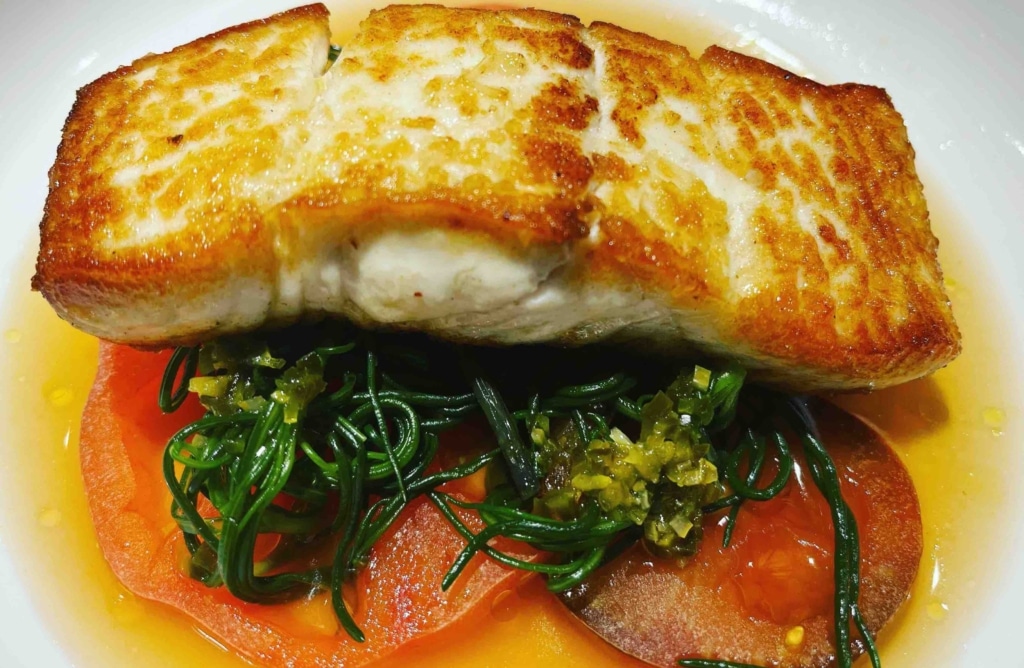
Dining solo at Crabshakk was an altogether more sedate affair. Even if I probably needed a large bib as I messily ripped into a whole crab at the counter. Contender for most beautiful fish dish of the year so far followed – a tranche of halibut in a tomato miso with a draping of monksbeard.

This brilliant ‘high tea’ made up for a less convincing dining experience the previous evening (in company). Tucked into the Cathedral Hotel, Modern Italian Celetano’s came with a glowing recommendation from The Guardian’s Grace Dent but, fennel salami and a couple of accomplished pasta dishes aside, it didn’t deliver the promised bliss.

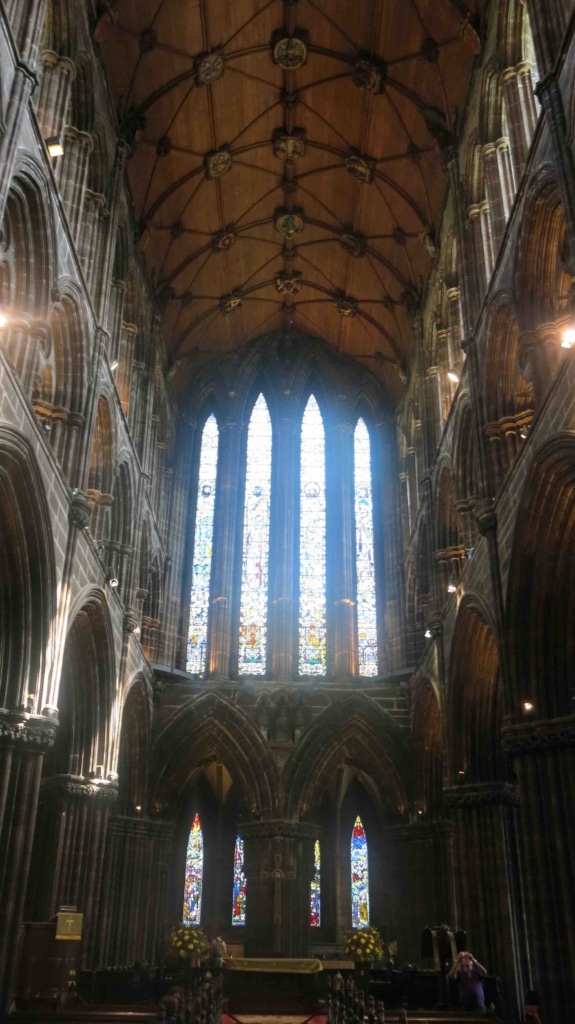
It is handy though for a mooch around the spooky Necropolis http://www.glasgownecropolis.org, which looks down on a cityscape packed with steeples and towers. This 19th century burial ground, inspired by Paris’s Pere Lachaise, lies on a ridge close to the city’s pre-industrial centre, rubbing shoulders with the magnificent Gothic Cathedral. For 700 years St Mungo’s tomb has drawn pilgrims there.

The Necropolis boasts 3,500 monuments, commemorating the city’s grandees. More than 50,000 other souls keep therm company from their unmarked graves. The cemetery upkeep is an ongoing challenge, my guide from the Friends of Glasgow Necropolis, told  me as we stood beneath the hulking monument to religious reformer John Knox (“he is Edinburgh, nothing to do with us really.”). 

Glasgow-based journalist Peter Ross in his great celebration of Britain’s graveyards, A Tomb With a View (Headline, £20), says the Knox statue “functions as a sort of Statute of llliberty, representing all that is stern and joyless and unbending about Scotland”.

His own favourite Glasgow cemetery is the gentler Cathcart on the Southside; for Gothic ghoulish, though, head for the Southern Necropolis, across the Clyde from Glasgow Green. Here the eerie marble figure known as The White Lady, marking the grave of two women killed by a tram in 1933, is said to turn its head to gaze at passers-by. It’s also the alleged haunt  of the Gorbals Vampire with its iron teeth and lust for the blood of local lads.

Such urban folklore is enough to make you turn to drink. Wee drams aside, in this city that’s traditionally been courtesy of Tennent, whose mass market lager brewery looms to the south of the Knox Necropolis. As a family business it predated the boneyard by centuries and there were once genuine fears the arrival of corpses would contaminate its spring water supply.

Tennent’s commitment to the present is undoubtedly its collab with Alloa indie brewers Williams Bros – Drygate, a converted box factory on its estate, now home to a US-style craft brewery tap. The Drygate labels are designed by students from the Glasgow School of Art.

Which leads us neatly to the on-going saga of the iconic Art School building designed by Charles Rennie Mackintosh. This was extensively damaged when a blaze broke out late in the summer of 2018 as it neared the end of a £35 million restoration project following a previous fire in May 2014. The scaffolds and tarpaulins remain in place. It will be years yet before the current rescue project is finished.

Born in 1868, policeman’s son Mackintosh had none of the advantages of his architect contemporaries, just more talent. To get a taste of the whole Art Nouveau-dabbling coterie sign up for one of the Mackintosh’s Glasgow Walking Tours or download as self-guided leaflet.They all offer an illuminating introduction to the city as a whole, particularly the Victorian and Edwardian era where the vast wealth raised through shipbuilding and the sugar and tobacco trade was lavished on elaborate architecture.

I like the fact that Mackintosh designed both the main newspaper offices – the Daily Record, all glazed brick down a dark lane (home to vegan cafe and gig venue Stereo) and the Glasgow Herald building, deftly transformed into the panoramic Lighthouse, Scotland’s Centre for Architecture and Design (alas still closed post-pandemic).

My favourite building on our tour had to be James Salmon Junior’s Gaudiesque 1902 St Vincent Street Chambers, nicknamed the ‘Hat Rack’. Small in stature, Salmon was nicknamed the ‘Wee Troot’. A recent bridge over the Clyde has been dubbed the ‘Squinty Bridge’. Yes, the city’s dry humour takes no prisoners.

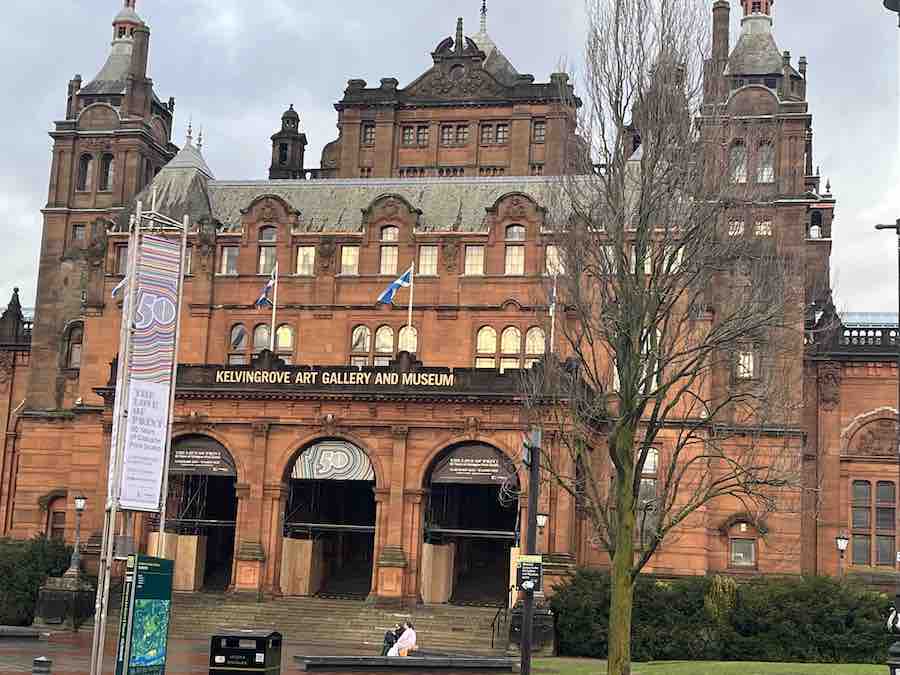
So much architecture but Glasgow has a wealth of green spaces, too. I love Kelvingrove Park and the shady promenade along the River Kelvin, taking in Kelvingrove Museum. This fantastical Spanish Baroque pile, spring cleaned inside and out two decades ago, houses an eclectic collection of art and objects that takes your breath away – from Rembrandts, Van Goghs and Salvador Dali’s vertiginous Christ of St John of the Cross to armour collections, a stuffed elephant and a dangling Spitfire. It’s a great place to acquaint yourself with Mackintosh’s influence and the contemporaneous Glasgow Boys art movement.

The interior of the Glasgow house where Mackintosh lived with his wife and artistic collaborator Margaret Macdonald has been reassembled up the hill within the University of Glasgow’s Hunterian Museum, featuring a definitive collection of his austerely beautiful furniture. From here it’s a 10 minute walk to Byres Street and the West End – the 

Bohemian buzz of which would surely have delighted the dandy in Mackintosh.

Much quieter, in the southern approaches of the city, is another green oasis voted Europe’s best park in 2008, Pollok Country Park, home to elegant Pollok House, great walks and the remarkable Burrell Collection Museum – a Mackintosh-free zone.

It is a custom-built modern repository for more than 9,000 objects bought by Sir William Burrell, cannily using wealth from the family shipping business. Chinese, Muslim, Medieval and Gothic treasures rub shoulders with Impressionist masterworks. Unlike the Kelvingrove, it feels uncluttered, displaying at any one time only 20 per cent of the collection. The landmark building reopened last spring after four years shut for water damage repairs.

t is too far out to feature on Glasgow’s official hop on hop off (with commentary) City Sightseeing Tour. This double decker’s circular route takes in the East and West Ends as well as the revitalised banks of the Clyde with its award-winning, Zaha Hadid-designed Riverside Museum. Offering an even more fascinating insight into the city’s past is the People’s Palace on Glasgow Green in the East End. This sandstone working class cultural centre charts everything from tenement poverty to entertainment diversions. Attached to it is the elegant Victorian glasshouse of the Winter Garden. 

Nearby you’ll find the Templeton Carpet Factory, modelled on the Doge’s Palace in Venice, and, of course, The Barrowland Ballroom. Take them both in on a walk up to Merchant City, once home to mansions and markets and now reinvigorated as a creative hub after decades of decay, good for bars and people watching. 

It’s after here you start to recognise the grid system Victorian expansion built along. Look down long straight streets and you’ll inevitably see church towers or steeples framed at the end. It all feels uncannily American. Indeed when the cityscape turns hilly around Blythswood Square it might almost be San Francisco. Not quite sure John Knox would have approved.

Fleeting tips on food and drink in Glasgow

Crabshakk, as you already know. The Finnieston original has spawned a sibling up at the Botanical Gardens. Other fish restaurants of note – the veteran bistro Gamba on West George Street and the Finnieston Bar and Restaurant. Nearby Gannet, paragon of Scottish sourcing, is probably the pick of the Argyle Street eateries.

Pubs? My fave remains The State Bar, off Sauchiehall Street, with its glorious Victorian interior, fine cask ales and Glasgow’s longest-running blues jam. In the Merchant City, a short stroll from the Moxy Hotel, is the laid-back Babbity Bowster, named after an old Scottish wedding dance and offering a countrified beer garden at odds with its urban surroundings. Current craft beer mecca is down on Southside – Koelschip Yard with 14 cutting edge keg lines.

It’s that time of year again and as I prepare to barbecue a big bundle of calçots in my rather blustery backyard the whole celebration is tinged with sadness. Because these long thin Catalan onions that resemble a leek (but aren’t related) will forever be associated with Lunya in the Barton Arcade and Iberica in Spinningfields. Both these now departed Hispanic standard bearers in Manchester hosted jolly, messy events around that quirky veg’s brief season. Bibs were essential as the charred objects of our desire, fresh from the coals, were dipped in a pungent Romesco-style sauce and accompanying wine was poured from a great height from needle-nosed porróns. 

Calçots’ journey from plot to plate is far more epic than your supermarket spring onion’s. The Catalans plant them in early autumn, traditionally as the moon is waning, then a few weeks later, when the shoots have pushed up, transplanting them. The following summer they are harvested and stored in a dry place to germinate again, then in August/September they are trimmed and replanted in trenches. 

Now the fun starts. Let Colman Andrews, author of the still definitive Catalan Cuisine (1997) take up the story:

“As they begin to sprout once more earth is packed around the new growth to blanch it (as done with chicory and celery) – and this is how calçots got their name, from the verb C, to put on boots or shoes. (The Catalan word for shoe, in fact, is the almost identical calçat. Compare the Italian word calzone, ‘big stocking’, meaning a stocking-shaped turnover pizza).

“By the time the calçots – as many as 12 or 13 of them from each large onion,  seven or eight from each smaller one – are harvested in January and the ensuing few months, they have become not only much larger but much milder and sweeter. And because of their ‘shoes’ of soil, at least half their length is white.”

What was once a seaside speciality around Tarragona province, is now commonplace across Spain, as ubiquitous as paella or churros. A colleague noticed Manchester’s acclaimed 10 Tib Lane is currently serving leeks with romesco, saving on the air miles for the real thing.

In truth the annual La Calçotada wasn’t remotely on mind until a visit to Liverpool this week for the opening of Daniel Heffy’s impressive new restaurant NORD. En route I happened upon the original Lunya restaurant/bar/deli, where founders Peter and Elaine Kinsella retrenched after their Manc exit. And there for sale was a stack of calçots, in all their earthy prime, which I snapped up on impulse, The Kinsellas will be hosting their own Calçotada this Sunday afternoon (March 26) at Lunyalita at Albert Dock, with not just calçots smoking on the grill but also a selection of grilled meatsand yes, the cava will flow. For afters, crema catalana, naturally. My more modest party at the same time may feature fino sherry en rama, my preferred tipple, decidedly un-Catalan. but hey  I will, of course, have make my own take on Romesco (recipe below).

I’ll endeavour to char the calçots almost black, wrap them in newspaper as tradition demands.To be topical, I used Times columnist Matthew Parris’ caustic consignment of Boris Johnson to history’s scrap heap. Leave them to steam for 20 minutes, then gingerly peel open the sweet insides from their feathery casing. Serve them simply with lashings of romesco and garlicky tomato bread. The Catalans serve them in long terracotta roofing tiles to keep them warm, but it’s not my priority, obviously.

ROMESCO SAUCE

Ingredients

200g piquillo peppers

6 garlic cloves, unskinned, raosted for 20 minutes

6 plum tomatoes, roasted

100ml sherry vinegar

 250ml olive oil

1tsp smoked paprika

50g breadcrumbs

150g blanched almonds

juice of ½ lemon 

Method

Toast the almonds in a dry frying pan for 3-4 mins until starting to turn golden and smelling toasted. Shake the pan often to turn them. Tip out and leave to cool, then grind. Roast the tomatoes in the oven until soft and sticky
Drain the red peppers and tip into a food processor with the almonds, breadcrumbs, tomato, lemon, garlic, vinegar and smoked paprika, then blitz to a chunky mixture.
With the motor still on, slowly drizzle in the olive oil to make a coarse sauce. Season well.

The last time I wrote about San Diego it was as a staging post on my road to discovering that the Brussels Sprout is cool in California. The foggy, coastal area south of San Francisco grows 95 cent of the American crop and it’s definitely not cool there to boil the little bullets into mushy oblivion. My Brassica oleracea gemmifera Damascene moment came in a downtown taproom, when shrimp tacos were accompanied by tempura sprouts – their natural hint of bitterness in harmony with the hop.

The Golden State’s Sprout Love is quite mainstream. Check out the menu at the Desmond Restaurant in San Diego’s Kimpton Alma Hotel on Fifth Avenue. For $19 you can order a plate of sprouts with dashi broth, Japanese curry, scallions and a poached egg. When I used the Kimpton as my base for exploring California’s most southerly city its culinary emphasis was elsewehere – on dishes from across the Mexican border 20 miles to the south.

Sprouts weren’t really what brought me to San Diego, though. Of all the places to live the West Coast dream it has few equals. Immoderately blessed with perfect weather, surf culture and pristine beaches, its laid-back attitude belies its history as a major deep sea harbour for the US Navy. 

So many major attractions to see but sometimes Seaworld and Aquatica, San Diego Zoo and the USS Midway Museum, based upon a legendary aircraft carrier, may have to take a backseat to exploring the possibilities of the city’s many cool hang-outs. Here are 10 suggestions to make you want to get up and go…

Go to the Park

Sounds a dull place to start? Not when you are talking Balboa Park, which stretches across 1,200 acres and encompasses everything from the 660 species San Diego Zoo to nearly 20 museums and a host of other venues in glorious lush gardens, the Japanese one the pick. Best place, for an overview is the California Tower, closed to the public for 80 years but now open for tours via seven sets of winding stairs from the Museum of Man. You are rewarded with a spectacular panorama of the city. You almost duck when low  planes fly past. The Park, a National Historic Landmark, is named after Spanish explorer Vasco Núñez de Balboa, in honour of the 1915 Panama-California Exposition, held on the site. A Balboa Park Explorer Pass costs from from $56 for one day, giving access for up to four venues. For full city tourism information visit SanDiego.org.

Go El Greco

It seems appropriate that in a US city with so many Hispanic ties that the San Diego Museum of Art, among the country’s finest, should boast such a strong Spanish collection. Francisco de Zurbarán, Murillo, Juan Sánchez Cotán’s iconic Quince, Cabbage, Melon, and Cucumber and, of course, El Greco. Check out his glorious Adoration of the Shepherds and the unearthly Penitent St Peter. The SDMA is not just about Old Masters; you’ll find benchmark collections of Indian art and 19th and 20th century American paintings and sculpture. All set in one of Balboa Park’s original Mission-style buildings, with a Platereresque frontage inspired by Salamanca in Spain.

Go fly a kite

After all that history it’s time to get the wind back in your sails. And where better than Embarcadero Marina Park? We didn’t exactly fly our own kite but it was good to see lots of them fluttering against the backdrop of the mighty Coronado Bridge. The breezy harbour-front Embarcadero walkway is jogger and dog walker heaven, while Seaport Village offers a cluster of folksy gift shops. The harbour is where it all began for San Diego back in 1542 when Juan Cabrillo sailed into the sheltered Bay. Loma Point, where the explorer stepped on shore is celebrated with a scenic National Monument. There are breathtaking views from here and the adjacent Ballast Point Lighthouse.

Go Gaslamping

It’s not all exhilarating green spaces. In a transformation typical of many American cities The Gaslamp Quarter, a once dead downtown, is now the centre of a food and drink-centric nightlife. A long period of neglect preserved the Victorian architecture of this 16 block historic district. Just wander around, looking up at the ornamentation of buildings such as the Romanesque Keating Building, ornate, domed Balboa Theatre and the hallucinogenic Louis Bank of Commerce, once home to a favourite bar of Wyatt Earp and the notorious brothel, the Golden Poppy Hotel. When your neck starts to get stiff there’s an abundance of bars to recover in. Restoring the green wrought-iron gas lamps (they actually run on electricity) was an inspired move to inspire after-dark footfall. We succumbed, dining at upmarket seafood restaurant Lionfish in The Pendry Hotel on Fifth Avenue.

Go for a beer

Ever-impressionable, where better to dip into San Diego’s unrivalled craft beer scene than the pioneering brewery that calls itself Ballast Point? It caused quite a splash in 2015 when it was bought for $1billion by an an international beverage group; last year its major rival Stone was snapped up by Japanese giant Sapporo. Craft is no longer all about plucky minnows. All quality dilution fears allayed at Ballast Point’s original brewtap up in the Little Italy district. The flagship Sculpin IPA, served unfiltered, was fantastic. Elsewhere, you are definitely spoiled for choice; there are over 150 breweries – check out the likes of Modern Times, Border X, Karl Strauss, Societe and Belching Beaver.

Go to market

Little Italy, these days more chic eaterie and art gallery territory than Genoese fishermen’s  slice of the ‘Old Country’, does offer the pick of the city’s farmer’s markets – the Little Italy Mercato open Wednesday and Saturday, straddling several streets, its 175 vendors showcasing the richness of Southern Californian food culture. We had brunched first at at Herb and Wood – immaculate baked goods, Kombucha, house-made bone broth and savoury specials such as salmon rillettes on avocado and sourdough. Very different to the Mercato, though equally buzzing, is Liberty Market, a seven days a week artisan-led operation in a former naval training complex. It’s an eclectic mix with a vintage comic bookshop rubbing shoulders with a feminist museum and and a bistro/boutique brewing facility run by Stone. The focus, though is the globally-influenced food hall, where you’re spoilt for choice. In the end I went for a trio of ceviches plus oysters and a sea urchin from the Poke Bar. Washed down in the ‘Mess Hall’ with sour beers sourced from the comprehensive Bottlecraft beer shop.

Go plant based, heavy metal brunch

As with craft beer and small batch coffee roasts, we in the UK are always playing catch-up with our West Coast cousins. So too with San Diego’s vegan culture. Combine it with a heavy metal ethos and you get Bar Kindred, cool even by the cool standards of its South Park setting (North Park isn’t bad either if you are into foraging for vintage vinyl, thrift store chic, hipster brews and chakra practitioners). There’s no booking at Kindred, so get there early for breakfast cocktails, drop biscuits with mushroom gravy, then brunch mains that might deliver calypso beans, soy curls, maitake mushrooms, charred kale, jicama salsa and Creole aioli. Ask if you can sit under the giant four-eyed snake wolf. No wi-fi. Well, we said it was heavy. 

Go grab a coffee 

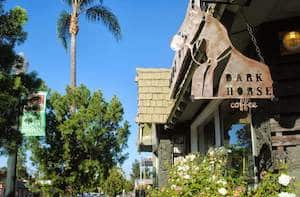
Locals claim the city’s coffee culture rivals or even surpasses Portland and Seattle’s. Amazingly there are 1,900 coffee shops in the city, so definitely a risk of caffeine overload in your quest for the best. I asked the locals and they came up with this trio: Black Horse (North Park, Normal Heights and Golden Hill) and the Barrio Logan district duo Cafe Moto and Cafe Virtuoso, the latter organic. A current fad elsewhere is to spike your morning ‘bullet’ coffee with a shot of omega-3-rich flax oil or fat-burning coconut oil. Avoid.

Go to the beach

There is a string of strands to show off your beach body all along the coast. We ended up at La Jolla, which boasts some of the USA’s most expensive beach front real estate and boutique shopping to match. Ostensibly we were there for kayaking to the La Jolla Sea Caves with the added carrot of possible whale or shark watching but, gauging the ocean swell, I chickened out and instead sauntered the length of the beach for refreshment at Caroline’s clifftop cafe at the fascinating Scripps Institute of Oceanography. Lunch was at award-winning Galaxy Tacos. Ask for the terrace; order the essential Baja rried fish with chile lime crema, avocado mousse, cabbage, pico de gallo or the more unusual Lengua (tongue) with cilantro, onions and  avocado salsa verde. Sprouts here come roasted with chipotle mayo. If you stay until sunset I’d recommend a cocktail and sea view at Level 42 at ‘California Modern’ restaurant Georges at the Cove. 

Go hiking

The coastline to the north of La Jolla offers a string of laid-back beach towns, seafood and surfing, along the legendary Route 101, but before you get to all that take in the managed wilderness of Torrey Pines State Reserve. The name gives away its raison d’etre – preserving 3,000 endangered examples of the US’s rarest pine tree, Pinus Torreyana, which only grows here and on Santa Rosa Island off Santa Barbara. Below the 1,750 acre clifftop reserve you’ll find one of the last great salt marshes and waterfowl refuges in Southern California. The well-kept trails – family-friendly or more testing – provide stunning views of the Pacific. ‘Beware of rattlesnakes’ notices made me watch where I was putting my dusty Vans.

Go Chicano

Eighty colourful, politically provocative murals under a fly-over? Chicano Park is the emotional epicentre of the Barrio Logan district. Its painted pillars depict the life and struggles of San Diego’s Mexican community. Back in the Sixties, when the Coronado Bridge was constructed through it, the Park itself was the cultural focus of these struggles. It still is, its cultural importance confirmed by being granted National Historic Landscape Status in 2017. The street art has spread out across the Barrio now as vacant warehouses have become creative spaces and live music venues and authentic Mexican food is a big draw. At La Cuatro Milpas the tortillas are made fresh each day, while fish and chorizo are the tacos of choice at Salud! by the San Diego Taco Company. Alongside the Barrio coffee already mentioned there’s also a strong craft beer presence with the likes of Iron Fist and Border X Brewing (try the Blood Saison made with hibiscus). If all this has whetted your appetite for Mexico proper? Cross the border into Tijuana, the city once called ‘Satan’s Playground’. Be sure to sample Caesar’s Salad in its hotel birthplace (or if you can’t make it, try my recipe.)

As I write this bittersweet love letter to Vienna I’m listening on the radio to the New Year’s Concert in the Golden Hall of the Musik Verein. I’m all in favour of waltzing through the various Strauss family members, but for me there’s an overdose of Josef on the playlist this year. Like the city’s sticky Sachertorte, a little goes a long way.

The Austrian capital has much occupied me at the ebbing of 2022. I finally got round to reading The Radetzky March, masterpiece of the great journalist/novelist Joseph Roth. Named sardonically after a Johann Strauss staple, this jaundiced family saga traces the decline of the Austro-Hungarian Empire. In Vienna the last throes coincided with the golden era of Sigmund Freud and the Gustavs, Klimt and Mahler, whose ghosts still populate today’s city as much as Emperor Franz Joseph, he of the unmatchable mutton chops and epic longevity. 

I also signed off 2022 hooked on a BBC whodunnit series that milks the decadence of those times. Even Max, the psychoanalyst hero of Vienna Blood, is a disciple of Freud and, yes, sexual motivation is part of its rich investigative stew. Equally titillating are the interiors – all ravishing Jugendstil and Secession heritage.

In contrast, sacrilege it may be, but the monumental trappings of the Habsburg Dynasty – the Hofburg Palace, the Spanish Riding School, Schönbrunn, the Ringstrasse – are not really my cup of Viennese Coffee. Here’s an alternative waltz around a city you can’t ignore. Outwardly stern, not immediately radiating Gutmütigkeit (bonhomie/joie de vivre etc), you have to persevere…

The big wheel around here…

A heady past then, but where to start on a weekend break to today’s Vienna? I’d say kick off, as we do, up in the air on a giant ferris wheel made iconic by a movie set in a city still shattered by war. The Riesenrad had just been rebuilt after bomb damage when The Third Man filmed a key scene there in 1948.

Remember Orson Welles, as the sardonic Harry Lime, ad libbing about cuckoo clocks and suckers to a wary Joseph Cotton? Chilling stuff. So too the winds wobbling our stalled carriage as we pay airborne homage to the city of Lime and Freud… and, let’s not forget, Adolf Hitler for five obscure years before the Great War swept away the hapless Habsburgs and the turbulent 20th century really began.

We are turning again now and, as we descend to the Prater Park with its tawdry amusements and smell of cheap cooking fat, we soon lose sight of the distant spire of St Stephan’s Cathedral in the elegant Old Town and the rather less elegant Sixties spike of the Donauturm across the Danube. You can bungee jump off this 827ft observation tower, if you so wish. Probably not on an icy day like this.

We had taken in that modern quarter the previous day. It was the furthest flung stretch of our Big Bus Tour, a slick hop on-hop off, all-day shuttle service with a recorded, and surprisingly enlightening, commentary on the city’s history, culture and characters. Only caveat: get stuck in traffic and a Strauss loop tape kicks in (and the jaunty Radetzky March lodges in you brain insufferably). We paid 16 euros a head for the standard Red Route, but there’s also a Blue Route, which focuses on the Palaces of Schönbrunn and Belvedere. Our more central tour really gave us our bearings. After that it was trams and shoe leather. 

Save the last waltz?

It was hard to resist dipping in to the schmaltzy world of Johann Strauss waltzes and Mozart’s Greatest Hits. Why, there’s even a Herren und Damen in the underground precinct between the Opera and Karlsplatz that belts out the Blue Danube (note: that river is invariably muddy grey). We chose the more alluring setting of the Auersperg Palace, conveniently across the road from our hotel, the 25 Hours, to attend a concert by the Wiener Residenz Orchester. It’s very much on the Danube cruise and coach party circuit, encompassing 18th century costume, ballet, opera arias and orchestral lollipops featuring an authentic Stradivarius. Mozart before the interlude fizz was a mite routine but the Strauss afterwards was clap-along jolly. 

An afternoon at The Vienna Opera

Now for something more serious. Call us cheapskates but with remaining seats for the evening performance topping 200 euros and our reluctance to queue for bargain on-the-night ‘standing only’ tickets, we settled for a guided tour of the Wiener Staatsoper. Highly recommended at 13 euros a head. You get a fascinating peek behind the scenes, while the ornate public rooms are thronged with the busts and musical ghosts of Mahler, Wagner and Herbert Von Karajan. 

Aim for Amadeus

Staying with Vienna’s musical greats, there is a Beethoven museum out in Heiligenstadt, though it’s more fun to toast the great composer in the Mayer am Pfarrplatz wine tavern – he once lived in the historic building. Since it is more central, tucked just behind the Stephansdom (Cathedral), we instead opted for the cannily arranged Mozarthaus, where The Marriage of Figaro was written when the composer was prospering for a while. After his fall from grace he was buried in the Saint Marx Cemetery, but no grave is marked. 

In the Realm of The Unconscious

The other famous house/museum I’d recommend is Sigmund Freud’s. Berggasse 19 was the home of founder of psychoanalysis from 1891 until 1938, when he fled from the Nazis to London, taking his famous couch with him. His library and many personal artefacts remain in an atmospheric place of pilgrimage (also an important study centre). Admission is 14 euros. The quirky Cafe Freud next door, with portraits of Viennese notables made out of buttons, is a good  place to recovery your sense of self! 

The skull beneath the skin in the Fools’ Tower

Follow up Herr Freud’s cerebral obsessions with an encounter with all the malformed horrors of the human body in the seriously morbid Pathologisch-Anatomisches Museum, dating back to 1796. Its vast jumble of exhibits is housed in the round Narrenturm (Fools’ Tower), the former century psychiatric ward of the General Hospital (today it’s a lively university campus). We were shown around by a curator attempting to rearrange all the bones and specimens in formaldehyde into some kind of order. Not for the faint-hearted. Freud once had rooms here as a student.

Perils of the Overlapping Schnitzel

It’s like going to Naples and not eating a pizza. When in Wien you have to tackle a Wiener Schnitzel, we were told. Hence we waited patiently to get into welcoming old Figlmüller,  famous for over a century for serving Schnitzels so huge they spill off the plate. In truth it was a challenge to nibble my way through the entire thin discus of fried, breadcrumbed pork (veal is less common these days).

Let Loos on Old Vienna’s best bar

It was a boon that we had half an hour free before Figlmüller could spare us a table. Otherwise we might never have squeezed into the tiny, tinyLoos American Bar just off  Kärtnerstrasse, the pedestrianised main shopping drag. Architect Adolf Loos is famous for cocking a snook the ornate old Hapsburg capital by inserting an outwardly frill-free building opposite the Palace. The Loos Haus is today a bank; the utterly gorgeous bar he built in 1908, is much more fun. Cocktails are outrageously good – or is it just thanks to the setting, mirrors amplifying the tiny, warm space with its coffered ceiling and green and white floor tiles.

We need a coffee after all that

Once you’ve lost your Schnitzel virginity it’s time to get off with Kaffee mit Kuchen (coffee and cake, inevitably with a swirl of whipped cream). The choice of historic coffee houses is wide, including the Cafe Demel, opened in 1786 and famous for serving Emperor Franz Joseph’s wife Sisi her favourite sweet violet sorbet. Impressive, but I can’t resist the Cafe Central in the Palais Ferstel. Nor can the throngs of locals and visitors alike (it serves a thousand cups of coffee a day in its elegant domed dining room). Once it was the preserve of intellectuals – one, the 19th century writer Peter Altenberg, remains unnervingly in statue form by the counter – and politicos such as the exiled Lenin and Trotsky and, from the other corner, Hitler. The Viennese have their own names for coffee specialities – to get a play-it-safe white Americano order a Verlängerter (a lengthened one).

If you really don’t want Schnitzel or Strudel

Motto am Fuss is an organic all-day eaterie/bar in a boat-shaped mooring station on the Danube Canal near where the hipsters frequent pretend beach bars. Motto’s food is light and regional, the ambience 50s Venice. Affordable and recommended. By general consent the best restaurant in Vienna is the Steireck, which regularly features in Restaurant Magazine’s World’s Top 50. Its little sister establishment is also in the Stadtpark (turn left at the gold-painted Johann Strauss statue someone’s bound to be photographing. Not so the nearby bust of a greater composer, Anton Bruckner – no one has bothered to swill the bird shit off) The more casual Meierei majors in cheeses –120 to choose from – and an array of cakes and pastries plus a few simple mains. Grab a table overlooking the placid waters of the Wienfluss and imagine you are in the Vienna Woods.

Or you could just grab some grub for a picnic

You can’t go wrong at the fabulous food hall called Meinl am Graben at the end of Kärtnerstrasse. Otherwise check out the food stalls of the Naschmarkt. I was lovingly trying to capture a barrel of pickled cucumbers for posterity when the stallholder screamed “No pictures of my gherkins, Mein Herr!”. The Viennese can be a mite volatile.

And so to the Art capital with a Capital A

The Naschmarkt is just across the road from the Secession Building – the white exhibition hall that was the originally the architectural manifesto for Vienna’s fin de siecle art movement – the base camp for Gustav Klimt and his crew to dismantle the city’s cobwebbed shibboleths. But the best place to get a real perspective on the city’s legendary, if febrile, golden age in arts, music and society is the Leopold Museum in the Museum Quarter, home to a cluster of Egon Schiele’s rawly sexual canvasses. If they’re not your bag check out the Breughel collection at the Kunsthistorisches Museum. 

And Architecture with an even more monumental Capital A

From the palaces that line the Ringstrasse (grab a circular tram round this landmark boulevard dating back to imperial times), via the fascinating legacy of art nouveau urban planner Otto Wagner to the surreal apartment block that is the Hundertwasserhaus, opened in 1986, the city offers an immense amount to gawp up at.

And then there is the smoochy allure of Gustav Klimt…

‘A kiss is just a kiss’ says the lyric of As Time Goes By. Not so Gustav Klimt’s most famous painting, its beauty replicated on millions of tourist souvenirs from mugs and fridge magnets to polyester leggings in Vienna alone. The real thing is in the unashamedly Baroque Upper Belvedere Palace and well worth the uphill walk from the city through formal gardens. Face to face, all the familiarity doesn’t matter – the sumptuously ornate embrace envelops you in the moment. As does Vienna, if you give it time. 

A place to stay in Vienna?

The city has its share of stuffy hotels and some that because of their heritage status are quite intimidating. Take the Sacher, gilded home of the Sachertorte. It fought a seven year war with the aforementioned Cafe Demel over which could use the word ‘Original’ when flogging that overrated chocolate and apricot jam cake. The hotel boasts flagpoles and flunkies in abundance.

Our Vienna billet was a haven from Cake Wars with all the trimmings. The 25 Hours is just a 15 minute walk away beyond the Museum Quarter. Not one to hide its red lights under a bushel, this seven storey hipster haven screams in neon as you approach: “We’re all made here”. We’d enjoyed its nautically themed sister hotel in Hamburg’s Hafen City; the Vienna version revels in circus motifs.

Our corner Panorama Suite on the sixth floor boasted terrific views but we couldn’t take our eyes off the fire eater, sword swallower, juggler and snake-draped strongman emblazoned on the wall behind out king-size bed.

With a casual Italian restaurant featuring a wood burning pizza oven and seriously good charcuterie on the ground floor, kooky public areas and free bike hire, the Mermaid’s Cave sauna and an uber-cool rooftop terrace bar, it ticks all the boxes for a generation of residents and visitors for whom cakes, waltzes and the Hapsburg legacy aren’t a prime attraction. That was my Vienna.

Seven years separate your latest book, Healthy Vegan Street Food, from Vegan Street Food (and amazingly it’s over a decade since your statement breakthrough on MasterChef). How has the profile of plant-based cuisine changed in that time?

The landscape has changed so much I hardly recognise it any more!  Plant-based food has become incredibly politicised through the growth in veganism. Which has been both a good and bad thing. On the one hand, there exists quite a hard and sometimes judgemental line about a strict vegan lifestyle but also the increase in the number of people, all people but especially omnivores, eating plant-based food. With the wide availability of products, it’s such a big shift in how people eat. I think people (esp. the younger generations) have embraced this more flexitarian approach to eating and it’s definitely a good thing for them and the planet. Like anything in life there also appears to be a polar opposite response too, that’s quite hardline from dedicated carnivores. As a former sociologist I find all that quite interesting.

How important to the growth of veganism is the kind of South Asian food you promote?

I think we should all be incredibly grateful to the cuisines across Asia because there’s so much more function, health and respect in their cooking overall. South Asian food is more evolved from accessibility and seasonality, rather than relying on Dutch hot houses or globally shipped foods. And, of course, it has many ancient cultural and religious practices that have informed and shaped how people eat. We have so much to learn from Asian cultures in terms of plant-based food. Vegan mock meat was essentially invented in China by the Han dynasty over 500 years ago. 

The new book is no rehash. Hardly a duplicate recipe in there. Even the travel element is updated. The emphasis is on that word healthy, all aspects of which you explore. Is that growing awareness the main difference?

I think the book reflects both my own journey and also what’s going on around us – that people are more interested in wellness and health now. Although I grew up in a family that was always quite healthy, I think we just know so much more now. Having the opportunity to travel has taught me a lot from other countries approaches to health and wellness. Functional medicine is huge in the US. Sadly it’s quite hard to access that kind of healthcare here in UK. And even those who do have access pay a high price for that.

But I’ve always been interested in wellbeing and health. I worked for the NHS as a researcher in evidence-based practice for 18 years before MasterChef. After I became unwell due to an autoimmune disease I began studying nutrition and developing my expertise in creating healthier food (that’s still amazing to eat).

What are your major healthy eating tips?

Mostly plant-based whole food most of the time. The whole food part is important. If you’re eating vegan ready made crap from the supermarket then you’re going to feel like crap. 

My main tips are firstly making some time for prep. Having real food prepped makes it a lot easier to eat healthier while leading busy lives. Number one for me is batch cooking. You can also prepare one meal while prepping some things for other meals. So I always make at least one sauce (such as a simmered tomato sauce) that I can use in two or three dishes. I usually make this while making another meal such as batch cooking a stew, soup or dal. Something that’s protein-packed, with mushrooms or tofu/tempeh plus lots of fresh veggies. I always have cooked rice in the fridge, as cooled, cooked rice has a much lower glucose curve – and is the easiest thing to stir-fry with fresh veggies. Make it black or red rice and you’ve seriously raised the antioxidant and fibre game! Black rice is also higher in protein and rich in anthocyanin – the same thing that makes blueberries so blue (and good for us).

I always take prepped food when I’m on the go as well because we tend to eat more rubbish when we’re caught out hungry out of the house. I don’t eat gluten, so instead of grabbing a sandwich I’ll have homemade energy bars in my bag – there’s a fab recipe or two in Healthy Vegan Street Food. Or I often post recipes on my Instagram for healthy snacks and treats.

I also try to eat seasonally and locally where possible – apart from my spice emporium at home. Now I’m living in Italy it’s easier to eat like this as it’s simply how their markets and produce are run. Imported goods are super expensive.

How big a part has your own auto-immune problem played in this?

It’s played a big part really. I was always pretty healthy until my 40s. Being a former researcher I became laser focused on finding answers. But what I’ve learned, like any good researcher, is I have a lot more questions. Social media would have us believe we can cure ourselves of all kinds of diseases but I think this is unfair at best and dangerous at its worst.  It can make you feel like you’ve failed if you don’t get better. But the truth is, you can only make the best of your own situation. There are no cure all easy answers sadly. We can keep ourselves in the best shape possible, so we are in the best place to handle whatever comes at us, physically or mentally. That’s all we can do.

What are your feeling about the rash of vegan ready meals?

It worries me a lot. On the one hand, as I mentioned before, it’s drawn more people into eating plant-based. And to be fair, if they’re choosing a ready made vegan lasagne over a readymade meat lasagne, then at least it’s a small change. But we have to compare like with like, and ready made food is not great for us and should not be the main part of our diet. We need to eat whole foods, mostly plants, fresh and raw foods, fermented foods, healthy proteins and fats, this is true whatever our dietary choices and even more so as we age.

This is what I wanted Healthy Vegan Street Food to be about – healthy real food that’s more balanced and considered when it comes to nutrition. It’s a focus on making sure someone whose diet is primarily plant-based, would be getting most of the nutrients they need. If someone is solely vegan then you will always need to supplement a little. But to eat well for most of the time, the food has to be delicious and that’s what I wanted to create. So it’s possible to have treats and snacks as well as gourmet banquets, that are flavour-packed but also satisfying. 

How important is a plant-based cuisine in the fight against global warming?

We know that the commercial production of food impacts climate change in quite drastic ways. Obviously capitalism is, well capitalising, on the whole plant-based market. As it is too with the wellness industry. But we shouldn’t throw the baby out with the bath water. We need to take better care of the planet and ourselves. And while it’s just a small thing, I feel that creating exciting, healthy and delicious things to eat made of plants is a pretty good place to start. 

Tell us about your current location in Italy – a far remove both from Chorlton, where you lived, and your Far East adventures.

We moved to Italy just before Brexit. Then the pandemic hit, which slowed our project plans down immensely – as it did for everyone. We moved here to Liguria to create a business that was more aligned to a healthier way of life. We have been building a retreat in the coastal mountains. Nothing complicated or any nutri-nonsense. Just simple principles of Move Well, Breath Well and Eat Well. Looking at the evidence base, these simple principles can give us the longer, healthier and happier life we all hope for. So yoga and hiking, cold water swimming and biodynamic breathwork (think Wim Hof) and together with delicious food and plant forward cookery lessons.

Your ‘Winter Reset’ programme is about to launch. Tell me about the aims of your Wellness Italy project.

This is our first opening for the retreat, so it’s a bit of a soft launch before next year. Our aim is to test the programme before we open the glamping site in the spring. This Winter Reset retreat is focused on yoga and breathwork, with accommodation in the village rather than camping on this occasion. 

We have some incredible teachers coming to support our guests. I actually met one person at a retreat in Thailand and have done some work with her since. I knew I wanted her to be part of the programme as a teacher. We hope next year that we can offer affordable retreat places for people who really need the opportunity. 

I’m well aware that it can be an elitist type of holiday. But we’re aiming to make it something more accessible. Everyone deserves to feel healthier and happier, not just those who can afford it. So we hope to start a Pay It Forward scheme eventually to create a place for someone in need to come for free. I’m also very excited about finally getting to cook for people again. And with small intimate groups too, more like a healthy supper club. And if I get the chance, sneak into the yoga class at the back before I have to get back in the kitchen!

Healthy Vegan Street Food: Sustainable & healthy plant-based recipes from India to Indonesia by Jackie Kearney (Ryland Peters & Small, £20) Photography by Clare Winfield © Ryland Peters & Small. She has published four previous books with them and the BLOG on her ‘Hungry Gecko’ website is an essential background read. 

Don’t miss Jackie’s showstopping recipe for Nasi Campur featured on my website.

‘Winter Reset’ runs from December 8-12 at Jackie’s Italian base of Pieve di Teco, high in the Ligurian mountains.  To find out more email mywellnessitaly@gmail.com .