We went for dinner to Hawksmoor Manchester the other night. It’s been a while. We avoided Monday because that’s BYOB day with just £5 corkage to pay, so I guessed it might be rammed. ‘Slowish’ Tuesday it was then and, to our amazement, there wasn’t a table to be had by mid-evening… or a dry glass in the house. We were in the roaring dining room by 6.30pm and the last sharing porterhouse had already been snaffled 20 minutes before. Damn you, carnivores of impeccable taste.

If you associate Hawksmoor only with steaks think again and settle down in the Manchester bar

No regrets, though, that we’d been detained in the penumbral clutches of the bar to sample the five fresh cocktails that constitute the upmarket steakhouse’s Summer Collection. You wouldn’t consider Miller & Carter or even Gaucho (and definitely not your local Toby Carvery) on the strength of the mixology team. At Hawksmoor it’s different. Quick flashback to a vanished age before vegans roamed the high street. Seven years ago I joined a charm offensive press pack ferried to London to gauge what all the fuss was about on the eve of this critically acclaimed outfit’s arrival in Manchester. Their latest conquest has been New York but no plane tickets in the mail, as yet, alas.

The food quality blew us away, especially the meat, with wines that made a splendid match. We visited four of their venues in the day. Somewhere along the line, probably in the Spitalfields original (above), we encountered the cocktail list that was an integral part of the Hawksmoor experience. The original list was created back in 2006 by the legendary Nick Strangeway and Liam Davy, who is still going strong as Head of Bars (his son Jack is now manager  of the Deansgate Manchester venue). Check out the Hawksmoor classics and you’ll find the hardy perennial, Shaky Pete’s Ginger Brew, the ultimate gin-fuelled ‘power shandy’ and the Fuller-Fat Old Fashioned, which I explored in a recent blog.

For the Father’s Day just past Liam devised Midsummer Old Fashioned, mixing Johnnie Walker Blue Label, salted Oxfordshire honey and cold brew camomile tea, topped with a cube of white chocolate fudge. 

That’s now off the menu because it’s not really seasonal. So how did the Summery Five –  launched at the same time and available until mid-September – fare?

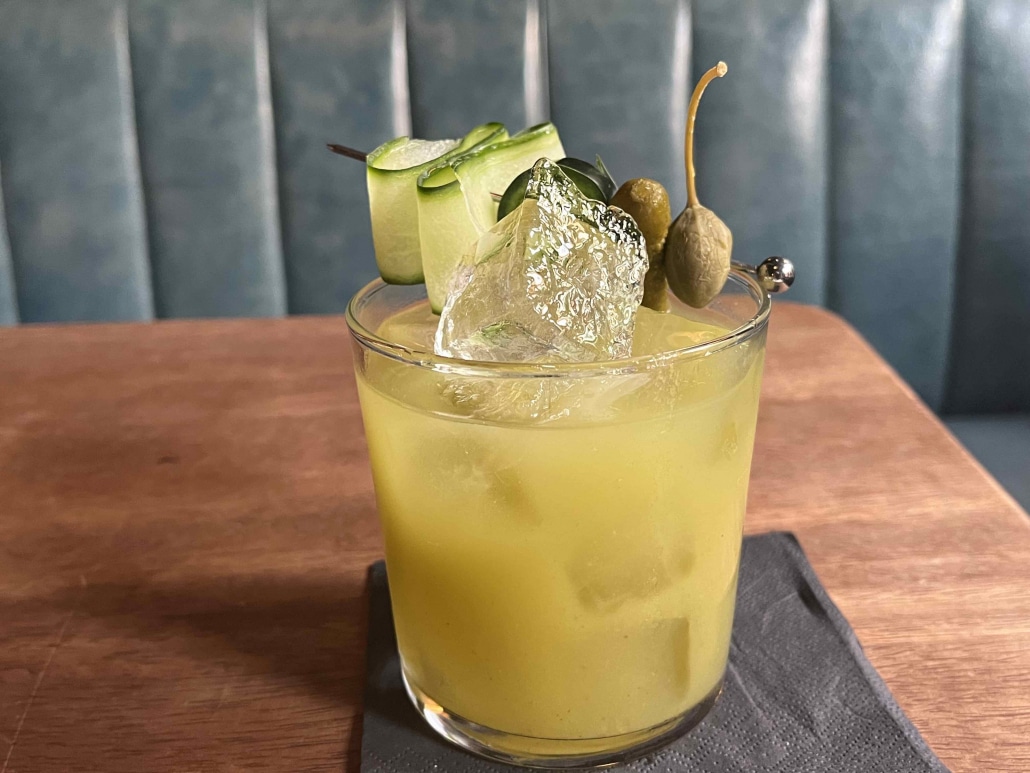
Green Snapper is a verdant riff on Bloody Mary. Five a day in a glass almost to send chlorophyll coursing through my veins. Forgive any nutritional, botanical inaccuracies;  this is a zinger. Beefeater Gin’s the base, muddled with green tomato, jalapeno, lime, cucumber and lovage.

Factor 50 Fizz pales in comparison, but then I’m not a spritz fan. It hardly feels alcoholic this mix of Lillet Rose, strawberry, cucumber and sparkling coconut water.

Rimini Iced Tea – Fellini’s home town (Amarcord in the movie of the name) is the tenuous inspiration for this cooler because of the reputation of its peaches. That fruit, basil and sparkling Darjeellng tea make a refreshing  match with ultra-sustainable Avallen Calvados.

R.A.C. Aviation is a classic rhubarb & custard combo. Made with Bombay Sapphire 1er Cru, rhubarb cordial, vanilla, lemon and maraschino. Surprisingly tart, it’s properly summery.

Moselle Martini is my favourite of the five, mellow and approachable with an indefinable complexity. It’s made with Fords gin, cucumber, Riesling vermouth and pear eau de vie.

No Porterhouse – how did we pull through?

Our daughter’s dog Toro gnawed our doggie bag T-bone with great gusto. We adored the steak that was once attached in the company of a soft, summery Pinot Noir from the Loire. Creamed spinach, anchovy hollandaise, triple-cooked chips, heritage tomato salad. To start we shared beef carpaccio and scallops cooked in the shell with White Port. Never lets you down.

Hawksmoor Manchester, 184-186 Deansgate, M3 3WB. 0161 836 6980.

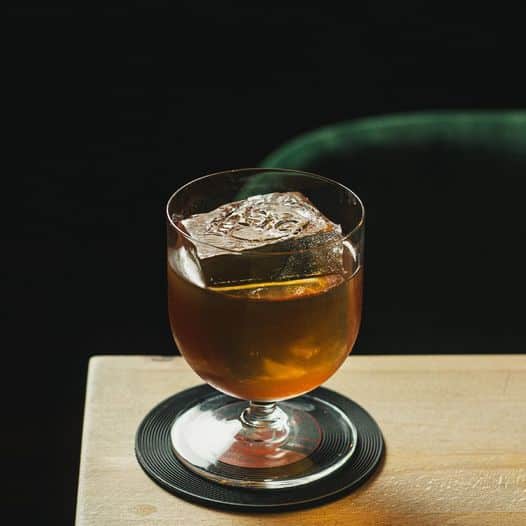
Platinum pandemonium on the streets of Manchester. We have half an hour to spare between engagements and definitely need a refuge from Saturday afternoon’s ‘jubilant’ crowds thronging Spinningfields. SCHOFIELDS Bar, of course… and a sublime Old Fashioned hits the spot.

Inside, the art deco space is quiet, both bar stools and deep blue leather banquettes sparsely occupied. Which is unusual. Since its arrival barely a year ago Joe and Daniel Schofield’s ‘instant classic’ has become an irresistible magnet for cocktail lovers and industry awards. Recently it won New Bar of the Year and overall UK Bar of the Year at the Class Bar Awards. In the separate Top 50 Cocktail Bars List it ran in at number 16 behind nearby Speak in Code, ranked 10th in the UK. 

On Deansgate, equidistant to both, is the atmospheric Hawksmoor restaurant bar, no strange to accolades, while on the fringe of the Northern Quarter Mecanica (above) is also a real contender (Ellie Wright was named Emerging Bartender of the Year in the Class awards).

Completing what I consider Manchester centre’s Fab Five is classy newcomer Blinker up on Spring Gardens. Like the Schofields (Bury) its creator Dan Berger (Heaton Mersey) is a local lad come home. Like Joe Schofield and Phil Aldridge, Dan honed his cocktail craft in Australia. He was also bar head honcho for Gordon Ramsay Holdings.

All of which brings us by a roundabout route back to arguably the oldest cocktail in the book, the Old Fashioned, its recent global appeal boosted by Dan Draper’s obsessive consumption in Sixties homage Mad Men. He would have been in his element at Blinker, which offers a complete page of Old Fashioned variants (The Martini gets a similar menu tribute)…

I’ve tried four out of the five OFs and am particularly smitten with the Sandalwood Old Fashioned (£12) which mixes Chivas Mizunara with a sandalwood and cherry Old Fashioned reduction. Purists, of course, might shy away from using the Chivas, the first Scotch whisky to be selectively finished in Japanese mizunara oak casks, but in general – like SCHOFIELDS – one Blinker emphasis is is on the stone cold classics with perfection the aim. Manhattan, Negroni, Sazerac, Vodka Martini territory.

This sits alongside Dan’ commitment to seasonality in his ingredients: “For the first menu, we’re going to focus on British mint, stone fruits and nectarines. We’re also looking at rhubarb that is grown in Cheshire, as well as pomegranate as a back-up fruit while we wait for more strawberries to come into season.”

Mecanica and SIC pursue more innovative cocktail trails with strong bartender contributions, yet just request and they’ll mix you up a pretty mean Old Fashioned. During pre-Christmas lockdown the latter sold a trio of pre-bottled versions for the Mad Man in your life.

Who’s to say what is a definitive Old Fashioned? Take Hawksmoor, whose culinary obsession with animal fats strays over into their continuing enhancement of the basic formula of muddling sugar with bitters and water, adding bourbon or rye whiskey and garnishing with orange slice or zest and maybe a cocktail cherry. Before serving de rigueur in an old-fashioned glass.

Liam Davy and his Hawksmoor bar team added a first tweak with their Full-Fat Old Fashioned, which begat more recently the Fuller-Fat Old Fashioned – “which still requires a painstaking process of infusing butter into bourbon in a water bath, but now has the added luxury of beurre noisette and a hint of the cigar box courtesy of sandalwood and cedar oil.”

For Father’s Day Liam has devised Midsummer Old Fashioned, mixing Johnnie Walker Blue Label, salted Oxfordshire honey and cold brew camomile tea, topped with a cube of white chocolate fudge. Available for a limited period from Monday, June 13 to to Sunday 19.

Hawksmoor’s not really one for the vegans then. They might turn to plant-based Speak In Code, who have their own way of adding savoury oomph to a bourbon-based cocktail. ‘Track 5’ is an old favourite: Shiitake & plant butter washed bourbon; toasted sunflower sweet vermouth; corn purée, foamer; mushroom jerky

“Bourbon is infused with dried shiitake mushrooms for 24 hours, strained and then melted plant butter is added before blast chilling. You’re left with a savoury, slightly sweet and salt bourbon with a creamy mouthfeel. Toasted sunflower seeds are added to a sweet vermouth, for their oil and fat properties. 

“The strained sunflower seeds are rehydrated as part of the garnish. The house corn purée is citrus boosted to add bite, and tastes like pineapples and passionfruit. The bourbon soaked shiitake mushrooms are blended down with dark soy, maple syrup, apple cider vinegar, salt and smoked paprika, then spread out on baking paper and dried out to make a bourbon mushroom jerky to garnish with the sunflower seeds. It’s a mad tropical meets umami experience.”

Old Fashioned – the Morgenthaler way

I was fortunate enough during a trip to Portland, Oregon to run into the legendry Jeffrey Morgenthaler, author of my cocktail bible, The Bar Book: Elements of Cocktail Technique. He was and still is managing the bars Clyde Common and Pépé Le Moko in the Ace Hotel, where I was staying. I went seeking his barrel-aged Negronis but the most requested drink there happens to be the Old Fashioned – what back in the 19th century was th kind of drink you were given if you asked for a cocktail. 

Morgenthaler tells new bartenders that this is one drink that is very easy to make well, but very easy to screw up. Here’s his advice, extracted from Food Republic magazine, on how to make one at home…

“You really only need a small handful of ingredients: a spirit, some sugar, some bitters, ice and a little citrus peel. Notice that you’re not required to have, or even like, whiskey to have yourself an Old Fashioned. If we look at a recipe from 1806 the drink is “composed of spirits of any kind,” which is great news for drinkers, as we can tailor our Old Fashioned to our particular taste without bastardizing the original intent of the drink.

“A note about sugar: you’ll want to make a simple syrup and have it on hand. I always keep a few simple syrups in my fridge at home for use in cocktails. I make mine at a ratio of two parts sugar to one part water, both measured by weight, and heated over low heat on the stovetop and stirred constantly until the sugar is dissolved. But which sugar to use? “Well, that’s the beautiful thing about the Old Fashioned — you can match your sugar syrup to match your spirit. How about a tequila Old Fashioned made with agave syrup? Or a rum Old Fashioned made with Demerara sugar syrup?

Experiment with the recipe below and tailor it to your own personal preference, and soon you’ll be able to regale your guests with the best Old Fashioned they’ll have ever tried. I guarantee it.

Old Fashioned

2 ounces spirit (I most often reach for bourbon, but nearly anything will do), 1 teaspoon of 2:1 simple syrup. 2 dashes bitters (I prefer Angostura bitters, but again, experiment with your favourites)

1. Stir ingredients with ice cubes for 20-30 seconds or until well chilled.

2. Strain over fresh ice in an Old Fashioned glass and garnish with a large swath of citrus peel. I typically use orange peel, but other citrus can make for interesting flavour.

Schofield’s Bar, Sunlight House, 3 Little Quay St, Manchester M3 3JZ. 07311 777606. They also have a side project, Atomeca, at the city’s Deansgate Square and will open Sterling in the Stock Exchange Hotel this summer. Speak in Code, 7 Jackson’s Row Manchester M2 5ND. 07767 658690. Hawksmoor, 184-186 Deansgate, Manchester, M3 3WB. 0161 836 6980. Mecanica, 1-3 Swan Street, Manchester M4 5JJ. 0161 806 1492. Blinker 64-72 Spring Gardens, Manchester M2 2BQ. 0161 236 8225.

The launch of Saison de la Maison, debut beer of Balance at Cafe Beermoth was an excuse for Manchester’s beerati to come out in force. As with the arrival six weeks before (at Port Street Beer House) of another stunning new brewing operation, Sureshot it felt like confirmation the beer scene was sticking its head properly above the parapet. 

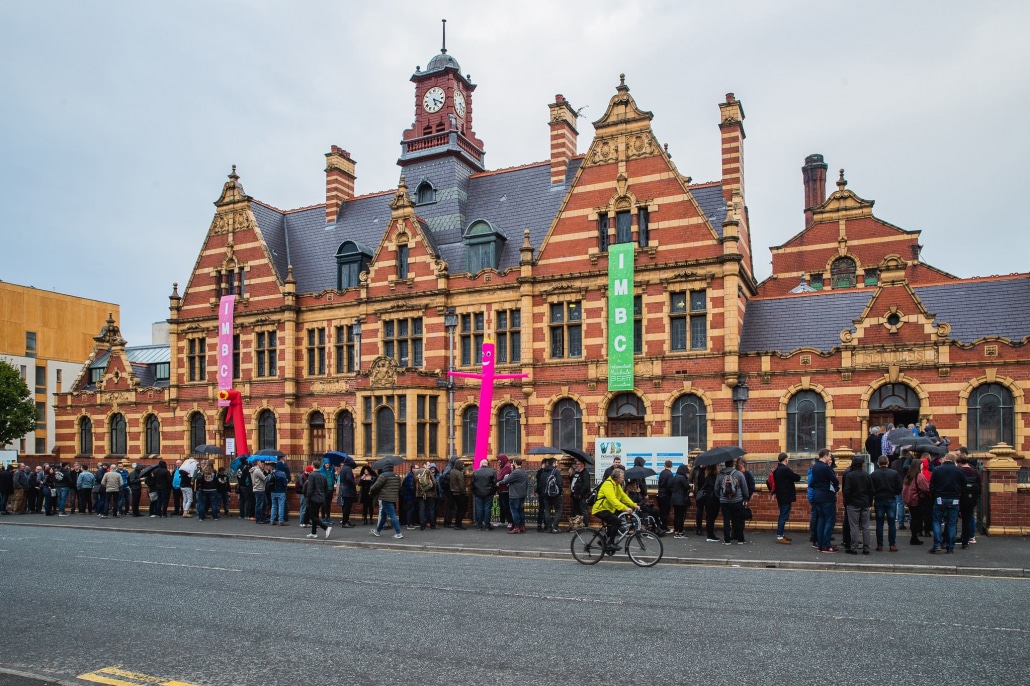
The recessionary odds are still stacked against all our breweries surviving the year. Heaven knows my hophead compadres and I are doing out best to support them. Which bring us to the restoration of beer festivals as a thing. From the traditional CAMRA-run variety such as the Stockport Beer Festival (June 16-18) to arguably the UK’s premier ‘craft’ event, Indy Man Beer Con ushering in autumn at Victoria Baths (September 29-October 2).

You’ll get a tempting taster at crafty cousin, Summer Beer Thing (June 24-26), which post-pandemic has decamped to Kampus, where the weekend food options will be a notch up on its previous Pilcrow incarnation. Ballast will be courtesy of Nell’s Pizza, Levanter and recent Kampus arrival  Pollen alongside soon-to-be neighbours Madre and Great North Pie Co. Expect a showcase of diverse beer styles plus cocktails, wine and non-alcoholic tipples, if you must.

Hip rival Mayfield Depot is also getting in on the act by hosting the return of Manchester Craft Beer Festival across the weekend of July 22-23. featuring over 50 top end breweries.

Expect fire pit food and sizzling sounds from Goldie and David Holmes. All a bit high octane for me and to get full value beerwise out of the £55 session ticket you have to be a very canny queue hopper. The likes of Marble, Track and Union Lager are representing Manchester but this is very much a festival brand that straddles several UK cities.

Another metropolitan cuckoo on our patch is Camden Town Brewery, whose latest Tank Party Roadshow is nesting at Escape to Freight Island on Friday, June 24 and Saturday 25.A single brewery tour hardly counts as a festival, even coming with its own raft of DJ and street(ish) food. The selling point is its unfiltered version of Hells Lager with an estimated 23,000 pints being poured ‘fresh from the tank’ during the Party’s parade across the UK. Camden’s owners, ABV Inbev, the world’s largest brewing operation, sure know how to market a very ordinary product.

My own properly indie dream is for a return of our own Cloudwater’s Friends, Family and Beer, which did what it said on the can by bringing to town equally renowned breweries they have collborated with cross the globe. After glitches first time around the sophomore event at Manchester Central in February 2020 was the most exciting beer celbration I’ve ever attended. And the good news? I ran into Cloudwater founder Paul Jones at the Balance launch and he intimated Friends and Family my reassemble in 2023.

Meanwhile, two smaller scale events that are perfect for my modest beer needs.

The first four days in September mark the return of Farm Trip. Venue a hilltop farm-based brewery I have lauded previously – Rivington, high above Horwich. For its outstanding views and brews. The Brewing Co’s first Trip was hastily assembled in 2021; the follow-up more measured, promising 120 beers poured through 41 lines. Do check it out.

Such an exposed spot has it weather risks. That’s not the case with Track’s large and stylish taproom in Ardwick, Manchester and, in case it’s sunny, they’ve just opened a new garden.  The beers, too, are as good as it gets but food offerings have failed to match their quality so far. Until now with the arrival of ‘Disco Cauliflower’ as part of a kitchen takeover (Friday, June 17, 5pm-10pm and Saturday 18, 1pm-10pm) by Liverpool based restaurant group Maray, who are promoting their new Manchester venue in Lincoln Square, set to open this summer. One of those arrivals you file as ‘much anticipated’.

Three of their staple dishes will put in an appearance – their flagship falafel; hummus, chermoula and flatbread; and disco cauliflower (3,000 of these are sold each month in Liverpool). To accompany there’s  collab beer Track have brewed for the new restaurant. Maray PA is described as‘Sunshine caught in a can! Bright zesty lemon gives way to gentle ebbs of white grape and grapefruit for a truly thirst quenching pale ale.” You’ll also be able to buy it in cans from bottle shops in between festivals!

CELEBRATE MANCHESTER’S PREMIUM INDIE BREWERIES AT TRACK

Check individual festival websites for ticket sales. Such is the thirst many sessions are already sold out.

It’s one helluva road trip from Austin, Texas to Cragg Vale, West Yorkshire. Eventually you turn right off the B6138 (England’s largest continuous gradient that once tested the calves of Tour de France competitors) and plunge into a wooded hollow, home to the Hinchliffe Arms.

It’s as sturdy a Pennine hostelry as you’ll find and it’s about to be revived under arguably Manchester’s premier ‘pub custodian’. Well, landlady sounds a bit Bet Lynch. Esther Maylor is not giving up her controlling interest in The Eagle Salford, which she has run for a decade from the age of 25. But from the end of May she’ll be at the helm of the Hinchliffe. Big boots to fill here with the reign of one Robert Owen Brown still a recent association. Even allowing for pandemic pressures, it’s not felt the same since he relinquished the stewardship.

So how does Austin gatecrash the narrative? In March Esther was performing with her Manc band Heavy Salad at the influential South by South West Festival in the Texan capital of cool. A multi-talented musician in her own right, the Lincolnshire vicar’s daughter is currently part of Salad’s girl backing trio. To get a flavour of the band visit this link or maybe catch them at Manchester Psych Fest this September. 

Music played a part in levering Esther into the hospitality industry. She was in a band called Biederbeck with Johnny Booth, who along with actor Rupert Hill had a business turning around run-down pubs. She begged a bar job at his debut project, The Castle in the Northern Quarter, out of which arose The Eagle opening. That was a collab with brewers Joseph Holt, which entailed adding on an intimate music venue to the once grim backstreet boozer.

All a far cry from the rural idyll of Cragg Vale, but there is a certain symbiosis. The Hinchliffe’s own new lease of life sprang from another Manchester brewery, JW Lees. Taking it over, they gave it an extensive and sympathetic renovation befitting its location.

That’s where Robert Owen Brown enters the picture in the summer of 2017. I was excited to have Rob and his ‘nose to tail eating’ ethos on my Calder Valley doorstep. 

After all, when he was cooking at The Mark Addy (a cobble’s throw, almost, from The Eagle) I had worked with him on his cookbook, Crispy Squirrel and Vimto Trifle. I welcomed him to Yorkshire by quoting from the book’s blurb: “Robert Owen Brown is the real thing… a chef who combines oceans of technique with an instinct to feed and a deep understanding of gutsy cooking – the verdict of Observer food critic Jay Rayner, for whom Rob is a panellist on his BBC Radio 4 show, The Kitchen Cabinet.

“Radio air time, mind, doesn’t put bums on seats. And Cragg Vale is hardly Maida Vale. Just regard it as a scenic  adventure getting there. Which is surprisingly easy from Manchester, especially if after the M62 you go the A58 wild moorland route. Alternatively, get off the Halifax train at Mytholmroyd and grab a cab. You’ll end up inching down an incline into a ludicrously picturesque wooded dell with a church and gurgling stream.”

I’d suggest following those trusted travel instructions to check out what Esther Maylor brings to the table. 

Be warned there won’t be an immediate food offering when the new era kicks off at the end of May. That’s for a future full of potential surprises. Just a full drinks menu (note to Lees – a couple of guest beers would be a plus) and the kind of warm welcome that’s big in Salford… and Texas.

Hinchliffe Arms, Church Bank Lane, Cragg Vale, near Mytholmroyd, HX7 5TA. 01422 887439.

I was a staunch Republican from the start. Before Paul Greetham launched his Beatnikz Republic brewery up on Manchester’s Red Bank back in June 2017 there hadn’t been much incentive to ‘cross the tracks’ towards The Green Quarter. Since when pioneer Three Rivers Gin has been joined by GRUB and The Spärrows.  Sadly after last week’s shock closure announcement Beatnikz will no longer be on the block and the city will have lost one of its finest breweries. Another victim (and not the last) of difficult times.

The name was inspired by the founder’s love of the US Beat movement of the Fifties and Sixties and iconoclastic kindred spirits who have revolutionised the American (and world) beer scene since. The Republic bit came from Paul’s view of beer as a democratic, affordable drink. This very drinkable manifesto was spread by a weekend taproom in the rail arches housing the brewery and then the Beatnikz bar, the Northern Quarter’s most copacetic watering hole. 

Happily the latter is surviving under devolved management. Fingers crossed I will be able to get down there to purchase remaining cans of Tropic Fiesta Session DDH IPA as base for my own person cocktail tribute to Beatnikz Republic.

The back story? In March 2019 Paul generously donated a couple of cases to fuel a beer cocktail I was concocting for a ‘Too Many Critics’ fund-raising dinner at the Manchester branch of Dishoom. The annual event, where food critics cook dishes to be judged by chefs, raised over £20,000 for Action Against Hunger, as I recall. 

The beer cocktail remit was an add-on I took more seriously than I might have. With guidance from Dishoom’s bartenders I came up with a winning formula. My original plan has been to use one of Russian Riot, a 9.4 per cent Imperial Russian Stout that would have put hairs on even Vladimir Putin’s chest – Beatnikz’s dark beers were exceptional.

Second thoughts, and bearing in mind the need for something exotic yet light to match all that Indian spice (my dish was a Goan fish curry with lashings of coconut and curry leaves) I changed tack to Tropic Fiesta, a sessionable 4 per cent packed with tropical hops.

Next move, it had to playfully resemble an actual glass of beer – ahead of a cocktail explosion dancing across your palate. After all, it was to be called Bhangra Beatnikz.

To create a creamy head I purchased ProEspuma powder online. This stabiliser gives volume and holds to make a light foam from liquid state. 

I mixed it with the Tropic Fiesta to give a properly bitter edge. The body of the ‘beer’ was blended from pineapple rum, stem ginger syrup, lime juice and at the suggestion of the Dishoom-walla, a British aperitif new to me: Kamm & Sons.

Created in his garden shed by celebrity bartender Alex Kammerling it features 45 difereent botanicals, including crucially four variants of ginseng, macerated for 72 hours in neutral spirit. It’s herby, honeyed and bitter-sweet.

I got windfall bottle of the stuff four months ago when I was lucky enough to win over £1,000 worth of assorted spirits in the Tipples of Manchester liquor store’s Christmas draw. To complete the reassembled  ingredients I am going to have to splash out £42 there for the required Plantation ‘Stiggins Fancy’ Pineapple Rum.

Not over-sweet, this slightly smoky, spicy pineapple-flavoured rum was created by Plantation’s Alexandre Gabriel as a tribute to Reverend Stiggins, a hypocritical character in Charles Dickens’ Pickwick Papers with a penchant for pineapple rum.

Below are my ingredients with appropriate ratios. Enough for an ample toast to Beatnikz and Dishoom…

Plantation Pineapple ‘Steggins’ Rum 25ml; stem ginger syrup 10ml; lime juice 15ml Kamm & Sons 15ml. For an ample reservoir of beer foam 440ml Beatnikz Tropic Fiesta; 

40g ProEspuma powder; 40ml simple syrup.

Method: Add the above ingredients (minus the beer foam) into a shaker, then shake hard, top with whipped beer foam, sip with relish.

How times change (and not that plus ça change casuistry). The Bordeaux of my distant memory was a grey city, on the muddy Garonne, hoarding its vinous treasures with a kind of miserly hauteur. Its 18th century architectural glories were as grime-ridden as the ancient bottles slumbering in its fusty trade cellars. 

Returning is quite a culture shock. After three decades of enlightened civic planning the centre has been transformed. Dazzling sun helps highlight its limestone treasures and riverside gardens. Bordeaux is baking. Tomorrow we’ll fly home before the temperature soars beyond 40 degrees. The steaming temptation is to dip one’s toes in the quayside Miroir d’eau in front of the Place de la Bourse. At 3,450 square metres the world’s largest reflecting pool.

Instead we head for shelter… and, naturally, wine. Inside L’Intendant the air conditioning is a comfort. Its true purpose? To protect 15,000 bottles of the fine wines associated with the city. They are spectacularly displayed around the walls of a 12 metre high, spiralling stairway. All for sale – this is a shop.

Half way up I get into conversation with a German connoisseur. “From Manchester, you say – ah, Hawksmoor, the great claret blunder, the world still talks about it.” He’s referring, of course, to that fateful day in May 2019 when diners at the Deansgate steakhouse were mistakenly served a £4,500 bottle of Chateau Le Pin Pomerol 2001 instead of the £260 Chateau Pichon-Lalande 2001 they had ordered. 

The incident went viral, provoking mutterings of “how can any wine be worth that much?”. Market forces, supply and demand. Minuscule Le Pin produces just 200 cases a year and is a trophy red. There are a few of those dotted around L’Intendant, where vintages date back to 1945 (a legendary year), alongside relatively affordable wines.

From the vantage point of an English wine lover, with all the world to choose from, the old mystique of Bordeaux has worn off somewhat. Partly due to its reds in particular becoming a global commodity. The word claret is as démodé as cordon bleu cuisine.


Which brings us to La Cité du Vin, the focus of our return to a reinvigorated, scrubbed up city. The swift flowing, tidal Garonne river may be as muddy as back then, but the esplanade along its banks has been transformed and, 2km north reached by the sleekest of tram services, the old docks now play home to the the €81 million ‘Guggenheim of Wine”.

That label’s too glib, but it has stuck. Comparisons with Frank Gehry’s game-changing museum on the banks of the Nervión river in Bilbao are inevitable. But La Cité, just three years old, feels more a valuable addition than a turning point for a city’s touristic appeal.

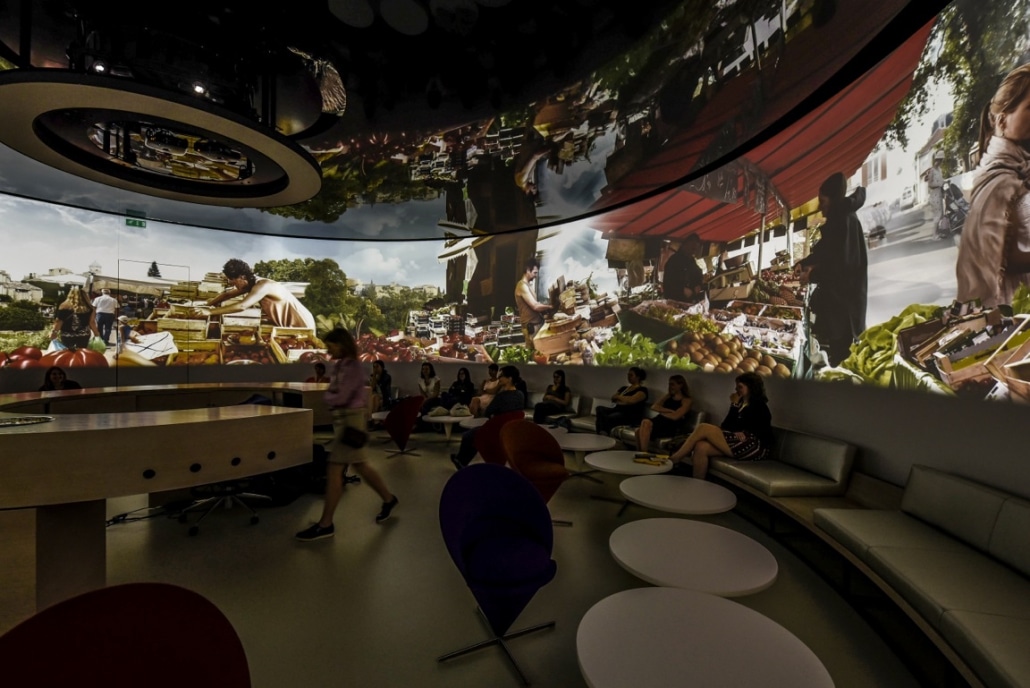
Devoted to educating the public in the glories of wine and viticulture, it certainly catches the eye on the outside – an asymmetrical swish of gold and aluminium, topped by a leaning tower. Inside, it casts aside the old museum certainties of curated objects in favour of an immersive, interactive experience, involving all the senses. So expect to do a lot of sniffing out of little funnels to unleash various aromas. What am I getting here? Gooseberry, honey, farmyard? Book a tasting workshop to get the whole synaesthetic connection.

We chose to ramble around and felt slightly adrift against filmic backdrops. Of course, there’s a slight theme park appeal; that’s part of its populist, demystifying mission. A chance to be unafraid of terroir and minerality. All those daunting buzz words.

There’s also a lot of attention paid to the rest of the globe. This is breaking the mould in a France that for too long dismissed wines that weren’t French; indeed in Bordeaux Burgundy wouldn’t get much of a shout. 

Further evidence of this sea change was to be found in the Cité’s top floor Belvedere tasting room – attractive for its 360 degree panorama and also for the complimentary glass of wine for each ticket holder. The array of bottles on the counter covered the globe. We sipped an Australian Shiraz as we gazed back through the heat haze to the city proper far beyond the futuristic Chaban-Delmas Bridge. Below us the Bassins à Flot – derelict tidal basins” – are undergoing gentrification. 

The advance guard has been the resurgent Les Halles de Bacalan market across the road from the Cité’. It’s a smart food hall, hosting 24 traders. Fronting it is a separate brasserie. La Familia, named after a treasured 1920s neighbourhood cinema and celebrating the food and drink of South West France. The regional platters were the mot impressive food offering.

From here the promenade back to the city centre is via the Quai des Chartrons, whose warehouses were central to the wine and slave trade which created the city’s wealth. Evidence of which is more than 5,000 restored houses from the 18th century and 350 listed historic monuments. Such glories make it a delight to wander around the UNESCO World Heritage Status Chartrons district and the charming Jardin Public. 

Most folk amble along the Rue de Notre Dame in search of antiques; we perversely discovered Rn7 Caviste at No.102, devoted exclusively to the wines of the Northern Rhone, where brave incomer Frederic Bennetot introduced us to the most impressive wines we tasted on our city break. Crozes Hermitage, St Joseph Cornas, Côte-Rôtie –  a treasure trove homage to the Syrah grape in premises that proclaim their former incarnation as an upholsterer’s.

The city, as you’d expect, boasts some terrific wine bars. Close to L’Intendant is Le Bar a Vin, a Bordeaux institution in lofty ornate premises. Government-subsidised, it offers bargain, by the glass offers of some seriously good wines. Around the Place St Pierre is a fertile area for an evening’s carousing. Check out near neighbours on the Rue des Bahutiers, Italian-owned The Wine Bar with more than 300 wines from around the world and excellent snacks to accompany them, and the hipper Vins Urbains. By the glass is expensive, so definitely go for a bottle to share (400 to choose from) and don’t miss the delights of their with even more bottles and a white truffle croque monsieur.

Some palate-cleansing hoppiness? Venture further down winding Bahutiers to its junction with with the Rue Alsace at Lorraine and you’ll encounter the Bordeaux branch of the French craft beer chain, Les BerThoM. It has a fine Belgian selection, but do try the fine local Merignac beer.

At the other end of the food and drink scale Bordeaux has it share of Michelin restaurants, non more high profile the Gordon Ramsay’s two-starred Le Pressoir d’Argent inside the InterContinental Bordeaux – Le Grand Hotel. Its name comes from the dining room’s centrepiece, a solid silver lobster press, on of only five in the world. Splash out well over €100 and they’ll serve you a native lobster fresh from the press, steamed with lemon leaf, corn, girolles, courgettes, coral and lemongrass bisque. Maybe the shadow of Brexit is straitening you purse strings? Stick to the €185 Origins Menu, featuring old Bordeaux’s signature fish dish, freshwater lamprey in a red wine sauce. We thought better of it.

Of course, you can dine superbly in small bistros, if you pick well, and then, it being France, make a beeline for a market. Les Halles de Capucins in the homely St Michael’s quarter, south of St Pierre, was in second gear the Tuesday we visited but could still maintain luxuriant fresh herb stall, the like of which I’ve never seen before (actually I recognised it from one of those Rick Stein’s Long Weekends programmes). 

Mid-morning was a perfect time to indulge in a half dozen Arcachon oysters and a tumbler of Entre deux Mers white at Chez Jean-Mi, bistrot a huitres. A piece of old Bordeaux. Vive les traditions Bordelaises.

It’s not all about wine – Three must-visits in Bordeaux

The Cathedrale Saint-André 

There’s nothing like a church tower panorama to help you get a feel for a city. We tried two. The gargoyle-thronged Gothic belfry, the Tour Pey Berland, was built in the 15th century alongside the Cathedral (a spire came later). 231 steps will take you to the viewpoint; be prepared to queue, visitor numbers are restricted. 

St Michel’s bell tower

Its contemporary rival, the 114 metre high bell tower of the Basilica of Saint-Michel is also freestanding and spired. Known as La Fleche (‘the arrow), it’s quite a climb but you are rewarded with a view down onto a vibrant local street market. The tower’s crypt used to house a collection of mummies unearthed from a local burial ground in the 18th century. Our macabre  expectations were dashed – they were reburied 40 years ago.

Get a masterpiece fix at the Musée des Beaux-Arts

One of France’s finest art galleries, built in 1881, has reopened after several years of renovation and offers an eye-opening primer in European fine art. The collection is housed in two glorious, separate wings – the south devoted to art from the 16th to the 18th century, and the north the 19th and 20th centuries. Artists who feature include Brueghel, Corot, Delacroix, Van Dyck, Kokoschka, Matisse, Picasso, Renoir, Rubens, Véronèse and Bordeaux’s own Odilon Redon.

For a full rundown on the city’s attractions visit Bordeaux Tourism.

Of late I’ve been spending more time than usual inside Manchester railway arches. The usual hop-driven hideaways once promoted as The Piccadilly Beer Mile? Indeed, yes, but checking out a new wave of craft breweries with their roots in the first wave.

In what was the original Track premises on Sheffield Street I got previews of crowd-pleasing IPAs from Sureshot, new venture from James Campbell, a key figure in the rise of both Marble an Cloudwater.

That brewery is now safely launched and causing quite a stir. Next in the pipeline is a very different operation, Balance Brewing & Blending – an ambitious, barrel-fermenting labour of love from two brewers, whose day jobs are at Squawk and Track respectively. James Horrocks and Will Harris both share a common thread in their CVs that is a pointer to their leftfield brewing direction. Both worked for a certain Mike Marcus, regarded as the Che Guevara of the sour beer revolution. When Donald Trump was elected President maverick Mike cut all American hops out of his brewing process. Come Covid he mothballed his Chorlton Brewing Company and decamped to the Continent. Whispers have it Belgium or Estonia may be its next home. 

It was never in Chorlton, but at  69 North Western Street, three arches down from Manchester Brewing Company, where James and Will rent brewing kit and store the key to their operation, 30 neutral barrels, where the wood won’t overwhelm their blends’ fruit. It has been a patient past 12 months or more waiting for the contents to mature to attain the right balance. For the duo, committed to barrel fermented, mixed culture beers, BALANCE is more than just a slogan. 

Funky doesn’t have to mean over the top and their commitment to British ingredients is not  a radical political stance. Their use of malt from Fawcetts in Yorkshire, hops from Brookhouse in Herefordshire and British grown fruit makes a sustainable statement about terroir. Early days yet, but tasting their first release, from bottle, it all made immediate sense. 

Will Harris and James Horrocks have invested in quality barrels to pursue their brewing dream

The quietly glorious Saison de Maison will be launched at Cafe Beermoth in Manchester city centre from 6pm on Thursday, May 19. This is what Horrocks and Harris say about it: “It’s is a 6 per cent bretted saison, blended from beer fermented and conditioned in ex-red wine barrels before being dry-hopped with fresh UK Goldings. It is the first iteration of our house saison, which will be a regular release. The base beers were brewed using low colour Maris Otter and torrefied wheat to put a British spin on a classic Lambic-inspired base. The beer was hopped in the kettle with aged British Goldings and fresh Bramling Cross before being transferred to barrel to undergo fermentation with a carefully selected blend of Saccharomyces, Brettanomyces and Lactobacillus which we propagated in-house. 

“After the fermentation and conditioning phase we selected barrels which offered the particular funky saison characteristics we desired and developed a final blend. This blend was transferred onto fresh Goldings and stayed on the hops for a week before being bottled with nothing but priming sugar added. The bottle conditioning phase allowed all of the flavours to marry and develop until we were happy that the beer was well balanced and ready to release. 

“The end result is a beer with bright carbonation and pleasing acidity leading into a layered, fruit forward brett and hop character. We get funky pineapple up front with hoppy notes of gingerbread, ripe peach and subtle Perry pear. Gentle bitterness and herbal, woodruff notes meander into the long, clean yet complex finish. This is the first beer we envisaged as we dreamed of brewing our own beer and we are so pleased with how it has come out.”

So what tipped the balance to get the right blend for this project?

James Horrocks and Will Harris laid the foundation in 2021, working evenings and weekends to get Balance off the ground. It helped that their niche ‘side project’ was not in competition with the core range of their employers, Squawk and Track. The pair were buoyed by their shared enthusiasm for sour, wild and funky beer nurtured at Chorlton. It also helps to heve some serious brewing chops. Will has a first degree in biochemistry and an MSc in Brewing and Distilling from Herriot Watt University. So what can we expect from the 750ml sharing bottles they will be releasing, roughly a beer a month over the next year? 

Over to James: “Our aim is to produce nuanced sour and funky beers in a range of styles, from bretted saisons to Lambic-inspired creations, utilising both wild captured and lab propagated yeasts and bacteria. After fermenting in barrels for anywhere from four months to several years, we carefully select blends and move them onto hops, fruit or straight into bottle. The outcome is tart, complex, funky, fruity and ultimately an expression of our passion for these styles of beer and for the complexity that can be achieved through simple ingredients. Our next release is already in bottle too: Jam, a blend of saisons fermented in barrel then aged on damsons for four months.”

Saturday, October 5, 2019 was a blast. As we staggered out into a blurry Hathersage Road, clutching our souvenir glasses, to let the evening session brigade into Victoria Baths it was ‘see you again next year’ time all round. Little did we know then that the next Indy Man Beer Con would not be for another three years. The scheduled 2020 event never happened as the pandemic put up the shutters on boozy socialising (unless you were in Downing Street).

Now it’s back, the indoor Glastonbury of craft beer on our Manchester doorstep. The dates were announced in March (September 29-October 2) and this week on Thursday, April 14 the tickets go on sale, priced between £14.50 and £19, via this link. I recommend you don’t hang around. There’ll be a huge thirst for this four day event.

Victoria Baths has proved the perfect venue for arguably Britain’s finest beer festival

Early Bird tickets will be available, with both Port Street Beer House in the Northern Quarter, and The Beagle in Chorlton running pre-sale events on Wednesday April, 15 between 6pm and 9pm. To celebrate, the two venues will each be giving free treats out to those in attendance: Port Street will have slices of Nell’s NYC 22” pizza, while The Beagle will be cracking open mystery sharing bottles from past IMBC’s for some free tasters. 

Since its inception in 2012 Independent Manchester Beer Convention (Indy Man Beer Con/IMBC) has proved a world class showcase for the most forward thinking breweries from the UK and beyond. Everything about it (apart from the amount consumed) is different from the traditional beer festival. Not least the venue – the Grade II listed, architectural gem Victoria Baths.

Inclusivity and diversity are part of its appeal. And great street food. This year’s focus on sustainability and environmental awareness of the impact of the brewing industry sees special, cross-Atlantic collaborative brewing and innovative approaches to recycling spent products.

It’s a big step up from that first pioneering IMBC, created by Jonny Heyes, founder of Common & Co (Common, The Beagle, Nell’s Pizza, Summer Beer Thing). Just two rooms were used, hosting only 20 breweries. Nowadays more than 60 breweries will occupy every nook and cranny . From the main ‘stages’ in the old swimming pools to tasting areas and snug bars in the Turkish Baths, the breweries will pour a selection of their beers to thousands of beer lovers and converts alike.

Tickets are available for the following sessions: evenings 17:30-22:30, Thursday/Friday/Saturday; daytimes 11:00-16:00, Friday/ Saturday; and on Sunday 13.00-18.00.

Thanks to Jody Hartley for two of the images.

The weekend the clocks go forward 2002 and Jester King Spontan is guest pour at Dukes Bar, Halifax. That’s if there’s any left after the Friday being designated as ‘Sponzee Day – celebrating the iconic spontaneously fermented barrel sour’. Unimaginable even a few years ago for such an event in a provincial craft beer outpost; even now a big hand to bar owners Ellie and Sean.

This three year blend (18-19-20 vintages) from a farmhouse brewery outside Austin, Texas pays its dues to the Gueuze brewing style of Belgium. Yet another example of America’s magpie adoptions that have spread the word about niche beers once threatened with extinction.

Sponzee Day comes just three weeks after the death of Armand Debelder, whose Brouwerij Drie Fonteinen kept alive the Belgian tradition of gueuzes and the wild lambic beers from which they are blended. The man nicknamed ‘Grandfather Gueuze was just 70 and, suffering from cancer, had already handed over the reins to trusted associates. The brewery’s own website pays an affectionate homage https://www.3fonteinen.be/en/and there’s a fitting obituary on the Good Beer Hunting website,https://www.goodbeerhunting.com/blog/2022/3/10/goodbye-to-grandfather-geuze-armand-debelder-dies-at-71 which recounts how back in the Eighties he took over blending work at the family restaurant, Drie Fonteinen at a time when lambic seemed in terminal decline with small brewers swallowed up by multi-nationals. 

In tandem with brewer soulmate Frank Boon, Armand rallied the rearguard in the Pajottendland region south west of Brussels. In 1989 he found equipment and, despite family qualms, started brewing his own lambics.

So what are Lambics? Beers left in open vats where wild yeast and bacterias are allowed to take up residence. Once the fermentation process begins, the beer is stored in barrels and left to age for up to three years.

The rescue act was boosted by a kind of symbiotic serendipity. The doyen of British beer writers, Michael Jackson, developed a unique affinity with Belgian beer culture, exploring even its most arcane corners. We owe to him, in part, the survival of Saison, Flemish red ales and all the wild yeast styles.

In a 1996 interview Jackson surmised why he spent so much time documenting Belgium’s beer culture: “I think the motivation was almost like the motivation of some of those musicologists like Alan Lomax who went down to the Mississippi Delta in the ’50s and recorded old blues men before they died. I wanted to kind of record Belgian beer before those breweries didn’t exist anymore. I certainly didn’t see it as a career possibility, but I think all, or many, journalists have in them a sort of element of being an advocate.”

All this culminated in his Great Beers of Belgium (1991), whose sales across various editions have topped 150,000. It’s 15 years since his untimely death his digital legacy The Beer Hunter website is still a valuable resource despite its outdated lay-out. Here’s its summation of Gueuze:

“A bottled, sparkling, style that is much easier to find. Can have the toasty and Chardonnay-like notes found in Champagne. The word Gueuze (hard “g”, and rhymes with “firs”) may have the same etymological origins as the English words gas and ghost, and the Flemish gist (“yeast”), referring to carbonation and rising bubbles.

“The carbonation is achieved by blending young Lambic (typically six months old) with more mature vintages (two to three years). The residual sugars in the young Lambic and the yeasts that have developed in the old cause a new fermentation.… References to “old” (oud, vieux, vieille) on the label indicate a minimum of six months and a genuine Lambic process. Without these legends, a Lambic may have been ‘diluted’ with a more conventional beer”. 

Jackson’s describes the Drie Fonteinen beer as “creamy, aromatic, with a clean, teasing, perfumy fruitiness and a faintly herbal tartness”. I can concur with all that after refreshing my memory with a bottle at my favourite Calder Valley bar, Coin.

Armand Debelder reciprocated the appreciation, lamenting in one interview: “It’s a shame on Belgian brewers that there’s no statue of Jackson. He was the first to start describing lambic with words such as ‘horse sweat,’ words others may not have considered or perhaps been afraid to use. He was a friend of the Lambic producers. We have photos hanging in our brewery of when Jackson visited us. We were always happy to give him the opportunity to taste something special when he visited. He never asked for it. But because of his simple being and calmness, it was more than normal to offer him something exceptional.”

Survival remained perilous for a while. With the Debelder Lambics and Guezes on the up, an act of nature nearly destroyed the whole mission. On the morning of May 16 2009, a faulty thermostat caused the warehouse to heat up and because of the pressure the bottles started exploding one by one. 80,000 were los in one night. Bankruptcy loomed, but bottling and selling rare stocks helped the brewery bounce back.

My own conversion to Gueuze

What clinched it was the gift of a ‘2021 Horal Megablend’ . Over the years, encouraged by friends’ enthusiasm, I had dipped my toe (so to speak) in the Lambic pond and I was aware of the High Council for Artisanal Lambic Beers  (Horal), founded by Armand in 1997, to safeguard and promote the tradition. He quit as chairman in 2015 but 10 other members of this loose confederation of Lambic and Gueuze brewers and blenders around the Senne Valley have continued the biennial ‘Toer de Gueuze’, where they produce a celebratory ‘Megablend’ (blendedand open their doors to visitors. Last year’s Tour was necessarily a virtual version, but the event will return in 2022. Meanwhile check the site for virtual videos.

The producers involved are Boon, De Oude Cam, De Troch, Hanssens, Tilquin, Lambiek Fabriek, Lindemans, Mort Subite, Oud Beersel and Timmermans. They all contributed young and old Lambics that were then mega-blended by Frank Boon (whose own Oude Gueuze is benchmark stuff).

My personal bottle I owe to an old friend, Anita Rampall, from Visit Flanders. I couldn’t resist opening the 75cl bottle and it was a revelation – tart lemon then biscuity with a spicy floral hop note that lingered and lingered. You’d be hard pressed to buy a bottle now. Beer geeks will have squirrelled theirs away to see how they age. Fascinatingly, I wager. I now wish I had. Still, now it’s time to work my way through all the other Gueuzes on the planet.

It’s far from up there with P&O’s unceremonious mass cull of their crews but one of the more unsavoury moments in a troubled 2021 for the hospitality trade was Bruntwood’s decision to dispense with vin-yard, a bijou independent wine bar/shop at its Hatch ‘retail and leisure destination’ on Manchester’s Oxford Road. The landlord’s apparent reason was a need to recoup revenue lost during the pandemic by taking over booze sales from its tenants. The quality wine offering from vin-yard’s Anna Tutton has never been adequately replaced.

Anna Tutton at her vin-yard wine venue at Hatch. She has high hopes for her new venture

For several years it has been a ploy for developers, enlightened and otherwise, to add a dash of millennial cool to their sites by hosting street food wannabes on fixed term deals as a launchpad for eventually establishing their own permanent bases. Now with the economy in freefall that’s easier said than done. When I ran into Anna at a recent wine tasting she told me over lunch about her own life-after-Hatch plan for The Beeswing and it sounded a perfect next step, albeit again pitched as the icing on a property cake – at the Kampus ‘garden neighbourhood’ across the canal from the Village.

The Beeswing is a co-production with business partner Joe Maddock, who ran West Didsbury’s much-loved Pinchjo’s back in the day. For the new venture he’ll provide a small plate menu to match Anna’s eclectic wine offering (mainstream plus some natural). I was particularly taken with the black sesame crusted feta triangles, my main picture, from a menu that will reflect the melting pot of food styles around Manchester – including dals, plant-based and Ottolenghi-influenced Middle-Eastern. All food images by Rebecca Lupton.

Design – sneak preview courtesy of these 3D renders from Andy Gough – is in the hands of the talented and lovely Soo Wilkinson, co-founder of Chorlton’s The Creameries. Set upstairs above Nell’s Pizza place, it too looks a treat with its softened industrial look.

But now comes the rub. There is a budget deficit and Anna and Joe urgently need your crowdfunding help…

The pair’s initial costing was £80,000 and when the figure leapt up to over £100,000 they made up that deficit, but they £25,000 remain adrift of the new final total, so they have launched a crowdfunding campaign, deadline mid-April. It’s a great indie cause – contribute here.

Your potential rewards? You can pre-order a meal for two with wine for £50, or if you can’t wait for the restaurant to open, you can order a meal for six and two bottles of wine to be delivered to your home for £150. You can even help shape the menu by throwing £25 into the pot to be invited to a private dining event of menu cook-offs with chef Joe, and tell him what you think works – or doesn’t. I’ve invested in that one.

Kampus’ developers Capital & Centric and HBD have been pretty canny recruiting some established indie food and drink names to populate Instgrammably picturesque Little David Street. The presence of Pollen Bakery, Cloudwater, Madre, Great North Pie Co, Yum Cha and The Beeswing will attract a clientele way beyond the on-site apartment dwellers.

Cloudwater/Levanter collab at Kampus

This is still very much a work in progress, but to whet the appetite Manchester’s highest profile craft brewery, Cloudwater and Ramsbottom’s award-winning Spanish restaurant Levanter (sibling of Baratxuri) have unveiled a 10 week residency. This will consist of a series of globe-trotting weekend block parties around the ‘tropical garden’ with DJs saluting the likes of California beach sounds and raucous Mexican festivities for Cinco de Mayo, Irish folk parties and smooth NYC jazz.

My focus will obviously be on Levanter’s Joe Botham serving up his legendary giant paellas from 3pm at the canalside Bungalow. The residency kicks off on Easter weekend.