Exciting openings have not been plentiful of late. Now we have one. Such is the allure of the re-born Black Friar, reopening on Tuesday, July 27, not even the stormy weather heading our way can zap the al fresco vibe generated by its glorious garden. The short hot summer was at its peak when we got our sneak preview. The rest of the world will inevitably follow.
Hurtling along Trinity Way, you’d be hard pressed to twig the large terrace behind its palisade; ditto the glass-fronted restaurant annexe seamlessly attached to the Victorian sandstone and brick pub, restored to the tune of £1.4m.
Black Friar – Salford heritage among the new build
For two decades, after a devastating fire, it stood desolate on the corner with Blackfriars Street. Not quite an eyesore – if you were a fan of Boddingtons Bitter. As the reputation of the ‘Cream of Manchester’ turned sour under successive corporate owners the prominent two bees logo decked out in yellow and black on the end of the building was a lachrymose reminder of the straw-coloured, fragrantly hoppy nectar the beer once was.
This may be apocryphal but I’m told Boddies cask was so popular in the Seventies the Black Friar stocked no keg beer or lager. That was an old school Salford boozer; in its latest incarnation it reflects a new apartment block generation colonising the former industrial wasteland. Food-oriented, most definitely. Developers Salboy originally intended it to be a vehicle for star chef Aiden Byrne, but he pulled out as the pandemic struck; in his place is another ex-20 Stories talent, Ben Chaplin.
Still it plugs its pub credentials, honouring the brewery that once belched malt fumes over Strangeways by offering the keg Boddies at £4.50 a pint. A bland brand, it’s brewed by Inbev in Samlesbury; I’d veer towards the excellent wine list instead.
The trad pub sign also name checks Boddingtons. It features a jolly friar, given a shaggy dog back story on the website (and a chance to proclaim the pub’s Resurrection, thankfully without appropriating the Stone Roses).
I’d hoped the fashion for this kind of naff narrative self-validation had passed, but hey it’s just a quibble. Let us praise. The Black Friar is a holy exceptional addition to the Manchester/Salford food and drink scene. The first Salford gastropub proper since the demise of Robert Owen Brown’s remarkable Mark Addy.
What immediately impressed on that embryonic lunchtime visit was the quality of service mustered from a young crew by exuberant Lebanese general manager Remi Khodr. From the immediate water bowl for our chihuahua, Captain Smidge, to the limoncello proffered when our puddings were slightly delayed the experience was a delight.
Probably because Smidge was with us we were seated at a garden table. No hardship but the restaurant proper looked the stylish business. An open kitchen, an abundance of greenery, black and white tiles, marble table tops, all filled with light.
.A section of the garden – Boddingtons Corner – can be hired for private events, as can the panelled, drawing room-like Sanctuary on the pub’s first floor.
Totally gratuitous image of the Blackfriar. Few pub interiors can match its art nouveau magnificence
As many original features as possible have been retained but alas the shell was vandalised during the lost years. Compare and contrast its namesake in London, the Blackfriar, a masterpiece of art nouveau don by the Thames, built on the site of a real priory. It did serve Boddingtons in its heyday; food has never been a priority.
Under head chef Chaplin it definitely is here. There is to be an upmarket ‘pub food’ menu but we got to sample the ‘restaurant’ offering. Eventually there’ll be a chef’s table on the Black Friar’s second floor. You can see the ambition in what’s on offer already. I have never encountered such an elaborate, deconstructed tiramisu. No wonder it took time to emerge. A honeycomb and gold leaf wow. Equally satisfying was a 72 per cent Valrhona chocolate fondant with peanut butter ice cream across the table.
A starter of juniper-cured ‘au point’ Creedy carver duck was stunning, served with sweet roast cherries and a pickled kohlrabi salad. My Cornish boudin, in contrast struck a drab note, despite the best efforts of basil jelly and some interesting smoked dehydrated watermelon. Little roundels of seafood sausage betrayed hardly a hint of crab.
Main prices are heading premium-wards. £28 for roast Cumbrian rack of lamb, but all the Mediterranean elements of the dish were in harmony – glazed baby aubergine, kalamata olive and confit tomato jus. Smidge loved his substantial tithe.
Perhaps there was too much going on in our other main, a couple of quid more. Wallowing in a polite ‘bouillabaisse’ with a scattering of mussels was a dense seared monkfish fillet. Giving it a flouncy 20 Stories feel was a small flotilla of nasturtium leaves. A mound of squid ink rouille was excessive and would have been unbalancing if I hadn’t shoved half to the side. No matter, this is food worth making the trek for.
Would I treat it as a pub to drop in for a pint? Doubt it. That’s what The Eagle around the corner is for. And yet… that garden. That first kiss of ‘freedom’. I know how Adam felt. Before the Fall, that eternal lockdown.
The Black Friar, Blackfriars Road, Salford M3 7DH. 0161 667 9555.
https://i0.wp.com/www.neilsowerby.co.uk/wp-content/uploads/2021/07/The-garden-scaled.jpg?fit=2048%2C1536&ssl=115362048Neil Sowerbyhttps://www.neilsowerby.co.uk/wp-content/uploads/2022/11/NS-typemark-v1c.pngNeil Sowerby2021-07-24 17:58:002021-08-05 17:55:17Black Friar gastropub – Got to get ourselves back to the garden
Wine dark sea. I’ve always loved that enigmatic go-to phrase of Homer. Hard to pin down its exact meaning until one sunset stroll along the vast esplanade of Greece’s second city, Thessaloniki. Nikis Avenue and its continuation doesn’t bother with fencing off the Thermaic Gulf. One stumble and you could plunge into Poseidon’s salty realm.
Sunset over the Thermaic Gulf viewed from our Thessaloniki hotel room
The home of the Gods, Mount Olympus, is a distant silhouette to the south west; the wine of the Gods undoubtedly springs from Naoussa, 75 mountainous miles north. Thessaloniki gave us so much but the taste for Xinomavro may be the most lasting legacy. Along with the view from our seafront hotel, but more of that later.
Xinomavro (pronounced ksee-NOH-mavro) is a red grape found all over Northern and Central Greece. Traditionally it’s challenging, tannic with high acidity, often compared with Italy’s Barolo grape, Nebbiolo. We were recommended it to accompany a herby lamb stew in Thessaloniki’s hip former Jewish quarter, Valaoritou.
We were immediately smitten, but that introduction didn’t yell Barolo. Back in Manchester, we unearthed a bottle that did – a Markowitis Xinomavro from 1999 on the list at the wonderful erst, Ancoats. That substantial bottle age delivered an enticing scent of violets and truffles. It tasted waxy, slightly nutty, the tannins having smoothed out without compromising the essential acidity. Very like a mature Barolo or Barbaresco. The wine is no longer available at erst but another seasoned vintage can be found at Wine & Wallop, Knutsford.
Since then I’ve deluged myself with various Xinomavros from Naoussa and the three other appellations across Macedonia. Earlier this year The Wine Society offered a toothsome special introductory case of six for a while and still offer a varied selection. I’d recommend as an introduction two contrasting bottles from the doyen of Xinomavro winemakers, Apostolos Thymiopoulos. His Jeune Vignes 2019 (£11.50) is all accessible bright red fruit and herbs, while from older grapes the Xinomavro Naoussa 2018 (£14.50) is more structured but with delicious ripeness. Almost a feel of Pinot Noir in there.
Note: you have to make a one-off modest payment to join the Society for life (membership numbers and sales have swelled dramatically during lockdowns). If you’d just like to try the 2018 without committing it’s available too at Majestic Wine.
There’s also an accessible £9.50 introduction in M&S’s new ‘Found’ range, where Thymiopoulos has blended 70% Xin with 30% Mandalaria grapes from distant Santorini.
Xinomavro grapes ready to harvest and the legendary Apostolos Thymiopoulos
If Xinomvavro is still under the radar with the wine-buying public – still too much in thrall to the mixed blessings of Malbec – it’s certainly a wine trade favourite. The great Tim Atkin MW raves about it in his blogs and in the engagingly maverick Noble Rot: Wines From Another Galaxy (Quadrille, £30) co-authors Dan Keeling and Mark Andrew pin its appeal down perfectly: “To think of it just as a Barolo-alike is to do it a disservice. Notes of dried herbs, tomato and olive unfurl with age, which contemporary vignerons balance by emphasising the primary fruit characters and taming its jagged tannins.”
There is a chance modern techniques could subdue the wildness of the grape. Over-oaking i happening. That’s not the case with the best example from Thymiopoulos, his award-winning Rapsani Terra Petra 2018 (Wine Society, £22), where sweetly fruited Xinomavro is blended with indigenous Krassato and Stavroto to add extra richness. It comes from a warmer climate, long-neglected vineyard on the slopes of Olympus. Told you it was the wine of the Gods.
These are real icons melding Greek Orthodox religiosity and the tourist buck
THESSALONIKI
Let’s now banish the Gods and return to Greece’s culinary capital and its liveliest city. It has ancient roots and by the late 19th century was perhaps the most multicultural city in Europe with an Ottoman heritage co-existing with Greek Orthodox, the large Jewish population a catalyst for its prosperity. An essential guide to Thessaloniki’s turbulent history is Salonica City of Ghosts by Mark Mazower (Harper pb £14.99).
Yet today’s city, with a population of 800,000, is shaped by the 20th Century – or to be more specific one particular day, August 18, 2014. Over several hours the Great Fire wiped out that rich past, destroying 9.500 houses and leaving 70,000 homeless. So the city centre you see today with its elegant French style boulevards is the result of the rebuild.
Expect no concessions to visitor squeamishness on city market stalls
A few significant remnants survive – the old city walls high above in the old town, alongside the tranquil Vladaton Monastery, the atmospheric churches of St Demetrios and Aghia Sofia, the Byzantine Thermal Baths – but essentially it is a city to stroll around and relish the essence of modern Greekness, the bars, markets and old-fashioned shops. It’s all a bit cluttered.
The Jewish Museum in Agiou MIna Street traces the rich culture of the community, which was wiped out when 60,000 were deported to the camps by the Nazis . Valaoritou, once home to the fabric shops of working class Jews, is the coolest place to be after dark as clubs and bars slowly restore its disused buildings.
The esplanade, which passes the White Tower, a 15th-century curiosity that is famous throughout Greece, is a spacious boon to cyclists and pedestrians. New public sculptures, including the much-photographed Umbrellas opposite Anthokomiki Park, are witty and attractive. Almost every month there’s a different festival – food, music, jazz, films, wine. There are book fairs and an LGBT Pride parade in June. The Greek word most associated with Thessaloniki is “xalara” which means “laid-back” or “cool” and you really feel it as you begin to explore.
The White Tower is visible from seafront rooms at Daios Luxury Living
We had the perfect base, Daios Luxury Living, at Nikis 59, along from the White Tower. Our fifth floor room with balcony looked down onto the seafront with exhilarating views over the Gulf, with epic sunsets and then a glorious pale moon. It was so tempting to stay put with a glass of Assyrtiko (my favourite Greek white, but that’s another story) but beer called!
At the nearby Hoppy Pub owner George Alexakis, perhaps Greece’s foremost craft beer fanatic, holds court, discussing the merits of Magic Rock and the ascendancy of Cloudwater. He and fellow pioneers even brew their own beer; the Flamingo Road Trip IPA was delicious.
On his recommendation we ate at a new, acclaimed Cretan restaurant called Charoupi. The name means ‘carob’, that chocolate-like pod some see as a superfood and is certainly a symbol for Crete. Charoupi’s menu reflects the rustic food of the island (bone-in rabbit stew, goat cheeses), but it was a carob-driven dish that astonished – a pie made not with white flour, but with carob flour and topped with black and white sesame seeds and carob honey. Alas, not a Xinomavro on the wine list.
The food was glorious at Charoupi
Getting there:
It’s a two hour flight with jet2.com from Manchester. We combined Thessaloniki with staying as guest of the highly recommended Eagle Villas resort two hours south in Halkidiki, near the gateway to Mount Athos. We could see the Holy Mountain, mantled in cloud far down the coastline. Iconic is an over-used term (and obviously real icons are everywhere here) but apt for the sealed-off realm of 20 Orthodox monasteries, clustering in its shadow.
For a thousand years the barriers have been up. Present yourself for one of the strictly controlled three-day permits at the basement border post in the nearest town, Orianopoulis, and you might well fail to convince them of your suitability. It’s simpler for a woman. You’re absolutely forbidden entry into this 300 sq km male-only dominion, home to some 2,000 monks and stunning treasures.
We enjoyed a vicarious peek at the clifftop monastic fastnesses from a catamaran we hired, picnicking on board, surrounded by a school of playful dolphins. Feeling gloriously heathen.
There are some images that are hard to sweep from your mind. You know the sort of stuff – hypocritical politicos caught by CCTV in a ‘steamy clinch’. Etched in my cranium is that ogre of monstrous appetites, Robert Maxwell, in his eyrie at the old Daily Mirror HQ in Holborn opening a desk drawer during a meeting and scooping a hairy fistful of caviar into his maw.
That might put anyone off this ultra-expensive delicacy for life. On the hack’s salary he was paying me I was never going to develop the habit. But when the opportunity comes along to reacquaint oneself with the unique experience of high end sturgeon roe it’s hard to say ‘whoa there’.
The three Petrossian caviars we got to try
I barely know my Beluga from my Ossetra but I know what I like. In truth my palate isn’t attuned to the nuances that separate the trio of caviars sent to me by iconic brand Petrossian but I’m getting there. The three 50g tins before me range in price from £100 for the Alverta® Royal Caviar through £120 for the Alverta® Tsar Impérial™ Caviar to £130 for the Ossetra Tsar Impérial™
Before I even dare broach them I have to do some research, which I can share with you as fellow caviar virgins. If you are already an aficionado (not just a show-off glutton like the aforementioned Cap’n Bob) look away now.
Prehistoric survivor – Acipenser Gueldenstaedti
Ossetra, also called Oscietra or ‘Russian sturgeon’, hails from the shores of the Caspian Sea bordering Kazakhstan and Azerbaijan. It’s in those dark waters, muddied by the interminable internecine conflicts of the region, that we should start.
The star of the show is the bottom-feeding sturgeon – scientific name Acipenser Gueldenstaedti – which was around way before the dinosaurs and hasn’t had much of a makeover since. Traditionally it was an absolute lottery for sturgeon to produce offspring. Even the smallest of them are over six years old when they first spawn. Beluga and Kaluga, the larger varieties, only reach maturity in their twenties.
Sturgeon were also picky about where to lay their eggs – inevitably in tthe same area where they themselves were hatched. It was all quite an endurance test. En route they lived off their own fat, swimming upriver against the tide, until they found a rocky stretch to find a mate and spawn. Yet unlike salmon they don’t perish at the end of the process, which has kept them from extinction.
Overfishing and poaching definitely pushed the sturgeon toward the brink, though until it became illegal to fish for this species in that region. After years of studies and research, Petrossian was the first player on the market to offer farmed Ossetra in 2007.
A scattering of caviar, smoked salmon and a buckwheat blini is quite a combo
I must admit it was my favourite of the trio, whether on its own or with blinis (our own fresh buckwheat treats, not the bought-in disappointments), soured cream and slices of Petrossian’s Coupe du Tsar® 80 day smoked salmon tenderloin.
The dark amber-hued Ossetra was briny and sensual with a persistent aftertaste, for me pipping its creamier, iodised rival, the almost black Alverta® Tsar Impérial™. The other Alverta was less distinctive. Both the product of the Acipenser transmontanus white sturgeon, which can top four metres long in its natural habitat of North American rivers. Nowadays the fish is farmed for it eggs in California and Italy.
They sure love it in the ‘Golden State’ where the great chef patron of The French Laundry, Thomas Keller has just launched a new pop-up bar pairing – what else? – caviar and Champagne in the Napa Valley wine town of Yountville.
Fresh out of Krug, I opened sharing bottles of beer with photographer compadre Joby Catto. He brought along ‘Spirit of Nature’, a mixed fermentation yuzu fruited sour and
The Wild Beer Co’s Ninkasi Saison. The latter, containing 10 per cent apple juice, fruity hops and wild yeast, made an excellent fist of counterfeiting the appropriate Champagne.
No bias here but the best match came from my Elderflower and Gooseberry Sour 2020. Tart and funky, it made a perfect marriage of convenience with the briny caviar.
Black gold comes at a mega premium price
Is it all worth it?
A pre-pandemic survey of the UK’s two and three Michelin starred restaurants discovered that over 70 per cent featured caviar on its menus. This is all the milder, farmed stuff, more sustainable than the wild product from the Caspian and Black Seas, international trade in which has been banned since 2006. That had to be done since harmful fishing practices put native sturgeon on the endangered list.
Still there are some issues in harvesting the roe (ie eggs) from sturgeon in the farms. These are discussed in a balanced way in this 2019 Guardian article.
Without the farms, caviar, an iconic luxury item, would not now exist. A new generation of chefs are seeking alternative roes but as with Champagne versus other bubbles the cachet is not the same.
From the watershed moment when it was transformed from peasant fodder – a meat substitute during fasts – into a coveted status symbol of the Tsars and ultimately the affluent across the globe there has been no turning back for caviar.
As I nibble the final glistening ‘black gold’ off a silver spoon I relish an oligarchal sense of conspicuous consumption, but ultimately I prefer the salmon on my blini.
To buy Petrossian caviar, smoked salmon and other top of the range products visit this link.
Many thanks to Joby Catto for the beer and some excellent images.
https://i0.wp.com/www.neilsowerby.co.uk/wp-content/uploads/2021/07/Yum-scaled.jpg?fit=2048%2C1462&ssl=114622048Neil Sowerbyhttps://www.neilsowerby.co.uk/wp-content/uploads/2022/11/NS-typemark-v1c.pngNeil Sowerby2021-07-13 10:34:442021-08-02 13:57:28Caviar – quite a scoop as I unleash my inner oligarch
Spring 2018 and I’m besotted. The venue a rough and ready moorland pub high above Sowerby Bridge. Not an obvious honeytrap for a tryst and there was precious little flesh on the bones of the object of my desire. A deep-fried herring skeleton on the debut menu was a mission statement for the reinvention of the Moorcock Inn at Norland.
That challenging herring bone that kickstarted the Moorcock experience
Penning the first UK review of Alisdair Brooke-Taylor’s daring fresh take on the UK gastropub I wrote: “North Sea herring season is upon us. All those Dutch and Flemish trenchermen salivating at the prospect of fatty raw fish soused in vinegar or brine. A Yorkshireman’s penchant for pickles stops at onions; herring bone to him is tweed or twill.”
Not real bones, constituting the second course in a £35 tasting menu. One that started weird and became ever more wonderful. They resembled a seahorse or a fossil shape in ammonite. Three winters (and herring seasons) have passed and this take on a Japanese omakase snack has never reappeared.
Mangalitza chop and wild greens – so very Moorcock
The rare breed Hungarian Mangalitza pork that provided the 11 week dry-aged chops that followed has remained on the radar, though. It contributes to the house-cured charcuterie sharing board that is a star attraction in the post-lockdown food offering. Some component have been two years in the making.
This outstanding home cured charcuterie plate is my favourite contemporary snack
It is made up of pork rillettes, hot smoked rare breed ham, Gloucester Old Spot coppa, chicken liver parfait, jellied pork terrine, smoked prunes and toast. All for just £18 a platter. Inevitably you add on a £4.50 portion of their own wholemeal sourdough and cultured butter – like the extensive employment of a huge wood-fired barbecue, a constant since day one (main image).
You can purchase the Moorcock sourdough and cultured butter to take home
Pandemic caution means that tasting menus are shelved for the moment; attention focuses on the daily shifting boards that constitute the bar menu.
There is a walk-in capacity, mind, as Alisdair and drinks-savvy partner Aimee Tufford continue to encourage the pubby (and dog-friendly) side of their now acclaimed foodie destination. I celebrated a recent birthday there with a pint of cask Vocation Bread and Butter Ale from fellow local heroes Vocation and then drank a series of Belgian beers, culminating in an old favourite, Westmalle Tripel (in the proper glass).
Alongside natural wines, the couple are devotees of Belgium’s astonishing beer culture after cutting their culinary teeth at the Michelin-starred In de Wulf restaurant, close to the border with Northern France.
In this unlikely spot legendary chef Kobe Desramualts, with Alisdair as his right hand man, had created a very special place. Just before it closed in 2016 influential website Opinionated About Dining named it third best restaurant in Europe after L’Arpège in Paris and the Basque Country’s Azurmendi.
The kitchen garden in its early day being hewn from the surrounding moorland
Norland may seem an equally unlikely spot but over three years it has developed a similar ‘forage and ferment, cure and preserve’ ethos, utilising their own two acre organic kitchen garden and the surrounding moorlands, which yield mushrooms and wild herbs aplenty.
Alastair’s kipper ties – coming upon a batch of herring smoking merrily away
The garden has evolved spectacularly and the other centrepiece of the Moorcock, the expansive outdoor barbecue is used to increasing effect for cooking with fire or smoking. Lots of chefs – Tomas Parry at Brat notably – have bragging rights here but few do it as well as Alistair and his small team.
The chef’s talents don’t stop here. The various lockdowns gave Alistair the opportunity to hone his talent for ceramics, making glazes with the ash from the burnt charcoal. Now he’s not just providing for the restaurant. From ramen bowls to platters and jugs these have pride of place in an upstairs shop (open during pub hours) that offers gift packs of foodie goodies and, naturally, classic Belgian beers.
This ceramic plate complements this leek, potato and smoked poulet egg pie, topped with Baron Bigod and a radish salad
Lauded in the early days by national critics such as the Observer’s Jay Rayner and Marina O’Loughlin of the Sunday Times, the Moorcock became a hot ticket. Twisting the metaphor hot tickets get cooler as as fickle critical attention shifts to newer ventures.
The extra pressure of Covid must have been immense. Potter’s kiln aside, Alasdair and Aimee tackled it with a defiant playfulness. I recall their take on a Chinese menu, featuring th likes of their in-house XO sauce and the kind of wild Yorkshire greens you don’t usually find in a black bean stir-fry.
Ever resourceful, the Moorcock turned into a community grocer during lockdown
More straightforwardly they diversified into quality foodie groceries – from Yorkshire asparagus to mixed bags of Cornish sea vegetables to over-wintered jars of their own produce. I recall with fondness Aimee’s rather lovely house Negroni made from a ‘Campari’ she crafted from rosehip, hogweed and clementine, mixed with rose petal wine and Yorkshire gin. It all helped to keep them afloat.
Crucially they kept their core staff together. Sustainable, ethical, pleasurable. What’s not to fall in love with all over again?
Moorcock Inn, Moor Bottom Lane, Norland Moor, Sowerby Bridge HX6 3RP. 01422 832103. Thanks to Joby Catto for the main barbecue picture and other image help.
https://i0.wp.com/www.neilsowerby.co.uk/wp-content/uploads/2021/07/Chrgrill.jpg?fit=2048%2C1365&ssl=113652048Neil Sowerbyhttps://www.neilsowerby.co.uk/wp-content/uploads/2022/11/NS-typemark-v1c.pngNeil Sowerby2021-07-12 17:12:012021-08-02 14:00:22No end to my sizzling love affair with the Moorcock
It was numbing last year when the Manchester Food and Drink Festival was postponed. Man and boy (well almost) I had served my dues as one of its Awards judges and, sitting in at some of its more random events, had oodles of foodie fun over the years.
This September (from the 16th to the 27th) MFDF is back to its fully functioning best and, pandemic backlash permitting, should champion the further resurgence of Manchester’s dynamic culinary scene against the lockdown odds.
I regularly edited the print brochure but that task is now confined to history. The 24th Festival sees for the first time the entire programme of what’s happening and when will be available via a brand new MFDF app. Users will be able to browse the full festival programme, reserve a table at the Festival Hub and vote in the MFDF awards too.
The app can be downloaded in the apple and android app stores by searching ‘Mcr Food and Drink Festival’.
The jovial Hub before the days of social distancing hastened the postponement of MFDF in 2020
That Festival Hub was switched to Cathedral Gardens from Albert Square when the major renovation of the Town Hall kicked in. Once again it will host a programme of events happening in partnership with the city’s restaurants, bars, cafes and chefs running throughout the Festival.
Some tables will be available to book over the two long weekends, but there will also be plenty of opportunities for walk-ins as large areas will not require reservations.
Even on Monday and Tuesday when it is not open to the public, the Hub will be hosting special Festival events and pop-ups.
Tom Kerridge’s ‘pub’ will be taking over the Festival Hub for a day
What are the top events on offer?
Mon Sep 20: The Bull & Bear Takeover – Tom Kerridge’s restaurant operation at the Stock Exchange Hotel monopolises the Hub for one night only to create a special street food meets pub grub feast with a live music soundtrack.
Wed Sep 20: Manchester’s Biggest Chippy Tea – Some of the city’s best loved restaurants, chefs, chip shops and food traders, including The Hip Hop Chip Shop, Street Urchin and Lord of the Pies are coming together to create a mammoth chippy tea feast in homage to one of the region’s best-loved meals.
Thu Sep 23: Schlosstoberfest – It may not be quite October but Albert’s Schloss will be getting in the mood with Schlosstoberfest at the Hub. Expect an Oktoberfest Takeover bringing brats, pretzels and lederhosen. Free to attend and no need to book at the MFDF street kitchen they will be serving up Bavarian food and programming a lively night of Schloss-style entertainment.
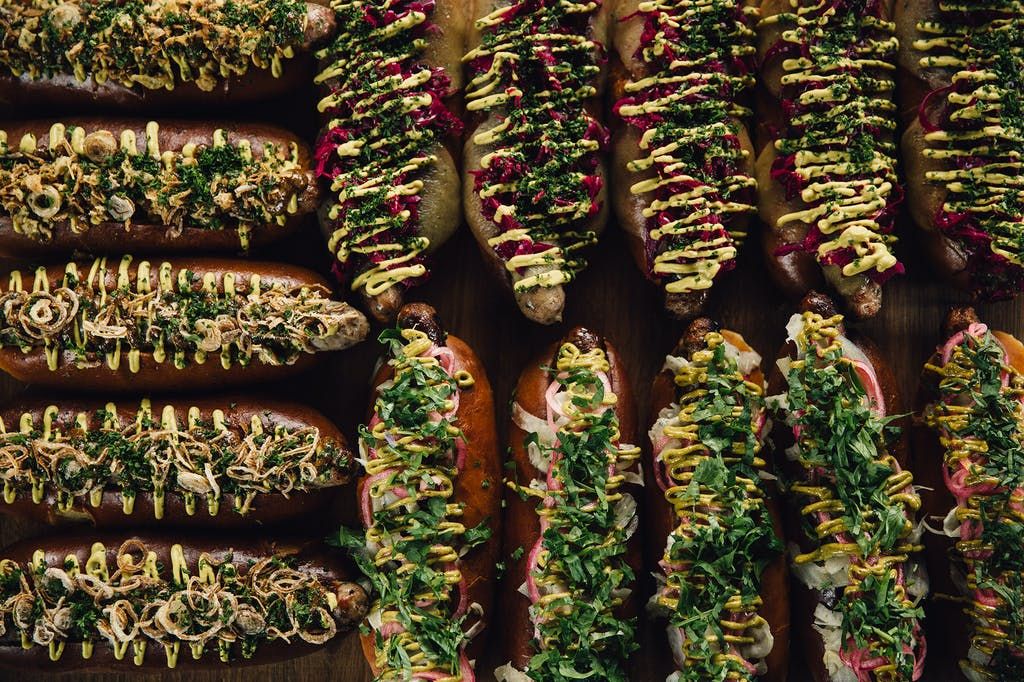
Bratwurst Albert’s Schloss style can be spectacular
Thur-Sun Sep 16-19: MFDF Street Kitchen Takeovers – MFDF has its own street food kitchen trailer on site at the Hub which where guests will include Evuna, Jackie Kearney and Tast Catala.
Fri-Sun Sep 24-26: Eat Well Kitchen – Eat Well Mcr is the inspiring social enterprise born out of the COVID-19 crisis. Founded by food and drink star Mary-Ellen McTague, Kathleen O’Connor and Gemma Saunders, it provide meals made by chefs and hospitality professionals to people sidelined by poverty. Each day their kitchen at the Hub will feature a different restaurant partner from the Eat Well Collective with all profits going to Eat Well Mcr, including a £1 voluntary donation added to orders.
Thu-Sun Sep 16-19 and Thu-Sun Sep 23-26: The Just Eat Street Food Chalets – MFDF sponsors Just Eat will be bringing some of their Manchester restaurant partners to the Just Eat Street Food Chalets. They include Peck and Yard,, La Bandera, Vertigo Plant-Based Eatery and JJ Vish and Chips.
There will be an abundance of global street food to tempt Festival-goers
PLUS, an array of street food vendors will be at the Hub over the two long weekends and an MFDF Artisan Food Market will operate from Thu 16 to Sun 19 and Thu 23 to Sun 26. Drinkers are well catered for with a variety of bars on site, while on Fri 17 and Sat 18 Halle St Peters in Ancoats hosts the ever popular MFDF Wine & Fizz Festival.
Participating retailers including Decent Drop, Prestwich’s Grape to Grain, Le Social Wine, Cork of the North and UKiYO Republic showcasing their wonderful range of Japanese sake. As well as tasting the wines, guests can buy from those on site too and take some very special bottles home. £12.50. Book here.
The MFDF Awards 2021 will be presented at a Gala Dinner at the Ticket All at Escape to Freight Island on Monday, September 27. Award nominations are now open. New categories this year include one which demonstrates the regional breadth of the festival – ‘Best Foodie Neighbourhood’.
For full details of the UK’s best regional celebration of food and drink, including its extensive programme of free music, visit the Festival website.
https://i0.wp.com/www.neilsowerby.co.uk/wp-content/uploads/2021/07/main-chips-scaled.jpg?fit=2048%2C1572&ssl=115722048Neil Sowerbyhttps://www.neilsowerby.co.uk/wp-content/uploads/2022/11/NS-typemark-v1c.pngNeil Sowerby2021-07-11 17:01:462021-08-20 09:21:21Manchester’s Biggest Chippy Tea is in the bag for reborn Food and Drink Festival
Last October at home prepping up my Northcote Autumn Gourmet Box I wore the apron that was the legacy of a 2014 Cookery School experience there (I buggered up the Beef Wellington, as I recall). I’ve a soft spot for the place, love the Obsessions festival every January that has brought a global smorgasbord of chefs to this corner of the Ribble Valley and go back further with them than1996 when they won the Michelin star they’ve held ever since.
It’s 38 years since Nigel Haworth and Craig Bancroft were given the chance to turn this Victorian pile into a fine dining mecca with rooms. In the Nineties when Ribble Valley Restaurants were suddenly ‘rock n’ roll’ you were either Haworth or Heathcote (Paul), like being Beatles or Rolling Stones. Well, almost.
Lisa Goodwin-Allen worked her way up to exec chef through the Northcote ranks
Now part of the Stafford Collection luxury portfolio (not a bad thing) Northcote is definitely on the top of its game despite all the constrictions of a pandemic. All helped by the high profile of exec chef Lisa Goodwin-Allen who took on the Great British Menu mantle of her mentor Nigel.
He is doing his own thing these days and, as I write, is about to bring back from the dead The Three Fishes, the groundbreaking regional produce-inspired gastropub he created a few miles up the road at Mitton. Sold on with the rest of the Ribble Valleys Inn Group, it shut in 2019.
Remaining under the new regime, sidekick Craig (ebullient front of house/wine guru) is, welcoming us this sunlit Thursday lunchtime to sample Lisa’s £95 five-course Spring Gourmet Menu. For lunch you must book it specially. In the evening, as Northcote cuts its cloth to accommodate the current challenges, it’s available either of two sittings, as we await the reintroduction of a la carte.
The revamped terrace gives Northcote fresh options – and it’s a perfect spot for a wedding shot
Encouraging is the buzz a wedding party on the spanking new outdoor terrace. Along with a full house of folk, most of whose own nuptial are decades back, we are consigned to the dining room, which shares the same rural vistas. Hard to credit the busy A59 is only 200 metres away.
The matching wine flight is £53.80. I’m often wary of ceding choice but this is pretty solid, notably two whites – the Abstraction #1 Muscadet Sur Lie from Guerin (with Orkney Scallop) and Redoma Branco from Nierpoort in Portugal’s Douro Valley (Wild Turbot) – and a perfumed Bruno Sourdais Chinon red from the Loire.
Poussin the boat out! Lisa treats the bird to a garlic and allium makeover
The latter was the perfect match for my favourite dish, a Norfolk Poussin. Also known as coquelets, poussins are the baby chickens much cherished by the French. They rarely weigh in above 500g and are perfect for quick grilling.
My first encounter came courtesy of enterprising online butcher Farmeson and in my home kitchen I followed a recipe from Wild Honey’s Anthony Demetre. This involved spatchcocking – removing the backbone from tail to neck so the bird can be opened out flat – and an overload of garlic and herbs.
Lisa treats it differently. Garlic featured again, one white blob and a swirl of on-trend black garlic, its long caramelisation imparting a subtle liquorice tone. Hen of the woods mushroom and a baby allium poached in ponzu ramped up the succulence.
The trim breast and a cute little croquette of leg meat may have lacked the splayed splendour of my effort but they were delicious testimony to canny UK sourcing. Norfolk poussins are corn-fed and reared ethically for their short lives in Fakenham as an alterntib from importing from France.
Lisa’s previous course of Wild Turbot feels very spoonable, foamy GBM. It’s another little marvel incorporating clam, cucumber, sea lettuce and dill in a saline-inclusive broth.
Like the whole menu, it sings of the season. I love the sorrel granita that adds a lemony counterpoint to Yorkshire Asparagus (green, from Sand Hutton I’m presuming) and basil gel but also the combo of Isle of White heritage tomato textures that lifts a perfectly seared Orkney scallop.
Amalfi lemon inspired dessert completed a satisfying meal, but could we resist the petits fours?
Admirable restraint, matched to accomplished technique, culminates in a masterly pud celebrating the Amalfi lemon and Limoncello. It’s a work of art that almost convinces me tangy powders and meringue splinters are for me. Still a pretty Michelin-friendly plateful. Which bring us back to the admirable Michelin substitute delivered to us in October 2020 as an alternative to the forbidden delights of restaurant dining.
It was easily the best menu kit we encountered during lockdown. But this recent Northcote visit was proof that nothing can replace the real thing. Especially where washing up by someone else is concerned.
Northcote, Northcote Road, Langho, Blackburn BB6 8BE. 01254 240555. For information on a variety of gourmet breaks visit thewebsitebut be warned, plan ahead. They’re full up well into the autumn.
There’s a fascinating interview with Lisa Goodwin-Allen in trade magazine Supper, where she discusses the challenges that have sprung from the pandemic and lockdowns. She also sing the praises of the Norfolk Poussin! Read it here.
https://i0.wp.com/www.neilsowerby.co.uk/wp-content/uploads/2021/06/Petits-fours.jpg?fit=2048%2C1365&ssl=113652048Neil Sowerbyhttps://www.neilsowerby.co.uk/wp-content/uploads/2022/11/NS-typemark-v1c.pngNeil Sowerby2021-07-03 14:51:002021-08-02 14:03:14Review: Five course Gourmet Menu at Northcote
I noticed recently Mana was advertising for a ‘Chef of Fermentation’. That’s quite a specific job title in a hospitality marketplace that’s struggling to find sous chefs and KPs. But when you’re on a mission to net that second Michelin star it’s best to stay true to your culinary direction and gut feelings (sic).
Garum will certainly be on the kitchen to-do list for the new recruit. It entered the conversation early on in my first visit to the Ancoats Manchester game-changer. I’d already been impressed by dishes such as smoked yakitori eel, glazed with roasted yeast and blueberry vinegar, and Dungeness crab baked in hay celeriac and masa.
Underneath that shell the oyster dish that leant on chicken garum
Chef patron Simon Martin had talked us through both. Next up was a raw oyster tucked taco style into a cabbage leaf with fudge miso, chicken fat, English wasabi, pine salt and chicken garum. In mid-explanation he was surprised by my knowledge of garum’s back story – the fermented fish sauce used as a condiment in the cuisines of Ancient Greece and Rome, not a million miles away from Thai fish sauce Nom Pla..
Simon had adapted garum to incorporate chicken. At his culinary alma mater, Rene Redzepi’s Noma in Copenhagen, they offer a whole palette of garums. Look at this beauty: rose and shrimp garum with a suitably rose-tinted description of what is essentially a whack of umami-rich funk.
Rose shrimp garum symbolises Noma’s innovative take on ancient traditions
“We take shrimps, water and salt, with fresh roses and blend it. It is naturally fermented by the enzymes inside the shrimps. During the foraging season last year, the fresh roses were added and they have been fermenting together ever since. The garum is quite intense by itself but the roses bring balance to it with its floral notes and sweetness.”
There’s a whole chapter on garum in The Norma Guide To Fermentation (Artisan, £30) by Redzepi and David Zibler, the man he entrusted to run the restaurant’s Fermentation Lab. Another member of the team convinced them to diverge from fish as the base. Hence, chicken, bee pollen and grasshoppers. All made is temperature controlled cylinders, leaving nothing to chance in this stinkiest of production processes.
That would probably be heresy to John Niland, chef owner of St Peter in Sydney, Australia. His ethos, laid out in his cookbook/manifesto, The Whole Fish, is to use all of the creature. Like Nose to Tail meat cooking, the object is not to waste the 60 per cent or so of a round fish that is routinely discarded in a western restaurant. Again one of the team (so democratic this new wave in the kitchen) came up with a sustainable garum.
“To produce the garum, start by adding 50 per cent of water to the total amount of heads, bones and scraps you have from small fish, such as sardine, mackerel, anchovies or trevally, then to this total quantity add 20 per cent of fine salt. Mix together, transfer to a mason (kilner) jar, seal and place in a circulator bath set to 40 degrees Celsius (104 degrees Fahrenheit). Leave for seven days in the dark, stirring once daily. Make sure that the gall bladder is removed as it will make the finished sauce extremely bitter. This recipe is versatile and can be adapted to produce scallop, prawn (shrimp) or cuttlefish garums.”
In Niland’s follow-up book, Take One Fish: The new school of scale-to-tail eating (Hardie Grant, £26, to be published August 5) he goes one challenging step further with a recipe for custard tart, made with a sardine garum caramel made using the head, bones and scraps of sardines.
Imperial Rome was an enthusiastic consumer of garum (or liquamen)
Leaving aside today’s state of the art equipment, it is a method the Ancients would have recognised. Garum was a fermented fish sauce used as a condiment in the cuisines of ancient Greece, Rome, and Byzantium. Liquamen was a similar preparation, and at times the two were synonymous. It enjoyed its greatest popularity in the Roman world.
Pliny the Elder derives the Latin word garum from the Greek γαρός (garos), maybe a type of fish, and states that it was crafted e from fish intestines, with salt, creating a liquor, the garum, and a sediment named (h)allec or allex. A concentrated garum evaporated down to a thick paste with salt crystals was called muria – packed with protein, amino acids, minerals and B vitamins, so not far off today’s soy sauce.
After the liquid was ladled off of the top of the mixture, the remains of the fish, called allec, was used by the poorest classes to flavour their farinata or porridge.
The finished product—the nobile garum of Martial’s epigram—was apparently mild and subtle in flavor. The best garum fetched extraordinarily high prices, and salt could be substituted for a simpler dish. Garum appears in many recipes featured in the Roman cookbook Apicius. For example, Apicius (8.6.2–3) gives a recipe for lamb stew, calling for the meat to be cooked with onion and coriander, pepper, lovage, cumin, liquamen, oil, and wine, then thickened with flour.
The traditional way of creating Colatura d’alici from salt and anchovies
And so to Colatura d’alici. I hastened to purchase a vial of this intense stuff (it translates fetchingly as anchovy drippings) after one of my favourite chefs, Jeremy Lee of Soho’s legendary Quo Vadis recommended it in Observer Food Monthly.
He wrote: “Alici is the essence of anchovy and it’s a very precious condiment. It comes in a very small bottle, like a bottle of perfume. It’s not cheap, but it’s relatively easy to get, and a little goes a long way. It’s never gone off – well, not that it lasts long enough to find out. I get it from Andy Harris at the Vinegar Shed (£26.50) and use it sparingly. It’s an elegant variation on using Worcestershire sauce in something, but it’s not so overwhelming. There’s a softness to it that’s amazing, it adds a roundness. You just need a few drops.
“It’s extraordinary in braised lamb and hogget dishes – lamb and anchovy is such a fabulous combination. Pork too. I add the alici to porchetta tonnato as a final flourish, much as you would add a squeeze of lemon juice. I find the combination of alici and lemon juice incredible in all sorts of dishes. It’s an extraordinary ingredient and one I cherish.”
Colatura d’alici works well as a simple dressing for spaghetti
Like traditionally made Southeast Asian-style fish sauce, but with a much longer ageing process, colatura is concocted with just anchovies and sea salt. For colatura anchovy fillets and salt are layered in wooden barrels (chestnut is good) and then set them aside in a temperature-controlled environment to ferment for up to three years. The liquid exuded ages into colatura, which is surprisingly unfishy. Still a health warning – this is mega pungent. But worth it.
https://i0.wp.com/www.neilsowerby.co.uk/wp-content/uploads/2021/07/Anchovies.jpg?fit=800%2C532&ssl=1532800Neil Sowerbyhttps://www.neilsowerby.co.uk/wp-content/uploads/2022/11/NS-typemark-v1c.pngNeil Sowerby2021-07-02 17:02:002021-08-02 14:04:34Anchovy is of the essence – Garum, Colatura d’alici and Nam Pla
What do the composer of the William Tell Overture and a Liverpool charcutier trained in South West France have in common? A love of Cotechino. No, not the name of some cynical Juventus centre back but the most amazing poaching sausage I’ve left it far too long to discover.
Bel Canto maestro Gioachino Rossini was forever ordering this speciality of Modena in his native Italy, along with its culinary cousin, the sausage-stuffed pig’s trotter called Zampone. Both winter seasonal delicacies are based on the uncompromisingly porkiest bits – real nose to tail stuff. Modena, not short of World Heritage recognition for its buildings, was also assigned Protected Geographical Indication (PGI) for Cotechino Modena in 1999.
I ordered my debut Cotechino nearer home from North by Sud-Ouest Charcuterie, its bits sourced from free range rare breed pigs on the Wirral. It arrived as part of a £40 ‘Large Selection Box’ showcasing the pork-curing talents of one Andrew Holding.
Also in the pack, weighing in at over a kilo, were sliced selections of coppa (cured pork collar), cured pork loin and goula, the jowl bacon called guanciale in Italy; the spreading sausage nduja, two whole saucisses sec, lardons of Ventrêche (which formed a bacony base for a Coq au Vin) and whole, chunky, grey Cotechino bulging out of its natural casing.
If Andrew follows the traditional recipe, it is made from high fat content meat from cheek, neck, shoulder, fatback, and lots of pork rind, seasoned with salt, pepper, nutmeg and coriander. Made fresh in Modena, it would traditionally take hours to poach in simmering water until the rind softened to give the characteristic melting texture. The essence of Slow Food.
My take on Cotechino with mustard and lentils
Here, pre-prepared and vacuum packed, it took just 20 minutes to warm through.
These days most North Italians would do the same. They would also serve it, as I did, with lentils and mostarda di Cremona. For my Cotechino e Lenticchie I used the French Le Puy variety because they are incomparable; the mostarda, a mustardy candied fruit preserve, came (via Alexander’s Mediterranean Pantry on Todmorden Market) from its Cremona heartland, 90 minutes north west of Modena.
Mostarda di Cremona – if you’re making your own handle with care
Lockdown had me creating many pickle and relishes from scratch but life really is too short (again). I was put off mostarda making by my mentor in most things hardcore Italian, Jacob Kenedy, chef patron of Soho’s Bocca di Lupo. In his Bocca Cookbook (Bloomsbury, £30) he writes: “The day you are satisfied that the fruit is candied and the syrup thick enough, procure some essential oil of mustard. This may not be easy to find and should be handled like TNT. Rubber gloves must be worn, wear some glasses too and the bottle shouldn’t be sniffed directly. This may sound over-cautious – but it is a dangerous and irritant substance before dilution in the mostarda.
Andrew Holding has imported European charcuterie skills to Liverpool
Jacob, London-born and Cambridge educated so hardly a peasant, also crafts his Cotechino from scratch. Caveats here include the necessity of sourcing skin-on pig’s cheeks. Worth it because “lots of glands and gnarly bits in the jowl give an incredible roundness of flavour”. Pigskin is tough, used for making shoes, so Jacob advises it might be worth asking your already obliging butcher to mince meat and skin together through a 4.5mm plate. When the spiced mince mixture is finally encased there’s a lot of sausage hanging to be done.
Better to buy one from North by Sud-Ouest or alternatively from Coombeshead Farm a restaurant with rooms featured in the recent Rick Stein’s Cornwall BBC series.
Best of all, when travel restrictions are lifted, head for the Emilia Romagna region at New Year, where they put into practice the old maxim ‘del maiale non si butta via niente’ (pigs are used till the last bit), with cotechino and zampone the centrepiece of celebrations. The lentil accompaniment to the former is believed to bring luck in the year ahead. If the mustard oil hasn’t blasted you first!
Why have I allowed an invasive native of the Yucatan peninsula into my kitchen? The immediate answer is the thunderstorm outside. It’s freaking out our chihuahua (fellow Mexican), who is cowering in a corner, while I’m equally frightened our new Chaya plant (also known as Tree Spinach) will be devastated if left out in the deluge in its flimsy pot.
When it hits maturity as a 12ft tall rival to Japanese knotweed the Chaya will hold its own but, as a stripling freshly arrived from a Lincolnshire herb nursery, we’re giving it shelter. And that kind act is causing ructions all of its own. Because I have briefed the rest of the household on the pluses and minuses of harbouring such a nutritious plant.
So already I’ve slipped in its major selling point. Chaya has high levels of protein, calcium and iron, while the leaves are also crammed with carotene, potassium and vitamin C, putting normal spinach or Chinese cabbage in the shade. Superfood status? This is a hype-free zone.
All this nutritional benefit is for the future, of course, when my plant grows enough foliage to cook with.
Wild tree spinach grows abundantly around Hartwood restaurant
You could just juice it or, like our spinach, stew it in butter, one minute minimum. I’ll start with legendary food writer Diana Kennedy’s Tamales de Chaya and then proceed to Grilled Coronado Fillets with Piña and Chaya from Eric Werner and Mia Henry’s Hartwood restaurant between the jungle and the sea in the hippest stretch of Yucatan (if you can’t get there their cookbook is highly recommended).
Culinary bucket list logged but let’s first fit in the downside, which is causing some domestic consternation. As a major convert to indigenous Mexican regional cuisine during lockdown I hunt down authentic ingredients zealously, but some do come with a health warning. Not all the insects surprisingly. Cue Chaya. When mature, the leaves can be tough with microscopic stinging hairs, which can irritate the skin for days, so handle with latex gloves when cleaning. Unless very young, best not to eat it raw since, like spinach or almonds, it contains a toxic compound, a form of hydrogen cyanide. That’s easily sorted, I’m telling my wary nearest and dearest, simply by boiling, frying or drying the leaves.
This is my tree spinach in search of jungle conditions in the Calder Valley
I will be charting my progress – in the garden and the kitchen – with this vigorous perennial, which I’ve been slow to catch on to. A decade ago Guardian gardening correspondent Alys Fowler vividly described the beauty of the Tree Spinach Chenopodium giganteum or Magenta Spreen Lambsquarter in her garden: “The tree spinach is a brilliant bright green with each new set of leaves blushed a shocking magenta.”
Attractive, but Alys warns: “It will reappear everywhere. It is not exactly a thug, but if you’re not prepared to eat it, that’s an awful lot of weeding. If you sow it as seed, consider sowing it in modules or seed trays and planting it out as this will give you more control as to where to grow it. If you want full-height plants, it needs to go at the back of the border.”
Maybe it needs a WALL.
TOP FOODIE DOCUMENTARY TIP
Diana Kennedy: Nothing Fancy (available to rent on Amazon Prime for £3.49) tracks the now 98-year-old expat Brit to her lair deep in the Mexican forests. This fiery, formidable cookery writer is the foremost champion of authentic Mexican cuisine and Elizabeth Carroll’s inspiring warts and all profile does her proud.
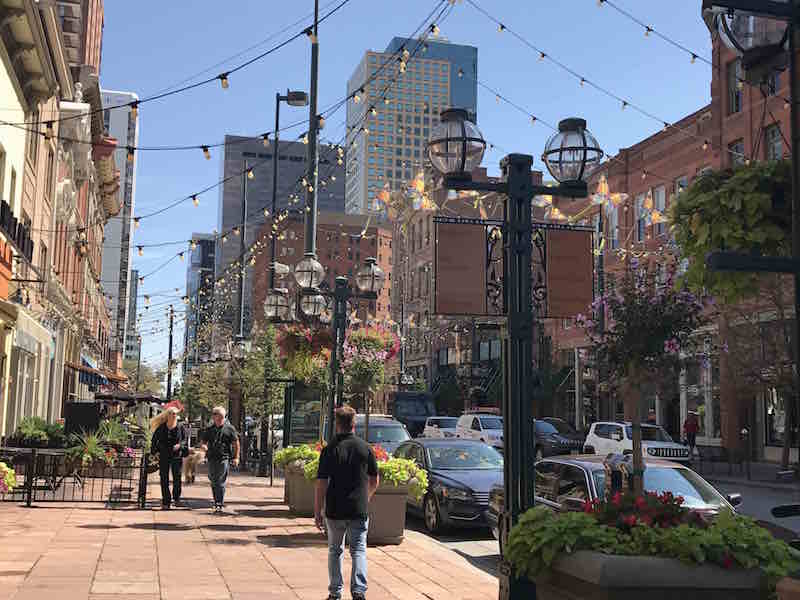
I am eating one of those banh mi Vietnamese baguettes, with a dip of pho broth on the side. The spice goes surprisingly well with a Denver Pale Ale from Hogshead brewery – a neighbourhood homage to English cask beer. Soundtrack is the Black Keys in glam stomp mode; staff serving sushi, pizza and Venezuelan arepas shimmy along to it. In the distance Denver’s soaring skyline shimmers.
The ‘Mile High City’ apparently gets 300 days of sunshine a year and today is living up to the boast. My vantage point is the rooftop terrace of collective eaterie Avanti F&B, a two level shipping container with half a dozen global food vendors plus bars dispensing a riot of delicious, eclectic beers.
The panorama across the city from the Avanti Food Hall is stunning
Naturally, for this is Denver, US capital of craft brewing, home to more than 100 breweries, and to the annual Great American Beer Festival (virtual in 20121, due to return in 2022).
After my banh mi it’s all I can do not to order another pint, a Diebolt Chin Chin de Diable Belgian Golden Strong Ale perhaps or a wild-fermented Crooked Stave Hop Savant, both local riffs on artisan hoppiness.
Heaven knows I’m thirsty enough after rambling around Denver’s hip and hilly Highlands district with its roster of fine eating places and bars – the likes of Roots Down, Linger, The Ale House, William & Graham and the veteran Beat Writers’ hang-out, My Brother’s Bar (about all of which, later). Fine old houses, too, and a pleasing leafiness.
The Ice House Building in historic Wynkoop Street
This is a city for walking. Highlands is west of the South Platte River, easily reached via the pedestrian Millennium Bridge and the revived Riverfront parks from my base in LoDo (Lower Downtown). How they love these aspirational acronyms – RiNo, which I always took for ‘Republican In Name Only’, here means the River North Art District, an urban wasteland now on the up and a hub for the craft brewing and leftfield creativity that define contemporary Denver.
LoDo too is a story of resurgence, entire blocks of brick warehouses and stables left to rot rediscovered and turned into apartments, restaurants and the like without losing their soul. Blink and you could be in that old Rocky Mountains frontier town with a whole posse of mavericks passing through – Wyatt Earp, Butch Cassidy, Billy the Kid and Buffalo Bill (who is buried up on Lookout Mountain on the outskirts of town).
Union Station’s impressive facade is symbolic of the old city centre’s regeneration
The railroad was mighty important for the development of the Wild West; one cherishable legacy in Denver is LoDo’s Union Station, a 1914 Beaux Arts masterpiece that only a few years ago was a shabby drifters’ haunt under threat of being torn down. Enter an urban conservationist called Dana Crawford, who energised its transformation into one of America’s coolest destinations, complete with its own 112 room Crawford Hotel named in her honour.
The view of the Union Station Great Hall from my Crawford Hotel lodging
I was lucky enough to stay there; walk out of my second floor room and I gazed down from the landing on its ornate centrepiece, the sweeping Great Hall. White and gilt, glistening chandeliers for when the light fades through its vast arched windows, it’s quite glorious.
Down in the lift, avoiding the temptations of the Cooper indoor cocktail terrace, and I was spoilt for choice by the array of food and drink outlets and boutique shopping, including a tiny branch of the city’s legendary Tattered Cover bookstore and Snooze, flagship of a renowned retro brunch chain (with cocktails and ancho chilli wheat beer shandies for when the smoothies pall). Next door Mercantile switches from daytime deli to casual fine dining each evening.
My main focus was on the Terminal Bar, in the converted ticket office which occupies a whole side of the ground floor. What’s not to like about 30 rotating regional beers on tap and a smart Colorado spirits list?
The RINO district is the epicentre of Denver’s art culture
Having got the taste, I left this heavenly haunt in quest of the catalyst of Denver’s craft beer revolution – The Wynkoop Brewpub on the street of that name. To get there it’s just a short walk across the station plaza, home to a growers-only farmer’s market every Saturday (Union Station even has its own beehives on the roof and a farm to table ethos governs much of the city’s eating habits).
Denver mayor now Colorado state senator John Hickenlooper founded the brewery/bar back in 1988, kickstarting the rebirth of the whole area. It has a real pub feel with pool, darts, telly sports and a hearty food menu.
It’s a must-visit destination, but the axis of brewing has shifted northwards to RiNo, a still edgy district that over the last decade has been colonised by artists, hipster nesters and cutting edge brewers. This transformation has now gone into overdrive, with the infrastructure still a work in progress as we discovered on our bumpy tuk tuk ride from Downtown.
The Source, converted from an old brick foundry into a food market hall
What we discovered was majorly exciting. The hub is The Source, an 1880s brick foundry complex that has been converted spectacularly into an artisan food market hall with an on site hotel created by New Belgium brewery, from Fort Collins. Their big rivals in that town, Odell also now have a presence in Denver. A sign of the times, though, in a very competitive market, Falling Rock Tap House, a pioneering US craft beer bar, closed it doors in June 2021.
Ratio Brewery – I just missed a private gig there from Wilco
A short walk away from The Source are several excellent brewery taps – Zach Rabun’s Mockery probably the best, its name a rebuttal of the constricting German Reinheitsgebot ‘pure beer’ rules, thus emphasising their own innovative brewing (Mukduk, a summery cucumber Berliner Weisse beer quite breathtaking); Great Dividenext door, motto ‘bold characters’, is a bigger concern, a pioneer in the wake of Wynkoop with their Yeti Imperial Stout range almost a brand within their brand and their brewery tours a lively introduction to the brewing process’; and Ratio Beerworks with a delicious range to be sampled in their large, functional, dog-friendly taproom, an offbeat rock venue (the touring Wilco played a private set there while I was in town).
Lining up the sours for me at the amazing Crooked Stave’s brewtap
Still, the most exciting tasting was in Source’s industrial chic food hall itself, just past the unique combo of florists and butcher’s shop, at the Crooked Stave Artisan Beer Project brewtap. Our server lined up 16 samples of the sour beers they specialise in – owner Chad Yakobson completed his master’s in Edinburgh in these complex ales fermented with wild yeast. Blueberries and cherries and barrel ageing all strove for attention with hardly a dud down the line, making for the most memorable beer moment of our visit.
Black Sky featured Robinson’s Trooper on tap and their own beers were damn tasty
All this proves how important beer tourism is to the town, which is scattered with breweries and their taps. Down in boho South Broadway I took in two which combine fermentation and heavy metal head-banging – TRVEwith its occult dungeon trappings and Black Sky, whose bar – suddenly making me homesick – sports a Trooper beer banner in homage to the bitter curated by Bruce Dickinson for Robinson’s of Stockport. Booze loving bookworms have their own Fiction Beer Company, which I never got to, sampling brews inspired by literature from a bar created from stacked books. Anyone for Dreamer IPA, whose muse is the last line of Rudyard Kipling’s The Fairies’ Siege?
The Blue Bear marks the spot where the Great American Beer Festival traditionally takes place
But, of course, this is just the tip of the all-year-round ‘Aleberg’ that culminates in the Great American Beer Festival in the Convention Center on 14th Street – hard to miss because of the 40ft high blue bear leaning into it, a much-loved statue by a local artist, which is actually called ‘I See What You Mean’. Such a very Denver icon.
Larimer Square is home to Rioja, arguably Denver’s finest resturant
So if your idea of heaven strays beyond brewery visits…
Here are a few places to eat, perhaps buy a hat or even a stash of legal marijuana.
A contender for best restaurant in a city devoted to casual dining, this Francophile project from Jasinki-Gruich is a terrific mix of stylish surroundings, slick service and some imaginative Mediterranean-inspired food. Fittingly it’s in pedestrianised Larimer Square, the swishest stretch of bars and restaurants in the city.
This purveyor of extreme fillings and biker diner vibes, is situated in edgier territory a 10 minute walk from Rioja. Alaskan Reindeer was the recommended dog of choice, but I decided Pheasant and Rattlesnake was the way to go with an El Diablo topping. Tastes of chicken naturally, not to be hissed at.
Civic Center EATS food trucks
Throughout the summer from Tuesday to Thursday, from 11am-2pm, it’s meals on wheels time in the rather grand public park sandwiched between the Capitol, the mInt and the rather wonderful Denver Art Museum. From a melting pot of global street food on offer I went Indian. My spinach paneer lacked genuine chilli eat, but it was lovely to sit out in the Denver sun with the lunchtime crowd.
Civic Centre is a grand setting for food trucks
Ophelia’s Electric Soapbox
I went up 20th Street to breathe in the atmosphere from Coors Field ballpark on a Colorado Rockies match night and maybe grab a beer from the Jagged Mountain brewtap (not a Coors, mind, poor, thin stuff from the world’s biggest brewing facility just outside Denver). I was diverted, though, to Ophelia’s Soapbox, a former bordello that wryly styles itself as a ‘gastro-brothel’ thanks to its boudoir-style decor across several levels, encompassing and eclectic mix of cocktails and mostly organic dishes, live music and a dancefloor.
A younger version of The Source – a gourmet food emporium with a community feel covering most bases and also a good place to lunch and, of course, drink craft beer, which we did. Lovely conversion of a bright and airy 1920s building, once a car showroom.
Linger, the former mortuary that now dispenses small plates and gelato
Another (more leftfield) conversion in the Highlands – the old Olinger’s mortuary transformed into a global small plate restaurant with a panoramic rooftop bar. The ‘O’ in the neon Olinger sign is extinguished at night; hence the laid-back name Linger.
Also in the Highlands classic Prohibition-style speakeasy the guise of a bookstore. A cosy escape, pull up a chair and order a Corn on the Macabre (Butter Washed Vida Mezcal, sweetcorn, blackened lime demerara and lime luice).
Hats off to Rockmount, downtown cowboy fashion store extraordinaire, patronised by Willie Nelson
Famed the world over for its classic Western clothing range, notably the original snap button shirt, the original LoDo outfitters is a photo-cluttered shrine to all the celebs who have worn (or at least bought) the gear. I couldn’t resist slipping into the cannabis motif cowboy blouse sported by Willie Nelson in the picture.
Legal marijuana is big business in the ‘Mile High City’
Marijuana Dispensaries
Denver would be Spliffing Willie’s kinda town, Colorado his kinda state. If you are 21 or older, you can now legally possess 1oz of marijuana in Colorado. You can enjoy many types of concentrates and edibles during your visit, bought from an array of dispensaries with names like Potco and Sacred Seed. If you wish to research further visit the Colorado Pot Guide. And if you really want an initiation into the almighty Pot, visit the city’s International Church of Cannabis.
My Brother’s Bar, famed for its Beat connections, claims to be the city’s oldest drinking joint
The Beat writers would have approved – cannabis was their drug of choice back in the Fifties and Sixties. Kerouac, Ginsberg and Co were regular moochers around Denver primarily because partner in crime Neal Cassidy was raised in the city. His faint legacy remains in My Brother’s on the edge of Highlands, a bar without a sign at 2376 15th St. Here you’ll find a framed letter Cassady sent to a friend from the Colorado Reformatory, where he was sent for car thieving. The ever hard-up Cassady wrote: “I believe I owe (My Brother’s) about 3 or 4 dollars. If you happen to be in that vicinity, please drop in and pay it, will you?” The beer range here is ace. I’d recommend the Odell IPA.
Glamorous ski centre Telluride is six hours’ drive away from Denver in the Rockies
FACT FILE
For full information about the state’s attractions visit Colorado Tourism Office. and for Denver check out this link. The self-guided Denver Beer Trail is a good way to get your beer bearings in the city. A version of this article, since amended post-pandemic, first appeared on Manchester Confidential.
https://i0.wp.com/www.neilsowerby.co.uk/wp-content/uploads/2021/06/New-hat-1.jpg?fit=1287%2C899&ssl=18991287Neil Sowerbyhttps://www.neilsowerby.co.uk/wp-content/uploads/2022/11/NS-typemark-v1c.pngNeil Sowerby2021-06-30 10:28:002021-08-02 14:11:13Denver, America’s capital of craft beer and legal highs