Persistent readers of this blog have probably twigged that rum is my spirit of choice – even if tequila/mescal have made a recent surge for my affections. Read a rather comprehensive account of my fermented molasses affiliations via this link.
Hence one of the key dates in my calendar has been Manchester Rum Festival. It was there two years go among the Hawaiian shirts, straw hats and high octane excitement that I first ran into Lewis Hayes, founder of the spanking new DropWorksdistillery in Nottingham.
Lewis and his team sat DropWorksBen and Fran, Stray co-owners
Ebullient Lewis was glad to be back in the city where he went to university, helping fund his studies through some committed bartending. That had sowed the seeds for his ambitious project to import the finest molasses, ferment it with his own cultivated trinity yeast strain, distil it in bespoke stills, then blend and mature it in barrels across three unique ageing locations.
This trail, with stop-offs at Stray, New Century Kitchen (for a Pusser’s tasting) and Festival hotel partner Indigo, was organised by Festival head honcho Dave Marsland to promote a major expansion of his pioneering event. Naturally, as brand ambassador, he poured a rare Chairman’s Reserve ‘single vintage’.
Step forward Manchester Rum Week (July 21-27). The centrepiece, of course, will be the Rum Festival proper, now in its eighth year, on Saturday, July 26, at the New Century Hall. The Rum Week alongside exists to whet your appetite and whet your whistle. It will enable aficionados and newbies alike to take a tour of the city centre’s best rum and cocktail joints, where bartenders and venues showcase their curated serves and killer cocktails. Participating venues will be announcing their rum vibes over the coming weeks via Instagram.
What to expect from Manchester Rum Festival 2025?
Rum cocktail bar partner MONIN and new food vendor Elijo’s will headline the show, alongside some of the world’s most iconic rum brands of Mount Gay from Barbados, Chairman’s Reserve of Saint Lucia, Guyana’s Pusser’s and Don Papa from the Philippines. Newcomers making their debut in Manchester include Jamaica’s West Grove Rum Punch, a selection of unique single cask rare rums from the team at Precious Drops, and Henstone Distillery of Shropshire.
For just £27.50 a ticket, entrants will be treated to unlimited rum tastings, live entertainment with Soca and Reggae music by DJ Dom, discounts on bottles and a barrel load of frivolity. This year, super rum-fans can also upgrade to join in with the Rum Ramble – an exclusive series of seminars and talks by the UK’s top rum talent. Buy tickets via this link. You can also take advantage of early bird discounts and exclusive news by joining the mailing list at www.manchesterrumfestival.com
https://i0.wp.com/www.neilsowerby.co.uk/wp-content/uploads/2025/04/Rum-new-min-scaled.jpg?fit=2048%2C1055&ssl=110552048Neil Sowerbyhttps://www.neilsowerby.co.uk/wp-content/uploads/2022/11/NS-typemark-v1c.pngNeil Sowerby2025-04-26 16:10:542025-04-26 16:11:01Mad about Manchester Rum Festival? Now you can make a groggy week of it!
AN Irish wolfhound painted green, would you credit it? Not a tall tale but a Paddy’s Day encounter on the thronged streets of Downpatrick a decade ago. En route for Belfast we were driving through the County Down town – appropriately the last resting place of Ireland’s patron saint. The huge dog’s master was sporting an equally green stovepipe hat with a clover on it but not, alas, an elasticated ginger beard attached.
Every March 17 American cities go even further celebrating Hibernian heritage. In Chicago and Boston whole waterways get dyed bright emerald. I don’t expect the Irwell to shed its shit-brown sheen in Manchester’s upcoming contribution to the Pat in the Hat revels. Yet the big day is sure to be fuelled by a flood of the black stuff. Purely on the evidence of the plethora of Irish bars springing up. One a month at the last count.
Chicago paints the river greenWhat else would you wear on Paddy’s Day?
Somewhere over the rainbow, the price is way up high
Across the land trad pubs may be closing at the rate of 30 a week, but on the flip side an Oirish theme offers the pot of gold at the end of Finian’s rainbow. Just stick a row of Guinness dispensers on the bar, lay it on thick with the toucan posters and signposts proclaiming “It’s 300 miles to Tipperary” … then call yourself Mother McGinty’s Goat. Or something equally seafóideach (check Irish Gaelic translation, don’t attempt to pronounce).
Fact: across the globe, in streets broad and narrow, Molly Malone’s is the most popular Irish pub name. Of course, you’ve also got The Dog’s Bollix in Auckland, New Zealand, The Hairy Canary in Brussels, Cromwell’s (this’ll slay them) in Alicante and in our own dear Sale Moor, Fibber Magee’s.
At the more sophisticated end of nomenclature I give you the Northern Quarter’s fresh Salmon of Knowledge in the former Ply site, and shortly to spawn a second in Didsbury (becoming the new Dublin with the excellent Kennedy’s of Altrincham also expanding there). Smart sports bar Salmon is a quite different kettle of fish to the old school establishments. To wash down your brisket boxty they even feature a ‘craft’ alternative to Guinness. The Brandon Stout from Cork’s Franciscan Well Brewery is a more substantial tipple, but a small drop in the roasted malt dark ocean.
Lining them up for a new generationNo longer an old folk’s tipple
Guinness is good for you (especially if you’re an investor)
Central to this bar boom is, of course, the astonishing surge in popularity of Arthur Guinness’s beautifully marketed brew, on trend in Dublin since since 1759. As I write, they are predicting 380,000 pints of this iconic stout will be downed at the current Cheltenham Festival – a 43 per cent increase on last year.
And before Christmas fears of a national shortage sent shockwaves through its new Generation Z legion of admirers. Result: a scramble to the bar to pay £7 a pint and beyond. The prices at Mulligan’s off Deansgate are almost keeping pace with London phenomenon The Devonshire, its landlord a man named Oisin, the downstairs bar the biggest Irish scrum down since Willie John McBride. (Tip: the wood ember grilled steaks upstairs are a superior experience.)
All this for a gentle keg beer that clocks in at just 4.2 per cent ABV but, yes, looks good on Instagram. Helped by all that ritual about the perfect, two-part pour, which takes 118 seconds to get it right. Oh, and for real nerds, the correct keg ratio of blanket nitrogen and oxygen has to be in place. As they say in Auckland, Bollix. Not content with now producing the UK’s best-selling beer, Guinness owners Diageo have also tapped into the zero market. Guinness 0.0 is also our numero uno non-alcoholic beer. Staggering, you might say, but that’s not the end product.
Mulligan’s stands out from the crowdAnd its new upstairs space attracts the crowds
So which Manchester Irish bar is best for a St Patrick’s Day bash?
Probably Mulligan’s. It used to be my affordable local in ‘Lunchtime O’Booze’ days at the Manchester Evening News. It was just the right side of shabby then under a laconic landlord nicknamed Trigger. Was that really Roy Keane over there in the corner near the Fir and Mna (Gents and Ladies)? Nowadays, under progressive owner Pádraig Brady, it has smartened up and expanded upstairs to accommodate the hordes who descend. Get there early or charm the bouncers. Best Guinness in the land? I’m keen (sic) not be mugged by the hype, but it is a lovely drop. Prices: Ouch.
The wonder of Waxy’s is no moreO’Connell’s is banking on imported fixtures
Pull up a pew – when bar decor is an ecumenical matter
How I miss Waxy O’Connor’s in the Printworks, at one time Manchester’s biggest Irish bar. Labyrinthine was the word for this multi-level job lot of ecclesiastical carved wood and stained glass, its centrepiece a 250-year-old tree shipped over from Ireland. What was that trunk’s fate when Waxy’s suddenly jumped ship?
Reassuringly old wooden fixtures remain de rigueur in a new generation of Irish bars. Sometimes it goes beyond recycled barrels as tables. Take O’Connell’s, which has set up shop in the old Thirsty Scholar site on New Wakefield Street. The main bar front has been sourced from an early 20th-century bank on Dublin’s College Green with seating ‘looted’ from both Tralee and Manchester Cathedrals.
Less generic is neighbourMother Marys, itself a reinvention of another classic Manc student bar, Font. Music, including Irish trad sessions, is part of the package. Derry’s lively bar scene is apparently an inspiration and Franciscan Well is on tap here, too. Combine a crawl round both bars with a communion with the nearby plaque marking the site of the 19th century slum district, Little Ireland. Friedrich Engels was appalled.
They love a story – who’s for Nancy Spain?
An invitation sits in my inbox. To Nancy Spains, a project by three brothers from Kerry who have brought the craic to Shoreditch and Monument In London and hope to replicate in the NQ’s Hilton Street. They are just going to make it in time for St Patrick’s Day. Cork stout Murphy’s is their signature stout – not even Cork’s finest. I prefer the creamier Beamish, also under the Heineken umbrella but, for some odd commercial reason, we don’t see it much on draught over here.
It’s an odd addition to the scene, but I’m not pre-judging. Just indulge in that traditional Tralee bottomless brunch while digesting the back story of the eponymous heroine: “Nancy Spain was born outside Tralee in County Kerry in 1857, just after the Great Famine. Raised in a rural farming family, she grew up helping on the land but always dreamed of a life beyond the village. In her mid-teens, she left Ireland for London, driven by the hope of a better future.
“Starting out as a maid and factory worker, Nancy worked tirelessly, eventually becoming a barmaid in a local pub. Through her hard work, charm, and dedication, she became the landlady – the first Irish woman to hold such a role in London. Throughout the years, the pub became a place for the Irish community to connect with their heritage. Through traditional music, dance, and storytelling, it became a home away from home for many Irish generations living in London.
“Though Nancy loved London, her heart always longed for home. When she retired, she returned to Tralee, where she spent her remaining years in the peaceful countryside that had never left her soul.”
So Nancy, no pissed-up leprechauns from the great peat bogs of Newton Heath and Harpurhey then?
A traditional entrance to ~O’Shea’s…And a traditional Irish breakfast
Forgive me, St Patrick. Do I sin in loving the old school bars?
There were, of course, pubs where folk of Irish extraction exclusively went. Not much of this left around. The Hennigan family empire in Levenshulme is majorly depleted. if you listen carefully enough on Ducie Street you might still hear the ghostly strains of Irish music sessions of the Jolly Angler, now shut after 166 years of jollity. Up in Ancoats a similar fate has befallen the even older Shamrock Inn in Bengal Street. It was mooted Holt’s Brewery would refurbish and reopen it, but that still hasn’t happened.
To the west of here was Angel Meadow. In the 19th century it was hellish home to 30,000 Irish immigrants. On the other side of town there was the aforementioned ‘Little Ireland’. On the fringes today hail O’Shea’s. I was there in 1994 when Jack Charlton, Geordie boss of the raggle-taggle Republic of Ireland football squad, poured the first ever pint in this warehouse conversion that still proudly flies the green, white and orange tricolour. Grab a Full Irish with Clonakilty Black and White Pudding, washed down with Guinness at a mere £6.10 a pint. Do they screen the All-Ireland Hurling? Be good if they did. Whatever’;s on the screens, it will be packed this coming Monday.
A leap of faith at The Salmon of Knowledge
A busy Salmon, too. To sup the stout you don’t have to be acquainted with the legend, but it helps. In Irish myth the salmon of knowledge swam in the Well of Segais, and ate the magical nuts from nine hazel trees that fell into the water. There was a prophecy that Finegas would catch and eat it, thereby gaining all knowledge. However his apprentice Fionn roasted the salmon and burnt his thumb while turning it. Fionn put his thumb in his mouth to cool it, and so received the salmon’s power. From that point on he only had to chew his thumb to gain knowledge of the future.
Mind, at the end of a hectic St Patrick’s Day the immediate future is probably just a Full Irish.
St Patrick’s Day is March 17. In the aftermath treat yourself to a copy of Ian Ryan’s A Beautiful Pint (Bloomsbury, £9.99), which explains the Guinness mystique and guides you to the best places to sample it. As a riposte to the TikTok influencers check out this Cork exile’s @shitlondonguinness Instagram account.Finally apologies to all the Irish bars I may have missed out, including those that opened during the time I started writing this piece.
https://i0.wp.com/www.neilsowerby.co.uk/wp-content/uploads/2025/03/IR-Kennedys-altrincham.jpeg?fit=1439%2C903&ssl=19031439Neil Sowerbyhttps://www.neilsowerby.co.uk/wp-content/uploads/2022/11/NS-typemark-v1c.pngNeil Sowerby2025-03-13 21:35:022025-03-14 15:28:29Bhoys for the black stuff – how Gen Z foams at the mouth for Irish pubs
Guardians of the Red Mountain sounds pure Lord of the Rings. So too the ritual planting of a sacred cow horn to thwart the dominance of the chemical Dark Lord. Easy on the Tolkien there. The biodynamic Hedges Family Estate is set not in some mythical Shires but in one of the prime viticultural sites of Washington State in the north west USA.
Mountain? More of a long mound apparently, coloured by reddish cheat grass in spring before the grapes take centre stage – true object of the family’s self-styled guardianship. This is as hot and dry as it gets with cool nights, the soil a mix of clay, loess and rocky granite, making it perfect for creating stellar, tannic red wines; Hedges are a rarity among their peers in going down the biodynamic route.
This means their five vineyards are farmed according to the eco-forward tenets of the Austrian philosopher, Rudolf Steiner (1861-1925). Probably the most divisive of these recommends the use of ‘preparation BD500’, where horns are filled with ox manure and buried in October to stay in the ground throughout the dormant season. The horn is later unearthed, diluted with water and sprayed onto the soil.
However wacky it may sound the proof is surely in the wine quality and the 2020 vintage of La Haute Cuvee, their first certified biodynamic wine, is supple and savoury with masses of ripe blackcurrant under its tannic shield.
Ambassador Christophe HedgesThe glorious wine he offered me
I am tasting it alongside a trio of other Hedges reds (including a stunning Syrah ‘Les Gosses’) at a Pacific Peaks & Vines roadshow in Manchester, showcasing the wines of Washington and Oregon. I’m in the amiable company of the brand’s travelling ambassador, Christophe Hedges, who runs the estate with his winemaker sister Sarah. She led the charge to biodynamic practice and natural fermentation; in a region of ‘big’ wines theirs possess a certain Old World finesse.
Maybe put that down the influence of their French mum Anne-Marie. She and husband Tom harvested their first vintage in 1987 before purchasing 50 acres on Red Mountain two years later to plant mainly Bordeaux varietals. These days (from their French chateau-like base) they are adapting to climate change by employing drought-resistant grape varieties and careful irrigation in an area that gets only eight to nine inches of rain a year.
The French-influenced houseThe Hedges’ vines this winter
All in stark contrast to Oregon, the other state participating in Pacific Peaks & Vines. There a more temperate, rainier microclimate close to the ocean is more suitable for the cultivation of Chardonnay and especially Pinot Noir. I was particularly impressed at the Manchester Side Street tasting by examples from Willamette Valley stalwarts Stoller.
Between them Oregon and Washington account for seven per cent of US production volumes, exports to the UK are growing but still tiny and we are talking premium prices, an average of £40 a bottle.
If Willamette Pinot remains my target tipple I can now see the attraction of both ‘twin peaks’ of North Coast viticulture
The cherry pie was rather fineIt was agent Cooper’s favourite
Cherry pie is on the menu in the real-life Twin Peaks
And you thought Twin Peaks was just a hugely acclaimed TV show, created by David Lynch, who died last month. It’s also coincidentally the name given to wineries in Western Australia, California’s Sonoma and Mallorca while its star, Kyle MacLachlan himself dabbles in the wine trade with his private label, Pursued by Bear.
I’d like to think his Columbia Valley Cabernet Sauvignon offers hints of cherry pie on the nose. That pie, in the company of “damn fine coffee”, was the chosen treat of MacLachlan’s character, Agent Dale Cooper.
Naturally, on our last visit to Washington State, we sampled both in the hotel that stood in for the Great Northern Hotel in David Lynch’s surreal TV series. We had been based in Yakima, epicentre of the Yakima Valley wine and hop-growing region, an hour’s drive to the west of Red Mountain.
Spectacular Snoqualmie FallsSouvenirs for sale in Salish Lodge
The Salish Lodge was our lunchtime stop-off heading further west towards Seattle. After the desert climate of Yakima, we hit big rain crossing the Cascades range. The mountain murk was so dense we couldn’t even get a view of 14,411ft Mount Rainier, the USA’s fifth highest and one of the world’s great standalone peaks (we glimpsed it later from the equally iconic Space Needle in Seattle).
After slaloming down forested switchbacks it was a relief to reach Salish Lodge perched on the brink of the Snoqualmie Falls, one of Washington’s big visitor draws. The famous waterfall there, swollen by those rains, was in full spate as the clouds cleared enough for a proper view from the terrace path of, where we were booked in for lunch at its Attic restaurant.
First though we had to investigate this luxury inn’s Twin Peaks souvenir shop. Echoing some Lynchlike plot twist, one of the stars of the original and the recent follow-up series, Harry Dean Stanton, had died the previous day.
It was a mark of respect to a great actor that, after oysters, clams and stone hearth fired pizza, we had to find room for that pie.
Healthy grapes are the keyCompost ‘mountain’ at Hedges
What are the secrets of biodynamic wine?
Biodynamics is often referred to as ‘super-charged organic’. Rather than simply reducing chemical inputs, biodynamic production is a proactive attempt to bring life to the soil with the use of natural composts and organic preparations.
It’s more than just an agricultural system, rather an altered world view that then impacts on the practice of agriculture. Winemakers drawn to this philosophy tend to be creative, spiritual types, deeply connected to their land and always experimenting to see what works best.
Demeter biodynamic certification is the reward for going down this radical route, which forbids chemical fertilisers, pesticides, herbicides or fungicides. Instead insect life and spiders are encouraged to control pests; manure encourages organic growth. After hand-harvesting the grapes the wine is produced in a gravity-fed cellar without winemaking additives. Ambient yeasts are used, with no or scant sulfites and no fining.
More controversially all significant vineyard activities – soil preparation, planting, pruning, harvesting – are done in accordance with the influence on earth by the moon, stars and planets. Finally, the aspect that can spark scepticism – the use of nine preparations 500-508 (a bit like homeopathy), using plants such as nettles, dandelion and chamomile, to be applied in powdered form or as sprays. And then there is the afore-mentioned Preparation 500.
One French winemaker of my acquaintance wrote of the Steiner strictures: “It is important to understand that 50 percent is symbolic and 50 percent is real… it all helps focus.”
All of which reminds me of a memorable trip to Ted Lemon’s Littorai winery in Sonoma, California. In Ted’s absence his young deputy confessed to not being a total convert to biodynamics (the perfection of the Pinot Noir was proof enough for us). And yet, as he put it, “It sure does make you pay attention.”
The damn good wines of Hedges Family Estate sure grabbed mine.
• A range of Hedges Family Estate Wines is available in the UK from Guildford-based sustainable merchant Wine & Earth.
https://i0.wp.com/www.neilsowerby.co.uk/wp-content/uploads/2025/02/Horn.jpeg?fit=1100%2C825&ssl=18251100Neil Sowerbyhttps://www.neilsowerby.co.uk/wp-content/uploads/2022/11/NS-typemark-v1c.pngNeil Sowerby2025-02-14 17:40:482025-02-15 09:41:55Biodynamic Washington wine (and a slice of David Lynch’s cherry pie)
A Pondicherry fish curry in a French bistro, basmati rice from remote Piemonte flatlands and a raft of six pale ales each made from different Kiwi hops – all part of a delicious dash for freedom from the crush of Saturday afternoon Borough Market.
OK, I should have known better with a few daylight hours to spare in London. A wonderful Waiting for Godot with Ben Whishaw and Medieval Women: In Their Own Words at The British Library had quenched my cultural cravings. Now for quality time with gourmandise.
Camille’s modest frontageIts merry team looked after me
On my last capital visit I’d found much to admire at Camille at 2-3 Stoney Street opposite the food mecca, so Gallic symmetry demanded I check out Café François further along at 14-16 (restraining my urge for my habitual pint of Harvey’s Sussex Best in The Market Porter at no.9). The pub was heaving anyway, like the inside of the Market, which I had made the mistake of trying to traverse untrampled.
Overtourism is a buzz word of the moment, but who would wish to revert to earlier times at Borough Market? Maybe not the 12th century beginnings on this site when bartering turnips for gruel was trade. No, before 1998, when the old fruit and veg market was on its knees, undermined by the power of the supermarkets. Then the decision was made to switch upmarket into a bazaar of artisan foodstuffs to tantalise the tastebuds of the chattering classes. A plan that has worked so brilliantly that it is wise to choose your moment to duck the tourist hordes. The prices, though, remain on the ambitious side, even if you roll up on a Tuesday morning. Weekends are just mayhem as the queues for average ‘street food’ stretch as long as, well, a street.
A parade of fine new restaurants is a reason to brave the Borough overload
In contrast, a big plus at Borough in recent times has been the arrival of proper restaurants on the edge of the market. Also on Stoney Street, stripped back Sri Lankan diner Rambutan, which I eagerly anticipated and then enjoyed immensely.
The most hyped recent arrivals have been Akara, https://www.akaralondon.co.uk/ a West African cuisine sibling of Michelin-starred Akoya in Fitzrovia and Oma, https://www.oma.london/ a high end Greek place from Smokestak and Manteca founder David Carter.
Café François is in a prime position It’s an all-day operation
A theme here is: big acclaim elsewhere, let’s bite on Borough. Hence Café François, which has sprung from the fancy success of Maison François near Fortnum and Mason. This more casual spin-off is also styled as an all-day Gallic-inspired brasserie and the simple, classic plates sport the joint’s name. More casual it may be but the designers have been given free rein to transform this former Paul Smith store. Stylewise it’s head and padded shoulders above anywhere else in the foodie ‘hood.
Further good news? It’s also fun with exceptional service despite it being flavour of the moment. A well thought out French flavour. Well so is Cafe Rouge. Except the François food is light years better. It’s never going to be Bouchon Racine but it’s not aiming for that crowd (well mine and Jay Rayner’s crowd). Henry Harris’s determinedly old school French bistro above a pub in Farringdon would never run to a glass-fronted dessert kiosk stuffed with patisserie and Paris-Brests. Open from breakfast, Café François is still going strong for mid-afternoon sugar rushes.
My tartare was the real dealThe vadouvant was une vrai surprise
Arriving around then I perversely ordered a curry. So should they rename it Café Indienne? Don’t forget there is a very French foothold in the Sub-continent, around Pondicherry. Hence the Vadouvan as their contribution to Indian cuisine – featuring a smoky spice mix and plenty of garlic and shallots. Quite mild this £24 bistro version with plentiful monkfish and a scattering that made an orangey mess as I prised them from the rice.
More colonial influence the presence of a soft shell crab bánh mì on the menu; the Vietnamese love (and supply most of France’s) frog’s legs but the crispy cuisses de grenouille are served with a trad sauce ravigote.
Eclectic touches aside there is a solid bistro/bouchon feel to the menu. A starter portion of exemplary if mustardy tartare du boeuf cost me £18. I drank one of my favourite rosés, Domaine de Triennes from Aix-en-Provence.
Enjoyable but my beating Borough Heart belongs to Camille. It’s a promenade de cinq minutes from La Gare de London Bridge; turn into Stoney Street, veer immediately left and you are in some modest estaminet on the Left Bank back in the Fifties. In truth it’s a plain room, untouched by any cute designer’s hand.
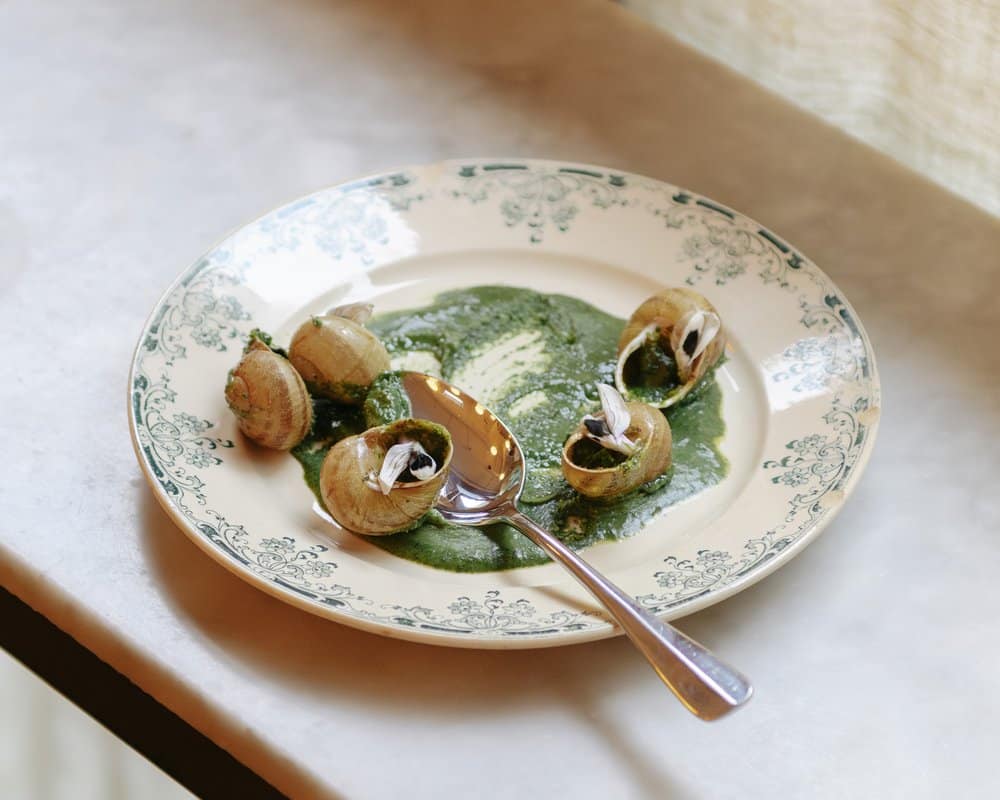
Ignore the melee outside and tuck into escargots, crispy pig’s ear, frisée and apple, and smoked eel devilled eggs, as I did, before Highland Angus tartare with chestnuts and topped with a fluffy cloud of grated Lincolnshire Poacher. A tie on the tartare with its rival down the street.
Chef Elliot Hashtroudi, once of St John, is on top of his Gallic game. As dusk dropped and candles were lit I started humming La Vie en Rose. But that was a while back. On this November Saturday it was time to make my escape from Borough Market. One Underground stop away is Battersea. Present Oyster Card.
Kernel has a remarkable beer offeringCloudwater’s Beer Mile outpost
Hardly the New Frontier but Bermondsey has a pioneering buzz
I had two reasons to go to Bermondsey – the Kernel Brewery Taproom and the Ham & Cheese Co, neither or which I’d made it to previously. Indeed the Taproom is a smart newcomer, opened only in August. Not every venue in this end of town is now confined to an arch.
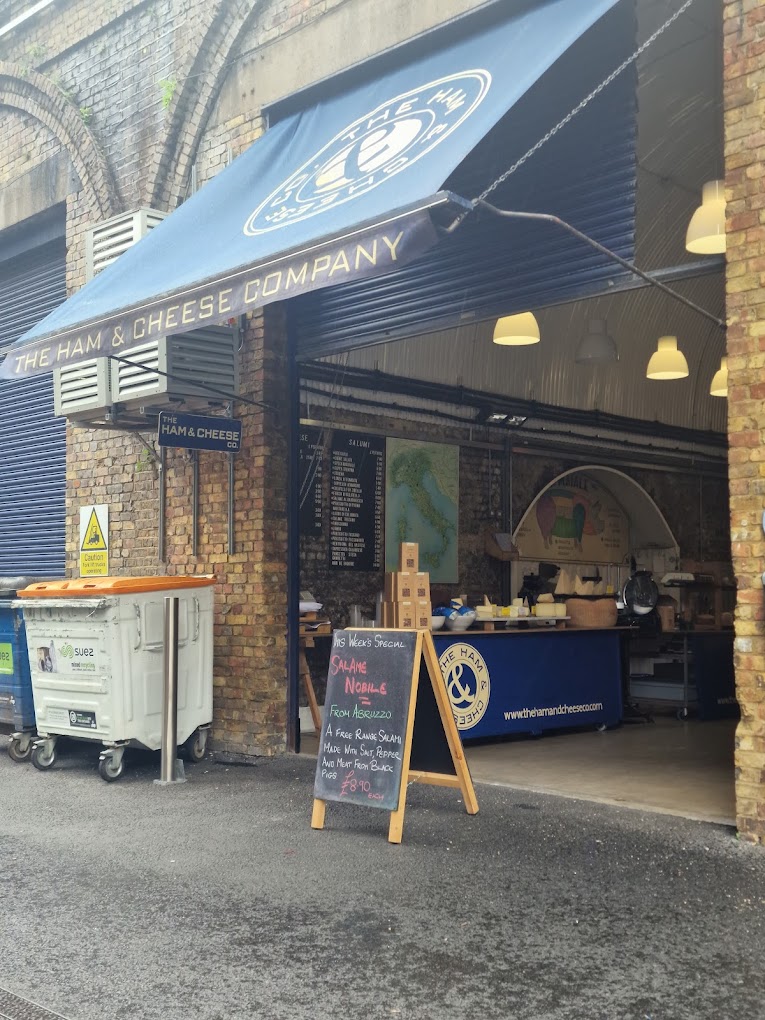
Ham & Cheese is. It does what it says on the label imports the finest charcuterie and cheese from Italy. Plus olives, oil, pulses, rice, capers and much, much more, all sourced directly from producers that genuinely qualify as ‘artisan’. I discovered it through the charcuterie for platters they supplied to Coin in Hebden Bridge down the Valley from us. Regular online orders proved a lifeline throughout the lockdowns. My only caveat you could only buy my favourite Mortadella whole – 2.3kg for £65. They recommend eating it with three days, too and there was a further obstacle – I don’t own a commercial slicer.
Gioia! On the counter at their base in Dockley Industrial Estate there sat a hunk of mortadella to be sold by the 100g and cut wafer thin. Is per favore.
Those mighty mortadellasFrom pigs that roam free
Their source in the Bologna Apennines, Aldo Zivieri, keeps his rare breed Mora Romagnola pigs or free range large whites in 40 hectares of pristine woodland and slaughters them at 14-16 months in his own small abattoir before applying traditional charcutier’s skills.
My prime mission was accomplished too. The new season’s extra virgin olive oil had arrived only five days before from the Abruzzo. It is made from a tough little olive called intosso, which only yields fruit above an altitude of 350m. A labour of love indeed. It has only survived as a varietal thanks to pressure from the Slow Food Movement. When I got home and opened the bottle of Casino di Caprafico the colourswas vibrantly, verdantly green with a huge, grassy perfume. At £42 for 75cl it’s a luxury to be sprinkled sparingly, but when even commercially produced olive oils are soaring price my advice is bugger £10 Berio.
I went for Abruzzo oil and came away with Piemonte basmati
A final surprise package, literally, was – alongside the customary Carnaroli rice for risotto – was Riso Gange with its remarkable back story. Let me quote the Ham & Cheese Co notes on this aromatic basmati style long grain rice also grown in Piemonte by Igiea Adami…
“In 1821 Igiea’s distant relative, Paolo Solaroli, was exiled to India for his revolutionary ideas. There he made his fortune, married an Indian princess, returned to Piedmont in 1867 and bought the tiny hamlet of Beni di Busonengo to grow rice. It is in an area of wild flatlands called the Baraggia, now a nature reserve, where poor, clay soil fed with cold waters channeled straight off the Monte Rosa massif in the Alps provides the perfect growing conditions for rice.”
And it was suitable for the ‘Riso Gange’. Each pack that Igiea sells she donates money to the Indian charity Samparc in Calcutta. Just before I wrote this piece I used it to make a kedgeree and it worked a dream.
The Ham & Cheese store only opens for a few hours every Saturday; the nearby Kernel Brewery Taproom closes Monday and Tuesday but is open up to 10 hours a day the rest of the week.
At least until the end of 2024 Kernel is hosting a kitchen residency with Yagi Izakaya, serving Japanese-inspired comfort food such as gyoza, udon and karaage. It would be intriguing to see how such dishes match with Kernel’s classic dark beers. I couldn’t resist sampling the 7.1 per cent Export Stout 1890 but balked at the 9.5 per cent Imperial Russian Stour, cleansing my palate with one of six individually hopped NZ pale ales. I took my server’s advice and went for the Rakau. It was a resinous treat. Does Kernel ever brew a dull beer? It has been 16 years since Evin O’Riordan started brewing at his original Druid Street site and it remains the benchmark for all the other breweries along the ‘Bermondsey Beer Mile’. Many were lined up in the Enid Street arches (including the London outpost of Manchester’s own Cloudwater) as I walked back to Borough Market, hoping in vain the hordes might have dispersed.
Some special treats to add to your Bermondsey basket
My tip: stop off at the Maltby Street Market on the Ropewalk for your street food, having stocked up at some of the classy food outlets clustered around Ham & Cheese and Kernel on the Dockley Road Industrial Estate. Most of therm do online retail. I liked the look of The Fresh Fish Shop at Unit 8, foraged mushroom and truffle specialists The Wild Roomat Unit 3.
In the adjacent Apollo Business Park I recommend Maltby and Greek at Arch 17, a real Hellenic Aladdin’s Cave (sic) from the UK’s leading importer of Greek foods with an impressive wine selection, too, and at Arches 1-11 the cheesy cornucopia that is Neal’s Yard Dairy. Less hectic than the Borough branch, naturally. I rest my case.
FACT FILE
I stayed at the Z Hotel Covent Garden, 31-33 Bedford St, London WC2E 9ED, a delightful bolthole which backs on to St Paul’s Church and overlooks Covent Garden Piazza. It’s a haven of quiet despite being in the heart of the tourist action (you’ve gathered I don’t like crowds). There’s so much to do in this area of great restaurants and theatres, including the Royal Opera House. For my Borough Market/Bermondsey break-out I caught the Jubilee Line at Westminster.
https://i0.wp.com/www.neilsowerby.co.uk/wp-content/uploads/2024/11/boorugh.jpg?fit=640%2C480&ssl=1480640Neil Sowerbyhttps://www.neilsowerby.co.uk/wp-content/uploads/2022/11/NS-typemark-v1c.pngNeil Sowerby2025-01-29 14:25:592025-02-14 17:50:24How I grew to love the Bermondsey bounty at Borough’s expense
A starry newcomer and a revitalising pioneer of the region’s food culture were the big winners at the 2024 Manchester Food and Drink Awards. Tom Barnes, once a linchpin of Michelin 3-star L’Enclume in Cumbria, won Best Chef and Best Newcomer for Skof after just six months in the city, while Sam Buckley’s Stockport flagship WhereThe Light Gets In was named Restaurant of the Year for the second time in three years. Sam also took the Outstanding Achievement Award for eight years of innovation, championing sustainability and helping put Stockport on the culinary map.
And, of course, the 18 categories up for grabs in front of 350 hospitality professionals at the New Century Hall, weren’t all about big hitters. The presence of ‘Affordable Eats’ and ‘Best Takeaway’ offered their own statement on the strength of the local scene in the face of continuing pressures on the industry. On the day of the Awards the Almost Famous burger chain went under.
The 135 contenders in the MFDF Awards were selected by a panel of judges made up of leading food and drink experts, writers and critics. Shortlisted venues were put to the public vote via the MFDF website where thousands of food and drink fans voted for their favourite winner. Scores from a mystery shopping visit, carried out by members of the judging panel, were also combined with the public vote for some of the awards to determine the winners. Here is this year’s awards list in full (for addresses visit this link:)…
Where The Light Gets InIts creator Sam Buckley
Restaurant of the Year – Where The Light Gets In
Shortlisted: Skof, Higher Ground, Another Hand, The Pearl, Restaurant Örme, Mana, Adam Reid At The French , Where the Light Gets In.
Chef of the Year – Tom Barnes (Skof)
Shortlisted: Iain Thomas (The Pearl), Joe Otway (Higher Ground), Sam Grainger (Medlock Canteen), Patrick Withington (Erst), Danielle Heron (OSMA), Sam Buckley (Where The Light Gets In), Julian Pizer (Another Hand) , Tom Barnes (Skof).
Newcomer of the Year – Skof
Shortlisted: The Pearl, Medlock Canteen, Onda Pasta Bar, Tawny Stores, Caravan, Hakkapo , Flat Iron, Skof.
Shortlisted: Monton, Salford, Urmston, Levenshulme, Altrincham, Denton, Sale, Prestwich.
Great North Pie rosterThe big pour at Cloudwater
Independent Drinks Producer of the Year – Cloudwater Brewing Co
Shortlisted: Pomona Island Brew Co, Sureshot Brewing , The Salford Rum Company, Steep Soda Co, Pod Pea Vodka, Hip Pop , Balance Brewing & Blending, Cloudwater Brew Co.
Independent Food Producer of the Year – Great North Pie Co
Shortlisted: Companio Bakery, H.M.Pasties, La Chouquette, The Flat Baker, Long Boi’s Bakehouse, Yellowhammer, Half Dozen Other, Great North Pie Co.
Another Heart To FeedPizza kings Honest Crust
Coffee Shop of the Year – Another Heart To Feed
Shortlisted: Grind & Tamp, Fort Coffee, Allpress Espresso, California Coffee & Wine, Bold Street Coffee, ManCoCo, Oscillate Coffee, Another Heart to Feed.
Food Trader of the Year – Honest Crust
Shortlisted: House of Habesha, The Little Sri Lankan, Cardinal Rule, Ad Maoira, Jaan By Another Hand , Baity, House of Bun, Honest Crust.
Pop up or Project of the Year – Love From
Shortlisted: Bungalow at Kampus, Tartuffe, The Landing, Root to Flower, Sampa, Manchester Wine Tour, Midori Didsbury at Wine & Wallop, Love From.
Nell’s Pizza abundanceMaray go plant-based
Affordable Eats Venue of the Year – Nell’s Pizza
Shortlisted: Café San Juan, Wow Banh Mi, Hong Thai, Salt & Pepper, Nila’s Burmese Kitchen, Mia’s Arepas, Sips & Dips, Nell’s Pizza.
Shortlisted: Ad Hoc Wines, Out of the Blue Fishmongers, Littlewoods Butchers, Wandering Palate, New Market Dairy, Petit Paris Deli, La Chouquette.
Mulligans is Guinness centralBar classics at Hawksmoor
Pub or Beer Bar of the Year – Mulligans
Shortlisted: Heaton Hops, Port Street Beer House, North Westward Ho, The City Arms, The Britons Protection , The Old Abbey Taphouse, Café Beermoth, Mulligans.
Bar of the Year – Hawksmoor
Shortlisted: Red Light, Flawd Wine, Speak In Code, Project Halcyon, 10 Tib Lane, Stray, Sterling Bar, Hawksmoor.
A touch of Spain at San JuanSchofield’s offers great service
Neighbourhood Venue of the Year – Bar San Juan
Shortlisted: Restaurant Örme, OSMA, Ornella’s Kitchen, The Oystercatcher, Yellowhammer, Fold Bistro & Bottle Shop, The Jane Eyre Chorlton, Stretford Canteen.
Great Service Award – Schofield’s Bar
Shortlisted: Flawd Wine, The Pearl, Higher Ground, Skof, 10 Tib Lane, Adam Reid At The French, Ornella’s Kitchen, Schofield’s Bar.
The Howard and Ruth Award for Outstanding Achievement – Sam Buckley
Recognising people who have contributed something outstanding to the hospitality industry in Greater Manchester.
https://i0.wp.com/www.neilsowerby.co.uk/wp-content/uploads/2025/01/main-matt.jpg?fit=640%2C480&ssl=1480640Neil Sowerbyhttps://www.neilsowerby.co.uk/wp-content/uploads/2022/11/NS-typemark-v1c.pngNeil Sowerby2025-01-28 07:47:572025-01-28 09:30:37All the winners from The MFDF Awards 2024 on a night of New Century celebration
Jerez is an entrancing Spanish city in its own right. Amazing tapas, Andalusian horses, flamenco. And as the Capital of Sherry, it offers a unique wine culture to explore and fall in love with. Richard Oakley, on a random visit, did. It has inspired his new online venture, Sherry Amor, providing an insider’s introduction through a range of mixed sherry cases.
The first three on sale showcase very different producers – venerable Valdespino (1430), specialists in single vineyard and aged sherries; Jerez bastions Williams and Humbert (founded by Englishmen in 1877) and Sanchez Romate (family-owned since 1781) offering dry styles; and Barbadillo.
The latter bodega is steeped in history, too. Dating back to 1821, it is now run by the seventh generation of the family in Sanlúcar de Barrameda, 25km north west of Jerez. Sanlúcar is the epicentre of Manzanilla, the bone dry sherry whose saline finish is attributed to the vineyards’ position on the Guadalquivir estuary, from where Columbus and Magellan once set sail.
The company’s Solear is Spain’s best-selling Manzanilla and is included in Sherry Amor’s mixed case of six Barbadillo half bottles (37.5 cl) that also features two of their aged dry sherries, a medium-sweet Oloroso, sweet Moscatel… and a Manzanilla Pasada En Rama de la Pastora. The extra ageing on a ‘pasada’ wine adds complexity and body. ‘En Rama’ means bottling straight from the cask with no fining or filtration.
Just answer this simple question: Which town is the centre of Manzanilla sherry production?
Email your answer (with name and postal address) to neil@neilsowerby.co.uk by midnight on December 31. Winner will be notified the following week.
What makes sherry so special? I asked Richard Oakley…
It’s nearly Christmas. Time to dust off the Bristol Cream at the back of the drinks cabinet. Doesn’t sherry still suffer from an image problem? The drink of an elderly demographic? Or is that changing?
I don’t think sherry has an image problem. More and more people are discovering the range of styles that are available and loving them. They’re unique wines, full of complexity and flavour, great value and practical, too – they keep very well once opened. Oh, and I have nothing against Harvey’s Bristol Cream!
There are so many different sherry styles, from bone-dry to lusciously sweet. You are focusing on the drier ones. Why is that?
I’m offering more dry styles of sherry as I generally find them more interesting to drink, and hope other people do, too. Most of the six-bottle mixed cases I’m offering have maybe one sweet and five dry styles. In addition, I think the dry styles are perhaps less well-known, so there is more to discover.
I think most folk know fino as a dry aperitif, but explain the difference between amontillado, oloroso and palo cortado. So drinkers know what to expect.
All three are all made from the same grape, Palomino Fino, but one main difference is in the amount of oxygen they are exposed to during development. Amontillado is initially aged under a thick layer of yeast, known as flor, whereas Oloroso is aged in full contact with oxygen. This results in a more nutty, oaky and aromatic flavour for Amontillado and a more toasty, balsamic and dried fruit flavour for Oloroso. Palo Cortado is produced when the flor goes a bit rogue, doesn’t develop fully and is a flavour combination of the two, often with a very dry, saline character.
Half of the Valdespino case is devoted to wines with some age on them. Why are they worth the premium? Is sherry as a whole good value?
Some, but not many, unfortified wines are drinkable when 20 or 30 years old. If you compare sherry with the prices of an aged red or white wine, sherry is incredible value. You’re getting a ton of complexity and flavour for your money in a 20 or 30-year-old sherry! I’m planning to add more aged sherry products to the Sherry Amor list in 2025.
Not just for sipping on their own, how food-friendly are sherries? What are the best matches?
Dry sherries are incredibly savoury and therefore versatile food wines. Fino and Manzanilla are the same alcoholic strength as some unfortified white wines, so think seafood. I like to enjoy Amontillado with cured meats, especially Iberico jamon, as there’s a nuttiness to both. Oloroso is great with a roast chicken; sometimes I add a splash to the roasting pan. Palo Cortado can stand up to some highly-spiced Asian dishes, especially classic home-cooked Indian dishes such as keema peas. On the dessert front, Pedro Ximenez with vanilla ice cream and raisins is a classic. Aged sherry wines also make for a great aperitif or digestif. But nobody should feel obliged to follow any rules.
Setting up Sherry Amor demonstrates your passion for this classic tipple in a world of so many wine choices. Sum up what makes sherry so special?
Sherry is a unique style of drink, in terms of production and flavour, from a very specific geographical area. Its production and consumption is very closely intertwined with Britain, having been mentioned by Chaucer, Shakespeare and Dickens. I think you can taste some of that history when you drink the wines.
https://i0.wp.com/www.neilsowerby.co.uk/wp-content/uploads/2024/12/True-Barbadillo.jpg?fit=1964%2C1324&ssl=113241964Neil Sowerbyhttps://www.neilsowerby.co.uk/wp-content/uploads/2022/11/NS-typemark-v1c.pngNeil Sowerby2024-12-17 11:50:572024-12-17 11:51:14Win a fabulous six-bottle case of sherry to kick-start 2025
I make no apology for kicking off my books of 2024 round-up with the reissue of a foodie classic first published in 1950 – a time when we weren’t deluged with cookbooks from every corner of the globe and olive oil and garlic weren’t a staple of our national diet. Alongside it a history of that same English food, whose riches have rarely been given their just recognition…
A Book of Mediterranean Food by Elizabeth David (Grub Street, £14.99 reissue) and The English Table by Jill Norman (Reaktion, £17.95)
For nigh on 30 years my most cherished foodie keepsake was a browning programme from Elizabeth David’s memorial service on September 10, 1992. The great and the good of the food world were in attendance inside St Martin-in-the-Fields. Plus me taking a break from the very different world of Robert Maxwell’s Daily Mirror to honour the great cookery writer, credited with introducing grey Post-War Britain to the sun-dowsed delights of Mediterranean and French cuisine.
Still today a standard-bearer for her values, Jeremy Lee was also in attendance, as a young chef. When he came up to Manchester to guest at Bistrotheque in Ducie Street Warehouse the dinner’s theme? Why, Elizabeth David as Muse! Alas, I took that precious memento to show Jeremy and somewhere on the way home I mislaid it.
A hardback version of her debut, A Book of Mediterranean Food, has not been available for decades (my dog-eared Penguin paperback is from 1975), but facsimile specialists Grub Street have remedied that and, with its original John Minton illustrations, this reissue would make a lovely Christmas present for a new generation.
Just a little taster from it, on Greek meze: “Your feet almost in the Aegean as you drink your ouzou; boys with baskets of little clams or kidonia (sea quince) pass up and down the beach and open them for you at your table; or the waiter will bring you large trays of olives, dishes of atherinous (tiny fried fish like our whitebait), small pieces of grilled octopus…”
Remember this was a pre-package holiday era when such travel was generally the preserve of an elite. She feels the need to explain meze as similar to hors d’oeuvre.
At that distant memorial service, Jill Norman, editor of both Ms David and Jane Grigson, gave an oration. She quoted from the author’s anthology, An Omelette and a Glass of Wine: “Came 1846 the year that Mr Alfred Bird brought forth custard powder, and Mr Bird’s brainchild grew and grew until all the land was covered with custard made with custard powder, and the trifle had become custard’s favourite resting place.”
Jill Norman’s new bookElizabeth David – legend
It is proof that in her later years Elizabeth David (wryly) researched our own native food culture and Jill Norman has followed in her footsteps with some distinction. The English Table is her own contribution to British food history. It’s a crowded field, mind, going back to the days of Dorothy Hartley and Florence White and, more recently, Pen Vogler and Diane Purkiss… plus Manchester-based Dr Neil Buttery, who conducted a fascinating recent interview with Jill on his British Food History podcast.
Now 84, she has taken on a big task to compress a couple of millennia’s worth of food-related social history into some 250 pages. She is ferociously well-read but recognises that in earlier times printed recipes were rarely representative of what most folk ate. In her final chapter she briefly addresses contemporary issues of ultra-processed foods and the need for biodiversity (insect-based anyone?).
A swell of local pride for me when she promotes Incredible Edible, the hands-on community growing movement that started in my home town of Todmorden 15 years ago. Back to basics is a good mantra to have.
‘Diana Henry’s debut’ reissuedA vintage taste of the sun
Crazy Water, Pickled Lemons by Diana Henry (Octopus, £26) and Dinner by Meera Sodha (Penguin Fig Tree, £27) xx
Another welcome reissue, this time from the 21st century. Diana Henry lacks the high profile of a Nigella or a Jamie but through nine books and a her Daily Telegraph column has been quietly influential. Crazy Water was her 2002 debut, where she acknowledges the influence of Claudia Roden (another Jill Norman signing) in her own incursions into Middle Eastern and Mediterranean flavours. She is rightly fascinated by evocative names; ‘crazy water’ is an Italian dish of sea bass poached in a salty, garlicky broth by the fishermen of the Amalfi coast. Pungent flavours in the recipes are matched by the piquancy of her traveller’s tales. Ms David would surely have approved.
Meera Sodha’s secret maladyAnd the book that came out of it
Meerha Sodha is familiar from her own weekly column in The Guardian’s Food supplement – the New Vegan. Her first two award-winning books sprang from her family’s diaspora – they fled from Uganda to less exotic Lincolnshire, where she was born and learned to cook Indian at her mother’s side.
The award-winning Mother India and Fresh India are among the most thumbed through, stained volumes on my kitchen shelves, The fourth, Dinner, continues the plant-based trajectory of follow-up East, offering 120 user-friendly recipes celebrating ‘the most important meal of the day”. That gives a clue to the once hidden, personal calamity at the book’s heart. To quote her chilling Dinner introduction: “A couple of years ago, I lost my love for food. I didn’t want to shop. I didn’t want to cook. I ate for necessity, not pleasure.”
Well, all of us food obsessives have had these days? No, this was true depression,, a can’t het out of bed breakdown – payback time for her over-zealous rise as a food writer. Heart-warming is the way she fought back finally when, realising her husband was himself cracking up after supporting her, she cooked a dinner that brought the family together. This book is a record of how each evening she rediscovered cooking for pleasure. The pleasure is now ours. This is genuine comfort food to batten down the hatches with against a hostile, demanding world.
An inspired Thai follow-upThe much-travelled Austin Bush
The Food of Southern Thailand by Austin Bush (Norton, £35) andThe Book of Pintxos by Marti Buckley (Artisan, £30)
Two very different writers who have settled in a distant country and charted its cuisine in minute but vital detail. Both happen to be American – Bush from Oregon, Buckley from Alabama. Bush has contributed hyperactively to Lonely Planet and rival guides to South Eastern Asia, but until this year his magnum opus was The Food of Northern Thailand (2018). Based in that country and a fluent Thai speaker, he has now followed it up with The Food of Southern Thailand, spotlighting a cuisine more familiar to Western holidaymakers on the surface, but Bush’s expeditions carry him far beyond Phuket resorts’ green curries ands pad thais. It is a visual revelation, too. His photography skills capture the vividness of diverse dishes such as Pork Braised with Soy Sauce, Pepper and Brown Sugar; a Rice Salad with Budu Dressing; a Spicy Dip of Smoked Shrimp; and Simmered Black Sticky Rice with Taro and Jackfruit. Chinese, Malay and Muslim cuisines come together in one cultural melting pot.
Marti BuckleyHer definitive pintxos guide
Marti Buckley has been based in Donastia (local name for San Sebastián) for over a decade and I used her debut food volume, Basque Country as a guidebook on a walking tour of that gastronomically rich region. Pintxos dives even deeper via the Basques’ small plate answer to tapas. Rich social history sits on the counter alongside some alluring recipes; I’m taking this one with me on my next trip. Not that I’ll be ordering my pdet phobia, Russian salad. Sorry, Marti.
Loch Fyne and its ruined castle
Between Two Waters by Pam Brunton (Canongate, £20) and Ultra-processed People by Chris van Tulleken Penguin, £10.99pb)
The main image for this article is the view across Loch Fyne from Inver to the ruins of Old Castle Lachlan. It’s lifted from this unique restaurant’s Facebook page. It’s always difficult to illustrate a book review article beyond a parade of covers. On the Inver site alongside a delectable food shot I was struck by this quote from chef patron Pam Brunton:
“The fish and the artichokes grew up a few miles from the restaurant. The sauce –made from the smoked bones of the fish and seaweed from nearby waters – is spiked with exotica from landscapes further away: verbena berries and fragrant bergamot juice, lifting the mellow autumnal umami. The crispy artichoke skins rustle like leaves in cold sunshine. Hardly post anything about food anymore – every time I come on here I’m consumed myself by thoughts of war and political collapse.”
Can’t imagine Nigella Lawson coming out with that, but then she would never have published Between Two Waters. It’s both a memoir of how Pam and her partner created their remote restaurant a decade ago, challenging punters’ expectations and not compromising on their ideals, and a rallying cry, tirade in parts, against how ‘Big Food’ has damaged the way we farm and cook and eat, severed our connection with nature.
A former philosophy student, she name-checks Descartes and Locke along the way as she lays into salmon farming, the grouse shooting industry and much, much more. She’s proud about buying organic and local, and Inver’s Michelin Green Star for prioritising sustainability. Sounds preachy? No it’s one of the most timely and important food books of recent years, tender and down to earth to when she explores her family roots in Dundee, rhapsodical about the staples of Scottish peasant cuisine. Just don’t get her started on the Highland Clearances.
Medic turned author Chris van Tulleken (above) took his crusade against ultra-processed foods and the damage they do onto BBC 2 the other night.
“This was explained to me by a scientist who works in the food industry,” reported Van Tulleken. “I said ‘but if I’m making a chocolate brownie at home, surely it is basically the same as one I buy in the shop?’ And he explained there are two really important differences. Firstly, the shop-bought one will use much more fat, salt and sugar.”
“The second difference is the shop-bought one will use additives which we don’t at home – these are ingredients that aren’t available to us – different fats and sweeteners, emulsifiers, stabilisers, colourings and flavourings.”
Such products are geared to engaging your appetites commercially, while neglecting your health. Not that the the oafish Rod Little, reviewing it in The Sunday Times, was convinced. Conspiracy theories he hinted at. The food industry is obviously keen to downplay what academic research compiled by Dr Chris has indicated. It scared the life out of me. Just buy the book and you may be too.
Jill Norman’s n
One Thousand Vines: A New Way to Understand Wine by Pascaline Lepeltier (Mitchell Beazley, £45) and Perry: A Drinker’s Guide by Adam Wells (CAMRA, £17.99pb)
I first encountered Pascaline Lepeltier when she wrote a foreword for (and contributed greatly to) Alice Feiring’s groundbreakingThe Dirty Guide to Wine in 2017, the ultimate terroiriste manifesto. Now Anjou-born, Chenin championing master sommelier Pascal has produced her own erudite overview, challenging pre-conceived ideas. US-based Pascaline also had a background in philosophy and her book ranges across botany, ecology, geology, how perception works in judging wines, the language of wine. It’s a unique work of synthesis, but never dry. Or should that be sec?
Earlier in the year I had the pleasure of interviewing Adam Wells about apple cider’s often neglected country cousin. The mission of Perry is to change all that. I described it as “a hugely evocative beacon of hope that manages to be more celebration than elegy. It’s a wonderful, revelatory read.” It has also added to my drinks bill as I’ve striven to fill the gaps in my knowledge. A trip to the orchards of Herefordshire was particularly fruitful. Do read about my adventures and check out the thoughts of Adam. Last word with him: “Great perry takes consummate care and attention. Which is all the more reason to celebrate the remarkable fact that it even exists.”
The Brandenburg GateBorder guards on the alert
Vertigo by Harald Jähner (WH Allen, £25) and Borderlines by Lewis Bastion (Hodder Press, £25)
The history of 20th century Europe continues to fascinate me. Aftermath was Harald Jähner’s eye-opening account of ‘Life in the Fall-out from the Second World War’, where he retraced a decade of ruins and restoration in his native Germany. More ambitiously, with Vertigo, he tackles the rise and fall of the Weimar Republic between the debacle of the Great War and the rise of Hitler. It’s more than just Cabaret decadence; a wealth of research reveals a society rich in innovation but wracked by internecine strife. The redrawing of borders after 1918 contributed to major tensions across Europe. In his quirky but sobering travelogue fellow political historian Lewis Bastion journeys to 29 key European borders to question what national/racial identity is all about it. Historical, it couldn’t feel more topical.
The Heart in Winter by Kevin Barry (Canongate, £16.99) and Tell Me Everything by Elizabeth Strout (Viking £16.99)
Colm Tóibín now ranks among the Irish literary greats and Long Island, his sequel to Brooklyn, was ‘eagerly anticipated’ in this household, but disappointed us both. Neither of us either can see what the fuss is about Sally Rooney, so Intermezzo was never likely to make my stocking. Step forward Sligo’s ever-surprising Kevin Barry and his wild western tale of lovers on the run in 1890s Montana. Opium-raddled wastrel Tom Rourke and mail order bride with a past Polly Gillespie high-tail it out of a mining town with a saddle pack full of dollars and a price on their head. Plot and language are as leftfield lyrical and inventive as ever. I love the pure Barry blarney of “Tom Rourke salted the eggs unambiguously”.
Since her 1998 debut novel Amy and Isabelle Elizabeth Strout has ploughed a very different literary furrow exploring the separate but eventually interlinking lives of two protagonists, Olive Kitteridge and Lucy Barton, one a cantankerous schoolmarm, the other a New York based writer, scarred by a poverty-stricken childhood in Illinois. Their parallel lives, and all involved with them, interlock finally in small town Maine. Strout mines a rare richness out of theconnections. Classic.
https://i0.wp.com/www.neilsowerby.co.uk/wp-content/uploads/2024/12/fish-market.jpeg?fit=800%2C600&ssl=1600800Neil Sowerbyhttps://www.neilsowerby.co.uk/wp-content/uploads/2022/11/NS-typemark-v1c.pngNeil Sowerby2024-12-09 21:33:102024-12-10 07:55:24Random reads – my recommended books of 2024 (and a reminiscence)
The shortlisted nominees for the 2024 Manchester Food and Drink Festival Awards have been announced. The Awards are the most prestigious in the North West and celebrate the region’s outstanding hospitality talent, with winners to be revealed at the MFDF Gala Dinner at New Century Hall on Monday, January 27, 2025.
There are 136 exceptional venues, traders, places and people nominated across 17 categories celebrating a resurgent year for Greater Manchester’s hospitality industry. This year’s roll call takes in the whole breadth of talent flourishing in our region – from talented takeaways and superb street food vendors to Michelin-star dining and some of the newest and most exciting additions to the scene.
The shortlisted nominations have been compiled by the MFDF Judging Panel, taking into account award submissions from the hospitality industry. The panel is made up of the region’s leading food and drink critics, writers, and experts. The awards are now open to public vote on theMFDF website.
As well as the public vote, a mystery shopping period will now commence when judges will visit nominated venues in some categories or an anonymous dining visit, and will score venues based on their experiences.
The mystery shopping and public voting period will end at midnight on January 10 when the polls will be counted and combined with the judges’ scores, and the winner of each category will be chosen.
The MFDF 24 Award Winners will be announced at the MFDF Awards Dinner on Monday, January 27 and tickets can be purchased by emailing isabella@foodanddrinkfestival.com
And the nominations are…
AFFORDABLE EATS VENUE OF THE YEAR
Café San Juan
27 St Petersgate, Stockport SK1 1EB
Nell’s Pizza
22 Minshull Street, Kampus M1 3EF
Wow Banh Mi
132 Oldham Road, Ancoats M4 6BG
Hong Thai
140 Oldham Road, Ancoats M4 6BG
Salt & Pepper
60-62 High Street, Manchester M4 1EA
Nila’s Burmese Kitchen
386 Third Avenue, Trafford Park, Stretford M17 1JE
Mia’s Arepas
11 Baring Street, Manchester M1 2PZ
Sips & Dips
994 Stockport Road, Manchester M19 3WN
Last year’s winner: Ornella’s Kitchen Denton.
TAKEAWAY OF THE YEAR
Chips @ No. 8
8 Clifton Road, Prestwich M25 3HQ
Ad Maoira
23 Radium Street, Ancoats M4 6AY
Maida Grill House
38 Liverpool Street, Salford M5 4LT
Lucky Mama’s
565 Barlow Moor Road, Chorlton M21 8AE
Codi’s Kitchen
391 Bury New Rd, Prestwich M25 1AW
Fat Pat’s
88 Portland St, Manchester M1 4GX
Mrs A’s Kitchen
30 Church Street, Eccles M30 0DF
One Sushi
St James’s Building, 75 Oxford Road, Manchester, M1 6EG
Last year’s winner: Burgerism
COFFEE SHOP OF THE YEAR
Grind & Tamp
45 Bridge Street, Ramsbottom BL0 9AD
Fort Coffee
255 Deansgate, Manchester M3 4EN
Allpress Espresso
3, Redfern Building, Dantzic Street, Manchester M4 4AH
California Coffee & Wine
3 Oxford Road, Altrincham WA14 2DY
Another Heart to Feed
10 Hilton Street, Manchester M1 1JF
Bold Street Coffee
53 Cross Street, Manchester M2 4JN
ManCoCo
85 Hewitt Street, Manchester M15 4GB
Oscillate Coffee
52 Flixton Road, Urmston M41 5AB
Last year’s winner: Grapefruit Coffee, Sale
FOOD AND DRINK RETAILER OF THE YEAR
Wandering Palate
191 Monton Road, Eccles M30 9PN
Petit Paris Deli
10 King Street, Manchester M2 6AG
Out of the Blue
484 Wilbraham Road, Chorlton M21 9AS
Chorlton Cheesemongers
486 Wilbraham Road, Chorlton Manchester M21 9AS
Littlewoods Butchers
5 School Lane, Heaton Chapel SK4 5DE
Ancoats Deli
6 Murray Street, Ancoats M4 6HS
Lily’s Deli
102 Manchester Road, Chorlton M21 9SZ
Oseyo
Unit 90, Halle Mall, Manchester Arndale M4 2HU
Last year’s winner: Cork of the North, Heaton Moor
FOOD TRADER OF THE YEAR
House of Habesha
Kargo MKT, Salford M50 3AG
The Little Sri Lankan
Cardinal Rule
10 Tariff St, Manchester M1 2FF
Ad Maoira
23 Radium Street, Ancoats M4 6AY
Jaan By Another Hand
St George’s House, 56 Peter St, Manchester M2 3NQ
Baity
Kargo MKT, Salford M50 3AG
House of Bun
11 Blackburn Street, Radcliffe M26 1PN
Honest Crust
1 Eagle Street, Manchester M4 5BU
Last year’s winner: Fat Pat’s, Manchester
FOODIE NEIGHBOURHOOD OF THE YEAR
Monton
Prestwich
Salford
Urmston
Levenshulme
Altrincham
Denton
Sale
Last year’s winner: Stockport.
INDEPENDENT DRINKS PRODUCER OF THE YEAR
Cloudwater Brew Co
7-8 Piccadilly Trading Estate, Manchester M1 2NP
Pomona Island Brew Co
33 Waybridge Enterprise Centre, Daniel Adamson Road, Salford M50 1DS
Sureshot Brewing
5 Sheffield Street, Manchester M1 2DN
The Salford Rum Company
33 Viaduct Street, Salford M3 7WX
Steep Soda Co
Pod Pea Vodka
Ten Locks, Fairhill Road, Irlam M44 6BD
Hip Pop
Unit 98, North Western Street, Manchester M12 6JL
Balance Brewing & Blending
Unit 10, Sheffield Street, Manchester M1 2DN
Last year’s winner: Track Brewing Co, Manchester
INDEPENDENT FOOD PRODUCER OF THE YEAR
Companio Bakery
Unit 6 Flint Glass Wharf, 35 Radium Street, Ancoats, Manchester M4 6AD
H.M.Pasties
Unit 11-12, Pennant Industrial, Oldham OL1 3NP
La Chouquette
812a Wilmslow Road, Didsbury M20 6UH
Great North Pie Co
Unit 2a, Deanway, Manchester Road, Wilmslow SK9 2HW
The Flat Baker
23 Radium Street, Ancoats M4 6AY
Long Boi’s Bakehouse
40 Forest Range, Manchester M19 2HP
Yellowhammer
15 Lower Hillgate, Stockport SK1 1JQ
Half Dozen Other
Unit 17 Redbank, Cheetham Hill M4 4HF
Last year’s winner: Pollen Bakery, Manchester
NEIGHBOURHOOD VENUE OF THE YEAR
Cibus Pizza
847-849 Stockport Road, Manchester M19 3PW
Ornella’s Kitchen
10 Manchester Road, Denton M34 3LE
Fold Bistro & Bottle Shop
7 Town Street, Marple Bridge, Stockport SK6 5AA
The Pearl
425 Bury New Road, Prestwich M25 1AF
Restaurant Örme
218 Church Road, Urmston M41 9DX
Tawny Stores
1 Upper Hibbert Lane, Hawk Green, Marple SK6 7JQ
Vero Moderno
Unit 4, Vimto Gardens, Chapel Street, Salford nM3 5JF
Bar San Juan
56 Beech Road, Chorlton M21 9EG
Last year’s winner: Stretford Canteen
PLANT-BASED OFFERING OF THE YEAR
Maray
14 Brazennose St, Manchester M2 6LW
Lily’s Indian Vegetarian Cuisine
85 Oldham Road, Ashton-under-Lyne OL6 7DF
Wholesome Junkies
Hinterland Bar, 16-20 Turner St, Manchester M4 1DZ
Allotment Vegan Eatery
1 – 3 Cathedral Gates, Manchester M3 1SW
Walled Gardens
Whalley Range, Manchester
Little Aladdin
72 High Street, Manchester M4 1ES
Herbivorous
445 Wilmslow Road, Withington M20 4AN
Sanskruti
93-95 Mauldeth Road, Manchester, M14 6SR
Last year’s winner: Bundobust
POP-UP OR PROJECT OF THE YEAR
Bungalow at Kampus
Aytoun Street, Manchester M1 3GL
Tartuffe
Side Street Studio Kitchen, ABC Buildings Corner of Quay Street and, Lower Byrom St, Manchester M3 4AE
Midori Didsbury at Wine & Wallop
97 Lapwing Lane, Didsbury M20 6UR
The Landing
Merseyway Shopping Centre Car Park, Stockport SK1 1HG
Love From
Aytoun Street, Manchester M1 3GL
Root to Flower
Sampa
24 Dale Street, Manchester M1 1FY
Manchester Wine Tour Last year’s winner: Platt Fields Market Garden
PUB OR BEER BAR OF THE YEAR
Heaton Hops
7 School Lane, Heaton Chapel SK4 5DE
Port Street Beer House
39-41 Port Street, Manchester M1 2EQ
North Westward Ho
Pall Mall, 19 Chapel Walks, Manchester, M2 1HN
Mulligans of Manchester
12 Southgate, Manchester, M3 2RB
The City Arms
46-48, Kennedy Street, Manchester M2 4BQ
The Britons Protection
50 Great Bridgewater Street, Manchester, M1 5LE
The Old Abbey Taphouse
Guildhall Close, Manchester Science Park, Hulme M15 6SY
Café Beermoth
Brown Street, Manchester M2 1DA
Last year’s winner: Marble Arch, Manchester
GREAT SERVICE AWARD
Flawd Wine
9 Keepers Quay, Manchester M4 6GL
The Pearl
425, Bury New Road, Prestwich M25 1AF
Higher Ground
Faulkner House, New York Street, Manchester M1 4DY
Skof
3 Federation Street, Manchester M4 4BF
10 Tib Lane
10 Tib Lane, Manchester M2 4JB
Schofield’s Bar
Sunlight House, 3 Little Quay Street, Manchester M3 3JZ
Adam Reid At The French
16 Peter Street, Manchester M60 2DS
Ornella’s Kitchen
10 Manchester Road, Denton, Manchester M34 3LE
Last year’s winner: Hawksmoor, Manchester
BAR OF THE YEAR
Red Light
4-2 Little David Street, Manchester M1 3GL
Flawd Wine
9 Keepers Quay, Manchester M4 6GL
Speak in Code
7 Jackson’s Row, Manchester M2 5ND
Project Halcyon
Unit 2, Bonded Warehouse, St Johns, Manchester M3 3GS
Hawksmoor
184 – 186 Deansgate, Manchester M3 3WB
10 Tib Lane
10 Tib Lane, Manchester M2 4JB
Stray
1 Eagle Street, Manchester M4 5BU
Sterling Bar
4 Norfolk Street, Manchester M2 1DW
Last year’s winner: Schofield’s Bar, Manchester
NEWCOMER OF THE YEAR
The Pearl
425, Bury New Road, Prestwich, Manchester M25 1AF
Skof
3 Federation Street, Manchester M4 4BF
Medlock Canteen
5 Owen Street, Deansgate Square, Manchester M15 4YB
Onda Pasta Bar
Circle Square, Oxford Road, Manchester M1 7FS
Tawny Stores
1 Upper Hibbert Lane, Hawk Green, Marple SK6 7JQ
Caravan
6 Goods Yards Street, St Johns, Manchester M3 3BG
Hakkapo
13 Jack Rosenthal Street, Manchester M15 4FN
Flat Iron
200 Deansgate, Manchester M3 3NN
Last year’s winner: Higher Ground, Manchester
CHEF OF THE YEAR
Iain Thomas (The Pearl)
Joe Otway (Higher Ground)
Tom Barnes (Skof)
Sam Grainger (Medlock Canteen)
Patrick Withington (Erst)
Danielle Heron (OSMA)
Sam Buckley (Where the Light Gets In)
Julian Pizer (Another Hand)
Last year’s winner: Shaun Moffat (Edinburgh Castle)
RESTAURANT OF THE YEAR
Skof
3 Federation Street, Manchester, M4 4BF
Higher Ground
Faulkner House, New York Street, Manchester M1 4DY
https://i0.wp.com/www.neilsowerby.co.uk/wp-content/uploads/2024/11/awards.new-main-1.jpeg?fit=803%2C373&ssl=1373803Neil Sowerbyhttps://www.neilsowerby.co.uk/wp-content/uploads/2022/11/NS-typemark-v1c.pngNeil Sowerby2024-11-05 20:54:022025-01-27 11:34:002024 MANCHESTER FOOD AND DRINK FESTIVAL AWARDS SHORTLISTS – CAST YOUR VOTE NOW
The Bloody Foreland, Donegal, autumn, some time in the Seventies. It’s raining as we get off a bus that’s going no further. Over the breakwater the waves are pounding but such is the sea fret you can barely see them. You can, though, feel the spray and by the time we stagger into the bar where we plan to stay – Murphy’s, Halloran’s, O’Dowd’s? – we are soaked to the callow bone. Cue a welcome that brings two young travellers round. “You’ll be having a warm double toddy won’t yous?” Indeed a second rum and blackcurrant swiftly follows the first before our restorative drisheen-heavy fry-up appears.
I’d hardly given that evening a thought in half a century until a bottle of Salford Rum CompanyRum and Black arrived in the post on a Yorkshire summer day that couldn’t have been more different than that Irish drencher. The R&B belongs deep in the memory bank like the Guinness and Black we also supped as students. They felt quite rock and roll. Lager and lime we shunned.
Mojitos weren’t a thing back then but, courtesy of Salford Rum’s head bartender Hendo,
the cocktail recommendation that accompanies our review bottle is a ‘Black Spiced’ take on the summery classic. In the absence of Licor 43 from my shelves I substitute Kamm & Co with its heady flavours of ginseng and grapefruit. Hardly like for like, but it does the job alongside mint sprigs, cinnamon syrup, lemon juice, a handful of fresh blackcurrants. soda and, of course, the Rum and Black. All that vitamin C coursing through us!
Historically the drink is known as ‘the drink of the dockworkers’, a working men’s club staple back in the 1800s and early 1900s utilising the exotic spices and rums filtering in via the Ship Canal. I expect the stevedores of old Salford Docks, when it was the UK’s third argest port, laced their grog with blackcurrant cordial. Updating it, the distilling team “fuse smooth rum with locally sourced blackcurrants from The Promise Co, a family-rum urban homestead in Worsley.” A gorgeous, collectable bottle, designed by ‘Dave Draws’ takes the tipple even further upmarket. Worth the retail price of £42 a 75cl bottle? At a 28% ABV it is quite delicate compared, say with a créme de cassis, but proof that it slips down well – we drained the bottle, even running out of soda, as the sun sank in the west, releasing the inner docker in ourselves.
• My own Ribes nigrum (blackcurrant) update. 1kg of freshly picked berries from my own urban homestead have been steeped in vodka for the past three months with sugar syrup to be added in time Christmas to complete my own créme de cassis, to let the festive Kir Royales roll.
https://i0.wp.com/www.neilsowerby.co.uk/wp-content/uploads/2024/09/Min-hot.jpg?fit=2016%2C1512&ssl=115122016Neil Sowerbyhttps://www.neilsowerby.co.uk/wp-content/uploads/2022/11/NS-typemark-v1c.pngNeil Sowerby2024-09-02 15:08:072024-09-02 15:08:11Dockworkers’ tipple Rum & Black the new rock and roll?
There are many approaches to eating and drinking in Glasgow. At the elevated end the city finally boasts two Michelin-starred restaurants – Cail Bruich in the West End and Unalome by Graeme Cheevers in still hip Finnieston. At the other end of the Clydeside spectrum you could test out the old Glasgae stereotypes, deep-fried Mars Bars and Lorne Sausages, Buckfast and Irn Bru. I don’t expect these fixtures feature if you sign up for any of the recommended Glasgow Food and Drink Tours run by Gillian Morrison. In their palce you’ll be left with the sense of a city celebrating amazing Scottish produce and revelling in its burgeoning food and drink culture.
I’ve been lucky to visit the city frequently in recent years and have charted the sea change (yes, fresh seafood is to the fore). Below are my personal tips. In no away definitive, especially where pubs are concerned. As everywhere, hospitality is in a state of flux. Along the way old stagers such as Rogano have gone and Gamba up for sale, while new places are springing up post-Pandemic. Next time I’m up Brett on Great Western Road is first on my bucket list after a rave reviewby Grace Dent in The Guardian.
Inside The GannetA cute sardine dish there
THREE OLD FAVOURITES
If you’d asked me two years ago, The Ubiquitous Chip would have been nailed on. Since its launch in 1971 this converted stables had championed Scottish cuisine from homemade haggis with champit tatties, carrot crisp and neep cream to more contemporary takes on seafood such as seared Islay scallops with pumpkin fondant, malt crumble and seaweed butter. The glorious courtyard dining space only enhances the dining experience – though I am also partial to the dram-filled warren that is the Wee Pub at the Chip.
The culinary emphasis didn’t shift after founder Ronnie Clydesdale, the ‘Godfather of Scottish Cooking’, died in 2010, then two years ago his family sold the Chop to Greene Kings Metropolitan Pub Company. Ouch. Cheeringly head chef Doug Lindsay stayed on, but a recent scan of the menu didn’t encourage, so I’ve not been back.
The Gannet is a fledgling in comparison. Its chef/patron Peter McKenna gets credited with kickstarting the vibrant Finnieston dining scene from this narrow converted tenement. Also championing the best of Scottish produce? It goes with the territory. Now over a decade old, The Gannet stays true to its original mission statement: “Something that evokes Scotland’s Hebridean coastlines, giving a sense of place and landscape and at the same time offering a cheeky culinary reference as a moniker for those with large appetites: ‘The Gannet’ was christened.” For a sophisticated take on those fecund fishing grounds check out the Cured Wild Halibut/Soy /Yuzu/Horseradish or the Tarbert Lobster/Barra Cockles/Summer Vegetables.
The Cafe GandolfiBabbity Bowster
My other two stalwart faves are near neighbours in the revitalised Merchant City (home to my recent hotel base, The Social Hub). A real pioneer in this quarter is Hebridean Seamas Macinnes, since 1983 at the helm of theCafe Gandolfiin Albion Street with his sons now joining him. The L-shaped room offers a stylish rusticity featuring Tim Stead wooden furniture and quirky artwork. I particularly love the stained glass ‘A Flock of Fishes’ by Glasgow School of Art alumnus John Clark in the dining room (my main image). Comfortable in its own skin, Gandolfi? Definitely. A snip of a house white, a Veneto Bianco, went equally well with a dish of Mull scallops and mackerel and a fillet of coley in an Arbroath smokies cream. Stornoway black pudding with potato rosti and pickled mushroom was equally comforting. In another season I might have gone for the Haggis (from Cockburn’s of Dingwall), neeps and tatties. The name, by the way, is nothing to do with Lord of the Rings. It’s a homage to the legendary camera maker.
Just around the corner on Blackfriars Street, the Babbity Bowster pub takes its name from an old Scottish wedding dance. If the weather’s warm the temptation is to linger in its countrified beer garden at odds with the urban surroundings. That would be to neglect the high-ceilinged cool white bar with a fine array of Scottish ales. The building itself, converted in 1985, is a 1790 tobacco merchant’s house, all that remains of an entire street built by Robert Adam. There is a restaurant and en-suite bedrooms upstairs.
Lobster at The FinniestonCrab at Crabshakk
SEAFOOD
There are fine seafood places along Argyle Street – among them the aforementioned Gannet and The Finnieston – but the pick of the catch for me is Crabshakk, This stripped back temple to fish has a sibling up at The Botanic Gardens, but I‘m in my happy plaice (sic) here. On my last visit, eating solo in this narrow space, I regretted not begging a large bib as I messily tucked into a whole crab at the counter, followed by a quite wonderful tranche of halibut in a tomato miso with a draping of monksbeard.
An oven out of NaplesA perfect Paeseano pizza
PIZZA
You do wonder when a hugely successful indie food business is sold. Take Manchester’s own Rudy’s Pizza, currently being rolled out across the land. Three months on from their own sale Glasgow’s own Neapolitan crust champions Paeseano still boasts just the two outlets – each with its own oven installed by Gianna Acunto,of Naples, no less. After a torrid train journey up I’m given a quiet corner table in the heaving Miller Street original, off George Square, self-medicating with a Negroni before demolishing a very large anchovy-caper-olive overload pizza at a modest price. Magnifico.
Agnolotti at Celentano’sThe Necropolis next door
PASTA
In the shadow of that great Victorian boneyard, The Necropolis (3,500 monuments and commemorating the city’s grandees plus 50,000 other soulsin unmarked graves) you’ll find Celentano’s, tucked away inside the sandstone pile of the Cathedral House Hotel. It’s the dream project of chef Dean Parker and his wife Anna, whose two-week Italian honeymoon inspired them towards this pasta-led project. Too dreamy? They also worked at some serious restaurants in London before moving to Glasgow a couple of years ago, swiftly earning a Michelin Bib Gourmand. Antipasti, primi, secondi are on the menu but there’s not a check tablecloth in sight. Their home-made pasta is the draw. Who could resists a Dexter beef ragu with your papardelle? Sourcing is immaculate – Mossgiel organic farm provides the ricotta for the agnolotti with cavolo nero and squash.
Steak at Porter & RyeBeef Wellington at Glaschu
MEAT
Glasgow is not short of steakhouses. My own favourite for dry-aged prime cuts is
Porter and Rye on the Argyle Street strip. A regular on the World’s Best Steak Restaurants list, it is a carnivore’s dream with side dishes such as bone marrow mac and cheese and beef dripping thick cut chips. The cocktails too are among the city’s best. Another carnivore’s treat is the Beef Wellington with beef fat carrots and horseradish (£90 for two to share but worth it) at Glaschu Restaurant & Bar, which takes its name from the Gaelic word for Glasgow, meaning “dear green place”. It’s set in the building of the 19th-century Western Club and is technically the club’s restaurant, but, unlike other members’ rooms, is open to the public.
VEGAN
Stereois housed in a Rennie Mackintosh building once home to The Daily Record in a lane near Glasgow Central Station, this bar combines a vegan kitchen with a basement live music space. Pair a Queer Brewing Fight Like Hell DIPA with an arepa with mole and tomato salsa or banana blossom tacos before taking in an indie gig downstairs. Under the same ownership, big brother Mono Cafe Bar is half a mile way
‘Venetian’ West BreweryDrygate’s different vibe
CRAFT BEER AND TAPROOMS
If Stereo gives you the taste for craft beer, the rest of Glasgow doesn’t disappoint. Current mecca is down on Southside – Koelschip Yard with 14 cutting edge keg lines. Centrally try The Shilling Brewing Company, a groundbreaking brew pub in former bank premises. Order a flight of four third pints, ranging from the crisp blonde ale The Steamie to the more complex, coconut-roasted porter Black Star Teleporter. Pizzas are the main ballast, but they also offer ‘crust dippers’ that tip the hat to Glasgow with a chilli and Irn Bru flavour jam. An even more spectacular brewpub setting is to be found on Glasgow Green in the East End. The West Brewery and Restaurant occupies a corner of a carpet factory built to echo the Doge’s Palace in Venice. Why? That’s the only way wealthy citizens living nearby back in the 1890s, would allow such commerce to sully Glasgow Green. Today they’d have to put up with the clink of glasses in one of the city’s best beer gardens, serving tipples brewed according to the Reinheitsgebot – the German Pure Beer Law of 1516, specifying the use of only malt, hops and water. ‘Glasgow Heart, German Head’ is one slogan. There’s lots of Teutonic fodder to accompany. Ideal accompaniment? Their St Mungo, a full-bodied hoppy hybrid of a Bavarian Helles and a North German Pils
In sharp contrast a converted box factory is the base for the Drygate Brewing Company – a collaboration between acclaimed independent Williams Bros of Alloa and big brother Tennent’s. It is Glasgow’s interpretation of a US-style tap with 16 keg and four cask lines from the in-house brewery, viewed through a glass panel, and the requisite amount of bearded hopheads. Some excellent value food, too. On the sunny afternoon of our visit we just lazed on the large rooftop beer garden and supped pints of Bearface Lager. It is the antithesis of the mass market Tennent’s lager brewed next door, just to the south of the Necropolis. As a family business it predated the graveyard by centuries and there were once genuine fears the arrival of corpses would contaminate its spring water supply.
The State BarA tasty dosa at Dakhin
OLD SCHOOL PUBS
My fave remains The State Bar, off Sauchiehall Street, with its glorious Victorian interior, fine cask ales, Oakham Green Devil IPA a regular, and Glasgow’s longest-running blues jam. Some legendary musical talent has graced The Scotiaon Stockwell Street, arguably the city oldest pub. All back in the day – the likes of John Martyn, Hamish Imlach and the Sensational Alex Harvey Band plus Billy Connolly and Gerry Rafferty when they were still folk duo The Humblebums. The look of the place, low and dark, has barely changed since the Sixties – the 1860s when there was a famous music hall next door. In 1792 when the Scotia was established, it was a favourite watering hole for sailors and folk heading for the Clyde penny ferry. Such ghosts of the past live on here – recorded paranormal activity is off the scale.
INDIAN
Traditionally, a night of Glaswegian excess involving Tennent’s and dram chasers would end in the generic curry house. Like the rest of the UK there’s now a choice of Indians reflecting the subcontinents’s regional cuisines. For me the most attractive is that of the South – the land of coconut and curry leaves, dosas and moilees. In the Merchant City Dakhin has the menu for me. Recommended dish the palkatti dosa, where the rice and lentil batter crepe is filled with their homemade paneer. They also own the shinier Dhabba further down Candleriggs, which champions the very different food styles of North India.
FACT FILE: The latter was arguably the closest restaurant to my most recent hotel base, The Social Hub. Shiny new, this is the first UK venue for the Social Hub network, founded in Amsterdam over a decade ago by a Scot with a vision of combining affordable hotel space with student accommodation. There are now 23 scattered across Europe.
https://i0.wp.com/www.neilsowerby.co.uk/wp-content/uploads/2024/07/Flock-main.jpg?fit=668%2C666&ssl=1666668Neil Sowerbyhttps://www.neilsowerby.co.uk/wp-content/uploads/2022/11/NS-typemark-v1c.pngNeil Sowerby2024-07-10 19:11:122024-07-16 14:17:11Fish, fowl, fur and flesh – Scotland’s rich larder finds focus in Glasgow old and new