The Manchester Food and Drink Festivalkicks off on Thursday, September 16 with the full raucous backing at the Cathedral Gardens Hub of Mr Wilson’s Secondliners (above). As usual the Festival is packed with events and should profit from a huge public appetite for some kind of tasty ‘new normal’. Here is my choice of five very special MFDF opportunities to enjoy yourself and support a resurgent hospitality industry…
Tom Kerridge’s posh operation in the Stock Exchange Hotel will will be bringing the pub to the hub on Monday 20 September for a three-course feast with music, too. Expect potted Loch Duart salmon with apple jelly and cucumber chutney to start and a braised beef and cheese pie with English mustard for your main and a pud of banana custard with dates, pistachio and honeycomb. The Festival Beer Bar is there to add to the pub experience.
MFDF x Eat Well Dinner, Mana, Blossom Street. Tue Sep 21. £200.
This is the big one – a collab between some of the city’s finest chefs at its only Michelin-starred establishment, all to raise money for Eat Well, a social enterprise tackling food poverty in Manchester. Participating are Mana’s own Simon Martin, Mary-Ellen McTague (The Creameries), Ben Humphries (District), Eddie Shepherd (Walled Garden) and Anna Søgaard (Erst), each preparing one course. Tickets go on sale Friday, September 10. 25 spots only are available. Book here.
Much-loved Ancoats pioneer Elnecot are joined by their wine suppliers It’s Alive for a menu inspired by the British Isles. Natural wines will be paired with the likes of a Yorkshire hogget broth, a surf and turf and a rendang doughnut.
Exec chef Paco Perez and head chef Julià Castelló have designed a five-course gastronomic tasting menu that includes octopus, oysters, autumn rice with mushrooms, cheese and figs plus poussin, beetroot and truffle. There’ll also be one limited-edition Macallan whisky that pairs with this feast. Choose Barcelona but also choose Scotland via Manchester. Choose a ticket that costs £125.
Launching a run of seasonal events, Open Kitchen, inside the People’s History Museum, showcase a selection of wines from the Bolney Estate in Kent, a winery known for its sustainable land management since 1972. Taste six wines across the evening (I particularly recommend the Lychgate red) with table snacks and a wider small plates menu available to purchase.
https://i0.wp.com/www.neilsowerby.co.uk/wp-content/uploads/2021/09/M-Wilsons.jpg?fit=2048%2C1365&ssl=113652048Neil Sowerbyhttps://www.neilsowerby.co.uk/wp-content/uploads/2022/11/NS-typemark-v1c.pngNeil Sowerby2021-09-07 23:08:002021-09-10 15:17:07Five Manchester Food and Drink Festival star turns to sink your teeth into
Best kept secrets and hidden gems have a habit of finally exploding into the public domain. So Farm Trip may count as a wider coming of age for Rivington Brewing Co. Proof of the pudding? Tickets sold out in a flash for all five days of this craft beer ‘Woodstock’ with over 50 different guest beers on offer.
Ben Stubbs and his brewtap team will be praying for an Indian summer for the event, running from Wednesday, September 29, to Sunday, October 3. The hilltop that hosts the traditional family farm, a camp site and one of the UK’s best craft breweries is idyllic in the sunshine with its views of Winter Hill and Rivington Pike, but squally weather will send you rushing for the sanctuary of the marquee.
Fog? Not a problem; just neck it. Never Known Fog Like It, 5.2% New England pale ale, is the standard bearer for a beer range that wears its American influences on its sleeve. Matthew Curtis, who I interviewed about his essential new book, Modern British Beer, chooses Days of Candy as his benchmark Rivington brew. It’s a west Coast style, ie clear, grapefruity, resinous, making ample use of Hallertau Blanc, Mosaic, Simcoe and Chinook. It’s been a lovely stalwart since Ben opened the brewery in 2014 with his farmer brother-in-law Mick Richardson, but I go with the crowd in favouring Fog (hopped with with Citra, Mosaic, Simcoe & Chinook).
Even before UK craft aficionados fell head over heels for murky, juicy brews inspired by East Coast USA I invariably ordered it when I trekked up to Rivington’s legendary Tap Beneath The Trees summer weekends. The walk past the three reservoirs (above) is the best route. The woodland setting was as intoxicating as the brews from the makeshift bar – IPAs, saisons, porters, barley wines, even a Grisette (a farmhouse style from the Northern French mining region). It all signalled a magical new chapter for Home Farm, in the same hands for 10 generations. The Farm Trip is just the same beer adventure writ large.
Rivington Brewing Co, Horrobin Ln, Adlington, Chorley PR6 9HE. Tap open Wed-Sun. No tent stay 2021. Caravan/trailer, tent/motor home only.
https://i0.wp.com/www.neilsowerby.co.uk/wp-content/uploads/2021/09/Lone-table-scaled.jpg?fit=2048%2C1330&ssl=113302048Neil Sowerbyhttps://www.neilsowerby.co.uk/wp-content/uploads/2022/11/NS-typemark-v1c.pngNeil Sowerby2021-09-06 13:31:542021-09-06 14:35:01The UK’s most beautiful beer garden? Just let the Fog settle
This is an epic pioneering tale of brave new frontiers versus folk settled in their ways. Of an award-winning beer named after a 2,000 mile trek in search of a new life… or its champion’s own 200 mile switch from Crouch End to Levenshulme and a kind of ale apotheosis.
The day I met beer writer and South Manc ‘incomer’ Matthew Curtis to discuss his new book, Modern British Beer (note the absence of the word Craft), Elusive Brewing’s Oregon Trail West Coast IPA had just been judged country winner in its category at the World Beer Awards and would represent the UK in the world finals. Cue much whooping it up in wild Wokingham, where this modest but progressive brewery is based.
Oregon Trail West Coast IPA uses Chinook, Simcoe and Columbus hops for “a resinous profile with a citrus undertone, the bitterness helping to balance the light caramel flavours of the malts,” according to Elusive.
Curtis in his book is more hopstruck, and rightly so. “For me this style (West Coast) is all about using malted barley to construct a pillar of caramel sweetness, which is then adorned from plinth to pedestal with the most bitter, resinous and aromatic hops you can find.”
All at a quite reasonable 5.8% ABV, compared with the Elevator IPA at 6.5 I encountered at the Oregon City Brewery once upon a day. I still can’t work out why I was visiting the trailhead of the original 2,000 mile Oregon Trail that brought the settlers’ wagons west from Missouri. Yet the beers I tasted there, far from the hip urban centres, were a further confirmation that the land of Bud and Miller Lite offered a remarkable alternative – one that would be cloned elsewhere.
The Elevator washed down a helping of Reuben dogs that could easily be on the menu at many of our own brew taps. Let’s call it all the transatlantic symbiosis of hopheads. In Washington State’s Yakima Valley I visited both a hop farm that supplies our own BlackDog and the rather fusty American Hop Museum (exhibit next to Oregon Trail can, above).
New wave UK beer writers such as Mark Dredge have codified the global beer styles that have been clarified/reinvented across America and then taken up over here. Matthew Curtis goes a step further and charts the creative melting pot of our own mash tuns and barrel ageing projects. Modern British Beer proves we are not just brewing lackeys; our own cask ale traditions remain the envy of the world, our own innovations the equal of anywhere.
The seeds of his own own beer writing career were actually sown in the States, in 2010. “My Dad had just emigrated to Fort Collins in Colorado, which is home to an incredible bunch of breweries”, he recalls. “The Odell Brewing Co IPA just blew me away, after which I became obsessed with researching beer.” A blog followed in 2012 and he went full-time freelance in 2016.
Sign of changing times, Modern British Beer is published by CAMRA Books (£15.99pb). This new open door policy may rankle with the diehard stalwarts for whom cask beer is the only choice on the bar, but the brews they are ‘a changin’. The sheer quality of a new generation’s beers, cask, keykeg or keg, cannot be ignored.
So Curtis, region by region, picks an exemplary beer from brewers he deems ‘modern’ according to a manifesto in the front of the book. Some 90 breweries in all feature. Omitted are influential traditionalists such as Harveys and Timothy Taylor, only because they are not ‘modern’. In his opening chapter Curtis dubs the whole contemporary beer scene ‘The Broad Spectrum of Joy’, incidentally the name of his celebratory beer collab with Sussex’s Burning Sky, another brewery fave we share.
We met at Manchester’s own Small Chalet of Joy, Sadler’s Cat, formerly artisan-crafted The Pilcrow, perfect excuse for missing trains from nearby Victoria Station. Now under the aegis of Cloudwater Brewery, it is serving as a guest Track Sonoma on handpull, the stuff of long lockdown dreams. I can’t resist just the three as I quiz Curtis specifically on what makes the Manchester beer scene so enticing he had to relocate last November.
Cloudwater’s Double Hopfenweisse, for a start. How could you not live in a city, which can yoke a German wheat beer style with a modern double IPA? Groundbreaking in different way is Cloudwater providing a platform for black and LGBTQ+ owned beer brands such as Eko Brewing, Rock Leopard and Queer Brewing via collab IPAs getting a national profile on the shelves of Tesco. Woke, of course, but the beer scene has moved on, hence the need for MBB as well as The Good Beer Guide.
Curtis has been living up here for the past 10 months. “It was a fresh start in a new city, Levenshulme felt like Stoke Newington 10 years ago and the beer scene was a huge draw.” It wasn’t the best time to relocate, he admits, but he has no regrets. His partner Dianne had been the driving force and he eventually acquiesced. As a freelance (check out the online magazine he co-edits, Pellicle) he could work from anywhere – and when they arrived she found a job, appropriately enough, as Cloudwater’s Unit 9 tap room manager.
Manchester wasn’t new territory for Curtis. IndieManBeerCon, Friends & Family & Beer, CAMRA’s Manchester Beer and Cider Festival, Marble, Manchester Beer Week, had all been ‘magnets for Matt’.
“Every week in Manchester is Beer Week,” he told me. “IndyMan was the blueprint for all modern beer festivals and I’m fascinated by Beer Nouveau recreating old beer styles. The city has a bit of everything, too. Classic old family breweries such as Lees, Hydes and Holts; incredible traditional pubs such as the Peveril of The Peak, City Arms and the Marble Arch.”
His own local in Levenshulme is Station Hop, one of the bevy of craft beer bars that have sprung up in the past decade. Witness their shortlist dominance in the pub/beer bar category of this year’s Manchester Food and Drink Awards – the likes of Heaton Hops, Beatnikz Republic NQ bar, Reasons to Be Cheerful and Nordie (another Levy watering hole for Curtis).
If it had re-opened earlier, Sadler’s Cat would surely have been a candidate. The refurb has been a real refresher. It gets its name from the cat that accompanied pioneering 19th century balloonist James on his ascent and is curled away in Sadler’s Yard, off Corporation Street.
Graeme Brown of Curators of Craft offers a compendium of ‘modern beers’ online
Of course, a major beneficiary of lockdown home drinking has been canning. Home delivery has allowed beer geeks licence (sic) to explore febrile, far-flung corners of the beer scene. With a huge turnover of one-off brews or seasonal specials it is exhausting, thirsty work. In my quest to locate specific beers spotlighted in Modern British Beer I checked out Curators of Craft, which mails out British and Belgian beer nationwide from its Calder Valley base. My order, as a local, came via electric bike.
Graeme Brown set up the business in November 2019 and has stock from over 60 breweries, including stellar names recommended in the the Curtis book. But of the individual examples representing each brewery only one could I find. Yes, you guessed it, Oregon Trail didn’t prove elusive. And it’s a beer I’d settle for any day.
https://i0.wp.com/www.neilsowerby.co.uk/wp-content/uploads/2021/08/Matt-Curtis-scaled.jpg?fit=2048%2C1414&ssl=114142048Neil Sowerbyhttps://www.neilsowerby.co.uk/wp-content/uploads/2022/11/NS-typemark-v1c.pngNeil Sowerby2021-08-25 12:12:002021-08-29 15:52:19Modern British Beer – through a glass brightly with Matthew Curtis
Water-centric news stories (floods aside) usually flow swiftly through my attention span and only two 2021 H20 moments have registered in a glass half empty, glass half full kind of way…
Big money guardians of the pour
The first? In February global food Nestlé released a substantial amount of its ‘liquid assets’ in North America by selling off its bottled-water brands, including popular but controversial Poland Spring. Two years ago judges dismissed a lawsuit casting doubts on its bona fide spring water status. Two private equity firms paid $4.3 billion. Proof that there’s gold still in them thar bottles, whatever the cost to the planet through plastic pollution.
Of course, the tide is turning with bottled water growth slowly shrinking, even in the USA, while Worldwide National Refill Day encourages greater responsibility beyond the chill cabinet impulse buy and swiftly discarded plastic. Back in 2019 Manchester Food and Drink Festival In a bid to do their part to tackle plastic bottle pollution, The Manchester Food and Drink Festival teamed up with the national Refill Campaign to offer free water bottle refills across city venues, linked by an appropriate app.
Yet all this activity still seems a drop in the polluted ocean, so fixed are we in our convenience ways. How any of us can be bothered to locate a free water fill-up station after all the corporate goodwill?
MFDF’s Alexa Strattton-Powell promoting free tap water refills
Whatever happened to Cristiano Ronaldo?
The second? When Cristiano Ronaldo, at a European Championship press conference, cleared two Coca-Cola bottles from view while brandishing his own tipple of choice, ‘Agua’ it was linked with a sudden $4 billion drop in the fizz giant’s market value (it bounced back). A blow for product placement, yes, a positive health statement, yes, but also promoting water in single use plastic bottles. No, no, no!
Coca Cola’s many subsidiary brands include bottled waters, some from natural springs, others not. Check out US top-seller Dasani. According to the website, Dasani combines “the process of reverse osmosis filtration with a proprietary blend of minerals to deliver a fresh, clean taste.” Clear as water? Clear as mud.
So what’s wrong with tap water?
While admitting a personal preference for refreshing liquid sustenance centred on fermentation (and I don’t mean kombucha), I do also recognise that straight tap water doesn’t always deliver a “fresh clean taste”. Urban myths about the tap stuff passing through seven bodies before it reaches you haven’t helped. The truth is, according to one UK water company expert: ‘You can’t make new water. You can basically say the water we drink today is the same water that the dinosaurs drank. So forget seven people – it’s been through billions.”
Quality varies from region to region, according to chemical composition. Hence it is easy to get in the habit of avoiding tap. Figures have shown that in the UK 7.7 billion plastic water bottles are used each year, with the average person in the UK now using 150 plastic water bottles every year – more than three a week. Many are discarded, and end up polluting our rivers and seas.
I can’t resist a further set of statistics from refill campaigners. The weight of plastic saved by removing just one billion plastic bottles is equal to 12,700 metric tonnes, or just under 13 million kilograms. That’s the equivalent of around 50 Eurotunnel trains, or more than 2,100 African bush elephants.
ZeroWater – a pure solution for my home water requirements
Fact: my new water filter, empty weighs under 1.5kg (about the weight of a duckbilled platypus) and has years of shelf life ahead. It replaces an old Britax that had given us good service but had grown grubby. Plastic for plastic but a sense of sustainability. The new kit in my kitchen is called ZeroWater. I’ve been testing the ZeroWater 12 cup .which costs £39.99 and I immediately appreciated the freshness of water stripped of impurities and free of any chlorine taint. Hence the name. It’s all about the Total Dissolved Solids (TDS) level.
The US Food and Drug Administration the TDS level in purified bottled water to reach 000-010ppm. ZeroWater is the only filter in its class to achieve this level. ZeroWater’s first layer of filtration, activated carbon and oxidation reduction alloy removes the chlorine taste you are accustomed to with tap water. The Ion Exchange stage removes virtually all dissolved solids that may be left over from public water systems or even leached into your water from metal piping. Three additional stages remove other contaminants.
All this is clocked by a gadget I’ve never seen with a filter before – a reader that allows you to gauge water quality in the glass before and after filtration. Laboratory research show water quality in US cities is 200-300ppm and ZeroWater tranforms this to a 000 reading or thereabouts.
It was a gimmicky Youtube plug three Christmases ago, but filterer for hire Philip Schofield proved (briefly) that ZeroWater power can turn wine to water!
Philip Schofield’s sobering festive demonstration on the power of ZeroWater over wine
https://i0.wp.com/www.neilsowerby.co.uk/wp-content/uploads/2021/09/Lots_of_bottled_water.jpg?fit=2048%2C1536&ssl=115362048Neil Sowerbyhttps://www.neilsowerby.co.uk/wp-content/uploads/2022/11/NS-typemark-v1c.pngNeil Sowerby2021-08-22 18:10:002021-09-08 18:12:01ZeroWater filter is the purest solution to all those H2O pipe dreams
Sometimes a wine comes along that makes you re-think a neglected old favourite. That’s the case with Cayetano del Pino Palo Cortado Solera. It has been the subject of rave reviews on The Wine Society website but was I going to fork out even £15.50 for the least definable of sherry styles? Yet I have been paying the like for those new season ‘fresh’ finos tagged as En Rama (‘from the branch’).
As it turned out the Cayetano del Pino is among the wine world’s great bargains. Its creators, Bodegas Sánchez Romate – one of the few family-owned operators left in Jerez – are virtually giving away a fortified wine of this quality. Around 15 years old, pale bronze in colour, nutty, dry with a finish as long as the journey south from Madrid.
Aficionados are always complaining/gloating that the fortified wines of Jerez are undervalued. Image problem, you know? And of all sherry image problems, Palo Cortado’s is the thorniest. So Is it a heavier Amontillado? Or a lighter Oloroso? Neither. Though some cheap end Palo Cortados may be blends of both.
“It is the most ambiguous of all the sherry styles and the reverence with which it is regarded is undoubtedly fuelled by its air of mystery and legend…” write the authors of Sherry, Manzanilla & Montilla.
Without going into technicalities, Palo Cortado has been the black sheep of the sherry-making process since the 19th century. This process is based on the unique solera system of maturation across a large number of casks and fractional blending over many years.
A key to a young sherry’s development towards Amontillado status is the protective layer of ‘flor’ or yeasty bloom that settles on the surface of the base fino. Serendipitously it fails to persist in certain cask batches, the subsequent oxygen contact encouraging more intense flavour and alcohol. Each cask is then re-fortified to over 17 per cent and shifted to a Palo Cortado solera to age oxidatively.
Once a matter of chance but with modern techniques it’s down to manipulation. Cortado fans can spend far more than 15 quid on what is a rarity, representing only one per cent of all sherry made.
THE CUT STICK
The name means ‘cut stick,’ in reference to the mark made on the cask whenthis style of wine is recognised. Since the wine was originally destined to be a fino or amontillado, it will initially have had a single stroke marked on the cask. When the cellar master realises that the wine is becoming a palo cortado, he draws a cross (or cut) through the initial stroke (or stick), resulting in a crossed stroke or ‘cut stick’.
A fond memory from visiting Jerez was tasting in the cellars of Bodegas Rey Fernando de Castilla in the company of its avuncular owner, the Norwegian Jan Pettersen. I particularly love their Pedro Ximenez but the Antique Palo Cortado is equally distinctive. Boutinot Winesof Cheadle import the range and at each annual Manchester tasting I’d renew acquaintance of this honeyed, saline, finessed example.
For the moment, though, the Cayetano del Pino has stolen my heart. And not mine alone. One of my favourite wine writers, Rose Murray Brown reviewed it thus: “Lovely combo of vibrant freshness and rich texture. Our tasters loved the enticing toffee honeyed aromas and rich nutty complexity (and the pretty label). Bone dry, but not as searingly dry as some we tasted. Sleek elegant and attractive on the palate.”
What is the best food match for it, though? It would be easy, as with Amontillado or Oloroso, to sip it with a bowl of nuts, but it does enhance certain partnerships.
The obvious one is cheese, particularly hard cheese. My compadre and Spanish food guru Gerry Dawes, from New York, opined: ”I stopped using red table wines, really good ones, with cheese quite some time ago. Cheese completely changes the make-up of the red wine, and you lose the nuances. Sherry has enough elements that it stands out in relief.”
Triple cream cheeses might work, but i’m not sure; aged Alpine cheeses are definitely a perfect fit.
Princess Alisia Victoria is just the kind of Alpine cheese that pairs beautifully with Palo Cortado
I’m lucky enough to have within 10 minutes’ walk, the Calder Cheesehouse, which has a delectable range of unpasteurised Beaufort, Comte, Gruyere and, more under the radar, Schlossberger and Princess Alisia-Victoria, both from Switzerland. In France’s Jura region, which we visited pre-Pandemic, the recognised accompaniment for Comte is the local, oxidised Vin Jaune, that has affinities with Palo Cortado.
In Southern Spain itself it matches well with Iberico lomo or salchichon; at home in Todmorden we tried it successfully with a mixed charcuterie platter (air dried ham, lomo, culatello and coppa) from local producers Porcus. The sherry and cured fat make good buddies. Grilled fish seems to work with Palo Cortado, sardines and anchovies, too, but I’m not convinced about smoked salmon.
Pour a glass of the Cayetano del Pino Palo Cortado Solera, your charcuterie platter awaits
• For a succint explanation of Palo Cortado’s history and current specification visit the specialist website Sherry Notes or better still read Rose Murray Brown’s Masterclass on Palo Cortado.
Summer 2021 marks two milestones in the post-industrial bubble that is Kelham Island. Cutting edge restaurant Jörohas expanded beyond its upcycled shipping container base to open a four-room boutique hotel nearby, complete with chef’s table, while the homely pub at the heart of this buzzing urban community is celebrating 40 years of just being The Fat Cat.
A maverick umbilical cord links that almost bucolic cask beer mecca, whose in-house brewery spawned the iconic Pale Rider ale, to the sleek steel (well it is Sheffield) Krynkl complex where chef Luke French has transformed the city’s culinary expectations over the past four years. It reached No.34 in the Estrella Damm National Restaurant Awards (announced on August 16).
Post lockdown it seemed a good time to visit both pioneering venues. So a tram from the station (after a Thornbridge Jaipur refresher, naturally at the Sheffield Tap on Platform 1B), then across the busy Shalesmoor roundabout to a suddenly hushed warren of backstreets to establish the respective locations.
Only disappointment of a dazzling day, the Kelham Island Tavern had been forced to shut
A detour might have been in order, too, to the Kelham Island Tavern, arguably the city’s best craft beer pub venue but – sign of the times – there was a Covid-closure note on the door. Still the pre-amble ramble did allow me to soak in the atmosphere of a district that defines industrial heritage and cool renewal…
Renewal, of course, means creatives clustering in shiny new build apartments or brick-heavy warehouse conversions with a casual bar/dining scene springing up to service the influx. And occasionally big hitters show up such as Mana in Ancoats, Brat in Shoreditch or Casamia on the Bristol waterfront. Sheffield has its own contender…
JÖRO
One slight tremor as I entered the penumbral interior, the normal 50 covers reduced as a Covd-safe measure. Would the widening horizons of Luke French and his wife and business director, Stacey Sherwood-French impact on the core operation? Not jut th hotel project but also street food spin-offs. Fear not this was an outstanding £65 eight course lunch that ate up three joyful hours. I’m not sure I’m a fan of the building, shaped from 29 shipping containers but I am of a serving staff that included one who had a sake qualification (thanks for the New Mountain Junmai recommendation) and another who knew his way round the new Spanish wine frontiers of Ribeira Sacra and Sierra de Gredos.
Chef Luke has previously expressed his desire to “find something similar to L’Enclume or The Black Swan at Oldstead, somewhere rural we can forage in and with a smallholding to grow our own ingredients.” For the moment he’s as urban as it gets, albeit with some amazing rural suppliers. Just a Michelin Bib for the moment but the food I encountered across my tasting menu surely deserve a star. Manchester’s own Mana deserves a second, but that’s a whole other matter.
Jöro Highlights? Virtually everything, from an early introduction to Chawanmushi, a savoury Japanese custard here flavoured with smoked eel, a tiny tranche of which also featured alongside salmon roe and pancetta. Wortley wagyu rump in a tartare with celeriac and mustard was less groundbreaking but equally wonderful. I should have asked about the Wortley provenance (it’s the fabled beef of Japan but reared in South Yorkshire’s grasslands); I didn’t make the same mistake with Doncaster peas. “You’ll taste them and know why,” was the enigmatic response. Their yoking with mint and lamb fat yielded more detailed exegesis. The key to the dish was ‘lamb garum’ where lamb mince and koji had been given 10 weeks in a water bath to create a fermented base for this incredible dish. For more on garum readmy recent article.
What I really loved about the whole experience was a straightforward punch of flavours, whether a pure tranche of Cornish cod on a bed of smoked haddock and creme fraiche sauce or among the desserts the stand-out strawberries with lemon verbena and organic yoghurt. You get the dedication to our own raw materials filtered through an appropriated Japanese and Norse (hence the name) sensibility.
Stays and JÖRO Packages can be booked online via thislink.
THE FAT CAT
Neither of my two destinations is on the island proper, man-made in the 13th by diverting water from the River Don to power medieval mills. So a distant seed sown for the Industrial Revolution proper, the catalyst for which in Sheffield was the opening of John Crowley’s Iron Foundry in 1829, tapping into river power abundant coal and iron ore.
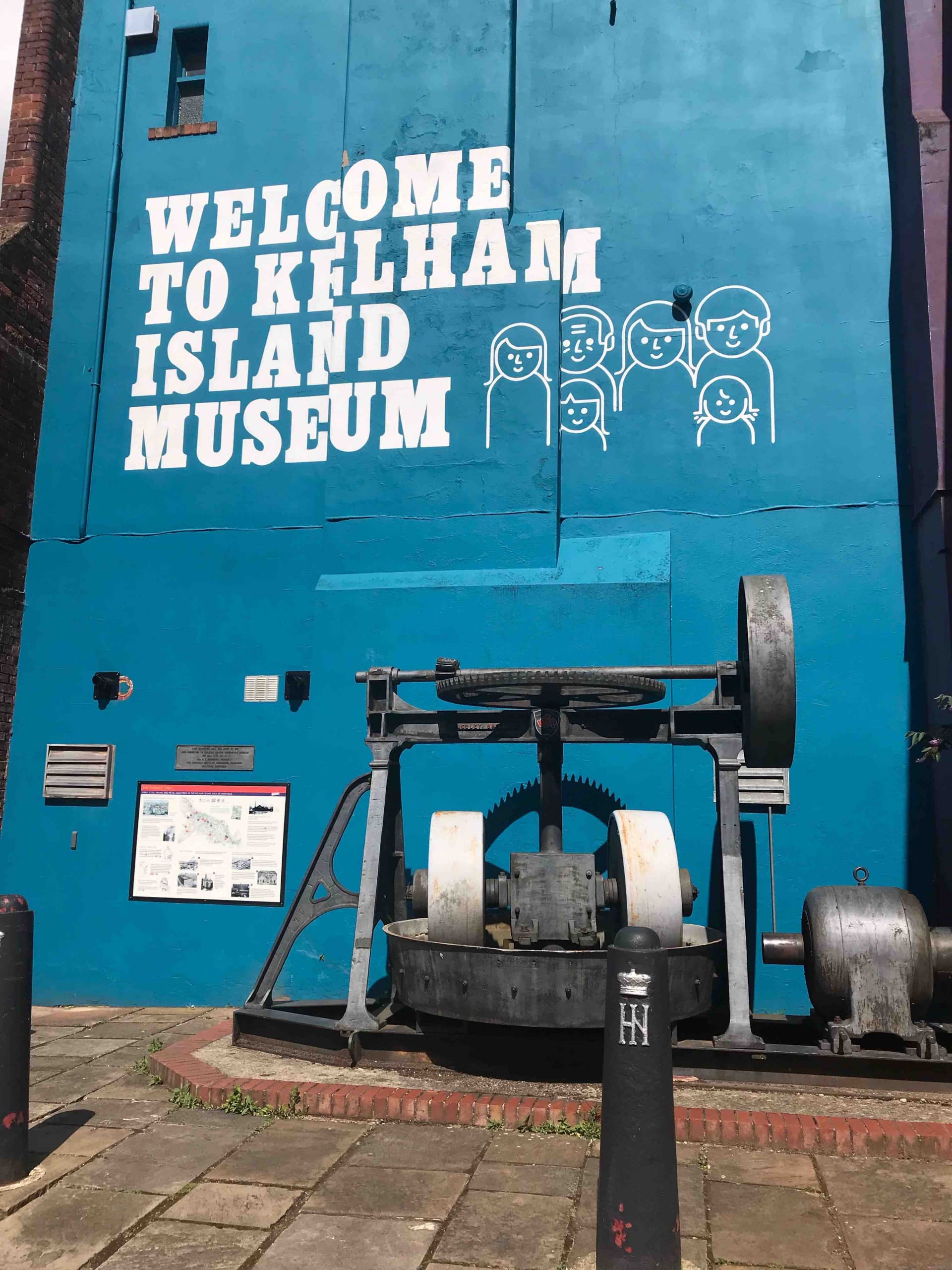
If you want to get the full story visit the Kelham Island Museum, which was created 40 years ago. You can see it prize exhibition for free because the only Bessemer steel converter still in existence stands in front. This egg-shaped black hulk quickly revolutionised 19th century steel production.
Thirsty work, the industry in its heyday and pubs like The Alma just down the street of that name existed to slake those forge-driven thirsts. Then came the long slow decline of the Steel City. From the Seventies onwards recession and dereliction battered Kelham.
It took a brave man to acquire the Alma, change its name to the ironic Fat Cat and start brewing his own exceptional beer in the yard.
That was the grand plan of Dave Wickett, the new co-owner. The pub introduced Sheffield to a cavalcade of guest beers and by 1990 when Dave took sole control he created his own Kelha Island Brewery in the beer garden. The pub survived flooding in 2007; the level is charted on the exterior alongside that of the The Great Sheffield Flood of 1864. It survived Dave’s early death and is still brewing in premises across the street.
In 2004 their flagship beer Pale Rider was voted Supreme Champion Beer of Britain at The Great British Beer Festival. It has hardly been off the hand pull ever since, though a recent month’s hiatus perturbed devotees.
Matthew Curtis, in his highly recommended new survey, Modern British Beer (CAMRA Books, £15.99) descrIbes Pale Rider thus: “There was some malt character in the flavour, soft and candy-floss sweet, but only fleetingly. This allowed a crescendo of hop to build with notes of candied orange peel to the fore, but they were restrained throughout with a balanced bittersweet finish forming at the end of this orchestral flourish.
A touch flowery but a good summary of my ‘aperitif’ experience before lunch over at Jöro. Old meets new in one memorable Kelham Island afternoon.
https://i0.wp.com/www.neilsowerby.co.uk/wp-content/uploads/2021/08/Kelham-main-scaled.jpg?fit=2048%2C1536&ssl=115362048Neil Sowerbyhttps://www.neilsowerby.co.uk/wp-content/uploads/2022/11/NS-typemark-v1c.pngNeil Sowerby2021-08-17 10:05:112021-08-17 10:14:26Saluting Jöro and the Fat Cat on Sheffield’s paradise Island
Hard to credit now but back in December 2019 Saint Lucia was the last foreign country I visited – before Covid turned the world upside down. There I consolidated my passion for rum. It will be consummated once again on Saturday, August 28 when Manchester Rum Festival makes its belated return. Among the many treasures to taste will be Saint Lucia’s own Chairman’s Reserve, Four Square from Barbados, Montanya from Colorado and our own Diablesse, all of which have been staging posts on my rum journey, which began among the sugar cane plantations of the Caribbean.
ST LUCIA
The two hour west coast road trip north from Soufriere to Castries is a clifftop, hairpin bend rollercoaster ride, requiring strong nerves at the wheel (taxi recommended). En route, the views are fabulous, the fishing villages of Anse La Raye and Canaries worth a quirky stop-off, our only regret we hadn’t time to detour to picturesque Marigot Bay.
Inland consolation, a ‘Rhythm of Rum’ tour of St Lucia Distillers. The island no longer produces commercial quantities of sugar cane, importing molasses from Guyana or Barbados and this is the only producer left but the quality is high from the core brand Chairman’s Reserve upwards. At the end of the hourlong tour you get to sample their 20 or so products and access discounts on purchases at the Rhum Shoppe.
Dave Marsland, organiser of the Rum Festival, also happens to be UK brand ambassador for Chairman’s Reserve. His favourite of the range? “It would be Chairman’s Reserve Forgotten Cask. It’s smooth with plenty of the ex-American oak barrel flavours coming through, whether I drink it straight, with coconut water or as an Old Fashioned. Works fantastic with cigars too.”
My own? The real knockout is the Denros Strong Rum – 80% ABV, 160º proof. Well maybe not a tot on a school night.
BARBADOS
Rum’s heartland is the northern parishes. Historic plantations still dot the landscape in various states of desuetude. Movable wooden worker’s dwellings called chattel houses add to the sense of transience. The clue to where all the sugar cane fields once were are the windmills.
In 1846 the island had more than 500 – only Holland had a greater density – and the remaining mills, in whatever state, are all now under a preservation order. The Barbados National Trust maintain the Morgan Lewis Working Mill. in the parish of St Andrew’s. From December to April visitors can see cane ground into juice there.
Under 10 minutes away and much more enjoyably hands on is St Nicholas Abbey, the island’s best historic day out. One of only three Jacobean mansions left in the whole Americas, the gabled old house set among mahogany trees summons up the ghosts of those early plantation owners with its museum addressing the slave issue, while current owners the Warren family lovingly preserve the old rum-making methods in a boutique distillery they set up a decade ago.
So you get a steam-powered cane crush and a traditional pot still, using cane for the syrup that’s unique to the 400 acre estate, half of which is under sugar cultivation. The quest for a premium quality spirit was consolidated by enlisting the advice – and starter rums – of Richard Seale, owner of the island’s multi award-winning Foursquare distillery.
So the older rums (10 years) we tasted with Larry Warren after our tour originated at Foursquare before being barrel-aged at the Abbey, most of whose own rums still need to serve their time in oak. There’s no church connection, by the way; Abbey’s just a landowner’s affectation from way back.
COLORADO
The little town of Crested Butte is not as glamorous as Rockies mecca Telluride. Indeed the folksy mountain charm is it selling point alongside – for me – its rum distillery. Whoa! We a long way from sugar plantations, so why did Karen Hoskin decided to set up Montanya Distillershere on Main Street? It’s the pure mountain water apparently that is the key, the stuff that makes spring so special.
So the flowers were in full spate in the high meadows above Crested Butte 150 miles north of Telluride. Like its rival destination, this former coal mining town is divided into a ski resort village and the original settlement below, rescued by hippies in the Seventies and still not insufferably gentrified.
I loved its bookshops and coffee hang-outs, kids selling homemade lemonade on the streets and, above all Montanya, for its sustainable ethos and the quality of its acclaimed small batch product. Rum sounds an odd drink to be making in the mountains but owner Karen Hoskin believes the 9,000ft altitude helps the progress.
“Our non-GMO sugar cane comes from family farmers in Louisiana, who grow and mill for us,” she says. “ Our water comes from one of the purest spring and snowmelt charged aquifers in the USA. Our rums are made by hand, from scratch, in a very traditional way using alembic copper pot stills from Portugal.”
One bonus of booking a Montanya tour is you get a complimentary cocktail in the garden bar. Karen discovered her taste for rum in Goa – try her signature, spicy Maharaja. You may never leave.
NEARER HOME
South Manchester is the least exotic rum address I know, but then Cleo Farman has always taken the Odd route. That was the name of her pioneering NQ bar on Thomas Street. That spawned Odder and Oddest and then they all all faded away leaving ebullient Cleo with the kind of midlife crisis we’d all want when she decamped back to the Caribbean where she had once worked for Richard Branson on Neckar Island. Retrenchment meant nine months researching rum blends, out of which arose in early 2019 her own bespoke blends.
They bear the name Diablesse – inspired by a Caribbean folklore spook, La Diablesse, born human but turned demonic after a pact with the Devil. Makes for a striking bottle label. They say you should use a long spoon to sup with the Devil.
Diablesse Caribbean Rum (40% abv) is Cleo’s benchmark blend of three distinctive rums, serious stuff, while Diablesse Clementine Spiced Rum (42.3%) is a crowd-pleasing demerara rum from the Diamond Distillery, flavoured with clementine and a spice mix of spice mix of vanilla pod, ginger, cinnamon, cinnamon and clove.
Lovely glugger the latter, but it is the Caribbean Rum that really makes you sit up and pay attention. Some canny blending has gone into its creation with a major contribution to its complexity and smoothness coming from ageing in American bourbon barrels. No added sugar or caramel either.
Manchester Rum Festival 2021 will be going ahead on Saturday August 28, 12pm-7pm at new venue Mercure Manchester Piccadilly Hotel. Check out the full list of rums via this link. I suspect it may be a sell-out even after a handful of extra tickets were squeezed out. Priced £30 + booking fee, please check here.
https://i0.wp.com/www.neilsowerby.co.uk/wp-content/uploads/2021/08/Sugar-cane.jpg?fit=1000%2C800&ssl=18001000Neil Sowerbyhttps://www.neilsowerby.co.uk/wp-content/uploads/2022/11/NS-typemark-v1c.pngNeil Sowerby2021-08-17 09:02:092021-08-20 11:51:49Some rum spots I’ve been in… now bring on its Manchester festival
Two years ago I discovered the leftfield cocktail bar of my dreams and alerted the world to its marvels. It felt like being kidnapped into a playground of flavours and aromas hosted by some Avengers mixology squad in their commitedly vegan hideaway. That seems a bizarre galaxy away. I’m naturally tremulous on my post-lockdown return to Speak In Code, where all its superheroes have been laid low by Covid at one point and commercial survival must have seemed precarious, too.
Flash back to that pre-lapsarian summer of ’19 when I wrote of Nathan Larkin’s new city centre bar: “Ever wanted to kick in the tumblers all those compilers of the ‘Top Ten Hidden Gem Bars Only Cool Dudes Like Ourselves Can Let You Into The Secret Of’? Quell your wrath. Take a walk up Jackson’s Row, after confusedly seeking an entrance in Lloyd Street, and you’ll arrive at the restrainedly Gothic looking entrance to Speak In Code.
“There’s a sign. No big secret. It’s not the portal into Cocktail Narnia, just your average Game of Thrones set much given to hip hop and the drip drop of mixologists’ tinctures, Oh and its totally vegan, too, food and drinks, which are symbiotically, sustainably linked. Order a Pornstar Martini at your peril.”
There’s still not an obvious hen party crowd pleaser on the drinks menu, but it all feels more accessible with a £10 Classics Menu occupying a quarter of the majorly revamped list. OK, it’s not your entry level Negroni you’re getting (equal parts, gin, Campari, Martini Rosso); instead it’s a blend of Chamomile Capucana Cachaça, Cynar Amaro and sweet vermouth.
Nathan is over his Covid bout and understandably excited by the new cocktail menu they have created
Sounds enticing but I’m really back at SIC to taste the more challenging elements of a record-sleeve inspired menu that styles itself Selective-Interpretation-Cocktails. Still a palate cleanser is in order, so I take Nathan’s advice and test out that sparkling Negroni offshoot, the Sbagliato. In Italian it means ‘mistake’. It was apparently created in the 1980s by Mirko Stocchetti at his Bar Basso in Milan; when making a Negroni he mistakenly reached for a bottle of spumante instead of gin.
Sbagliato, a bubbly take on Count Negroni’s classic cocktail
Prosecco provides the base bubbles here and sweet vermouth is in the mix. After which it gets more complicated. To create an amaro the team lacto ferment strawberries with non-iodised salt, a starter culture (tofu brine), and SIC’s home-made honey (from birch and quince). They let this sit for five days in an airtight bag until the bag balloons up, then they separate the juices, turn the juice into a 1:1 ratio syrup. They then reuse the fermented strawberry pulp by dehydrating and infusing into the Amaro for 24 hours for a ‘rich strawberries and cream vibe’.
To complete it they make an oil (oleo) by peeling oranges, massaging the peels in sugar and again leaving for 24 hours for the skin oils to seep out and dissolve the sugar. PS It was delicious.
Before a similar exploration of the further three cocktails I essayed – Track 5, Track 6 and Track 10 – a brief explanation of that ‘track listing’… I hope I got the drift, Nathan. It was a quick run through before you had to rush off to pick up your Romanian rescue dog, Cheddar. Still I was left in the safe hands of your oppo, Jamaican-Irish Brummie Connan.
Sleeve notes from Speak In Code
The new three part drinks brochure – Signatures (forward thinking), B-Sides (present), ClasSICs (past) comes inside an EP sleeve. The back cover details the plant-based food menu, which retains the cauli wings in buffalo sauce and adds the likes of ‘Neatballs’ and the stand-out jackfruit-led mock duck steamed buns. The front is a green/blue amoebic image created by placing a canvas on top of a bass amp and Nathan playing Dr.Dre – Forgot About Dre on bass, letting acrylic paints fall into this pattern. Well, I did say leftfield. But it mirrors the creativity of the cocktail offering.
The bar’s hip-hop inspiration has been there from the start and Nathan’s innovative bar career (that began with Hard Rock Cafe) has gone hand in hand with his development as a designer and photographer. Each drinks section has an appropriate symbolic image; linking to a music studio come bar; the eight B-sides (£11 each) are labelled Untitled 1 to 8; I’m here to sample three Tracks from the 16 Signatures (£12).
Bourbon is infused with dried shiitake mushrooms for 24 hours, strained and then melted plant butter is added before blast chilling. You’re left with a savoury, slightly sweet and salt bourbon with a creamy mouthfeel. Toasted sunflower seeds are added to a sweet vermouth, for their oil and fat properties. The strained sunflower seeds are rehydrated as part of the garnish. The house corn purée is citrus boosted to add bite, and tastes like pineapples and passionfruit. The bourbon soaked shiitake mushrooms are blended down with dark soy, maple syrup, apple cider vinegar, salt and smoked paprika, then spread out on baking paper and dried out to make a bourbon mushroom jerky to garnish with the sunflower seeds. It’s a mad tropical meets umami experience.
This is an indulgent drink thanks to the infusion of fatty, creamy, acidic non-dairy coconutyoghurt into an aged rum. For the syrup they use both roasted and unroasted coffee beans, with a pinch of salt and a dash of vanilla. The unroasted coffee brings a vegetal and earthy tone to the drink. Dark chocolate is mixed with rock salt and coffee and added to silicone moulds with the SIC logo to garnish.
Track 10
Toasted sunflower Japanese whisky; Quinquina aperitif; Soju infused with chai and Thai basil; purple sweet potato orgeat; polenta chip garnish
Japanese whisky this time embraces the toasted sunflower seeds for their oil and fat properties, the Quinquina providing bitter herbiness, the infused Korean Soju floral hints, the orgeat syrup an unguent texture in a cocktail that pretty much sums up the playful SIC ethos of contrasting salty, sour and sweet.
Speak in Code, 7 Jackson’s Row Manchester M2 5ND. 07767 658690. Open Sun-Thu 5pm-12am, Fri-Sat 5pm-2am.
https://i0.wp.com/www.neilsowerby.co.uk/wp-content/uploads/2021/08/Track-10.jpg?fit=1440%2C1220&ssl=112201440Neil Sowerbyhttps://www.neilsowerby.co.uk/wp-content/uploads/2022/11/NS-typemark-v1c.pngNeil Sowerby2021-08-10 21:48:342021-08-11 07:35:42Speak In Code is back on track, with some cracking cocktails
So you think you know what Provencal rosé is all about? At the pale end of pale pink, ripe fruit with (you hope) some fresh acidity and a dry aftertaste? There will be a wide price range but a reassuring homogeneity, especially when chilled to within an inch of its roseate existence.
Every summer now there seems to be a mad scramble to think pink, especially Provence. Hence an obligatory tasting of 300 in the current issue of Decanter magazine. Verdict of their rosé expert, Elizabeth Gabay MW: “Quality was consistently high, with some squeaky clean wines at all price points. The downside was an almost unending monotony of style.”
In the resultant Top 30 recommendations the rosé at No.5 (with 93 points) stands out as a ruddy maverick interloper among the pale brigade.
She describes Château Gasqui, Silice, Côtes de Provence Rosé 2019 as: “Pale red copper. Perfumed, almost grapey, red fruit aromas. On the palate a beautiful explosion of ripe red fruit, creamy apple compote, a touch of orange peel, marmalade, crushed citrus and some pretty leafy acidity. Quirkily different, intensely fruity and fresh. A gorgeous wine from a biodynamic producer, who is not afraid of ripe fruit and who makes wines which age with ease.”
What did also surprise was the UK supplier,https://www.owtleeds.comOWT of Leeds. Weren’t they the outfit that set up in the city’s Kirkgate Market with a menu generated from what was freshest on the stalls daily? ‘Owt!’ being the answer to what was available. It was a natural extension of co-owner James’s time as a volunteer chef at Real Junk Food Project flagship Armley Junk-tion.
How does all this link to Southern France’s fields of lavender, sunflowers and vines? Bear with me for a paragraph. Well, OWT has now decamped from the Kirkgate to a cafe unit in the nearby Corn Exchange, Grade 1 listed, domed Victorian gem. The casual but precise food offering remains much the same – from breakfast to late afternoon but with a more expansive Thursday evening menu that wasn’t possible under market hours.
Esther and James are, step by simple step, rising stars of the Leeds food scene
Oh and on the left as you go in among some chic OWT merchandise you’ll find a trio of exclusive Provencal wines from the family vineyard of James’s partner, Esther. Her surname, Miglio, is a clue to an Italian bloodline way back, but she is the very French daughter of Francois, winemaker for 30 years at Château Gasqui.
She’s proud of the Gasqui wines and so she should be. After hopping on a train to Leeds I can confirm what a complex belter the ‘Silice’ rosé is, like the Roche d’ Enfer! red, dominated by the Grenache grape. Yet just as striking was Esther’s favourite, the Roche d’ Enfer! white from 2013. The ageing has obviously benefited the Semillon that forms part of the cepage with Rolle and Clairette. What struck was a hint of jasmine on the nose, a waxy mouthfeel and spice notes among the honeyed peachy fruit.
Château Gasqui’s vineyards are set in and support an idyllic natural landscape in the South of France
All three wines are available by the glass at £5, £25 the bottle (which is also the takeaway price). Not cheap but worth it for the purity of fruit extracted by Francois, driving force behind Gasqui being one of only two biodynamic producers in the region. Pictures of the vineyards radiate healthy, blossomig terroir. The brand-heavy fleshpots of Saint-Tropez and the Med Coast may be only 40km to the east but this is a world away, a sustainable enterprise, the antithesis of vinous bling.
OWT’s food is a perfect complement to the wines. I lunched mid-afternoon off a small menu offering a choice of summer tartelette, aioli with prawns, ‘pepper patchwork’ or panzanella. I went for(and didn’t regret) the £10 steak plate that consisted of a 7oz Yorkshire rump steak, properly rare as requested, plus a herb salad and salsa verde. Fries had run out for the day (it was 3.30pm), so I ordered a side of OWT pickles at £3.50. Carrot, cucumber, ginger and red onion, all fresh and tangy as Esther recounted how after a history course at Marseille University she decided to check out Manchester and fell in love with it gigs and bars. There she met James and he persuaded her a future together lay in his native Yorkshire. God’s Own Country got the best of the deal, you feel, when you taste the wines she has brought with her.
A swift guide to biodynamic winemaking and how it benefits Gasqui
Biodynamics is often referred to as ‘super-charged organic’. Its roots are in the theories of the Austrian philosopher, Rudolf Steiner (1861-1925). Rather than simply reducing chemical inputs, biodynamic production is a proactive attempt to bring life to the soil with the use of natural composts and organic preparations.
It’s more than just an agricultural system, rather an altered world view that then impacts on the practice of agriculture. Winemakers drawn to this philosophy tend to be creative, spiritual types, deeply connected to their land and always experimenting to see what works best. Which seems to sum up Francois Miglio’s approach.
Gasqui holds Demeter biodynamic certification after the Château’s owner was persuaded to go down this radical route, which forbids chemical fertilisers, pesticides, herbicides or fungicides. Instead insect life and spiders are encouraged to control pests; manure encourages organic growth. After hand-harvesting the grapes the wine is produced in a gravity-fed cellar without winemaking additives. Ambient yeasts are used, with no or scant sulfites and no fining.
More controversially all significant vineyard activities – soil preparation, planting, pruning, harvesting – are done in accordance with the influence on earth by the moon, stars and planets. Finally, the aspect that can spark scepticism – the use of nine preparations 500-508 (a bit like homeopathy), using plants such as nettles, dandelion and chamomile, to be applied in powdered form or as sprays. Most divisive is Preparation 500’, where cow horns are filled with cow manure and buried in October to stay in the ground throughout the dormant season. The horn is later unearthed, diluted with water and sprayed onto the soil.
In a magazine interview Francois said of the Steiner strictures: “It is important to understand that 50 percent is symbolic and 50 percent is real… it all helps focus.”
All of which reminds me of a memorable trip to Ted Lemon’s Littorai winery in Sonoma, California. In Ted’s absence his young deputy confessed to not being a total convert to biodynamics (the perfection of the Pinot Noir was proof enough for us). And yet, as he put it, “It sure does make you pay attention.”
We loved the copper hue of Château Gasqui but if rosé has to be pale pink for you?
Much has been made of a celebrity influx of Provencal rosé providers, led by Brad and Angelina, whose Château Miraval is made by the Famille Perrin, Chateauneuf du Pape royalty at Chateau Beaucastel. Majestic have it at £19.99 bottle, £14.99 in a mixed six case.
My Provencal pink alternative from a celebrity duo would be Domaine de Triennes, a joint venture by Aubert de Villaine of Domaine de la Romanée-Conti, and Jacques Seysses of Domaine Dujac in Burgundy. It’s a serious well structured wine without sacrificing all the joyous fruit (£13.95 from Vin Cognito. A simpler favourite would be Coeur De Cardeline Rosé, better value at £8 than its Co-op stablemate, Brangelina’s ‘Studio de Miraval’ (£12).
https://i0.wp.com/www.neilsowerby.co.uk/wp-content/uploads/2021/08/Grapes.jpg?fit=1410%2C989&ssl=19891410Neil Sowerbyhttps://www.neilsowerby.co.uk/wp-content/uploads/2022/11/NS-typemark-v1c.pngNeil Sowerby2021-08-05 17:51:232021-08-05 17:51:27The Corn Exchange Rosé blooms far from its biodynamic roots
Exciting openings have not been plentiful of late. Now we have one. Such is the allure of the re-born Black Friar, reopening on Tuesday, July 27, not even the stormy weather heading our way can zap the al fresco vibe generated by its glorious garden. The short hot summer was at its peak when we got our sneak preview. The rest of the world will inevitably follow.
Hurtling along Trinity Way, you’d be hard pressed to twig the large terrace behind its palisade; ditto the glass-fronted restaurant annexe seamlessly attached to the Victorian sandstone and brick pub, restored to the tune of £1.4m.
Black Friar – Salford heritage among the new build
For two decades, after a devastating fire, it stood desolate on the corner with Blackfriars Street. Not quite an eyesore – if you were a fan of Boddingtons Bitter. As the reputation of the ‘Cream of Manchester’ turned sour under successive corporate owners the prominent two bees logo decked out in yellow and black on the end of the building was a lachrymose reminder of the straw-coloured, fragrantly hoppy nectar the beer once was.
This may be apocryphal but I’m told Boddies cask was so popular in the Seventies the Black Friar stocked no keg beer or lager. That was an old school Salford boozer; in its latest incarnation it reflects a new apartment block generation colonising the former industrial wasteland. Food-oriented, most definitely. Developers Salboy originally intended it to be a vehicle for star chef Aiden Byrne, but he pulled out as the pandemic struck; in his place is another ex-20 Stories talent, Ben Chaplin.
Still it plugs its pub credentials, honouring the brewery that once belched malt fumes over Strangeways by offering the keg Boddies at £4.50 a pint. A bland brand, it’s brewed by Inbev in Samlesbury; I’d veer towards the excellent wine list instead.
The trad pub sign also name checks Boddingtons. It features a jolly friar, given a shaggy dog back story on the website (and a chance to proclaim the pub’s Resurrection, thankfully without appropriating the Stone Roses).
I’d hoped the fashion for this kind of naff narrative self-validation had passed, but hey it’s just a quibble. Let us praise. The Black Friar is a holy exceptional addition to the Manchester/Salford food and drink scene. The first Salford gastropub proper since the demise of Robert Owen Brown’s remarkable Mark Addy.
What immediately impressed on that embryonic lunchtime visit was the quality of service mustered from a young crew by exuberant Lebanese general manager Remi Khodr. From the immediate water bowl for our chihuahua, Captain Smidge, to the limoncello proffered when our puddings were slightly delayed the experience was a delight.
Probably because Smidge was with us we were seated at a garden table. No hardship but the restaurant proper looked the stylish business. An open kitchen, an abundance of greenery, black and white tiles, marble table tops, all filled with light.
.A section of the garden – Boddingtons Corner – can be hired for private events, as can the panelled, drawing room-like Sanctuary on the pub’s first floor.
Totally gratuitous image of the Blackfriar. Few pub interiors can match its art nouveau magnificence
As many original features as possible have been retained but alas the shell was vandalised during the lost years. Compare and contrast its namesake in London, the Blackfriar, a masterpiece of art nouveau don by the Thames, built on the site of a real priory. It did serve Boddingtons in its heyday; food has never been a priority.
Under head chef Chaplin it definitely is here. There is to be an upmarket ‘pub food’ menu but we got to sample the ‘restaurant’ offering. Eventually there’ll be a chef’s table on the Black Friar’s second floor. You can see the ambition in what’s on offer already. I have never encountered such an elaborate, deconstructed tiramisu. No wonder it took time to emerge. A honeycomb and gold leaf wow. Equally satisfying was a 72 per cent Valrhona chocolate fondant with peanut butter ice cream across the table.
A starter of juniper-cured ‘au point’ Creedy carver duck was stunning, served with sweet roast cherries and a pickled kohlrabi salad. My Cornish boudin, in contrast struck a drab note, despite the best efforts of basil jelly and some interesting smoked dehydrated watermelon. Little roundels of seafood sausage betrayed hardly a hint of crab.
Main prices are heading premium-wards. £28 for roast Cumbrian rack of lamb, but all the Mediterranean elements of the dish were in harmony – glazed baby aubergine, kalamata olive and confit tomato jus. Smidge loved his substantial tithe.
Perhaps there was too much going on in our other main, a couple of quid more. Wallowing in a polite ‘bouillabaisse’ with a scattering of mussels was a dense seared monkfish fillet. Giving it a flouncy 20 Stories feel was a small flotilla of nasturtium leaves. A mound of squid ink rouille was excessive and would have been unbalancing if I hadn’t shoved half to the side. No matter, this is food worth making the trek for.
Would I treat it as a pub to drop in for a pint? Doubt it. That’s what The Eagle around the corner is for. And yet… that garden. That first kiss of ‘freedom’. I know how Adam felt. Before the Fall, that eternal lockdown.
The Black Friar, Blackfriars Road, Salford M3 7DH. 0161 667 9555.
https://i0.wp.com/www.neilsowerby.co.uk/wp-content/uploads/2021/07/The-garden-scaled.jpg?fit=2048%2C1536&ssl=115362048Neil Sowerbyhttps://www.neilsowerby.co.uk/wp-content/uploads/2022/11/NS-typemark-v1c.pngNeil Sowerby2021-07-24 17:58:002021-08-05 17:55:17Black Friar gastropub – Got to get ourselves back to the garden