Denver, San Diego, Portland, Seattle, Boston, and in a few one horse towns in between, the magnet of new wave American brewhouses and tap rooms has proved irresistible. So much less concentration required compared with serious winery tastings. Not that I don’t take beer seriously – but more as serious refreshment. No swirling, sniffing and spitting involved.
Sonoma County in California, with its Pinot Noirs and Chardonnays, is the laidback alternative to Napa. It’s the New World wine country of my dreams. If recent trips have involved dodging raging bush fires or coastal fog stifling the Pacific’s famous sunsets, well every paradise can slip into occasional purgatory.
But why would you name a signature beer after Sonoma, as Manchester brewers Track have? Could it be the presence in county seat Santa Rosa of Russian River Brewing Company, whose Pliny The Elder, technically a double IPA, is one of the most sought-after beers on the planet? For any geeks reading, it’s named after the Roman natural philosopher, one of the first to reference hops in his writings.
My own go-to West Coast IPA, on a less stratospheric level is Racer 5 from Bear Republic in downtown Healdsburg 15 miles north of Santa Rosa. Malty but hoppy, floral, resinous and bitter, it has always made me happy as did the original Bear Republic brewpub, now forced out of an upmarket tourist town because of running costs.
Clever Track Brewing Company in Manchester for opening their new tap room at Unit 18, Piccadilly Trading Estate, definitely not a tourist honeypot but, close to the equally revered Cloudwater at 7-8. I’ve loved their Unit 9 taproom as a cool space, but Track’s (see pictures below) has trumped it. It is quite beautiful. Seven years after launching in a Sheffield Street arch, and a succession of not quite appropriate bars, it has a home fit for its beers.
And at the recent launch Sonoma Pale Ale, as befits a beer synonymous with contemporary Manc beer culture, was available as both keg and cask.
I prefer it as cask. All my lockdown beer dreams were of hand-pulled real ale, hopefully through a tight sparkler. These came true when Iinterviewed Matthew Curtis about his Modern British Beer (CAMRA Books, £15.99). A superb range of Cloudwater beers were on the lines at Sadler’s Cat but I stuck to three pints of cask Sonoma, described by Matthew in his book as “A beer that revels in the softness of a smoother pour, while losing none of its strolling-in-a-citrus-grove character. Its gentle ABV of just 3.8% also makes it accessible.” No wonder it accounts for half of Track’s production.
Matthew was at the preview with us. Unlike Track founder Sam Dyson, who is laid up with a horrendous fracture sustained playing five-aside, and wife Mel, in the final throes of pregnancy. We toasted them royally in their absence across a beer range that is testimony to Sam’s love of hoppy American beers. And the Patel Pies residency provided the necessary ballast.
• If you love breweries with an on-site bar and great food check out another new arrival in Manchester, The Bundobust Brewery. And it does its own facsimile of Racer 5. Here’s mywelcome to it.
https://i0.wp.com/www.neilsowerby.co.uk/wp-content/uploads/2021/10/Pint-copy.jpg?fit=1200%2C839&ssl=18391200Neil Sowerbyhttps://www.neilsowerby.co.uk/wp-content/uploads/2022/11/NS-typemark-v1c.pngNeil Sowerby2021-10-05 20:38:262021-10-06 16:51:20Sonoma dreaming as Track’s new taproom proves a destination of equal beauty
Time was there used to be a new brewery opening every month in Manchester with cosy taprooms hard on their heels. That torrent of craft has slowed to a trickle with the emphasis now on established operations upsizing to bigger premises. Track are shifting up to Piccadilly Trading Estate opposite Cloudwater while both Beatnikz Republic and Blackjack have expanded into neighbouring arches.
Bucking the trend (though it has, appropriately, had the gestation period of an Indian elephant), is the Bundobust Brewery, which is opening from 4pm on Thursday, September 16, offering the group’s full repertoire of Gujarati street snacks and craft beer, much of it their own, created on the premises. So the kind of major, major opening we’ve been starved of. And it’s dog-friendly. Our chihuahua Captain Smidge (below left) approved even though spicy veggie is not quite his thing.
It’s located in the Grade II-listed St James Building on Oxford Street, a swift stagger from Oxford Road Station or the St Peter’s Square Metrolink stop.
The last time I was on site was February 12, 2020 and we all know what inhibiting factor for hospitality happened shortly after. Kitted out in a hard hat, I quickly recognised why Bundobust co-founders Marko Husak and Mayur Patel had fallen for the former car park with its wealth of period features – vintage alarm bells, glazed bricks and ‘Drive Slowly’ signage – plus a show-stopping giant glass atrium mirroring the Piccadilly Bundobust’s glass apex.
This is all on a much bigger scale, influenced by US brewpubs and with a focus on sustainable furniture. Each chair is made from 40 recycled plastic water bottles, while school desks have been repurposed into beer hall-style tables, complete with “I Woz ‘Ere” etchings across a 150-seat taproom and restaurant. All within a fully-functioning brewery that gleams with all the allure of a new toy. A toy that’s in the hands of a very experienced head brewer.
Dan Hocking, former main man at Holland’s world-renowned Uiltje Brewery, has spent the past year perfecting recipes behind closed doors in the state-of-the-art facility.
Bundobust’s brand new Vienna-style Lager, Cartway Lager, will be available exclusively at the brewery upon opening, taking its name from the historic ‘Cartway’ space within the St James Building that the brewery occupies. Hocking says: “Vienna Lager has a fantastic balance of sweetness and bitterness, and it’s the best all-rounder beer style to pair with food”.
On the opening day the first 200 pints are being given away, with the purchase of food and we expect lager demand will make it Goodnight Vienna.
Marko tells me: “We were due to open in May 2020. The past 18 months have slowed us down, but the delay has meant that we’ve been able to develop our beer recipes. Expect the familiar Bundobust vibe and menu, with the bonus of being in a working brewery”.
That 10-hectolitre custom-build is capable of producing 20,000 pints per month. The beer range will only be available, on rotation, at the Brewery and at the other Bundobust venues in Manchester, Liverpool and Leeds. They are designed to partner the award-winning food.
CHAITRO. 5% Nitro Chai Porter. Smooth and creamy Porter with roast malts, a whack of our Bundobust chai masala, and fresh ginger.
PEELA. 4% Pale Ale. Easy drinking hazy Pale, brewed with Azacca and Ekuanot hops. Loads of tropical fruit flavour.
DHANIA PILSNER. 4.8% Coriander Lager. Clean and crisp Czech-style Pilsner with a hit of citrusy toasted coriander seeds.
KIPSY BHAI. 4.8% Kellerbier. Traditional Kellerbier-style lager with German malts and hops. Clean, balanced and crisp.
EAST IS EAST. 6.5% New England IPA. New England-style IPA showcasing ever-changing combinations of the freshest hops.
WEST IS WEST. 6.5% West Coast IPA. Dank and bitter IPA. Piney and resinous, brewed with a rotating selection of the choicest hops. An absolute stand-out.
Bundobust Brewery will also be collaborating with the cream of UK brewery talent. Recent collaborations include Andhera Hoppy Black Lager with Deya Brewing Company, New Delhi Dazzler India Pale Wit with Northern Monk, and Salted Lemon Sour with North Brewing Co.
On a personal note, I have a small role in the Bundobust Odyssey. I was an early reviewer, for Shortlist magazine, of Marko’s pioneering Sparrow Bier Cafe in Bradford, ensuring it made the Top 10 UK craft beer bars, and as a customer wolfed my share of dosas, choles and chaats at Prasad, the Patel family’s acclaimed restaurant, now in Drighlington. In 2014 the two friends combined beer and veggie small plates to create the first Bundobust in Leeds (yes, Zelig-like I was there). The Brewery is just the latest chapter in a delicious indie story.
https://i0.wp.com/www.neilsowerby.co.uk/wp-content/uploads/2021/09/Dan.jpg?fit=2048%2C1365&ssl=113652048Neil Sowerbyhttps://www.neilsowerby.co.uk/wp-content/uploads/2022/11/NS-typemark-v1c.pngNeil Sowerby2021-09-08 18:07:442021-09-16 10:16:26Brewer Dan fuels the Spice Odyssey as Bundobust Brewery finally takes off
Best kept secrets and hidden gems have a habit of finally exploding into the public domain. So Farm Trip may count as a wider coming of age for Rivington Brewing Co. Proof of the pudding? Tickets sold out in a flash for all five days of this craft beer ‘Woodstock’ with over 50 different guest beers on offer.
Ben Stubbs and his brewtap team will be praying for an Indian summer for the event, running from Wednesday, September 29, to Sunday, October 3. The hilltop that hosts the traditional family farm, a camp site and one of the UK’s best craft breweries is idyllic in the sunshine with its views of Winter Hill and Rivington Pike, but squally weather will send you rushing for the sanctuary of the marquee.
Fog? Not a problem; just neck it. Never Known Fog Like It, 5.2% New England pale ale, is the standard bearer for a beer range that wears its American influences on its sleeve. Matthew Curtis, who I interviewed about his essential new book, Modern British Beer, chooses Days of Candy as his benchmark Rivington brew. It’s a west Coast style, ie clear, grapefruity, resinous, making ample use of Hallertau Blanc, Mosaic, Simcoe and Chinook. It’s been a lovely stalwart since Ben opened the brewery in 2014 with his farmer brother-in-law Mick Richardson, but I go with the crowd in favouring Fog (hopped with with Citra, Mosaic, Simcoe & Chinook).
Even before UK craft aficionados fell head over heels for murky, juicy brews inspired by East Coast USA I invariably ordered it when I trekked up to Rivington’s legendary Tap Beneath The Trees summer weekends. The walk past the three reservoirs (above) is the best route. The woodland setting was as intoxicating as the brews from the makeshift bar – IPAs, saisons, porters, barley wines, even a Grisette (a farmhouse style from the Northern French mining region). It all signalled a magical new chapter for Home Farm, in the same hands for 10 generations. The Farm Trip is just the same beer adventure writ large.
Rivington Brewing Co, Horrobin Ln, Adlington, Chorley PR6 9HE. Tap open Wed-Sun. No tent stay 2021. Caravan/trailer, tent/motor home only.
https://i0.wp.com/www.neilsowerby.co.uk/wp-content/uploads/2021/09/Lone-table-scaled.jpg?fit=2048%2C1330&ssl=113302048Neil Sowerbyhttps://www.neilsowerby.co.uk/wp-content/uploads/2022/11/NS-typemark-v1c.pngNeil Sowerby2021-09-06 13:31:542021-09-06 14:35:01The UK’s most beautiful beer garden? Just let the Fog settle
This is an epic pioneering tale of brave new frontiers versus folk settled in their ways. Of an award-winning beer named after a 2,000 mile trek in search of a new life… or its champion’s own 200 mile switch from Crouch End to Levenshulme and a kind of ale apotheosis.
The day I met beer writer and South Manc ‘incomer’ Matthew Curtis to discuss his new book, Modern British Beer (note the absence of the word Craft), Elusive Brewing’s Oregon Trail West Coast IPA had just been judged country winner in its category at the World Beer Awards and would represent the UK in the world finals. Cue much whooping it up in wild Wokingham, where this modest but progressive brewery is based.
Oregon Trail West Coast IPA uses Chinook, Simcoe and Columbus hops for “a resinous profile with a citrus undertone, the bitterness helping to balance the light caramel flavours of the malts,” according to Elusive.
Curtis in his book is more hopstruck, and rightly so. “For me this style (West Coast) is all about using malted barley to construct a pillar of caramel sweetness, which is then adorned from plinth to pedestal with the most bitter, resinous and aromatic hops you can find.”
All at a quite reasonable 5.8% ABV, compared with the Elevator IPA at 6.5 I encountered at the Oregon City Brewery once upon a day. I still can’t work out why I was visiting the trailhead of the original 2,000 mile Oregon Trail that brought the settlers’ wagons west from Missouri. Yet the beers I tasted there, far from the hip urban centres, were a further confirmation that the land of Bud and Miller Lite offered a remarkable alternative – one that would be cloned elsewhere.
The Elevator washed down a helping of Reuben dogs that could easily be on the menu at many of our own brew taps. Let’s call it all the transatlantic symbiosis of hopheads. In Washington State’s Yakima Valley I visited both a hop farm that supplies our own BlackDog and the rather fusty American Hop Museum (exhibit next to Oregon Trail can, above).
New wave UK beer writers such as Mark Dredge have codified the global beer styles that have been clarified/reinvented across America and then taken up over here. Matthew Curtis goes a step further and charts the creative melting pot of our own mash tuns and barrel ageing projects. Modern British Beer proves we are not just brewing lackeys; our own cask ale traditions remain the envy of the world, our own innovations the equal of anywhere.
The seeds of his own own beer writing career were actually sown in the States, in 2010. “My Dad had just emigrated to Fort Collins in Colorado, which is home to an incredible bunch of breweries”, he recalls. “The Odell Brewing Co IPA just blew me away, after which I became obsessed with researching beer.” A blog followed in 2012 and he went full-time freelance in 2016.
Sign of changing times, Modern British Beer is published by CAMRA Books (£15.99pb). This new open door policy may rankle with the diehard stalwarts for whom cask beer is the only choice on the bar, but the brews they are ‘a changin’. The sheer quality of a new generation’s beers, cask, keykeg or keg, cannot be ignored.
So Curtis, region by region, picks an exemplary beer from brewers he deems ‘modern’ according to a manifesto in the front of the book. Some 90 breweries in all feature. Omitted are influential traditionalists such as Harveys and Timothy Taylor, only because they are not ‘modern’. In his opening chapter Curtis dubs the whole contemporary beer scene ‘The Broad Spectrum of Joy’, incidentally the name of his celebratory beer collab with Sussex’s Burning Sky, another brewery fave we share.
We met at Manchester’s own Small Chalet of Joy, Sadler’s Cat, formerly artisan-crafted The Pilcrow, perfect excuse for missing trains from nearby Victoria Station. Now under the aegis of Cloudwater Brewery, it is serving as a guest Track Sonoma on handpull, the stuff of long lockdown dreams. I can’t resist just the three as I quiz Curtis specifically on what makes the Manchester beer scene so enticing he had to relocate last November.
Cloudwater’s Double Hopfenweisse, for a start. How could you not live in a city, which can yoke a German wheat beer style with a modern double IPA? Groundbreaking in different way is Cloudwater providing a platform for black and LGBTQ+ owned beer brands such as Eko Brewing, Rock Leopard and Queer Brewing via collab IPAs getting a national profile on the shelves of Tesco. Woke, of course, but the beer scene has moved on, hence the need for MBB as well as The Good Beer Guide.
Curtis has been living up here for the past 10 months. “It was a fresh start in a new city, Levenshulme felt like Stoke Newington 10 years ago and the beer scene was a huge draw.” It wasn’t the best time to relocate, he admits, but he has no regrets. His partner Dianne had been the driving force and he eventually acquiesced. As a freelance (check out the online magazine he co-edits, Pellicle) he could work from anywhere – and when they arrived she found a job, appropriately enough, as Cloudwater’s Unit 9 tap room manager.
Manchester wasn’t new territory for Curtis. IndieManBeerCon, Friends & Family & Beer, CAMRA’s Manchester Beer and Cider Festival, Marble, Manchester Beer Week, had all been ‘magnets for Matt’.
“Every week in Manchester is Beer Week,” he told me. “IndyMan was the blueprint for all modern beer festivals and I’m fascinated by Beer Nouveau recreating old beer styles. The city has a bit of everything, too. Classic old family breweries such as Lees, Hydes and Holts; incredible traditional pubs such as the Peveril of The Peak, City Arms and the Marble Arch.”
His own local in Levenshulme is Station Hop, one of the bevy of craft beer bars that have sprung up in the past decade. Witness their shortlist dominance in the pub/beer bar category of this year’s Manchester Food and Drink Awards – the likes of Heaton Hops, Beatnikz Republic NQ bar, Reasons to Be Cheerful and Nordie (another Levy watering hole for Curtis).
If it had re-opened earlier, Sadler’s Cat would surely have been a candidate. The refurb has been a real refresher. It gets its name from the cat that accompanied pioneering 19th century balloonist James on his ascent and is curled away in Sadler’s Yard, off Corporation Street.
Graeme Brown of Curators of Craft offers a compendium of ‘modern beers’ online
Of course, a major beneficiary of lockdown home drinking has been canning. Home delivery has allowed beer geeks licence (sic) to explore febrile, far-flung corners of the beer scene. With a huge turnover of one-off brews or seasonal specials it is exhausting, thirsty work. In my quest to locate specific beers spotlighted in Modern British Beer I checked out Curators of Craft, which mails out British and Belgian beer nationwide from its Calder Valley base. My order, as a local, came via electric bike.
Graeme Brown set up the business in November 2019 and has stock from over 60 breweries, including stellar names recommended in the the Curtis book. But of the individual examples representing each brewery only one could I find. Yes, you guessed it, Oregon Trail didn’t prove elusive. And it’s a beer I’d settle for any day.
https://i0.wp.com/www.neilsowerby.co.uk/wp-content/uploads/2021/08/Matt-Curtis-scaled.jpg?fit=2048%2C1414&ssl=114142048Neil Sowerbyhttps://www.neilsowerby.co.uk/wp-content/uploads/2022/11/NS-typemark-v1c.pngNeil Sowerby2021-08-25 12:12:002021-08-29 15:52:19Modern British Beer – through a glass brightly with Matthew Curtis
Summer 2021 marks two milestones in the post-industrial bubble that is Kelham Island. Cutting edge restaurant Jörohas expanded beyond its upcycled shipping container base to open a four-room boutique hotel nearby, complete with chef’s table, while the homely pub at the heart of this buzzing urban community is celebrating 40 years of just being The Fat Cat.
A maverick umbilical cord links that almost bucolic cask beer mecca, whose in-house brewery spawned the iconic Pale Rider ale, to the sleek steel (well it is Sheffield) Krynkl complex where chef Luke French has transformed the city’s culinary expectations over the past four years. It reached No.34 in the Estrella Damm National Restaurant Awards (announced on August 16).
Post lockdown it seemed a good time to visit both pioneering venues. So a tram from the station (after a Thornbridge Jaipur refresher, naturally at the Sheffield Tap on Platform 1B), then across the busy Shalesmoor roundabout to a suddenly hushed warren of backstreets to establish the respective locations.
Only disappointment of a dazzling day, the Kelham Island Tavern had been forced to shut
A detour might have been in order, too, to the Kelham Island Tavern, arguably the city’s best craft beer pub venue but – sign of the times – there was a Covid-closure note on the door. Still the pre-amble ramble did allow me to soak in the atmosphere of a district that defines industrial heritage and cool renewal…
Renewal, of course, means creatives clustering in shiny new build apartments or brick-heavy warehouse conversions with a casual bar/dining scene springing up to service the influx. And occasionally big hitters show up such as Mana in Ancoats, Brat in Shoreditch or Casamia on the Bristol waterfront. Sheffield has its own contender…
JÖRO
One slight tremor as I entered the penumbral interior, the normal 50 covers reduced as a Covd-safe measure. Would the widening horizons of Luke French and his wife and business director, Stacey Sherwood-French impact on the core operation? Not jut th hotel project but also street food spin-offs. Fear not this was an outstanding £65 eight course lunch that ate up three joyful hours. I’m not sure I’m a fan of the building, shaped from 29 shipping containers but I am of a serving staff that included one who had a sake qualification (thanks for the New Mountain Junmai recommendation) and another who knew his way round the new Spanish wine frontiers of Ribeira Sacra and Sierra de Gredos.
Chef Luke has previously expressed his desire to “find something similar to L’Enclume or The Black Swan at Oldstead, somewhere rural we can forage in and with a smallholding to grow our own ingredients.” For the moment he’s as urban as it gets, albeit with some amazing rural suppliers. Just a Michelin Bib for the moment but the food I encountered across my tasting menu surely deserve a star. Manchester’s own Mana deserves a second, but that’s a whole other matter.
Jöro Highlights? Virtually everything, from an early introduction to Chawanmushi, a savoury Japanese custard here flavoured with smoked eel, a tiny tranche of which also featured alongside salmon roe and pancetta. Wortley wagyu rump in a tartare with celeriac and mustard was less groundbreaking but equally wonderful. I should have asked about the Wortley provenance (it’s the fabled beef of Japan but reared in South Yorkshire’s grasslands); I didn’t make the same mistake with Doncaster peas. “You’ll taste them and know why,” was the enigmatic response. Their yoking with mint and lamb fat yielded more detailed exegesis. The key to the dish was ‘lamb garum’ where lamb mince and koji had been given 10 weeks in a water bath to create a fermented base for this incredible dish. For more on garum readmy recent article.
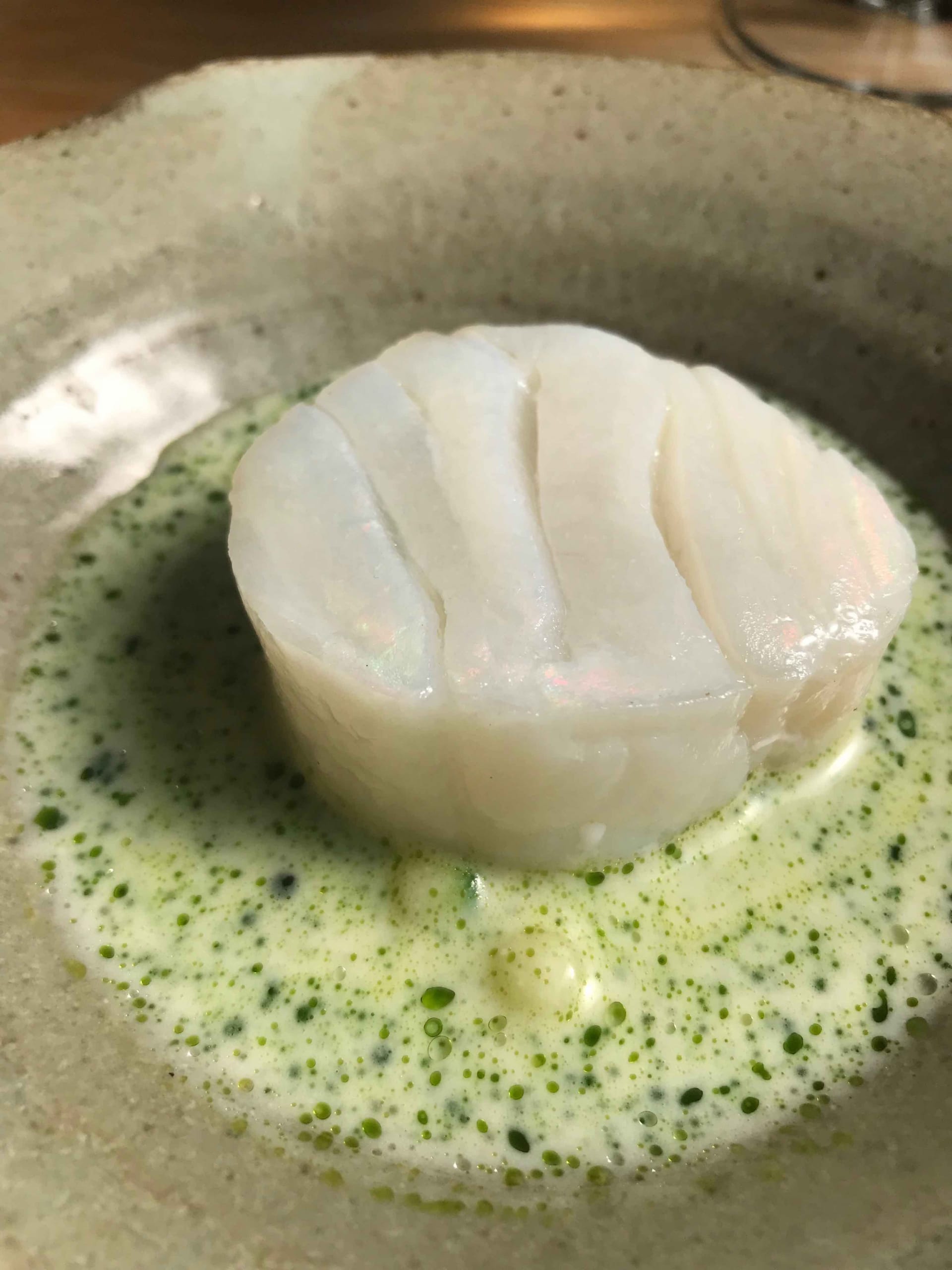
What I really loved about the whole experience was a straightforward punch of flavours, whether a pure tranche of Cornish cod on a bed of smoked haddock and creme fraiche sauce or among the desserts the stand-out strawberries with lemon verbena and organic yoghurt. You get the dedication to our own raw materials filtered through an appropriated Japanese and Norse (hence the name) sensibility.
Stays and JÖRO Packages can be booked online via thislink.
THE FAT CAT
Neither of my two destinations is on the island proper, man-made in the 13th by diverting water from the River Don to power medieval mills. So a distant seed sown for the Industrial Revolution proper, the catalyst for which in Sheffield was the opening of John Crowley’s Iron Foundry in 1829, tapping into river power abundant coal and iron ore.
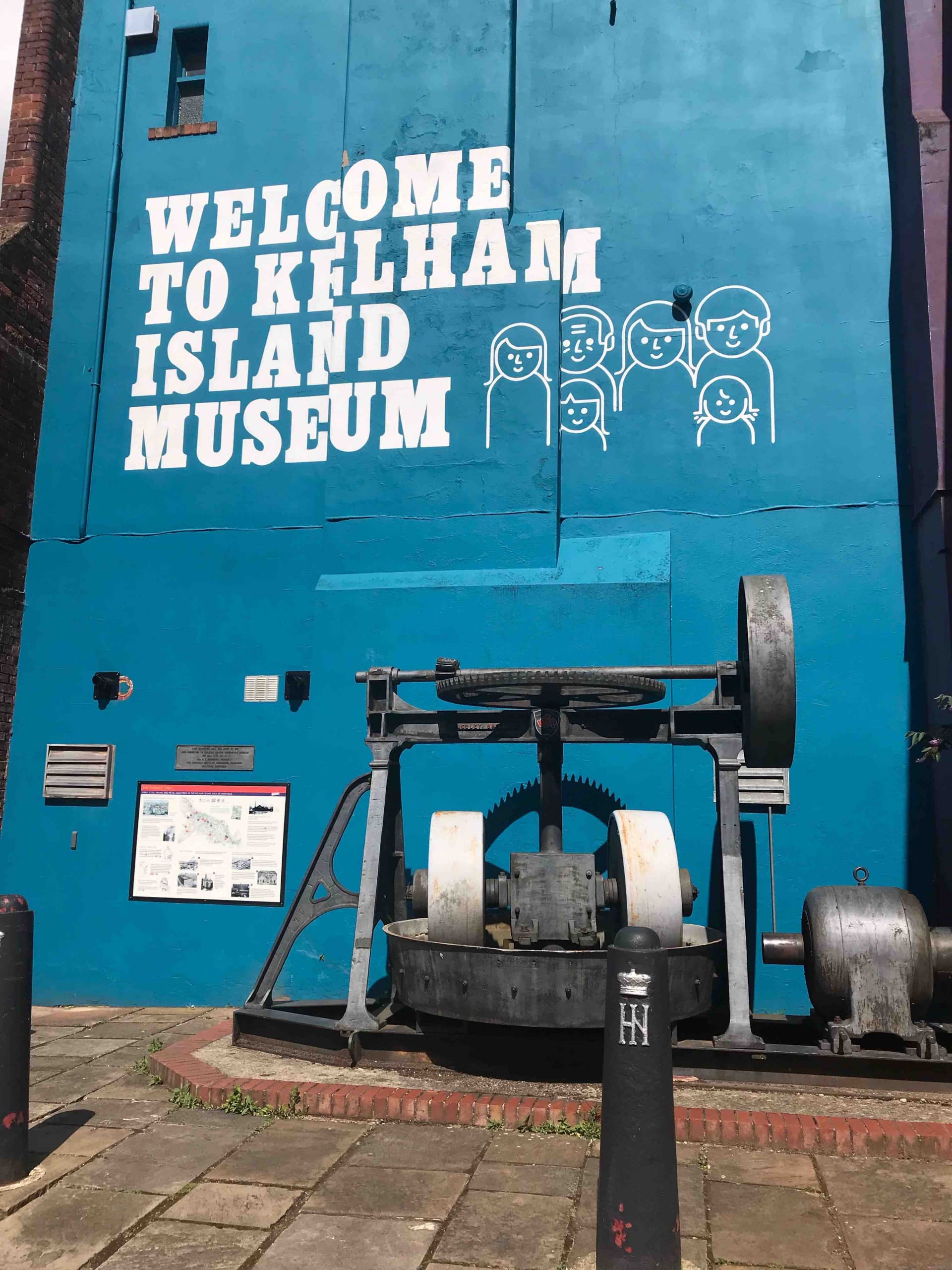
If you want to get the full story visit the Kelham Island Museum, which was created 40 years ago. You can see it prize exhibition for free because the only Bessemer steel converter still in existence stands in front. This egg-shaped black hulk quickly revolutionised 19th century steel production.
Thirsty work, the industry in its heyday and pubs like The Alma just down the street of that name existed to slake those forge-driven thirsts. Then came the long slow decline of the Steel City. From the Seventies onwards recession and dereliction battered Kelham.
It took a brave man to acquire the Alma, change its name to the ironic Fat Cat and start brewing his own exceptional beer in the yard.
That was the grand plan of Dave Wickett, the new co-owner. The pub introduced Sheffield to a cavalcade of guest beers and by 1990 when Dave took sole control he created his own Kelha Island Brewery in the beer garden. The pub survived flooding in 2007; the level is charted on the exterior alongside that of the The Great Sheffield Flood of 1864. It survived Dave’s early death and is still brewing in premises across the street.
In 2004 their flagship beer Pale Rider was voted Supreme Champion Beer of Britain at The Great British Beer Festival. It has hardly been off the hand pull ever since, though a recent month’s hiatus perturbed devotees.
Matthew Curtis, in his highly recommended new survey, Modern British Beer (CAMRA Books, £15.99) descrIbes Pale Rider thus: “There was some malt character in the flavour, soft and candy-floss sweet, but only fleetingly. This allowed a crescendo of hop to build with notes of candied orange peel to the fore, but they were restrained throughout with a balanced bittersweet finish forming at the end of this orchestral flourish.
A touch flowery but a good summary of my ‘aperitif’ experience before lunch over at Jöro. Old meets new in one memorable Kelham Island afternoon.
https://i0.wp.com/www.neilsowerby.co.uk/wp-content/uploads/2021/08/Kelham-main-scaled.jpg?fit=2048%2C1536&ssl=115362048Neil Sowerbyhttps://www.neilsowerby.co.uk/wp-content/uploads/2022/11/NS-typemark-v1c.pngNeil Sowerby2021-08-17 10:05:112021-08-17 10:14:26Saluting Jöro and the Fat Cat on Sheffield’s paradise Island
Exciting openings have not been plentiful of late. Now we have one. Such is the allure of the re-born Black Friar, reopening on Tuesday, July 27, not even the stormy weather heading our way can zap the al fresco vibe generated by its glorious garden. The short hot summer was at its peak when we got our sneak preview. The rest of the world will inevitably follow.
Hurtling along Trinity Way, you’d be hard pressed to twig the large terrace behind its palisade; ditto the glass-fronted restaurant annexe seamlessly attached to the Victorian sandstone and brick pub, restored to the tune of £1.4m.
Black Friar – Salford heritage among the new build
For two decades, after a devastating fire, it stood desolate on the corner with Blackfriars Street. Not quite an eyesore – if you were a fan of Boddingtons Bitter. As the reputation of the ‘Cream of Manchester’ turned sour under successive corporate owners the prominent two bees logo decked out in yellow and black on the end of the building was a lachrymose reminder of the straw-coloured, fragrantly hoppy nectar the beer once was.
This may be apocryphal but I’m told Boddies cask was so popular in the Seventies the Black Friar stocked no keg beer or lager. That was an old school Salford boozer; in its latest incarnation it reflects a new apartment block generation colonising the former industrial wasteland. Food-oriented, most definitely. Developers Salboy originally intended it to be a vehicle for star chef Aiden Byrne, but he pulled out as the pandemic struck; in his place is another ex-20 Stories talent, Ben Chaplin.
Still it plugs its pub credentials, honouring the brewery that once belched malt fumes over Strangeways by offering the keg Boddies at £4.50 a pint. A bland brand, it’s brewed by Inbev in Samlesbury; I’d veer towards the excellent wine list instead.
The trad pub sign also name checks Boddingtons. It features a jolly friar, given a shaggy dog back story on the website (and a chance to proclaim the pub’s Resurrection, thankfully without appropriating the Stone Roses).
I’d hoped the fashion for this kind of naff narrative self-validation had passed, but hey it’s just a quibble. Let us praise. The Black Friar is a holy exceptional addition to the Manchester/Salford food and drink scene. The first Salford gastropub proper since the demise of Robert Owen Brown’s remarkable Mark Addy.
What immediately impressed on that embryonic lunchtime visit was the quality of service mustered from a young crew by exuberant Lebanese general manager Remi Khodr. From the immediate water bowl for our chihuahua, Captain Smidge, to the limoncello proffered when our puddings were slightly delayed the experience was a delight.
Probably because Smidge was with us we were seated at a garden table. No hardship but the restaurant proper looked the stylish business. An open kitchen, an abundance of greenery, black and white tiles, marble table tops, all filled with light.
.A section of the garden – Boddingtons Corner – can be hired for private events, as can the panelled, drawing room-like Sanctuary on the pub’s first floor.
Totally gratuitous image of the Blackfriar. Few pub interiors can match its art nouveau magnificence
As many original features as possible have been retained but alas the shell was vandalised during the lost years. Compare and contrast its namesake in London, the Blackfriar, a masterpiece of art nouveau don by the Thames, built on the site of a real priory. It did serve Boddingtons in its heyday; food has never been a priority.
Under head chef Chaplin it definitely is here. There is to be an upmarket ‘pub food’ menu but we got to sample the ‘restaurant’ offering. Eventually there’ll be a chef’s table on the Black Friar’s second floor. You can see the ambition in what’s on offer already. I have never encountered such an elaborate, deconstructed tiramisu. No wonder it took time to emerge. A honeycomb and gold leaf wow. Equally satisfying was a 72 per cent Valrhona chocolate fondant with peanut butter ice cream across the table.
A starter of juniper-cured ‘au point’ Creedy carver duck was stunning, served with sweet roast cherries and a pickled kohlrabi salad. My Cornish boudin, in contrast struck a drab note, despite the best efforts of basil jelly and some interesting smoked dehydrated watermelon. Little roundels of seafood sausage betrayed hardly a hint of crab.
Main prices are heading premium-wards. £28 for roast Cumbrian rack of lamb, but all the Mediterranean elements of the dish were in harmony – glazed baby aubergine, kalamata olive and confit tomato jus. Smidge loved his substantial tithe.
Perhaps there was too much going on in our other main, a couple of quid more. Wallowing in a polite ‘bouillabaisse’ with a scattering of mussels was a dense seared monkfish fillet. Giving it a flouncy 20 Stories feel was a small flotilla of nasturtium leaves. A mound of squid ink rouille was excessive and would have been unbalancing if I hadn’t shoved half to the side. No matter, this is food worth making the trek for.
Would I treat it as a pub to drop in for a pint? Doubt it. That’s what The Eagle around the corner is for. And yet… that garden. That first kiss of ‘freedom’. I know how Adam felt. Before the Fall, that eternal lockdown.
The Black Friar, Blackfriars Road, Salford M3 7DH. 0161 667 9555.
https://i0.wp.com/www.neilsowerby.co.uk/wp-content/uploads/2021/07/The-garden-scaled.jpg?fit=2048%2C1536&ssl=115362048Neil Sowerbyhttps://www.neilsowerby.co.uk/wp-content/uploads/2022/11/NS-typemark-v1c.pngNeil Sowerby2021-07-24 17:58:002021-08-05 17:55:17Black Friar gastropub – Got to get ourselves back to the garden
Spring 2018 and I’m besotted. The venue a rough and ready moorland pub high above Sowerby Bridge. Not an obvious honeytrap for a tryst and there was precious little flesh on the bones of the object of my desire. A deep-fried herring skeleton on the debut menu was a mission statement for the reinvention of the Moorcock Inn at Norland.
That challenging herring bone that kickstarted the Moorcock experience
Penning the first UK review of Alisdair Brooke-Taylor’s daring fresh take on the UK gastropub I wrote: “North Sea herring season is upon us. All those Dutch and Flemish trenchermen salivating at the prospect of fatty raw fish soused in vinegar or brine. A Yorkshireman’s penchant for pickles stops at onions; herring bone to him is tweed or twill.”
Not real bones, constituting the second course in a £35 tasting menu. One that started weird and became ever more wonderful. They resembled a seahorse or a fossil shape in ammonite. Three winters (and herring seasons) have passed and this take on a Japanese omakase snack has never reappeared.
Mangalitza chop and wild greens – so very Moorcock
The rare breed Hungarian Mangalitza pork that provided the 11 week dry-aged chops that followed has remained on the radar, though. It contributes to the house-cured charcuterie sharing board that is a star attraction in the post-lockdown food offering. Some component have been two years in the making.
This outstanding home cured charcuterie plate is my favourite contemporary snack
It is made up of pork rillettes, hot smoked rare breed ham, Gloucester Old Spot coppa, chicken liver parfait, jellied pork terrine, smoked prunes and toast. All for just £18 a platter. Inevitably you add on a £4.50 portion of their own wholemeal sourdough and cultured butter – like the extensive employment of a huge wood-fired barbecue, a constant since day one (main image).
You can purchase the Moorcock sourdough and cultured butter to take home
Pandemic caution means that tasting menus are shelved for the moment; attention focuses on the daily shifting boards that constitute the bar menu.
There is a walk-in capacity, mind, as Alisdair and drinks-savvy partner Aimee Tufford continue to encourage the pubby (and dog-friendly) side of their now acclaimed foodie destination. I celebrated a recent birthday there with a pint of cask Vocation Bread and Butter Ale from fellow local heroes Vocation and then drank a series of Belgian beers, culminating in an old favourite, Westmalle Tripel (in the proper glass).
Alongside natural wines, the couple are devotees of Belgium’s astonishing beer culture after cutting their culinary teeth at the Michelin-starred In de Wulf restaurant, close to the border with Northern France.
In this unlikely spot legendary chef Kobe Desramualts, with Alisdair as his right hand man, had created a very special place. Just before it closed in 2016 influential website Opinionated About Dining named it third best restaurant in Europe after L’Arpège in Paris and the Basque Country’s Azurmendi.
The kitchen garden in its early day being hewn from the surrounding moorland
Norland may seem an equally unlikely spot but over three years it has developed a similar ‘forage and ferment, cure and preserve’ ethos, utilising their own two acre organic kitchen garden and the surrounding moorlands, which yield mushrooms and wild herbs aplenty.
Alastair’s kipper ties – coming upon a batch of herring smoking merrily away
The garden has evolved spectacularly and the other centrepiece of the Moorcock, the expansive outdoor barbecue is used to increasing effect for cooking with fire or smoking. Lots of chefs – Tomas Parry at Brat notably – have bragging rights here but few do it as well as Alistair and his small team.
The chef’s talents don’t stop here. The various lockdowns gave Alistair the opportunity to hone his talent for ceramics, making glazes with the ash from the burnt charcoal. Now he’s not just providing for the restaurant. From ramen bowls to platters and jugs these have pride of place in an upstairs shop (open during pub hours) that offers gift packs of foodie goodies and, naturally, classic Belgian beers.
This ceramic plate complements this leek, potato and smoked poulet egg pie, topped with Baron Bigod and a radish salad
Lauded in the early days by national critics such as the Observer’s Jay Rayner and Marina O’Loughlin of the Sunday Times, the Moorcock became a hot ticket. Twisting the metaphor hot tickets get cooler as as fickle critical attention shifts to newer ventures.
The extra pressure of Covid must have been immense. Potter’s kiln aside, Alasdair and Aimee tackled it with a defiant playfulness. I recall their take on a Chinese menu, featuring th likes of their in-house XO sauce and the kind of wild Yorkshire greens you don’t usually find in a black bean stir-fry.
Ever resourceful, the Moorcock turned into a community grocer during lockdown
More straightforwardly they diversified into quality foodie groceries – from Yorkshire asparagus to mixed bags of Cornish sea vegetables to over-wintered jars of their own produce. I recall with fondness Aimee’s rather lovely house Negroni made from a ‘Campari’ she crafted from rosehip, hogweed and clementine, mixed with rose petal wine and Yorkshire gin. It all helped to keep them afloat.
Crucially they kept their core staff together. Sustainable, ethical, pleasurable. What’s not to fall in love with all over again?
Moorcock Inn, Moor Bottom Lane, Norland Moor, Sowerby Bridge HX6 3RP. 01422 832103. Thanks to Joby Catto for the main barbecue picture and other image help.
https://i0.wp.com/www.neilsowerby.co.uk/wp-content/uploads/2021/07/Chrgrill.jpg?fit=2048%2C1365&ssl=113652048Neil Sowerbyhttps://www.neilsowerby.co.uk/wp-content/uploads/2022/11/NS-typemark-v1c.pngNeil Sowerby2021-07-12 17:12:012021-08-02 14:00:22No end to my sizzling love affair with the Moorcock
I am eating one of those banh mi Vietnamese baguettes, with a dip of pho broth on the side. The spice goes surprisingly well with a Denver Pale Ale from Hogshead brewery – a neighbourhood homage to English cask beer. Soundtrack is the Black Keys in glam stomp mode; staff serving sushi, pizza and Venezuelan arepas shimmy along to it. In the distance Denver’s soaring skyline shimmers.
The ‘Mile High City’ apparently gets 300 days of sunshine a year and today is living up to the boast. My vantage point is the rooftop terrace of collective eaterie Avanti F&B, a two level shipping container with half a dozen global food vendors plus bars dispensing a riot of delicious, eclectic beers.
The panorama across the city from the Avanti Food Hall is stunning
Naturally, for this is Denver, US capital of craft brewing, home to more than 100 breweries, and to the annual Great American Beer Festival (virtual in 20121, due to return in 2022).
After my banh mi it’s all I can do not to order another pint, a Diebolt Chin Chin de Diable Belgian Golden Strong Ale perhaps or a wild-fermented Crooked Stave Hop Savant, both local riffs on artisan hoppiness.
Heaven knows I’m thirsty enough after rambling around Denver’s hip and hilly Highlands district with its roster of fine eating places and bars – the likes of Roots Down, Linger, The Ale House, William & Graham and the veteran Beat Writers’ hang-out, My Brother’s Bar (about all of which, later). Fine old houses, too, and a pleasing leafiness.
The Ice House Building in historic Wynkoop Street
This is a city for walking. Highlands is west of the South Platte River, easily reached via the pedestrian Millennium Bridge and the revived Riverfront parks from my base in LoDo (Lower Downtown). How they love these aspirational acronyms – RiNo, which I always took for ‘Republican In Name Only’, here means the River North Art District, an urban wasteland now on the up and a hub for the craft brewing and leftfield creativity that define contemporary Denver.
LoDo too is a story of resurgence, entire blocks of brick warehouses and stables left to rot rediscovered and turned into apartments, restaurants and the like without losing their soul. Blink and you could be in that old Rocky Mountains frontier town with a whole posse of mavericks passing through – Wyatt Earp, Butch Cassidy, Billy the Kid and Buffalo Bill (who is buried up on Lookout Mountain on the outskirts of town).
Union Station’s impressive facade is symbolic of the old city centre’s regeneration
The railroad was mighty important for the development of the Wild West; one cherishable legacy in Denver is LoDo’s Union Station, a 1914 Beaux Arts masterpiece that only a few years ago was a shabby drifters’ haunt under threat of being torn down. Enter an urban conservationist called Dana Crawford, who energised its transformation into one of America’s coolest destinations, complete with its own 112 room Crawford Hotel named in her honour.
The view of the Union Station Great Hall from my Crawford Hotel lodging
I was lucky enough to stay there; walk out of my second floor room and I gazed down from the landing on its ornate centrepiece, the sweeping Great Hall. White and gilt, glistening chandeliers for when the light fades through its vast arched windows, it’s quite glorious.
Down in the lift, avoiding the temptations of the Cooper indoor cocktail terrace, and I was spoilt for choice by the array of food and drink outlets and boutique shopping, including a tiny branch of the city’s legendary Tattered Cover bookstore and Snooze, flagship of a renowned retro brunch chain (with cocktails and ancho chilli wheat beer shandies for when the smoothies pall). Next door Mercantile switches from daytime deli to casual fine dining each evening.
My main focus was on the Terminal Bar, in the converted ticket office which occupies a whole side of the ground floor. What’s not to like about 30 rotating regional beers on tap and a smart Colorado spirits list?
The RINO district is the epicentre of Denver’s art culture
Having got the taste, I left this heavenly haunt in quest of the catalyst of Denver’s craft beer revolution – The Wynkoop Brewpub on the street of that name. To get there it’s just a short walk across the station plaza, home to a growers-only farmer’s market every Saturday (Union Station even has its own beehives on the roof and a farm to table ethos governs much of the city’s eating habits).
Denver mayor now Colorado state senator John Hickenlooper founded the brewery/bar back in 1988, kickstarting the rebirth of the whole area. It has a real pub feel with pool, darts, telly sports and a hearty food menu.
It’s a must-visit destination, but the axis of brewing has shifted northwards to RiNo, a still edgy district that over the last decade has been colonised by artists, hipster nesters and cutting edge brewers. This transformation has now gone into overdrive, with the infrastructure still a work in progress as we discovered on our bumpy tuk tuk ride from Downtown.
The Source, converted from an old brick foundry into a food market hall
What we discovered was majorly exciting. The hub is The Source, an 1880s brick foundry complex that has been converted spectacularly into an artisan food market hall with an on site hotel created by New Belgium brewery, from Fort Collins. Their big rivals in that town, Odell also now have a presence in Denver. A sign of the times, though, in a very competitive market, Falling Rock Tap House, a pioneering US craft beer bar, closed it doors in June 2021.
Ratio Brewery – I just missed a private gig there from Wilco
A short walk away from The Source are several excellent brewery taps – Zach Rabun’s Mockery probably the best, its name a rebuttal of the constricting German Reinheitsgebot ‘pure beer’ rules, thus emphasising their own innovative brewing (Mukduk, a summery cucumber Berliner Weisse beer quite breathtaking); Great Dividenext door, motto ‘bold characters’, is a bigger concern, a pioneer in the wake of Wynkoop with their Yeti Imperial Stout range almost a brand within their brand and their brewery tours a lively introduction to the brewing process’; and Ratio Beerworks with a delicious range to be sampled in their large, functional, dog-friendly taproom, an offbeat rock venue (the touring Wilco played a private set there while I was in town).
Lining up the sours for me at the amazing Crooked Stave’s brewtap
Still, the most exciting tasting was in Source’s industrial chic food hall itself, just past the unique combo of florists and butcher’s shop, at the Crooked Stave Artisan Beer Project brewtap. Our server lined up 16 samples of the sour beers they specialise in – owner Chad Yakobson completed his master’s in Edinburgh in these complex ales fermented with wild yeast. Blueberries and cherries and barrel ageing all strove for attention with hardly a dud down the line, making for the most memorable beer moment of our visit.
Black Sky featured Robinson’s Trooper on tap and their own beers were damn tasty
All this proves how important beer tourism is to the town, which is scattered with breweries and their taps. Down in boho South Broadway I took in two which combine fermentation and heavy metal head-banging – TRVEwith its occult dungeon trappings and Black Sky, whose bar – suddenly making me homesick – sports a Trooper beer banner in homage to the bitter curated by Bruce Dickinson for Robinson’s of Stockport. Booze loving bookworms have their own Fiction Beer Company, which I never got to, sampling brews inspired by literature from a bar created from stacked books. Anyone for Dreamer IPA, whose muse is the last line of Rudyard Kipling’s The Fairies’ Siege?
The Blue Bear marks the spot where the Great American Beer Festival traditionally takes place
But, of course, this is just the tip of the all-year-round ‘Aleberg’ that culminates in the Great American Beer Festival in the Convention Center on 14th Street – hard to miss because of the 40ft high blue bear leaning into it, a much-loved statue by a local artist, which is actually called ‘I See What You Mean’. Such a very Denver icon.
Larimer Square is home to Rioja, arguably Denver’s finest resturant
So if your idea of heaven strays beyond brewery visits…
Here are a few places to eat, perhaps buy a hat or even a stash of legal marijuana.
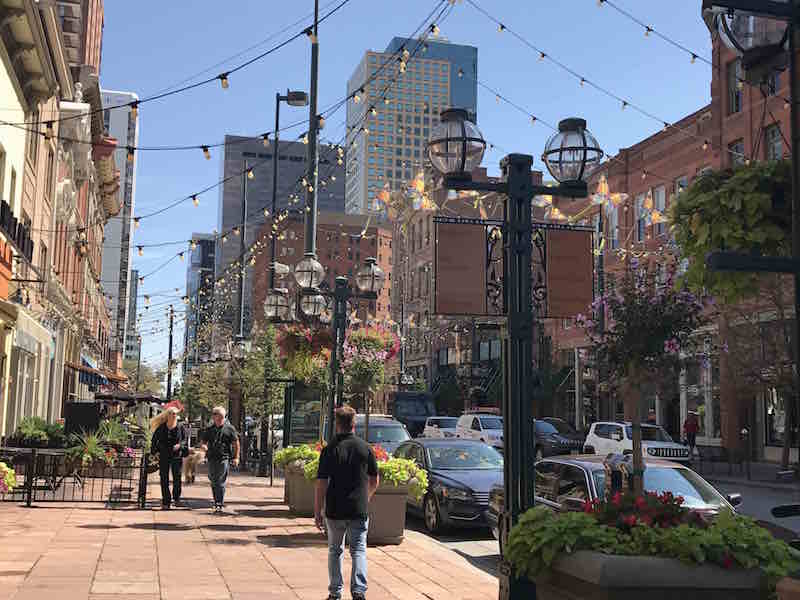
A contender for best restaurant in a city devoted to casual dining, this Francophile project from Jasinki-Gruich is a terrific mix of stylish surroundings, slick service and some imaginative Mediterranean-inspired food. Fittingly it’s in pedestrianised Larimer Square, the swishest stretch of bars and restaurants in the city.
This purveyor of extreme fillings and biker diner vibes, is situated in edgier territory a 10 minute walk from Rioja. Alaskan Reindeer was the recommended dog of choice, but I decided Pheasant and Rattlesnake was the way to go with an El Diablo topping. Tastes of chicken naturally, not to be hissed at.
Civic Center EATS food trucks
Throughout the summer from Tuesday to Thursday, from 11am-2pm, it’s meals on wheels time in the rather grand public park sandwiched between the Capitol, the mInt and the rather wonderful Denver Art Museum. From a melting pot of global street food on offer I went Indian. My spinach paneer lacked genuine chilli eat, but it was lovely to sit out in the Denver sun with the lunchtime crowd.
Civic Centre is a grand setting for food trucks
Ophelia’s Electric Soapbox
I went up 20th Street to breathe in the atmosphere from Coors Field ballpark on a Colorado Rockies match night and maybe grab a beer from the Jagged Mountain brewtap (not a Coors, mind, poor, thin stuff from the world’s biggest brewing facility just outside Denver). I was diverted, though, to Ophelia’s Soapbox, a former bordello that wryly styles itself as a ‘gastro-brothel’ thanks to its boudoir-style decor across several levels, encompassing and eclectic mix of cocktails and mostly organic dishes, live music and a dancefloor.
A younger version of The Source – a gourmet food emporium with a community feel covering most bases and also a good place to lunch and, of course, drink craft beer, which we did. Lovely conversion of a bright and airy 1920s building, once a car showroom.
Linger, the former mortuary that now dispenses small plates and gelato
Another (more leftfield) conversion in the Highlands – the old Olinger’s mortuary transformed into a global small plate restaurant with a panoramic rooftop bar. The ‘O’ in the neon Olinger sign is extinguished at night; hence the laid-back name Linger.
Also in the Highlands classic Prohibition-style speakeasy the guise of a bookstore. A cosy escape, pull up a chair and order a Corn on the Macabre (Butter Washed Vida Mezcal, sweetcorn, blackened lime demerara and lime luice).
Hats off to Rockmount, downtown cowboy fashion store extraordinaire, patronised by Willie Nelson
Famed the world over for its classic Western clothing range, notably the original snap button shirt, the original LoDo outfitters is a photo-cluttered shrine to all the celebs who have worn (or at least bought) the gear. I couldn’t resist slipping into the cannabis motif cowboy blouse sported by Willie Nelson in the picture.
Legal marijuana is big business in the ‘Mile High City’
Marijuana Dispensaries
Denver would be Spliffing Willie’s kinda town, Colorado his kinda state. If you are 21 or older, you can now legally possess 1oz of marijuana in Colorado. You can enjoy many types of concentrates and edibles during your visit, bought from an array of dispensaries with names like Potco and Sacred Seed. If you wish to research further visit the Colorado Pot Guide. And if you really want an initiation into the almighty Pot, visit the city’s International Church of Cannabis.
My Brother’s Bar, famed for its Beat connections, claims to be the city’s oldest drinking joint
The Beat writers would have approved – cannabis was their drug of choice back in the Fifties and Sixties. Kerouac, Ginsberg and Co were regular moochers around Denver primarily because partner in crime Neal Cassidy was raised in the city. His faint legacy remains in My Brother’s on the edge of Highlands, a bar without a sign at 2376 15th St. Here you’ll find a framed letter Cassady sent to a friend from the Colorado Reformatory, where he was sent for car thieving. The ever hard-up Cassady wrote: “I believe I owe (My Brother’s) about 3 or 4 dollars. If you happen to be in that vicinity, please drop in and pay it, will you?” The beer range here is ace. I’d recommend the Odell IPA.
Glamorous ski centre Telluride is six hours’ drive away from Denver in the Rockies
FACT FILE
For full information about the state’s attractions visit Colorado Tourism Office. and for Denver check out this link. The self-guided Denver Beer Trail is a good way to get your beer bearings in the city. A version of this article, since amended post-pandemic, first appeared on Manchester Confidential.
https://i0.wp.com/www.neilsowerby.co.uk/wp-content/uploads/2021/06/New-hat-1.jpg?fit=1287%2C899&ssl=18991287Neil Sowerbyhttps://www.neilsowerby.co.uk/wp-content/uploads/2022/11/NS-typemark-v1c.pngNeil Sowerby2021-06-30 10:28:002021-08-02 14:11:13Denver, America’s capital of craft beer and legal highs