Tag Archive for: Beer

Showing my age. Just realised it’s 30 years since I sat down in the cinema to watch Delicatessen. I expected a celebration of pastrami on rye and coffee-toting waitresses with attitude. Instead I was served a post-apocalyptic, cannibalistic black comedy packed with butchered body parts. 

I blame a movie made two years earlier for my cinematic naïveté. The one where the Meg Ryan character simulates orgasmic cries. The one I always think of as When Harry Met Deli because that scene was set inside Katz’s on New York’s Lower East Side. And, yes, I have visited that apotheosis of all the kosher eateries recalibrating the Old Country in the New World. The touristy sign quotes the film dialogue: “Hope you have what she had.” We ordered differently.

There was a cluttered buzz to the joint, the queues to get in filtered through a ticketing system. The food? Not really star quality. And not really the global template for the Deli  these day, definitely a devalued catch-all term just like bistro and brasserie. Yet neither of these are synonymous with a sandwich shop.

A more positive perspective is the combo of grocer’s and cafe, ideally the latter feeding off the raw materials and store cupboard essentials of the former. A good example (with the bonus of a well-stocked wine shop and bar) was the late, lamented Lunya in Manchester, the original of which is still going strong in Liverpool. That is Spanish with a Catalan influence; the Italian equivalent, equally family-run, is Salvis’ Corn Exchange outpost in Manchester’s Corn Exchange.

My ideal deli though would be a suburban provisioner. The supplier of an impulse wine purchase, a decent cheeseboard, charcuterie, olives and bread to carry home around the corner. Even better, if the budget allows, to be able to tuck into all that stuff upstairs above the shop, augmented by an eclectic beer offering, including the owner’s own acclaimed lager.

Factor in the natural progression 100m away of a sibling butchers/fishmonger with its own eat-in small plates deli counter and it could only be Wandering Palate – The Movie and Farm & Fish – The Sequel. Location? Upwardly mobile Monton, the posh banlieue beyond Eccles. The first is the debut deli of Will and Emma Evans; the second their collab with The Butcher’s Quarter, which has two further outlets in the city centre.

It has taken me a while to trek here. As I sit in the window of Wandering Palate at 190 Monton Road, first with a De Koninck Bolleke, a Belgian amber-coloured pale in the glass of that name, then with a Bodegas Manzanos Gran Reserva Rioja Will brings me a selection of ‘picky bits’.

They are his Manc version of pintxos or cicchetti. The baguette bases are from Holy Grain, arguably Manchester’ best bakery, like Wandering Palate shortlisted at this year’s Manchester Food and Drink Awards. The toppings are sourced from the deli shelves. My favourites the Trealy Farm venison and juniper pâté with salsa verde and truffled Baron Bigod cheese with baby onions.

Time for browsing. A smaller beer collection (“we needed the fridge space for other items”) than you’d expect from Will, who co-founded Manchester Union Lager. That’s on tap here ahead of its unveiling in tank form at Manchester’s new Exhibition food hall this November.

Wine is a major player, though with a substantial natural wine offering, much of it sourced from Les Caves De Pyrene. Coffee comes from Yorkshire’s Dark Woods, charcuterie from Manchester’s own Northern Cure, cheese from The Crafty Cheese Man and much more.

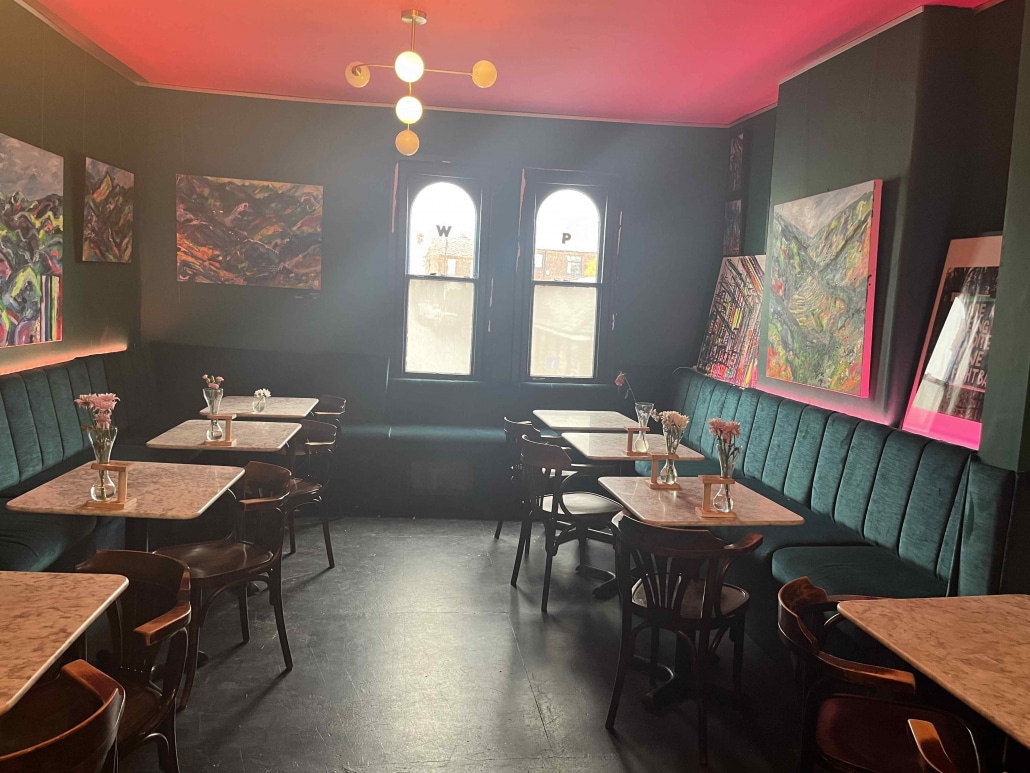
Emma Evans is an acclaimed artist, whose canvases you can check out in the upstairs bar. She also hosts regular life drawing classes there. Probably more my thing is Wandering Palate’s Wine Club Wednesdays with free corkage.

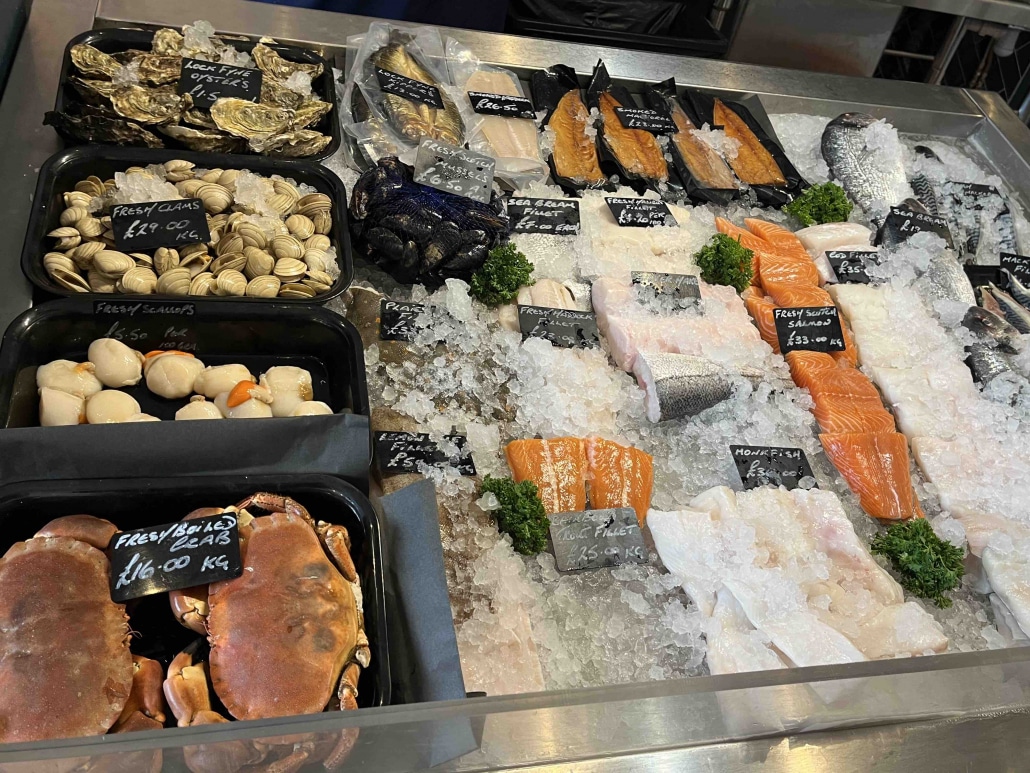
Farm & Fish at 190 Monton Road equally aspires to be a community hub. It recently hosted a Polish wine tasting. But my eyes were for the meat and fish counters. I inevitably splashed the cash, coming away with a kilo of  ox cheeks and a robust boiled crab. I could happily have sat in the window there with a further wine as evening fell… to survey the Monton ‘paseo’.

It’s the beery equivalent of Beaujolais Nouveau – well kind of. I’ve never twigged why, Kent apart, we don’t celebrate the UK’s new ‘green’ hops harvest by brewing with them. Virtually straight from the stalk. It’s a big thing in the craft ale heartlands of the USA.

On a road trip stop-off in Washington State’s hop capital, Yakima, we were devastated to discover we were one week early to join in the annual ‘Fresh Hop Party’. Bet it was an epic celebration in the heart of the fertile volcanic soil where 75 per cent of American hops are grown. Cascade, Chinook, Centennial and the rest.

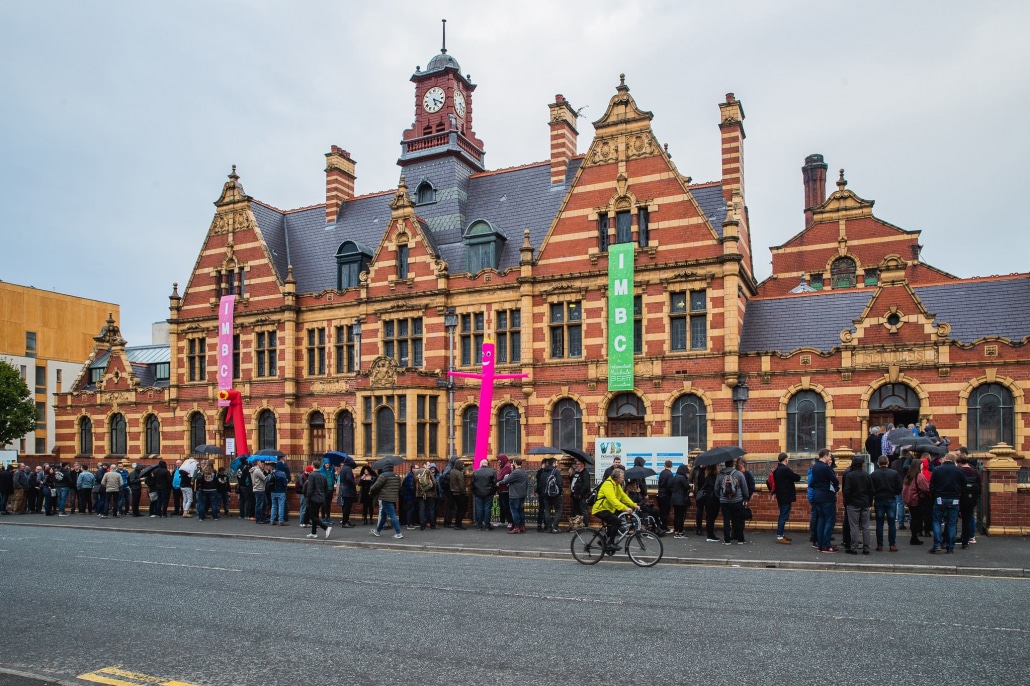
Victoria Baths on Hathersage Road becomes the epicentre of UK beer culture for four days

At Indy Man Beer Con at Manchester’s Victoria Baths (Sept 29-Oct 2) we aim to make up for that miss in a small way by sampling ‘Hops are Green’, an Extra Special Bitter created by JW Lees specially for the festival, returning after a  two year hiatus. 

We suggest you do the same. Nominally sold out, IMBC have just released a batch of extra tickets.Tickets are available for the following sessions: evenings 5:30pm-10.30pm  Thursday/Friday/Saturday; daytimes 11pm-4pm, Friday/ Saturday; and on Sunday 1pm-6pm. Buy via this link but hurry!

Of all the area’s traditional family brewers 200-year-old Middleton-based Lees are the ones who get down most with the craft beer kids. They’ve long shared with Cloudwater some of their legendary, long-lived yeast strains. Just this week I tasted a Cloudwater ‘JW Lees’ DIPA in a can that was quite splendidly balanced – at 9%!

Lees’ own ‘Hops are Green’ is a quite different beast, inspired by a need to start a conversation about sustainability in beer. The industry is facing multiple challenges from climate change and inflation to water shortages and demographic shifts. 

Independent Manchester Beer Convention (to give its full title) and JW Lees wanted to explore how you might brew with a lower carbon footprint, which helps the brewer run a successful business, delivers a beer which the craft beer drinker loves, but which doesn’t break the bank. Beer brewed and drunk locally, with more locally sourced ingredients could be part of the answer.

That means marking the sustainble progress made by domestic hop growers rather than importing from far-away Yakima (or even New Zealand). Groundbreaking Brook House Hops in Herefordshire fits that bill admirably.

Matt Gorecki, Head of Beer at the festival told me: “We all love American Hops and we have for years, but we can’t ignore what people like Brook House are doing right here on the doorstep.They’re growing some mega stuff! When we first spoke to JW Lees and heard Michael’s story about working with the same farmers and fields as his grandfather we just felt that we could bring together the best of both worlds.”

Lees were definitely up for it. Head Brewer Michael Lees-Jones, said: “We are experienced in adapting as the world changes around us.  In order to stay relevant and to keep pouring beer for the next 200 years we need to remain curious and to experiment with different ideas. We think it is great that the IMBC team are asking questions about sustainability in beer as we consider how we can be a more sustainable brewery.”

I haven’t tasted ‘Hops are Green’ yet, but like the sound of it – an Extra Special Bitter. “Typically a malt forward brew using English yeast and firm but not over the top hopping, it will be finished using freshly harvested green hops from the forward thinking hop growers at Brook House.” 

So what are Green or ‘Wet’ Hops?

An ingredient  with a lower carbon footprint due to their lack of time in an energy intensive kiln, where hops are usually cured to preserve and intensify their flavour. They’re used in an array of seasonal beers in the US around harvest time but curiously not so much in the UK. They’re grown in Herefordshire and were transported to the brewery by road. It will preview at the festival and be available at several JW Lees pubs as well as Port Street Beer House.

This beer is the first in a series of beers produced with sustainability in mind, with Cheltenham based Deya Brewery, picking up the baton to create the next product following the festival. Any brewery wishing to get involved can contact the IMBC team through their social media channels.

Welcome back Indyman

Since its inception in 2012 Independent Manchester Beer Convention (Indy Man Beer Con/IMBC) has proved a world class showcase for the most forward thinking breweries from the UK and beyond. Everything about it (apart from the amount consumed) is different from the traditional beer festival. Not least the venue – the Grade II listed, architectural gem Victoria Baths.

Inclusivity and diversity are part of its appeal. And great street food. This year’s focus on sustainability and environmental awareness of the impact of the brewing industry sees special, cross-Atlantic collaborative brewing and innovative approaches to recycling spent products.

It’s a big step up from that first pioneering IMBC, created by Jonny Heyes, founder of Common & Co (Common, The Beagle, Nell’s Pizza, Summer Beer Thing). Just two rooms were used, hosting only 20 breweries. Nowadays more than 60 breweries will occupy every nook and cranny . From the main ‘stages’ in the old swimming pools to tasting areas and snug bars in the Turkish Baths, the breweries will pour a selection of their beers to thousands of beer lovers and converts alike.

Question. What the devil is the owner of ‘the UK’s toughest pub’ doing at Manchester Food and Drink Festival debating the food matching merits of craft beer over cocktails?

Of course, every city boasts a roughhouse contender but the Kray twins’ locals around London did have the Wild West edge back in the Sixties. Notably the Blind Beggar in Whitechapel, a local of mine too for a while, as it happens. a quarter of a century after Ronnie Kray notoriously shot gangster rival George Cornell there in 1966.

Brewer and media star Jaega Wise now runs another past Kray haunt, the Victorian Tavern on the Hill in Walthamstow, which once had a “a reputation for being a bloodbath,” according to Sky TV’s Britain’s Hardest. It’s not like that these days with a Jamaican food menu and beers from Jaega’s award-winning brewery, Wild Card, samples of which should feature in the Octopus Books showcase at the MFDF Hub on Saturday, September 24.

Jaega, named Britain’s best brewer in 2018 by the Guild of Beer Writers and winning an equivalent award this year, is promoting her recently published Wild Brews (Kyle hb, £22). At 6pm she comes up against Joel Harrison and Neil Ridley, co-authors of 60 Second Cocktails, to determine if beer or cocktails should be crowned the winning beverage.

It’s not a straight stand-off, hops and malt versus spirits and botanicals, since her primer for home brewers is subtitled “from sour and fruit beers to farmhouse ales”. A sophisticated far cry from the Boots kits of yore, then.

34-year-old Jaega’s talents are spread interestingly these days. I listen to her regularly when she presents on BBC Radio 4’s The Food Programme. Her most recent assignment explored the racial connotations of fried chicken. Her telly career includes Channel 5’s The Wine Show and Beer Masters, available on Amazon Prime, where Jaega and James Blunt judged “Europe’s best home brewers going head-to-head across five challenges brewing popular beer styles and taking on creative and technical challenges.” Think Bake-off with ‘stuck mash’ instead of ‘soggy bottoms’.

Filming the latter show appropriately coincided with the gestation of Wild Brews. “The book took me three and a half years… writing’s not really my thing,” Jaega laments. Modesty from a Nottingham girl, who once considered studying English at university before a volte face into chemical engineering. “You see my scientific training in the technical side of the book, but I was determined to make it accessible. It’s both an introduction for the beginner and of use to a more advanced brewer, who wants to be more adventurous with styles.”

Certainly when Wild Card was launched a decade ago sours and saisons, lambic and goses didn’t trip off the average beer tippler’s tongue. London, where Jaega had moved, had only 10 breweries. Multiply that many times now.

She had dabbled in home brewing at university. But it was not until, disillusioned with the day job, she started working in a pub, she was swept up in the hop-driven zeitgeist, joining friends William Harris and Andrew Kirkby, who had first dreamed up Wild Card over a kitchen table. After nomadic years ‘cuckoo brewing’ on others’ kit Wild Card eventually  found their first Walthamstow site, before moving to the nearby Lockwood brewery in 2017.

Result: today’s mini-empire at the northern end of the Victoria Lime with a taproom at Lockwood and another in their Barrel Store, plus the Tavern, overlooking gentrifying Walthamstow, with a Jamaican food residency from The Jam Shack.

Jaega says: “We are very proud to have taken over the pub, the only one in the Higham Hill area. Pubs are incredibly important. They and the role of the publican are not given enough credit. There are issues of loneliness that they can help combat. Weddings, funerals, all kinds of community activity –  pubs can be central.”

And, of course, there’s the beer. Like pubs, it’s under threat too in economically perilous times. Wild Card, by necessity, concentrated on more traditional styles to start off but is now in the forefront of US-inspired ‘craft beer’ with – you guessed it – benchmark NEIPA. Matthew Curtis in his definitive Modern British Beer (my review) described it as “redolently juicy with a fruit cocktail of flavours including peach, apricot, melon and pineapple that’s typically characteristic of the New England IPA.”

Peruse the Wild Card website, though, and you’ll discover a much more diverse array of beer styles that live up to the ‘Wild Brews’ tag. Alongside the current Twilight NEIPA there’s an Amaretto Sour, a Damson Sour, a Cuvee Saison sharing bottle and a Tropical Stout. 

I wonder which of these head brewer Jaega will bring up  to Manchester to pair with probable barbecue accompaniment? “You’ll have to wait and see,” she says.

What she can reveal: “This is the food and drink world I’m lucky enough to operate in. We are so lucky in this county to produce drinks of such  high standard. Our whisky is so delicious, and then I can get the used barrels and the chance to ply with flavours. It’s my life.”

That professional life has obviously encountered pitfalls. As a young woman of Caribbean heritage from the most deprived area of Nottingham entering a male-dominated profession. “Change is slow,” she says. “Statistics clearly show considerably fewer women in senior positions across the whole UK economy, not just in brewing.”

Jaega is obviously not one to shirk a challenge. So watch out Team Cocktail this Saturday.

“Wine has for too long been seen as the obvious match for food and I can see cocktails pairing well with some dishes, but beer is hard to beat. It handles spice better and is a perfect accompaniment to cheese.”

If you don’t catch Jaega at MFDF’s Octopus Cookbook Confidential on Saturday, September 22 don’t fret. She’ll be back in Manchester the following weekend as Wild Card makes its pouring debut at IndyManBeerCon.

Glastonbury 2002’s over. Just the stragglers still dispersing as the litter clearers descend. The wag who flew a ‘Work Event’ flag by the Pyramid stage has furled it up and taken it home with his washing, probably still humming ‘Hey Jude’.

My big festivals preview was about the beer variety. Hence my rallying cry: ‘Go Aleish, not Eilish!’ Though several fests have already been and gone the thirst for such communal participation shows no sign of abating and what is great to see is the emphasis on championing our local brewing operations.

Prominent among these is Track Brewing Co, which has never looked back since upsizing from its Piccadilly railway arch to large and stylish new brewery and taproom in Ardwick, Manchester. . They seem to be leading the way with collabs with other breweries and recently significantly upgraded their food offering by hosting a kitchen takeover by Liverpool-based restaurant group Maray, who are close to opening their new Manchester venue in Lincoln Square.

Food is a big deal in the first of two further Manchester mini-festivals they are helping generate this summer. Beers In The Garden will take place in Platt Fields on Friday and Saturday, July 8-9, curated by Track and Cheltenham’s Deya and featuring stellar names such as North Brewing, Burning Sky, Verdant, Pressure Drop, Newbarns, Donzoko and, a personal fave, St Mars of the Desert.

The food on offer? Pizza from Honest Crust and barbecue from Where The Light Gets In. The MUD kitchen will prepare dishes using ingredients from the garden there and Levenshulme’s ISCA will offer seasonal dishes and natural wines. The will be four sessions; tickets at £10 available here.

On Saturday, August 27, celebratinga successful first nine months in their new home on the Piccadilly Trading Estate (and the arrival of their beer garden), Track bring us Welcome to the Neighbourhood. There are two sessions with tickets £40 a head, to include all DRAUGHT beer at the festival, a glass and a programme. Tickets available here.

For your money you’ll have access to beers from an amazing array of North West stars – including Track, of course, Rivington, Sureshot, Balance, Red Willow, Pomona Island, Chain House, Bundobust, Squawk, Runaway, Cloudwater and Blackjack – plus DJ and street food. 

The first four days in September see the bucolic Farm Trip festival. Venue a hilltop farm-based brewery above Horwich I have lauded previously For its outstanding views and brews – Rivington (founder Ben Stubbs, above). Their first Trip was hastily assembled in 2021; the follow-up is more measured, promising 120 beers poured through 41 lines. Do check it out.

It’s a nice little autumn chaser before the eagerly anticipated return of Indy Man Beer Con  at Victoria Baths (September 29-October 2), the UK’s best craft beer festival. Capitalising on its absence last year, the Manchester Craft Beer Festival, is heading back to Mayfield Depot, across the weekend of July 22-23. Expect fire pit food and sizzling sounds from Goldie and David Holmes. All a bit high octane for me and to get full value beerwise out of the £55 session ticket you have to be a very canny queue hopper. The likes of Marble, Track and Union Lager are representing Manchester, but this is very much a national brand that straddles several UK cities.

Before then another metropolitan cuckoo descends. Camden Town Brewery Tank Party Roadshow is nesting at neighbouring Escape to Freight Island on Friday, June 24 and Saturday 25.A single brewery tour hardly counts as a festival really, even coming with its own raft of DJ and street(ish) food. The selling point is its unfiltered version of Hells Lager with an estimated 23,000 pints being poured ‘fresh from the tank’ during the Party’s parade across the UK. Camden’s owners, ABV Inbev, the world’s largest brewing operation, sure know how to market a very ordinary product.

I’d recommend, in these difficult times for our breweries: Think Local, Drink Local.

The launch of Saison de la Maison, debut beer of Balance at Cafe Beermoth was an excuse for Manchester’s beerati to come out in force. As with the arrival six weeks before (at Port Street Beer House) of another stunning new brewing operation, Sureshot it felt like confirmation the beer scene was sticking its head properly above the parapet. 

The recessionary odds are still stacked against all our breweries surviving the year. Heaven knows my hophead compadres and I are doing out best to support them. Which bring us to the restoration of beer festivals as a thing. From the traditional CAMRA-run variety such as the Stockport Beer Festival (June 16-18) to arguably the UK’s premier ‘craft’ event, Indy Man Beer Con ushering in autumn at Victoria Baths (September 29-October 2).

You’ll get a tempting taster at crafty cousin, Summer Beer Thing (June 24-26), which post-pandemic has decamped to Kampus, where the weekend food options will be a notch up on its previous Pilcrow incarnation. Ballast will be courtesy of Nell’s Pizza, Levanter and recent Kampus arrival  Pollen alongside soon-to-be neighbours Madre and Great North Pie Co. Expect a showcase of diverse beer styles plus cocktails, wine and non-alcoholic tipples, if you must.

Hip rival Mayfield Depot is also getting in on the act by hosting the return of Manchester Craft Beer Festival across the weekend of July 22-23. featuring over 50 top end breweries.

Expect fire pit food and sizzling sounds from Goldie and David Holmes. All a bit high octane for me and to get full value beerwise out of the £55 session ticket you have to be a very canny queue hopper. The likes of Marble, Track and Union Lager are representing Manchester but this is very much a festival brand that straddles several UK cities.

Another metropolitan cuckoo on our patch is Camden Town Brewery, whose latest Tank Party Roadshow is nesting at Escape to Freight Island on Friday, June 24 and Saturday 25.A single brewery tour hardly counts as a festival, even coming with its own raft of DJ and street(ish) food. The selling point is its unfiltered version of Hells Lager with an estimated 23,000 pints being poured ‘fresh from the tank’ during the Party’s parade across the UK. Camden’s owners, ABV Inbev, the world’s largest brewing operation, sure know how to market a very ordinary product.

My own properly indie dream is for a return of our own Cloudwater’s Friends, Family and Beer, which did what it said on the can by bringing to town equally renowned breweries they have collborated with cross the globe. After glitches first time around the sophomore event at Manchester Central in February 2020 was the most exciting beer celbration I’ve ever attended. And the good news? I ran into Cloudwater founder Paul Jones at the Balance launch and he intimated Friends and Family my reassemble in 2023.

Meanwhile, two smaller scale events that are perfect for my modest beer needs.

The first four days in September mark the return of Farm Trip. Venue a hilltop farm-based brewery I have lauded previously – Rivington, high above Horwich. For its outstanding views and brews. The Brewing Co’s first Trip was hastily assembled in 2021; the follow-up more measured, promising 120 beers poured through 41 lines. Do check it out.

Such an exposed spot has it weather risks. That’s not the case with Track’s large and stylish taproom in Ardwick, Manchester and, in case it’s sunny, they’ve just opened a new garden.  The beers, too, are as good as it gets but food offerings have failed to match their quality so far. Until now with the arrival of ‘Disco Cauliflower’ as part of a kitchen takeover (Friday, June 17, 5pm-10pm and Saturday 18, 1pm-10pm) by Liverpool based restaurant group Maray, who are promoting their new Manchester venue in Lincoln Square, set to open this summer. One of those arrivals you file as ‘much anticipated’.

Three of their staple dishes will put in an appearance – their flagship falafel; hummus, chermoula and flatbread; and disco cauliflower (3,000 of these are sold each month in Liverpool). To accompany there’s  collab beer Track have brewed for the new restaurant. Maray PA is described as‘Sunshine caught in a can! Bright zesty lemon gives way to gentle ebbs of white grape and grapefruit for a truly thirst quenching pale ale.” You’ll also be able to buy it in cans from bottle shops in between festivals!

CELEBRATE MANCHESTER’S PREMIUM INDIE BREWERIES AT TRACK

Check individual festival websites for ticket sales. Such is the thirst many sessions are already sold out.

I was a staunch Republican from the start. Before Paul Greetham launched his Beatnikz Republic brewery up on Manchester’s Red Bank back in June 2017 there hadn’t been much incentive to ‘cross the tracks’ towards The Green Quarter. Since when pioneer Three Rivers Gin has been joined by GRUB and The Spärrows.  Sadly after last week’s shock closure announcement Beatnikz will no longer be on the block and the city will have lost one of its finest breweries. Another victim (and not the last) of difficult times.

The name was inspired by the founder’s love of the US Beat movement of the Fifties and Sixties and iconoclastic kindred spirits who have revolutionised the American (and world) beer scene since. The Republic bit came from Paul’s view of beer as a democratic, affordable drink. This very drinkable manifesto was spread by a weekend taproom in the rail arches housing the brewery and then the Beatnikz bar, the Northern Quarter’s most copacetic watering hole. 

Happily the latter is surviving under devolved management. Fingers crossed I will be able to get down there to purchase remaining cans of Tropic Fiesta Session DDH IPA as base for my own person cocktail tribute to Beatnikz Republic.

The back story? In March 2019 Paul generously donated a couple of cases to fuel a beer cocktail I was concocting for a ‘Too Many Critics’ fund-raising dinner at the Manchester branch of Dishoom. The annual event, where food critics cook dishes to be judged by chefs, raised over £20,000 for Action Against Hunger, as I recall. 

The beer cocktail remit was an add-on I took more seriously than I might have. With guidance from Dishoom’s bartenders I came up with a winning formula. My original plan has been to use one of Russian Riot, a 9.4 per cent Imperial Russian Stout that would have put hairs on even Vladimir Putin’s chest – Beatnikz’s dark beers were exceptional.

Second thoughts, and bearing in mind the need for something exotic yet light to match all that Indian spice (my dish was a Goan fish curry with lashings of coconut and curry leaves) I changed tack to Tropic Fiesta, a sessionable 4 per cent packed with tropical hops.

Next move, it had to playfully resemble an actual glass of beer – ahead of a cocktail explosion dancing across your palate. After all, it was to be called Bhangra Beatnikz.

To create a creamy head I purchased ProEspuma powder online. This stabiliser gives volume and holds to make a light foam from liquid state. 

I mixed it with the Tropic Fiesta to give a properly bitter edge. The body of the ‘beer’ was blended from pineapple rum, stem ginger syrup, lime juice and at the suggestion of the Dishoom-walla, a British aperitif new to me: Kamm & Sons.

Created in his garden shed by celebrity bartender Alex Kammerling it features 45 difereent botanicals, including crucially four variants of ginseng, macerated for 72 hours in neutral spirit. It’s herby, honeyed and bitter-sweet.

I got windfall bottle of the stuff four months ago when I was lucky enough to win over £1,000 worth of assorted spirits in the Tipples of Manchester liquor store’s Christmas draw. To complete the reassembled  ingredients I am going to have to splash out £42 there for the required Plantation ‘Stiggins Fancy’ Pineapple Rum.

Not over-sweet, this slightly smoky, spicy pineapple-flavoured rum was created by Plantation’s Alexandre Gabriel as a tribute to Reverend Stiggins, a hypocritical character in Charles Dickens’ Pickwick Papers with a penchant for pineapple rum.

Below are my ingredients with appropriate ratios. Enough for an ample toast to Beatnikz and Dishoom…

Plantation Pineapple ‘Steggins’ Rum 25ml; stem ginger syrup 10ml; lime juice 15ml Kamm & Sons 15ml. For an ample reservoir of beer foam 440ml Beatnikz Tropic Fiesta; 

40g ProEspuma powder; 40ml simple syrup.

Method: Add the above ingredients (minus the beer foam) into a shaker, then shake hard, top with whipped beer foam, sip with relish.

Of late I’ve been spending more time than usual inside Manchester railway arches. The usual hop-driven hideaways once promoted as The Piccadilly Beer Mile? Indeed, yes, but checking out a new wave of craft breweries with their roots in the first wave.

In what was the original Track premises on Sheffield Street I got previews of crowd-pleasing IPAs from Sureshot, new venture from James Campbell, a key figure in the rise of both Marble an Cloudwater.

That brewery is now safely launched and causing quite a stir. Next in the pipeline is a very different operation, Balance Brewing & Blending – an ambitious, barrel-fermenting labour of love from two brewers, whose day jobs are at Squawk and Track respectively. James Horrocks and Will Harris both share a common thread in their CVs that is a pointer to their leftfield brewing direction. Both worked for a certain Mike Marcus, regarded as the Che Guevara of the sour beer revolution. When Donald Trump was elected President maverick Mike cut all American hops out of his brewing process. Come Covid he mothballed his Chorlton Brewing Company and decamped to the Continent. Whispers have it Belgium or Estonia may be its next home. 

It was never in Chorlton, but at  69 North Western Street, three arches down from Manchester Brewing Company, where James and Will rent brewing kit and store the key to their operation, 30 neutral barrels, where the wood won’t overwhelm their blends’ fruit. It has been a patient past 12 months or more waiting for the contents to mature to attain the right balance. For the duo, committed to barrel fermented, mixed culture beers, BALANCE is more than just a slogan. 

Funky doesn’t have to mean over the top and their commitment to British ingredients is not  a radical political stance. Their use of malt from Fawcetts in Yorkshire, hops from Brookhouse in Herefordshire and British grown fruit makes a sustainable statement about terroir. Early days yet, but tasting their first release, from bottle, it all made immediate sense. 

Will Harris and James Horrocks have invested in quality barrels to pursue their brewing dream

The quietly glorious Saison de Maison will be launched at Cafe Beermoth in Manchester city centre from 6pm on Thursday, May 19. This is what Horrocks and Harris say about it: “It’s is a 6 per cent bretted saison, blended from beer fermented and conditioned in ex-red wine barrels before being dry-hopped with fresh UK Goldings. It is the first iteration of our house saison, which will be a regular release. The base beers were brewed using low colour Maris Otter and torrefied wheat to put a British spin on a classic Lambic-inspired base. The beer was hopped in the kettle with aged British Goldings and fresh Bramling Cross before being transferred to barrel to undergo fermentation with a carefully selected blend of Saccharomyces, Brettanomyces and Lactobacillus which we propagated in-house. 

“After the fermentation and conditioning phase we selected barrels which offered the particular funky saison characteristics we desired and developed a final blend. This blend was transferred onto fresh Goldings and stayed on the hops for a week before being bottled with nothing but priming sugar added. The bottle conditioning phase allowed all of the flavours to marry and develop until we were happy that the beer was well balanced and ready to release. 

“The end result is a beer with bright carbonation and pleasing acidity leading into a layered, fruit forward brett and hop character. We get funky pineapple up front with hoppy notes of gingerbread, ripe peach and subtle Perry pear. Gentle bitterness and herbal, woodruff notes meander into the long, clean yet complex finish. This is the first beer we envisaged as we dreamed of brewing our own beer and we are so pleased with how it has come out.”

So what tipped the balance to get the right blend for this project?

James Horrocks and Will Harris laid the foundation in 2021, working evenings and weekends to get Balance off the ground. It helped that their niche ‘side project’ was not in competition with the core range of their employers, Squawk and Track. The pair were buoyed by their shared enthusiasm for sour, wild and funky beer nurtured at Chorlton. It also helps to heve some serious brewing chops. Will has a first degree in biochemistry and an MSc in Brewing and Distilling from Herriot Watt University. So what can we expect from the 750ml sharing bottles they will be releasing, roughly a beer a month over the next year? 

Over to James: “Our aim is to produce nuanced sour and funky beers in a range of styles, from bretted saisons to Lambic-inspired creations, utilising both wild captured and lab propagated yeasts and bacteria. After fermenting in barrels for anywhere from four months to several years, we carefully select blends and move them onto hops, fruit or straight into bottle. The outcome is tart, complex, funky, fruity and ultimately an expression of our passion for these styles of beer and for the complexity that can be achieved through simple ingredients. Our next release is already in bottle too: Jam, a blend of saisons fermented in barrel then aged on damsons for four months.”

Saturday, October 5, 2019 was a blast. As we staggered out into a blurry Hathersage Road, clutching our souvenir glasses, to let the evening session brigade into Victoria Baths it was ‘see you again next year’ time all round. Little did we know then that the next Indy Man Beer Con would not be for another three years. The scheduled 2020 event never happened as the pandemic put up the shutters on boozy socialising (unless you were in Downing Street).

Now it’s back, the indoor Glastonbury of craft beer on our Manchester doorstep. The dates were announced in March (September 29-October 2) and this week on Thursday, April 14 the tickets go on sale, priced between £14.50 and £19, via this link. I recommend you don’t hang around. There’ll be a huge thirst for this four day event.

Victoria Baths has proved the perfect venue for arguably Britain’s finest beer festival

Early Bird tickets will be available, with both Port Street Beer House in the Northern Quarter, and The Beagle in Chorlton running pre-sale events on Wednesday April, 15 between 6pm and 9pm. To celebrate, the two venues will each be giving free treats out to those in attendance: Port Street will have slices of Nell’s NYC 22” pizza, while The Beagle will be cracking open mystery sharing bottles from past IMBC’s for some free tasters. 

Since its inception in 2012 Independent Manchester Beer Convention (Indy Man Beer Con/IMBC) has proved a world class showcase for the most forward thinking breweries from the UK and beyond. Everything about it (apart from the amount consumed) is different from the traditional beer festival. Not least the venue – the Grade II listed, architectural gem Victoria Baths.

Inclusivity and diversity are part of its appeal. And great street food. This year’s focus on sustainability and environmental awareness of the impact of the brewing industry sees special, cross-Atlantic collaborative brewing and innovative approaches to recycling spent products.

It’s a big step up from that first pioneering IMBC, created by Jonny Heyes, founder of Common & Co (Common, The Beagle, Nell’s Pizza, Summer Beer Thing). Just two rooms were used, hosting only 20 breweries. Nowadays more than 60 breweries will occupy every nook and cranny . From the main ‘stages’ in the old swimming pools to tasting areas and snug bars in the Turkish Baths, the breweries will pour a selection of their beers to thousands of beer lovers and converts alike.

Tickets are available for the following sessions: evenings 17:30-22:30, Thursday/Friday/Saturday; daytimes 11:00-16:00, Friday/ Saturday; and on Sunday 13.00-18.00.

Thanks to Jody Hartley for two of the images.

The weekend the clocks go forward 2002 and Jester King Spontan is guest pour at Dukes Bar, Halifax. That’s if there’s any left after the Friday being designated as ‘Sponzee Day – celebrating the iconic spontaneously fermented barrel sour’. Unimaginable even a few years ago for such an event in a provincial craft beer outpost; even now a big hand to bar owners Ellie and Sean.

This three year blend (18-19-20 vintages) from a farmhouse brewery outside Austin, Texas pays its dues to the Gueuze brewing style of Belgium. Yet another example of America’s magpie adoptions that have spread the word about niche beers once threatened with extinction.

Sponzee Day comes just three weeks after the death of Armand Debelder, whose Brouwerij Drie Fonteinen kept alive the Belgian tradition of gueuzes and the wild lambic beers from which they are blended. The man nicknamed ‘Grandfather Gueuze was just 70 and, suffering from cancer, had already handed over the reins to trusted associates. The brewery’s own website pays an affectionate homage https://www.3fonteinen.be/en/and there’s a fitting obituary on the Good Beer Hunting website,https://www.goodbeerhunting.com/blog/2022/3/10/goodbye-to-grandfather-geuze-armand-debelder-dies-at-71 which recounts how back in the Eighties he took over blending work at the family restaurant, Drie Fonteinen at a time when lambic seemed in terminal decline with small brewers swallowed up by multi-nationals. 

In tandem with brewer soulmate Frank Boon, Armand rallied the rearguard in the Pajottendland region south west of Brussels. In 1989 he found equipment and, despite family qualms, started brewing his own lambics.

So what are Lambics? Beers left in open vats where wild yeast and bacterias are allowed to take up residence. Once the fermentation process begins, the beer is stored in barrels and left to age for up to three years.

The rescue act was boosted by a kind of symbiotic serendipity. The doyen of British beer writers, Michael Jackson, developed a unique affinity with Belgian beer culture, exploring even its most arcane corners. We owe to him, in part, the survival of Saison, Flemish red ales and all the wild yeast styles.

In a 1996 interview Jackson surmised why he spent so much time documenting Belgium’s beer culture: “I think the motivation was almost like the motivation of some of those musicologists like Alan Lomax who went down to the Mississippi Delta in the ’50s and recorded old blues men before they died. I wanted to kind of record Belgian beer before those breweries didn’t exist anymore. I certainly didn’t see it as a career possibility, but I think all, or many, journalists have in them a sort of element of being an advocate.”

All this culminated in his Great Beers of Belgium (1991), whose sales across various editions have topped 150,000. It’s 15 years since his untimely death his digital legacy The Beer Hunter website is still a valuable resource despite its outdated lay-out. Here’s its summation of Gueuze:

“A bottled, sparkling, style that is much easier to find. Can have the toasty and Chardonnay-like notes found in Champagne. The word Gueuze (hard “g”, and rhymes with “firs”) may have the same etymological origins as the English words gas and ghost, and the Flemish gist (“yeast”), referring to carbonation and rising bubbles.

“The carbonation is achieved by blending young Lambic (typically six months old) with more mature vintages (two to three years). The residual sugars in the young Lambic and the yeasts that have developed in the old cause a new fermentation.… References to “old” (oud, vieux, vieille) on the label indicate a minimum of six months and a genuine Lambic process. Without these legends, a Lambic may have been ‘diluted’ with a more conventional beer”. 

Jackson’s describes the Drie Fonteinen beer as “creamy, aromatic, with a clean, teasing, perfumy fruitiness and a faintly herbal tartness”. I can concur with all that after refreshing my memory with a bottle at my favourite Calder Valley bar, Coin.

Armand Debelder reciprocated the appreciation, lamenting in one interview: “It’s a shame on Belgian brewers that there’s no statue of Jackson. He was the first to start describing lambic with words such as ‘horse sweat,’ words others may not have considered or perhaps been afraid to use. He was a friend of the Lambic producers. We have photos hanging in our brewery of when Jackson visited us. We were always happy to give him the opportunity to taste something special when he visited. He never asked for it. But because of his simple being and calmness, it was more than normal to offer him something exceptional.”

Survival remained perilous for a while. With the Debelder Lambics and Guezes on the up, an act of nature nearly destroyed the whole mission. On the morning of May 16 2009, a faulty thermostat caused the warehouse to heat up and because of the pressure the bottles started exploding one by one. 80,000 were los in one night. Bankruptcy loomed, but bottling and selling rare stocks helped the brewery bounce back.

My own conversion to Gueuze

What clinched it was the gift of a ‘2021 Horal Megablend’ . Over the years, encouraged by friends’ enthusiasm, I had dipped my toe (so to speak) in the Lambic pond and I was aware of the High Council for Artisanal Lambic Beers  (Horal), founded by Armand in 1997, to safeguard and promote the tradition. He quit as chairman in 2015 but 10 other members of this loose confederation of Lambic and Gueuze brewers and blenders around the Senne Valley have continued the biennial ‘Toer de Gueuze’, where they produce a celebratory ‘Megablend’ (blendedand open their doors to visitors. Last year’s Tour was necessarily a virtual version, but the event will return in 2022. Meanwhile check the site for virtual videos.

The producers involved are Boon, De Oude Cam, De Troch, Hanssens, Tilquin, Lambiek Fabriek, Lindemans, Mort Subite, Oud Beersel and Timmermans. They all contributed young and old Lambics that were then mega-blended by Frank Boon (whose own Oude Gueuze is benchmark stuff).

My personal bottle I owe to an old friend, Anita Rampall, from Visit Flanders. I couldn’t resist opening the 75cl bottle and it was a revelation – tart lemon then biscuity with a spicy floral hop note that lingered and lingered. You’d be hard pressed to buy a bottle now. Beer geeks will have squirrelled theirs away to see how they age. Fascinatingly, I wager. I now wish I had. Still, now it’s time to work my way through all the other Gueuzes on the planet.

Not a Punk IPA in sight (thankfully) but the unveiling of Sureshot Brewing’s debut quartet of beers offered a bizarre echo of a seminal Sex Pistols gig, also in Manchester,  a lifetime ago. The seeds of this fanciful link were sown by my brother – like myself, old enough to have been in the Lesser Free Trade Hall in the Summer of ’76, but neither of us claims to have attended. Unlike hundreds of of others. The actual audience for a band barely known outside London barely topped 40.

In contrast Keith and I, on the evening of February 25, 2022, were definitely at a Port Street Brewhouse rammed to the gills for a home-coming beer hero. The loose connection? Virtually all who witnessed The Pistols were inspired to form their own band. The Buzzcocks-to-be organised the gig and the futures of The Smiths, Joy Division, New Order, The Fall, Simply Red were all forged that night. 

Maybe everybody supping at Port Street (distinctly un-punk with the plethora of facial hair on show) will be inspired to launch their own breweries. The theory breaks down here since a good raft of attendees were already brewers – the elite of Manchester come to welcome back into the fold one James Campbell, already a legend in his own mash time.

Raised in the Black Country, James became head brewer at Manchester’s Marble in 2000 and for the next 13 years pioneered the pick of New World styles and hops without losing sight of native traditions. Manchester Bitter, Lagonda, Dobber, Pint, Ginger Marble and Earl Grey IPA – most of these are his creation.

It can be argued that his mentoring of the team there is equally influential (shades of that gig). These days you’ll find Dominic Driscoll at Thornbridge Brewing and Colin Stronge at Salt Beer Factory while not forgetting Rob Hamilton, who founded Blackjack, and others.

Later as co-founder and head brewer he launched Cloudwater in Manchester, gaining global recognition. Since leaving there, but not his adopted city, he has set up new brewery plant for a roster of equally cutting edge operations such as Verdant (Falmouth), Deya (Cheltenham) and in Manchester the new Bundobust Brewery.

Still, using my final music analogy, this was like an original talent recording an album of cover versions. Still plans for Sureshot – yes, it is named after that Beastie Boys track – fermented away during lockdowns. Finally on the former Track site alongside Piccadilly Station, using initially their old equipment, it all took shape. Bannered by a beautifully random lion meets sun logo. No cask yet, but the kegs and colourful 440ml cans are launched. Buy the latter via the website. You won’t regret it. Yes, the initial batch will please the hopheads among you, but there’s a beautiful balance to them all. Hard to choose a favourite. Here’s the line-up:

How Much Does Water Weigh? (£4)

A 4.2 per cent pale ale hopped with Centennial, Galaxy and Citra. Crisp sipping with dry finish and fruit throughout. Built on an extra pale malt base. 

I’ve Had My Fun & That’s All That Matters (£4.50)

A generously hopped 5.6 per cent pale ale with Mosaic, Centennial, Galaxy and Idaho contribute  tropical juiciness with a silky smooth, almost oaty texture.

I Lost My Bag In Newport Pagnell, New England IPA (£5)

A 6 per cent NEIPA. Dry hopped with Nelson Sauvin, Citra & Idaho 7, all citrus, grape and pine.

Bring Me The Head Of John The Accountant (£6.50)

An 8 per cent double IPA juiced up on Strata, Mosaic, Citra & Centennial. Substantial tropical blast, mashing melon and passionfruit.