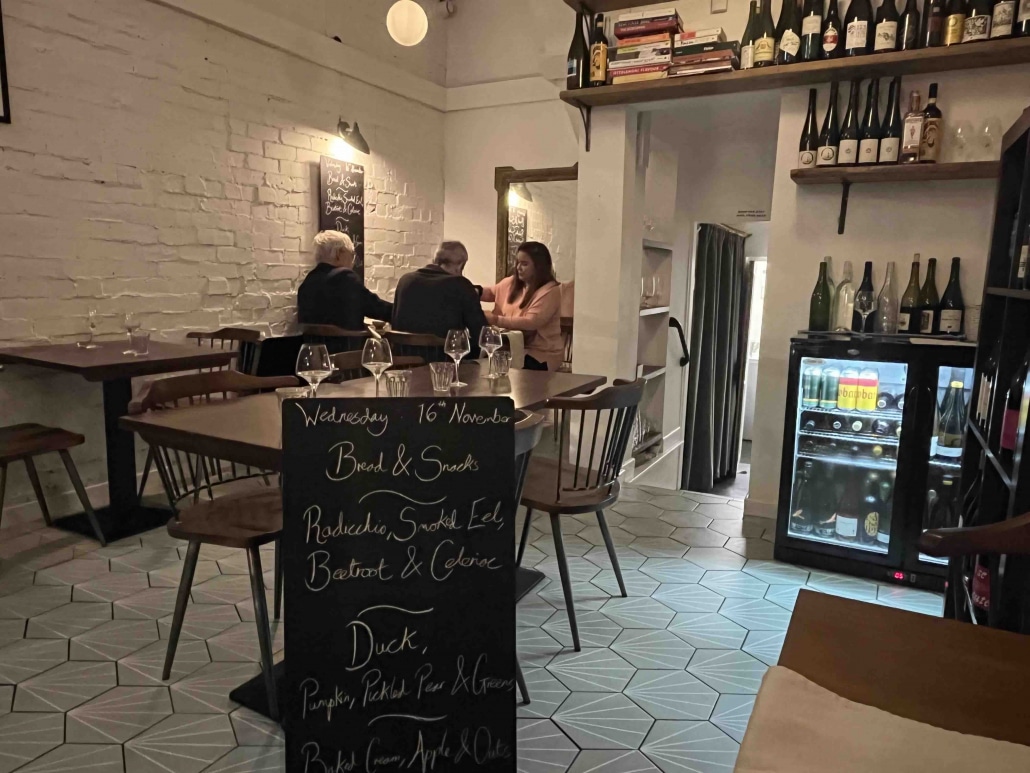
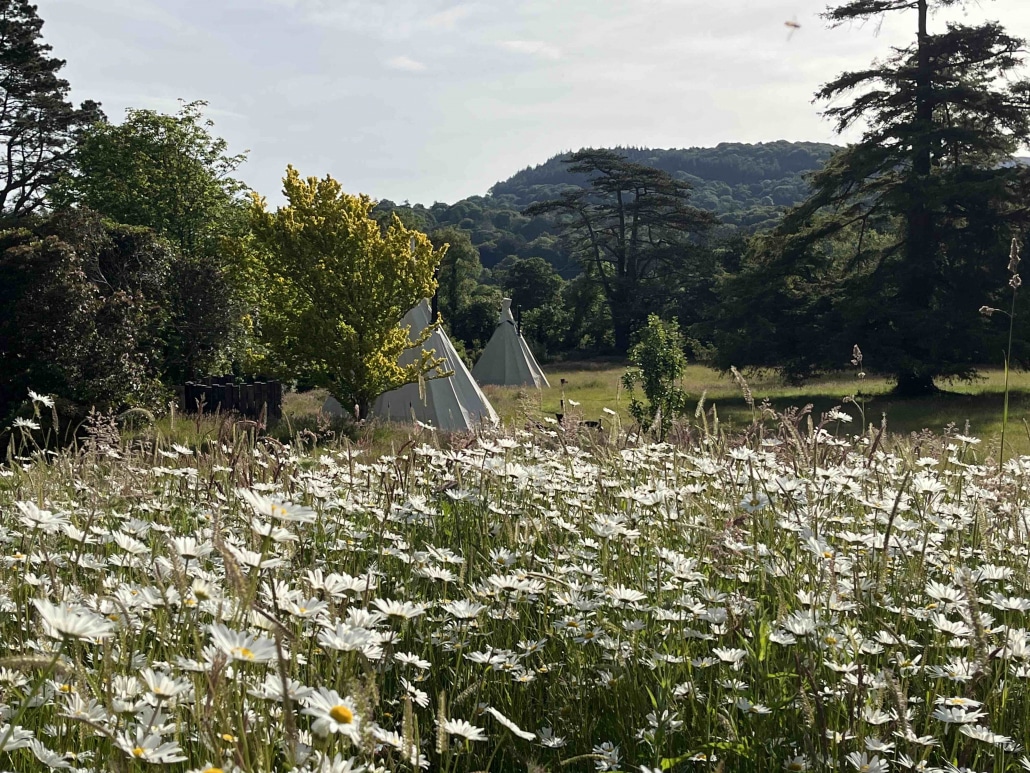
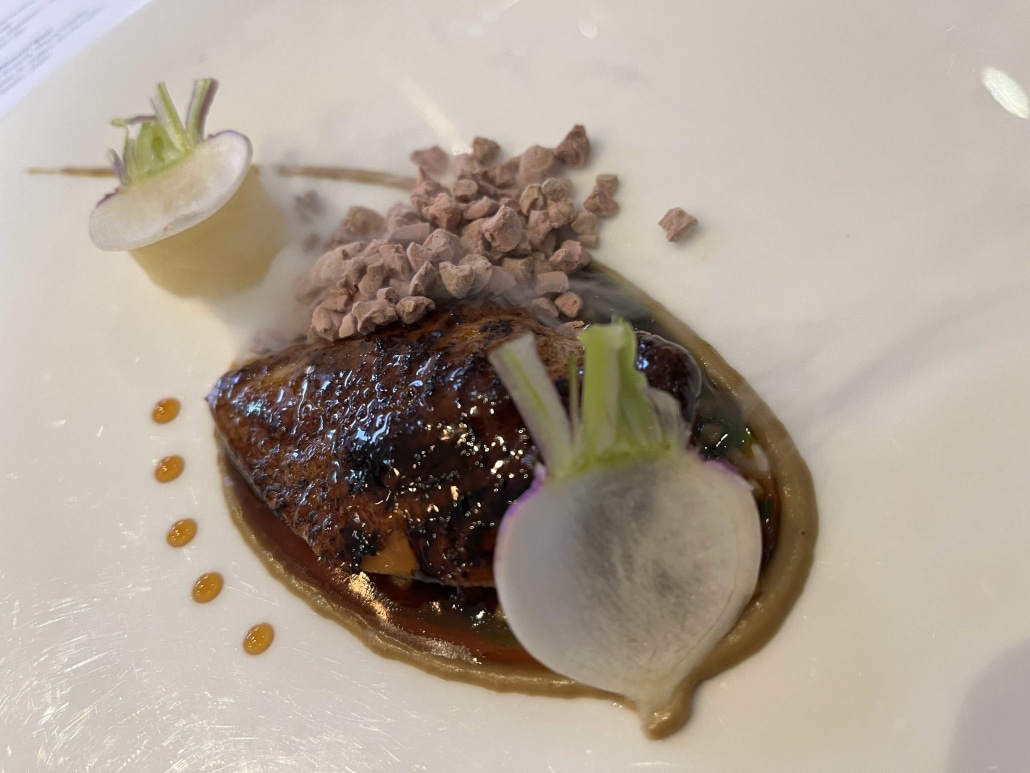
It was my first visit to the Farlam Hall hoterl near Brampton in Cumbria. For, of all things, a one-night-only 14-course dinner collab with Carlisle-based crime writer MW Craven. For it chef patron Hrisikesh Desai created dishes inspired by plot elements in the best-selling Washington Poe book series. Craven’s table-side commentary was illuminating, the whoe menu astonishingly playful and inventive.

You could see why, after just two years of Hrishi in situ, the accolades are building. In the recent Condé Nast Johansens Awards Farlam’s Cedar Tree was named UK Restaurant of the Year, while in the Top 50 Boutique Hotels list the Hall has just leapt 25 places to No.11, only five spots behind Lakes game changer Gilpin. That was Hrishi Desai’s previous Cumbrian billet, where he gained his first star for its SPICE restaurant. Cedar Tree’s was awarded within a year of his arrival.


To confirm Cedar Tree’s status, the globally influential La Liste Top 1000 Restaurants has ranked it among the UK’s best. Easy to see why on the evidence of our meal. I caught up with Indian-born, much-travelled Hrishi to quiz him on the success of his Cumbrian bolthole…
Hrishi, the whole ‘Murder Mystery and Michelin Stars’ event was sheer joy. How important is that sense of playfulness in the kitchen?
“Playfulness in cooking is incredibly important to me. It brings something fresh and memorable to the dining experience — something a guest will truly never forget. It also gives us the freedom to bend the traditional rules of gastronomy and bring to life ideas that might otherwise seem too unusual to attempt.
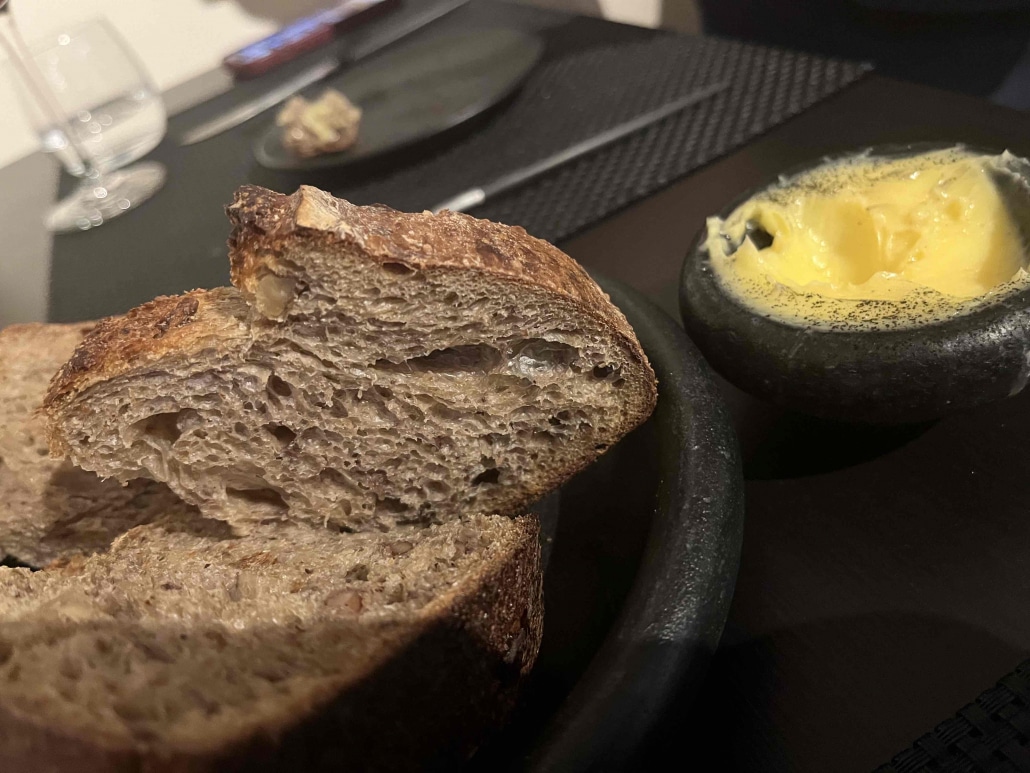
“Take the ‘Spaghetti alla Vongole’ pudding, for example. Deliberately designed to challenge expectations — sweet spaghetti, passion fruit cream, and a classic chocolate mousse re-imagined in the shapes of shells, conches, and clams. Or the ‘Severed Fingers’, a herb butter shaped like fingers. Serving something like that requires courage, but it also sparks curiosity and delight.


“At Farlam Hall, almost 54 per cent of our diners return, and a big part of that is their enjoyment of this playful approach to food. They appreciate that while we’re rooted in a classic country house style of cooking, we elevate it with global influences — spices from around the world, Japanese marination techniques, European fermentation skills, and more.
“We always aim to be different, but never at the expense of the fundamentals. No matter how playful the presentation or concept becomes, our core goal remains the same: solid, skilful cooking with real depth and craftsmanship on the plate.”


Local produce is on every chef’s lips. Sometimes it’s lip service. From the evidence of our dinner, it is very important to you. What does Cumbria bring to the plate?
“Cumbria is blessed with some truly exceptional producers, and for us it feels completely natural to use their ingredients as much as possible. The region offers an extraordinary range of produce — Herdwick lamb, rare-breed pork, artisan cheeses, incredible dairy, heritage vegetables, and foraged ingredients that change with the seasons.
“We’re also surrounded by farmers, growers and makers who are deeply committed to their craft, many of whom have skills passed down through generations. That depth of knowledge and care is part of what makes Cumbrian produce so special.
“I would also like to see our own kitchen garden reach its full potential, because we already use so much of what it produces. Being able to pair what we grow here with what our neighbouring producers craft — from honey and rapeseed oil to organic vegetables, game, cured meats and small-batch spirits — creates a uniquely Cumbrian identity on the plate.
“Ultimately, Cumbria’s natural beauty is reflected in the quality of its ingredients. The landscape shapes the flavour: clean air, rich pasture, rugged coastline and forests full of wild herbs and mushrooms. For us, cooking in Cumbria means tapping into this landscape and celebrating it. It’s not about paying lip service to ‘local produce’ — it’s about letting the region speak for itself through the food.”


Hearing all this, it seems you are really settled here. What are your ambitions for Farlam Hall and your own career?
“Farlam Hall means a great deal to me. It has taken a huge amount of hard work to restore it to its former glory, and we have no intention of stopping there. Karen and I believe that Farlam should stand as a beacon of classic British hospitality — one of the true ‘go-to’ destinations in the North West of England.
“We have ambitious plans for the future, and we hope that the financial climate will allow us to bring them to life. These include developing a cookery school, creating a dedicated treatment space for yoga, sound therapy and meditation, adding a few more rooms, and opening a second restaurant.
“For me personally, this feels like just the beginning. Farlam Hall is a long-term project that we want to keep growing, refining and elevating. The aim is not only to strengthen the hotel’s reputation, but also to continue evolving in our own career through creativity, innovation and a commitment to excellence, supporting the team and local community.”


Which chefs have been your main influences? Your own Indian heritage is obviously important but the traces are restrained. Is that the aim?
“There are many chefs who have influenced me throughout my career. I’ve been fortunate enough to meet most of them — including the Roux family, Thomas Keller, Hywel Jones (whom I worked with for almost 12 years), Heston Blumenthal and Gordon Ramsay. I also draw a lot of inspiration from the new generation of British chefs such as Mark Birchall, Lisa Allen and Adam Smith, whose creativity constantly pushes boundaries.
“Across Europe, chefs like Hélène Darroze, Anne-Sophie Pic, Olivier Roellinger, Björn Frantzén and Rasmus Kofoed have shaped my thinking through their subtlety, precision and ability to create deeply memorable dining experiences.
As for my Indian heritage, it is a big part of me. You’ll always find a gentle thread of Indian-Asian influence in my food, and that subtlety is very much intentional. What I don’t want is to be labelled as a chef creating Indian fine dining or ‘progressive Indian’cuisine — that’s not what I’m doing. Instead, I’m drawing on my roots in a way that complements the broader culinary style we aim for at Farlam Hall.”


Just before our recent dinner at Farlam I saw that you had been away in Mexico on a 10 day Roux Brothers Scholarship trip, where he and fellow alumni accompanied Michel and Alain Roux. Can we expect that experience to impact on your menus?
“I found that Mexican food — and its culture — has a surprising amount in common with Indian cuisine. So travelling through the Yucatán and discovering those parallels in flavour wasn’t entirely unexpected, but it was incredibly inspiring. I brought back a range of Mexican chillies, and we’ve already started experimenting with them in the kitchen. I’m sure you’ll begin to see subtle touches of Mexico appearing in some of our dishes over the coming months.
“One of the biggest revelations for me was the Mexican mole (a dark stew). The depth and complexity of its flavours were extraordinary, and recreating it here will be a real challenge — but one I’m excited about. I think a refined version of mole could pair beautifully with game birds or robust, meaty fish. It’s definitely something we’ll be exploring further.


I have to ask. What are the big challenges ahead for hospitality with precious little positive support from government?
“This is a question that opens Pandora’s box for me, because it touches on something that genuinely frustrates many of us in hospitality. I appreciate that any government faces enormous pressures and competing priorities, and we do have to allow space for that. But at the same time, when respected business leaders across hospitality, farming, tourism and the wider supply chain are repeatedly warning that the sector is on its knees, it becomes difficult to understand why these voices aren’t being heard.
“Hospitality is one of the UK’s biggest employers. It supports local economies, revives rural communities, sustains farmers and independent producers, and brings millions of visitors to regions like Cumbria. Yet rising costs, staffing shortages, and an inflexible tax framework are putting businesses under impossible pressure.
“When energy bills for small hotels resemble those of industrial facilities, when there is no cut in VAT rates for the sector, when recruitment rules don’t reflect the reality of rural workforces something is fundamentally out of sync with the real world.
What would you like to see done?
• A realistic VAT structure for hospitality – a lot to learn from some of our European neighbours or emerging power houses like India who have reduced the VAT to encourage growth.
• Long-term relief or reform on business rates.
• Practical solutions to staffing shortages, especially in rural areas
• Support for British farmers and producers facing the same inflationary pressures we are
• Incentives for training, apprenticeships and skills development,
• Encouragement for sustainable, regionally focused food systems.
“These are not radical ideas — they are common sense. They protect jobs, strengthen local supply chains and ensure that Britain’s hospitality sector, one of the most culturally and economically important industries we have, doesn’t collapse under its own weight.”


Who is Hrishikesh Desai?
Obviously, one of the UK’s outstanding creative chefs, now also overseeing a country house hotel, Farlam Hall, that is setting the bar higher and higher while retaining a dedication to homely hospitality rare among Relais & Chateaux establishments.
A key to his culinary is that Roux Scholarship award back in 2009. The most recent fruit was that educational expedition to Yucatán and Mexico City but the initial impetus from joining that elite culinary brotherhood was to launch him towards running his own kitchen.
He had been encouraged to enter by his then boss/mentor Hywel Jones at Lucknam Park. He had worked himself up from commis to head chef over a decade at this Michelin-starred exemplar outside Bath.
He had arrived there from France, itself quite some distance from his birthplace, Poona in Maharashtra. In his late teens he had won a scholarship to study restaurant management at the Institut Paul Bocuse in Lyon. It was in that most gastronomical of cities he found his true vocation – not fron of house but behind the stove.
He recalled: ’It sounds crazy to say but it all started with a crème brulée. ’I saw one being blowtorched and I was amazed by it. I think it was partly seeing that chefs got to use all of these cool gadgets but it also made me realise that if I wanted to fully understand this industry, I needed to cook. That was what made me want to become a chef.”