How times change (and not that plus ça change casuistry). The Bordeaux of my distant memory was a grey city, on the muddy Garonne, hoarding its vinous treasures with a kind of miserly hauteur. Its 18th century architectural glories were as grime-ridden as the ancient bottles slumbering in its fusty trade cellars. 

Returning is quite a culture shock. After three decades of enlightened civic planning the centre has been transformed. Dazzling sun helps highlight its limestone treasures and riverside gardens. Bordeaux is baking. Tomorrow we’ll fly home before the temperature soars beyond 40 degrees. The steaming temptation is to dip one’s toes in the quayside Miroir d’eau in front of the Place de la Bourse. At 3,450 square metres the world’s largest reflecting pool.

Instead we head for shelter… and, naturally, wine. Inside L’Intendant the air conditioning is a comfort. Its true purpose? To protect 15,000 bottles of the fine wines associated with the city. They are spectacularly displayed around the walls of a 12 metre high, spiralling stairway. All for sale – this is a shop.

Half way up I get into conversation with a German connoisseur. “From Manchester, you say – ah, Hawksmoor, the great claret blunder, the world still talks about it.” He’s referring, of course, to that fateful day in May 2019 when diners at the Deansgate steakhouse were mistakenly served a £4,500 bottle of Chateau Le Pin Pomerol 2001 instead of the £260 Chateau Pichon-Lalande 2001 they had ordered. 

The incident went viral, provoking mutterings of “how can any wine be worth that much?”. Market forces, supply and demand. Minuscule Le Pin produces just 200 cases a year and is a trophy red. There are a few of those dotted around L’Intendant, where vintages date back to 1945 (a legendary year), alongside relatively affordable wines.

From the vantage point of an English wine lover, with all the world to choose from, the old mystique of Bordeaux has worn off somewhat. Partly due to its reds in particular becoming a global commodity. The word claret is as démodé as cordon bleu cuisine.


Which brings us to La Cité du Vin, the focus of our return to a reinvigorated, scrubbed up city. The swift flowing, tidal Garonne river may be as muddy as back then, but the esplanade along its banks has been transformed and, 2km north reached by the sleekest of tram services, the old docks now play home to the the €81 million ‘Guggenheim of Wine”.

That label’s too glib, but it has stuck. Comparisons with Frank Gehry’s game-changing museum on the banks of the Nervión river in Bilbao are inevitable. But La Cité, just three years old, feels more a valuable addition than a turning point for a city’s touristic appeal.

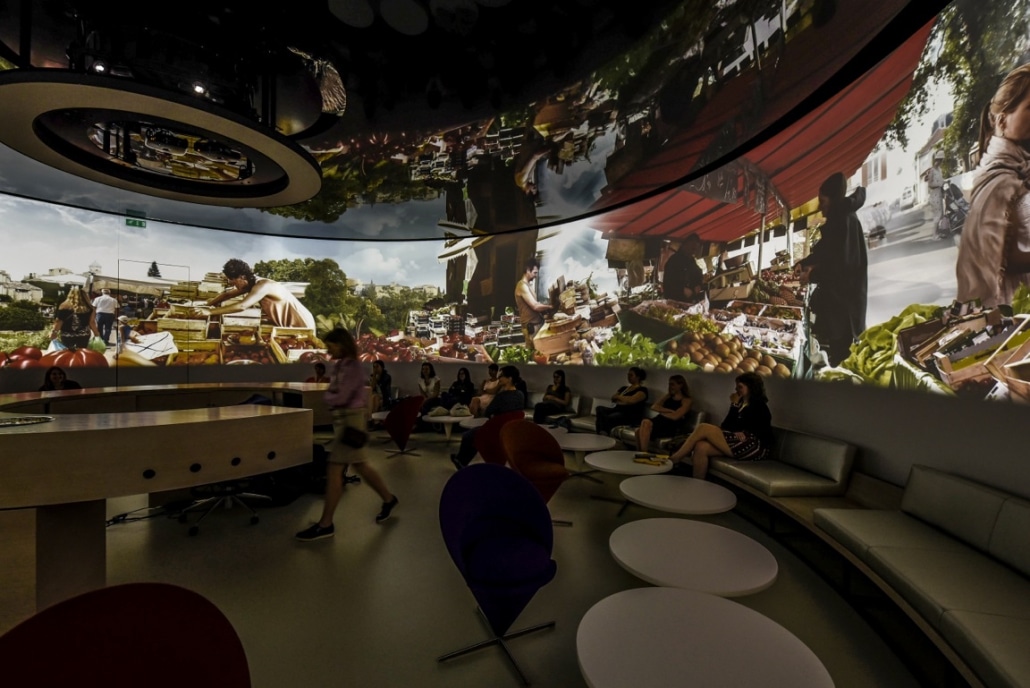
Devoted to educating the public in the glories of wine and viticulture, it certainly catches the eye on the outside – an asymmetrical swish of gold and aluminium, topped by a leaning tower. Inside, it casts aside the old museum certainties of curated objects in favour of an immersive, interactive experience, involving all the senses. So expect to do a lot of sniffing out of little funnels to unleash various aromas. What am I getting here? Gooseberry, honey, farmyard? Book a tasting workshop to get the whole synaesthetic connection.

We chose to ramble around and felt slightly adrift against filmic backdrops. Of course, there’s a slight theme park appeal; that’s part of its populist, demystifying mission. A chance to be unafraid of terroir and minerality. All those daunting buzz words.

There’s also a lot of attention paid to the rest of the globe. This is breaking the mould in a France that for too long dismissed wines that weren’t French; indeed in Bordeaux Burgundy wouldn’t get much of a shout. 

Further evidence of this sea change was to be found in the Cité’s top floor Belvedere tasting room – attractive for its 360 degree panorama and also for the complimentary glass of wine for each ticket holder. The array of bottles on the counter covered the globe. We sipped an Australian Shiraz as we gazed back through the heat haze to the city proper far beyond the futuristic Chaban-Delmas Bridge. Below us the Bassins à Flot – derelict tidal basins” – are undergoing gentrification. 

The advance guard has been the resurgent Les Halles de Bacalan market across the road from the Cité’. It’s a smart food hall, hosting 24 traders. Fronting it is a separate brasserie. La Familia, named after a treasured 1920s neighbourhood cinema and celebrating the food and drink of South West France. The regional platters were the mot impressive food offering.

From here the promenade back to the city centre is via the Quai des Chartrons, whose warehouses were central to the wine and slave trade which created the city’s wealth. Evidence of which is more than 5,000 restored houses from the 18th century and 350 listed historic monuments. Such glories make it a delight to wander around the UNESCO World Heritage Status Chartrons district and the charming Jardin Public. 

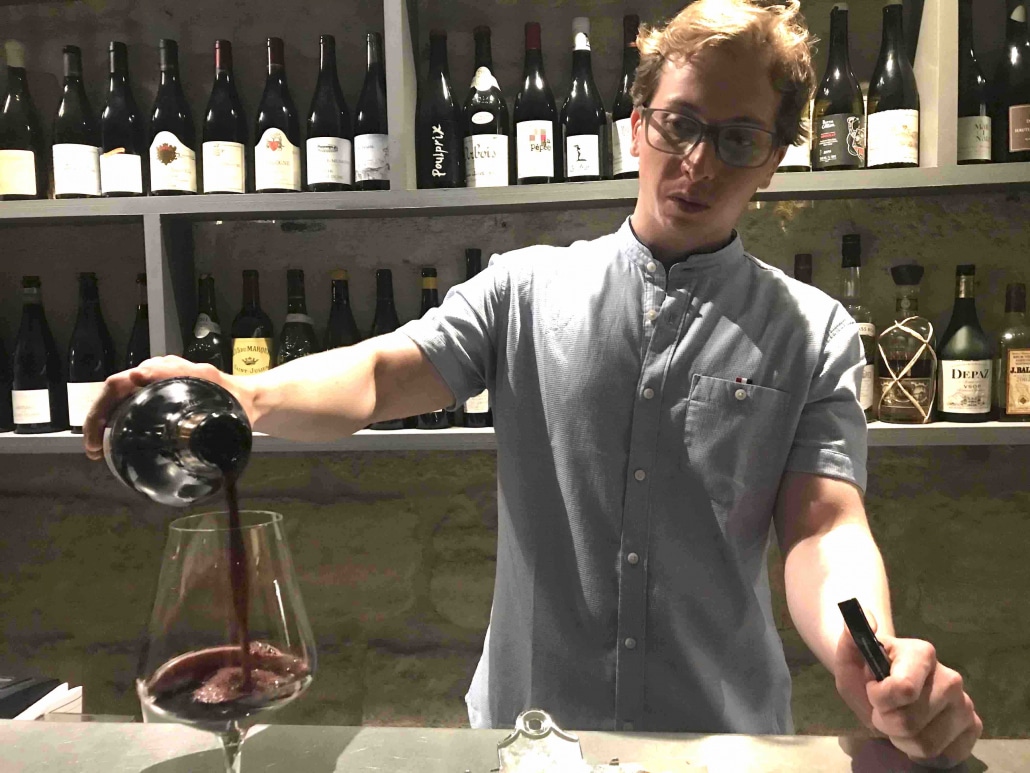
Most folk amble along the Rue de Notre Dame in search of antiques; we perversely discovered Rn7 Caviste at No.102, devoted exclusively to the wines of the Northern Rhone, where brave incomer Frederic Bennetot introduced us to the most impressive wines we tasted on our city break. Crozes Hermitage, St Joseph Cornas, Côte-Rôtie –  a treasure trove homage to the Syrah grape in premises that proclaim their former incarnation as an upholsterer’s.

The city, as you’d expect, boasts some terrific wine bars. Close to L’Intendant is Le Bar a Vin, a Bordeaux institution in lofty ornate premises. Government-subsidised, it offers bargain, by the glass offers of some seriously good wines. Around the Place St Pierre is a fertile area for an evening’s carousing. Check out near neighbours on the Rue des Bahutiers, Italian-owned The Wine Bar with more than 300 wines from around the world and excellent snacks to accompany them, and the hipper Vins Urbains. By the glass is expensive, so definitely go for a bottle to share (400 to choose from) and don’t miss the delights of their with even more bottles and a white truffle croque monsieur.

Some palate-cleansing hoppiness? Venture further down winding Bahutiers to its junction with with the Rue Alsace at Lorraine and you’ll encounter the Bordeaux branch of the French craft beer chain, Les BerThoM. It has a fine Belgian selection, but do try the fine local Merignac beer.

At the other end of the food and drink scale Bordeaux has it share of Michelin restaurants, non more high profile the Gordon Ramsay’s two-starred Le Pressoir d’Argent inside the InterContinental Bordeaux – Le Grand Hotel. Its name comes from the dining room’s centrepiece, a solid silver lobster press, on of only five in the world. Splash out well over €100 and they’ll serve you a native lobster fresh from the press, steamed with lemon leaf, corn, girolles, courgettes, coral and lemongrass bisque. Maybe the shadow of Brexit is straitening you purse strings? Stick to the €185 Origins Menu, featuring old Bordeaux’s signature fish dish, freshwater lamprey in a red wine sauce. We thought better of it.

Of course, you can dine superbly in small bistros, if you pick well, and then, it being France, make a beeline for a market. Les Halles de Capucins in the homely St Michael’s quarter, south of St Pierre, was in second gear the Tuesday we visited but could still maintain luxuriant fresh herb stall, the like of which I’ve never seen before (actually I recognised it from one of those Rick Stein’s Long Weekends programmes). 

Mid-morning was a perfect time to indulge in a half dozen Arcachon oysters and a tumbler of Entre deux Mers white at Chez Jean-Mi, bistrot a huitres. A piece of old Bordeaux. Vive les traditions Bordelaises.

It’s not all about wine – Three must-visits in Bordeaux

The Cathedrale Saint-André 

There’s nothing like a church tower panorama to help you get a feel for a city. We tried two. The gargoyle-thronged Gothic belfry, the Tour Pey Berland, was built in the 15th century alongside the Cathedral (a spire came later). 231 steps will take you to the viewpoint; be prepared to queue, visitor numbers are restricted. 

St Michel’s bell tower

Its contemporary rival, the 114 metre high bell tower of the Basilica of Saint-Michel is also freestanding and spired. Known as La Fleche (‘the arrow), it’s quite a climb but you are rewarded with a view down onto a vibrant local street market. The tower’s crypt used to house a collection of mummies unearthed from a local burial ground in the 18th century. Our macabre  expectations were dashed – they were reburied 40 years ago.

Get a masterpiece fix at the Musée des Beaux-Arts

One of France’s finest art galleries, built in 1881, has reopened after several years of renovation and offers an eye-opening primer in European fine art. The collection is housed in two glorious, separate wings – the south devoted to art from the 16th to the 18th century, and the north the 19th and 20th centuries. Artists who feature include Brueghel, Corot, Delacroix, Van Dyck, Kokoschka, Matisse, Picasso, Renoir, Rubens, Véronèse and Bordeaux’s own Odilon Redon.

For a full rundown on the city’s attractions visit Bordeaux Tourism.

It’s far from up there with P&O’s unceremonious mass cull of their crews but one of the more unsavoury moments in a troubled 2021 for the hospitality trade was Bruntwood’s decision to dispense with vin-yard, a bijou independent wine bar/shop at its Hatch ‘retail and leisure destination’ on Manchester’s Oxford Road. The landlord’s apparent reason was a need to recoup revenue lost during the pandemic by taking over booze sales from its tenants. The quality wine offering from vin-yard’s Anna Tutton has never been adequately replaced.

Anna Tutton at her vin-yard wine venue at Hatch. She has high hopes for her new venture

For several years it has been a ploy for developers, enlightened and otherwise, to add a dash of millennial cool to their sites by hosting street food wannabes on fixed term deals as a launchpad for eventually establishing their own permanent bases. Now with the economy in freefall that’s easier said than done. When I ran into Anna at a recent wine tasting she told me over lunch about her own life-after-Hatch plan for The Beeswing and it sounded a perfect next step, albeit again pitched as the icing on a property cake – at the Kampus ‘garden neighbourhood’ across the canal from the Village.

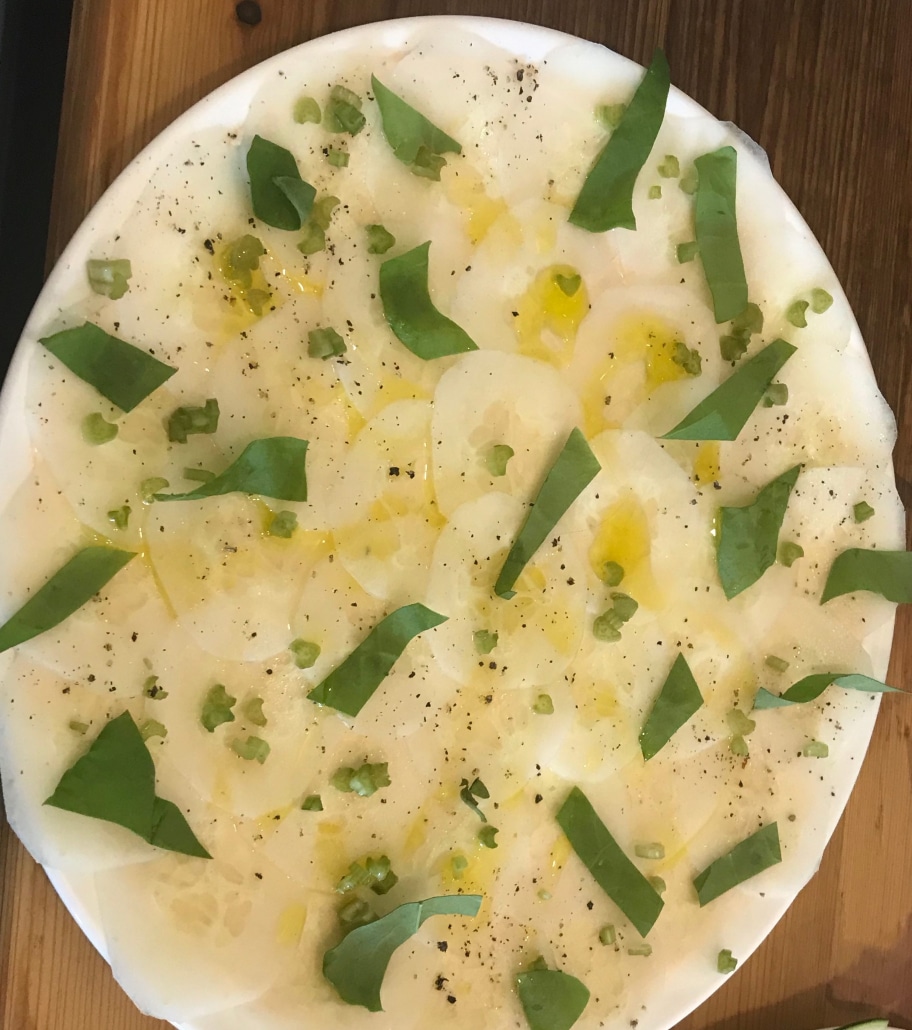
The Beeswing is a co-production with business partner Joe Maddock, who ran West Didsbury’s much-loved Pinchjo’s back in the day. For the new venture he’ll provide a small plate menu to match Anna’s eclectic wine offering (mainstream plus some natural). I was particularly taken with the black sesame crusted feta triangles, my main picture, from a menu that will reflect the melting pot of food styles around Manchester – including dals, plant-based and Ottolenghi-influenced Middle-Eastern. All food images by Rebecca Lupton.

Design – sneak preview courtesy of these 3D renders from Andy Gough – is in the hands of the talented and lovely Soo Wilkinson, co-founder of Chorlton’s The Creameries. Set upstairs above Nell’s Pizza place, it too looks a treat with its softened industrial look.

But now comes the rub. There is a budget deficit and Anna and Joe urgently need your crowdfunding help…

The pair’s initial costing was £80,000 and when the figure leapt up to over £100,000 they made up that deficit, but they £25,000 remain adrift of the new final total, so they have launched a crowdfunding campaign, deadline mid-April. It’s a great indie cause – contribute here.

Your potential rewards? You can pre-order a meal for two with wine for £50, or if you can’t wait for the restaurant to open, you can order a meal for six and two bottles of wine to be delivered to your home for £150. You can even help shape the menu by throwing £25 into the pot to be invited to a private dining event of menu cook-offs with chef Joe, and tell him what you think works – or doesn’t. I’ve invested in that one.

Kampus’ developers Capital & Centric and HBD have been pretty canny recruiting some established indie food and drink names to populate Instgrammably picturesque Little David Street. The presence of Pollen Bakery, Cloudwater, Madre, Great North Pie Co, Yum Cha and The Beeswing will attract a clientele way beyond the on-site apartment dwellers.

Cloudwater/Levanter collab at Kampus

This is still very much a work in progress, but to whet the appetite Manchester’s highest profile craft brewery, Cloudwater and Ramsbottom’s award-winning Spanish restaurant Levanter (sibling of Baratxuri) have unveiled a 10 week residency. This will consist of a series of globe-trotting weekend block parties around the ‘tropical garden’ with DJs saluting the likes of California beach sounds and raucous Mexican festivities for Cinco de Mayo, Irish folk parties and smooth NYC jazz.

My focus will obviously be on Levanter’s Joe Botham serving up his legendary giant paellas from 3pm at the canalside Bungalow. The residency kicks off on Easter weekend.

‘Never go back down those country roads’ might be the advice of some plaintive troubadour or a stressed-out Sat Nav, but when it’s Northern California how could I resist? My previous trip to the Napa Valley and Sonoma had been a wine-soaked idyll from sumptuous bases in Relais & Chateaux properties, but the simpler pleasures on the side seduced me too.

Hence a planned two week road trip between San Francisco and Seattle had to include some blissed-out backwoodsmanship and watching ocean sunsets with chilled IPAs. 

Here are 10 places along the route where we ditched the hire car and went native…

Ram’s Gate Winery

OK, so a vineyard had to be our gateway. Ram’s Gate is possibly the closest winery to San Francisco, so perfect for a wine tasting lunch. It’s set on a hill off State Route 121 heading for Sonoma among its own 28 acres of vines, but since its inception in 2011 its terroir-driven selling point has been its handling of small-lot Pinot Noir and Chardonnay grapes from across Sonoma and Carneros. 

The very definition of a Californian boutique winery, it is architecturally stunning. Inside it’s vintage chic, almost clublike; from the outside it lives up to its claim to be a modern interpretation of the weathered farmsteads of old Carneros, while below the vine-clad hill the wildlife habitat, Tolay Creek, signals the sustainable ethos.

Ram’s Gate is open Thursday-Monday , 11am-4pm, for tasting appointments. We went the whole hog and had the $160 a head Five Course Wine and Food Pairings, featuring  the likes of saffron poached lobster and pasta, smoked bavette, raspberry shortcake with brown sugar chantilly. Out on the terrace, naturally with some lovely wines.

Jordan Vineyard & Winery

Another winery, can’t resist, but the vineyard tour here is something special. You can spot the French influence on this chateau-stykled family winery, which opened back in 1971 and is single-minded about producing just two wines – a Cabernet Sauvignon Bordeaux blend and a Chardonnay. Tasting both in a luxury hilltop gazebo overlooking the  entire 1,200 estate with some seriously gourmet small plates was the culmination of a tour that took in a look at their own organic veg garden and apiary, natural habitat, a tasting of their own estate olive oil and real insights into vineyard practice. You can understand why it has won a clutch of awards. The three hour tour costs $150 plus tax; available May-October only, weather permitting. More affordable is theWinery Tour & Library Tasting, which features wine tasting with food pairings for $75 plus tax. 

Healdsburg

My, how this town has gentrified, gussied itself up big time, especially around the central lawned Plaza. When I first visited a quarter of a century ago there was hardly a bespoke tasting room in town. Hell, this was Sonoma, not Napa; you had to go out into the country and find the winemakers. Now a raft of grape-driven opportunities rub shoulders with designer shops and small batch coffee haunts. Still it’s undeniably attractive and some favourite spots remain – the Hotel Les Mars, where we stayed last time, and the homely Oakville deli/cafe on the Plaza, but the raucous Bear Republic brewpub just off the main drag has bitten the dust. Fear not they are still brewing elsewhere that quintessential West Coast IPA, Racer 5. After a couple we started noticing more the hardware stores and simpler liquor stores of an older Healdsburg; the apple orchards and ranches that dot the Sonoma hinterland – a world away from the polished wine palaces and their millionaire owners in Napa.

The Bohemian Highway

Definitely a world away from Napa. This was the country road we needed to get back on and it didn’t disappoint. Our destination was a log cabin lodging with ocean views at Jenner at the mouth of the kayak-thronged Russian River. Direct way from Healdsburg is the 116 up the valley, but we mooched further south towards Sebastopol to join the Bohemian Highway

Rarely has a road so lived up to its name. Orchards, redwood groves, vineyards and grazing land are the heavenly backdrop to laid-back small settlements. Occidental and Monte Rio are folksy cute, but Freestone, official population 50, is my favourite. Mainly because it’s home to the Wildflour Bakery and Freestone Artisan Cheese store, an essential stop on the California Cheese Trail.

Wildflour boasts a wood-fired brick oven, lit each afternoon with a wheelbarrow of eucalyptus kindling. Scones and all kinds of delights are produced, but it is the Organic Sourdough that rules supreme. Thick of crust and yet airy-light inside (even the rye variety), this is the best bread you’ll find anywhere.

At the cheese store affineur Omar Muller sells locally pressed olive oil, almonds and walnuts and a range of dairy-related artefacts, but the glory is the cheese. Try the local Bleeting Heart sheep’s or more widely available cheeses from the Cowgirl Creamery. A bottle of Pinot Noir from the nearby Joseph Phelps completes the picnic.

River’s End Restaurant & In, Jenner 

A tea-time sea fret shrouded the extended estuary of the Russian River. It grew thicker as we checked into the River’s End Inn and settled into our cabin. What chance a glimpse of their legendary sunset from our wooden porch? There were going to be few other distractions. With no cellphone or internet accessibility, no telly, we could have been back in the days when it was built as a wayside inn for loggers and fishermen.

Maybe they would have tucked into a large helping of elk, as I did; the difference surely the finesse with which mine was treated by chef Martin Recoder and it wouldn’t have been imported from New Zealand! Food miles concerns apart – and no problems with the King Salmon starter – this was an extraordinarily fine meal, the best of our whole road trip, even the sophistication of the service belying the rusticity of the Inn. And the wine? It had to be a Littorai Pinot Noir – perfection from legendary winemaker Ted Lemon. We’d visited his biodynamic vineyard above Sebastopol, where the cooling clouds roll in off the Pacific (main image). As if to cue, the clouds here suddenly cleared like ‘curtains up’ to reveal a glorious sunset finale.

Gualala and Point Arena

It’s a switchback car ride north on Highway 1, the Pacific on port side smashing into coves hundreds of feet below. There a few choice stop-offs to catch your breath and get closer to the ocean, notably Salt Point State Park, which has a winding, wooded path down to a sheltered cove. Twenty-five minutes further on and worth a longer visit is Gualala Point, at the mouth of the river of that name. We wandered through the dunes onto a driftwood-littered sand spit and then clambered up the headland, which promised whale watching but didn’t deliver on the day. A further 25 minutes north you hit Point Arena, centred on the lighthouse of that name but pulling in 1,600 acres of National Monument Land, a vast coastal preservation reserve. Fascinating to explore, we’re told, but we had to settle for a sea view, craft beer and San Francisco-style chowder (in a hollowed out sourdough bap) at the Pier Chowder House and Tap Room down by the pier in the historic district.

Albion River Inn

Star brew we tasted at the Pier was a G&T Sour Beer from Anderson Valley Brewery, a craft pioneer 30 years ago and still going strong. On our last visit to Anderson Valley we explored its cool climate vineyards, but this time were happy to go down the hop route – check out Visit Mendocino’s 9 Hop Stops at ABV’s beautifully-situated taproom, enjoying another approachable sour, the Briney Melon variety. We had to resist completism; we were en route for our next lodging, the Albion River Inn – like River’s End on a bluff at the river mouth. The clifftop views were equally spectacular but the style of lodging quite different. More romantic than rustic, with spa baths and panoramic decking.

Similarly high standards in the kitchen serving superb seafood to an 80 cover restaurant, set apart from the 22 room/suite complex and built out of wood salvaged from a 1919 shipwreck.

Mendocino

The Albion River Inn was our base to visit Mendocino, a 10 minute drive north up Highway 1, along which you can sense the locations of one of California’s most gripping and gritty literary fictions, Gabriel Tallent’s My Absolute Darling (4th Estate, £12.99). It wonderfully evokes the stunning coastal landscape (though might deter you from going camping!). Mendocino itself was as laid-back as ever. Old hippies and floral New Agers meet clapboard and cliffs. The Cannabis Medical Resource Center is along the road from Virgil’s Vittles – DIY Dog Biscuits. With a year-round population of not much more than a 1,000 there’s little in the way of bar culture but the Cafe Beaujolais offers fine West Coast bistro food. To get an appetite, go for a walk on the town’s great glory, the wave-lashed headland with its maze of easy trails. A pity the vertiginous path down to the beach has been cordoned off. Hardcore hikers can tackle the 130 mile Mendocino County Coastal Trail, which takes in beautiful State Parks.

Avenue of The Giants

I for one can’t get enough of giant redwood trees. Not content with detouring off the Anderson Valley Road to wander in wonder around Hendy Woods State Park (the greatest coastal redwood concentration is in the 80 acre Big Hendy grove) we fixed our GPS on the unique Avenue of the Giants 130 miles to the north up off the inland Route 101. This is a self-guided auto tour through great sleeping forests, 32 miles in length, but you can just access a section if time is short; I’d recommend the Boiling Grove stretch as best to appreciate examples of the Sequoia sempervivens, average age 400-600 years old, the largest living things on earth. Awesome, dudes, as they say in those parts.

Safari West

I’ve left the most luminous spot till last. Its recent backstory demands pride of place. We stayed, safari glamping style in a tree at this wildlife preserve/conservation centre, nicknamed the ‘Sonoma Serengeti’, a month before the Tubbs Fire, deadliest of the Wine Country conflagrations, ravaged the area. In its path Safari West and its 400 acres, home to giraffes, rhinos, zebras, cheetahs and countless other exotic creatures in the hills above Santa Rosa. On our personal sunset safari, drinking local craft beer on a hilltop surrounded by antelope we’d asked our guide Alex if they had evacuation plans in the event of fire, which he confirmed. Just small talk then after a memorable, eye-opening jeep tour.

Safari West survived the fire thanks to the bravery of owner Peter Lang, who founded the reserve 40 years ago. He and his team saw their own homes go up in flames in the distance, but stayed to fight off the main blaze with fire hoses and a vintage fire engine. All the animals were saved and the park reopened. It is a fascinating place to visit. Check glamping availability and rates here and safari tour rates here.

• To plan your trip of a lifetime go to Visit USA and Visit California. For full tourist information about Sonoma go to Sonoma County and for Mendocino Visit Mendocino County.

In the recent Observer Food Monthly 50 (Everything We Love About Food Right Now) at number three was wine editor David Williams’ celebration of adventurous winemakers snubbing ‘noble’ grapes to make good wine from under the radar varietals such as Chilean Pais, Argentinian Criolla and Spanish Airen plus ‘reinvented’ workhorses such as Cinsault and Carignan.

To the former list now add Rubin from Bulgaria. No, me neither. The only Rubin in my consciousness was Rick, the full-bearded record producer who gave hip hop-music its voice and superintended the late flourishing of Johnny Cash with his American Recordings.

Ah, Bulgarian wine. For me it conjures up loon pants and tank tops, for it was the affordable elixir of my hippyish studenthood back in the Seventies. Sturdy reds, pretending to be claret, as they accompanied trial and error Boeuf Bourguignons and Coq au Vins at our at fledgling ‘dinner parties’. 

Cabernet Sauvignon and Merlot predominated among the reds, to the detriment of Bulgaria’s indigenous grapes. It worked, as the hardcore Communist country amazingly became the world’s fourth largest producer by this pandering to the mainstream. The Soviet Union was much the largest consumer of these industrial scale tipples until the collapse of the Iron Curtain took this particular wine trade with it. A winemaking culture dating back 3,000 years was on its uppers. Affordable rivals from the New World certainly rushed to fill the gap in the UK.

Meanwhile, in the Thrace Valley (spectacularly pictured above) little pockets of Rubin grapes – a hybrid of Syrah and Nebbiolo – were biding their time. Maybe that time has come as Bulgarian wine is enjoying a modest resurgence. It has never left the bargain basement section of supermarket shelves, but we are now talking the quality market, that explored by Central and Eastern European specialists Vida Wines.

They sent me a Rossidi Rubin that’s worth every penny of its £21.29 price tag. It does seems to combine elements of of the Barolo grape Nebbiolo (paleness and fragrance) and the more intense Syrah. Fragrant and herby, it is a more elegant rival to another Bulgarian stalwart, Mavrud.

Rossidi is a combination of the names of the founders – Rosie and Eddie Kourian, whose vineyard is near the village of Nikolaevo in the Eastern Thracian Valley.

On the evidence of this bottle they couple (not the duo pictured!) do live up to their claim to be “the new face of Bulgarian wine”, but there are plenty of rivals in this viticultural revival.

A good primer to what’s happening in this corner of Europe is The wines of Bulgaria, Romania and Moldova by Caroline Gilby MW (Infinite Ideas, £30). She praises the new wave wines for being artisan, affordable and authentic.

“The change has been a complete revolution from communist, mass-market, wine-based alcoholic beverage, to today’s industries where an exciting raft of small producers has added interest and individuality and pushed quality forward.”

That’s true in other Eastern European countries. Another Vida wine I admire is Slovenia’s Kristančič Pavo Cristatus Classic Cuvee 2014 (£23.39), a methode traditionelle sparkler which displays a wealth of peachiness and brioche using Pinot Blanc and indigenous Rubela as its base grapes.

Two reds I’ve hugely enjoyed recently are Belliani Valley Winery 97 Unfiltered Saperavi 2019 from Georgia, deep in colour and reeking of blackberry and plum. Imported by Boutinot, expect to pay around £20 retail, worth the couple of quid mark-up on the simpler filtered version. And Maurer Oszkár Crazy Lud Red from Serbia’s border with Hungary. Fourth-generation winemaker Oszkár cultivates 15 ha of land by hand and horses, growing native grapes from vines up to 100 years old. There is grippy Cabernet Sauvignon in this bottling, which offers a decided earthiness alongside substantial acidity without swamping some lovely fruit. Flawd at Manchester’s New Islington Marina also stocks, at £25, a Lud majoring on the local Kadarka grape. Who’d have thought the world offers so many under the radar grape varieties yielding such riches?

Priest Stranglers and Little Sparrows are not quite the odd bedfellows they sound. Both find common ground in the North Italian city of Trento (above), glorious gateway to the Dolomites. The Trentino has always been wrangled over by Italy and Austria; reaching its blood-stained apogee during the Great War. Witness the trenches and obsolete weaponry that still litter the mountain ridges. 

A benevolent legacy, though, is the intermingling of Germanic and Italian Alpine cuisines. That’s why you’ll find Strangolapreti (stranglers) and Spätzle (sparrows) sharing equal billing on the menus. The former, also known Strozzapreti, are usually a twisty pasta made up of just flour water and salt – but no eggs. Legend has it these were taken by the Church as tithes, leaving the peasants to fulminate against ‘priest-chokers’ or ‘priest-stranglers’ in anti-clerical hotbeds such as Emilia Romagna. Or maybe it’s just a reference to how you shape them by hand.

Up in Trento my Strangolapreti turned out to be a delicious local variant – spinach gnocchi. In truth, they weren’t a far remove from the Spätzle, noodles which do benefit from the presence of eggs. In the Swabian-German dialect the name translates as ‘little sparrows’, which they resemble in flight when shaped by a spoon in the traditional way.

From its South West German birthplace the dish has flown across all the Alpine regions, establishing itself everywhere and, most handily, is now nesting in a restaurant in Manchester, paying its own homage – The Spärrows.

Up on Red Bank chef/co-owner Franco Concli stays true to his own Trentino roots by making the Spätzle the traditional way, hand scraping them off the floury board and dropping them into simmering water. They are available both as savoury and, very apres ski, as a sweet, with cinammon, brown sugar and butter.

I like both the Spätzle and Gnocchi served simply with butter and sage (£7 for 110g), but on a recent visit chose the £9 version with guanciale (cured pork cheek), which was fabulously soothing. So too was a special of beetroot-tinctured agnoletti filled with ricotta and lemon. 

Russian style pelmeni dumplings with beef/pork garlic breadcrumbs (£8.50) were less satisfying. I should have gone for the Polish pierogi, little dumplings filled with melted cottage cheese and potato with soured cream and sauerkraut, a favourite from The Spärrows’ early days in a small archway near Manchester’s Victoria Station.

Since then the drinks list has gone from strength to strength under the stewardship of co-owner, Polish-born Kasia Hitchcock. It is as focused as the cool but cosy fit-out of a much larger arch space. A sake and spirits expert, she has been very canny with a wine list that majors in the very Alpine territory occupied by most of the food. Reds such as Lagrein, Teroldego and a Pinot Nero, are all there, from the Trentino/Alto Adige with their better known country cousin, Zweigelt from Austria. Its producer Sepp Moser also supplies the well-priced house white, a moreish Gruner Veltliner (the thinking person’s Sauvignon Blanc).

It all takes me back to Trento. I was in town for the annual Mostra dei Vini, the spring festival celebrating the wines of the Trentino region. After dark I mingled with the winemakers and was astonished at the variety of styles and local grape varieties used. Among the reds I liked the chunky Marzeminos, the more ethereal Pinot Neros and the flagship Teroldegos, with Muller-Thurgau outstanding among the whites. The delicate Nosiola, grown in a small corner of Trentino only, fared better as the base for the dessert wine Vino Santo (not Vin Santo, that’s Tuscan).

The jolly fest was held in the stunning Castello del Buonconsiglio. The original 13th century Castelvecchio (“old castle”) is in contrast to all the Renaissance add-ons in different styles erected to the glory of various Prince-Bishops who ruled here in the name of the Holy Roman Empire. Cardinal Bernardio Clesio, the greatest of these, was responsible for its vast artistic treasure house, the Palazzo Magno. I liked the earlier Gothic-Venetian loggia.

The castle also houses a grim reminder of the bloody Italian campaign during the Great War – the dungeon that housed patriot martyr Cesare Battisti before he was hanged  in the castle grounds. This was Austrian territory then and they regarded him as a traitor for fighting on the Italian side. A Battisti mausoleum tops a hill outside Trento. As I write this piece on our own Remembrance Day I’ve opened a bottle of Teroldego to salute the fallen on a front that most Britons have never heard of.

The Spärrows, 16 Red Bank (Green Quarter), Manchester, M4 4HF. 0161 302 6267. Word of warning: access is via a plain door with minimal signage.

There are two commanding Bridges in Porto. The most conspicuous is the two-tier Ponte de Dom Luis I, whose metal arch dominates the skyline above the Douro river and links the city to Vila Nova de Gaia, hub of the Port wine industry. Eighty miles upstream are the precipitous vineyards that provide the grapes for the fortified classics and some equally remarkable Douro table wines.

The other Bridge is Adrian, CEO of the Fladgate Partnership, whose portfolio includes several Port houses, most notably Taylor’s, and the luxury Yeatman Hotel, all of whose 82 rooms command stunning views of Porto’s World Heritage cityscape. Big thanks to Adrian for arranging our stay there a while back. It boasts a two Michelin star restaurant, ‘library’ of 250,000 bottles, decanter-shaped infinity pool, wine spa… and Taylor’s Port lodge just across the way. Yes, there is a heaven.

But the hotel was just the start of Bridge’s ambitions to turn a workaday wine shippers warehouse district into an oenophile tourist destination to rival Bordeaux’s Cité du Vin. Some £100m later and with necessary pandemic patience after opening in 2020, the World of Wine has certainly injected a WOW! factor to the south bank of Portugal’s second city.  

It’s actually seven linked museums – like the Yeatman, created on repurposed lodge land – that add fashion, chocolate and culture to the wine-led experience which includes an exploration of cork and Bridge’s own collection of vintage and antique drinking vessels. After all of which there is the chance to unwind in one of the site’s nine restaurants with that view, naturally, of one of Europe’s most beautiful cities.

With travel restrictions easing all this is a magnet for me to return. And beyond WOW so much to enjoy all over again. As a stark contrast, roam the opposite riverfront district of Ribeira. It’s not the rough sailors’ haunt of yore, but the cobbled lanes and ancient dark houses are still far from gentrified as they might be in Lisbon. 

A cynic in me wonders if UNESCO pay a stipend to Porto’s housewives to spend half their day hanging picturesque washing out from their balconies. The flap of laundry is everywhere, high above even the narrowest, shadowiest of passages.

The quickest way up to the city proper is via the Funicular dos Guindais, which brings you out nerar the towering Se Cathedral and the medieval maze of the Barredo district. From here it’s no distance to three of the city’s star turns.

First there’s the Belle Epoque era railway station Sao Bento where azulejos tiles run rampant floor to ceiling, illustrating episodes of Portuguese history. Close by you’ll find one of the world’s most beautiful bookshops, Lello, which has a jolly little cafe on the top floor reached by ornate staircases.

Nothing, though, quite prepares you for Sao Francisco on the Rua do Infante D Henrique. The church was begun in the 1300s, but it is the 18th century Baroque interior that amazes. Over 200g of gold encrusts the high altar and pillars, culminating in the ornate carvings of the biblical Tree of Jesse. More sombrely, the opposite wall flaunts some gory images of martyrdom. The ticket includes a visit to the Catacombs that survive from a monastery on the site. Real memento mori stuff, carved skulls atop tombs and a well-stocked ossuary.

It’s a relief then to retreat to Vila Nova for an obligatory Port tasting at Calem and a stroll past the barcos rabelos bobbing on the Douro quayside. These are the traditional flat-bottomed boats once used to transport barrels of Port from the vineyards down to the city. Once it was a seriously dangerous voyage but the Douro has been tamed by locks and dams.


As an add-on to any stay in Porto I’d recommend a trip in the opposite direction–upstream to discover the wonderful scenery and wines of the Douro Valley. Meanwhile, here I recommend a clutch of the region’s opulent reds.

The Yeatman, Rua do Choupelo (Sta. Marinha), 4400-088 Vila Nova de Gaia, Porto.

The Douro region can hit 40 degrees in high summer, so its spectacular terraced vineyards are best suited to the production of rich, full-bodied reds. Traditionally the grapes were destined for Port, notably Touriga Nacional with its ability to withstand heat. The jury’s perennially out on whether it is rewarding a single varietal table red but, blended with the likes of Tinta Roriz (Tempranillo), Bastardo, Tinta Amarela, Touriga Franca and Tinta Barroca from the highest sites, its fruity exuberance can be channeled into real elegance.

Thee days you’ll find the Douro increasingly populated with luxury cruise vessels where you can sample such increasingly appreciated wines on board or stopping off at the various quintas (estates) dedicated to wine tourism. 

You can’t stay at the winery of Alves de Sousa, alas. Which is shame since they are spectacularly situated above the winding Douro. Te de Sousa family cultivate their five estates containing 110 hectares of vines, some over 100 years old. The winery, open to visitors is at the Quinta da Gaivosa. Visitors are welcome all year round, by appointment only (+351 254 822 111. The whole range is outstanding.

Our VIP visit culminated in a hair-raising four wheel dusk drive up 1 in 4, rutted mud tracks through pine and eucalyptus forests to the topmost vineyard, which produces their Vinho do Abandonado. Wine of the Abandoned, the first of my five recommended Douro Reds.

The slopes of old vines are a tough terrain to make wine with but the results can be stunning

Alves de Sousa, Abandonado, Douro, Douro Valley, 2015 (£80)

‘Abandoned’ because it took year to recover the 85 year-old site. It was worth the effort. The 2015,  a field blend (mixed vines in one plot) is inky, spicy intense yet surprisingly refined on the palate, with liquorice and black berry dominating. At this price, it’ one for the committed Dourophile. Count me in. All prices below re rrp.

Nat’Cool Voyeur Nierpoot 2019 (£30)

Very much at the opposite end of the Douro spectrum – from the region’s most restless groundbreaker, Dirk Neeport, now dipping his toes into the natural wine sector. Six amphora reds and whites, from vines 40-50 years old, and from six varying sites each year. Each site spent 6 months in 1000L Spanish amphora, lined with beeswax, prior to blending in stainless steel, returning to amphorae for a couple of months, and then bottling with minimal sulphur added. Result is a very fresh red with soft almost silky tannins, pale because of the presence of some white grapes in the blend. It bursts with redcurrant and raspberry fruit but it’s also quite earthy. Worth chilling slightly. If you seek a more traditional Neepoort red go for Redom Tinto 2018 (£40) or the top of the range Batuta 2017 (£80), both of which were in stunning form at a recent Manchester tasting.

Pouring the Quint do Vallado at a tasting in sunny Manchester; below, the even sunnier Vallado estate

Quinta do Vallado Reserva Field Blend 2018 (£33.90)

The entry level Tinto is a field blend too, but I’d recommend upgrading to the Reserva, always one of my favourite Douro reds, from a beautiful estate that dates back to 1716 but has moved with the times by hosting two highly recommended boutique hotels. Their elegance is shared by this fig-scented red that unleashes oodles of cherry and plum fruit.

Quinta de la Rosa Reserve Red 2017 (£38)

This estate upholds the old Portuguese tradition of treading the grapes in granite lagares – before transferring to stainless-steel vats for fermentation. After which it is matured for 20 months in used French oak casks. Result is a medium-bodied charmer with balanced acidity and a beguiling freshness.

Quinta do Crasto Reserva Old Vines 2017 (£29.95)

Complex and concentrated with a strong herbiness, this one needs a a couple of years but its juicy cherry fruit is tempting now. Maybe one to decant. Or just choose a simpler Crasto from lower in the range.

VISITING THE DOURO

If you ever get the chance travel up the valley from Porto. If you’re driving allow yourself plenty of time. Steepling hairpin bends offer spectacular views but make taxing motoring, particularly if you get stuck behind a tractor. Boat trip, as mentioned, offer a more laidback oenophile odyssey. Then there is the spectacular 175km Linha do Douro rail service up to Pochino by the Spanish border – one of the world’s great train journeys, much of it alongside the broad, swirling river, and on Saturdays offering a steam service from Regua to Tua (www.cp.pt).

Where to stay. In sleepy Pinhão, the heart of the quality vineyard area, where I recommend Vintage House Hotel, sister hotel to The Yeatman in Porto. This fomrer Port warehouse was repurchased and renovated in 2016 by the enterprising Fladgate Partnership, who own 500, hectares of vineyards nearby. So a great base to expand your knowledge of Douro wines.

BUT WHAT ABOUT PORT, YOU ASK?

OK, but let me stray leftfield to White Port. Served chilled, it makes a delightful aperitif. I first discovered its charms while staying at Vintage House. I’ve not drunk the Porto Quevedo since but a beautiful substitute, sharing the same honeyed colour and hints of pear drop on the palate with a long dry finish is The Quinta de la Rosa White Port (£15.95). It would be deceptively easy to sink the whole 50cl bottle but beware it’s 19.5 per cent.

The best foodie guide for any visitor to Portugal, with a strong section on Oporto and the Douro, is The Wine and Food Lovers’ Guide to Portugal by Charles Metcalfe and Kathryn McWhirter (Inn House Publishing, £16.95).

Portuguese wines. To discover where to buy the finest in Britain visit www.viniportugal.co.uk.

In the week that Noma belatedly gained a third Michelin star after years of accolades for transforming the way we look at the food on our plate and how we source the raw materials it seems entirely of the moment to be talking low intervention wines with one of its alumni.

No, not on the Refshaleøen waterfront in Copenhagen, where chef Rene Radzepi works his culinary magic; our view is of New Islington Marina, extension of Manchester’s own hip enclave, Ancoats. Dan Craig Martin is the curator of the wine offering at Flawd, latest arrival on Marina Promenade. Originally from Oregon, Dan spent three years working at Noma. 

New Islington Marina looks idyllic in the autumn sunshine… time for natural wine and charcuterie

Crucially he was previously at Blue Hill at Stone Barns restaurant in upstate New York – the farm to table crucible where the Joseph Otway/Richard Cossins project, Higher Ground, was forged. Richard was general manager at Stone Barns when fellow Brit Joe arrived as fish chef.

In 2020 Higher Ground sprang up in Manchester as a residency in the Kampus development. Here’s my Manchester Confidential review, which also unravels the partners’ CVs that include America, London, Copenhagen and Stockport.

After further peripatetic pop-ups their eyes are on a permanent restaurant site in the NOMA (the acronym is catching) district near Victoria Station, probably next year. Higher Ground has benefited from keeping their terrific team intact too – the likes of Meg and Chris.

The gang are all together at self-styled neighbourhood wine bar Flawd. Awkward name for a destination that decidedly isn’t. OK, the lack of an extractor fan means there’s no cooking on the premises. So expect assemblies of produce grown at Cinderwood, a Cheshire market garden they are partners in or platters of British cheeses and charcuterie with bread from neighbours Pollen Bakery, naturally.

Not just any charcuterie, mind. It’s sourced from Curing Rebels in Brighton, up there with the UK’s best producers of cured, fermented and smoked treats. The £12 plate on the menu for my visit featured salami, smoked sausage and coppa. So perfect to share a bottle of wine over with a view of barges and wildfowl (oh and the odd steepling apartment block in the distance).

I warmed immediately both to the wines and ciders on Flawd’s shelves, to drink in or take away, and to new partner Dan’s approach to specialising in ‘low intervention’. It’s no secret that natural wine apostles can turn into zealots, given consumer resistance. Here the choice, with affordable wines by the glass too, is much more welcoming. 

Natural wines will always be a broad church. Some wines will be a challenge to traditional, maybe hidebound palates, but there’s so much to convert you with proper advice from Dan. We share a love of less alcoholic Loire reds from Cabernet Franc and Gamay grapes. Among the most vibrant vignerons in the region is biodynamic champion Thierry Germain, marrying a modern approach to tradition (he uses both shire horses horses and specially light quad bikes in the vineyards). His Roches Neuves Saumur Champigny is £37 to drink in and at £28 to carry out. I couldn’t resist the latter.

To accompany a trio of dishes I was recommended a red from Northern Spain that combined old favourite grape Mencia with a dash of Palomino, white grape best known for sherry. Fascinating and very drinkable. 

Each of the dishes showed the value of Cinderwood. This one acre biologically intensive market garden in Poole, Cheshire, is based on the regenerative, organic principles championed by Dan Barber at Blue Hill at Stone Barns in a quest for the best possible flavours 

Under grower Michael Fitzsimmons, Cinderwood is supplying an increasing number of Manchester’s best places to eat, including 10 Tib Lane, Elnecot and The Creameries, which all share a similar ethos. Flawd, though, benefits from a daily supply chain, on which they base a swiftly changing menu.

What also cheers me is the presence of ‘signature’ ingredients that featured in that first Kampus tasting menu – the likes of smoked cod roe, Tropea onions, sea buckthorn.

Rings of Tropea, that intense red onion originally from Calabria, join an ox heart crumble in a sweet/savoury jumble on the freshest ice queen lettuce, another Italian ‘expatriate’ variety

Wafer-thin slices of courgette come dotted with Morecambe Bay shrimp in an elderflower dressing; even prettier and mouth-tingling is a dish where almost transparent discs of cucumber are coated in (the acceptable face of taramsalata) an emulsion of smoke cod roe and garnished with strips of lemony sorrel.

Most of the small dishes range in price from a fiver to £8. Seated next to the pass with Joe hard at work, the most popular dishes on the night appeared to be smoked salmon with Manchester sea buckthorn hot sauce and Lancaster Smokehouse mackerel on toast.

Of the new ventue Joe has said: “We really just want to open a neighbourhood wine bar for the growing New Islington community, to create a space for people to drink great wine, relax and have fun. Treat it as an ideal destination for an after-work drink, an aperitivo before dinner, or a few drinks before a night out in surrounding Ancoats or the Northern Quarter.”

I think it’s going to be hugely popular and I’m looking forward to a proper investigation of its bottleshop shelves. Still, it feels a product of canny expediency, a stepping stone towards a full restaurant experience Higher Ground. Now that would lift the spirits for 2022. Joseph Otway cooking on gas again!

Flawd, Unit 3, Mansion House, Marina Promenade, New Islington, M4 6JL. Wine bar hours: Wed/Thu/Sun: 5pm-11pm; Fri/Sat: 5pm-11:30pm. Bottle shop hours: Wed/ Thu/Sun: 12pm-11pm; Fri/Sat: 12pm-11:30pm. Main image left to right: Richard, Meg, Joe, Dan and Chris.

Blue Hill at Stone Barns 

This is the (literally) groundbreaking project of farm to table guru/chef Dan Barber. With a messianic zeal, his book The Third Plate: Field Notes for the Future of Food (Abacus) champions organic flavour-driven produce as a meal focus. Shift to fewer slabs of protein, elevate the finest quality veg and grains to centre stage, respect the earth is the message. To see what can be achieved on the plate, check out series one, episode two of Netflix’s Chef’s Table.

Natural Wine primers

I’d suggest two books by Alice Fiering – Natural Wine for the People (Ten Speed Press) and The Dirty Guide To Wine (Countryman Press), the latter in conjunction with Pascaline Lepetiere. Less terroir hardcore and covering organic and biodynamic producers is Wine Revolution (Jacqui Small) by Jane Anson.

Sometimes a wine comes along that makes you re-think a neglected old favourite. That’s the case with Cayetano del Pino Palo Cortado Solera. It has been the subject of rave reviews on The Wine Society website but was I going to fork out even £15.50 for the least definable of sherry styles? Yet I have been paying the like for those new season ‘fresh’ finos tagged as En Rama (‘from the branch’).

As it turned out the Cayetano del Pino is among the wine world’s great bargains. Its creators, Bodegas Sánchez Romate – one of the few family-owned operators left in Jerez – are virtually giving away a fortified wine of this quality. Around 15 years old, pale bronze in colour, nutty, dry with a finish as long as the journey south from Madrid.

Aficionados are always complaining/gloating that the fortified wines of Jerez are undervalued. Image problem, you know? And of all sherry image problems, Palo Cortado’s is the thorniest. So Is it a heavier Amontillado? Or a lighter Oloroso? Neither. Though some cheap end Palo Cortados may be blends of both.

“It is the most ambiguous of all the sherry styles and the reverence with which it is regarded is undoubtedly fuelled by its air of mystery and legend…” write the authors of Sherry, Manzanilla & Montilla

Without going into technicalities, Palo Cortado has been the black sheep of the sherry-making process since the 19th century. This process is based on the unique solera system of maturation across a large number of casks and fractional blending over many years. 

A key to a young sherry’s development towards Amontillado status is the protective layer of ‘flor’ or yeasty bloom that settles on the surface of the base fino. Serendipitously it fails to persist in certain cask batches, the subsequent oxygen contact encouraging more intense flavour and alcohol. Each cask is then re-fortified to over 17 per cent and shifted to a Palo Cortado solera to age oxidatively.

Once a matter of chance but with modern techniques it’s down to manipulation. Cortado fans can spend far more than 15 quid on what is a rarity, representing only one per cent of all sherry made.

THE CUT STICK

The name means ‘cut stick,’ in reference to the mark made on the cask when this style of wine is recognised. Since the wine was originally destined to be a fino or amontillado, it will initially have had a single stroke marked on the cask. When the cellar master realises that the wine is becoming a palo cortado, he draws a cross (or cut) through the initial stroke (or stick), resulting in a crossed stroke or ‘cut stick’.

A fond memory from visiting Jerez was tasting in the cellars of Bodegas Rey Fernando de Castilla in the company of its avuncular owner, the Norwegian Jan Pettersen. I particularly love their Pedro Ximenez but the Antique Palo Cortado is equally distinctive. Boutinot Wines of Cheadle import the range and at each annual Manchester tasting I’d renew acquaintance of this honeyed, saline, finessed example.

For the moment, though, the Cayetano del Pino has stolen my heart. And not mine alone. One of my favourite wine writers, Rose Murray Brown reviewed it thus: “Lovely combo of vibrant freshness and rich texture. Our tasters loved the enticing toffee honeyed aromas and rich nutty complexity (and the pretty label). Bone dry, but not as searingly dry as some we tasted. Sleek elegant and attractive on the palate.”

What is the best food match for it, though? It would be easy, as with Amontillado or Oloroso, to sip it with a bowl of nuts, but it does enhance certain partnerships.

The obvious one is cheese, particularly hard cheese. My compadre and Spanish food guru Gerry Dawes, from New York, opined: ”I stopped using red table wines, really good ones, with cheese quite some time ago. Cheese completely changes the make-up of the red wine, and you lose the nuances. Sherry has enough elements that it stands out in relief.”

Triple cream cheeses might work, but i’m not sure; aged Alpine cheeses are definitely a perfect fit. 

Princess Alisia Victoria is just the kind of Alpine cheese that pairs beautifully with Palo Cortado

I’m lucky enough to have within 10 minutes’ walk, the Calder Cheesehouse, which has a delectable range of unpasteurised Beaufort, Comte, Gruyere and, more under the radar, Schlossberger and Princess Alisia-Victoria, both from Switzerland. In France’s Jura region, which we visited pre-Pandemic, the recognised accompaniment for Comte is the local, oxidised Vin Jaune, that has affinities with Palo Cortado. 

In Southern Spain itself it matches well with Iberico lomo or salchichon; at home in Todmorden we tried it successfully with a mixed charcuterie platter (air dried ham, lomo, culatello and coppa) from local producers Porcus. The sherry and cured fat make good buddies. Grilled fish seems to work with Palo Cortado, sardines and anchovies, too, but I’m not convinced about smoked salmon.

Pour a glass of the Cayetano del Pino Palo Cortado Solera, your charcuterie platter awaits

• For a succint explanation of Palo Cortado’s history and current specification visit the specialist website Sherry Notes or better still read Rose Murray Brown’s Masterclass on Palo Cortado.

So you think you know what Provencal rosé is all about? At the pale end of pale pink, ripe fruit with (you hope) some fresh acidity and a dry aftertaste? There will be a wide price range but a reassuring homogeneity, especially when chilled to within an inch of its roseate existence. 

Every summer now there seems to be a mad scramble to think pink, especially Provence. Hence an obligatory tasting of 300 in the current issue of Decanter magazine. Verdict of their rosé expert, Elizabeth Gabay MW: “Quality was consistently high, with some squeaky clean wines at all price points. The downside was an almost unending monotony of style.”

In the resultant Top 30 recommendations the rosé at No.5 (with 93 points) stands out as a ruddy maverick interloper among the pale brigade.

She describes Château Gasqui, Silice, Côtes de Provence Rosé 2019 as: “Pale red copper. Perfumed, almost grapey, red fruit aromas. On the palate a beautiful explosion of ripe red fruit, creamy apple compote, a touch of orange peel, marmalade, crushed citrus and some pretty leafy acidity. Quirkily different, intensely fruity and fresh. A gorgeous wine from a biodynamic producer, who is not afraid of ripe fruit and who makes wines which age with ease.”

What did also surprise was the UK supplier, https://www.owtleeds.comOWT of Leeds. Weren’t they the outfit that set up in the city’s Kirkgate Market with a menu generated from what was freshest on the stalls daily? ‘Owt!’ being the answer to what was available. It was a natural extension of co-owner James’s time as a volunteer chef at Real Junk Food Project flagship Armley Junk-tion. 

How does all this link to Southern France’s fields of lavender, sunflowers and vines? Bear with me for a paragraph. Well, OWT has now decamped from the Kirkgate to a cafe unit in the nearby Corn Exchange, Grade 1 listed, domed Victorian gem. The casual but precise food offering remains much the same – from breakfast to late afternoon but with a more expansive Thursday evening menu that wasn’t possible under market hours. 

Esther and James are, step by simple step, rising stars of the Leeds food scene

Oh and on the left as you go in among some chic OWT merchandise you’ll find a trio of exclusive Provencal wines from the family vineyard of James’s partner, Esther. Her surname, Miglio, is a clue to an Italian bloodline way back, but she is the very French daughter of Francois, winemaker for 30 years at Château Gasqui.

She’s proud of the Gasqui wines and so she should be. After hopping on a train to Leeds I can confirm what a complex belter the ‘Silice’ rosé is, like the Roche d’ Enfer! red, dominated by the Grenache grape. Yet just as striking was Esther’s favourite, the Roche d’ Enfer! white from 2013. The ageing has obviously benefited the Semillon that forms part of the cepage with  Rolle and Clairette. What struck was a hint of jasmine on the nose, a waxy mouthfeel and spice notes among the honeyed peachy fruit.

Château Gasqui’s vineyards are set in and support an idyllic natural landscape in the South of France

All three wines are available by the glass at £5, £25 the bottle (which is also the takeaway price). Not cheap but worth it for the purity of fruit extracted by Francois, driving force behind Gasqui being one of only two biodynamic producers in the region. Pictures of the vineyards radiate healthy, blossomig terroir. The brand-heavy fleshpots of Saint-Tropez and the Med Coast may be only 40km to the east but this is a world away, a sustainable enterprise, the antithesis of vinous bling. 

OWT’s food is a perfect complement to the wines. I lunched mid-afternoon off a small menu offering a choice of summer tartelette, aioli with prawns, ‘pepper patchwork’ or panzanella. I went for(and didn’t regret) the £10 steak plate that consisted of a 7oz Yorkshire rump steak, properly rare as requested, plus a herb salad and salsa verde. Fries had run out for the day (it was 3.30pm), so I ordered a side of OWT pickles at £3.50. Carrot, cucumber, ginger and red onion, all fresh and tangy as Esther recounted how after a history course at Marseille University she decided to check out Manchester and fell in love with it gigs and bars. There she met James and he persuaded her a future together lay in his native Yorkshire. God’s Own Country got the best of the deal, you feel, when you taste the wines she has brought with her.

OWT, Unit C12A&B Leeds Corn Exchange, Call Lane, Leeds LS1 7BR. 0113. 247 0706.

A swift guide to biodynamic winemaking and how it benefits Gasqui

Biodynamics is often referred to as ‘super-charged organic’. Its roots are in the theories  of the Austrian philosopher, Rudolf Steiner (1861-1925). Rather than simply reducing chemical inputs, biodynamic production is a proactive attempt to bring life to the soil with the use of natural composts and organic preparations. 

It’s more than just an agricultural system, rather an altered world view that then impacts on the practice of agriculture. Winemakers drawn to this philosophy tend to be creative, spiritual types, deeply connected to their land and always experimenting to see what works best. Which seems to sum up Francois Miglio’s approach.

Gasqui holds Demeter biodynamic certification after the Château’s owner was persuaded to go down this radical route, which forbids chemical fertilisers, pesticides, herbicides or fungicides. Instead insect life and spiders are encouraged to control pests; manure encourages organic growth. After hand-harvesting the grapes the wine is produced in a gravity-fed cellar without winemaking additives. Ambient yeasts are used, with no or scant sulfites and no fining.

More controversially all significant vineyard activities –  soil preparation, planting, pruning, harvesting – are done in accordance with the influence on earth by the moon, stars and planets. Finally, the aspect that can spark scepticism – the use of nine preparations 500-508 (a bit like homeopathy), using  plants such as nettles, dandelion and chamomile, to be applied in powdered form or as sprays. Most divisive is Preparation 500’, where cow horns are filled with cow manure and buried in October to stay in the ground throughout the dormant season. The horn is later unearthed, diluted with water and sprayed onto the soil.

In a magazine interview Francois said of the Steiner strictures: “It is important to understand that 50 percent is symbolic and 50 percent is real… it all helps focus.” 

All of which reminds me of a memorable trip to Ted Lemon’s Littorai winery in Sonoma, California. In Ted’s absence his young deputy confessed to not being a total convert to biodynamics (the perfection of the Pinot Noir was proof enough for us). And yet, as he put it, “It sure does make you pay attention.” 

We loved the copper hue of Château Gasqui but if rosé has to be pale pink for you?

Much has been made of a celebrity influx of Provencal rosé providers, led by Brad and Angelina, whose Château Miraval is made by the Famille Perrin, Chateauneuf du Pape royalty at Chateau Beaucastel. Majestic have it at £19.99  bottle, £14.99 in a mixed six case.

My Provencal pink alternative from a celebrity duo would be Domaine de Triennes, a joint venture by Aubert de Villaine of Domaine de la Romanée-Conti, and Jacques Seysses of Domaine Dujac in Burgundy. It’s a serious well structured wine without sacrificing all the  joyous fruit (£13.95 from Vin Cognito. A simpler favourite would be Coeur De Cardeline Rosé, better value at £8 than its Co-op stablemate, Brangelina’s ‘Studio de Miraval’ (£12).

©2021-23 Copyright Neil Sowerby unless otherwise indicated. All right reserved.