Back in the day most folk’s first encounter with Indonesian food was probably via a Rijstaffel in Amsterdam or any Dutch city, an all-you-can eat buffet, at heart a colonial legacy. At its centre would be mounds of cooked rice – the Nasi of Nasi Goreng fame, that now ubiquitous fried rice dish, often featuring chicken or prawns.

Indonesia is the world’s third largest producer of rice and farmer must make offerings of the sacred grain at harvest time to Dewi Sri, the goddess of rice and fertility. This can involve eve trekking to the top of a volcano, of which there are many.

In her fascinating new book, Healthy Vegan Street Food (Ryland Peters & Small, £20) Jackie Kearney makes rice the centrepiece of her own Indonesian/Malaysian-influenced showstopper, but it consists of just three or four plant-based elements and the rice is the more nutritious black variety. 

Healthy eating is at the core of the Masterchef legend’s fresh batch of recipes – without sacrificing flavour. As proof let me introduce you, in this exclusive extract, to her recipe for Simple Nasi Campur: Tempeh brittle, purple potato curry and coconut kale stir-fry.

“Indonesia’s answer to India’s thali. This selection plate means ‘mixed rice’, simply a plate of rice with three or four different dishes. It’s a generic term used across Indonesia and Malaysia. Nasi padang is a type of nasi campur, originating from the city of Padang in West Sumatra, where the mixed rice plate was served as a huge banquet alongside multiple curries made with meat, fish and vegetables, plus spicy sambals, peanuts and eggs.

“The Dutch colonialists adored this Minangkabau banqueting, which they called ‘rijstaffel’ or ‘rice-table’. Rijstaffel restaurants are incredibly popular throughout the Netherlands, and a closer foodie experience for most Europeans. Go hungry and be prepared for 15–20 dishes to be laid around the table.

“This recipe is a simplified little taste of nasi campur to make at home. The moreish tempeh brittle recipe uses a significant amount of (unrefined) sugars, so the portion should be a very small part of the whole platter, or give this a miss if you are trying to reduce your sugar intake and simply fry some soy-marinated tempeh instead. The kale stir-fry and simple curry are super-quick to prepare. You could also add other Indonesian elements like loaded cassava fries, manadu ‘woku’ curry or Indonesian corn ‘ribs’, if you want to create a larger rijstaffel.”

TEMPEH BRITTLE

250g tempeh; 1 tbsp plus 1 tsp culinary coconut oil, or use good-quality vegetable oil; 1-cm/½ -in thumb of fresh ginger, peeled and finely chopped (about 2 teaspoons), or use 1 tsp ginger paste;  2 tbsp coconut sugar; 1 tbsp date syrup, or use pure maple syrup or unrefined coconut sugar; 3 tbsp soy sauce; large pinch of salt. Baking sheet, lined with parchment. Serves 6.

Preheat the oven to 190°C (375°F) Gas 5. Cut the tempeh into 6 mm/¼ in thick slices, then slice into 1 cm/½ in wide small pieces (the length will be the width of your tempeh block).

Place a wide frying pan over high heat with 1 tbsp of the oil. When the oil is very hot, add the tempeh pieces. Fry for 8–10 minutes until crispy and brown on all sides. Remove and place on paper towels to drain.

In the same pan, add another teaspoon of oil and add the ginger. Turn down heat to low and cook gently for 2 minutes, then add the remaining ingredients (except the tempeh). Bring the mixture to a low simmer until a thick syrup starts to form, then add the tempeh pieces. Mix well to coat all the pieces and fry gently until the liquid is reduced and sticky.

Lay the pieces onto the lined baking sheet and bake in the preheated oven for 10 minutes until crispy and nicely browned. Remove and set aside to cool. The pieces will then become more brittle and crunchy.

COCONUT KALE STIR-FRY

1 tbsp extra-virgin coconut oil, or use culinary coconut oil or good-quality vegetable oil; 7–8 curry leaves; 1 large brown onion, thinly sliced; 3 fat garlic cloves, thinly sliced; ½ tsp ground turmeric; 7.5-10-cm/3-4-in cinnamon stick; 250–300g bunch or 200g bag of kale, thick stems removed and thinly sliced; 75g desiccated unsweetened shredded coconut, soaked in boiling water for 15 minutes; 2 green chillies, chopped; ½-1 tsp salt, to taste; freshly squeezed juice of 1 lime (about ½ tbsp). Serves 6.

Place a wok or large frying pan over high heat. Add the oil and then add the curry leaves, frying for 20–30 seconds. Now add the onion, garlic, turmeric and cinnamon. Turn down the heat to medium–low, and gently stir-fry for 3-4 minutes until the onions are softened and the garlic is golden brown.

Add the kale and turn up the heat to medium–high. Stir-fry for 8-10 minutes until the kale starts to soften, depending on how crunchy you prefer your kale. Drain the desiccated unsweetened shredded coconut and squeeze out any excess water. Add the coconut and chillies to the pan, mix well and cook for 1 minute more.

Season with salt and remove from the heat. Add the lime juice and mix well. Serve immediately.

PURPLE POTATO CURRY

½ tbsp culinary coconut oil, or use good-quality vegetable oil; 1 large brown onion, finely chopped; 2 fat garlic cloves, finely chopped, or use 2 tsp garlic paste; 4-8 small red chillies, to taste; ¼ tsp chilli powder; 1 tsp ground cumin; 1 tbsp ground coriander; 400g can plum tomatoes; 250 g purple potatoes, peeled and cubed, or use new potatoes; 

250g firm tofu, cubed (and lightly baked if you prefer); ½-1 tsp salt, to taste. Serves 6.

Place a large frying pan or wok over medium-high heat and add the oil. Add the onion and sauté for 4-5 minutes until translucent. Add the garlic, cook for 1 minute, then add the chillies and ground spices. Add the tomatoes (and juices) plus 3½ tbsp water, then squash the tomatoes to a pulp. Simmer for a few minutes, then remove from the heat.

Using a stick blender, blitz until smooth. Return the pan to high heat and add the potatoes. Place a lid on the pan, turn the heat down to low and simmer the potatoes for 20-25 minutes until soft but not falling apart. Add the tofu pieces. Season with salt and add a little more water if needed. This curry can be reheated when needed.

TO SERVE

Cooked black rice; 3–4 tbsp sambal balado; 3-4 tbsp red-skinned peanuts, lightly toasted, or use cashew nuts; freshly chopped coriander; rice crackers.

To serve the nasi campur individually, place some cooked black rice in the centre of a plate (or on a banana leaf if you like). Add a large spoonful of each of the dishes around the outside, plus a spoonful of sambal balado (or hot chilli sambal) and a spoonful of toasted red skinned peanuts. Sprinkle the potato curry with a little fresh coriander and add a few rice crackers, if you like. Indonesian rice crackers are fried, so I prefer to serve with baked Vietnamese-style crackers for a healthier option.

SAMBAL BALADO:  This Indonesian chilli and tomato condiment is a cornerstone of Indonesian food. Buy in or follow this recipe, which will make 250ml. 10-12 large dried red chillies, to taste, soaked in boiling water for 15-20 minutes; 2-6 Thai chillies (optional); 1 small red onion, roughly chopped; 3 fat garlic cloves; 1 large tomato, halved and deseeded; ¼ tbsp culinary/unflavoured coconut oil; 2-3 fresh or dried kaffir lime leaves (optional); ½ tsp date syrup (or maple syrup/unrefined coconut sugar); ½-1 tsp salt,, to taste; freshly squeezed juice of one lime;. 

Drain the soaked chillies and add to a blender or food processor along with fresh chillies (if using), onion, garlic and tomato. Blitz to a rough pulp, then add to a small pan with the coconut oil. Place over medium heat and bring to a simmer. Add the lime leaves, date syrup and salt, and simmer gently for 10-12 minutes until the liquid reduces. Add the lime juice, mix well and taste. Adjust the seasoning, adding more date syrup or salt, if needed. Store in a sterilised jar and keep in the fridge for up to two weeks.

Healthy Vegan Street Food: Sustainable & healthy plant-based recipes from India to Indonesia by Jackie Kearney (Ryland Peters & Small, £20) Photography by Clare Winfield © Ryland Peters & Small. She has published four previous books with them and the BLOG on her ‘Hungry Gecko’ website is an essential background read. 

Check out my recent interview with Jackie.

I’m on a puff pastry roll at the moment. So to speak. No sooner had I hymned the praises of the vol au vent than I was grappling with another traditional French pie. Thanks to the arrival of a remarkable debut cookbook called simply Butter (Headline, £26). Spread the word (sic). Its author Olivia  Potts, The Spectator magazine’s ‘Vintage Chef’ and ‘Table Talk’ podcaster, is a bright new star in the cookery writer firmament. Already I’ve followed her book’ advice to make my own cultured butter, recycling the buttermilk created into a soda bread loaf; funkier till, twice I’ve filled hasselback potatoes with her signature kimchi and blue cheese butter.

With a glut of mushrooms on my hand what better next than her fungi-filled pithivier recipe? A big welcome to Wild Mushroom, Tarragon and Crème Fraîche Pithivier, which ticks so many of my boxes.

Originating in the eponymous town south of Paris that is twinned with Ashby-de-la-Zouch, the pithivier can accommodate savoury or sweet fillings under its distinctive fluted pastry dome. My own rather tasty effort (main picture) didn’t quite attain the classic round shape (see Olivia’s version below) thanks to my clumsy cutting of bought-in puff pastry. Olivia, though, is no stickler over the necessity to make your own. 

Indeed she offers a cautionary tale in the book. Volunteering to work in a Crisis at Christmas kitchen, she arrived to realise that she was in charge and no ready-made puff was in the walk-in fridge for the pies she had promised – just the separate ingredients. For a former criminal barrister this was judgement day! She rose to the occasion, making 6kg of pastry by hand, but admits: “I just about had RSI by the end but have rarely been prouder.”

If you must follow her lead, albeit on a smaller scale, Butter offers various versions, from decidedly flaky ‘rough’ to the smoothly laminated classic recipe and, finally ‘inverse’, which swaps the method. Rather than the base dough being wrapped around  butter block, and then folded to distribute even layers of the butter, the butter is wrapped around a dough block and then folded similarly.

As I said, I bought in mine, pure butter, of course, but with the proviso from an organic supplier, dorset pastry, which has no truck with the controversial and possibly harmful commercial additive, L-Cysteine (E920) (a dough relaxant derived from animal hair and feathers), which legally need not be disclosed on a pastry or bread label. It’s commonly used in the Chorleywood bread-making process. Think white pap. Say no more.
For something genuinely worth eating let’s visit Olivia’s recipe for Wild Mushroom, Tarragon and Crème Fraîche Pithivier (serves four) …

“Pithiviers are round puff pastry pies, with filling sandwiched between them. I think the word ‘pie’ in any context immediately summons up the idea of something heavy, something sturdy.While sturdiness is no bad thing, that is not what we’re dealing with here: pithiviers are the spiderwebs of pies, light, fragile, a feat of architecture. Pithiviers tend to be intricately decorated with knife marks, radiating or zig-zagging out from the centre, like fractals.

“As a pie, you can fill it with anything that takes your fancy… but for the best results, I use a filling that you can chill firm, so that when you shape the pastry round it and bake it, it will retain its beautiful domed shape. I use inverse puff pastry here, because the pithivier is such a handsome, proud dish that it makes the most of my hard laminating work, but you can use any puff you have – shop-bought is, of course, completely fine.”

Ingredients

20g dried porcini mushrooms; 150g oyster mushrooms; 250g chestnut mushrooms; 15g butter; 1tbsp cider or white wine vinegar; 3tbsp crème fraiche; 1 tbsp shredded fresh tarragon; ½tsp fine salt; freshly ground black pepper; 300g puff or inverse puff pastry; 1 egg yolk, beaten, to glaze.

Method

1. First, cover the dried porcini mushrooms in boiling water, and leave to soak while you cook the other mushrooms.

2. While the porcini are soaking, halve the oyster mushrooms and slice them, and slice the chestnut mushrooms. Heat a heavy-based frying pan over a medium-high heat and melt the butter in it. Sauté the oyster mushrooms until golden-brown, add the vinegar, let it cook off, then set the mushrooms to one side. Cook the chestnut mushrooms in the same pan until they have given up their water and begun to sizzle.

3. Drain and roughly chop the rehydrated porcini mushrooms. Combine the porcini, oyster, and chestnut mushrooms, along with the crème fraîche and the tarragon, and season generously with the salt and some pepper. Line a bowl approximately 15cm across with clingfilm, spoon the creamy mushroom mixture into it, pack it down into an even layer (don’t worry, it won’t fill the bowl) and freeze for an hour until firm.

4. Meanwhile, roll out the puff pastry to the thickness of a pound coin. Later, you’re going to need to cut one 20cm and one 23cm disc from the pastry, so check that your rolled pastry is big enough to accommodate this. Divide the pastry in half, then transfer the two sheets of pastry on to a chopping board or tray with a sheet of baking paper between them. Refrigerate for at least 30 minutes.

5. Cut out two discs, one 23cm, one 20cm, from the chilled pastry. Place the smaller disc on a baking paper-lined baking tray.Turn the chilled mushroom mixture out on to the centre of the pastry, removing the clingfilm from it, and dab a border of water around the edge of the pastry. Lay the second, larger disc on top. Smooth the top layer of pastry down over the mixture, to reduce air bubbles, and press the edges down with the tines of a fork to seal. Paint all over with egg yolk, and refrigerate for 20 minutes.

6. Preheat the oven to 200°C. Paint the pastry with another coat of egg yolk and then, using the back of a small knife, make swooping marks from the centre of the pastry down towards the edge. Prick a hole in the centre, to act as a vent. Bake for 15 minutes, then drop the temperature to 170°C and bake for another 45 minutes until puffed and golden. Serve hot.

Just a tiny shoal of fried whitebait tossed with house-grown Sichuan pepper, crisped garlic and coriander – snack prelude to another fascinating Moorcock at Norland lunch. In three months it will be no more, taking with it not only one of the UK’s great food experiences but also a rarely equalled adventurous drinks offering.

On this occasion it is the latter that has lured us to the squally hilltop above Sowerby Bridge. I’ve spent the weekend engrossed in Aaron Ayscough’s The World of Natural Wine (Artisan, £31.99), thus impressionable me can’t resist the prospect of tasting a clutch of minimal intervention reds and whites from France’s Jura and Savoie regions. They don’t disappoint.

Surprisingly Les Dolomies, profiled at length in Wink Lorch’s definitive Jura Wine (Wine Travel Media, £25pb), doesn’t get a mention in the comprehensive, France-centric new book from Not Drinking Poison blogger Ayscough. But then my beloved Jura is a maverick stronghold of natural wine and 15 pages only scratches the surface.

Savoie and neighbouring Bugey are more under the radar, but Domaine Partagé does get a glowing mention as one of five individual profiles. The author, a US expat, is based in Beaujolais, the crucible of the natural wine movement thanks to certain key figures over the past four decades. He traces that timeline in depth, exhaustively explaining what make this   alternative ethos superior to mainstream ‘manipulative’ winemaking. It certainly opened my eyes to the myriad dodgy practices employed in commercial production.

What you get is over 400 pages of (copiously illustrated) polemic. Ayscough pulls no punches in naming and shaming one-time natural crusaders, who have deviated from the true path. Sulfites anyone? The rest of Europe gets only a cursory over-view at the end, but that doesn’t detract from the most comprehensive exploration of a millennial phenomenon. Still the proof is in the pudding… or rather the glass. So back to the Moorcock, where any trepidation about haziness, excess brett and funk, vinegary volatile acidity, nail polish remover stinks or the dreaded ‘mouse breath are dispelled as quickly as the whitebait are despatched.

The four wines (above) we taste are exemplary. Yet each is no comfort blanket. Purity of fruit dominates with a certain attractive wildness. There’s acidity aplenty in the two whites that copes with the whitebait spice and later both the house nduja with roast Jerusalem artichokes and a smoked mackerel tartare. Both the Premice from Les Dolomies and Domaine Partagé’s Cricri were available by the glass at £8 all weekend.

The first uses the characteristic Jura grape, Savagnin, which here is hand harvested, whole bunch pressed and fermented in large tanks, taking advantage of wild yeasts. Terroir in abundance – Les Dolomies is named after the local salty, magnesium-rich limestone rock. Apricot, gooseberries and a white pepper tingle on the tongue.

The Cricri is quite a contrast, almondy, preserved lemony with a decidedly creamy aftertaste that I love. Tech stuff: direct press of whole cluster Jacquere grapes fermented and aged in fibreglass eggs. 

Both reds, at £12.50, are equally contrasting. Le Dolomie’s Bordel C’est Bon is from the Trousseau grape and translates loosely as ‘God that’s good!’. Grapes, de-stalked by hand, are fermented in stainless steel before being given 10 months’ élevage in old Burgundy barrels. For Jura it’s quite a substantial red, definitely damson and smoke on the nose, and  a plummy roundness to the palate.

Bibi from Domaine Partagé was served chilled, appropriate for a lighter carbonic macreation blend of Gamay and Savoie speciality Mondeuse that reeks of cherries and violets. Thanks to Moorcock co-founder and sommelier Aimee Tufford for the tip-off about lingering liquorice notes.

Partagé’s World of Natural Wine profile adds a human dimension. Vigneron Gilles Berlioz is “a fanatic for vineyard work with immense sideburns and a permanent suntan.” In 2016 he and his wife Christine (who work their land with a horse) “took the curious step of changing the name of their estate to Domaine Partagé (‘The Shared Estate’) to honour the co-operative input of all their employees and interns.”

Apologies then if I’ve given the impression of a rather earnest gospel to the converted. There are lots of diversions along the way from Ayscough. It’s wonderful to discover another Jura producer, Philippe Bornard, is “actually more famous outside the wine scene thanks to his 2012 appearance on L’Amour est dans le Pré (love is in the Field), long-running French dating show featuring farmers.” Just one of many eccentricities that go with the territory. 

Some of the author’s analogies are equally quirky. Take Loire producer Patrick Desplats, whose “output since he and Patrick Dervieux parted ways is like that of Andre 3000 since leaving Outkast; slim, indulgent and wildly inconsistent.” Elsewhere one vigneron’s early releases are compared with Cat Power’s – “shrill” – but the later output is as compelling as hers!

Where to buy natural wine in the north…

For the Confidentials website series I have written extensively about the best places to source minimum intervention bottles in the North and explained what constitutes unregulated ‘natural wine’. Follow these links: Manchester Part 1, Manchester Part 2 and Yorkshire. The latter piece profiled the wonderful Kwas in Huddersfield. Alas, it has since folded.

Though Samuel Pepys remains the diarist closest to my heart (with a dishonourable mention for the entertaining Alan Clark) it is Pepys’ Restoration contemporary, John Evelyn, to whom I consistently turn in penning my vignettes about food. Not so much to his Diaries proper but to his horticultural treatises. In my Quest for Cobnuts I invoked his Sylva (1664); while for Scorzonera it’s his Acteria: A Discourse of Sallets from five years later.

Many of those ‘sallets’ he grows in his stately country garden are salad stalwarts to this day – beetroots, spring onions, lettuces, radishes. His spellings may differ but artichaux and sparagus are no strangers to us either. Elsewhere there’s a strong interface between wild and cultivated, medicinal and culinary, and many plants mentioned (Jack o’ the Hedge, hogweed, seakale, wood sorrel, dock) are four centuries on now consigned to the forager’s domain.

That’s not the case with scorzonera – praised by Evelyn – and the inexorably yoked salsify. Not that it’s easy to buy either of these edible roots, distantly related, that are similar in appearance (long, thin, tapering) and taste (mild and sweet, a hint of oysters, some claim). Autumn is their season but they’re hardly a fixture in greengrocers or on the market. 

Three years ago Waitrose chose to stock Salsify, “both the black variety of the vegetable, grown in Cambridgeshire and Norfolk and a small amount of the white variety, grown in Ayrshire in Scotland.” The black variety is indeed scorzonera, the white the true salsify, though when both are peeled the flesh is ivory cream and must be instantly plunged into lemon water to prevent browning.

Whenever I locate either, usually from an enterprising organic grower, they’re caked in mud, making purchase a kind of Root Roulette.

Scorzonera has traditionally been reckoned the superior in taste. Evelyn’s Acteria entry is keen to stress its wellness attributes (it is indeed full of vitamins)  but he allows it place at the dining table: “Viper-graſs, Tragopogon, Scorzonera, Salſifex, &c. tho’ Medicinal, and excellent againſt the Palpitation of the Heart, Faintings, Obſtruction of the Bowels, &c. are beſides a very ſweet and pleaſant Sallet; being laid to ſoak out the bitterneſs, then peel’d, may be eaten raw, or Condited; but beſt of all ſtew’d with Marrow, Spice, Wine, &c. as Artichoak, Skirrets, &c. ſliced or whole. They likewiſe may bake, fry, or boil them; a more excellent Root there is hardly growing.

Scorzonera belongs to the Asteraceae family, a sibling of artichokes and Jerusalem artichokes. The best known species is the Scorzonera hispanica, native to southern Europe, known as winter asparagus, as it is harvested from October and throughout winter season. The plant has large green leaves and edible daisy-like yellow flowers. ‘Viper-gras’ refers to the legend that it was a cure for poisonous snake bites.

Salsify (Tragopogon porrifolius) boasts purple flowers and is a larger relative of the common wild plant, goat’s beard and share it hairy seed ‘clocks’. Domestic cultivation started in the 16th century in Italy and France, where it has always been more popular than in England. Until now when it has been take up by chefs such as Richard Corrigan, Simon Rogan and Michel Roux.

So what to do with these interchangeable rare treats? Boil, serve in wedges with lemon, or in fritters, tempura, puree, roasted or in  gratin (my favourite at home is baked in an earthenware pot, layered with oozing Ogleshield cheese), which doesn’t overwhelm the subtle root taste.

Still I bow to one of my favourite scholarly professional chefs, Jeremy Lee of Soho’s Quo Vadis for his superior salsify nibbles. Hugely pleased to meet him pre-Pandemic at Bistrotheque In Manchester’s Native Hotel, where he was guest chef, cooking a three-course homage to Elizabeth David. Jeremy blanches the salsify roots, smothers them in parmesan and butter before rolling them in in feuille de brick Tunisian pastry (sturdier than filo) and bakes until golden. It’s one of the sumptuous recipes in his recently published instant classic, Cooking, Simply and Well, For One or Many (4th Estate, £30), in which he devotes a whole chapter to salsify.

Ingredients: To serve 4-6 as a nibble: six sticks salsify, juice of one lemon, salt and pepper, 120g melted butter, 90g grated parmesan, three sheets of feuilles de brick pastry.

Method: Preheat the oven to 200C/gas mark 6. Wash the salsify. Peel swiftly and brush lightly with lemon juice. Bring a pan of water to the boil and salt lightly. Drop in the salsify and simmer until tender, around 12 to 15 minutes. Remove from the pan when cooked and cool.

Lay the feuilles de brick sheets on a surface, cut each in half so they are half-moon shapes, anoint with butter, liberally season with salt and pepper, and strew with parmesan. Lay the salsify along the flat side and roll very tightly towards the curved side. Lay the wrapped salsify upon a baking sheet. Brush with any remaining butter and bake for 12 minutes or until golden brown and interesting.

Lift carefully from the oven and remove to a board. To serve, cut into three or four pieces, adding a little more grated parmesan.

Grow your own

If this glorious celebration of under the radar roots makes you want to access them more easily follow Evelyn’s lead and grow your own. Sow the freshest seed possible in sandy soi,l either in autumn or spring. They can also be raised in pots and planted out in spring. Contrary to the last, salsify is a biennial plant, scorzonera a perennial. 

Family holidays in Provence. Those were the days. Not always without incident. The first time I ever drove abroad was an eerie 3am hire car trundle along Nice’s Promenade des Anglais after horrendous flight delays. Two tots in the back too tired to even attempt: “Are we nearly there yet?” ‘There’ was the hilltop village of Haut de Cagnes, a maze of cobbled passages, at the top of which lay our holiday ‘villa’ or ‘near hovel’. 

In those innocent pre-internet days we’d booked it via the small ads of The Lady magazine. It had apparently served as the wartime Gestapo HQ before falling into the hands of a retired Daily Express stringer. It dated back to the 13th century and so, it seemed, did its plumbing. 

Fortunately when the gas boiler conked out on day two there was a resourceful local Monsieur Fixit on hand. He and his partner also babysat our spotty kids – both of whom had succumbed to la varicelle (chickenpox) – allowing us to chill at the local bistro. Fine meal there, but the best of the holiday came from our own primitive stove. I cooked the classic Daube à la Provencale.

It was the product of a vibrant local market, the village’s best attraction alongside the artist Renoir’s house and the Chateau Grimaldi. Ingredients? Boeuf biologique, lard salé, olive oil, fleur de sel, onions and garlic, garrigue herbs and a bottle of equally herby red, a second bottle of which we consumed with the slow-braised beef. Of course, we didn’t have one of those traditional claypot daubières to cook it in, but it still turned out sublime.

Attempts since have never quite matched that daube debut. It didn’t help that I flipped between different recipes. Yet all along on my bookshelves lay the solution. It took the death of Lulu Peyraud in 2020 and a lockdown trawl out of curiosity through A Provençal Table to reignite my quest. Eureka!

Her version is the fruit of a lifetime’s cooking (she died aged 102) in the kitchens of her family’s vineyard in the Bandol appellation 200km west of Nice. Her friend and disciple Richard Olney, expatriate American bon viveur, assembled all the book’s terroir-driven recipes under the subtitle The Exuberant Food and Wine from Domaine Tempier

Olney’s magnum opus, Simple Food, offers a daube recipe that is more daunting, not quite as intricate as his two takes on cassoulet but you get my drift. Introducing her to America’s West Coast culinary elite (Chez Panisse’s Alice Waters wrote the foreword to A Provençal Table), the faux rustique Olney built up an almost mythical image of Lulu (née Lucie, winemaker husband Lucien). 

Alongside acting as an ambassador for the Tempier wines, she just loved cooking and entertaining. Up early in the morning to meet the fishing boats and buy the pick of their catch, or to the market for fruit and vegetables, she would go home and cook for large parties for lunch or dinner several times a week. 

A role model for me? Yet all that back story was enough to put me off when, a few years on from La Varicele, we had our next Southern French holiday. ‘Play with the vigneron’s dog’ we told the kids as we sampled delicious reds and rosés made from the Mourvedre grape at various vineyards in the hills above the Med. But Tempier was a stop-off too far. I made do with buying the book. Here is the quiet wonder you’ll find on page 179 of my 1995 Pavilion edition…

Lulu’s Daube à la Provencale 

Ingredients

4lb chuck steak, cut into 3oz pieces, 4oz lean, streaky salt bacon, in a single slice, cut across into ⅓ inch-thick lardon; ½ cups peeled, thinly sliced carrots; ½ lb onions; 3 branches of thyme, 2 bay leaves, parsley stems; one strip dried orange peel; 1tbsp olive oil; bottle of deep red wine; coarse sea salt; bouquet garni (thyme, bay leaf, orange peel, celery stalk, parsley). 

Method

In a large bowl, intermingle the meats, vegetable, herbs and orange peel, sprinkle over the olive oil, and pour over red wine to cover. Maria, covered, fo several hours or overnight, turning the contents of the bowl around two or three times. Strain the marinade into another bowl. Discard the carrots, onions, herbs and orange peel. In a heavy pot (preferably a daubière) layer the meats, sprinkling with salt, and place the bouquet garni between layers. Pour over the marinade and bring slowly to the boil. Then maintain a slight simmer for six hours. Lift off as much floating fat from the surface as possible. Discard the bouquet garni

Serve with macaroni and parmesan. I didn’t. And I added garlic and basil. Sacrilege. Plus a pig’s trotter so I could serve the left-overs cold en gelée. Inspired. I’m sure Lulu (and Richard) would have approved.

Main image of Haut de Cagnes by Renaud d’Avout d’Auerstaedt 

Nigh on four decades of living in Pennine border town Todmorden and I’d never darkened the doors of Bridge End Working Men’s Club. Even though it sits just across the road from the primary school once attended by my daughters and granddaughter, it remained a no-go zone. As much of a mystery as the notorious alien abduction of a local copper a couple of miles away. That nationally reported incident came just two years before we became off comed ’uns in a then insular community.

These days Tod is cool thanks to an influx of young ‘creatives’ and I almost feel like a pioneer, straddling the transformation that’s not yet gentrification. Even my veteran beard was a harbinger of craft beer, our South American cantina and an Andrew Weatherall cult centred on the Golden Lion. Clubby in a different way from WMCs but, with a nod to the past, the pub also hosts UFO meetings. Very Tod.

So what finally tempted me to blood myself at Bridge End? I probably wouldn’t have but for the arrival of a review copy of Clubland by my friend Pete Brown, doyen of contemporary beer writers. His previous books have strayed beyond the grist and kettle boils of more mundane ale chroniclers into some serious (yet light-hearted) social history, notably in 2012’s Shakespeare’s Local: Six Centuries of History Seen Through One Extraordinary Pub, focusing on the rich tapestry that is The George Inn, Southwark.

Even before that break-out tome he had proposed to London-centric publishers a social history of working men’s clubs. No takers. The stereotype – just cheap drinking holes in moribund industrial communities. From The Wheeltappers and Shunters Social Club in the Seventies to Peter Kay’s Phoenix Nights in the early Noughties they could be a ‘reet laugh’ on telly but not to be taken seriously. 

Pete does and his persistence has finally paid off with Clubland, personal experience informing even the driest of research.

Just as metropolitan mates he made after moving down from Barnsley to work in advertising earmarked him as a ‘professional Northerner’, so back home in the pit communities he was brought up in he got tarred with ‘almost a soft Southerner now’.

Like Pete (but from a cotton background) I was the first member of my family to go to university, but I was never forced to run the gauntlet of a working men’s club initiation. 

From birth he was part of a neo-Laurentian ‘muckstack’ landscape with the club as a lubrication station for thirsty miners… and a place of entertainment. In the opening chapter, ‘The Club and Me’, he recalls “one of my earliest memories is of being held in someone’s arms, in a space that glowed.” Little such warmth percolated his awkward relationship with his father. Poignant is the passage recalling a teenage Pete being taken for a pre-Sunday lunch pint at Mapplewell Ex-Servicemen’s Club, known as “The Tin Hat’. Dad wore suit and tie over a chunky jumper. Son? ”Standing next to him dressed head to toe in black, my bootlace tie beneath my RAF greatcoat, my hair in a rockabilly quiff dyed blond on top. I thought at the time he was the one who looked ridiculous.”

On his third such session he was asked by one of the locals ‘What’s tha do then?” College, management studies. Uneasy silence. A muttering from behind a pint of John Smith’s: “Tha can’t study management.” He was never invited back. A stint behind the bar at another club and he was fired; unsaid but really for not fitting in. This would have put many of us off for life, but not Pete.

His exquisitely written, affectionate account of a vanishing part of British cultural life has not attracted the number of reviews it ought (with the notable exception of Jude Rogers’ in The Observer. Literary levelling up, London? My arse, as they say in Todmorden and Barnsley. 

Great to catch up with him on the Manchester leg of the promotion tour. Not as you might expect in some approximation of The Phoenix Club but in the taproom of one of the UK’s cutting edge craft breweries, Cloudwater, in an on-stage interview with its founder, Paul Jones. Not the kind of venue where you’d find a note saying ‘These Pies Have Been Counted’. No turns on either. 

Variety was the spice of club life back in the Seventies when more than seven million, mostly working class, folk were members and mega venues such as the Batley Variety Club might squeeze in audiences of up to 3,000 to see he likes of The Bee Gees, Roy Orbison, even Louis Armstrong. Further down the chicken in the basket chain stardust was more lightly sprinkled, with performers, on the way up or down, aghast at the absence of basic backstage facilities. In his ‘The Club and the Turns’ chapter Pete tries in vain to substantiate the apocryphal Shirley Bassey ‘sink down the corridor story’, punchline “if it were good enough for her it’s good enough for thee…”

That era certainly feels the apogee of the club movement, bolstered by the bingo boom.  Yet all this was a far remove from the 19th century pipe dream of the Reverend Henry Solly in campaigning for a prototype that embraced educational, teetotal hubs for the workers. It all turned out differently, of course, and the author doesn’t shy away from addressing issues that include booziness, bigotry, racism and misogyny as he charts the clubs’ evolution and eventual decline.

Hearteningly he visits North Reddish Working Men’s Club, outside Manchester, widely regarded as the first WMC, and finds it in fine fettle, adapting to more straitened times. Two other venerable WMCs (Reddish and the monumental Houldsworth) still surviv in what is essentially now a commuter rather than industrial town..

At Sheffield Lane Club he salutes a cannily run commercial operation (not the norm); elsewhere he encounters valuable community initiatives. Yet nothing can dispel a pervasive melancholy.

So, you’ve been wondering, how did I get on in the Bridge End? Welcomed with open arms by the club treasurer. On my debut I wasn’t strong-armed into paying the tenner annual membership fee. Beer was ridiculously cheap but no cask was on during the heatwave because they couldn’t afford to rent a cellar cooler. Members of a certain age hadn’t returned post-pandemic, but there was a ‘quality vocalist’ booked for the weekend and there were darts opportunities aplenty upstairs. Even if the local leagues may be in decline. 

Would I go back to this cosy bolthole? Nay, lad. There’s this microbar down the road that supplies me with barrel-aged Imperial Russian Stout.

Clubland: How the Working Men’s Club Shaped Britain by Pete Brown is published by HarperNorth (£20). Thank to Pete for allowing me use of his pictures.

How best to pay homage to the passing of one of the greatest chefs of his generation? No brainer: cook one of his signature dishes. But will my take on Alastair Little’s Pollo Orvietano evoke the tastes and aromas of a chicken cooked with wild fennel and local olives at La Cacciata, the farmhouse cookery school he founded in the Umbrian hills?

The death of ‘the godfather of modern British cooking’ at the age of 72 came out of the blue, so I haven’t had time to acquire my chicken of choice from Loose Birds, Paul Talling’s unmatchable operation near Harome, North Yorkshire, but I’m happy with a Soanes from Driffield in the Wolds, bought on Todmorden Market, and serendipitously I’ve been able to supplement fennel from my daughter’s garden with a bunch inside my ‘No Dig Club’ veg bag (£14.95 via this link) from Cinderwood Market Garden.

I always associate Little with his eponymous restaurant that sprung up in Frith Street, Soho, in the mid-Eighties. Behind its Venetian blinds it offered a rebuke to haute cuisine thanks to its menu restricted to soup, salad, fresh fish and meat, plus puddings, changing twice a day according to availability of raw materials.

Paper napkins and an absence ot tablecloths contributed to the determinedly Keep It Simple ethos. That was the name of his first book, aimed squarely at the adventurous home cook. Jonathan Meades, greatest food critic of Little’s era, said of it: “What makes Alastair such a good cook (apart from talent, taste, application and curiosity), is that he possessed the un-English conviction that eating well is a normal part of a civilised society.”

There’s a recipe for Chicken Orvieto-style in there and a subtly different one on his website, referring to the town not the wine, but it would seem wrong not to use that straw-coloured, slightly bitter white for the 250ml of wine required. In the end I’ve adapted an alternative recipe from his second, equally evocative, cookbook, Italian Kitchen: Recipes from La Cacciata (pictured in the autumn mists above). It came out at around the same time as Rose Gray and Ruth Rogers’ first River Cafe Cookbook, cementing rustic Italian cucina as the aspirational ingredient-led cuisine du jour (apologies for my French).

Ingredients were always paramount for Little, always ahead of his time and a handsome, engaging champion of real food on television. In the Noughties he ran a deli-trattoria called Tavola in Notting Hill; in 2017 he moved to Australia (check out the archive of BBC Radio 4’s The Food Programme for a Sheila Dillon entertaining interview with him on the eve of his departure. He was to open a restaurant in his wife’s home town of Sydney, where he died this week. 

Alastair Little not sparing the wine in a marinade. Image: Alastair Little

The Colne-born chef had trained in top London kitchens before setting up on his own, but he initially seemed defined by his academic pedigree, having read archaeology and social anthropology at Downing College, Cambridge. He taught himself to cook in his last year,dishing up meals for, among others, his exact contemporary, Rowley Leigh (Christ’s) later a chef/restaurateur and food writer in his own right.

With them I always associate (though his only Cambridge connection was winning a choral scholarship aged eight) another chef/scholar Simon Hopkinson, two years younger. Little was from Colne, Leigh from Manchester, Hopkinson from Bury.  A fourth member of an incomparable quartet has to be Jeremy Lee, who worked for both Little in Frith Street and for Hopkinson at Bibendum in Fulham. The Scot, a mere stripling at 58, is still manning the stoves in Soho, at Quo Vadis and has a highly anticipated book coming out on September 1 – Cooking: Simply and Well, for One or Many.

Lee led the tributes from the London food world this week: “Alastair Little was a godfather of modern British cooking and a champion of keeping it simple. His cooking was just incredible, peerless. Unique, charming, brilliant, a joy to cook with, a huge inspiration, a great pal and a great boss, gone too young, too soon, much missed and never to be forgotten.”

As I write this, my own tribute is sizzling in the Aga. I’ve never cooked Pollo Orvietano before. I just hope I do it justice.

Ingredients

1.5 kg free range chicken; good olive oil; 500g chicken livers, cleaned and diced

2 large potatoes, cut into 1cm dice; an enormous bunch of leaf or feather fennel; 48 black olives, stoned; salt and pepper; 48 large fresh garlic cloves in their skins; 250ml dry white wine;  500ml chicken broth.

Method

Prepare the stuffing in advance. It takes around an hour. Sauté the livers in the 4 tbsp of olive oil, stirring until coloured. Add the potatoes and gently cook until thoroughly cooked through. Add the fennel with half the olives, season well and set aside to completely cool. Pre-heat the oven to 400F/200C/gas mark 6.

Spoon as much of the stuffing as will fit into the cavity of the bird without overfilling; place the rest, lubricated with a little olive oil, in an oven-proof dish. Rub the chicken all over with a little more olive oil and season generously. Place in a deepish casserole dish, on its side, and put in the oven to roast for 20 minutes. Slide it onto its other side and continue roasting for a further 20 minutes. Finally, turn the right way up and throw in the garlic cloves. Turn the oven down a notch, put in the dish of extra stuffing and continue cooking for a further 30-40 minutes, adding the remaining olives for the last 10.

Remove the bird to a chopping board, allow it to rest. Put the garlic and olives in a dish and keep warm. Pour off any excess fat in the roasting dish and add the wine. Bring to the boil and reduce until almost evaporated. Pour in the chicken stock and reduce the lot by three-quarters. Cut the chicken into eight pieces and arrange on a serving dish surrounding the extra stuffing. Scatter with the olives and garlic and strew with more chopped fennel fronds.

We accompanied the dish with a Pheasant’ s Tears Poliphonia, a Georgian red matured in a qvevri (earthenware amphora). It’s a blend of 100 indigenous red and white grape varieties. Thanks for the recommendation, Dan at Flawd.

On Dunster seafront stands a statue of a certain Ancient Mariner, obligatory albatross around his neck. A selfie prop gull, very much alive, flutters on his head for our shot. Behind, a quote from the Coleridge ballad is daubed on the harbour wall: “The fair breeze blew, the white foam flew, the furrow followed free”. They make much of the great Romantic poet in these parts. The Somerset port has tenuous claims to be the inspiration for The Rime of the Ancient Mariner. Perhaps lines such as “merrily did we drop/Below the kirk, below the hill, below the lighthouse top” were penned in the Bell Inn when Coleridge stayed there. He regularly walked the 10 miles west from his home at Nether Stowey in the Quantock Hills in the last three years of the 18th century.

The 50 mile ‘Coleridge Way’ that starts there bypasses Watchet on its meandering path to Lynmouth in Devon via the fringes of Exmoor, offering tangible links to another of his great poems, Kubla Khan. Of which more shortly. Lorna Doone Country is along the route, too, if you plan a homage to RD Blackmore’s historical romance of 1869 with a cream tea… or, in our case, a pint of Exmoor Gold by the East Lyn River at Brendon village’s Staghunters Inn.

This was just six miles from our base near Lynton, more attractive hilltop sibling of seaside resort Lynmouth. Shelley spent his honeymoon there in 1812. Further proof of the irresistible picturesque allure of this whole coastline to the Romantic poets. 

Take Watersmeet, the wooded gorge that descends to the sea here. Very much the “deep romantic chasm” of Kubla, albeit these days under the auspices of the National Trust. As is the Coleridge Cottage in Nether Stowey. You don’t have to be in thrall to the West Country coming together of Wordsworth and Coleridge ahead of the publication of Lyrical Ballads but it helps. Their communal Quantocks bonding and radical literary departures in 1797-98 are charted in a very hands-on way in Adam Nicolson’s The Making of Poetry: Coleridge, the Wordsworths and Their Year of Marvels (William Collins, £25).

Laid-back Nether Stowey is a very copacetic starting point to retrace their steps. The Coleridge Cottage is hardly stimulating. It doesn’t convey the bohemian muddle of the young Coleridge family somehow getting by in far from idyllic conditions. Today it’s a quintessential Somerset village to hang loose in.

Much more fun, though, was our next port of call, the aforementioned Watchet, a couple of miles off the A39. There’s a plethora of quirky indie shops and galleries plus a clutch of welcoming pubs. Just the one then? Definitely colourful Pebbles Tavern on Market Street, which boasts a comprehensive cider list alongside cask ales and shanty sessions. Fo something rockier maybe the equally colourful gig venue, The Esplanade.

Speaking of pebbles, I tripped up over the St Decuman Pebble Mosaic at the end of the Esplanade. This public work of art celebrates this seventh century holy man, who crossed over from Wales on his cloak with a cow for company. After settling he made enemies and was beheaded. Upon which he picked up his head, washed it and reattached it to his neck. The impressed locals helped him build a church. I too feel a ballad coming on.

Inland from Watchet a visit to picture postcard Dunster with its castle is a must, if you avoid high season. Of the many thatched villages dotted around the National Trust’s Holnicote estate the pick is Selworthy, with the bonus of its unusually Italianate lime-washed church with stupendous views across fields and woodland.    

But back to the coastal Coleridge pilgrimage (in the literary company of Mr Nicolson) and Porlock next. Kubla Khan allegedly came to the poet in a dream and he was busy writing it down when he was interrupted by a ‘person from Porlock’ and lost his thread, leaving it unfinished. The location of this momentous interruption? Coleridge recalled: “At a Farm House between Porlock & Linton, a quarter of a mile from Culbone church, in the fall of th year, 1797, in a sort of Reverie brought brought on by two grains of Opium, taken to check a dysentery.”

It’s nigh on 40 years since we last visited Culbone, which “can justly claim to be the smallest (in floor area), most isolated and most picturesque in England by Simon Jenkins in his magisterial England’s Thousand Best Churches. Probably Saxon in origin, its wooded combe once housed a leper colony. To reach it we walked the three and a half miles up from Porlock Weir, climbing steeply through oak and chestnut with the sea glinting to our right. The jury’s out, by the way, on which farmhouse Coleridge was staying at and if it still standing.

The Weir, a little harbour among the shingle is prettier than Porlock proper, a real sun trap offering cafes, a decent pub and Porlock Bay Oysters, among the best in the country. Owner Mark from his quayside shack shucked a couple of free ones to show just how sweet and saline they are.

North Devon is not far off and the Coastal Path will take you along the cliff tops all the way to Lynmouth. By road, your gears will be sorely tested by Porlock Hill; your reward magnificent views from the switchback A39 of the distant sea one way and the wild  uplands of Exmoor. Do slow down if one of the semi wild Exmoor ponies strays across.

Low gear is required as Countisbury Hill swoops spectacularly down to Lynmouth. That resort is very much geared towards tourism. I was happy to take the unique Cliff Railway, a water-powered funicular that takes you up the high cliff to Lynton, which has more interesting shops and a community-run cinema. We were staying in a cottage at Barbrook to the north. One night we dined on Thai cuisine at the quirky Old Cottage Inn; and on the last night ordered a takeaway from Spicy Mare, a South Indian operation run by a retired air stewardess with a passion for Kerala. The best foodie adventure, though, was to buy a beef box from West Ilkerton Farm, which has pioneered the revival of the Devon Ruby breed.

We had a great walk to Watersmeet House, the NT tea room in the spectacular gorge, but preferred the coastal path route, feral goats and all, westward to the Valley of the Rocks, the apogee of sublime romantic scenery, a riot of fossiliferous ancient stones. And, yes,

Wordsworth and Coleridge and their poetic contemporary Robert Southey all trekked there. For the Romantics rocks were their rock and roll.

I’ve been contemplating cruelty a lot lately. No, not inflicting it personally. There are already enough despots and apparatchiks around showing no remorse for what they do to their fellow man. I’m more interested in how we can all turn a blind eye to the suffering that may underpin our simplest pleasures. Easy to write off a legacy of organised humiliation and torture of entire races. War? No, Sugar.

Penning The Dark History of Sugar obviously disturbed food historian Dr Neil Buttery. At our meeting in a cafe near his Levenshulme home he came across as a gentle, civilised soul, slightly regretful of his own sweet tooth (we disagreed on the necessity for Bake-off) after putting our centuries-old sugar rush in often gruesome context. 

Gung-ho apologists may rage against the dumping of a slave master’s statue by trumpeting what a glorious boon the British Empire was for those under its yoke. But, in the crowded field of global exploitation between the 16th and 19th centuries, British  explorers, slave traders and plantation owners certainly ‘refined’ levels of cruelty exceeding those of colonialist rivals.

That 1791 political cartoon above, called Barbarities of the West Indias shows a cruel overseer plunge a slave, claiming to be ill, into a kettleful of boiling sugar syrup to ‘warm’ him up. Nailed to the wall behind are a dismembered arm and amputated ears (British Museum).

You survive the hellish boat journey from Africa and all that awaits you is the tyrannic treadmill of working in the cane fields and dangerous factories. Black lives didn’t matter.

Across the Caribbean as slaves heavily outnumbered masters and their downtrodden British servants there was always a fear of rebellions, so every savage means was used to break their spirit as much as their bodies.

From 1807’s The Penitential Tyrant below shudder at the iron mask, collar and spurs used to restrain slaves.The masks were often fitted with tongue depressors, preventing swallowing; collars had long spurs so they could not lie down or sleep.

Such revelations were all grist to the anti-slavery mill slowly grinding along towards Abolition in 1834, when vast amounts of compensation allowed slave owners to retire in luxury back to Blighty, country houses, statues and all. They left behind chaos as ‘freed’ slaves discovered they weren’t entirely free and sugar operations found all kinds of back door ways to continue to exploit a captive workforce. Production would shift across the globe with all kinds of political and social consequences.

Meanwhile, back across the Atlantic, from the mid 18th century onwards sugar had become an essential part of the middle class diet alongside fashionable coffee and tea, seen as healthy alternatives to booze. A far cry from the luxury spice it had been at the court of the extravagant Richard II as supplies filtered in from the East. Dr Buttery has done a terrific job in crushing a vast web of historical detail into barely 200 pages.

Our americano and latte have just been brought over. Neither of us takes sugar with them. Our chat has now moved onto the sugary legacy of ill health. A spoonful of sugar may help the medicine go down but it’s the catalyst for billions of dental cavities.

The patron saint of tooth decay appears to be Queen Elizabeth I, whose licensing of what was essentially piracy opened up the New World to sugar cultivation and slavery. Her sugar kick addiction was fuelled by whole banquets given over to the stuff, shaped into dolphins, elephants mermaids and the like. Result her legendary rotten black ‘tushy pegs’.

After extraction of many of these and the consequent collapse of her lower face she constantly covered it up or stuffed her mouth with rags. A later monarch, Sun King Louis XIV, did the same after losing all of his teeth to sugar by the age of 40. He also banned smiling at court in Versailles. It was likely he suffered from Type 2 diabetes, a consequence of a sugary diet that has snowballed ever since. A dark history indeed.

Ironic that the day Neil and I meet up – and I put a face to the evolutionary biologist turned chef behind the podcasts – our bedevilled government backtracks on cracking down on the obesity epidemic. 

Delayed for at least a year is the proposed ban on “buy one get one free” deals on junk food and a pre-9pm watershed for TV advertising, Continuing to encourage cheap food and drinks high in sugar, salt and fat is apparently a measure to alleviate the cost of living crisis. Let them eat cake!

The Dark History puts our sugar-dependent diet in historical context, charting the rise of breakfast cereals (“by 1921 there 60 brands, most liberally laced with sugar”) and commercial cakes and biscuits. Then there’s jam, not the kitchen garden preserve of yore but, aimed at the working city dweller, an industrialised product – “made from fruit of inferior quality or even the left-over pulp from some other food manufacturing process and only made up around a third of jam by weight.” 

And, of course, it was advertised as good value and nourishing, a fitting partner for the white bread and strong tea which in the 20th century remained a working class staple meal. All not so far removed from today’s fast food conglomerates who disguise the amount of sugar and salt (and all sorts of unhealthy shelf-live extending additives) in their products. And don’t get me started on the diet advice scapegoating of healthy fats to get sugar off the hook.

Neil Buttery insists he didn’t set out to write a political book, but his hugely readable and recommendable Dark History chimes with so many current preoccupations about food poverty, obesity and, of course, Black Lives Matter. 

Another coincidence on the day we met: a Home Office deportation flight took off to Jamaica, carrying British-raised Afro-Caribbeans guilty of various previous offences. Any excuse and an absence of compassion. Previous flights, to fix immigration loopholes, had strong Windrush generation connections. The legacy of slavery is not easily sugar-coated. 

A Dark History of Sugar by Neil Buttery is published by Pen & Sword in hardback at £20. Check out his blog British Food: A History. and the allied podcast. He has a further website, Neil Cooks Grigson, where he works his way through the great cookery writer Jane Grigson’s 1974 classic, English Food. 

A chilling brush with slave heritage

As a travel writer I’ve been lucky enough to visit Caribbean islands – Jamaica, St Lucia, Antigua, St Vincent, Mustique… and Barbados. On that latter island, after severing ties with Britain, there are plans to build a new heritage site next to a burial ground where the bodies of 570 West African victims of British transatlantic slavery were discovered. 

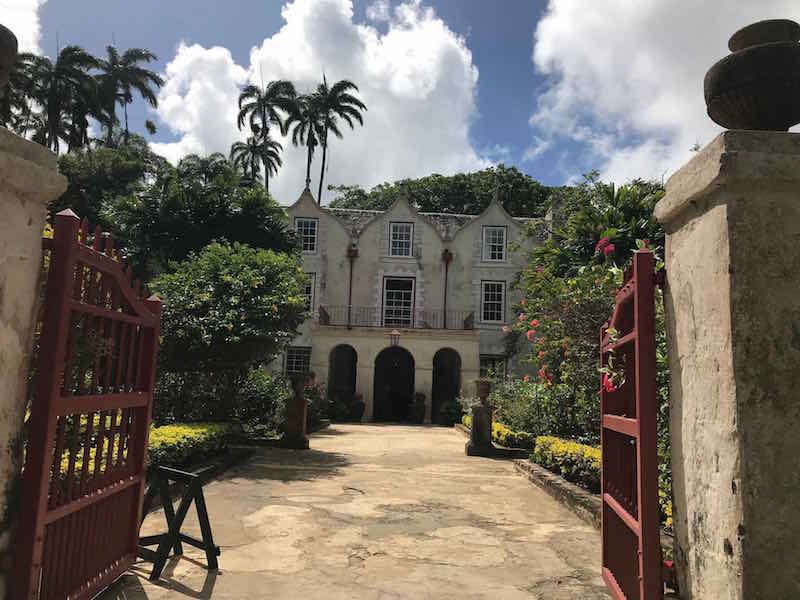
It will complement the existing Barbados Museum and Historical Society in Bridgetown. For a more vivid echo of a turbulent colonial past I was recommended St Nicholas Abbey. One of only three Jacobean mansions left in the whole Americas, the gabled old house set among mahogany trees summons up the ghosts of those early plantation owners.

At first encounter it’s a serene spot. Current owners the Warren family have been in situ for under two decades and lovingly preserve the old rum-making methods in a boutique distillery. So you get a steam-powered cane crush and a traditional pot still, using cane for the syrup that’s unique to the 400 acre estate, half of which is under sugar cultivation.

Tucked way behind the gorgeous old house is a museum addressing the tribulations of slavery on the estate and in the passage to the barrel rooms, easy to miss, are seven yellowing pieces of paper scribbled with lists of names, numbers, and pounds sterling, dating back to 1834.

Apparently in anticipation of freeing slaves, owners had to document the numbers and estimated worth of their slaves for the government to pay them out. £150 was the going rate for the most valuable male with farming skills with fertile women also valuable commodities. Tradable flesh. All this so that sugar could be on every table back home.

How memorable the morning I came away from Manchester Art Gallery clutching a packet of sea kale seeds from the gallery shop. I also carried with me newly purchased copies of Derek Jarman’s Garden and the polymath artist’s Modern Nature, the first an illustrated memoir of how he created his unique garden in the challenging terrain of Dungeness, Kent, the second his journals from January 1989 onwards, meshing his horticultural project inexorably with the AIDS-related complications that would eventually claim his life eight years later.

Derek Jarman Protest! is a remarkable retrospective of a multifarious creative career, on until April 10 2022 (free but you must book a slot). Alongside, from January 30, the 80th anniversary of his birth, all 11 of his feature films and a further 11 shorts will be shown as part of the collaborative Derek Jarman at HOME season at the city’s First Street arts venue.

 The whole package is the first time in 20 years the diverse strands of Jarman’s practice – as painter, writer, avant-garde filmmaker, set-designer, gardener, pop video innovator, gay rights champion, political activist – have been brought together. In truth, I’ve never hugely warmed to his cinematic output, even with the luminous presence of Tilda Swinton (pictured below in Caravaggio, my favourite because I love the artist) alongside a still from challenging final work Blue.

In contrast Jarman’s late return to painting, inspired by the jewels inside a seemingly barren landscape and in response to the emotional aridity of the Thatcher years, is sublime. So too his set designs. His writings will also last as a poignant record of what it was like to be a homosexual in times of persecution and plague. And then there is that garden… 

At the exhibition, to get to the apparent serenity of of a huge wall portraying a bucolic Prospect Cottage – albeit against its backdrop of Dungeness Nuclear Power Station – you have to pass through the most politicised aspects of Protest!. 

Here’ll you’ll find dark, deathly ‘Assemblages’ such as ‘Mrs Thatcher’s Lunch’, where the cutlery is stained with blood and scratched into the surface are the words ‘GBH promises, promises, promises, The Affluent Society’. Interpretations of the cryptic GBH include  ‘Grievous Bodily Harm’ or ‘Great British Horror’.

At first this artistic agit-prop and his residual gregariousness (he was crowned drag-tastic Alternative Miss World in 1975 for his Miss Crepe Suzette) seem at odds with the fisherman’s hut he retreated to, shortly after being diagnosed HIV positive in 1987. Yet around the distinctive black dwelling with its yellow window frames and John Donne’s great poem The Sun Rising emblazoned on an outside wall, he created a rustic work of art in its own right that has become a place of pilgrimage. When we visited a decade ago the great garden was still profuse but in 2018 when Jarman’s companion HB died all was placed in jeopardy.  

Thankfully, Prospect House was rescued for posterity by fund-raising £3.5m. We pray its current custodians, Creative Folkestone, can restore the garden to its to its glory – an unfenced riot of flotsam and jetsam, driftwood and flints, Japanese-like pebble patterns and the hardiest of plants. Jarman hated lawns and over-manicured habitats. So do I.

Sea kale – nature’s work of art I hope to cook and eat

Generally rare, Crambe maritima (cabbage of the sea) flourishes on the Ness as nowhere else in England and it was one of the plants that survived best on the saline shingle surrounding the blackened clapboard of his Prospect Cottage. 

In the Manchester Art Gallery shop there is a selection of nine seed packets for sale, each £2.75, ‘carefully hand-packed by Thomas Etty Esq’ , a Kent-based heritage seed supplier. Populating your own garden with the likes of sea campion, rock samphire, sea carrot and wood sage is the plan but I feel they may not necessarily thrive in my part of the world. And I’m never letting the invasive viper’s bugloss anywhere near my flower patch, however pretty.

Still as a tribute to Jarman I shall plant the sea kale seeds in my loamy Yorkshire raised beds this March. It will take patience as, after thinning the rows, you must allow a further year for them to acclimatise. Even then you must blanch by covering with a bucket.

One concern I will be spared is raised early in Derek Jarman’s Garden. “Crambe maritima are edible, but a radiologist told me that they accumulate radioactivity from the nuclear power station more than any other plant.” It’s just the slugs I’ve got to worry about. Or maybe not. According to Jarman with roots 20ft long, tough enough to resist caterpillars and snails, a sea kale plant can live up to half a century.

The symbolic importance to Jarman of ‘sage green’ sea kale is evident when it is the first plant name-checked in Modern Nature, but this rhapsodic Garden entry captures it best: “It is the Ness’s most distinguished plant… they come up between the boats. 

“They die away completely in winter, just a bud on the corky stem. In March they start to sprout – the first sign of spring. The leaves are an inky purple, which looks fine in the ochre pink pebbles, but they rapidly lose the purple and become a glaucous blue-green. 

“Then buds appear; by May these turn into sprays of white flower with little yellow centres – they have a heavy, honey scent which blows across the Ness. The flowers then turn into seeds – which look like a thousand peas. They lose their green and become the colour of bone. At this stage they are at their most beautiful – sprays of pale ochre, several thousand seeds on each plant. The autumn winds return, the leaves rot at the base, dry out and blow away; by November the Crambe has completely disappeared.” Until the next year.

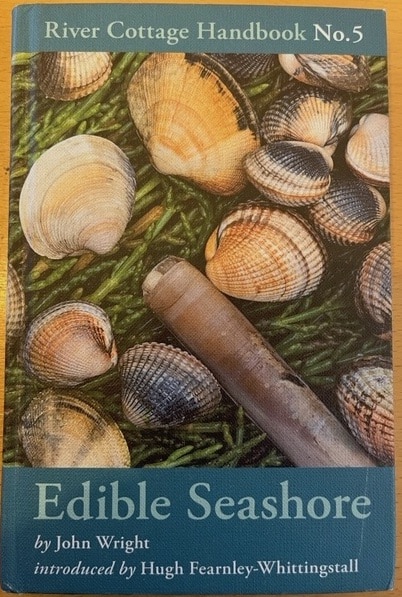
Let me confess: I have little aptitude for beachcombing/foraging. If I go off, I first consult the essential Edible Seashore by John Wright (£14.99), fifth in the River Cottage Handbook series. This warns you off picking more than a few leaves from a sea kale plant in SSSIs (Sites of Specific Scientific Interest). Which is no hardship when you consider they can grow up to two metres in diameter.

What deters me in my quest to cultivate and cook it comes in Edible Seashore “How to cook” section: While it is possible to eat a mature cooked sea kale leaf, it may require a day or two to accomplish the task. It has the flavour and texture of a damp thick face flannel. As the Victorian horticulturalist, Charles McIntosh lamented, this kale cannot be too much boiled.”

They recommend picking when the leaves are purple and tiny. On the bitter side at this stage, it’s best to blanch. Better still try the young flower spikes, which taste like broccoli. Or you can dig up and steam the shoots (though this is counter-productive to having a crop next year!) The taste is said to resemble asparagus.

For an exotic recipe check out this combo on the Great British Chefs website – steamed Scottish sea kale and white sprouting broccoli with crab, smoked cod roe and seaweed. Find sea kale on the menu at any restaurant and it will be cultivated stuff not wild because of the picking restrictions. I know an asparagus farm in Scotland that sells a limited amount of Crambe wholesale and the irrepressible Raymond Blanc grows it in his walled garden at Le Manoir aux Quat’ Saisons, putting it on the menu in season, serving it like asparagus. Edinburgh chef Tom Kitchin has created a sea kale and blood orange salad.

Did Jarman himself ever eat sea kale? In Modern Nature he writes about gathering elderflower, frying it in batter and sprinkling it with sugar for supper, but food never seems a priority  

Those journals, which began with ecstatic lists of plants, end in a litany of the drugs that keep him alive. As he gradually loses his sight and his body shrinks he spends more time in hospital than at Dungeness, but a companion to the end at Prospect Cottage is sea kale.

February 10: “Replanted a row of sea kale in the back garden, my first gardening this year.

Then settled down to put the voice-over for the film (Blue, his last) in order. In the afternoon I walked to the sea and found the storms had washed away the shingle, exposing the sea kale. I gathered several very large specimens and replanted them in the front garden.”

May 6: “A week has passed without a cloud in the sky. At dawn the sea kale, a froth of white flowers, is covered with small copper butterflies drunk on nectar. They freeze as my shadow falls across them.” And on August 10 a last, frail mention of “bone-bleached sea kale”.

RIP Derek Jarman.