New York, Chicago, Detroit, Rome, Naples naturally, they all blow the trumpet about their pizza dough being the best. Thin, deep-filled, crusts like craters, they clamour for your attention. And don’t get me started on toppings. The wagyu beef burger version that briefly popped up at that bloated brand trading on its Neapolitan heritage, da Micheleseems to have been discreetly discarded, but elsewhere there’s still the vexed validity of pineapple to be squabbled over.
Which brings us to the ‘Anglo-Saxon’ incarnation, selling point of Dokes, a new pizza house in Prestwich with a gratifyingly off-grid difference. We all know no pineapples were axed open in the long-houses of ancient Wessex. Fior di Latte, nduja? Not when parsnip gruel was a treat. Even those pesky olives the Roman conquerors brought with them hadn’t stuck around.
What does probably link the diet of cake-friendly King Alfred and the commitment of Dokes to English ingredients is grain. In Anglo-Saxon the word for a ‘loaf’ (hlaf) is found in the word for ‘lord’ (hlaford), itself derived from the term hlaf-weard, or ‘bread-guardian’. The lord’s wife was known as the hlæfdige, or ‘bread-maker’. The modern term ‘lady’ is derived from this word.
All kinds of grain, notably barley, went into the coarsely ground mix they baked with in rudimentary ovens. It’s not so far removed from Einkorn, one of the earliest cultivated forms of wheat, that contributes to the pizza dough used by Dokes creator and committed ‘antiquarian’ Michael Clay. His restaurant HQ remains Elnecot – first recorded name for its site, Ancoats.
For his new project, which debuted at the food hall, Society, in Barbirolli Square, he sources flour from Gilchester Organics in the North East, favoured by some of the UK’s top chefs, and from Shipton Mill in Tetbury, Gloucestershire.
The springy, almost ethereal dough of the three Dokes pizzas we essayed during the soft launch is down to Shipton’s Heritage Grain Mix. On top of this base the emphasis is on British produce, albeit our indigenous versions of Italian pizza staples. So expect extra virgin rapeseed oil from Yorkshire, salumi and nduja from Curing Rebels in Brighton, creamy British burrata from the home counties and truffles from Wiltshire. To extend the English tomato season from autumn onwards an Isle of Wight confit version will stand in, Michael tells me.
Dokes is not just about pizza. The 40-cover venue offers a full restaurant experience including veg dishes and salads, utilising fresh produce fromCinderwood Market Garden in Cheshire. Yorkshire Pasta Company rigatoni with slow-cooked lamb shoulder and anchovy (£14) was at least the equal of any similar dish I’ve eaten at the lauded Sugo in Ancoats and Altrincham.
It’s all a very convincing package with a minimal intervention wine list from Buon Vino in the Dales (I loved the Lambrusco) and a cutting edge local beer list featuring Pomona Island andSureshot.
In truth, the Anglo-Saxon hype is a bit of a red herring (yes, the invaders did bring herring fisheries with them), but I like the pottery shields that add colour to a dark interior. And who could resist a pizza called Beowulf? You may have encountered the epic through the 3D animated fantasy movie, the hero voiced by Ray Winstone. At Oxford I laboured my way through all 3,000 alliterative lines in the original Old English.
Was it worth it for the denouement with a dragon? What’s it all got to do with a topping of pepperoni, nduja, chilli, burrata and pesto? Odin only knows, but at £12 it’s a treat.
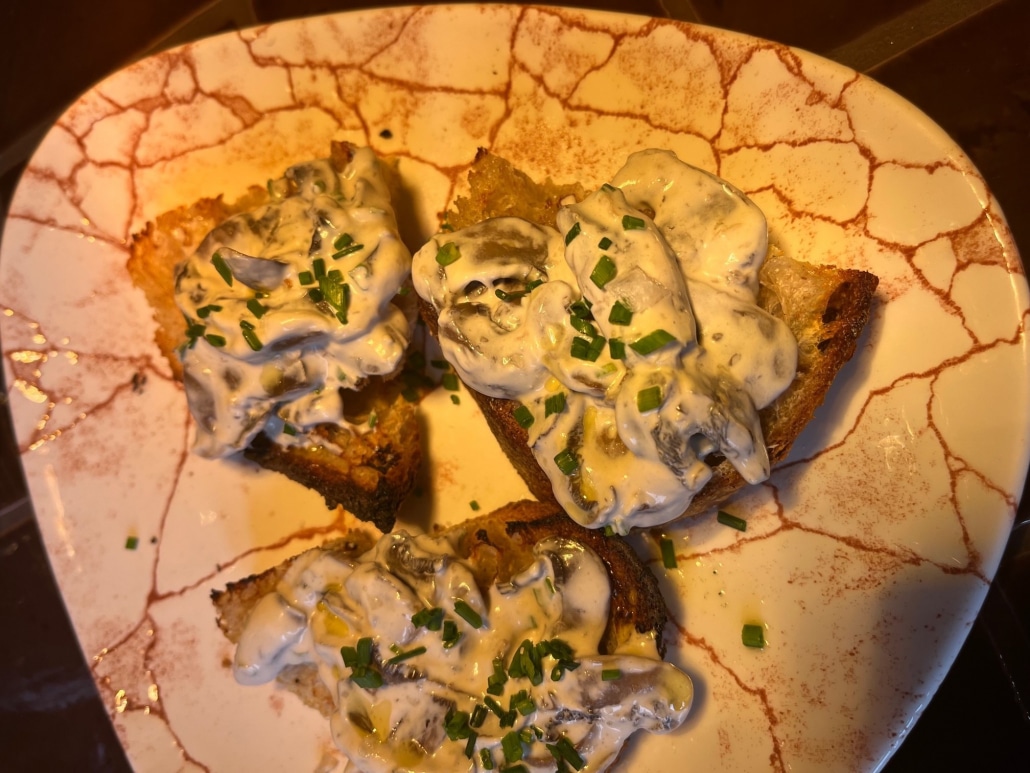
Equally impressive are, at a quid less, an earthy Funghi pizza featuring truffle and confit garlic (Dokes is lavish with the confit garlic, check out the bruschetta above) and, my favourite, The Rollright (£12), which combines the squidgy cheese of that name with new potatoes, smoked bacon, white onion and creme fraiche to create what the Italians call a Pizza Bianca. But we won’t because we’re all Anglo-Saxons now.
Dokes Pizzeria, 449A Bury New Road, Prestwich, Manchester M25 1AF. Open Wednesday-Thursday 12pm-10pm, Friday 12pm-11pm, Saturday 10am-11pm, Sunday 10am-10pm. Brunch at weekends.
The present of some corn cobs “as corny as Kansas in August”, well super fresh off the stalk, was a Proustian madeleine moment, albeit my Memory Lane was Route 66 through another US state – Arizona – and my emblematic longing was for a swirling, ‘tricoleur’ soup. Created bizarrely by a chef originally from Hartlepool.
The flashback sent me scuttling to the kitchen to recreate it, but first some context. It was exactly a decade ago. The latest leg of an epic road trip was from Sante Fe westward to the Grand Canyon. We had skirted Albuquerque on Interstate Highway 40 – the flat, straight blacktop that was supposed to demote the legendary Route 66 to a mere backroad. But, of course, the much-covered song and the iconic image live on, albeit a mite cheesily.
Standing on the corner that statue homage to an Eagles song. Image: Tpaairman – own work, CC BY-SA 3.0.
Altogether now: “If you ever plan to motor west, travel my way, the highway that’s the best. Get your kicks on Route 66!” When journeyman songwriter Bobby Troup (previous hit Snootie Little Cutie) penned this ditty in 1946 did he ever imagine its future mileage?
In the April I had stood on Adams Street, Chicago, in front of the Arts Institute, starting point of the 2,500 mile highway which runs south then west all the way to Los Angeles. Did I ever imagine three months later I’d be rejoining it in a place called Winslow, Arizona. Cue another song, another legend.
First track on The Eagles’ eponymous 1972 debut album was Take It Easy. One line, ‘Standing on the Corner in Winslow, Arizona’ put the town on the map. A girl in a flatbed Ford slows down to take a look at a horny hitchhiker who dreams that her sweet love might save him. I don’t expect it ended well… but a legacy remains.
On the corner of Kinsley Avenue and 2nd Street on Route 66 you can pose with a statue of the hitchhiker, backed by a mural of the lusted-after Ford girl… oh and across the road buy a tee-shirt in the gift shop.
We decamped to Winslow’s memorial of better times – the Posada Hotel, a wonderfully elegant, restored 1930s hacienda, pet project of prolific artist Tina Mion and her husband. He artwork and a plethora of local craft fills what was the last great railway hotel built along the Santa Fe line. Amtrak trains still thunder through. We lunched in the Turquoise Room restaurant where much-travelled, Hartlepool-born chef John Sharpe had won huge acclaim, even a James Beard nomination, for his interpretations of South Western cuisine and Slow Food.
John retired a couple of years ago, but his kitchen team and the core menu remain in place. I’ve just checked. The chillies, tomatillos and tamales stand-up for the South Western high desert heritage alongside some big, big flavours. One $40 main combines crispy, fried quail with an orange Oaxaca sauce, Colorado farm-raised venison medallion with a black currant brandy sauce, a chipotle tamale topped with a pork, venison and bison chili. Finished with a fresh vegetable medley.
I’m glad I don’t have to tackle that challenge. The object of my desire is a black and yellow emblem in a bowl with a scrawled red pepper ‘signature’. Two soups, spicy black bean and creamy corn.
Exquisite. As was Winslow itself – a sleepy, dream America heirloom strip. Just the plc to take it easy.
Black bean soup
Ingredients
500g black beans; ½ tspb ancho chili powder; 1tsp ground cumin; ½tsp oregano; ½tsp marjoram; ½tsp ground coriander; ½tsp ground white pepper; 1 bay leaf; 15g diced
Wash and soak the beans in cold water overnight. Place beans and the rest of the ingredients into a large pot. Bring to a boil and simmer for 1½ hours or until beans are tender. Remove the bay leaf and discard. Cool the beans and place them in a blender and blend until smooth. Dilute with water as needed. The soup can be made a day in advance.
Sweet Cream of Corn Soup
Ingredients
1kg corn; 350g sliced white onions; 50g butter; ½litre water; 750ml heavy cream, 1tsp salt
Method
Find the freshest corn you can and cut it off the cob making sure you scrape the cob to extract all of the milk. This is the sweetest part of the corn. Sauté the onions in a thick bottomed pan until soft but not brown. Add the rest of the ingredients and bring to a boil. Simmer for 10 minutes and remove from the heat. Place in a blender and puree till smooth. If the corn is not sweet add a little sugar. This may be done ahead of time and kept warm in a double boiler.
Red Pepper Stripe
250ml soured cream; 60g roasted peppers; 1tsp chipotle peppers; salt and pepper to taste. Blend together.
To serve
Due to the starch in both soups, they will thicken as they sit. It is important that they be of the same consistency so you may need to adjust them by adding a small amount of hot water. You want to serve the soup in the same bowl, with the bean on one side and corn on the other. So, place the soups side by side on the counter. Using a separate soup ladle for each soup, scoop a ladle of each and pour into the bowl at the same time, and at the same speed.
As a garnish squeeze the Red Pepper Stripe on top. Best served with cornbread fresh from the skillet.
https://i0.wp.com/www.neilsowerby.co.uk/wp-content/uploads/2022/08/Blck-ben-soup.jpg?fit=2016%2C1512&ssl=115122016Neil Sowerbyhttps://www.neilsowerby.co.uk/wp-content/uploads/2022/11/NS-typemark-v1c.pngNeil Sowerby2022-08-07 18:54:042023-02-15 21:44:21Arizona dreaming… of a tricoleur potage in Winslow’s Turquoise Room
High summer in Sicily and the carefree boys will be leaping off the quayside at Cefalu, location for Cinema Paradiso; in New Mills fewer, if any, will fancy a dive into the murky Peak Forest Canal or the River Goyt.
Taking a plunge on Cannoli, now that’s another matter. At A Tavola Gastronomia Sicilia I’ve lined up a trio of these sweet fried pastry tubes filled with fresh Agrigento ricotta, Etna pistachio and the like. To close a glorious lunch ‘from the old country’ in a Technicolor Mediterranean setting my brother and I are sharing them alongside scoops of ice cream, one intensely lemony, the other showcasing the legendary dark chocolate of Modica, spectacular Baroque home town of A Tavola’s owner/chef Alessio Muccio. His restaurant journey to the former Beehive pub has taken him via stints in the old Stock restaurant in central Manchester, Mamma Mia in Denton and Reddish.
This proud Sicilian and his open kitchen team make the cannoli, the gelato, much of the pasta we never ordered and the arancini that thankfully we did. Alessio’s front of house partner Nicky Owen beams with enthusiasm when we tell her these awesome cones of deep-fried, breadcrumbed rice are the best we’ve ever tasted, vanquishing those tiny balls of leftover risotto rice that are the norm in the chain Italians. At the heart of mine is a torrent of ragu and molten mozzarella.
Mixed feelings about the caponata on sourdough bruschetta but, as Nicky points out every family across the island of Sicily offers their own version of this sweet and sour aubergine dish. A Tavola’s is light on the capers and vinegar, unlike my own take, which is sometimes too Cosa Nostra ferocious. There looks to be a lightness of touch across the whole menu here. Testimony to which exemplary fritto misto, a bargain to share at £14.50 with its cornucopia of red mullet, whitebait, calamari, sardine fillets, anchovies and king prawns… only the latter, from Argentina, perhaps over-crisped in the frier.
Of course, there are pasta and pizzas on the menu (with a mission statement abut the quality and sustainability of the flour they use). Readers of my website will be aware of my obsession with Pasta all Norma. Yes, that pinnacle of Sicilian primi is there, the sauce with ricotta salata and mint applied to Casarecce (short durum wheat twists), Bravo.
The menu is apparently based on a book of family recipes passed down by his father. Among the riot of Sicilian artefacts and keepsakes across two floors there are pictures of family and, on the stairs, Al Pacino and other Godfather luminaries, who I presume are not related.
All in all, the whole place feels like a labour of love with some 30 covers inside and the same number outside, served by staff predominantly from Sicily. The raw materials, too, sing of that rich culinary melting pot – sasizza (fennel sausage), grassy olive oil, wines, even Sicilian craft lagers (they also have plans to commission a house beer from the estimable Torrside Brewing in the town). Check out the Sicilian deli, selling pasta, condiments and chutneys.
A Tavola Gastronomia Siciliana, 67 Albion Rd, New Mills, High Peak SK22 3EY. Open 4pm-11pm Tuesday-Thursday, 1pm-11pm Friday and Saturday.
Main image, courtesy of PMW Photography, is from the glorious A Tavola website gallery.
https://i0.wp.com/www.neilsowerby.co.uk/wp-content/uploads/2022/08/Mucci.jpg?fit=1600%2C1067&ssl=110671600Neil Sowerbyhttps://www.neilsowerby.co.uk/wp-content/uploads/2022/11/NS-typemark-v1c.pngNeil Sowerby2022-08-06 12:41:092022-08-06 12:47:37A Tavola Gastronomia – Alessio’s sweet taste of Sicily in the High Peak
How best to pay homage to the passing of one of the greatest chefs of his generation? No brainer: cook one of his signature dishes. But will my take on Alastair Little’s Pollo Orvietano evoke the tastes and aromas of a chicken cooked with wild fennel and local olives at La Cacciata, the farmhouse cookery school he founded in the Umbrian hills?
The death of ‘the godfather of modern British cooking’ at the age of 72 came out of the blue, so I haven’t had time to acquire my chicken of choice from Loose Birds, Paul Talling’s unmatchable operation near Harome, North Yorkshire, but I’m happy with a Soanes from Driffield in the Wolds, bought on Todmorden Market, and serendipitously I’ve been able to supplement fennel from my daughter’s garden with a bunch inside my ‘No Dig Club’ veg bag (£14.95 via thislink) from Cinderwood Market Garden.
I always associate Little with his eponymous restaurant that sprung up in Frith Street, Soho, in the mid-Eighties. Behind its Venetian blinds it offered a rebuke to haute cuisine thanks to its menu restricted to soup, salad, fresh fish and meat, plus puddings, changing twice a day according to availability of raw materials.
Paper napkins and an absence ot tablecloths contributed to the determinedly Keep It Simple ethos. That was the name of his first book, aimed squarely at the adventurous home cook. Jonathan Meades, greatest food critic of Little’s era, said of it: “What makes Alastair such a good cook (apart from talent, taste, application and curiosity), is that he possessed the un-English conviction that eating well is a normal part of a civilised society.”
There’s a recipe for Chicken Orvieto-style in there and a subtly different one on his website, referring to the town not the wine, but it would seem wrong not to use that straw-coloured, slightly bitter white for the 250ml of wine required. In the end I’ve adapted an alternative recipe from his second, equally evocative, cookbook, Italian Kitchen: Recipes from La Cacciata (pictured in the autumn mists above). It came out at around the same time as Rose Gray and Ruth Rogers’ first River Cafe Cookbook, cementing rustic Italian cucina as the aspirational ingredient-led cuisine du jour (apologies for my French).
Ingredients were always paramount for Little, always ahead of his time and a handsome, engaging champion of real food on television. In the Noughties he ran a deli-trattoria called Tavola in Notting Hill; in 2017 he moved to Australia (check out the archive of BBC Radio 4’s The Food Programme for a Sheila Dillon entertaining interview with him on the eve of his departure. He was to open a restaurant in his wife’s home town of Sydney, where he died this week.
Alastair Little not sparing the wine in a marinade. Image: Alastair Little
The Colne-born chef had trained in top London kitchens before setting up on his own, but he initially seemed defined by his academic pedigree, having read archaeology and social anthropology at Downing College, Cambridge. He taught himself to cook in his last year,dishing up meals for, among others, his exact contemporary, Rowley Leigh (Christ’s) later a chef/restaurateur and food writer in his own right.
With them I always associate (though his only Cambridge connection was winning a choral scholarship aged eight) another chef/scholar Simon Hopkinson, two years younger. Little was from Colne, Leigh from Manchester, Hopkinson from Bury. A fourth member of an incomparable quartet has to be Jeremy Lee, who worked for both Little in Frith Street and for Hopkinson at Bibendum in Fulham. The Scot, a mere stripling at 58, is still manning the stoves in Soho, at Quo Vadis and has a highly anticipated book coming out on September 1 – Cooking: Simply and Well, for One or Many.
Lee led the tributes from the London food world this week: “Alastair Little was a godfather of modern British cooking and a champion of keeping it simple. His cooking was just incredible, peerless. Unique, charming, brilliant, a joy to cook with, a huge inspiration, a great pal and a great boss, gone too young, too soon, much missed and never to be forgotten.”
As I write this, my own tribute is sizzling in the Aga. I’ve never cooked Pollo Orvietano before. I just hope I do it justice.
Ingredients
1.5 kg free range chicken; good olive oil; 500g chicken livers, cleaned and diced
2 large potatoes, cut into 1cm dice; an enormous bunch of leaf or feather fennel; 48 black olives, stoned; salt and pepper; 48 large fresh garlic cloves in their skins; 250ml dry white wine; 500ml chicken broth.
Method
Prepare the stuffing in advance. It takes around an hour. Sauté the livers in the 4 tbsp of olive oil, stirring until coloured. Add the potatoes and gently cook until thoroughly cooked through. Add the fennel with half the olives, season well and set aside to completely cool. Pre-heat the oven to 400F/200C/gas mark 6.
Spoon as much of the stuffing as will fit into the cavity of the bird without overfilling; place the rest, lubricated with a little olive oil, in an oven-proof dish. Rub the chicken all over with a little more olive oil and season generously. Place in a deepish casserole dish, on its side, and put in the oven to roast for 20 minutes. Slide it onto its other side and continue roasting for a further 20 minutes. Finally, turn the right way up and throw in the garlic cloves. Turn the oven down a notch, put in the dish of extra stuffing and continue cooking for a further 30-40 minutes, adding the remaining olives for the last 10.
Remove the bird to a chopping board, allow it to rest. Put the garlic and olives in a dish and keep warm. Pour off any excess fat in the roasting dish and add the wine. Bring to the boil and reduce until almost evaporated. Pour in the chicken stock and reduce the lot by three-quarters. Cut the chicken into eight pieces and arrange on a serving dish surrounding the extra stuffing. Scatter with the olives and garlic and strew with more chopped fennel fronds.
We accompanied the dish with a Pheasant’ s Tears Poliphonia, a Georgian red matured in a qvevri (earthenware amphora). It’s a blend of 100 indigenous red and white grape varieties. Thanks for the recommendation, Dan at Flawd.
https://i0.wp.com/www.neilsowerby.co.uk/wp-content/uploads/2022/08/Pollo.jpg?fit=2016%2C1512&ssl=115122016Neil Sowerbyhttps://www.neilsowerby.co.uk/wp-content/uploads/2022/11/NS-typemark-v1c.pngNeil Sowerby2022-08-05 14:15:062022-08-05 14:39:05Pollo Orvietano and Pheasant’s Tears – homage to the late, great Alastair Little
It’s been amazing stepping back inside restaurants and bars post-pandemic. From those first, tentative socially distanced steps to the current slightly strained normality in these difficult economic times.
Still the sheer joy of shared conviviality fuels my renewed enthusiasm for the Manchester Food and Drink Awards (here’s my preview). As a veteran judge, helping to assemble the 2022 shortlists just announced, that sense of responsibility returned but also admiration for the quality of contenders – 113 nominees across 16 award categories and so many worthy indie heroes who just missed the cut.
A special word of praise for a new arrival, the Great Service Award. There’s no hiding from front of house shortages, so a public vote celebrating the heroes who keep the hospitality wheels rolling couldn’t be more important.
Last year’ MFDF Awards ceremony packed Escape to Freight Island with the cream of the hospitality industry
The Manchester Food and Drink Festival, celebrating its 25th anniversary, is all about post-COVID recovery and it seems appropriate to continue to give the public a greater say in who wins its coveted Awards. 10 categories will be judged entirely by your vote. Here’s the MFDF voting link.
The winners of four more, Restaurant of the Year, Chef of the Year, Best Newcomer and Bar of the Year, will be chosen by a combination of a ‘mystery shopping panel’ selected from MFDF judges with a measure of public input. Independent Food Producer and Independent Drinks Producer will be judged by a panel taste test.
All the shortlists have been compiled by the MFDF judging panel, consisting of the region’s leading food and drink critics, writers and experts. Businesses were able to self-nominate for their chance to gain a spot on the shortlist and the categories have been carefully considered and curated with an absolute passion for the city’s industry at their heart. This year’s MFDF Awards are sponsored for the first time by Bruntwood. The closing date for votes is September 16. The 2022 Manchester Food and Drink Festival Awards nominations:
PLANT BASED OFFERING OF THE YEAR
Four Side Pizza 559 Wilbraham Road, Chorlton-cum-Hardy, Manchester, M21 0AE
Herbivorous Unit 7, Hatch, 103 Oxford Road, M1 7ED
Otto Vegan Empire 26A Bramhall Lane South, Bramhall, Stockport, SK7 1AF
Ruyi 101 Manchester Road, Chorlton-cum-Hardy, Manchester, M21 9GA
Sanskruti 93-95 Mauldeth Road, Manchester M14 6SR
The Walled Garden Whalley Range
Wholesome Junkies Unit 4 Mirabel Street, Manchester, M3 1PJ
INDEPENDENT DRINKS PRODUCER OF THE YEAR
Bundobust Brewery St James’ Building, 61-69 Oxford Street, Manchester M1 6EQ
https://i0.wp.com/www.neilsowerby.co.uk/wp-content/uploads/2022/08/Awards-1-scaled.jpg?fit=2048%2C1366&ssl=113662048Neil Sowerbyhttps://www.neilsowerby.co.uk/wp-content/uploads/2022/11/NS-typemark-v1c.pngNeil Sowerby2022-08-01 12:30:402022-08-01 12:36:26Stunning shortlists for the 2022 Manchester Food and Drink Awards – make your vote count
We are in the dog-friendly ‘No Man’s Land’ between restaurant and pubby bit. If I wanted, I could cross to an actual bar with hand pumps and order a pint of cask ale brewed under a mile away in an old Dales laithe (hay barn). Instead I sip my 125ml measure (I’m driving) of Swartland Chenin Blanc and contemplate the tranche of turbot on my plate. It has come from Cornwall, as I also expect have the squares of seared cuttlefish that book-end this exquisite main. Perigord supplied the wafers of black truffle; the provenance of the fermented turnip that contributes so much to the ensemble remains a mystery.
We are eating Michelin at The Angel at Hetton five miles from Skipton. Its chef/patron Michael Wignall has been a serial star holder since winning his first in 1993 at The Burlington, Devonshire Arms just down the road. After quitting two-star Gidleigh Park in Devon in 2018 the plan has been to put The Angel back on the culinary map. Touted as the first gastropub, its best years – which we were part of as regular customers – were long past.
Our first visit to Angel Mark II wasexactly a year ago on a glorious Dales summer day, only lockdown restrictions still in place muting our excitement at the transformation. Since when it has retained its star and been named No.4 (two places behind The Parkers Arms across the Lancashire Border) in the Estrella Damm Top 50 UK Gastropubs list. More recently it came in at No.12 in their NRA Top 50 Restaurants and, with The Parkers down at 44, romped home as that list’s ‘Top Gastropub’. The nod there was to its ‘high end’ food. In its 90s heyday under Dennis Watkins there was muttering that pilgrimages to sample its seafood specials and interesting wine list ruined it for the locals.
Yet it did retains an old Dales pub feel. Now with its spacious, almost Scandi makeover that’s not the case.
Would I ever pop in while passing for a pint of that Dark Horse Pale Ale? Probably not. Would I once again drive the 60 mile round trip to make the agonising choice between a la carte (£85) and tasting menu (£95 at lunch)? Yes, I’m already planning my next booking. The temptation is to do an evening and stay over in one of their 15 en suite rooms.
Whatever, The Angel unusually opens Mondays, happily accepts dogs (that ‘no man’s land’ has a hugely comfortable corner booth) and who needs beer when the food is this outstanding?
Our chihuahua Captain Smidge’s last Michelin meal was at Yynshir, UK’s newly anointed No.1 restaurant. Under our table he snoozed through a four hour, 30 course plus, spice-driven tasting menu with deafening house music, mirror balls, fire pits and leathern-aproned disciples serving on. Check out my reporton this astonishing place.
This time, in a more relaxed setting, the hound is more up for it, accepting his hand-fed tithe of sourdough, rabbit, confit chicken and Yorkshire spring lamb, off the a la carte this time. Most of this comes from my wife’s order choice. Before the turbot I have crab, razor clam, buttermilk, Oscietra caviar, green strawberries and a Nigiri topped with crab claw meat. Definitely not Smidge’s kettle of fish.
Contender for prettiest dish is my wife’s intricate starter of Loire rabbit, loin and tiny best end chops, linseed and garden peas, but then her pudding of English cherry with pistachio and a woodruff custard is a looker, too, with equally intense flavours to match. Ditch any pub pretensions, The Angel is one of our great, heavenly places to eat. Certainly in God’s Own Country.
https://i0.wp.com/www.neilsowerby.co.uk/wp-content/uploads/2022/07/Cherry-main-scaled.jpg?fit=2048%2C1536&ssl=115362048Neil Sowerbyhttps://www.neilsowerby.co.uk/wp-content/uploads/2022/11/NS-typemark-v1c.pngNeil Sowerby2022-07-26 17:17:412022-08-11 10:23:34Cheers to The Angel at Hetton – a culinary blessing that doesn’t need the ‘gastropub’ disguise
‘Want to go for a Chinese?’ may have lost its cool cachet in the UK, but for a new generation in India the casual dining out choice is definitely Indo-Chinese. You don’t go out to order dal. Manchurian chicken? Bring it on.
There won’t be any chicken on the menu at Bundobust as they launch a quartet of Indo-Chinese specials across their sites in Manchester, Leeds and Liverpool, available until August 29. The veggie/craft beer formula rightly rules. They’ve done cauli and mushroom Manchurian mash-ups in the past, favouring a sweet-sour sauce that’s a bit chippie-like.
And they’re not the only Manchester city centre Indian to put the Asian hybrid on the menu. Indian Tiffin Room confirmed its street food credentials by featuring diaspora dishes that originated in the old Chinatown of Kalkota (Calcutta) with influences from far beyond.
Take Hakka Noodles. To the traditional base of Indo-Chinese spices and soy sauce coated noodles the Bundobust chefs add stir-fried green and red pepper, mushroom and white cabbage. For a fiver it’s a gorgeous combo but begs the question: who were the Hakka?
It’s tiffin time in Kalkota’s teeming Tiretta Bazaar – the link between Chinese and Indian street food
In the late 18th century these folk emigrated from Northern China. A magnet for their silk and tanning skills was Calcutta, established by the British East India Company as capital of colonial India.
Two areas there vied to be Chinatown for them and other Chinese arrivals – Tangra and Tiretta Bazaar. Only the latter remains today as a food and cultural destination. Its restaurants are testimony to the inevitable fusion that quickly occurred to accommodate the deep-fried, chilli/spicy flavours Indians love. Key elements soy sauce, vinegar and the Hakkas’ essential Schezwan sauce substituting dried red chillies for Sichuan peppercorns
Nowadays you’ll find this Indo-Chinese cuisine across the Sub-continent. It’s especially popular in my favourite Indian city and great melting pot, Mumbai. In Kolkata, though, the influence goes much further, where’ll you’ll find the likes of Chinese bhel and Schezwan dosa. Any resemblance to authentic Cantonese or Sichuan food is fanciful.
Alongside is a more authentic approach to Chinese regional food, too. Around 1974 India’s first Sichuan restaurant opened up at the Taj Mahal hotel in Mumbai. A different kind of hot.
Chicken Manchurian was invented in Mumbai, by Nelson Wang, the son of Chinese immigrants in Kolkata. And that’s how umami made its entry into Indian cuisine. And made the Wang dynasty!
Indo-Chinese has been a slower burner in the UK, perhaps the flagship being Hakkaland in Harrow-on-the-Hill, but I recall a visit to Asha Khan’s much-missed Darjeeling Express off Carnaby Street, where some sizzling Tangra Prawns were on the menu.
Bundobust’s entry onto the scene is as playful as you’d expect, plugging into their own Gujarati-inspired small plate evolution.
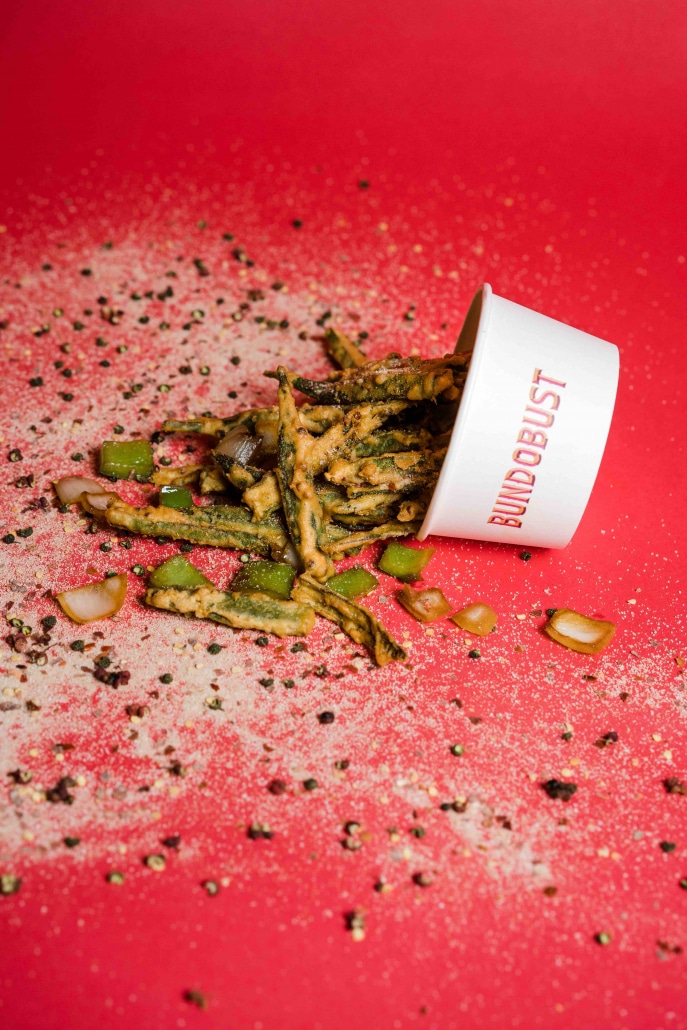
Gobi Toast (£5.25) is deep-fried pav soldiers crowned with garlic and ginger minced cauliflower crusted with mixed sesame seeds. Served with coconut korma dipping sauce. Salt & Pepper Okra Fries (£5.50), where the Bundo top seller is tossed with peppers, onions, chilli flakes and soy sauce. And from leftfield, Tofoo 65 (£6.75), a Bundo debut for the bean curd, filling pakoras in a sauce rich with Chinese five spice, curry leaf, garlic, ginger, fermented red chilli paste and mustard seeds.
The sauce is “a Chinese spiced reimagining of the classic Chennai Hotel Buhari 1965 sauce recipe.” More research for me to do, then.
• Bundobust has venues in Leeds, Liverpool, Manchester Piccadilly and Oxford Road (the Brewery).
https://i0.wp.com/www.neilsowerby.co.uk/wp-content/uploads/2022/07/Hakka-Noodles-above-scaled.jpg?fit=2048%2C1366&ssl=113662048Neil Sowerbyhttps://www.neilsowerby.co.uk/wp-content/uploads/2022/11/NS-typemark-v1c.pngNeil Sowerby2022-07-19 17:14:302022-08-01 11:57:43Oh Calcutta! Hakka noodles lead the Indo-Chinese charge at Bundobust
Serendipity? You bet. What are the chances of booking a dining destination to celebrate a ‘big’ birthday and in the intervening months it wins its second Michelin star and three days before your stay gets elevated to the UK’s number one restaurant?
Ynyshir was already a hot ticket for the foodie who likes to be challenged; now chef Gareth Ward and his design-savvy partner Amelia Eiriksson are having to fend off a press pack desperate to find out what all the fuss is about on this distant edge of Wales.
We already had a fair inkling. We holed up there exactly six years ago and adored the embryo project the pair had embarked on after taking full ownership. Since when we’ve traced from afar the radical transformation of this once whitewashed hunting lodge outside Machynlleth, once owned by Queen Victoria. A doom-laden redecoration, a ram’s skull motif and brown sheepskin throws off a Game of Thrones set, a soundtrack rumoured to make Nine Inch Nails sound like loungecore and a 32-course Japanese-influenced tasting menu that has ‘imminent overdraft’ written all over it. Bring it on.
Some time after we had polished off 15 fish courses – riffs on lobster, shrimp, scallop, crab, hamachi, blue fin, black cod and madai via a sensual overload of nahm jim, wasabi, yuzu, miso, sesame– Ynyshir really kicked off. A volcanic fire pit was ignited outside the window while a mirror ball pierced every corner of the penumbral dining room and I could have sworn the DJ ratcheted up the decibels.
Luckily we had been assigned one of two tables by the window and Captain Smidge, our gourmet chihuahua, had snuggled down on a rug oblivious to the hubbub, even missing the Wagyu beef three ways which he would have wolfed. Most of the dishes would have been far too spicy for him and anyway most were one-bite size. Hard to pick a favourite. The Welsh lamb spare ribs were sensational, ditto the blue fin tuna, the scallop with duck liver or the miso cured black cod with aged kaluga.
Impeccably behaved Smidge had been given special dispensation to sleep in the main house and to join us and 22 other souls on Yynyshir’s epic culinary voyage. The large couple from Essex, who had booked the chef’s table, looked quite blown away by the perfect storm of the adjacent kitchen brigade, with Gareth Ward as Captain Ahab on the bridge, silhouetted against the flaming grill.
A quiet date place this ain’t, yet our dinner experience had started in calm fashion on our arrival at 3pm. Like the other guests, we were invited to ‘check in’ for the meal before being shown to our rooms. Overnight stays are part of the package.
In turn you are taken out from your lounge drink to be introduced to a large box of raw produce that is the inspiration for the dishes ahead. Beware getting nipped by the live crab. Your MC then composes a taster bowl of ‘Not French Onion’. It was a signature statement in 2016 – Japanese dashi stock flavoured with onion oil, diced tofu, pickled shallots, sea vegetables, onion and miso purée and brown butter croûtons. I conjecture this chawanmushi (savoury custard) has been refined but it remains utterly delicious.
Next up is a session with Ynyshir sommelier Rory Eaton to discuss your wine (or sake) requirements for the evening. The list has stratospheric bottles but also a few you’d class as accessible. We went middle ground by the glass – Alsace Pinot Gris, South African Chenin Blanc, Chablis, South African Pinot Noir and a Barolo. Rory, a class act, remained attentive to our vinous needs throughout the evening.
A similar professionalism pervades the operation. Three days before, on the Monday Gareth and Amelia had to be leant on to make the trek to London, where they triumphed at the Estrella Damm National Restaurant Awards. No over the top celebrations, mind. Tuesday, 200 miles away, was to be business as usual. Even a scalded foot wasn’t keeping Gareth from the pass. Having risen through the ranks at Hambleton Hall and Sat Bains, the towering County Durham lad is nothing if not driven. Do not expect him to cater for your dietary requirements. You are there to eat HIS food.
In a corridor near our ground floor room hung a chef’s jacket proclaiming Yynyshir’s two Michelin star status. That achievement arrived through a deliberate policy to shake up expectations of country house dining. On our first visit it was a benign luxury country retreat. Not chintzy old school, but certainly decorous, quite at odds with the Japanese techniques/lamb fat base of dishes coming out of the kitchen. Hand in hand with a ramping up of the Orient influences and an obsessive investment in the finest raw materials (local, yes, but if the best has to be imported, so be it) came that radical reworking of the look of the place, inside and out.
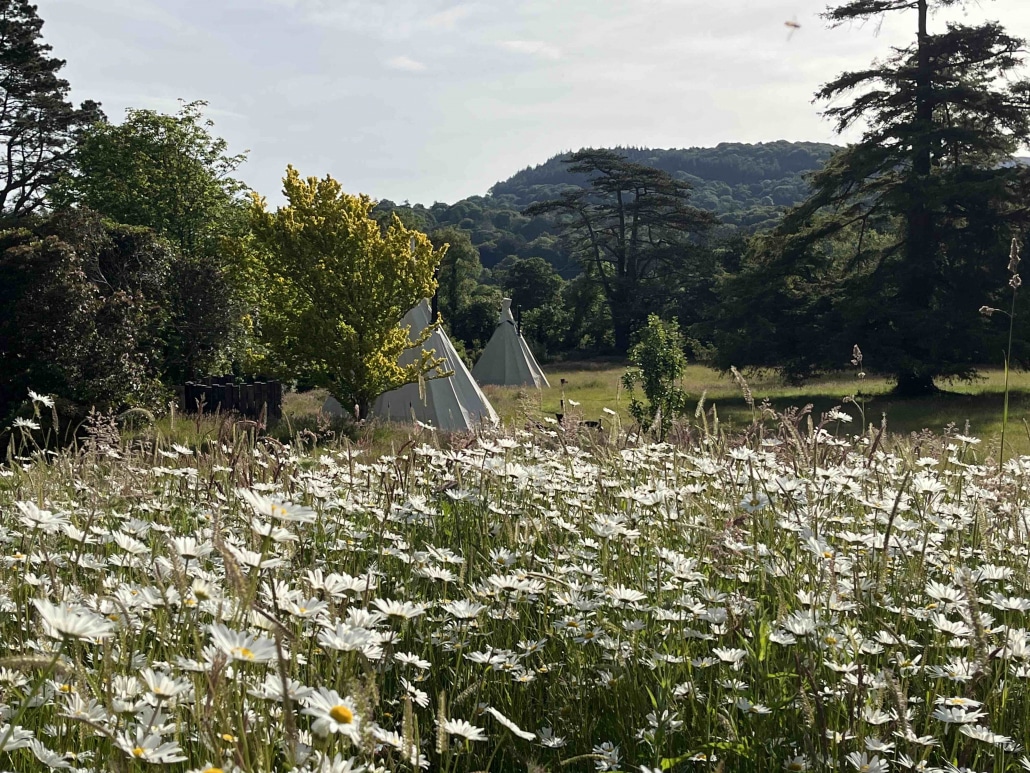
Moody dark blue and grey makes a statement. As does the two teepees viewed across rewilded grounds, thronged with chest-high ox-eye daisies on our visit. They were our vista as we opted to sample the first five courses outside by the (unlit) fire pit, revelling in the kind of heat wave rarely encountered around the Dyfi estuary.
Fortunately, our ground floor bedroom – yes, moody dark blue decor – was cool in every sense. Not that we had much time to spend in the space that was formerly the lounge/bar area (before and after above). Ynyshir is a high octane experience.
By the time we reached the seven puddings, including a playful Alphonso take on a Bakewell, we were flagging, yet rallied around an old acquaintance from first time around. Gareth’s deconstructed ‘tiramisu’ is a great splatter of coffee cake puree, vanilla mayo, chilli crémant gel, coffee, mascarpone granita and a grating of intense 100 per cent chocolate.
The finale? Well, no. Further Valrhona in an ‘after dessert’ in the bar. Single origin Madagascar Manjari daringly paired with shitake mushroom and kaffir lime… a final stroke of genius from a remarkable, unique restaurant experience.
Ynyshir Restaurant and Rooms, Eglwysfach, Machynlleth, Powys SY20 8TA. 01654 781209. Lunch or dinner £350. Prices start at £495 per person for a house room plus dinner (drinks extra). The grounds are also home to a ‘pub with casual dining’ marquee, Legless Fach. Check out my original Ynyshir review and discover the nearby shrine to austere priest poet RS Thomas, the amazing RSPB reserve over the hill and the charms of eco-friendly Machynlleth.
We went for dinner to Hawksmoor Manchesterthe other night. It’s been a while. We avoided Monday because that’s BYOB day with just £5 corkage to pay, so I guessed it might be rammed. ‘Slowish’ Tuesday it was then and, to our amazement, there wasn’t a table to be had by mid-evening… or a dry glass in the house. We were in the roaring dining room by 6.30pm and the last sharing porterhouse had already been snaffled 20 minutes before. Damn you, carnivores of impeccable taste.
If you associate Hawksmoor only with steaks think again and settle down in the Manchester bar
No regrets, though, that we’d been detained in the penumbral clutches of the bar to sample the five fresh cocktails that constitute the upmarket steakhouse’s Summer Collection. You wouldn’t consider Miller & Carter or even Gaucho (and definitely not your local Toby Carvery) on the strength of the mixology team. At Hawksmoor it’s different. Quick flashback to a vanished age before vegans roamed the high street. Seven years ago I joined a charm offensive press pack ferried to London to gauge what all the fuss was about on the eve of this critically acclaimed outfit’s arrival in Manchester. Their latest conquest has been New York but no plane tickets in the mail, as yet, alas.
The food quality blew us away, especially the meat, with wines that made a splendid match. We visited four of their venues in the day. Somewhere along the line, probably in the Spitalfields original (above), we encountered the cocktail list that was an integral part of the Hawksmoor experience. The original list was created back in 2006 by the legendary Nick Strangeway and Liam Davy, who is still going strong as Head of Bars (his son Jack is now manager of the Deansgate Manchester venue). Check out the Hawksmoor classics and you’ll find the hardy perennial, Shaky Pete’s Ginger Brew, the ultimate gin-fuelled ‘power shandy’ and the Fuller-Fat Old Fashioned, which I explored in a recent blog.
For the Father’s Day just past Liam devised Midsummer Old Fashioned, mixing Johnnie Walker Blue Label, salted Oxfordshire honey and cold brew camomile tea, topped with a cube of white chocolate fudge.
That’s now off the menu because it’s not really seasonal. So how did the Summery Five – launched at the same time and available until mid-September – fare?
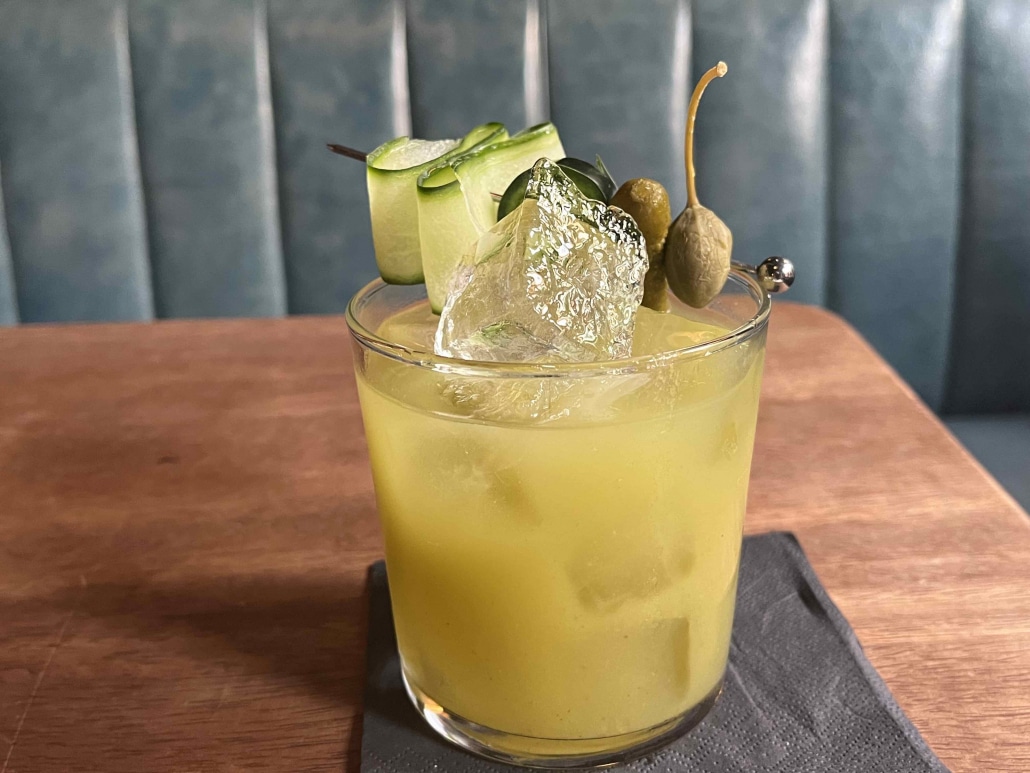
• Green Snapper is a verdant riff on Bloody Mary. Five a day in a glass almost to send chlorophyll coursing through my veins. Forgive any nutritional, botanical inaccuracies; this is a zinger. Beefeater Gin’s the base, muddled with green tomato, jalapeno, lime, cucumber and lovage.
• Factor 50 Fizz pales in comparison, but then I’m not a spritz fan. It hardly feels alcoholic this mix of Lillet Rose, strawberry, cucumber and sparkling coconut water.
Rimini Iced Tea – Fellini’s home town (Amarcord in the movie of the name) is the tenuous inspiration for this cooler because of the reputation of its peaches. That fruit, basil and sparkling Darjeellng tea make a refreshing match with ultra-sustainable Avallen Calvados.
• R.A.C. Aviation is a classic rhubarb & custard combo. Made with Bombay Sapphire 1er Cru, rhubarb cordial, vanilla, lemon and maraschino. Surprisingly tart, it’s properly summery.
• Moselle Martini is my favourite of the five, mellow and approachable with an indefinable complexity. It’s made with Fords gin, cucumber, Riesling vermouth and pear eau de vie.
No Porterhouse – how did we pull through?
Our daughter’s dog Toro gnawed our doggie bag T-bone with great gusto. We adored the steak that was once attached in the company of a soft, summery Pinot Noir from the Loire. Creamed spinach, anchovy hollandaise, triple-cooked chips, heritage tomato salad. To start we shared beef carpaccio and scallops cooked in the shell with White Port. Never lets you down.
https://i0.wp.com/www.neilsowerby.co.uk/wp-content/uploads/2022/07/Rimini-and-Factor-50-scaled.jpg?fit=2048%2C1536&ssl=115362048Neil Sowerbyhttps://www.neilsowerby.co.uk/wp-content/uploads/2022/11/NS-typemark-v1c.pngNeil Sowerby2022-06-27 07:33:002022-08-01 11:59:24Summer in the city… and I’m cradling a Hawksmoor Green Snapper
Courageous is the only way to describe opening a self-funded 12-cover, tasting menu based restaurant in a small Lancashire town with no history of cutting edge dining.
Restaurant Metamorphicais soft launching in Haslingden, as I write. Well behind schedule because of unprecedented times, yet lockdowns allowed chef/patron (ie one man band) Steven Halligan to create from scratch the project he has dreamed about since his catering student days.
His promise was always apparent. By the age of 20 he won Greater Manchester Young Chef of the Year; two years later he was runner-up for the North West Young Chef of The Year. All this as he was fast-tracked through some impressive kitchens – notably Room and Mr Cooper’s House and Garden in Manchester – justifying his decision to spurn university. Even in 2021, while diverting towards Metamorphica, he made it to the semi-finals of National Chef of the Year.
Yet it always rankled that from the age of 16 cold water was poured upon his vision to one day run a restaurant of his own. The aim to follow in the footsteps of his chef heroes across the world, whose hefty cookbooks grace his new dining space in a former pub. Now 28, Bury-born Steven is ready to prove the doubters wrong.
Herculean best describes the effort put in by him and his father to make this happen. Crowdfunding was never going to be an option without the necessary high profile. So it has been a case of amassing used kitchen equipment for a song, hands-on graft turning an aborted Indian grill conversion into a destination more suited to the constantly evolving menus he wants to put out. The only impossible to avoid outlay was to an electrician. Steven reckons hiring outside help instead of doing it all themselves would have cost them an undoable £150,000.
What best symbolises the rebirth of the corner site just off Haslingden town centre is the window retained from its previous incarnation as the Roebuck boozer versus the butterfly logo that partly justifies the ‘Metamorphica’ monicker of Steven’s restaurant.
Ovid’s Metamorphoses sprang to mind. Not so. I’m happy to accept it might have its foundation in Metamorphica, the classic magic trick associated with Houdini and brought brought up to date by musician Criss Angel. Maybe Steven is metaphorically breaking free from a box that constrained him. Maybe referencing the metamorphic rocks caused by compression? Or mirroring the shape changing stages out of which a butterfly emerges.
A thing of beauty. So is the menu also? On paper, certainly, and after relishing a couple of handsome snacks I can’t wait to sample the real deal when all is settled in…
The first ‘development’ menu featured brioche and cheese; tomatoes, lovage, cream; house loaf and butter; mackerel, cucumber, chervil; pollock, herb tea, parsley, pink peppercorn, sesame, mead; pigeon, plum, rye; goat’s cheese, mirabelle, sorrel; lamb, apple, turnip; anise, apple, honey; almond and meadowsweet millefeuille; blackcurrant pate de fruits.
Until June 30 he is serving this kind of menu for ‘Just The Chef’ events each night, hosting
only four customers at the open kitchen chef’s table. It will cost of £63 per head (with an optional six-strong ‘drinks journey’), compared with the eventual £78 per person for for 11 courses, maximum covers per night 12. For the foreseeable it’s to be just Steven both in the prep kitchen and front of house with his dad helping with the washing up. The chef’s own first taste of hospitality was as over a sink as a kitchen porter at his Auntie’s gastropub in 2008.
From there it has been a prodigious learning curve – eating in Copenhagen’s finest or the Eleven Madison Avenue, the New York three star of one particular inspiration, Daniel Humm, or working a stage at Philip Howard’s The Square (now closed) in London. Check out the Metamorphica website and you’ll find encomiums to many heroes and mentors, global and local, but also a fierce disillusionment with the way hospitality can stifle talent, too.
In his two years at Mr Cooper’s House and Garden (2AA Rosette and Michelin Bib Gourmand), inside Manchester’s Midland Hotel Steven rose to sous chef, becoming interim head chef for his final six months. You sense in the end he was keen for a personal challenge elsewhere. A short consultancy management role at Stockport’s influential Where The Light Gets In helped whet his appetite to do his own independent thing.
Hence Restaurant Metamorphica. Still a work in progress this steely mission statement about following your dream. Haslingden as an acclaimed gourmet destination? I definitely wouldn’t bet against it.
https://i0.wp.com/www.neilsowerby.co.uk/wp-content/uploads/2022/05/Chef-steve-scaled.jpg?fit=2048%2C1536&ssl=115362048Neil Sowerbyhttps://www.neilsowerby.co.uk/wp-content/uploads/2022/11/NS-typemark-v1c.pngNeil Sowerby2022-05-27 16:14:342022-05-27 16:30:01Metamorphica – chef whizz Steven works his magic on an extinct Roebuck